


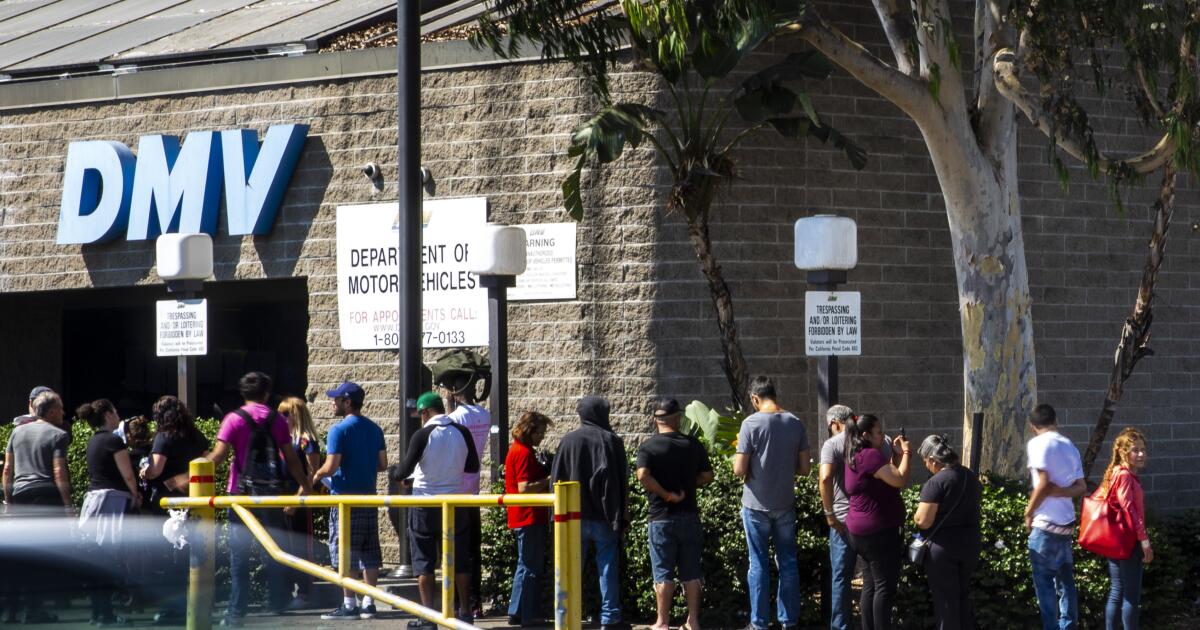
• Approximately 325,000 people will be required to replace their Real IDs.
• The DMV will waive costs for the replacements.
• The error is due to a “legacy coding” problem from 2006.
The California Department of Motor Vehicles said this week that approximately 325,000 Californians will be required to replace their Real ID licenses because of a software error.
In the coming weeks, DMV officials said, about 1.5% of those holding Real IDs will be notified that they “need to take action” to “ensure continued compliance with federal REAL ID regulations.”
“The DMV is informing affected individuals of the steps they need to take,” officials said in a news release issued Wednesday. Fees associated with reissuing the IDS will be waived for those affected.
DMV officials said the problem was discovered after a review of technology systems revealed that some legal immigrants had been issued Real IDs that did not expire at the same time as their authorization to remain in the country.
The Real ID Act was signed into law in 2005 and established security standards for state-issued IDs for things like boarding planes. But implementation was repeatedly delayed, and the requirement finally went into effect in May of 2025. DMV officials said they discovered that a “small subset” of Real IDs issued to lawful permanent residents “applied the standard credential renewal interval in some cases, instead of the expiration of a REAL ID holder’s authorized stay.”
“We proactively reviewed our records, identified a legacy system issue from 2006, and are notifying impacted customers with clear guidance on how to maintain a valid California-issued credential,” DMV Director Steve Gordon said. “For nearly 99% of REAL ID holders, no action is required. The DMV remains committed to serving all Californians and ensuring REAL ID credentials meet federal standards.”
Officials said the problem came about because of “legacy coding from 2006.” But the release added that all those who had been issued Real IDs received them only after the federal system had verified their lawful presence in the country, and that no one who was undocumented got one.
This story originally appeared on LA Times

