


Northeast Syria is rapidly changing hands, and with it the country’s fragile balance of power.
For more than a decade, Kurdish authorities governed this region with a high degree of autonomy.
Now, Kurdish leaders warn that their way of life – and their political future – is under serious threat.
Clashes between government forces and Kurdish fighters are destabilising the northeast and risk derailing Syria‘s already tenuous push towards lasting peace.
Under the Kurdish-led Syrian Democratic Forces (SDF) – a group that allied with the US and Western powers to defeat the Islamic State – the northeast remained one of the last parts of Syria outside full government control.
That status is now rapidly eroding.
In the city of Hasakah, Kurdish fighters told me they are preparing to defend their land and their communities at any cost.
Many here feel betrayed by Washington, accusing the US of shifting its support toward the new interim government in Damascus.
Since the beginning of the year, forces loyal to interim President Ahmad al Sharaa have pushed deep into the northeast, attacking Kurdish positions as part of a broader campaign to reunify the country.
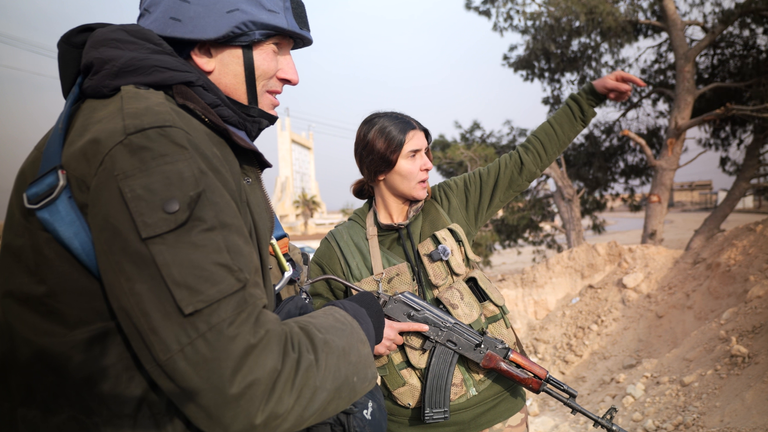
Kurdish forces told Sky News they’re still determined to defend their land ‘despite betrayal’
Government troops have retaken cities that were originally captured from ISIS by Kurdish forces, including Raqqa, a predominantly Arab city. There, residents celebrated as Kurdish fighters withdrew.
One of the most consequential takeovers has been al Hawl camp – a vast detention facility holding families linked to the Islamic State. When government forces moved in, scenes of chaos followed.
Nearby, al Roj camp – which the Sky News team visited – remains under Kurdish control. Inside, women and children live in harsh, overcrowded conditions.
‘We want to go out, get an education’
Zeelan, a Turkish national, was just 12 years old when her parents joined ISIS. She is now 20 and has spent nearly a decade inside the camp.
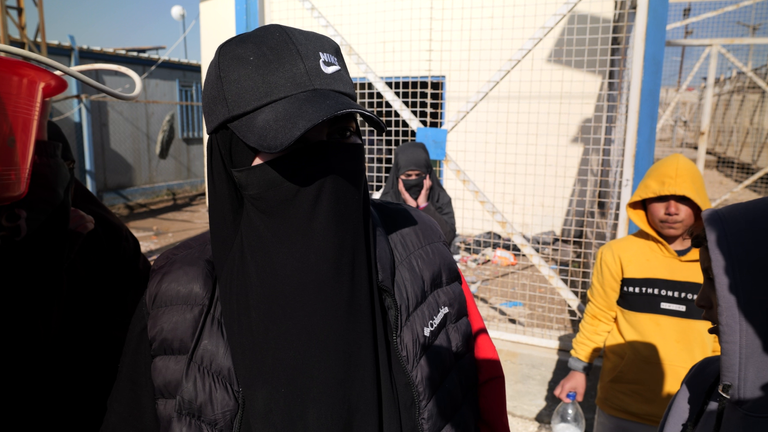
This woman has been in the camp since she was 12 and worries about dying there
“We want to go out, get an education, and live our lives,” she said.
“We have seen nothing here – no life at all.
“Nine years in this place. Look around – no one can stand it. Anyone from outside who came here, even for just one month, would kill themselves.
“We’ve been here for nine years. I worry about dying here. I can’t see a way out,” she told me.
Like thousands of others, she remains trapped in legal limbo, with no country willing to take her back.
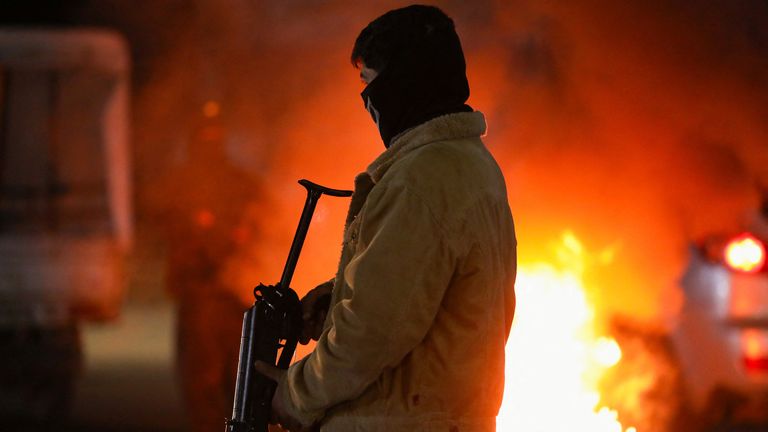
A Kurdish volunteer at a checkpoint in Qamishli, Syria. Pic: Reuters
The head of al Roj camp, Hikmya Ibrahim, says the atmosphere inside has darkened since government forces began their advance.
“Since the new government took control of Damascus, there have been noticeable changes in the camp,” she said.
“The women are feeling empowered and hopeful, believing that the era of the Islamic State is returning because they perceive ideologically aligned forces to be back in power.”
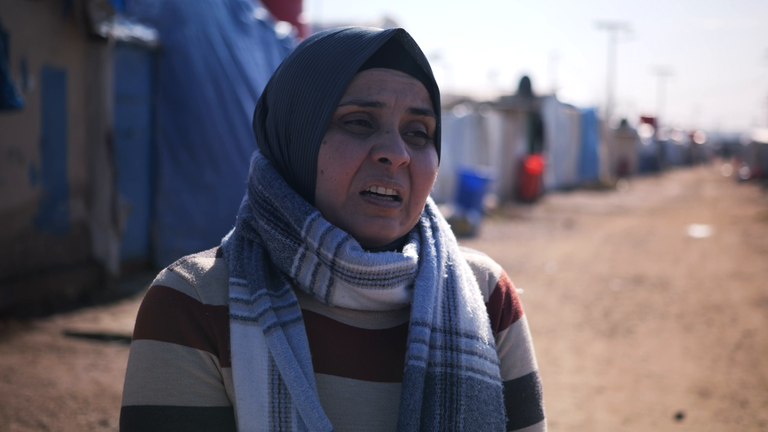
The head of al Roj says the women there have been hoping IS will return
The offensive is reshaping Syria’s political landscape following the fall of the Assad dynasty. The Kurds’ semi-autonomous region – once stretching across much of the northeast – is now rapidly shrinking.
At stake is control over the vast majority of Syria’s oil and gas reserves, most of which are located in the northeast – vital revenue for a country struggling to rebuild after years of war.
Despite their losses, the Kurds remain a sizeable military force with long-held aspirations of statehood. Damascus is demanding they disarm and integrate into the national army.
‘Children killed, women tortured’
Kurdish leaders say that is impossible without firm security guarantees and a degree of political autonomy.
In Kurdish-held areas, the new interim government – led by former rebel factions, some with extremist links – is viewed with deep mistrust. And there is widespread unease about what this new chapter may bring.
Thousands of Kurdish civilians have already fled advancing government forces. Some have taken refuge inside a mosque in the city of Qamishli.
Read more:
US moves 150 IS prisoners out of Syria
Fighting erupts near prisons holding IS extremists in Syria
Shireen Abdul Fattah is sheltering there with her family, fearing a full-scale conflict between Kurdish forces and the authorities in Damascus.
“We were afraid of airstrikes, of death, and of the complete absence of mercy,” she said.
“Children were being killed, women were arrested and tortured. You can see our situation and how we were forced to flee.”
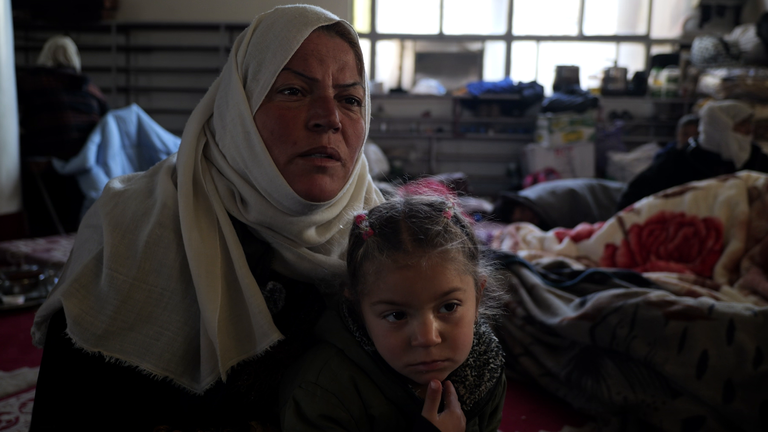
Shireen says the new government remains hostile to Kurdish communities
She described the new leadership in the capital as fundamentally hostile to Kurdish communities.
“In 2014, the same groups were fighting the Kurds – al Qaeda affiliates and Jabhat al Nusra attacked us,” she said.
“Today, the same man has become the president of Syria, yet he does nothing for us as Kurds.”
At night, armed militias patrol roads across Kurdish regions as tensions continue to rise. A 15-day ceasefire, intended to allow the transfer of ISIS prisoners to a more secure facility in Iraq, is already beginning to fray.
And Kurdish fighters say that if the Syrian army attempts to seize the region by force, they are prepared to fight to the end.
This story originally appeared on Skynews

