


Berserk is commonly hailed as the greatest dark fantasy manga of all time, and for good reason: it balances an oppressive world sliding into ruin, juxtaposing surprisingly lovable characters against some of the most heinous villains in fiction. Yet, despite such a rich world, at least one decent anime, Berserk’s video game footprint is sadly lacking.
Despite three adaptations across three consoles, Berserk joins a long line of anime with the video game adaptation curse, not because any are particularly bad, but none are especially great, and some struggle just to be good. However, there is plenty of discourse talking about how it’s influenced gaming’s most influential Action RPG, Dark Souls.
Combined with Demon’s Souls, Bloodborne, and Elden Ring, FromSoftware’s formula spawned an infamously overused buzzphrase, “the Dark Souls of (insert franchise here).” Between the Sega Dreamcast’s first outing, Sword of the Berserk: Guts’ Rage, the PlayStation 2 Japan-exclusive Berserk, and 2017’s Omega Force title Berserk and the Band of the Hawk, none have become “the Dark Souls of Berserk.“
Berserk Video Games Are Understandably Focused on Action
Naturally, a game set in a dark fantasy backdrop which canonically has seen some of the goriest carnage and bloodshed lends itself well to the broader action genre. Yuke’s, the developers best-known for their WWE games, honed their craft while bringing Berserk to hack and slash realms, while Koei Tecmo’s Omega Force injected their tried-and-true musou gimmicks.
This creates a fairly universal experience playing as Guts in each game, although Berserk and the Band of the Hawk crucially allows one to play as friends and foes alike. They each allow players to immerse themselves as Guts, understanding the extreme challenge he faces as he weathers foes drawn by his Brand of Sacrifice.
While this consistency with clear strengths as an action game is seen across each title, none are particularly great outside the hardcore Berserk fandom. This is more or less okay, since the games aren’t widely available anymore for the most part, but it begs the question whether the best avenues have truly been pursued for a Berserk game.
Berserk on the Dreamcast Set the Right Vibe
Owing to the system’s lack of a right control stick, contrary to an emerging standard, Yuke’s Sword of the Berserk: Guts’ Rage saw Guts in an arcade-style hack-and-slash set in the Millennium Falcon Arc. Guts may not have his Berserker Armor yet, but being able to carve up mandragorans and soldiers alike with the Dragon Slayer is fairly satisfying.
The game features an original story with Baron Balzac being a classic case of a once-benevolent ruler falling upon hardship and calling upon means beyond his control, the mandragoran plant, to cure his ailing wife. His descent into a deadly dictator, and eventually Apostle, is pretty quintessential Berserk from Black Swordsman through Millennium Falcon Arcs.
However, the game had noteworthy shortcomings. Guts is consistently thrust into narrow corridors which are intentionally designed to nerf the Dragon Slayer by causing it to bounce feebly off of nearby walls. This created frustrating close-quarters fights, and while it was nice that one could swap to melee, jump away, or perform Ninja Turtles-style sliding attacks, it’s out of place.
The game’s final fights leave players wanting more, despite conclusively finishing its story.
On top of wonky controls, Sword of the Berserk was criminally short. Players will get into the swing of things, mowing down bosses, growing comfortable with the Repeater Crossbow, charting a unique path through the then-novel QTEs, and feeling like a god with the Cannon Arm, the game’s final fights leave players wanting more, despite conclusively finishing its story.
Yet, there’s plenty to love about the Dreamcast game aside from awful English voice acting. It’s got an exceptional soundtrack, unsurprising since it’s by the original anime’s composer, Susumu Hirasawa, and includes the now-iconic “Indra” theme as well as haunting musical backdrops for the tragedy of Niko.
Finally, Sword of the Berserk holds a particular claim to fame: its fight with Nosferatu Zodd’s Released Apostle form is brutally hard, and incredibly satisfying to win on higher difficulties. Every time Zodd will say “I’m looking for warriors” after thrashing you, you will feel like you’ve disappointed him. This authenticity almost offsets characters inconsistently calling Guts “Gatsu”.
PlayStation 2’s Berserk Boasts the Most Mechanically Accurate Guts
Similarly set in the same arc as its Dreamcast predecessor, Yuke’s then developed Berserk Millennium Falcon Arc: Chapter of the Holy Demon War, but there’s a reason why it’s commonly just called Berserk for the PS2. It honed many of the rougher edges of the previous game, and players feel immersed properly as Guts this time around.
Every strike with the Dragon Slayer can potentially maim opponents cleanly, including satisfyingly splitting them from top to tail. Heavier attacks carry Guts with the inertia of his massive Dragon Slayer pulling him across the terrain, and parrying is wildly satisfying. There are even light roleplaying elements thrown in, allowing players to feel Guts grow stronger as they play.
The title is also notably more cinematic, with its obligatory fight against Zodd in his base form particularly standing as a highlight. Clashes feel authentic, and while the game largely fades against an emerging trend of hack and slash greats like Devil May Cry or musou legend Dynasty Warriors, it’s the best of the three, gameplay-wise.
While the gameplay is satisfying, it’d be negligent not to mention its opening theme, “Sign”, also composed by Hirasawa, the individual best original song across any Berserk game. The game infuriatingly lacks worldwide availability, being region-locked to older hardware, but Isidro or Captain Bonebeard may have an idea or two about how one may get their hands on it.
Koei Tecmo Brought Fans “Berserk Warriors” and It’s Mostly OK
By far the most ambitious of the three story-wise, depicting the events from the Black Swordsman, Golden Age, Conviction, and Millennium Falcon Arcs, Koei Tecmo and Omega Force created the most recent Berserk game. Part of the musou subgenre, essentially hack and slash but against massive hordes of visually-optimized, simplified AI enemies, this 2017 game had its quirks.
While individual games in the “Warriors” lineup, like Fire Emblem Warriors, blend a combination of unique character mechanics and gameplay inspired by their home franchises, Berserk surprisingly integrates the core gameplay formula very well. Feeling especially appropriate in these arcs, Guts faces down hordes deployed by the Tudors, the Kushan Empire, and even trolls or other astral creatures.
Feeling especially appropriate in these arcs, Guts faces down hordes deployed by the Tudors, the Kushan Empire, and even trolls or other astral creatures.
Berserk and the Band of the Hawk is thus the most varied game with the deepest offerings for those seeking to customize their experience. This spans from a moderately clever equipment system, to playable characters like Serpico sweeping away clusters of foes with his Sylph Sword. The novelty of playing as other characters throughout Berserk’s run is a big sell.
While the game’s visuals are already beginning to show their age, the art direction is strong, especially in executing shots for cutscenes that practically leap out of the manga, or in-game backdrops such as the outskirts of the Village of Witches.
However, unlike the other two games, Berserk and the Band of the Hawk largely lacks the proper vibe, leaning largely on the Golden Age Arc trilogy for cutscenes, and having a boring soundtrack. While it’s certainly fun to mow down enemies, it’s beginning to grow more clear that Berserk will need to create a gaming experience that stands out from this trend.
Berserk’s Video Game Answer Shouldn’t Be the Dark Souls Approach

While, much like the anime, adapting Berserk into games is innately difficult and will inevitably rub some fans wrong, it’s also important to stay creative when trying to create a truly authentic gaming experience. To create “the Dark Souls of Berserk” might feel like the obvious answer, but truthfully, Berserk isn’t solely about action; it’s often a contemplative, surreal journey.
The “It’s just like Dark Souls” trend emerged as a result of a persistent trend among content creators, journalists, and overall fans to overhype a game for common elements like tricky boss fights or third-person ARPG elements, and their inevitable Dark Souls comparisons.
There are certainly already shades of Berserk in Soulsborne games, from the armor aesthetics, to the massive weapons, Apostle-like bosses. Even side-stories like Ranni’s smack of Berserk’s “Corridor of Dreams” chapters. Imitating Dark Souls will lack Berserk’s character-driven appeal that inspired these gaming concepts to begin with.
Instead, developers should take a step back, and note that, while dark fantasy certainly lends itself to action, it is also a genre steeped in horror. An over-the-shoulder survival horror game in the vein of the modern Resident Evil games, complete with limited Cannon Arm shots, sparse Repeater Crossbow bolts, and finite Elf Dust, would feel appropriate yet novel.
A Berserk Horror Game Should at Least Be Considered
Berserk could do quite well as a purely Dark Souls experience, and this alternative isn’t just saying to imitate Resident Evil instead. Berserk’s stories often feature far larger expanses, realms, and kingdoms than Resident Evil’s setting, and it even has one untouched arc that’s perfect for survival horror.
The Fantasia Arc has never been adapted in any of the three games, but this is entirely because it remains the manga’s current arc, still ongoing as of 2010. It features Guts with the most hope, and conversely eventually facing the most despair, out of the current stories, and features terrors like ghost pirates and the deadly Sea God.
While Band of the Hawk integrated the Berserker Armor mode into its gameplay with incredible results, the true terror of its capacity to potentially harm allies or innocents, could properly be explored in a horror game.
With the Great Wave of the Astral World altering the Fantasia Arc’s backdrop of Berserk’s world, engulfing it in a nightmarish hellscape, the only ostensibly safe havens left are small pockets of Kushan Empire territory, and Griffith’s Falconia. Telling a story anywhere during this arc, including an original one like from the Dreamcast days, would fit perfectly.
However, until then, Berserk fans have plenty to look forward to. Creator Kentaro Miura’s prized manga is in dedicated hands, with Kouji Mori offering updates if and when possible, and the fandom remains patient, knowing every new chapter is maintaining Miura’s vision. Berserk’s anime prospects, however, still leave much to be desired.
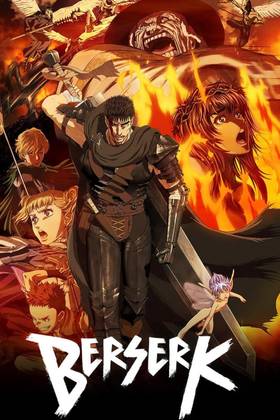
- Created by
-
Kentaro Miura, Kouji Mori
- First Film
-
Berserk: The Golden Age Arc 1: The Egg of the King
- Latest Film
-
Berserk: The Golden Age Arc 3: The Advent
- First Episode Air Date
-
October 7, 1997
This story originally appeared on Screenrant

