


The Earth’s climate is in a “state of emergency”, according to the United Nations which has warned it is more out of balance than at any other time in observed history.
The World Meteorological Organisation (WMO), which is the UN’s weather agency, predicted that rapid and large-scale changes to the global climate in recent decades would trigger harmful repercussions lasting centuries.
It comes as rising greenhouse gas concentrations in the atmosphere drive global warming and melt ice.
The WMO’s annual “state of the global climate” report, released on Monday, also highlighted the impact in 2025 of intense heatwaves, heavy rainfall, wildfires, drought, tropical cyclones, storms, and flooding, including widespread death and vast economic losses.
It further demonstrated the cascading impacts that extreme weather events were having worldwide, including food insecurity and displacement, and health risks driven by shifting rainfall patterns, like mosquito-borne dengue disease and heat stress.
UN secretary-general Antonio Guterres warned the global climate is in a “state of emergency”.
“Planet Earth is being pushed beyond its limits,” he said. “Every key climate indicator is flashing red.”
The report confirmed that 2015 to 2025 represented the hottest 11 years on record, with data showing last year as the second or third hottest ever documented.
It also revealed that Earth is close to breaching the key warming threshold of 1.5C – beyond which increasingly severe and compounding climate impacts are triggered – with the figure recorded at 1.43C last year.
Furthermore, the WMO found the accelerating amount of heat in the world’s oceans, which stores more than 91% of the excess heat in the Earth’s system, means the planet is moving to timescales of committed climate change for centuries.
Meanwhile, the planet’s energy imbalance – the rate at which energy from the sun enters and leaves the Earth – reached a new high in 2025.
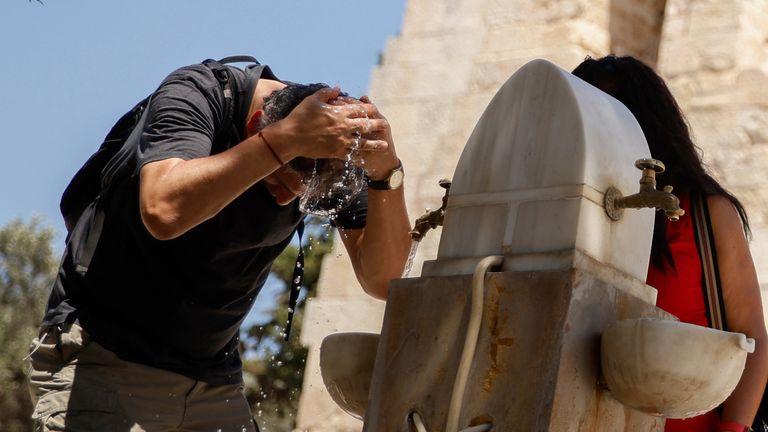
A man cools off with water in Athens, Greece, amid a heatwave in July 2025. Pic: AP
Read more:
Earth’s lungs are collapsing – is net zero dead?
Wettest winter on record for parts of the UK, says Met Office
At the same time, heat-trapping greenhouse gases like carbon dioxide, methane and nitrous oxide have risen to their highest level in at least 800,000 years.
WMO secretary-general Celeste Saulo said: “Human activities are increasingly disrupting the natural equilibrium and we will live with these consequences for hundreds and thousands of years.
“On a day-to-day basis, our weather has become more extreme.”
The report also outlined how climate data, early warning systems, and integrated climate services for health can protect people as the temperature rises.
This story originally appeared on Skynews

