


Image source: Getty Images
The FTSE 100 fell 1.3% today (26 March), so not many stocks moved upwards. As a result, Next (LSE:NXT) stood out like a beacon after it rose 5.2% to 12,665p.
This will come as a relief to shareholders, as the stock was down 12% year to date before today’s jump. So, what pleased the market today?
Exceptional results
The catalyst for today’s rise was the clothing and home retailer’s annual results for the financial year ending January 2026. And as is often the way with Next, it defied the doom and gloom out there in the long-struggling UK retail sector.
Full-year sales were up 10.8% to £7bn, with 7% growth in the UK and 35% overseas. These figures were far higher than the original guidance given almost a year ago (for 5% sales growth).
Meanwhile, pre-tax profit increased 14.5% to £1.16bn, while earnings per share jumped 17%. The business generated £1.1bn in free cash flow, which was exceptional. It returned £839m to shareholders via dividends, share buybacks, and other methods.
However, while sales in the first eight weeks of this year were promising, management is cautious due to the war in the Middle East. It expects full-year sales to rise 4.5%, with pre-tax profit edging up by the same amount to £1.21bn.
But if the disruption drags on for longer than three months, CEO Simon Wolfson warned Next would have to raise prices “in the order of 1% to 2% maximum“. But then potentially more, depending on cost inflation.
Moving forward then, the risk is that inflation-weary shoppers quickly tighten their belts, impacting sales growth.
Three considerations
Is Next stock worth considering for long-term investors? Well, I think to answer that, there are three main considerations: the quality of the business, future growth opportunities, and the valuation.
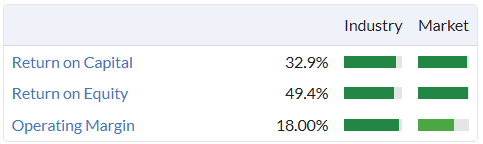
In terms of quality, I think Next ranks up there with the very best. Back in September, I referred to it as the “cream of the crop” among UK retailers, and last year’s results show why.
To give an example, consider this quote from the report: “Every activity we undertake — from new warehouses and marketing campaigns to the launch of new brands — must be assessed in terms of profitability and return on investment. We do not indulge in projects that some might think are ‘strategic’, but offer little hope of high returns or healthy margins.”
Sounds simple, of course. But due to world-class management and execution, Next actually walks the walks, as well as delivering the talk. Not many retailers do.
This is reflected in exceptional quality metrics.
As for future growth, well, I think Next has barely scratched the surface of the long-term overseas opportunity. International online sales reached £1.3bn last year, which is a drop in the ocean for the global market.
For example, it’s targeting capital-light sales expansion in Asia and the US via online aggregator platforms. And given the stagnant UK economy, this will become more important moving forward.
What about valuation? Well, surprise surprise, this quality stock isn’t cheap at around 16 times forward earnings (above the 10-year average of 13.5).
But Next has a strict valuation threshold for buying back its own shares, and that’s currently £131. With the stock at £126, I therefore think it’s worth considering, especially on any Middle East-related dips.
This story originally appeared on Motley Fool

