


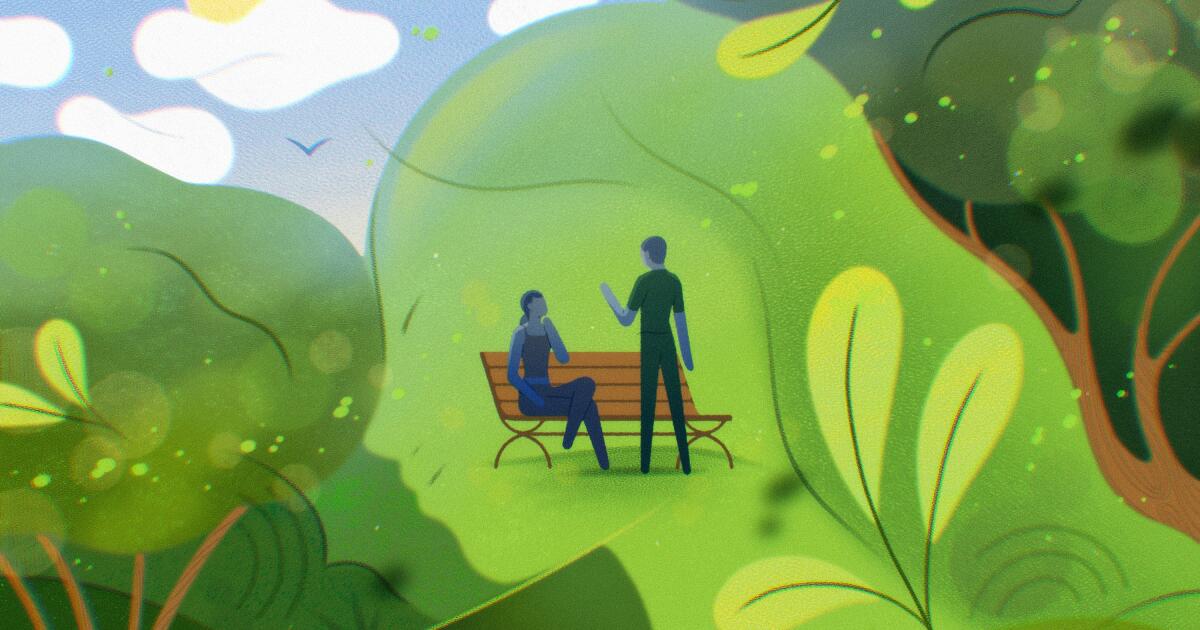
As far as wellness trends go, small talk isn’t sexy. The same with participating in civic government or helping a neighbor carry their groceries. But connecting with others might be the ultimate form of self-care, according to psychiatrist Joanna Cheek.

Shelf Help is a wellness column where we interview researchers, thinkers and writers about their latest books — all with the aim of learning how to live a more complete life.
In her book, “It’s Not You, It’s the World: A Mental Health Survival Guide for Us All,” published in February, the University of British Columbia professor makes a case for the health benefits of collective care. For example, Cheek cites research that connects altruistic behavior and a sense of purpose with reduced inflammation, as opposed to hedonistic pursuits, which can worsen inflammation.
Perhaps most importantly, Cheek warns how individual solutions aren’t enough to protect and heal us. “Emotional alarms” such as fear, guilt, shame and anger are healthy signals that help us avoid obstacles and find rewards, she says. When it comes to poverty, discrimination, isolation and other systemic problems, a sense of “moral distress” warns us away from harm and toward a more just, equitable society. And taking small steps to connect with others — even as simple as engaging in idle chitchat with a stranger — can be an impetus for broader change.

Portrait of author Joanna Cheek.
(Tegan McMartin)
“I’m constantly trying to think about socializing in the same way I think about exercise or physical activity,” says Cheek. “In the same way I eat a certain amount of vegetables or have a certain amount of quiet time to meditate, I think, ‘Have I had enough social contact today?’”
People obsessively track their steps. They might want to count their social interactions, too, she says. Those moments can build confidence and trust, until the momentum transforms us and the communities we call home.
This interview has been edited for length and clarity.
In the book, you quote the renowned psychiatrist Viktor Frankl, who wrote, “Happiness cannot be pursued. It must ensue.” Why should we focus on cultivating purpose instead of pursuing happiness?
There are a lot of studies that show that cultivating any emotional state — happiness in particular, but also calmness or lack of anxiety — actually backfires. The more we try to feel a certain way, we inevitably won’t, because we don’t have much control over how we feel and then we’ll compare it to some standard of how we should feel, which will only magnify our suffering.
Rather than chase an emotion, which is futile because our emotions are constantly shifting, we can chase purpose, which gives us a lasting sense of accomplishment, because we’re living in line with our values. That’s true wellness.

“It’s Not You. It’s The World” book cover bo Joanna Cheek, MD.
(Hachette Book Group)
How can people who feel isolated take steps toward cultivating purpose with others?
There was a large study that reviewed studies on loneliness. It showed it posed the same risk as smoking 15 cigarettes a day. I was utterly shocked when I read that, and started a deep dive and met [author and professor of psychology at the University of Sussex] Gillian Sandstrom. Her research shows that connections don’t need to be with the love of our life, a tight-knit family or best friends. When we have contact with a barista at the coffee shop, someone delivering the mail or just say hello to a neighbor who’s walking their dog past you, these weak ties actually have similar benefits to having really deep, personal connections. She ran a study with students at her university and found even if they had no friends in class, if they talked to strangers, they felt better and had more wellness indicators.
When we’re separated from others, we haven’t really evolved that fast, so it sets off alarms in our bodies. When you talk to someone at the grocery store, it’s like, “Oh, I’m not alone, I’m OK, I belong to something.” It silences those alarms so they don’t keep going off.
So it’s beneficial for us to have social interactions. How does it help our communities?
The more that we’re connecting with each other, the more we’re talking across differences, the more that we speak with people of different lived experiences, different politics, different cultural backgrounds, different ages, different levels of health and abilities and needs, then we can have more empathy and really take care for each other and make decisions that are based on the truth that we’re all connected.
Building community can start with weak ties. It can be really scary to join a new group in person. When we talk about anxiety, we talk about graduated exposure, where we don’t expose ourselves to the scariest things right away. So sometimes baby steps can help us get comfortable with weak ties. Then, with time, we can move toward deeper contact.
I just had knee surgery this summer, and I ended up doing a lot of water walking in the pool for rehab, and I was amazed at this community pool. There were all these people who were either retired or injured there during the day and I would have so many conversations. And so often we think that these connections don’t matter because we’re not building a friendship that might continue on. What is the point? The point is that through each interaction, we’re building a sense of community for everybody. And it doesn’t have to be more than one interaction. It helps create a sense that we can trust each other and we can learn from each other. It feels good to be in connection and that makes us want to care for one another.

(Maggie Chiang / For The Times)
You mention the term McMindfulness in the book. Could you describe what that means and why it can be damaging?
Yeah, there are a lot of concerns about quick fixes for mental health. I speak a lot about how mental health is really about the health of our entire systems. When we sit with that, it can be overwhelming to recognize that we can’t be well until our systems are well. We can practice wellness, we can do the best we can, but feeling better in a sick world isn’t going to fix us. We need to fix the world. McMindfulness is taking people in a toxic workplace and giving them mindfulness classes and not changing the toxic structures of the workplace. We should ask, “Why are they having these symptoms? And how do we make this workplace healthy so that our workers aren’t constantly falling sick?”
People need a sense of agency to thrive. But examining big problems through a systemic lens can create the impression we don’t have control over our lives. How do you reconcile the two?
Every connection we have, every time we live in a way with care and kindness, when we’re offering mutual aid or caring for our neighbors, those little things become contagious. Day to day, we can choose if we’re going to share our resources, whether that be our time, our care, our inclusiveness. Every time we choose to care for others, it’s contagious. It creates a culture. And every little connection like that matters. So while stress and dysfunction can ripple outward, I think our kindness and our unity and our caring can also ripple outward.
TAKEAWAYS
From “It’s Not You, It’s the World: A Mental Health Survival Guide for Us All”
That sounds wonderfully optimistic.
I think a lot about hope and I think hope has to be active. I think we can’t just passively wish for a brighter future. And so I like to think about what agency I have today. It doesn’t have to be becoming the next world leader or finding a cure for cancer. What matters is every little decision I make to make the world a little bit brighter.
This story originally appeared on LA Times

