


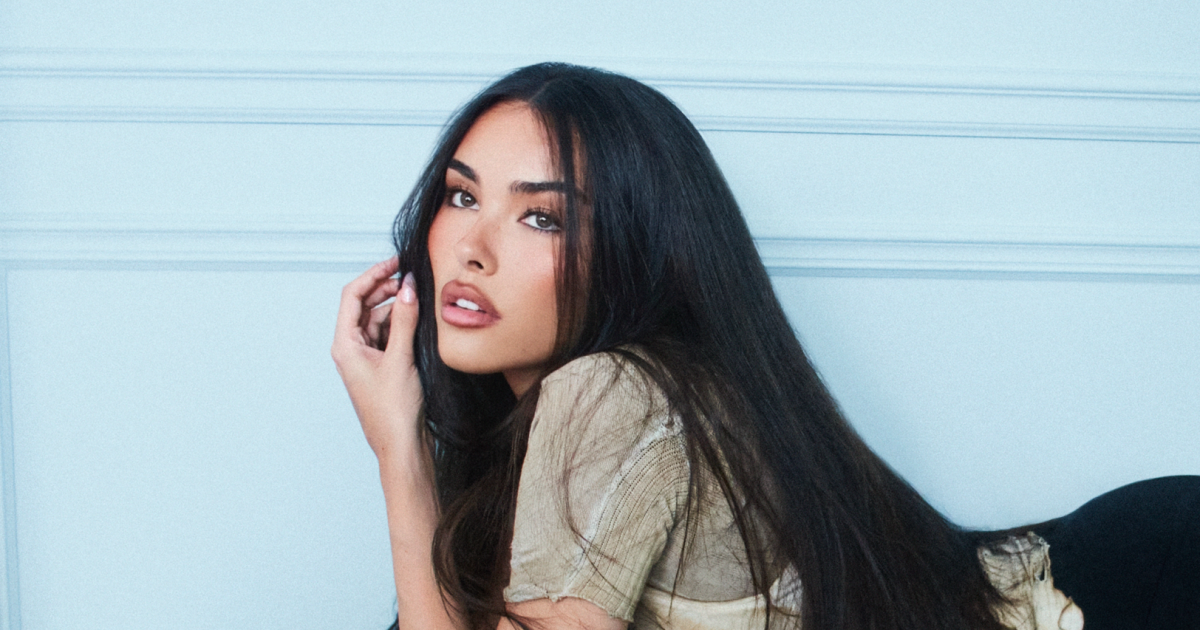
It’s a Saturday afternoon in Los Angeles, and all is normal on the road but for one pop star tuning in to a Zoom call.
“We are old now, dude,” Madison Beer, who just turned 26 years old back in March, says with a laugh.
She places her phone off to the passenger seat to avoid an accident. She explains that, understandably, she does not make her own schedule — hence the circumstances of her taking an interview behind the wheel. The last year has been busy for the musical sensation, with the rollout of her new album, “locket,” in full swing.
Beer, who struck fame at 13 years old for her YouTube song covers, began receiving strong recognition and critical acclaim for her original music by 2018, with the release of “As She Pleases.”
However, it would be 2021’s “Silence Between Songs” that snatched her first Grammy nomination in the immersive album category. She’s got another opportunity to win at this year’s ceremony Feb. 1, with her hit single “Make You Mine” getting a nomination for dance pop recording.
“Locket,” released Jan. 16, is certainly another glittering opportunity at success for Beer, who, despite having droves of talent and a cult-like following, has yet to strike the same cultural chord as some of her Gen Z peers.
She’s spent the last two years “cracking at this thing,” whose rollout formally began with “yes baby,” an exciting single wrought with hues of electronic influence. That was followed by a synth-pop tune in “bittersweet” and “bad enough,” which leaned back into typical pop production. Fans can catch her latest release live in 2026 when she embarks on tour, stopping at the Kia Forum on June 24.
She spoke with The Times about how “locket” came to be, from its early concept stages to finally hitting shelves.
Where do you think you’ve evolved the most as an artist since your last release in “Silence Between Songs?”
I’ve hopefully grown in every aspect. I learned a lot from “Silence Between Songs,” in the sense that people really connected to the songs that I was really vulnerable and honest on. It made me be like, “OK, even if a song’s not a hit and not a song that has so many streams, that doesn’t mean that it’s not impactful to many people.” And that was inspiring to me.
Does it ever feel odd that the songs you wrote for yourself and about your own experiences are ones that fans can connect to so strongly?
It’s honestly my favorite part about doing this because, you write something that you’re like, “Oh, no one’s gonna get what I’m even referring to or talking about,” and then you sing that song to a crowd of thousands of people, and everyone knows the words, and they’re all crying to it and relating to it. It’s nuts.
With “yes baby,” the song leans heavily into a “hyper pop” sound, which is going around. Were you inspired by anyone when making this song, or was it more of your own creation?
There wasn’t really a rhyme or reason. I think I felt like it was kind of still coming off the steam of “make you mine.”
It feels like it started with “make you mine” for me, and I definitely think that was solely just because I wanted to make something fun for tour, really, because my last album was a bit slower and more acoustic.
Beer first rose to fame in the early 2010s, notably for her YouTube cover of “At Last.”
(Morgan Maher)
Having grown up in the 2010s, do you feel like you drew a lot of inspiration from that decade when working on these songs?
For sure. Honestly, Gwen Stefani was a huge reference for that song [“angel wings”]. I wanted something that felt nostalgic in a way, with a little bit of an R&B touch to it.
But, honestly, I feel like what you’re saying is very representative of the whole project. I think that the whole album has a sprinkle of 2011 on it.
A lot of those sounds from that era are worth reviving, but do you think some are better off left in the past?
I’m sure there are some songs I can think of from then that I say, “Maybe we don’t need to revive that one.” But honestly, there’s so much goodness.
I think pre-social media, pre-TikTok, pre-all that stuff, people approached making music differently. There was maybe a little bit more experimentation. There’s like a feeling that you get that I would love to harness in some way.
What did your writing process look like for this album?
It’s honestly all over the place. Obviously, considering that it’s been a pretty long time, I think that it’s pretty all over the place. But mainly, I usually just go in, I focus on chords and stuff, and then I write the lyrics.
Well … no. Then I do melodies, and then I do lyrics. That’s usually the order of my operation.
It’s so crazy watching some of that footage back, and you can see my gears turning, being like, “What is the lyric?” And then I obviously know what the lyric ended up being. It’s really cool to have that footage. I’m excited that we pressed record on those cameras, because I’ve never done that before.
I’ve never like filmed my process. I’m usually pretty focused, so the thought of setting up a camera and pressing record, it felt like I wouldn’t capture an authentic moment, but we honestly just had it running for hours and hours and hours.

The official album cover for “locket.”
(Epic Records)
You said that at one point, this was almost a concept album from the perspective of a robot. What pushed you toward that and, subsequently, away from it?
All my projects have started with an idea that then doesn’t come to fruition, and it’s more so just what kick-starts the creative process for me, being like, “OK, this conceptually is cool.”
I liked the idea of some robotic thing … when I first started it, it didn’t really get that far, but I thought, “How can I make it interesting?” For me, it’s kind of easier to tell stories or write songs from the perspective of a character versus from the perspective of me, if that makes sense.
But then once I start creating it, and I feel open enough and able to be honest enough to do it, then it’s whatever. You know, I’m not really hesitant to share things, and I don’t need a character to hide behind.
Was there anything you struggled with on this album, in particular?
I think that my own internal pressures were stressing me out. I was like, “OK, I need to deliver something that’s better than my last album.” And that ended up not being productive. I realized very quickly that putting that pressure on myself is like shooting yourself in the foot, in my opinion.
Once I let go of that, I said, “No, I can just do something that feels good to me, and it doesn’t have to be for charts or streams.” Then, it felt a lot more freeing, and I was able to write without any restrictions.
This story originally appeared on LA Times

