


Just like food can noticeably clear up your skin, the same goes for your hair. As someone who knows hair woes like the back of her hand (thanks, PCOS and postpartum), it’s alarming to watch your hair thin and feel like there’s nothing you can do about it. But here’s what most people don’t realize: Hair growth starts from the inside.
The shampoos and serums matter, sure, but the nutrients you’re consuming daily play a much bigger role than most topical products ever will. An estimated 50% of women will experience noticeable hair loss during their lifetime, and nutrition is one of the few levers you can actually control. Scroll for the best foods for hair growth, and the key nutrients behind them.
image above from our interview with Brandy Joy Smith, by Michelle Nash
What Causes Hair Loss in Women
Hair loss in women is more common than most people think, and it rarely has a single cause. The most common is female-pattern hair loss (FPHL), a hereditary condition that usually shows up as gradual thinning. But hormonal shifts during pregnancy, postpartum, and perimenopause, as well as while managing thyroid disorders, can all contribute. The same goes for stress, iron deficiency, and chronic undereating.
Why Undereating is a Major Contributor
That last one is worth calling out on its own: Not eating enough is one of the most overlooked contributors to hair loss. When your body doesn’t have adequate calories and protein, it diverts resources away from non-essential functions—like hair growth—to protect vital organs first. As a nutrition consultant, I see this pattern with clients constantly. Your body is smart. It will always prioritize keeping you alive over keeping your hair thick. If you’ve been eating in a deficit, intentionally or not, and noticing more hair in your shower drain, the two are very likely connected.
The Nutrients Your Hair Needs Most
Your hair is made almost entirely of a protein called keratin, so it makes sense that the nutrients your follicles need most are the ones that support protein synthesis, cell turnover, and oxygen delivery to the scalp. Here’s what to prioritize:
Protein. The building block of keratin. Without adequate protein intake, your body can’t produce the structural components hair needs to grow. Aim for at least 25-30 grams per meal from sources like eggs, fish, chicken, lentils, and Greek yogurt.
Iron. One of the most common nutritional causes of hair shedding in women, according to Cleveland Clinic. Iron enables red blood cells to carry oxygen to your hair follicles, and low levels can cause hair to shed faster than it grows. Spinach, lentils, red meat, and pumpkin seeds are all strong sources.
Omega-3 fatty acids. These healthy fats nourish hair follicles, reduce inflammation, and support scalp health. Your body can’t produce them on its own, so you need to get them through food. Salmon, sardines, walnuts, chia seeds, and ground flax are your best options.
Zinc. Plays a role in hair tissue growth and repair, and helps keep the oil glands around hair follicles functioning properly. Oysters, beef, pumpkin seeds, and chickpeas are zinc-rich.
Biotin (vitamin B7). Biotin has become synonymous with hair vitamins in the supplement world, but the research is more nuanced than the marketing suggests. Biotin is essential for keratin production, and a deficiency can cause thinning. But deficiencies are uncommon if you’re eating a balanced diet, and recent research suggests there’s little evidence that supplementing with extra biotin helps people who aren’t deficient. Eggs, sweet potatoes, nuts, and seeds are all natural sources.
Vitamins A, C, and D. Vitamin A supports sebum production (your scalp’s natural moisturizer). Vitamin C aids in collagen production and iron absorption. Vitamin D deficiency has been linked to alopecia. Sweet potatoes, citrus fruits, bell peppers, and fatty fish cover all three.
12 Foods for Stronger, Thicker Hair
These aren’t magic bullets, but eaten consistently as part of a balanced diet, they provide the raw materials your hair needs to grow.
1. Eggs
Hair is made of protein, and eggs are one of the most efficient ways to get it! A single egg delivers about six grams of complete protein plus biotin, zinc, and selenium. Egg yolks in particular are rich in the nutrients that support keratin production. If you do nothing else, start your morning with a protein-forward breakfast that includes eggs.
2. Salmon
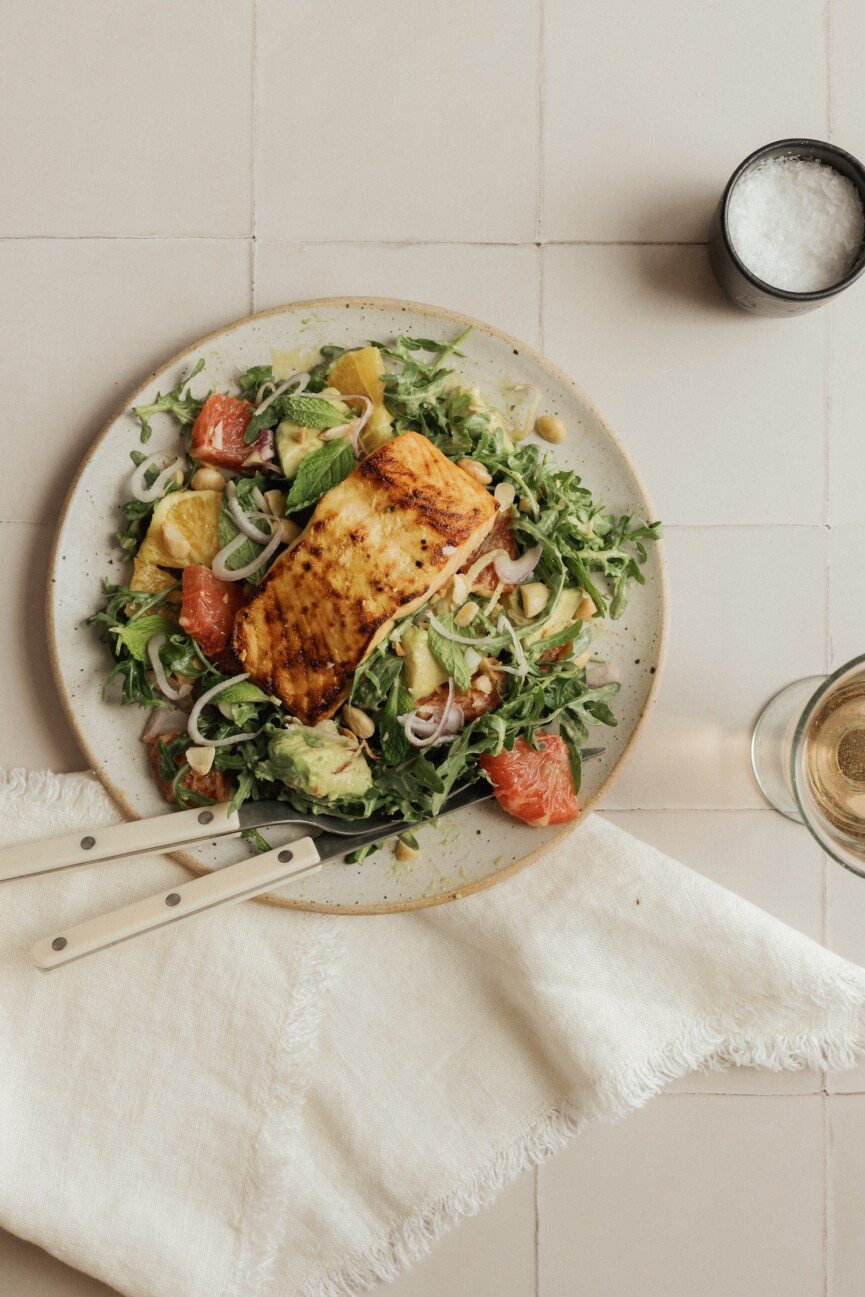
One of the most nutrient-dense foods for hair health. Salmon provides protein, omega-3 fatty acids, B vitamins, and vitamin D in a single serving. The omega-3s reduce inflammation around hair follicles and support scalp hydration, while the protein provides the building blocks for keratin. Try it grilled with a stone fruit salsa or in chimichurri fish tacos.
3. Spinach
Leafy greens are some of the best foods for hair growth, and spinach leads the pack. It’s rich in iron, folate, and vitamins A and C, all of which support scalp health and oxygen delivery to hair follicles. Vitamin A specifically helps with sebum production, keeping hair moisturized from the root. Toss a handful into a smoothie or build a dinner salad around it.
4. Sweet Potatoes
Loaded with beta-carotene, which your body converts to vitamin A. They’re also a source of biotin, vitamin C, and prebiotic fiber that supports gut health, and emerging research suggests a healthy microbiome plays a role in nutrient absorption for hair growth. Roast them as a side, add them to grain bowls, or use them as a base for sheet pan dinners.
5. Greek Yogurt
High in protein, rich in B5 (pantothenic acid), and a good source of zinc. B5 has been studied for its role in supporting blood flow to the scalp, and zinc supports the oil glands around hair follicles. Add chia seeds and ground flax to a bowl for an omega-3 boost. These Greek yogurt recipes are an easy starting point!
6. Lentils
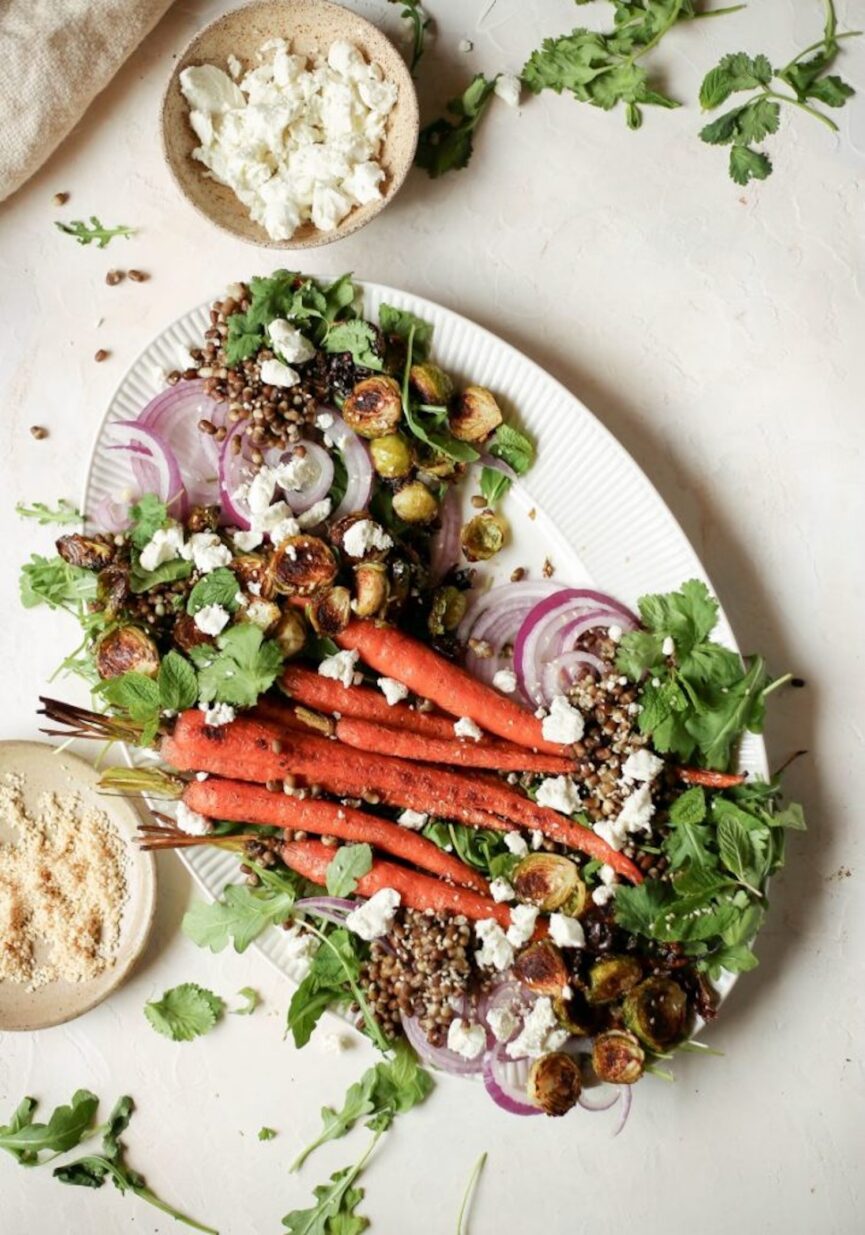
A powerhouse for plant-based eaters. Lentils are rich in iron, zinc, biotin, and protein, covering most of the key hair growth nutrients in a single food. They’re also high in fiber, which supports blood sugar stability that indirectly benefits hair health (chronic blood sugar spikes can contribute to inflammation, which affects follicles). Add them to soups, salads, or grain bowls.
7. Avocado
Rich in vitamin E and healthy monounsaturated fats, avocados nourish hair follicles and support scalp health. Vitamin E is an antioxidant that helps protect the scalp from oxidative stress and damage. The healthy fats also support the absorption of fat-soluble vitamins (A, D, E, K) that are essential for hair growth. Try them in an avocado caprese salad or sliced onto toast with an egg.
8. Bell Peppers
One of the highest food sources of vitamin C, which is essential for collagen production and iron absorption. A single red bell pepper contains more than double the daily recommended intake of vitamin C. They’re also a good source of vitamin A. Throw them into sheet pan chicken fajitas for an easy weeknight meal that checks multiple hair-health boxes.
9. Berries
Blueberries, strawberries, and raspberries are loaded with antioxidants and vitamin C. The antioxidants protect hair follicles from free radical damage, and the vitamin C supports collagen production and helps your body absorb iron from plant-based sources (so pair berries with your spinach salad for maximum benefit). Blend them into a protein smoothie or eat them alongside Greek yogurt.
10. Bone Broth
Bone broth (ideally from pasture-raised, grass-fed animals) is rich in collagen, amino acids, and gelatin, which support hair elasticity and strength. The amino acids in bone broth, particularly glycine and proline, are building blocks for connective tissue and help strengthen hair from the inside. Sip it on its own or use it as a base for soups and grain bowls.
11. Seaweed
An excellent source of iodine, which supports thyroid function. This matters because an underactive thyroid is one of the more common hormonal causes of hair thinning in women. Seaweed also provides zinc, iron, and omega-3s. Add nori to sushi bowls, toss dulse flakes into soups, or snack on roasted seaweed sheets.
12. Nuts and Seeds
Walnuts, almonds, sunflower seeds, and pumpkin seeds deliver zinc, omega-3s, vitamin E, and selenium. Selenium helps your body produce selenoproteins, which play a role in hair follicle development. Pumpkin seeds are particularly rich in zinc and iron. Keep a jar of mixed nuts on your counter and snack on them daily, or sprinkle seeds on salads, yogurt bowls, and oatmeal.

What About Supplements?
I get asked about hair supplements constantly, so here’s my honest take: if you’re eating a balanced diet that includes the foods above, you’re likely already getting what your hair needs. Supplementing on top of that won’t accelerate growth. Where supplements can help is if you have a confirmed deficiency—iron, vitamin D, and zinc are the most common culprits in women with hair loss—or if you’re in a life stage where your needs are elevated, like pregnancy, postpartum, or perimenopause.
Why I Recommend Getting Bloodwork
Before buying a hair growth supplement, get your bloodwork done. I use Function Health for comprehensive panels, but any provider can test for iron, ferritin, vitamin D, zinc, and thyroid function. Once you know where your gaps actually are, you can supplement with precision instead of guessing. A few things worth keeping in mind: most supplements take 3–6 months to show results in your hair (hair grows slowly — that’s normal). Be cautious with high-dose biotin supplements, since they can interfere with lab test results. And always check the ingredient list for unnecessary fillers.
At the end of the day, the most impactful thing you can do for your hair isn’t a supplement or a serum. It’s eating enough food, prioritizing protein, managing stress, and supporting your hormones. Your hair is a reflection of your overall health — when the foundation is strong, the rest tends to follow.


This story originally appeared on Camille Styles


