


August 12, 2026
Potted Tropicals Around My Farm
I love large urns filled with lush tropical plants.
I have a large and ever-growing collection of tropical plants. During the colder months, they are carefully stored and maintained in special greenhouses. When the warm weather arrives, the plants are brought outdoors – some make the journey to my home in Maine, while others are placed in various locations here at Cantitoe Corners. Displaying potted plants outside this time of year not only adds visual interest to a space, but also boosts plant growth – providing them with more natural light, humidity, and fresh air.
Here are some photos, enjoy.
-
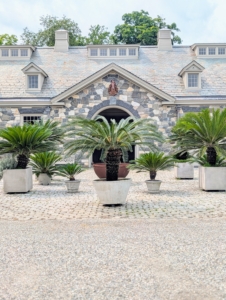
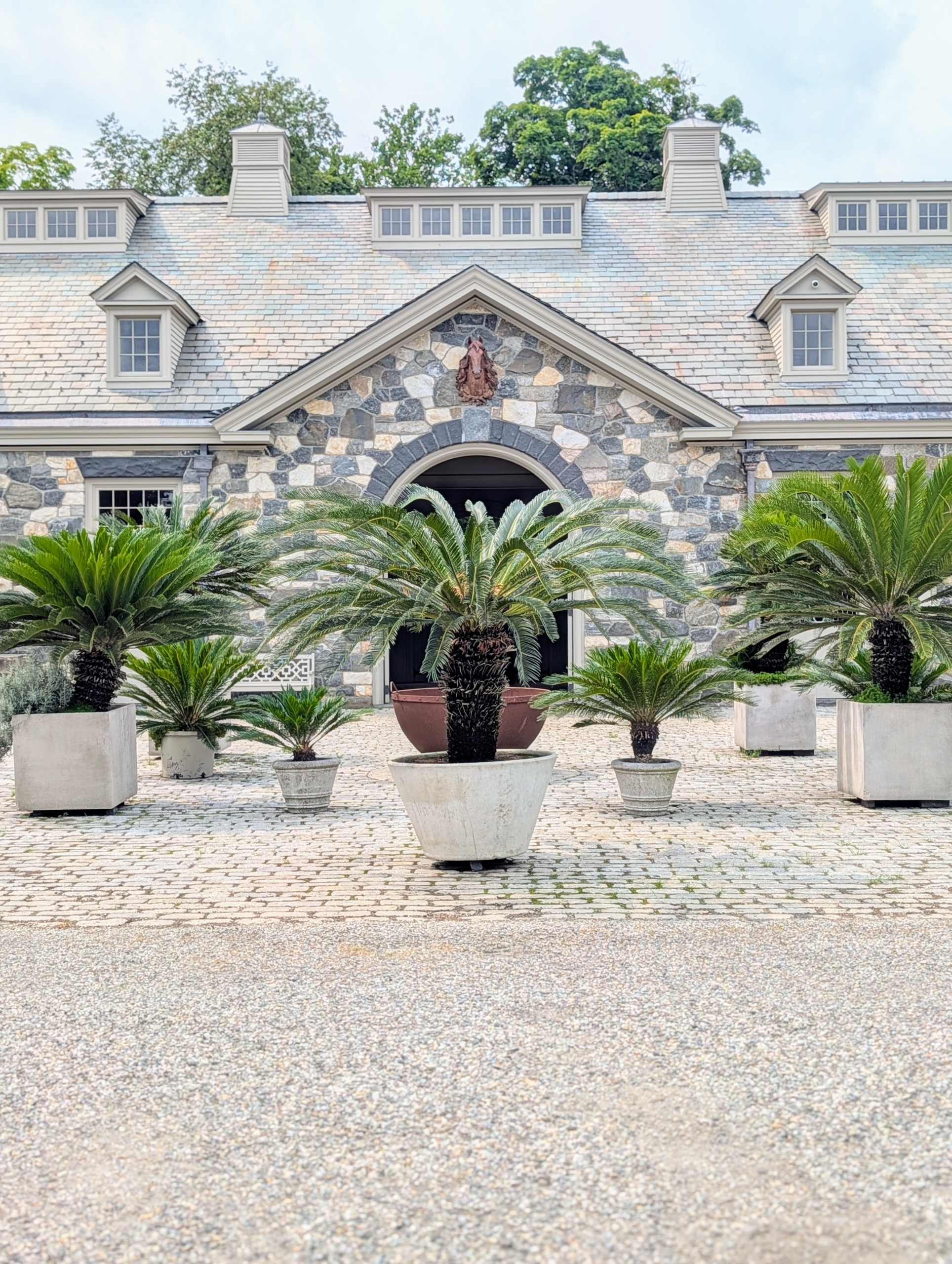
- Once spring weather is consistently warm, all my tropical plants come outdoors. This is one of my favorites – the sago palm, Cycas revoluta. It is a popular houseplant known for its feathery foliage and ease of care. Here they are in my stable courtyard. They’re always arranged with enough distance between them so none of them touch.
-
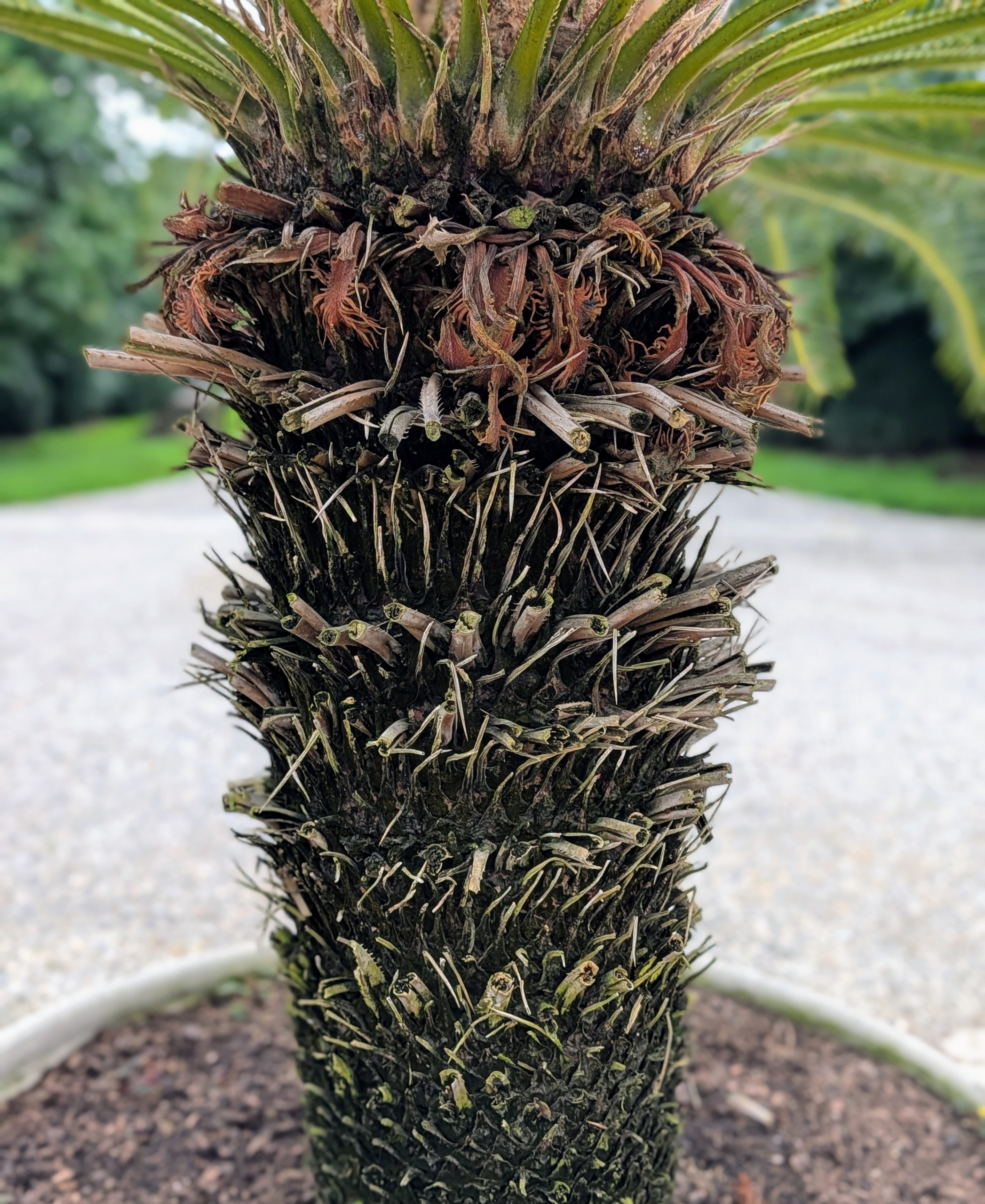
- Below the foliage of the sago palm is the bare section of trunk where leaves were once cut. The rough trunk becomes leafless as it ages.
-
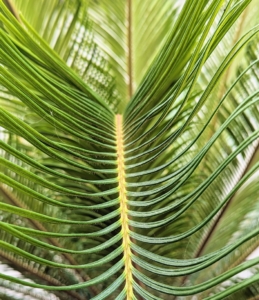
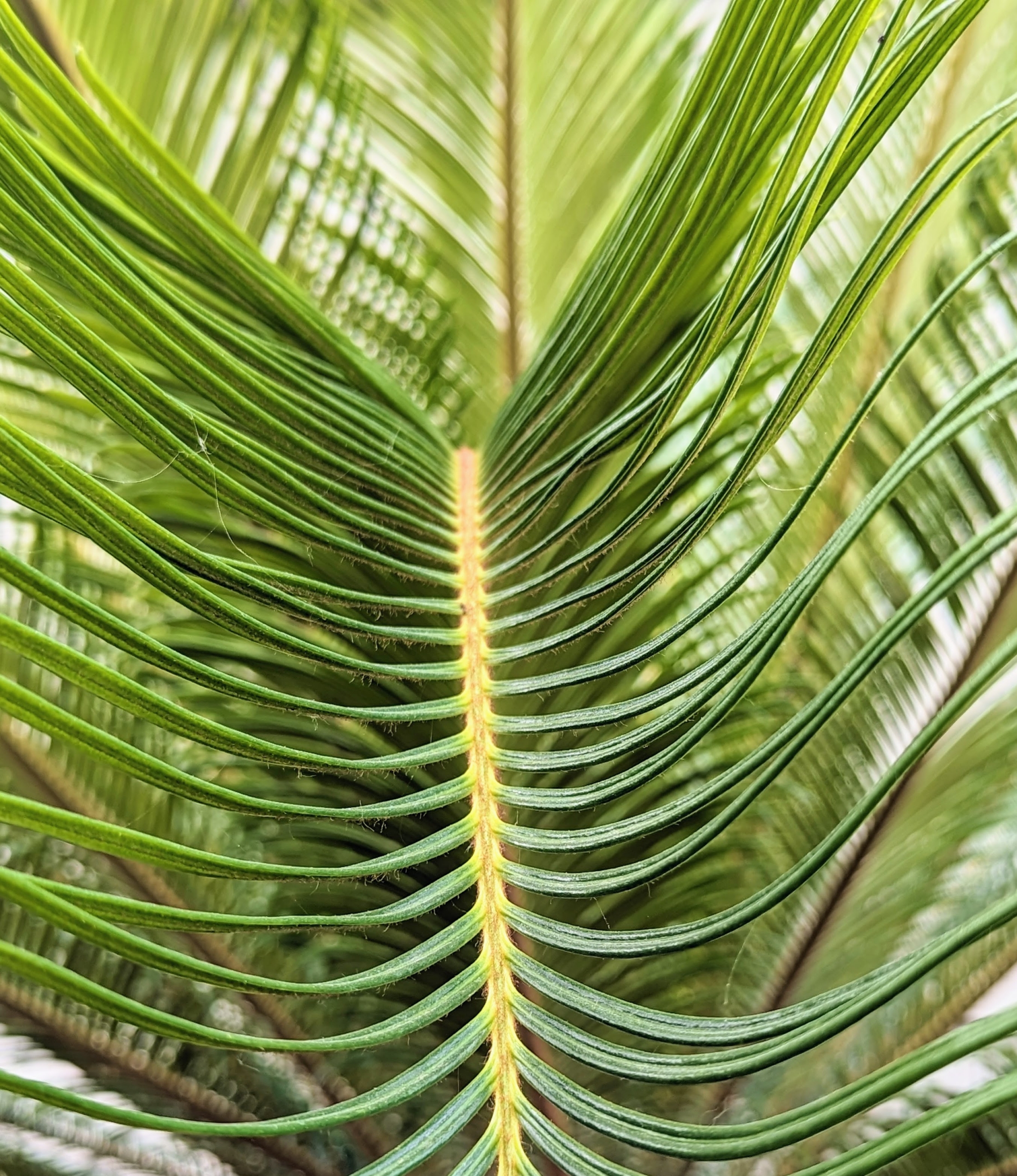
- Sago palm fronds are stiff, deep green, and feather‑like, growing symmetrically from the top of the plant.
-
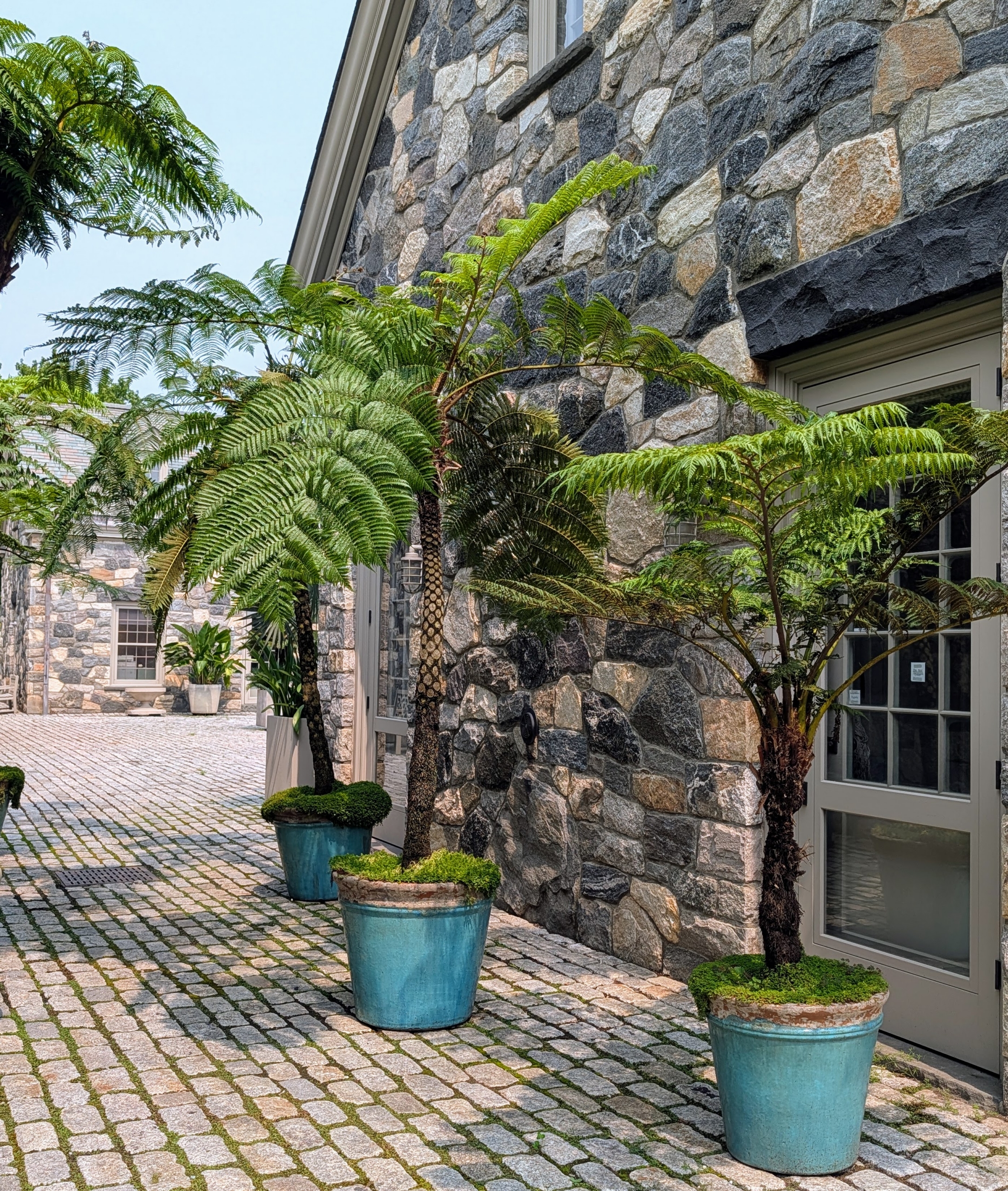
- In another area of the stable courtyard are my potted Australian tree ferns with their lacy feathery fronds and scale-covered trunks.
-
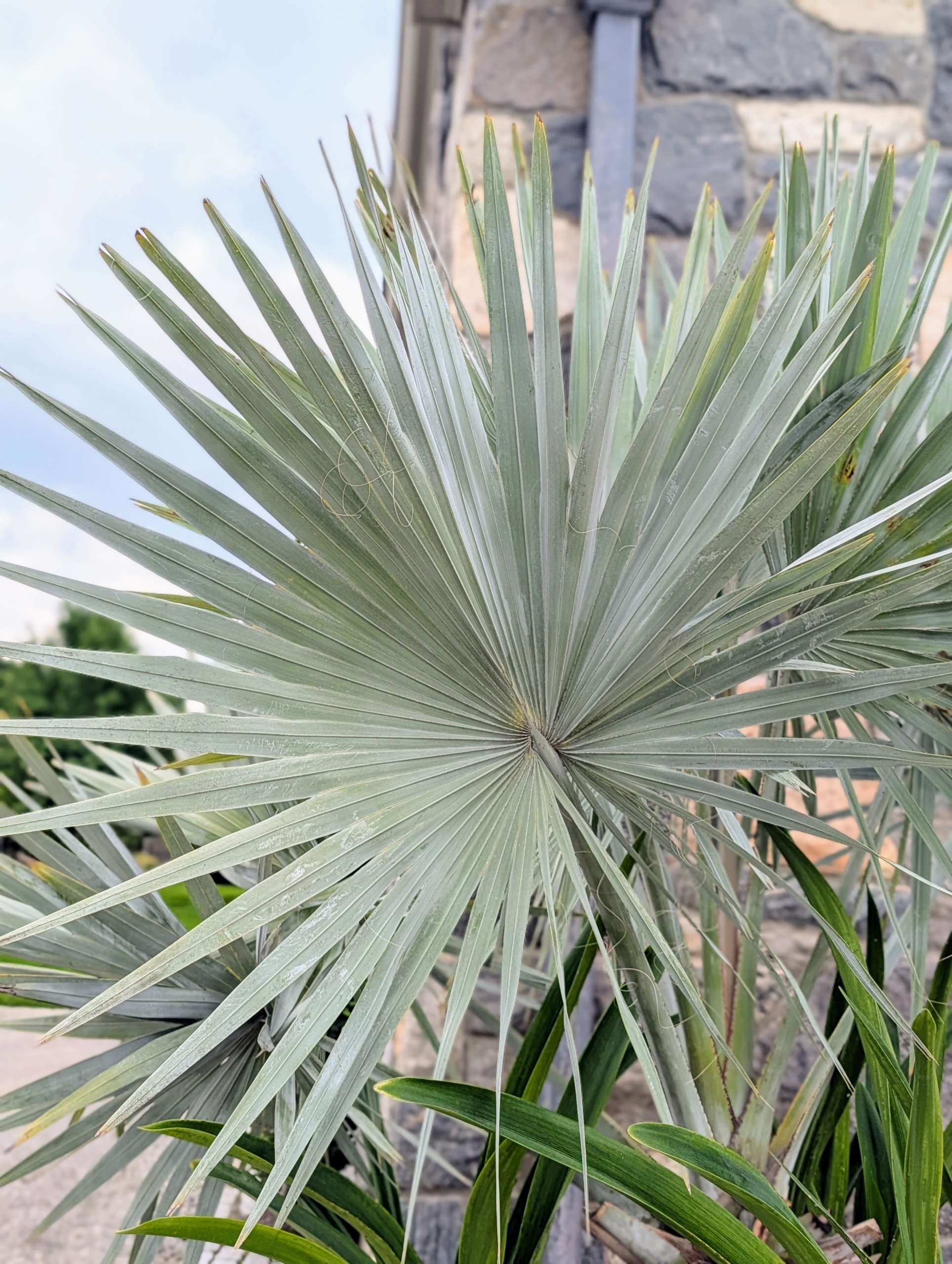
- Grown for its striking foliage color and texture is the Bismarckia nobilis, or Bismarck Palm. This evergreen palm has broad, rounded, stiff, intensely steel-blue, fan-shaped fronds that can grow to four feet long and wide.
-
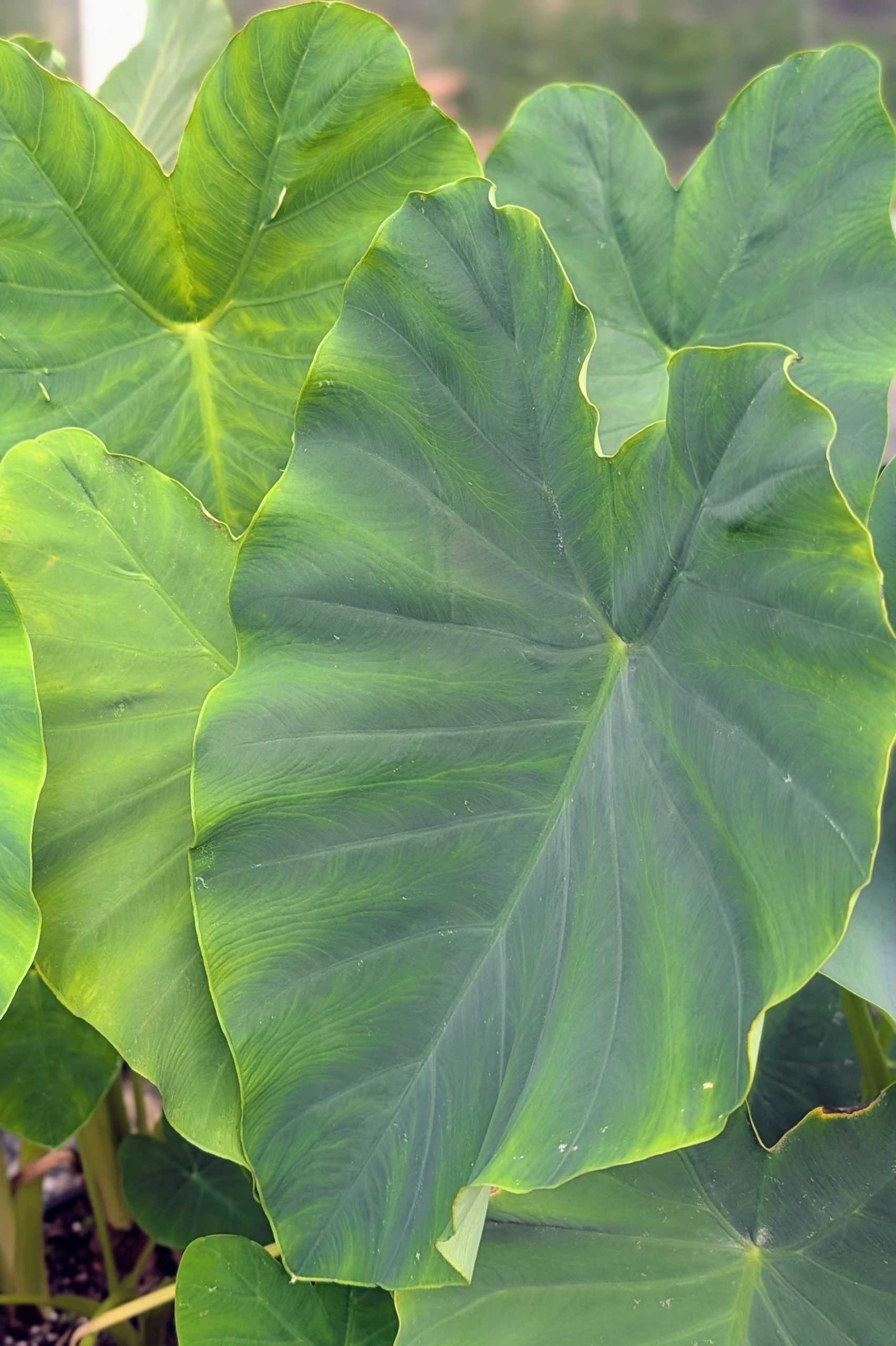
- Here are the large leaves of a green colocasia. In contrast to Alocasia, the leaf tip of colocasia points downwards.
-
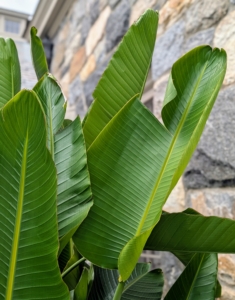
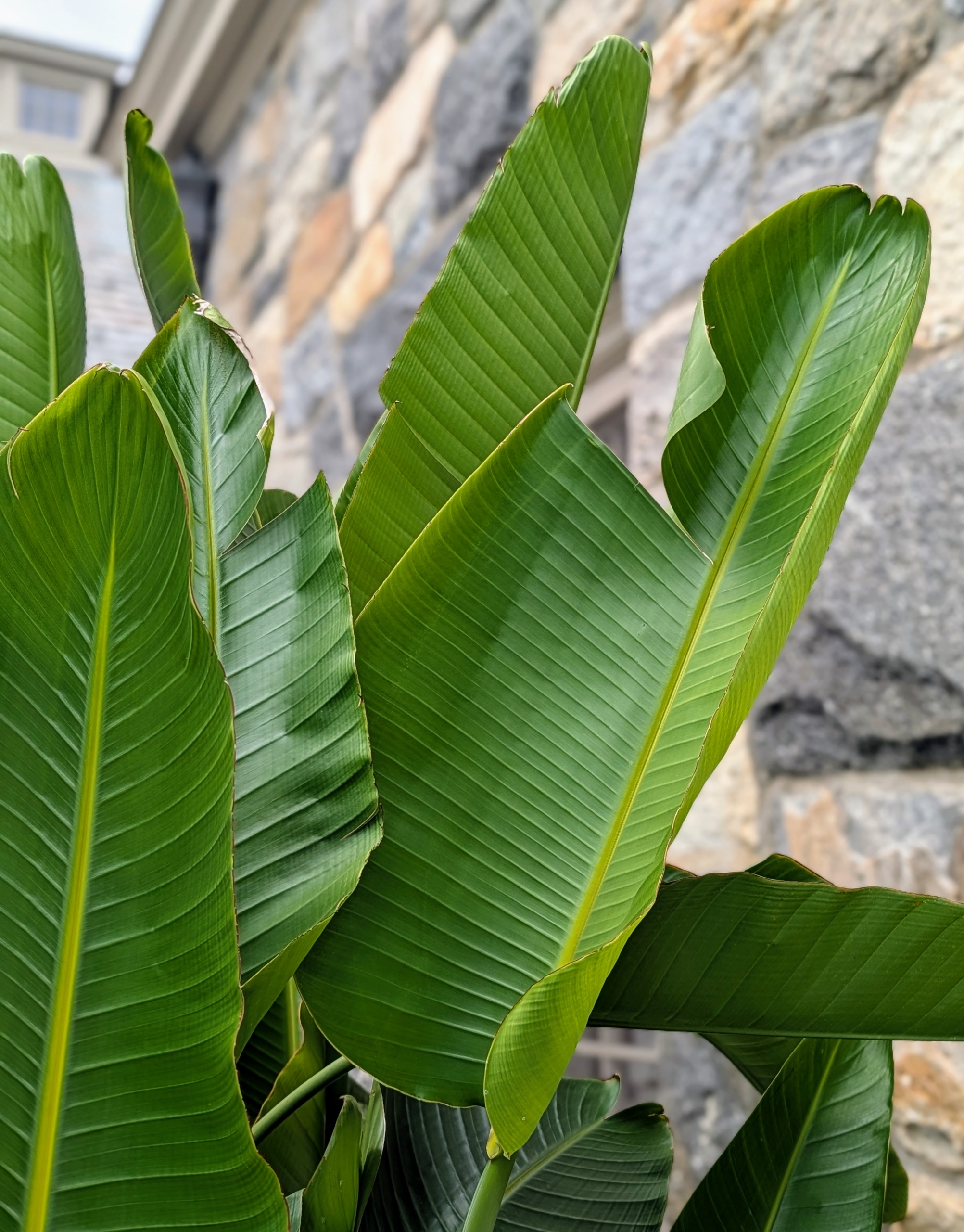
- Another plant in my tropical collection is Bird of Paradise, Strelitzia nicolai – a species of evergreen tropical herbaceous plant with gray-green leaves that grow up to 18-inches long. The leaves are paddle shaped and split naturally to allow wind to pass through the foliage without uprooting the plant or damaging its roots.
-
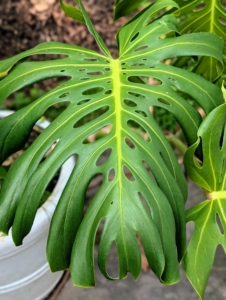
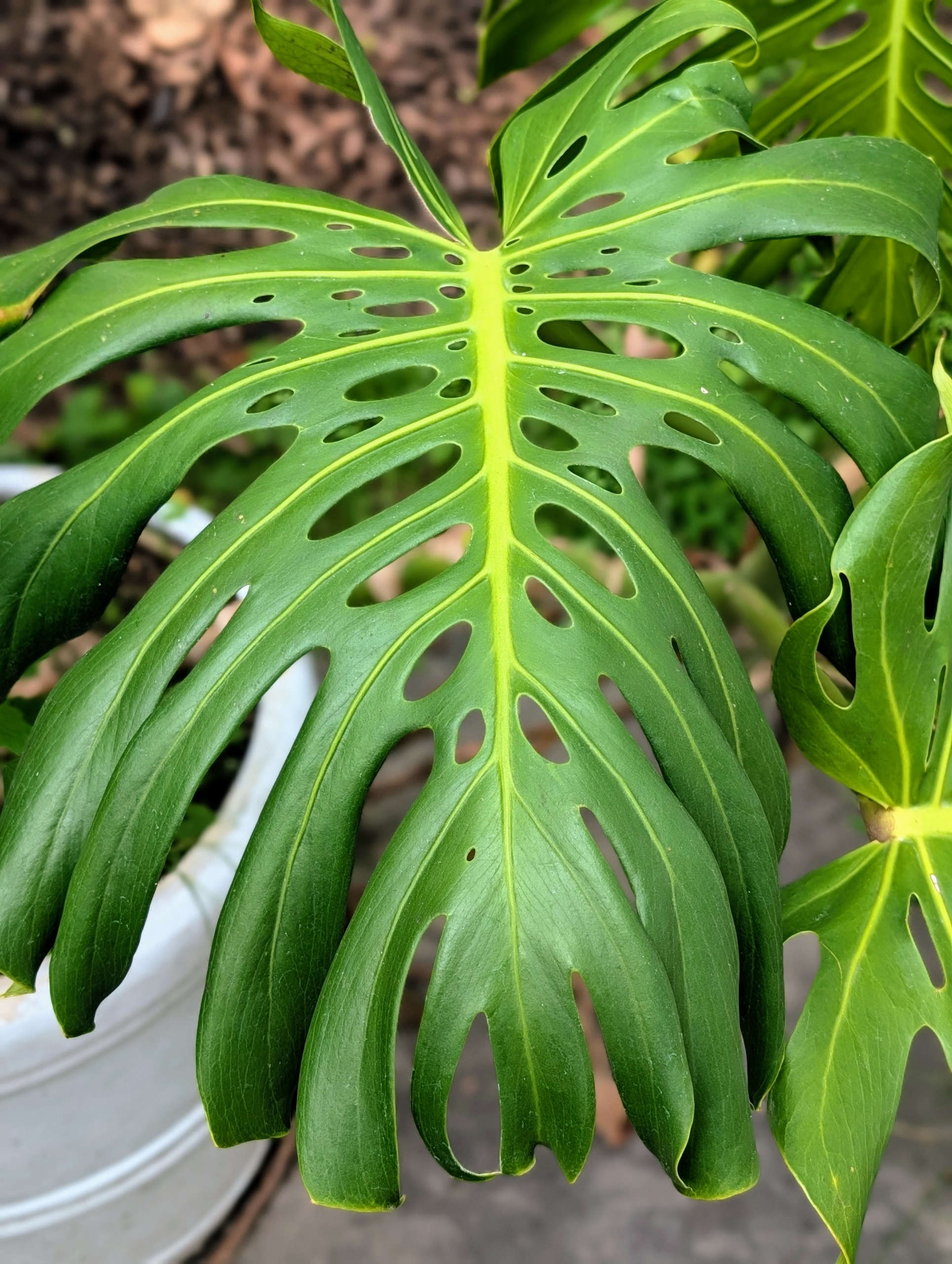
- Monstera is recognized by its large, glossy green leaves with natural splits and holes — a look that often gives it the name “Swiss Cheese Plant.”
-
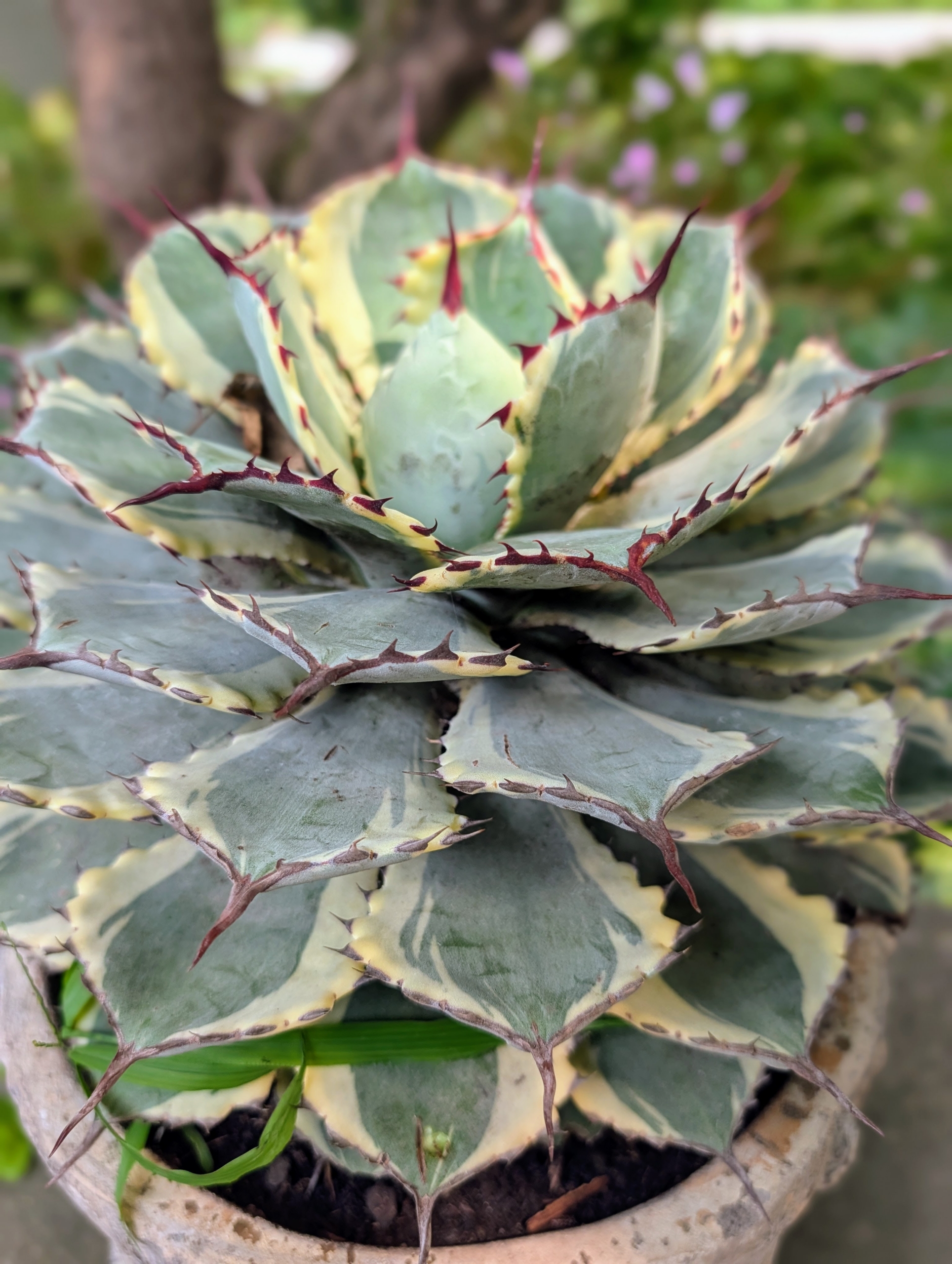
- I also bring out many of my agaves and depending on their size, display them on stone ledges around my home.
-
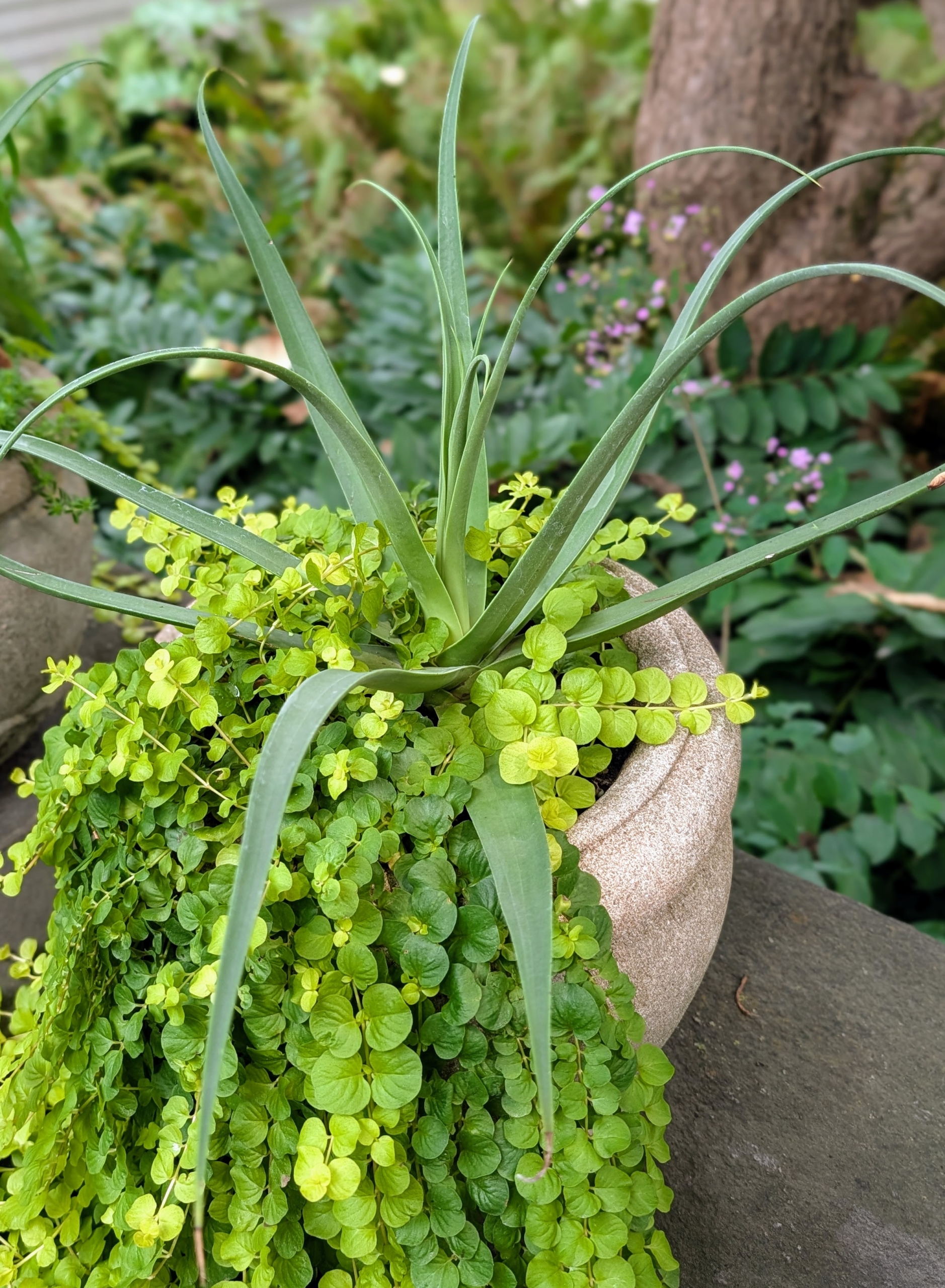
- This potted succulent outside my carport is underplanted with Lysimachia, a low and fast growing ground cover that spreads and flows nicely over the pot edges.
-
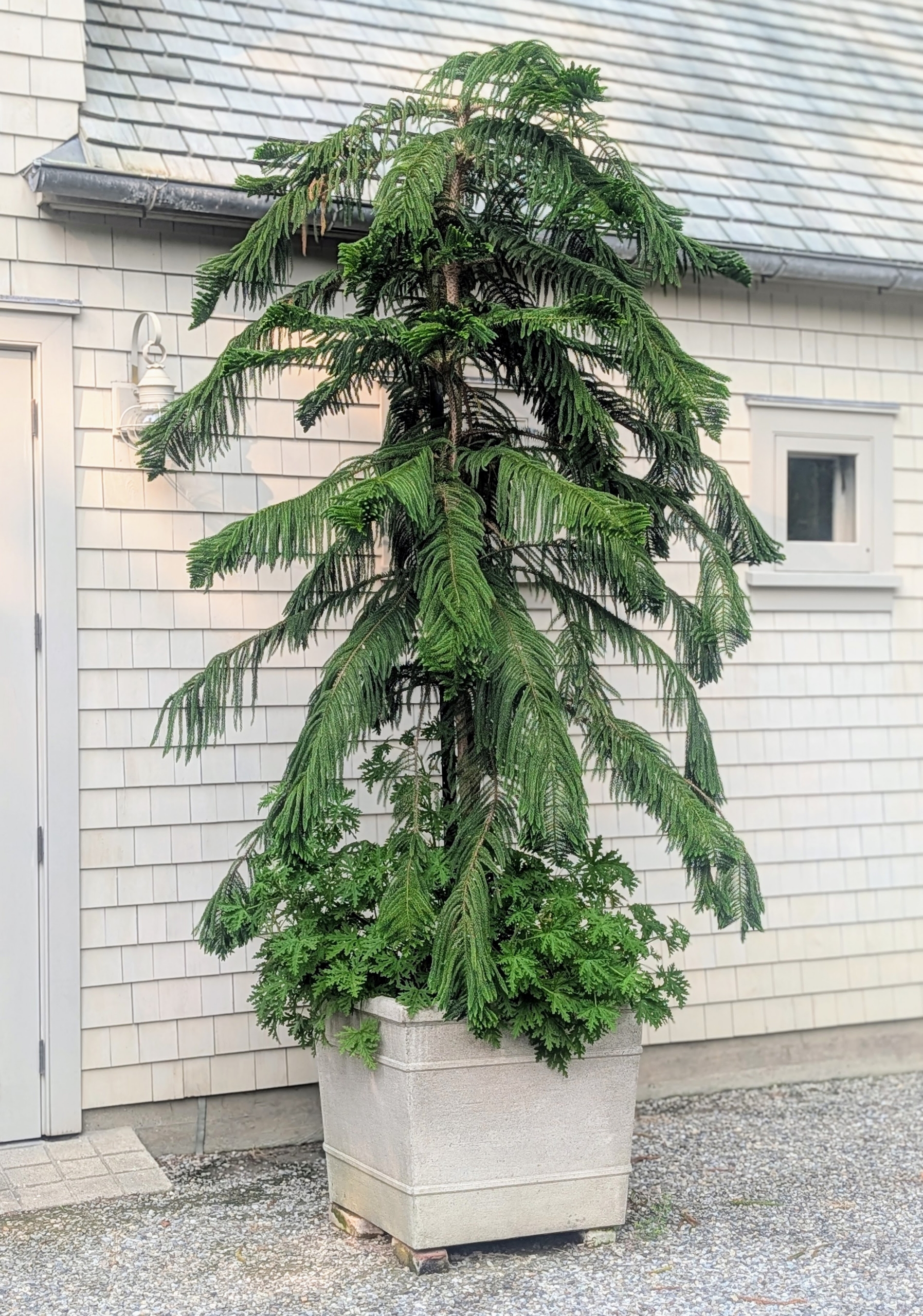
- I have several Norfolk Island Pine trees displayed around the farm. These are large, evergreen conifers with a symmetrical, pyramidal shape, straight trunks, and tiered branches arranged in whorls, with bright green soft, needle-like foliage. Mine are in excellent condition, but these trees cannot thrive in cold weather below 50 degrees Fahrenheit, so they are stored indoors in winter.
-
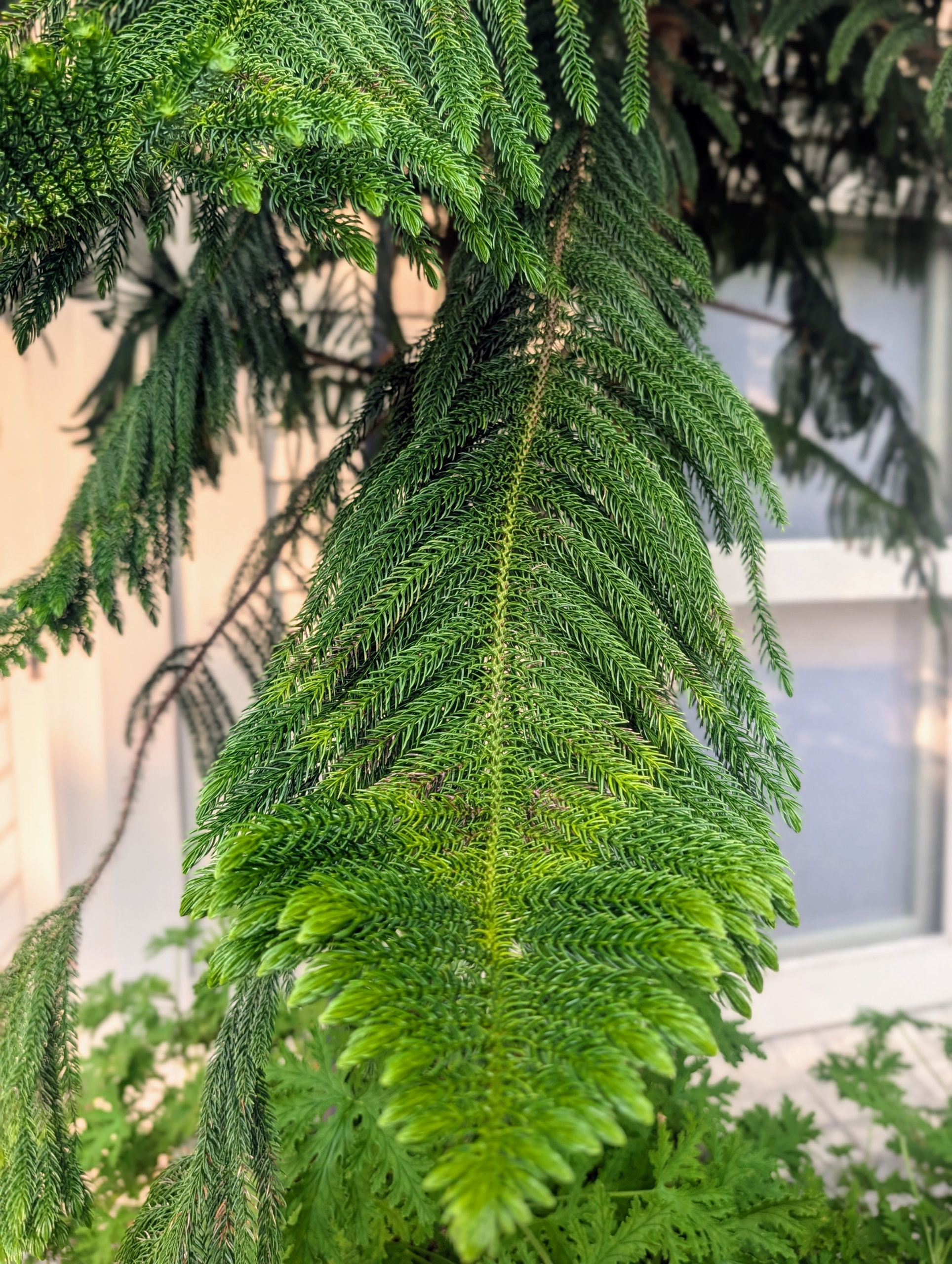
- Norfolk pine fronds are soft, dark green, awl‑shaped leaves arranged in a tight, overlapping spiral that gives them a feathery, textured appearance.
-
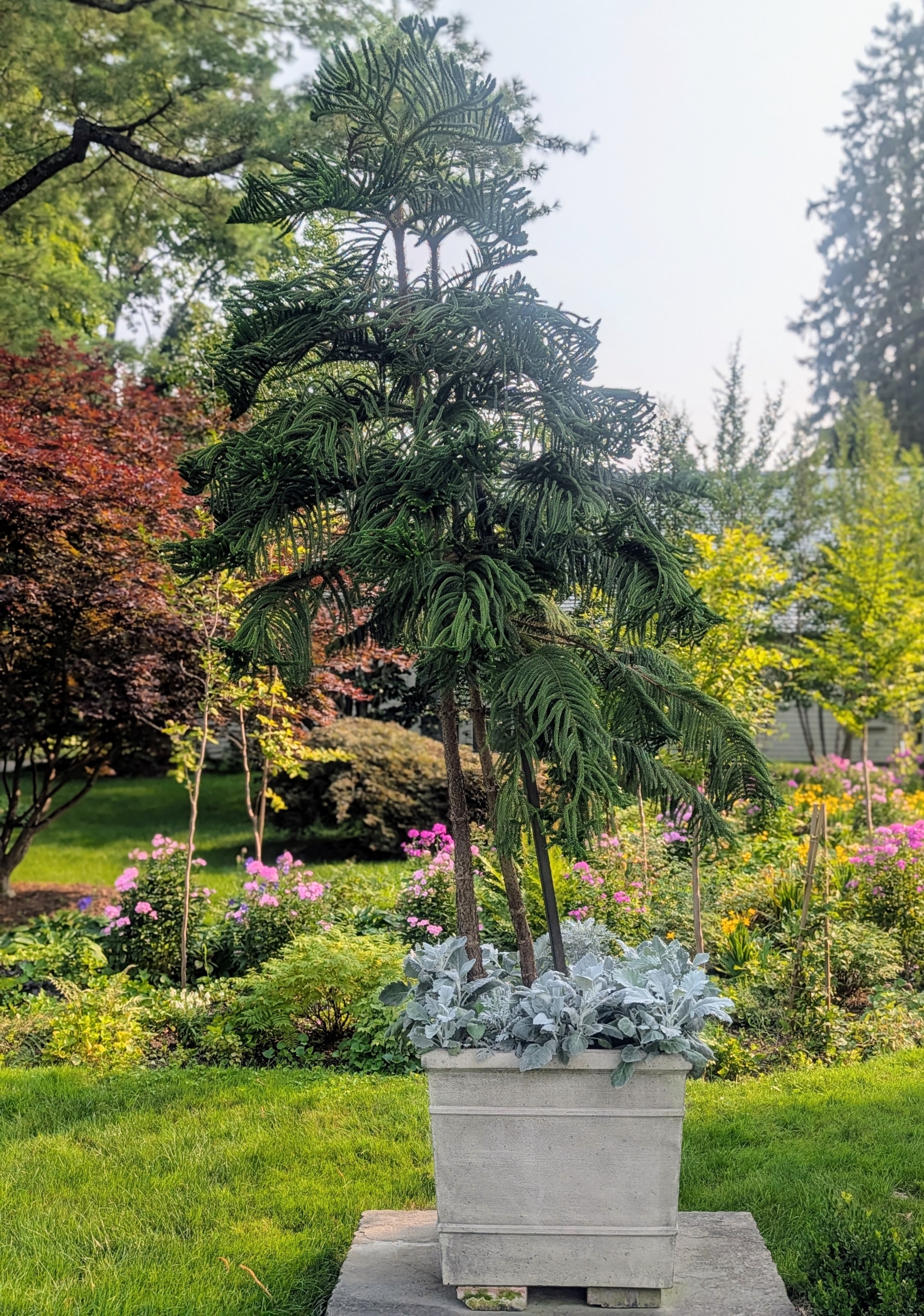
- Here is another Norfolk Island Pine tree displayed beside the carriage road leading to my home. It is underplanted with Dusty Miller, an ornamental plant known for its silvery, woolly foliage.
-
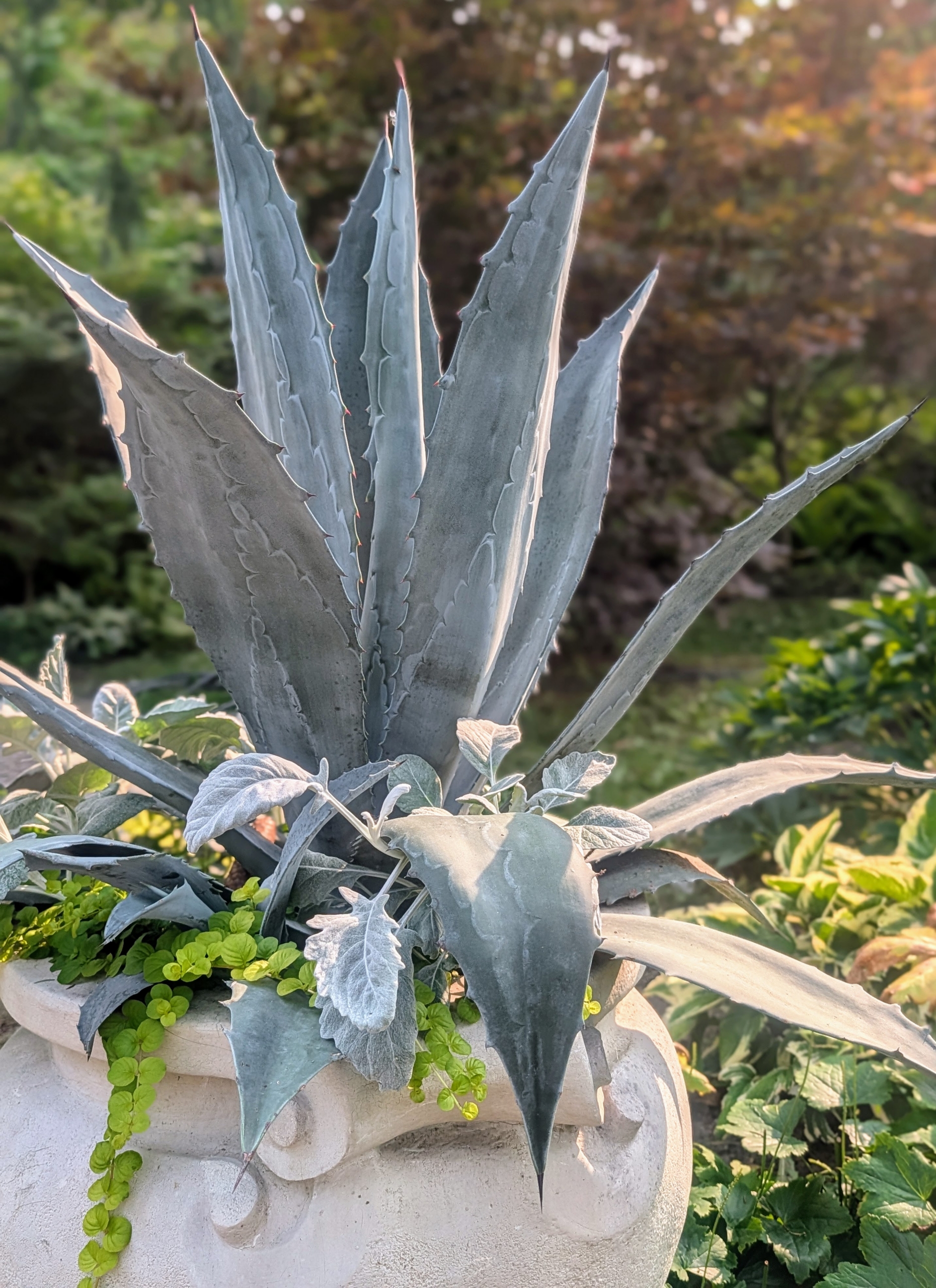
- Here is a blue agave with its long, narrow, fleshy silvery-blue leaves. Do you know… tequila is distilled from the sap of blue agave?
-
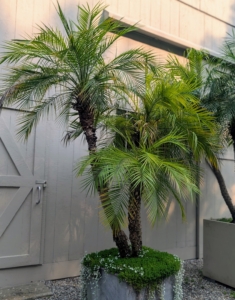
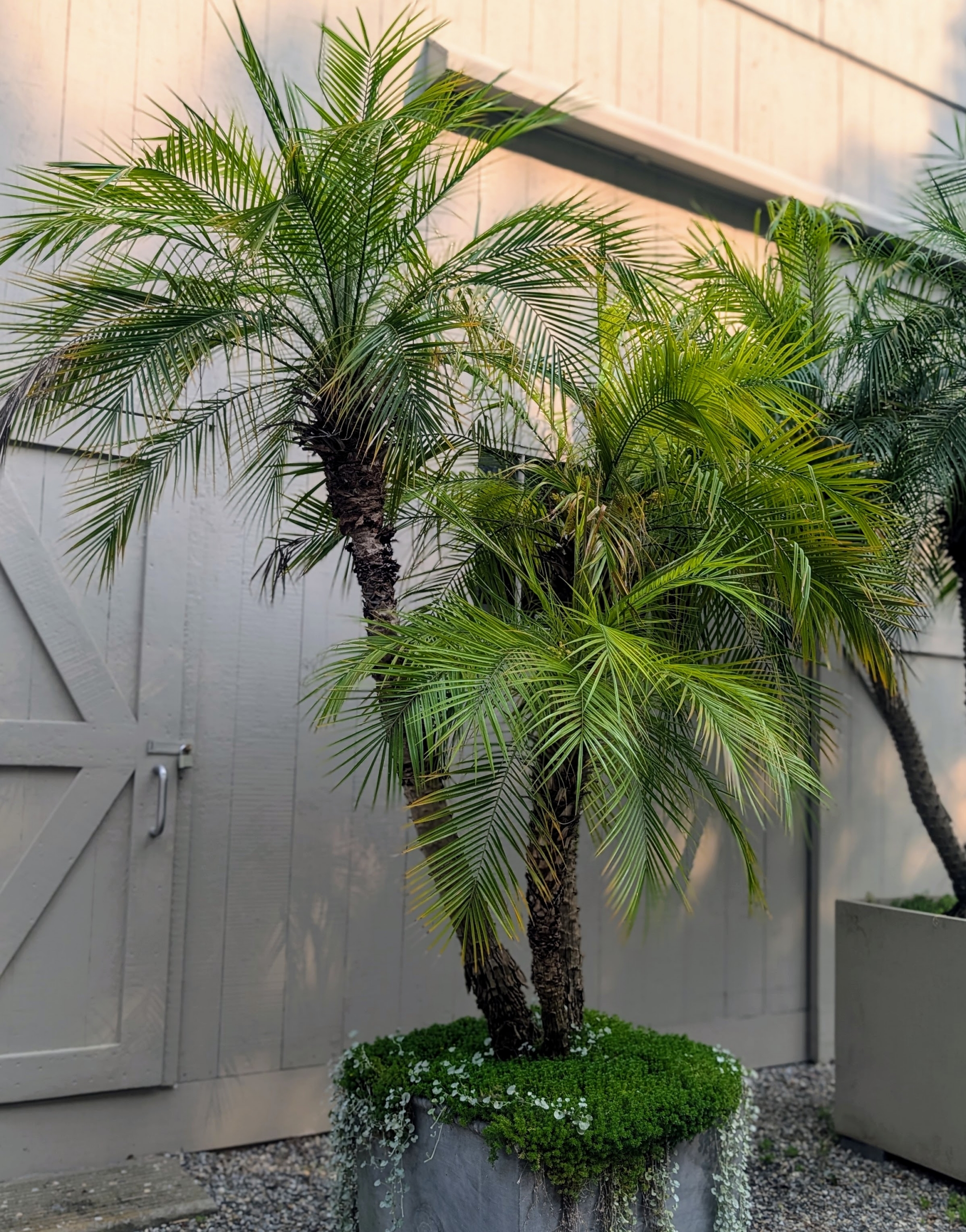
- In front of my Hay Barn are potted Phoenix roebelenii, the Pygmy Date Palm. This is a dwarf evergreen palm tree with a slender trunk topped with a crown of fine-textured, arching green fronds.
-
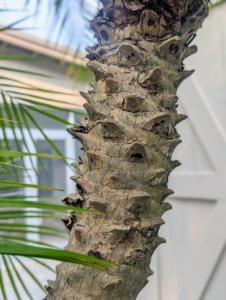
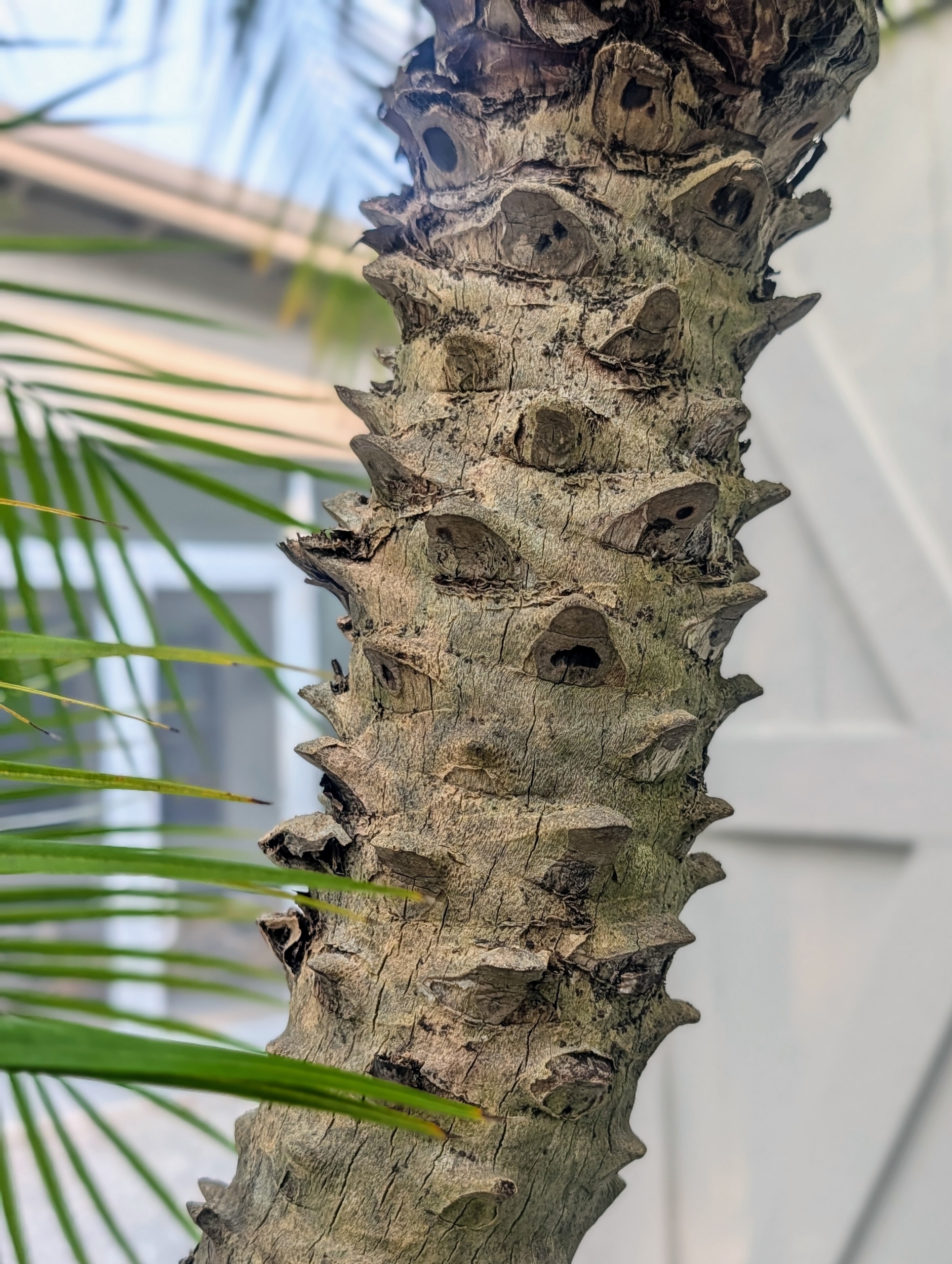
- What makes the Pygmy Date Palm so attractive are the brown, textured trunks. These trunks can grow straight or crooked, depending on how the palm is placed as they tend to curve toward the light.
-
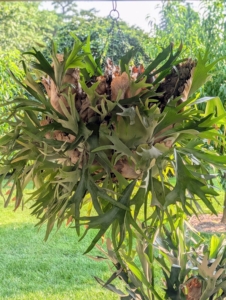
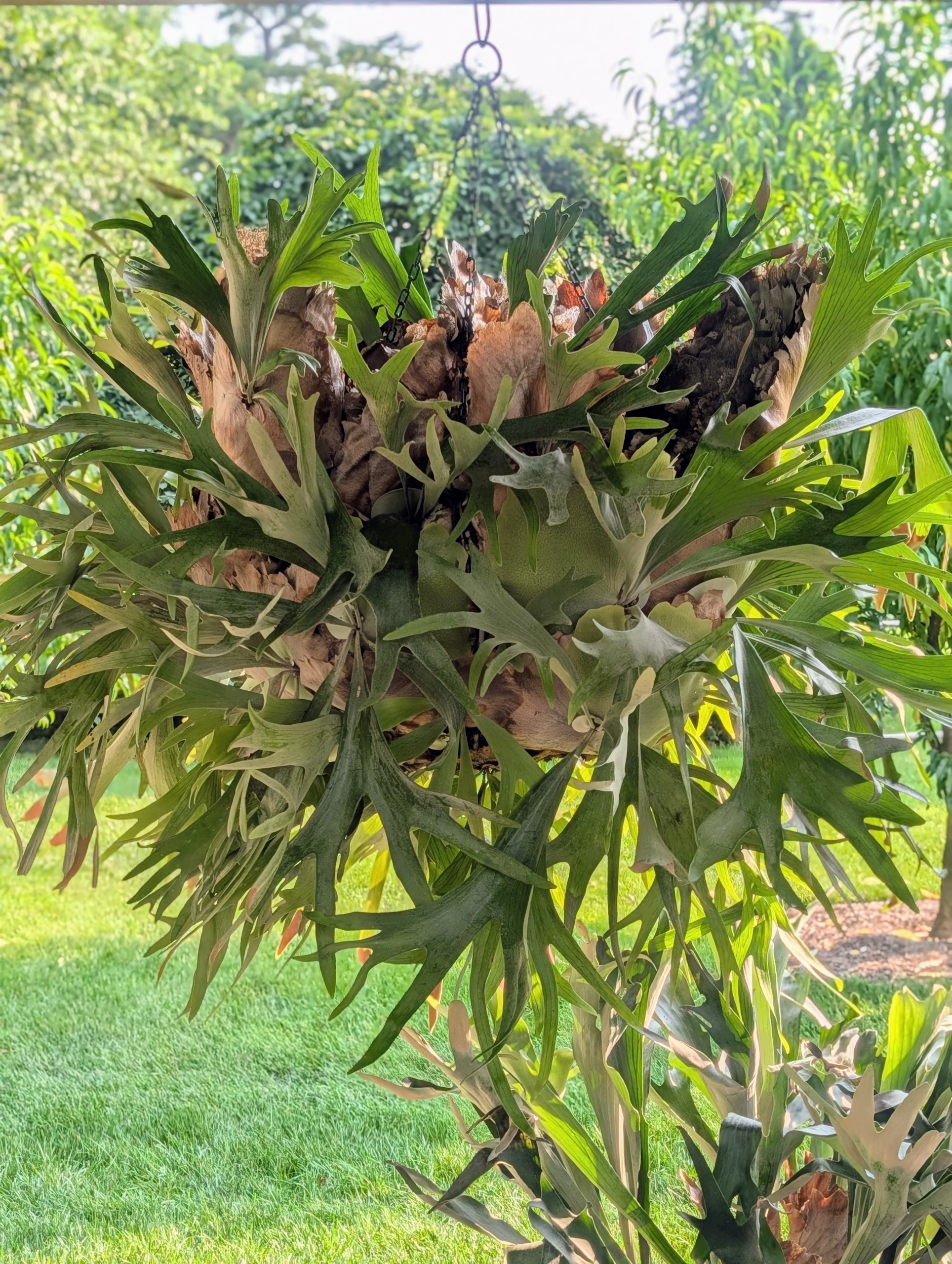
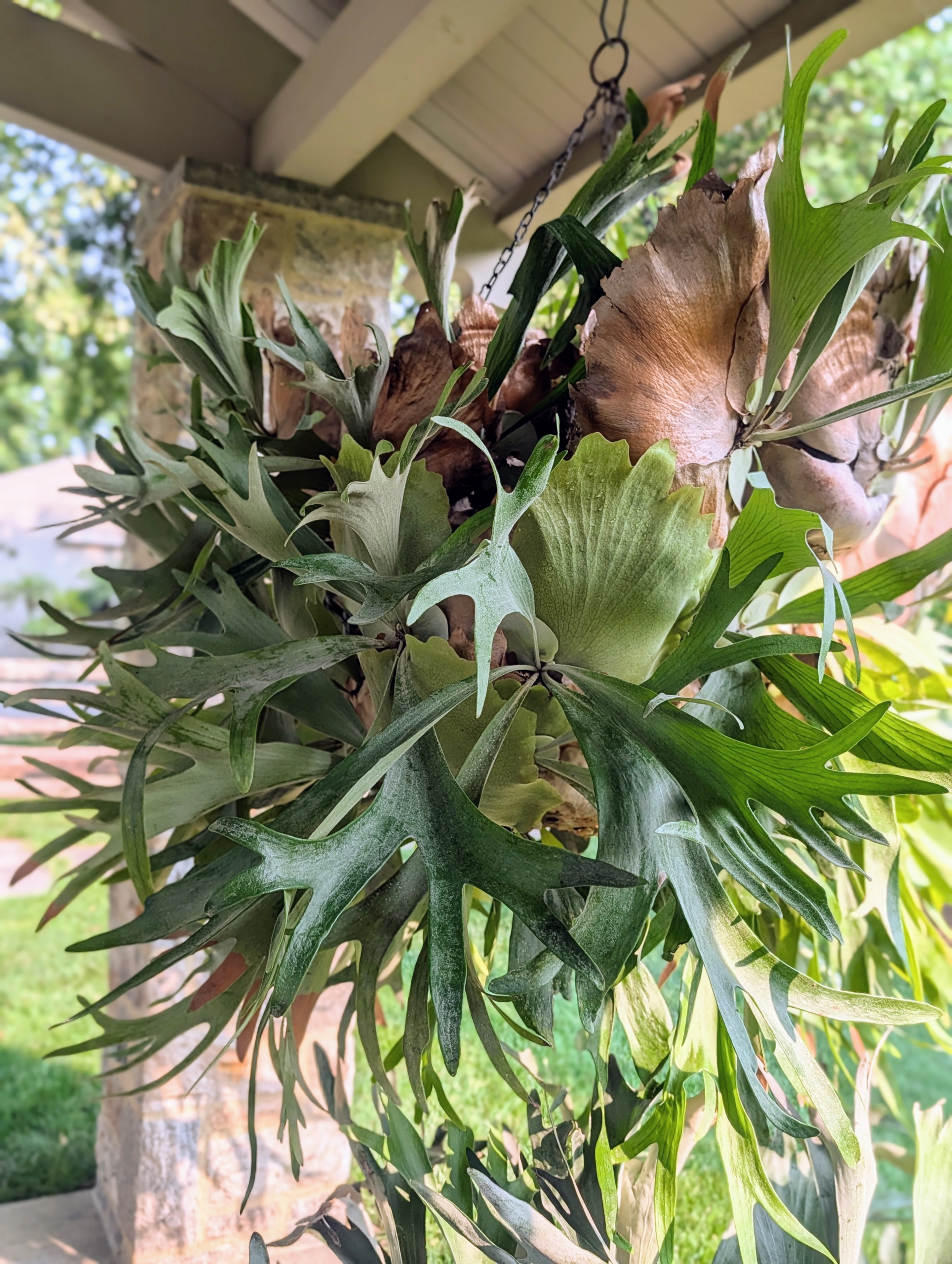
- And under my pool pavilion this time of year – several very large staghorn ferns. The staghorn fern is an unusual and attractive epiphyte that thrives in the tropics. I adore staghorns and over the years have collected quite a few of these magnificent specimens.
-
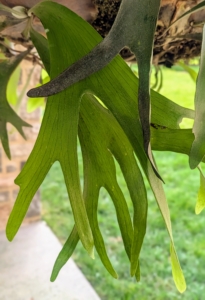
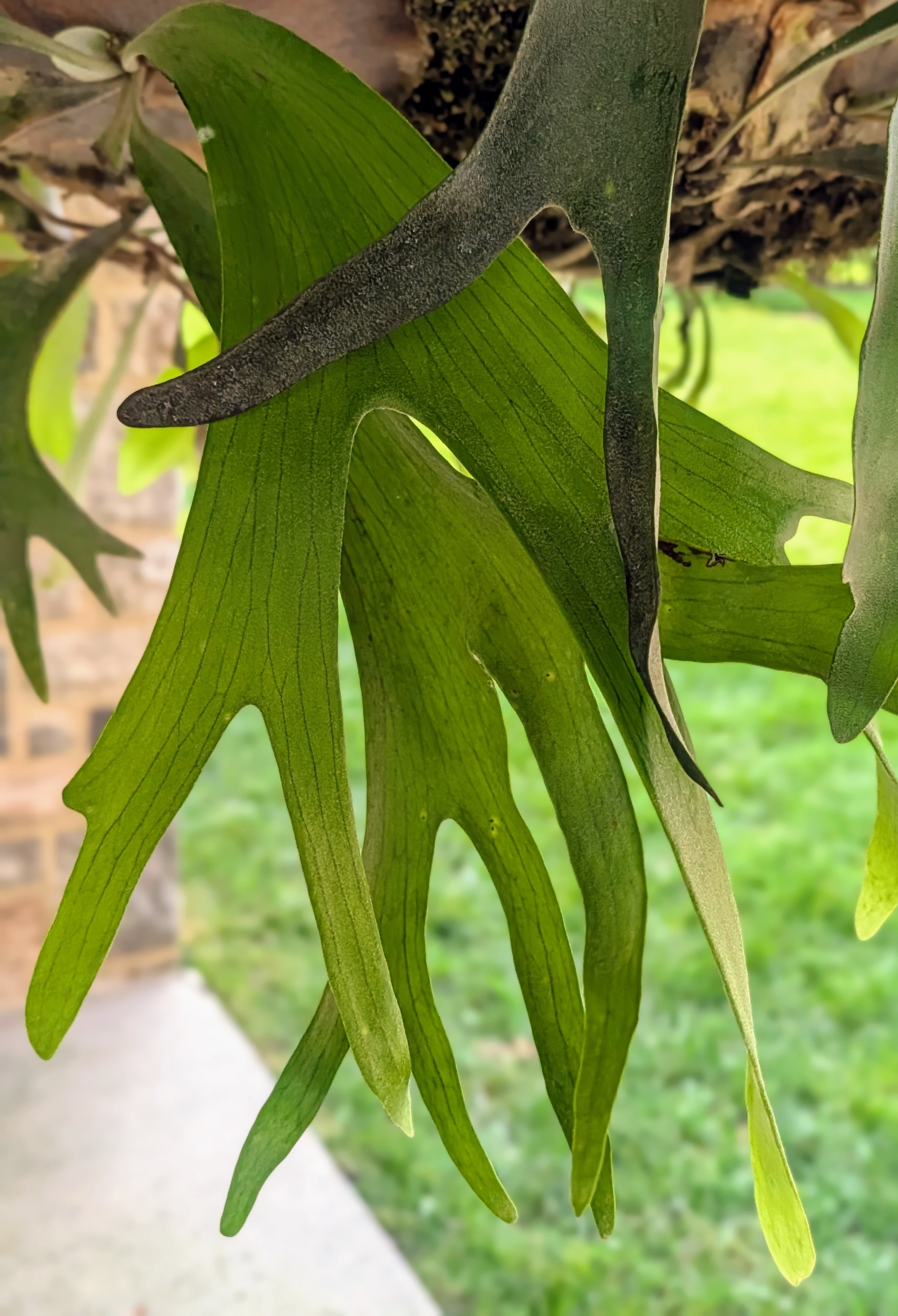
- Staghorn ferns get their name from the distinctive shape of their fertile fronds, which closely resemble the forked antlers of a male deer or elk.
-
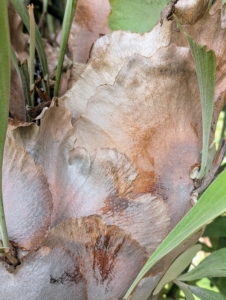
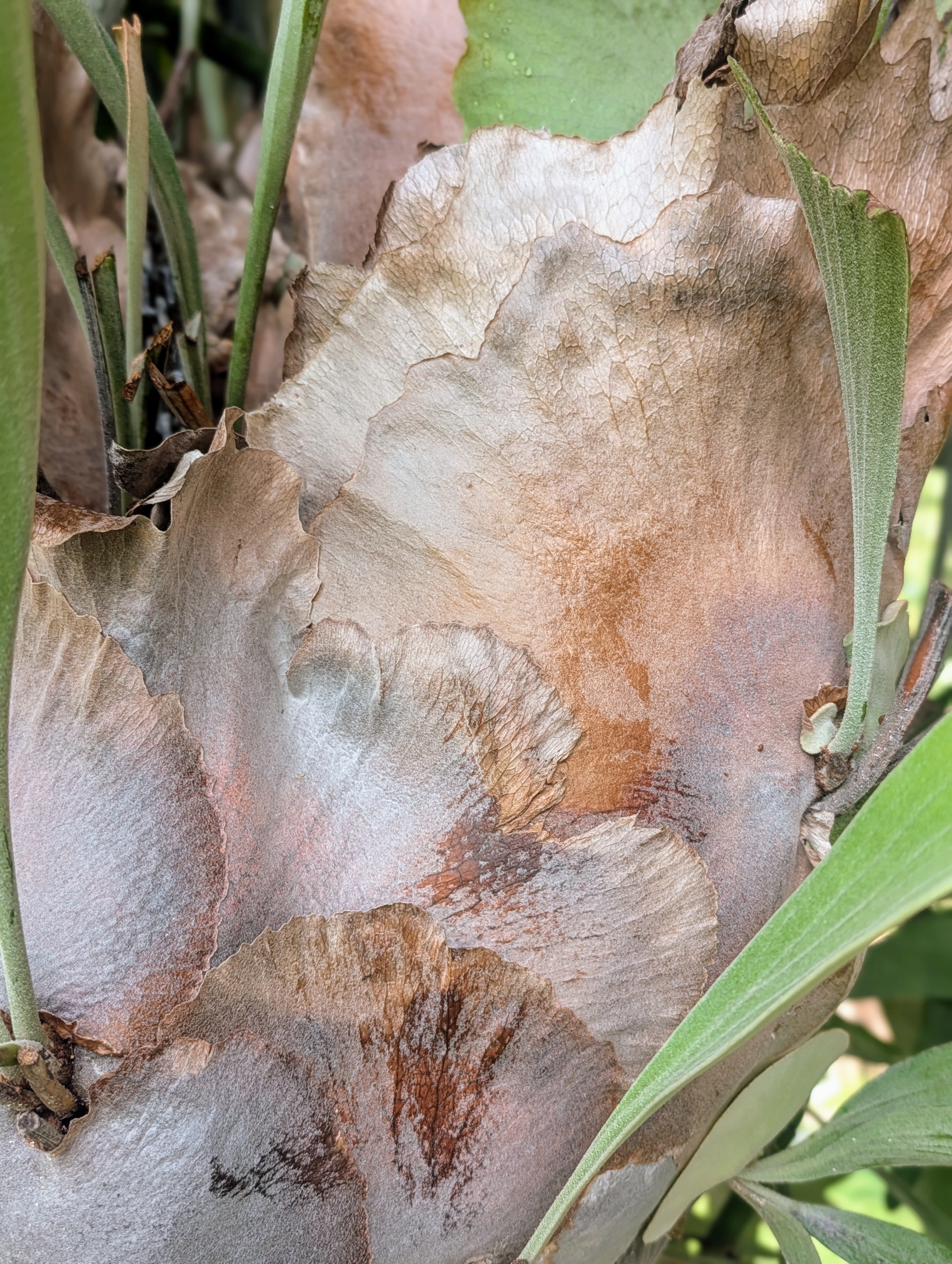
- The plant has basal or shield fronds which are broad and wrap around the plant’s roots to protect them and collect organic matter.
-
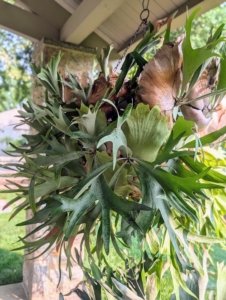
- Staghorn ferns are low‑maintenance once established. These plants thrive in bright, indirect light, and benefits from high humidity – they love it here under my pavilion.
This story originally appeared on Martha Stewart Blog

