


Ridley Scott has proven himself a visionary filmmaker, tackling grandiose topics across every genre. From the charged drama of Napoleon to the pulse-pounding action of Black Hawk Down and the mind-bending sci-fi of Prometheus and The Martian, Scott never shies away from bold ideas. He invites audiences into worlds where unforgettable characters and powerful emotions take center stage, always pushing the boundaries of cinematic storytelling.
One of Scott’s most impressively layered masterpieces is 1982’s Blade Runner. Harrison Ford brings Rick Deckard to life, a Blade Runner tasked with hunting down artificial beings called replicants. The film helped define the cyberpunk aesthetic, offering stunning visuals that juxtapose high-tech advancements with a gritty, decaying urban landscape. Through Blade Runner, Scott explores corporate control, the fragility of life, and the essence of humanity. This sci-fi classic fuses noir mystery with a futuristic setting, drawing viewers into a world of secrets and stirring empathy for its artificial souls. Decades later, Blade Runner’s most iconic line still echoes its gripping themes, securing its place as a sci-fi classic that only feels more prescient.
‘Blade Runner’s Greatest Quote Challenges What It Means To Be Human
-
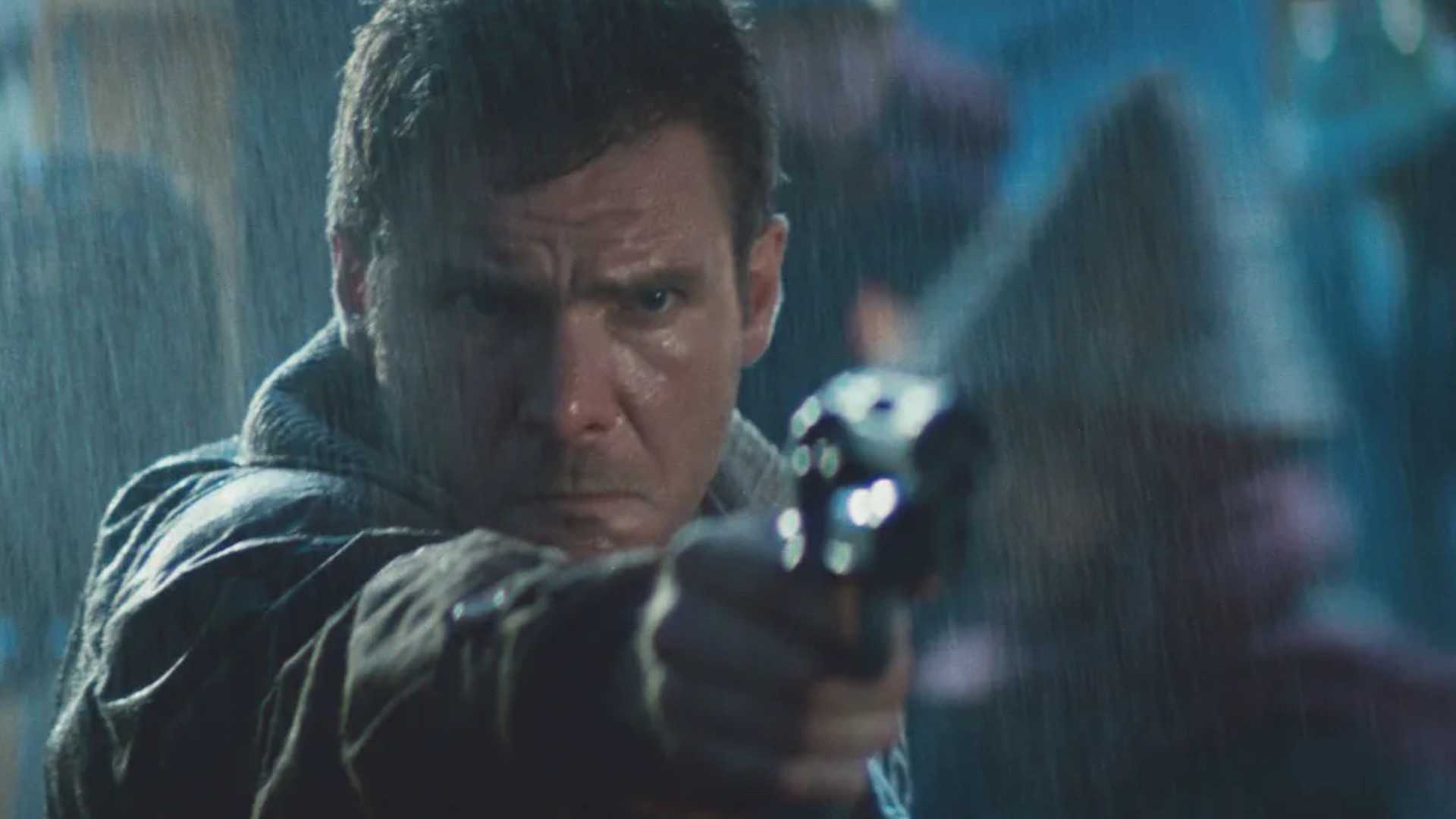
Harrison Ford in Blade Runner standing in the rain pointing a gun. Warner Bros. -
 Warner Bros.
Deckard’s mission in Blade Runner is to hunt down and retire replicants, beings first introduced as nothing more than artificial humans. Yet, the film quickly unravels this assumption, delving into the essence of humanity. The replicants reveal a profound ability to feel grief, love, and fear, while the supposed humans often appear more robotic and emotionally distant. Scott masterfully flips the script, inviting viewers to reconsider what it truly means to be human by granting these qualities to the replicants. By breathing life and vulnerability into these synthetic beings, Blade Runner urges us to empathize with those we might otherwise dismiss.
Replicants are marked by implanted memories, and the Nexus-6 models have a fleeting lifespan, unmistakably branding them as products of human design. Yet these limitations infuse their existence with a rare soulfulness, making every moment precious. Their memories and emotional depth drive them to yearn for autonomy, embodied by Rutger Hauer’s Roy Batty, who becomes the voice of their struggle for freedom and self-determination. As Batty collides with Deckard in the film’s climax, Blade Runner overturns familiar tropes, spotlighting the raw humanity and mortality in their final, unforgettable encounter.
Deckard dangles on the edge of death, clinging to a high ledge. Instead of letting him fall, which would serve the replicants’ interests, Batty chooses compassion and saves him. This act of mercy sets the stage for Blade Runner’s most iconic moment: Batty’s haunting final monologue.
“I’ve seen things you people wouldn’t believe. Attack ships on fire off the shoulder of Orion. I watched C-beams glitter in the dark near the Tannhauser gate. All those moments will be lost in time… like tears in rain… Time to die.”
As Batty utters his final lines, his brief lifespan quietly expires. His words are evocative, as even if you have no idea what a C-beam is, his monologue conjures vivid images and the ache of memories destined to vanish “like tears in rain.” It’s the kind of existential contemplation humans may face with their own mortality, except it is delivered by an artificial being who expresses more poetry and depth than his creators. The film pushes this idea further, hinting at Deckard’s own potential replicant identity as he escapes with Rachel, another replicant, at the story’s end.
Today’s rapid advances in artificial intelligence make Blade Runner’s moral and philosophical themes and Batty’s unforgettable monologue resonate more powerfully than ever, even after 44 years. As automation and robotics become more widespread in the workforce, humanity teeters on the precipice of a future much as the film imagined. Modern anxieties about AI pale in comparison to the existential questions raised by the existence of replicants, lending Batty’s words a chilling, forward-thinking relevance. Hauer’s improvisation of the “tears in the rain” line deserves praise. Still, the themes Blade Runner explores about the future of artificially created beings are more prescient than ever, with the world potentially on the verge of complex emotional responses to AI, making Scott’s iconic sci-fi movie a forward-thinking masterpiece.

- Release Date
-
June 25, 1982
- Runtime
-
118 minutes


This story originally appeared on Movieweb

