


September 1, 2026
Pruning Cotinus
In order to keep my farm and its gardens, allées, and groves as beautiful as possible, I pay lots of attention to the maintenance and care of all my trees and shrubs.
Smoke bushes, Cotinus, are among my favorite small trees – they have superlative color, appealing form, and look excellent in the gardens. Healthy, established smoke bushes are vigorous growers and can put up to three feet of new growth in a season. This week, many of these trees are being carefully pruned and groomed to keep them well-shaped and beautiful.
Enjoy these photos.
-
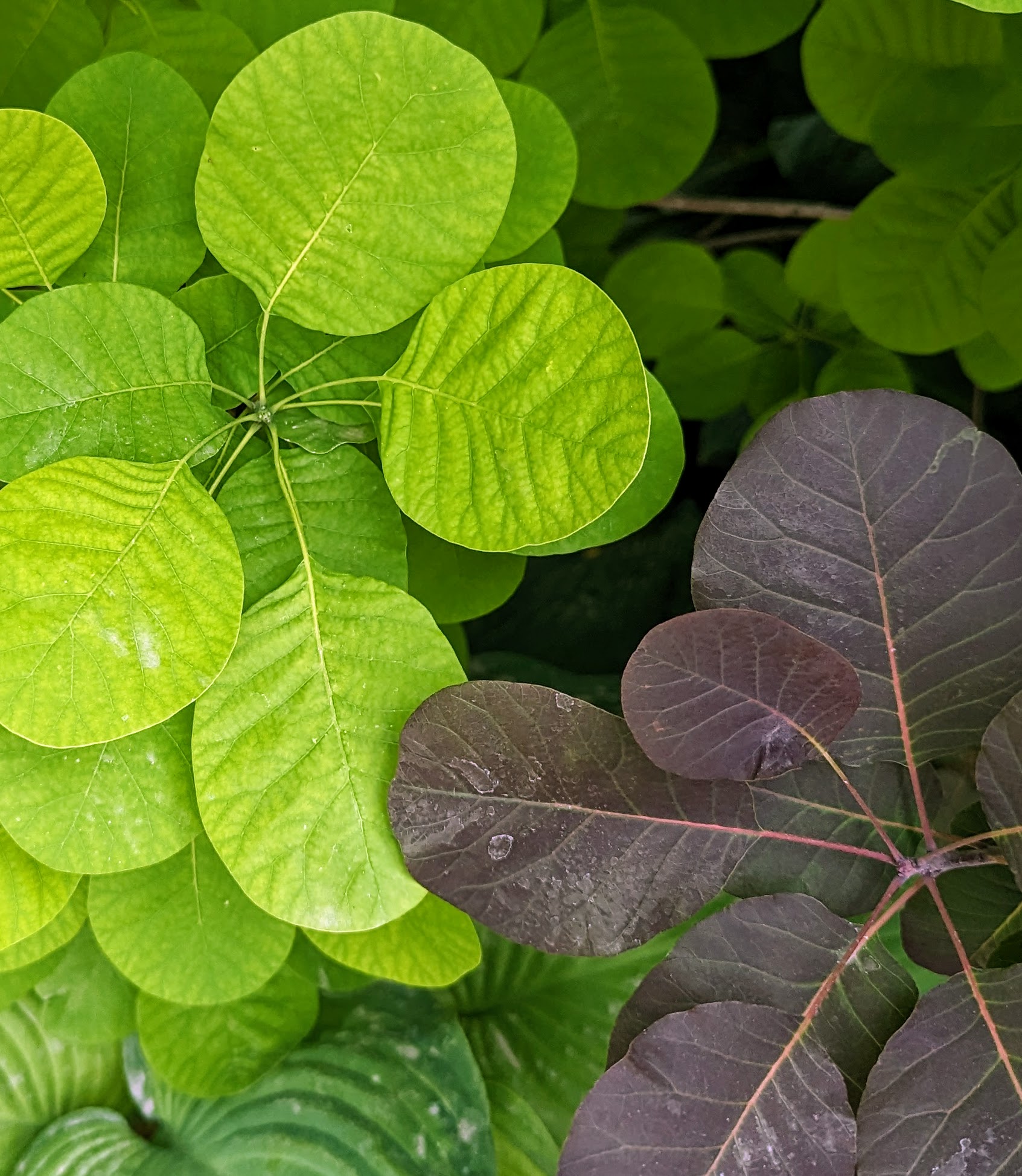
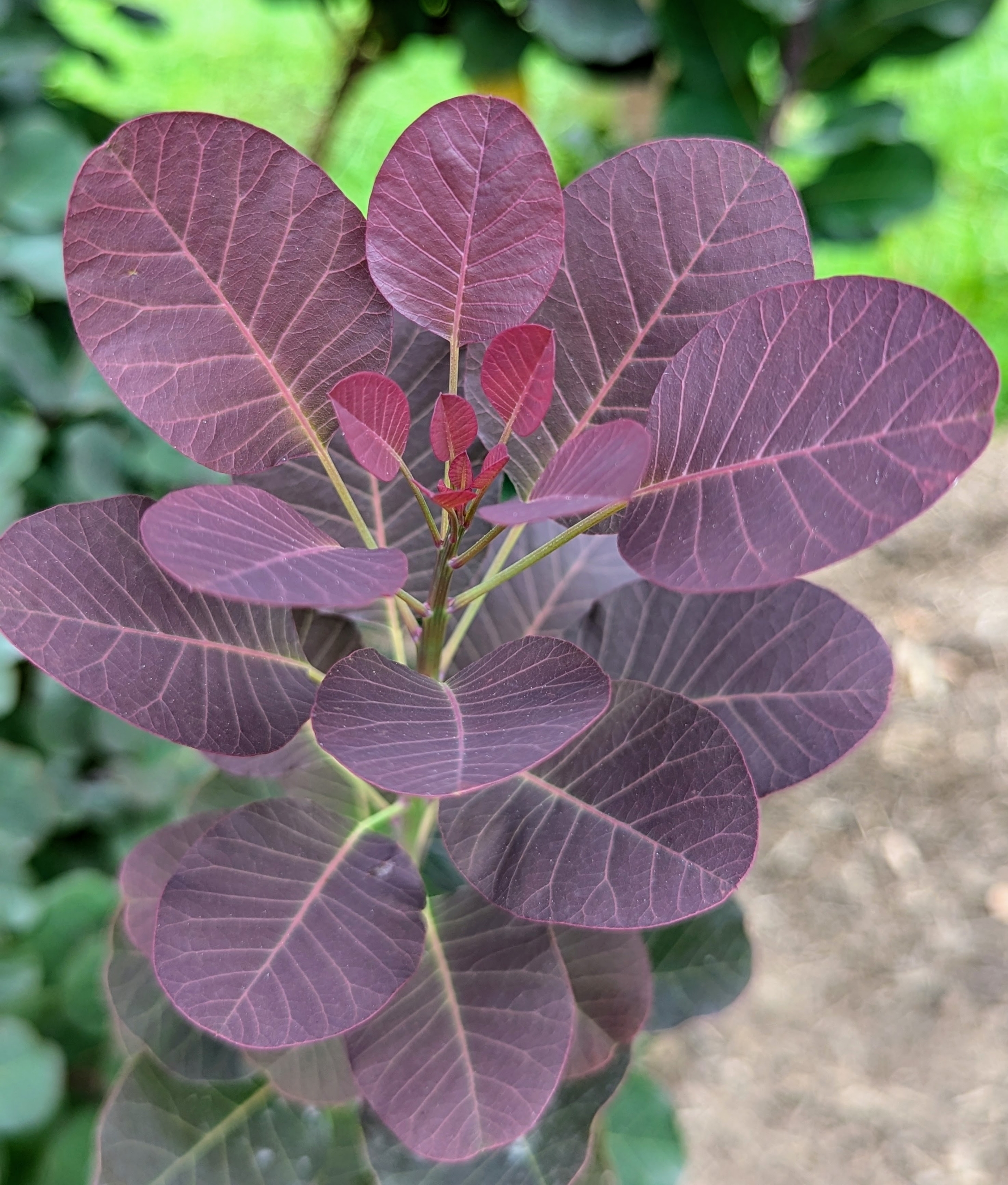
- These are the very interesting leaves of the smoke bush, Cotinus. Depending on the variety, these leaves can range from bright greens and yellows to deep purples and reds.
-
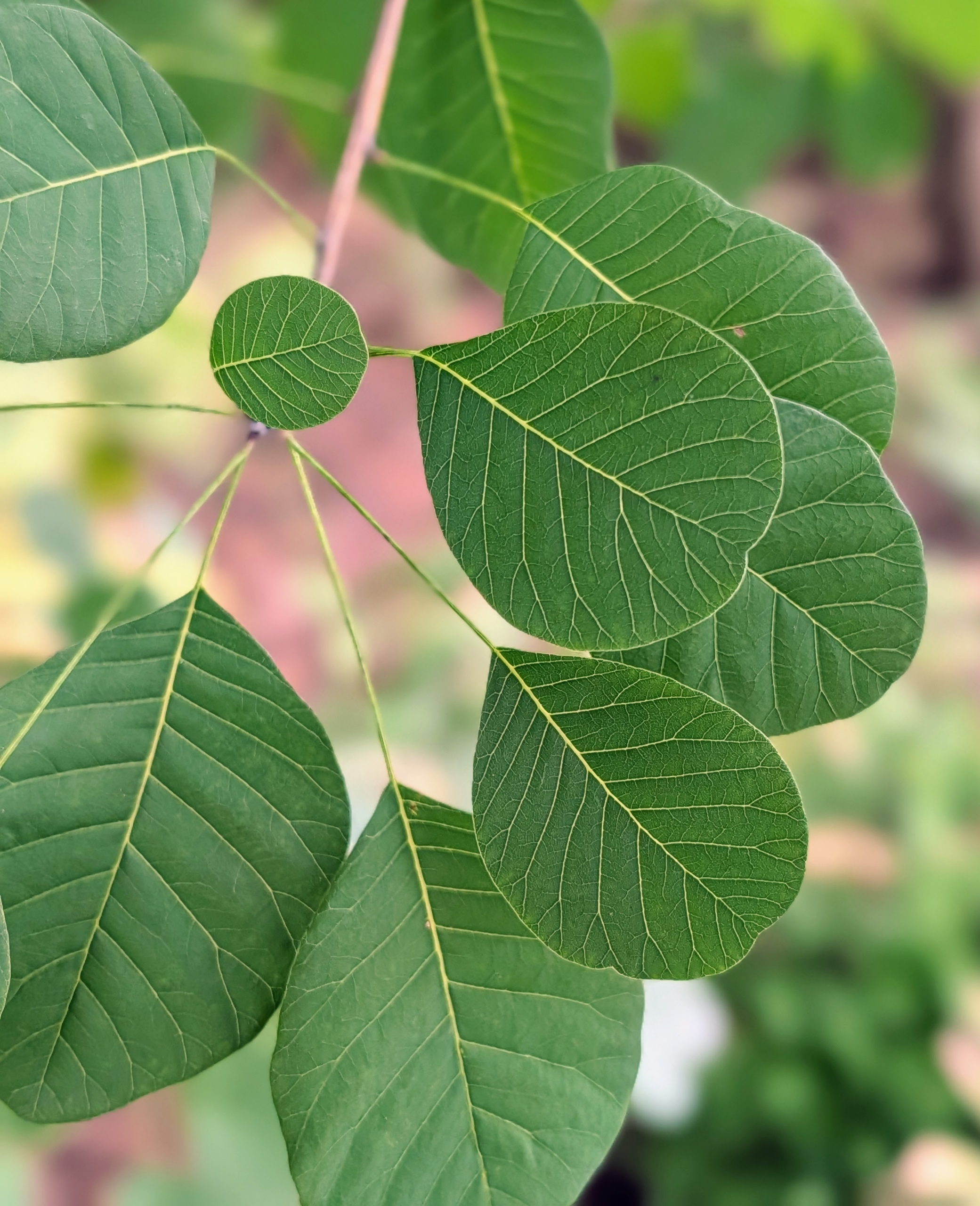
- The leaves are about one-and-a-half to three inches long and ovate, or oval like, in shape.
-
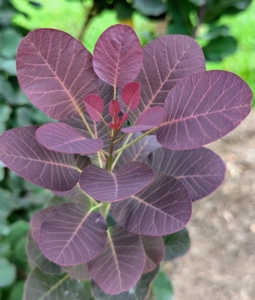
- There is one leaf per node along the stem. The leaves are also deciduous, meaning they drop off in winter, or wither and persist on its branch.
-
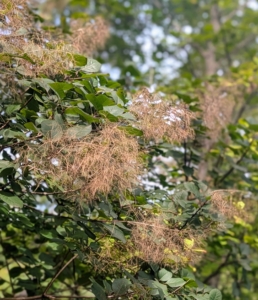
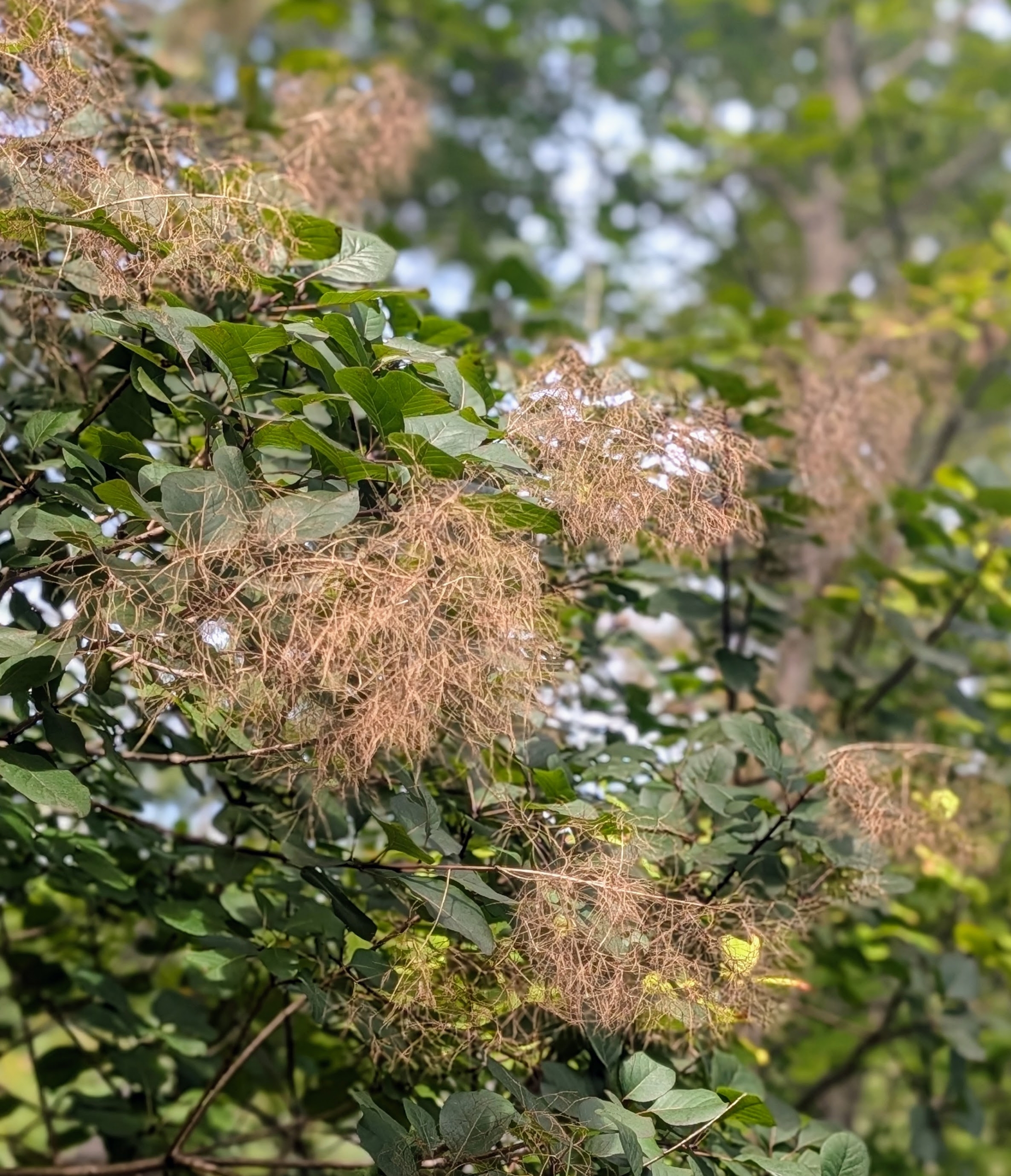
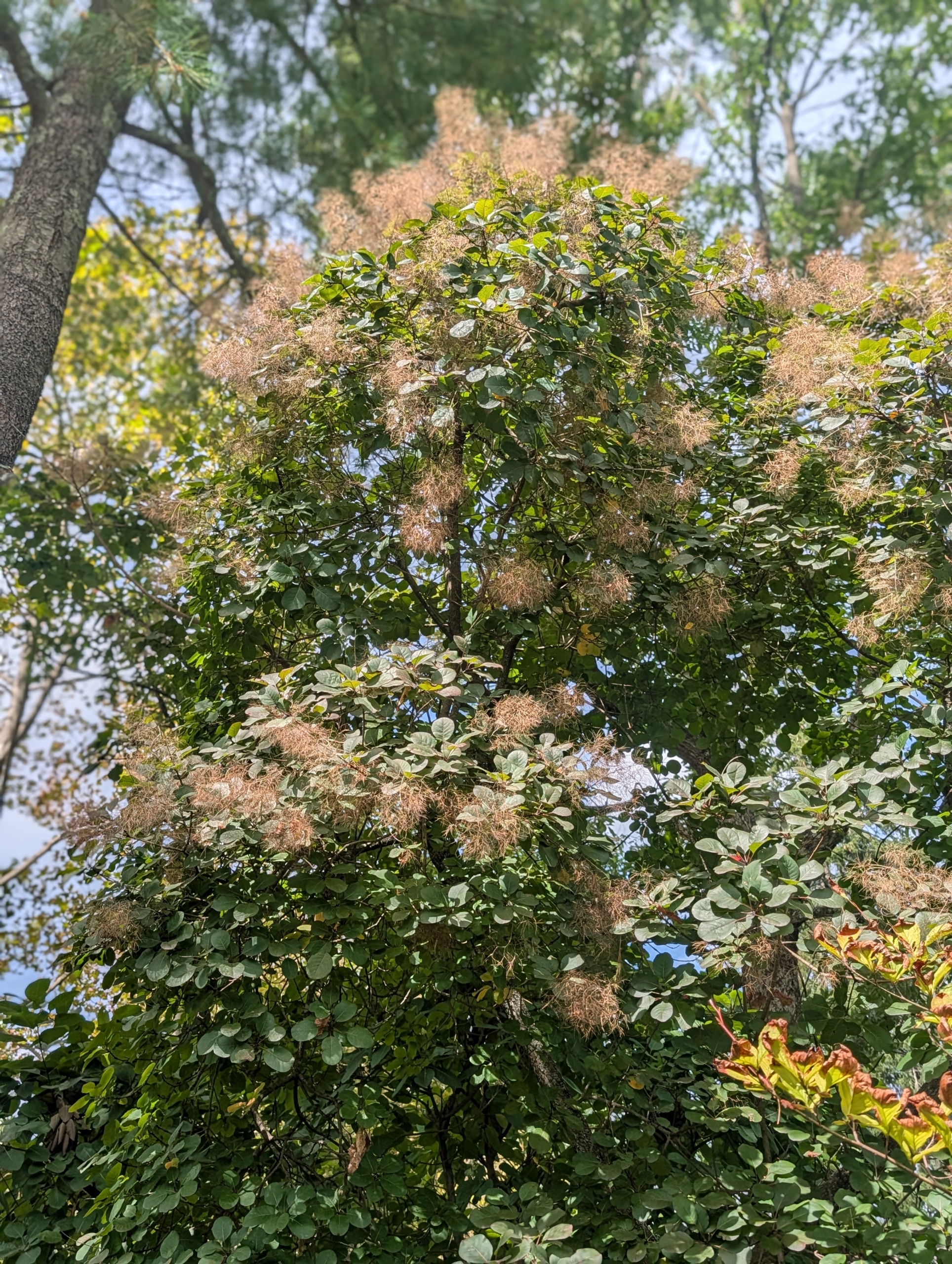
- The name “smoke bush” comes from the billowy hairs attached to the flower clusters, turning a smoky pink to purplish-pink as the weeks progress.
-
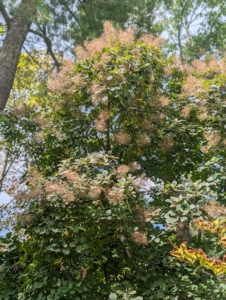
- This mature smoke bush is near the front of my home, where guests can see it. The fine, feathery clusters remain attractive for many weeks from now to fall.
-
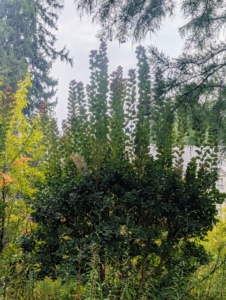
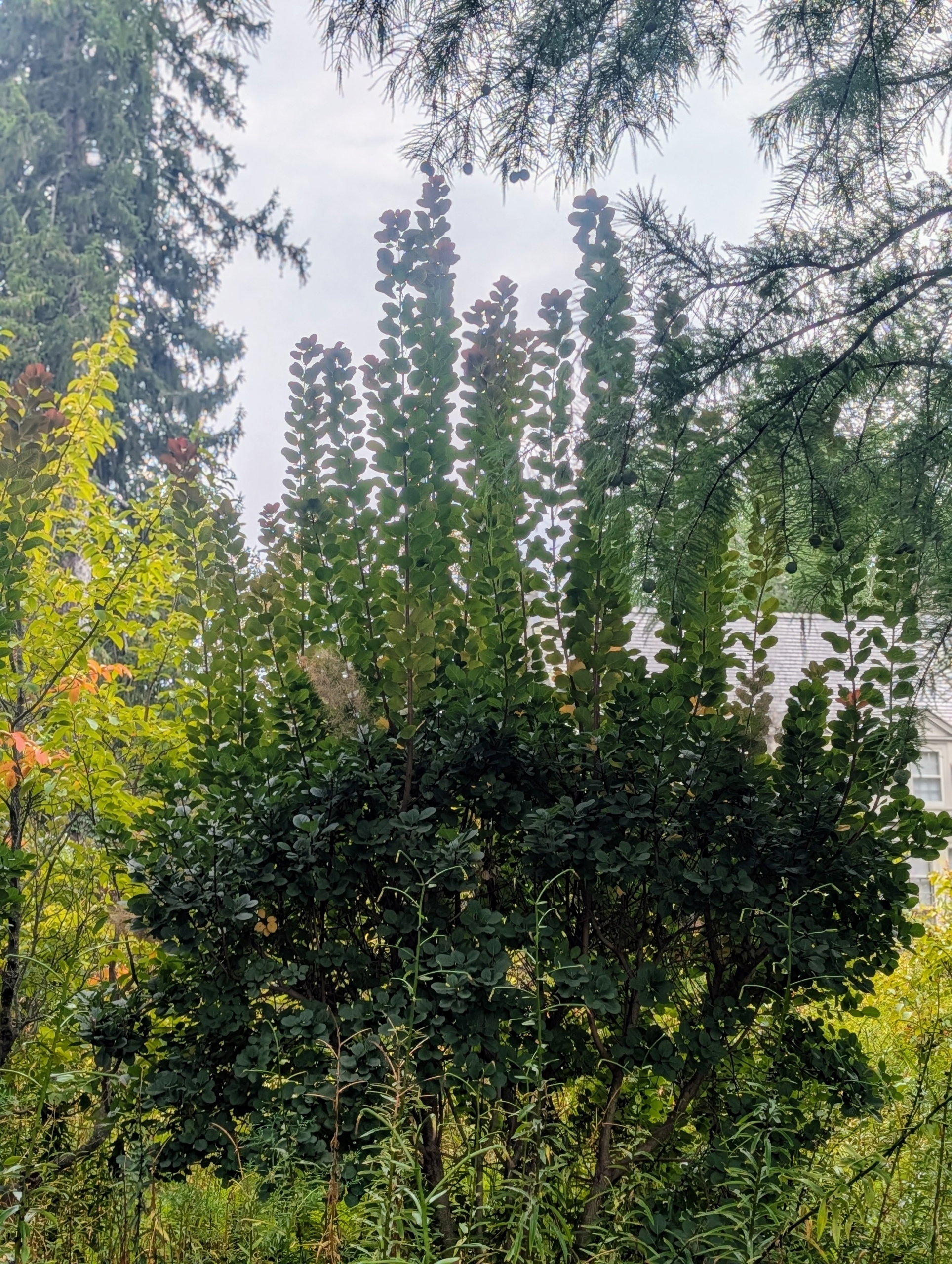
- Cotinus prefer full sun and well-draining soil, but some varieties can tolerate dappled shade. We’ve also had a good amount of rain this year. Look how much this Cotinus has grown – it is one of several outside my Tenant House.
-
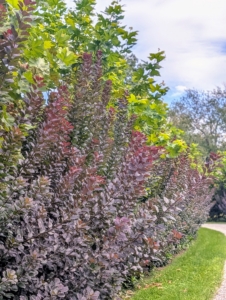
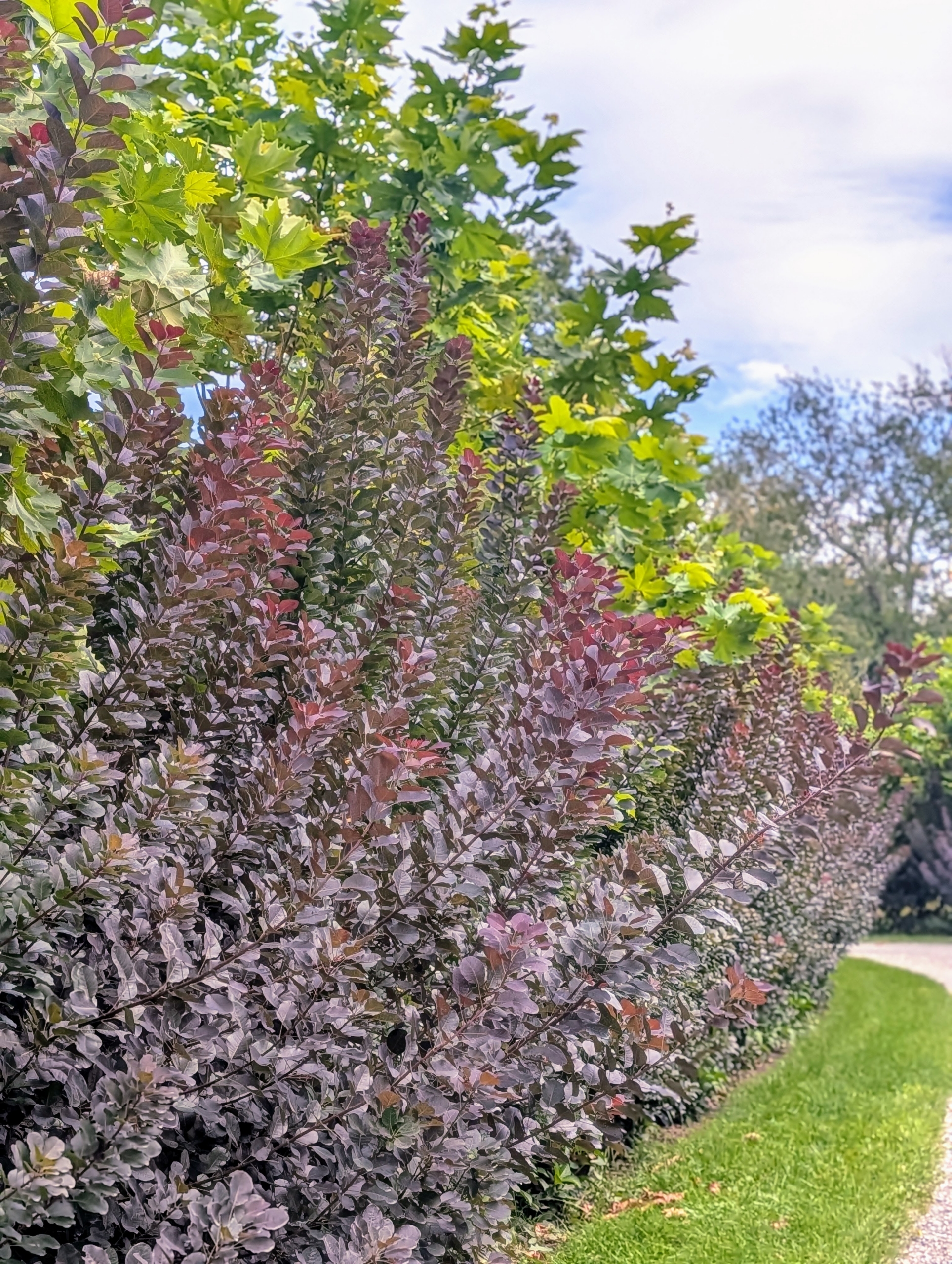
- And these are some of the 100 royal purple smoke bushes I planted in the allée in my middle hay field. The London plane trees behind have also grown so much this year.
-
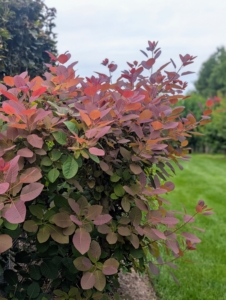
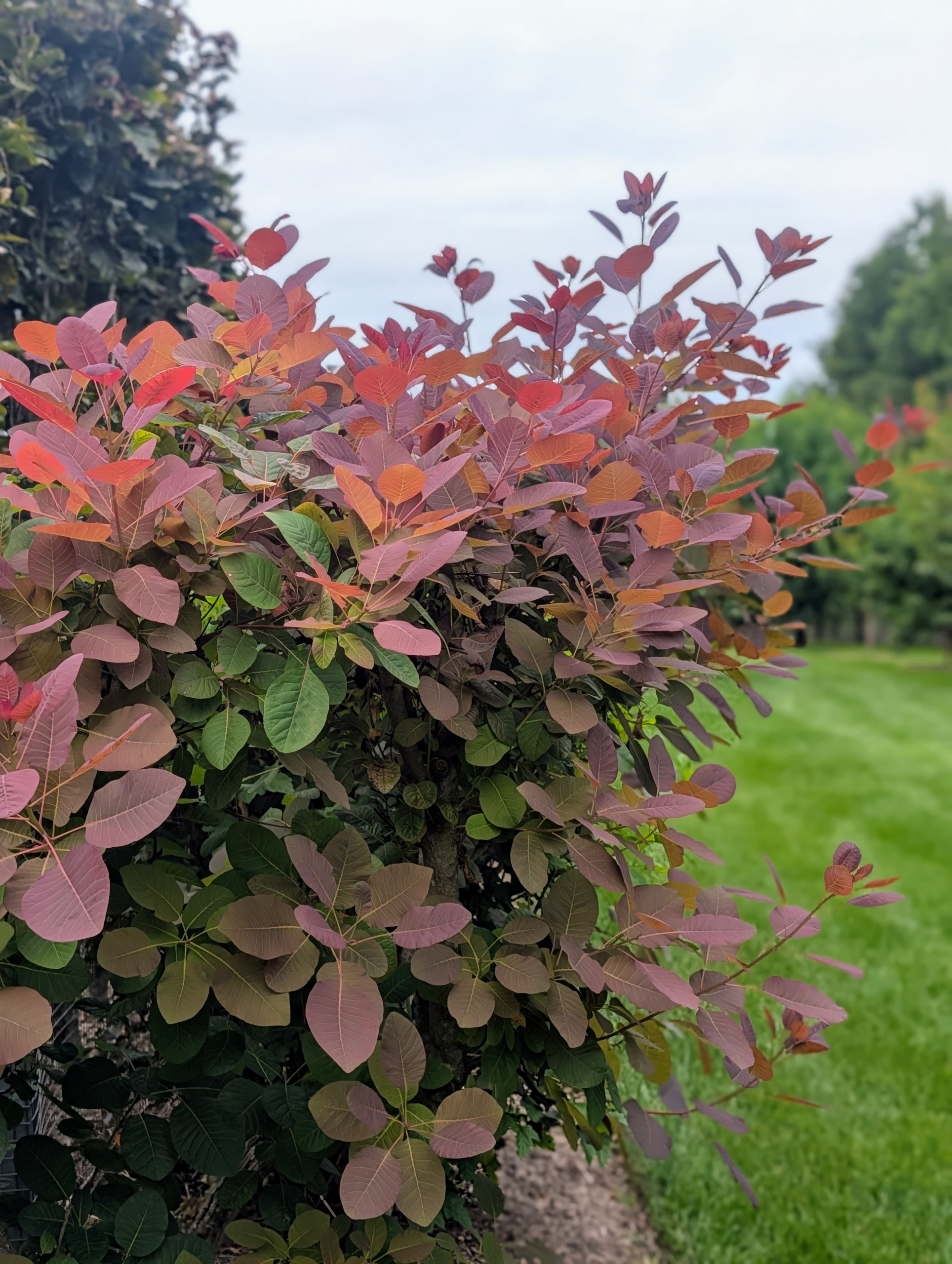
- The smoke bushes around my pool have been pruned twice already this year. This is new growth just from the last several weeks.
-
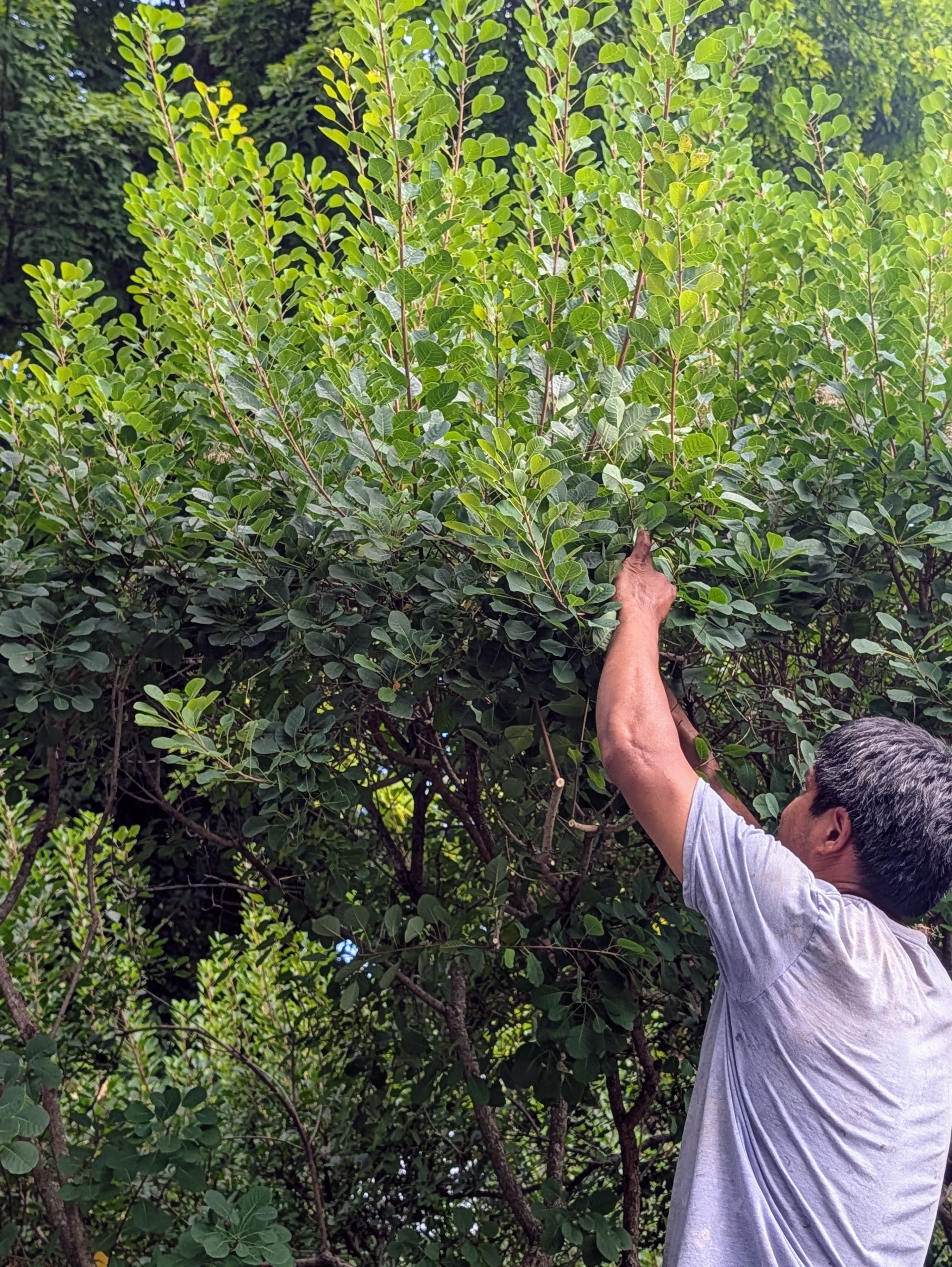
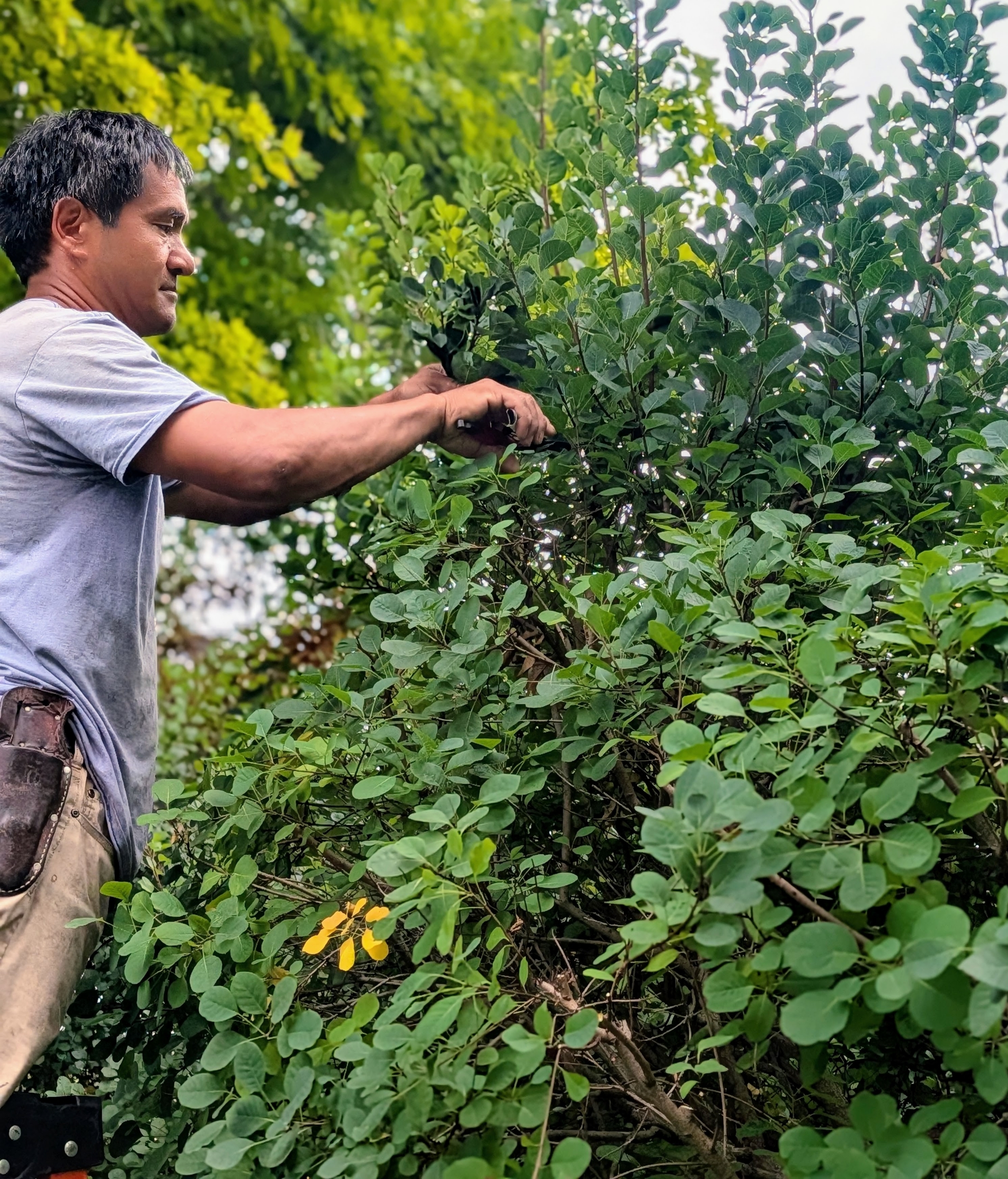
- Pasang Sherpa is my resident tree pruner. He does a wonderful job overseeing the maintenance of all the trees here at my farm. I like as much of the pruning and grooming to be done by hand, so Pasang trims many branches with his pruners – one by one.
-
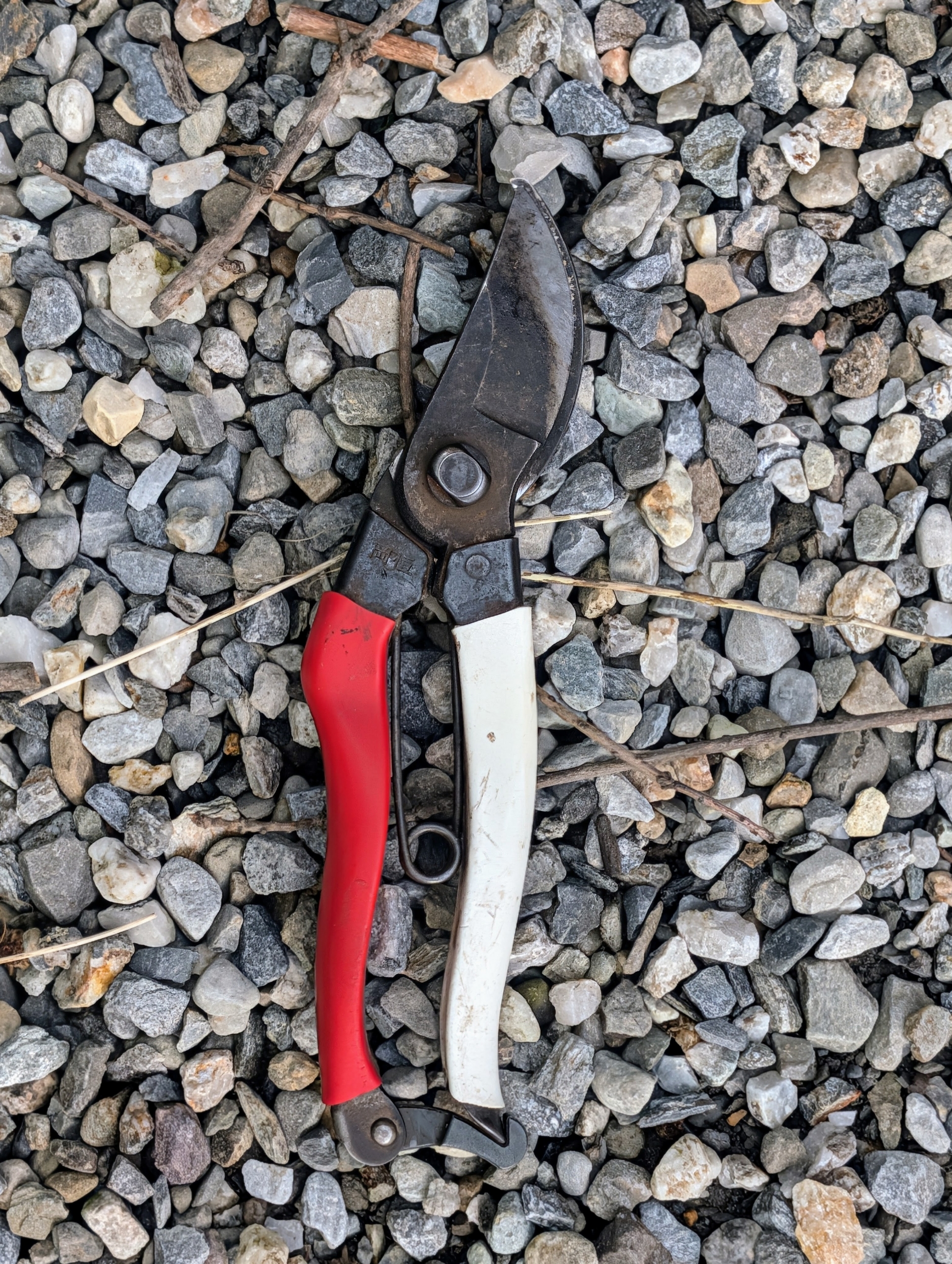
- Pasang uses his Okatsune hand pruners. Pruning shears, hand pruners, or secateurs are a type of scissor used on plants. They are strong enough to prune hard branches of trees and shrubs, sometimes up to an inch thick. Everyone on the crew has a pair.
-
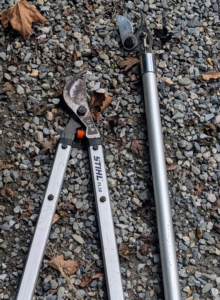
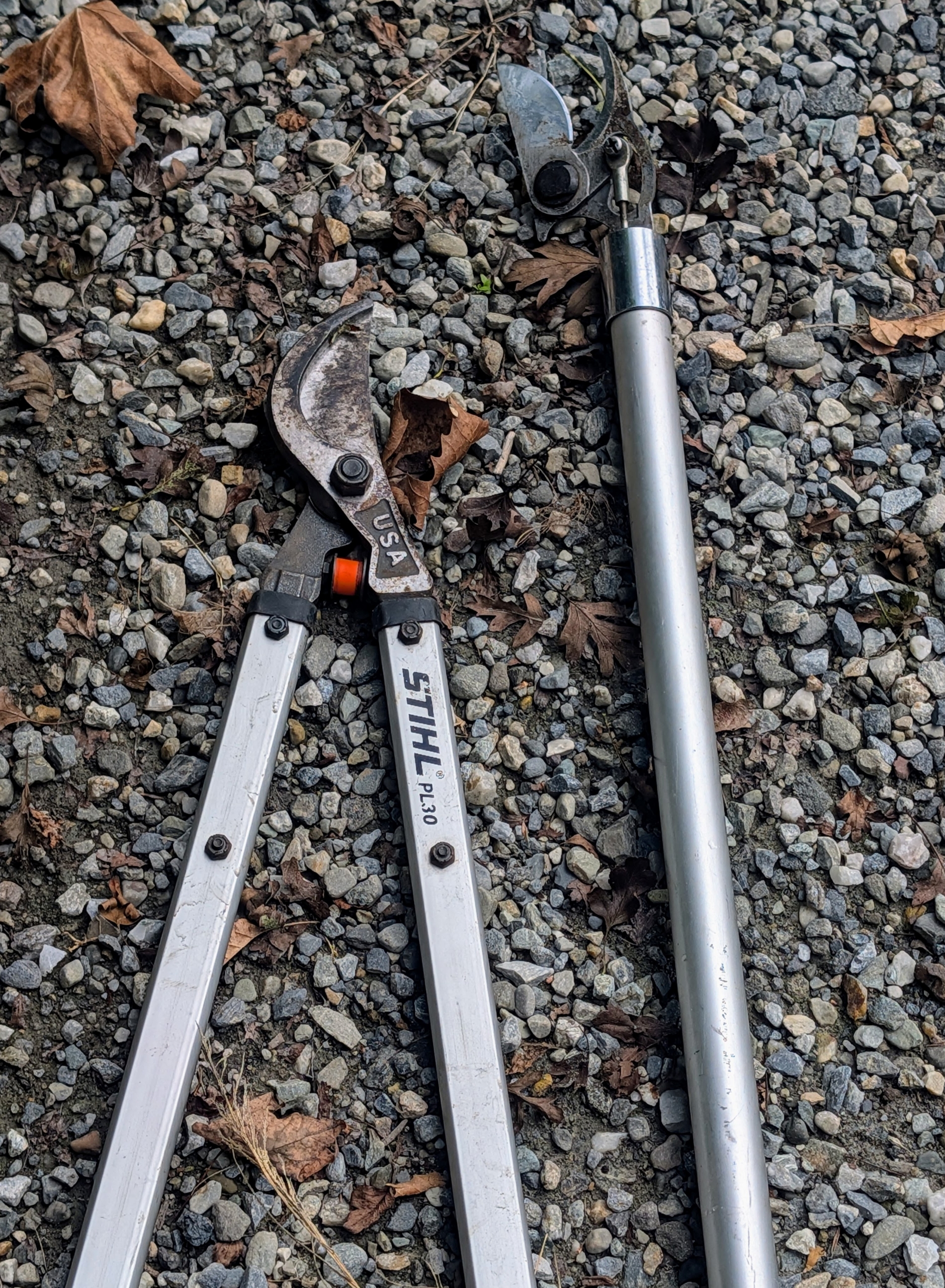
- He also uses two STIHL tools – loppers and a long reach pruner.
-
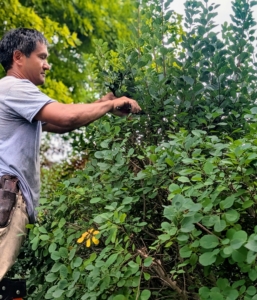
- Pruning means to lop or cut off any superfluous branches or shoots for better-shape and better growth. These trees look fuller every year – in part because of the regular pruning.
-
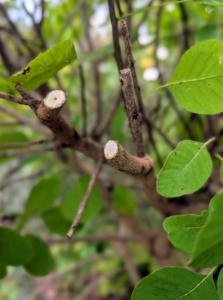
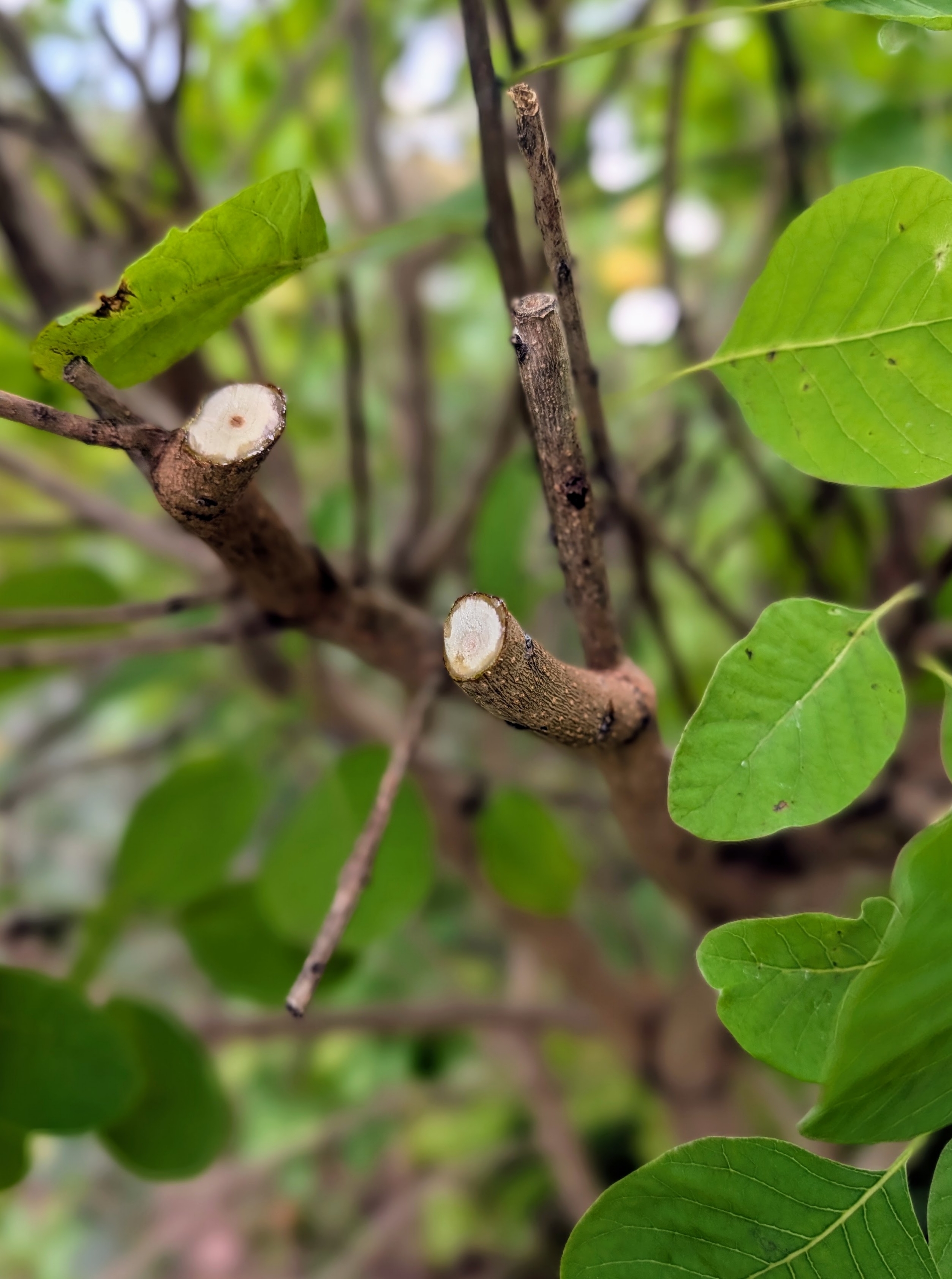
- Pasang cuts off any dead or crisscrossing branches first. The rule of thumb when pruning is to cut the dead, diseased, damaged, non-productive, structurally unsound, or otherwise unwanted plant material.
-
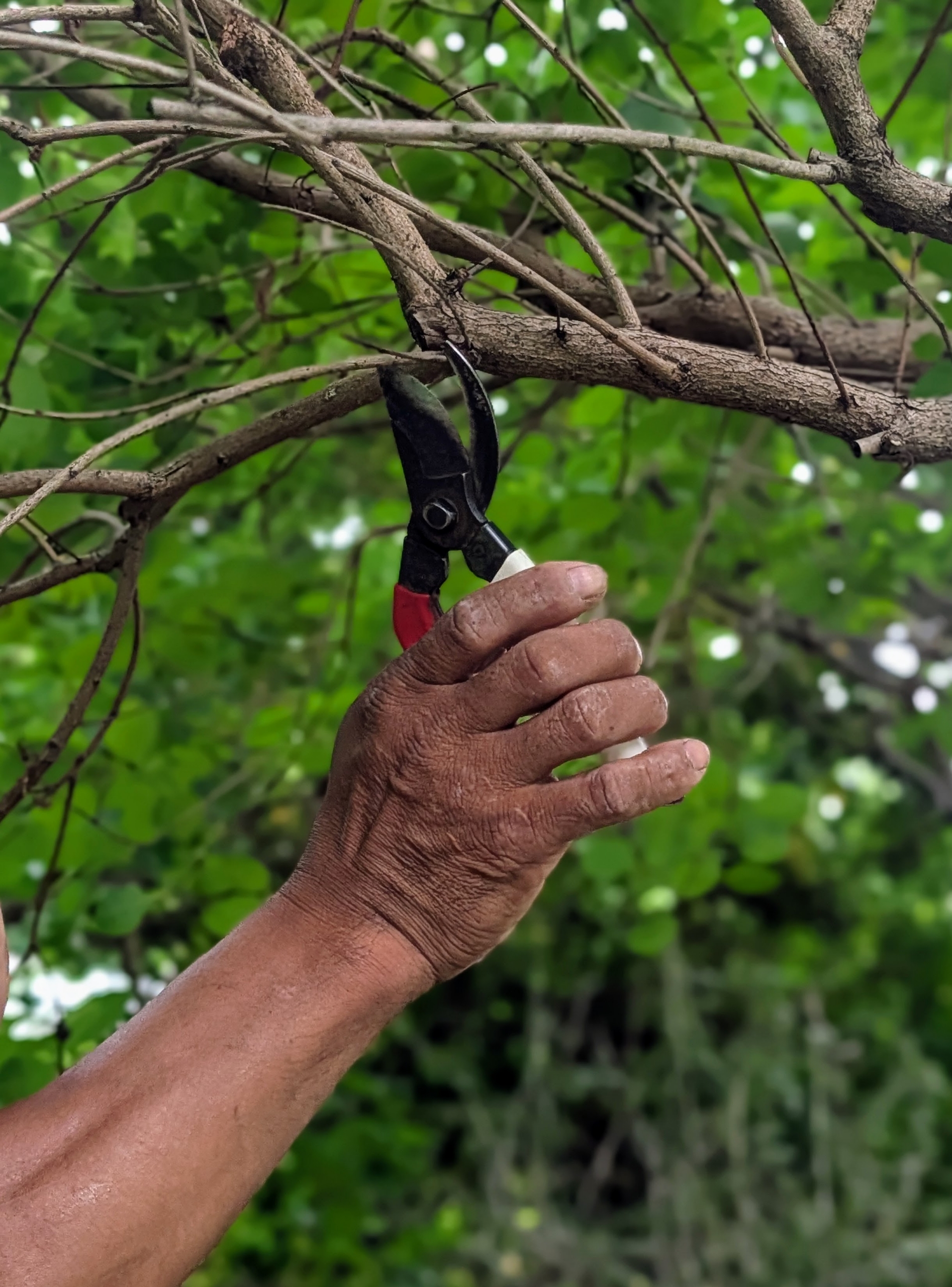
- He goes under the tree to examine all the lower branches.
-
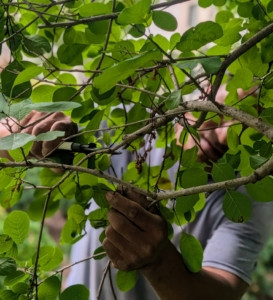
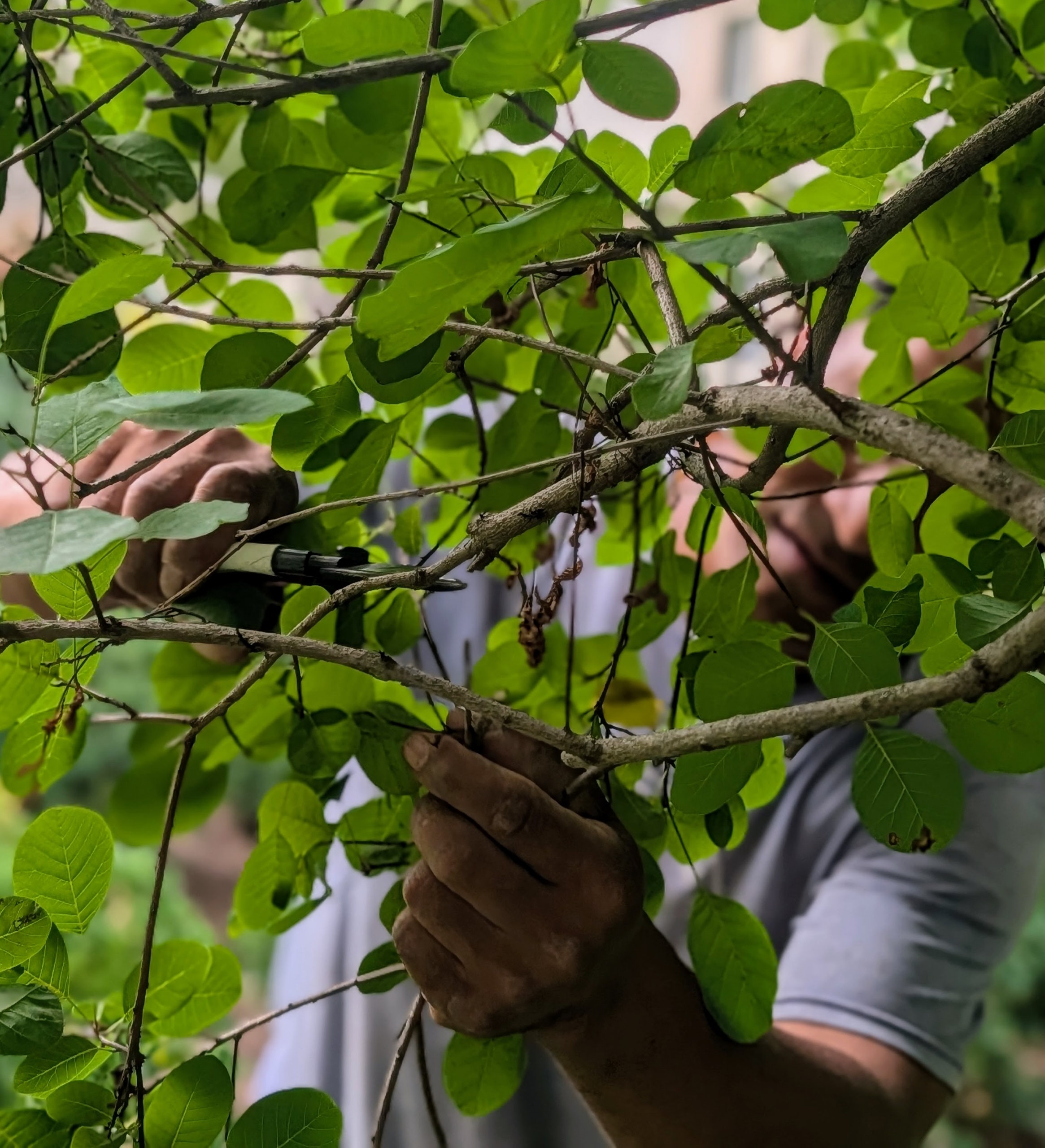
- Dead branches, or those without any signs of new growth, are cut, so the energy is directed to the living branches.
-
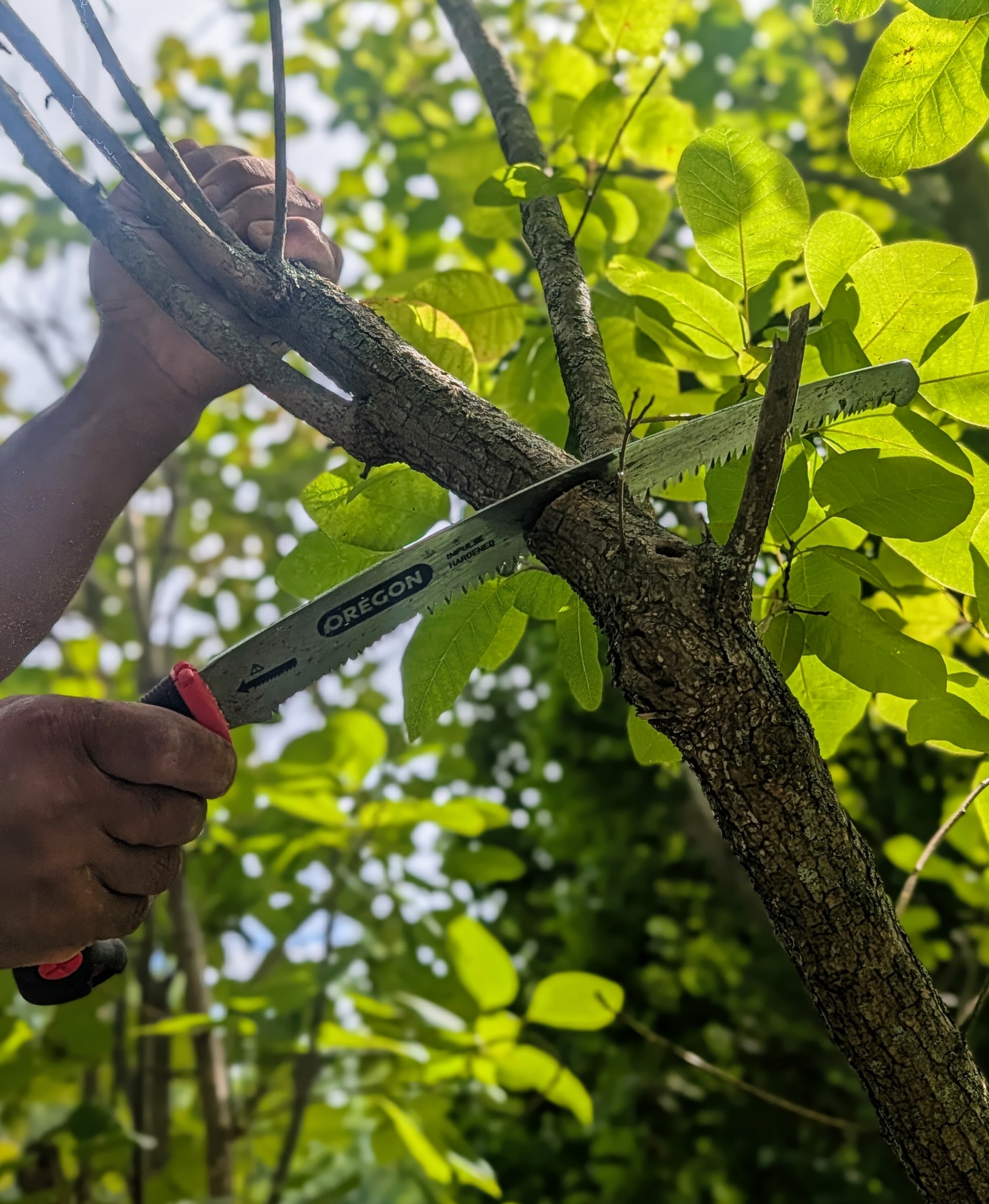
- A bow saw, or pruning saw, cuts on both the fore stroke and back stroke and is designed for cutting thicker, older branches.
-
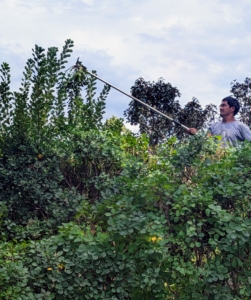
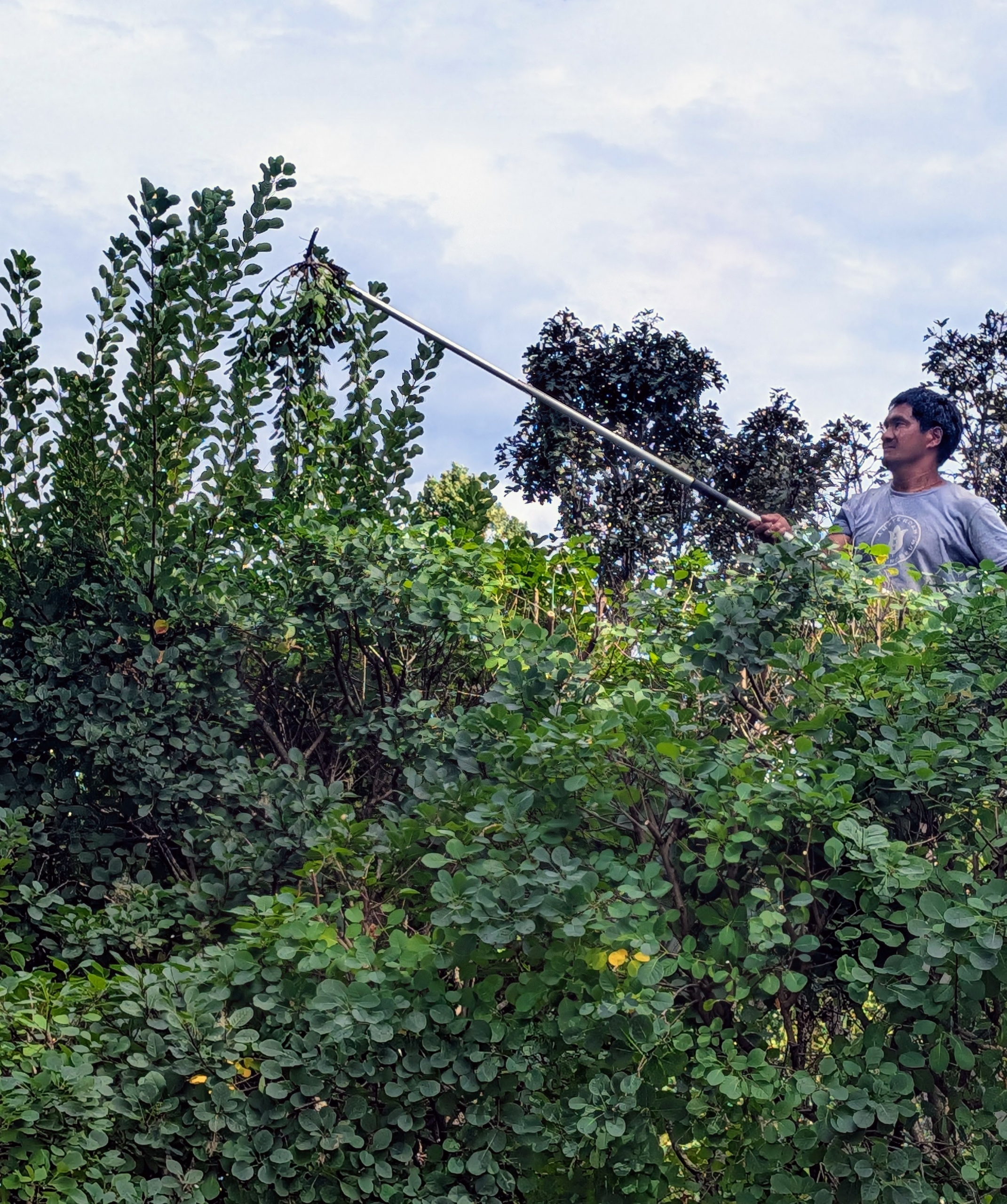
- Here, a long handled pole pruner is used to remove harder to reach branches. Pasang takes these tall branches out to keep the tree’s full shape.
-
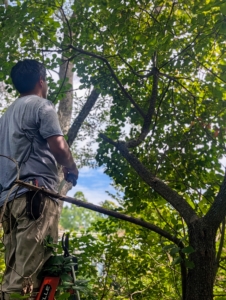
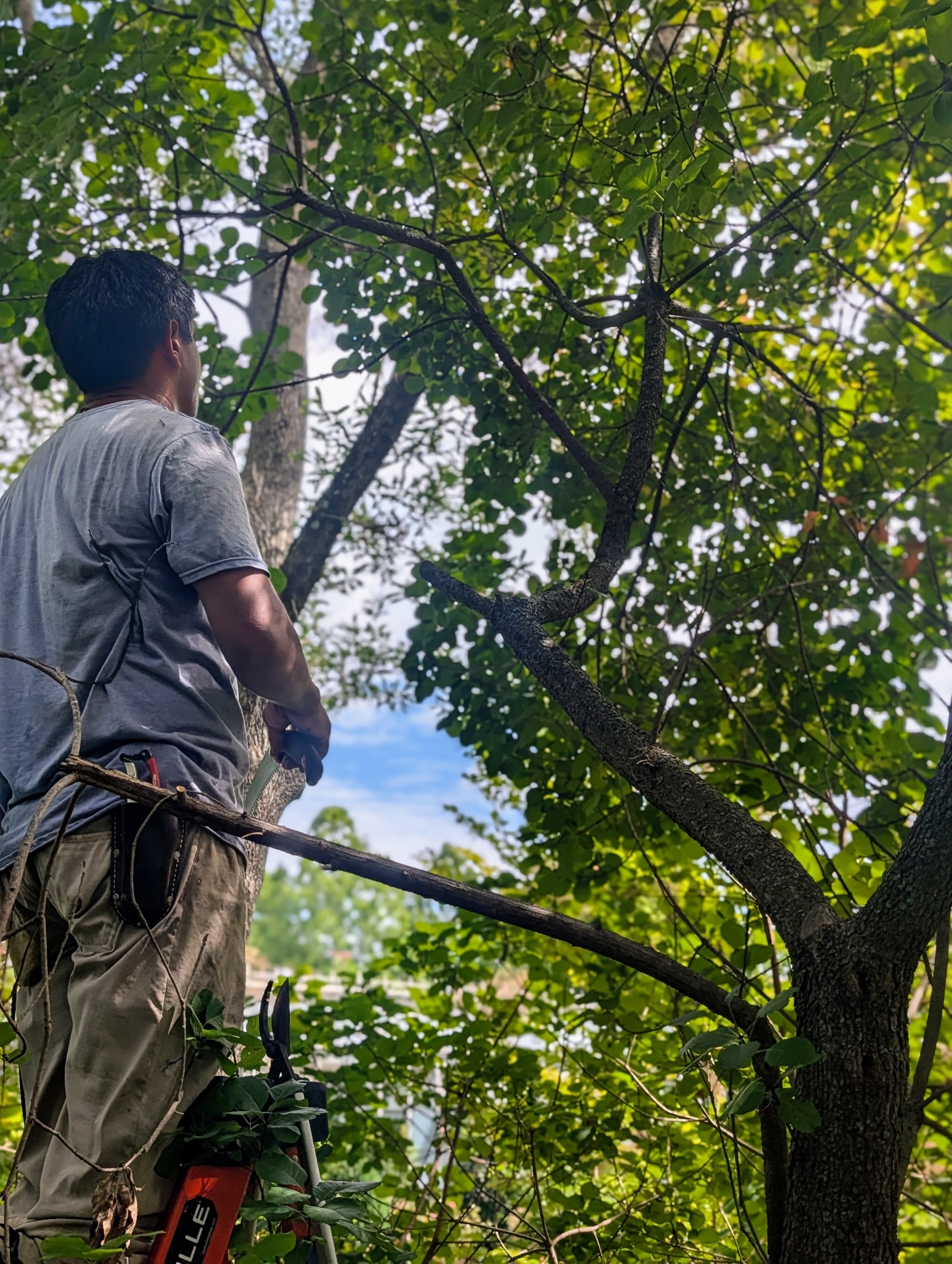
- Pasang is a thoughtful pruner. He often looks at the tree to assess where he needs to cut. Any branches which interfere with the tree’s shape or create a dense framework should are removed.
-
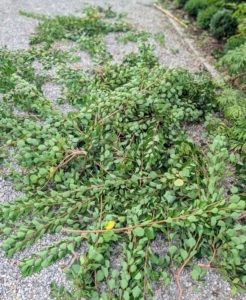
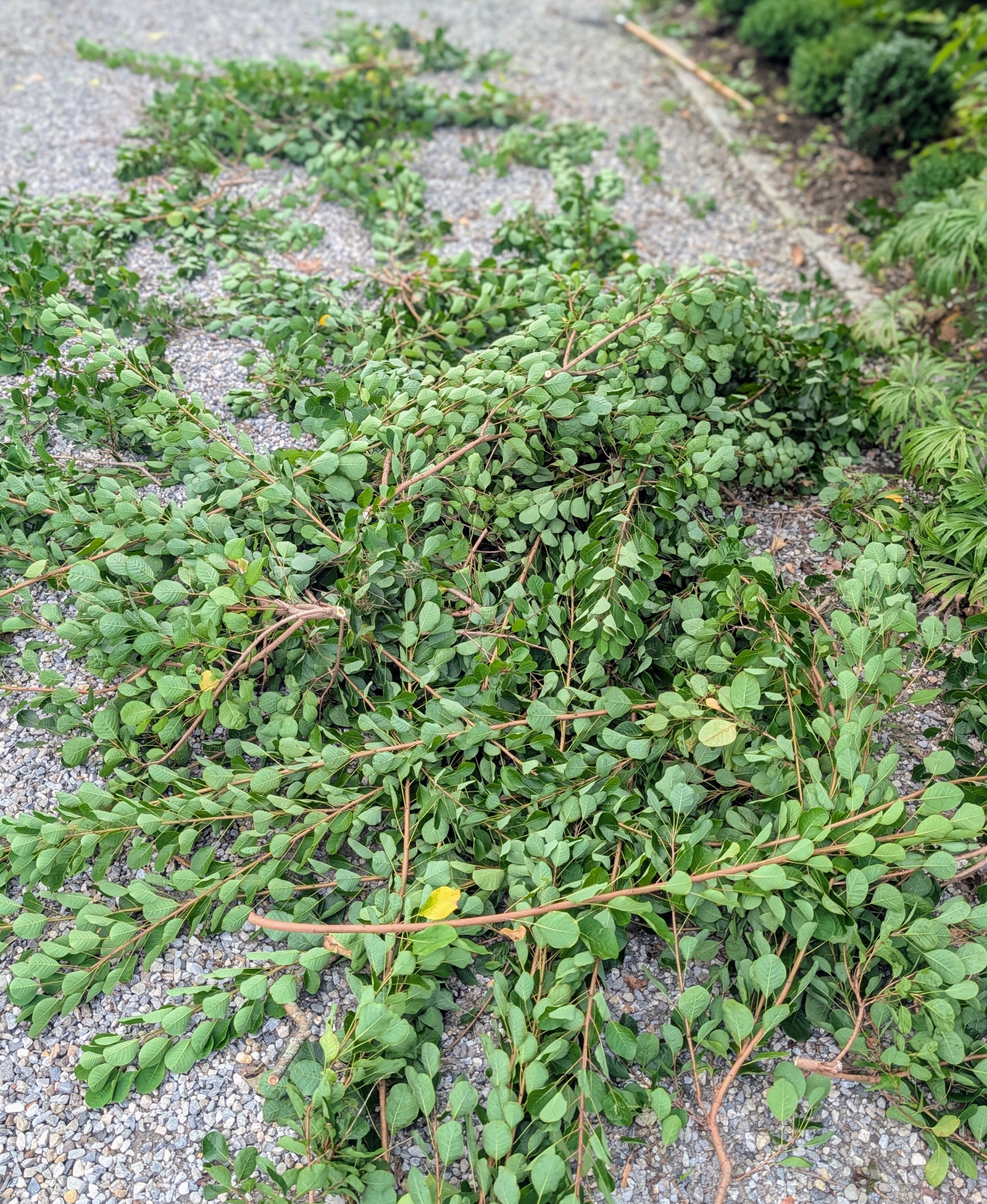
- As the branches are cut, Pasang gathers them in one place, so they are easy to collect later and take to the compost yard.
-
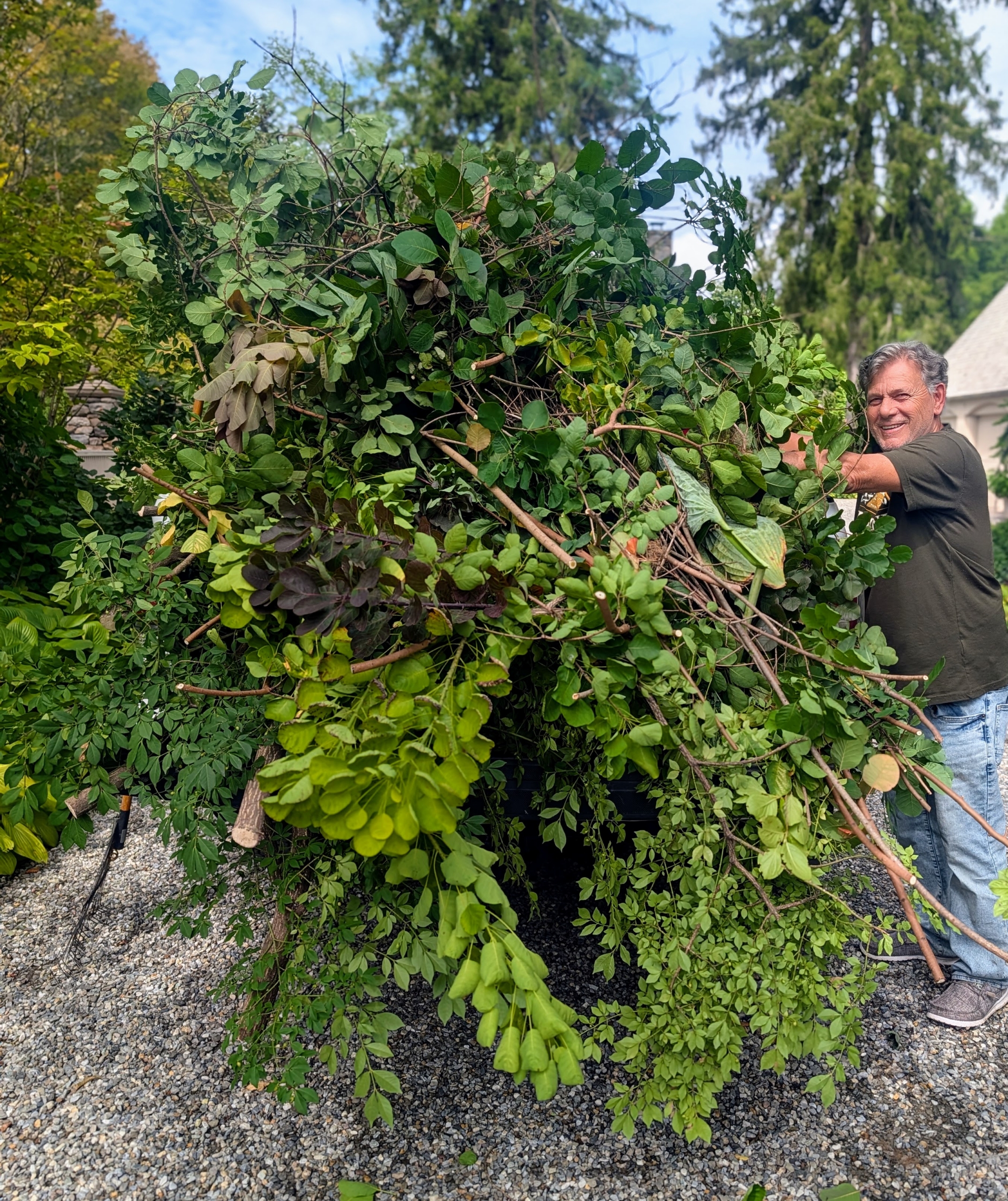
- And then Fernando loads them up and takes them away.
-
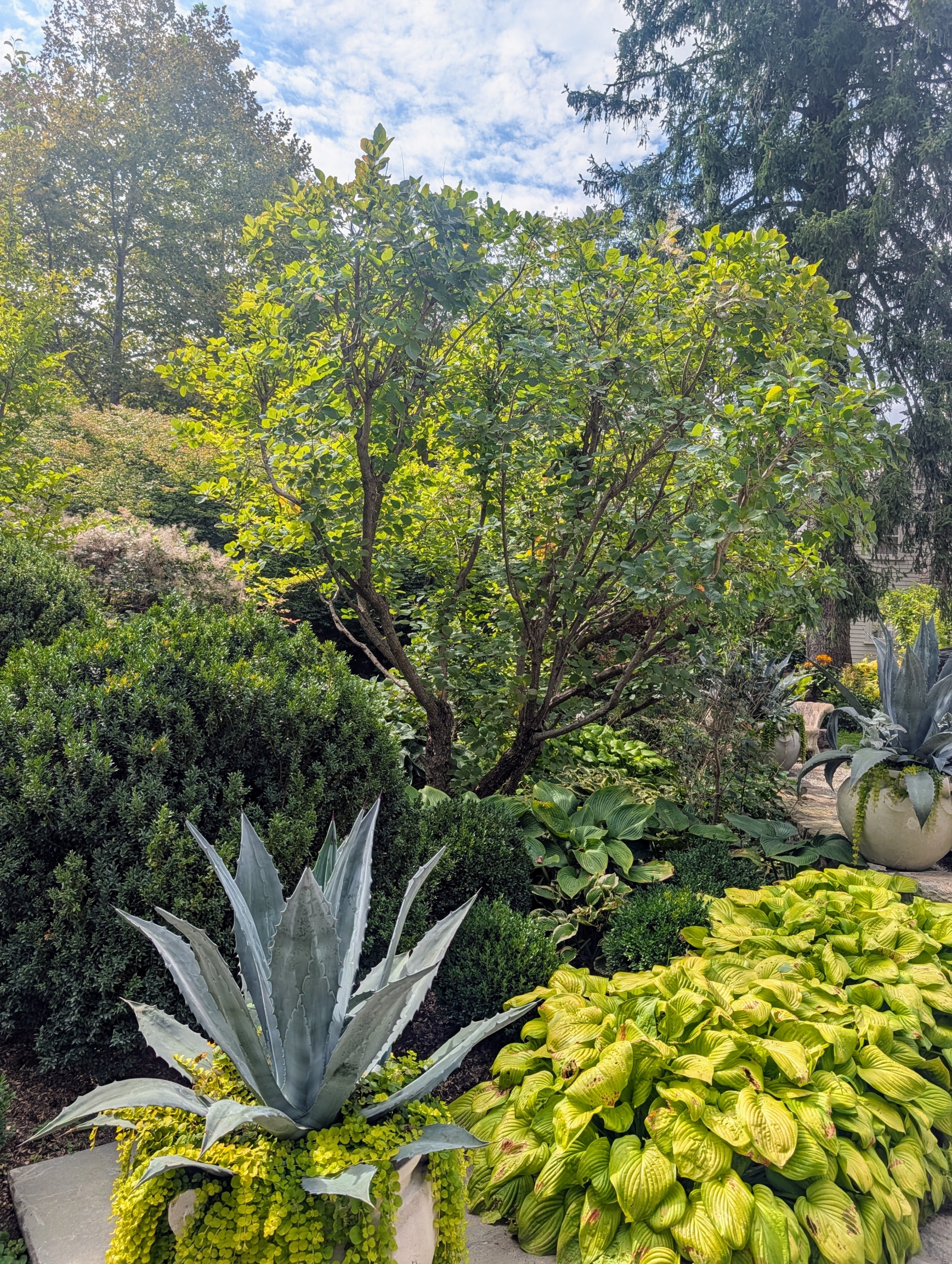
- Pruning is crucial in preserving trees, retaining their form, and encouraging healthy growth.
This story originally appeared on Martha Stewart Blog

