


September 14, 2026
Second Cut of Hay 2026, Part II
Once hay is cut, dried, and raked into windrows, it’s ready to be baled.
Here on my farm, my outdoor grounds crew has just finished harvesting and stacking more than 550 bales of hay for my horses. While the first cutting was harvested in June, this second cutting is finer, leafier, and richer in protein and energy, making it especially nutritious. I am fortunate to have both the dedicated team and the equipment needed to produce high-quality hay for my herd.
Enjoy these photos.
-
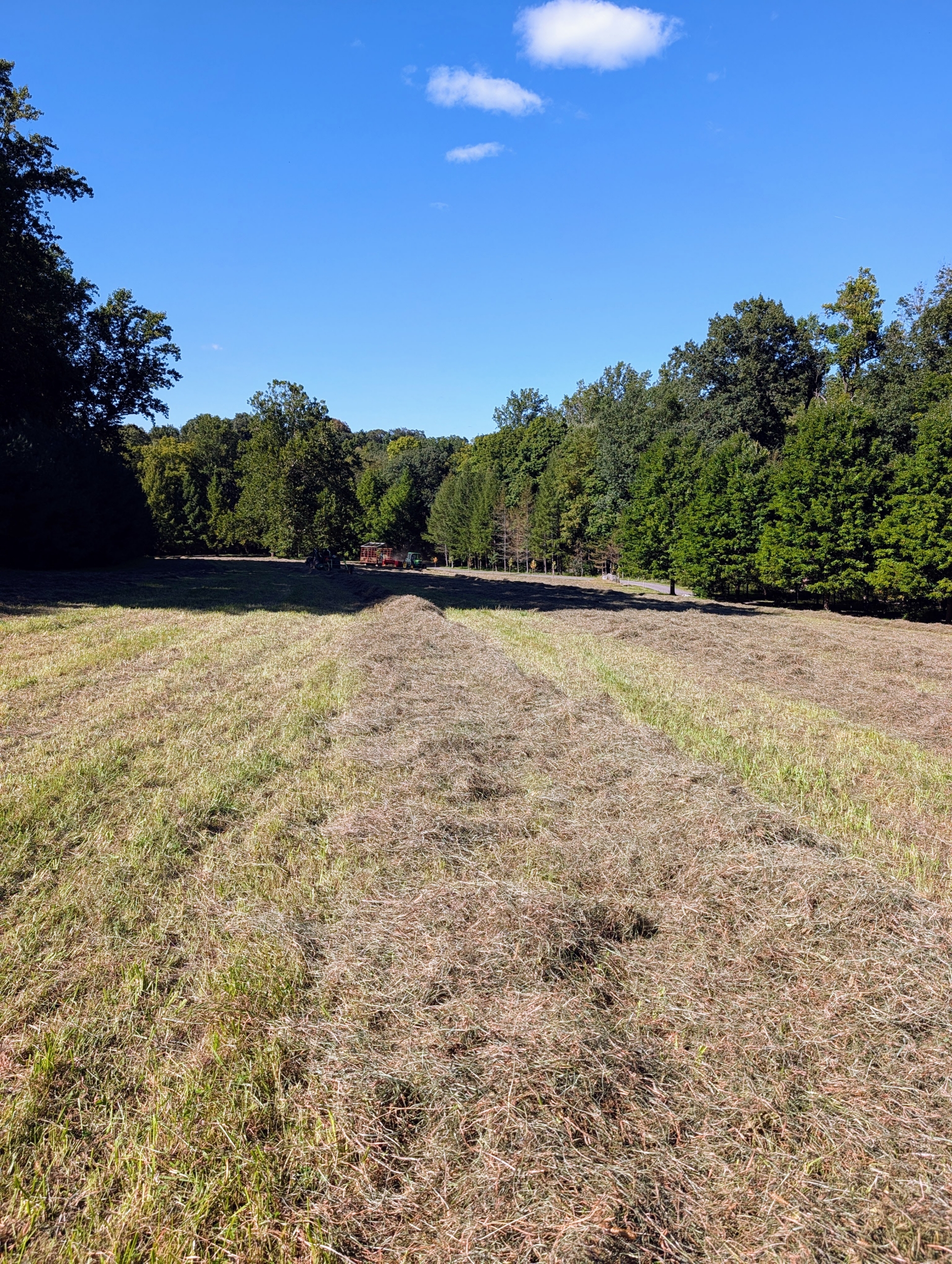
- The hay is ready to bale when hay pulled from the bottom of the windrow makes a crunching sound when snapped. Chhiring drives the tractor and starts the process midday when there is the least amount of moisture.
-
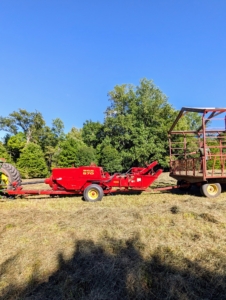
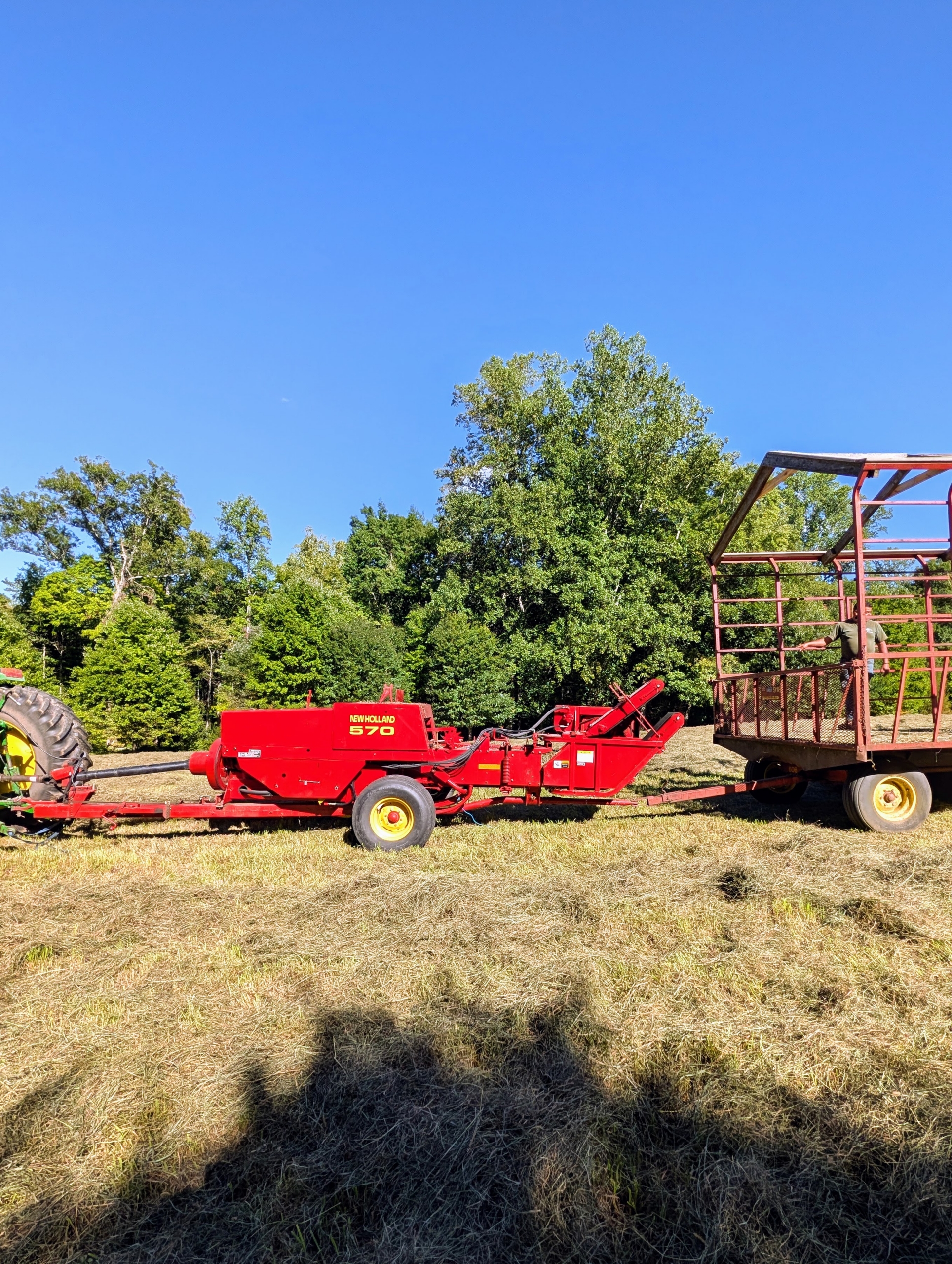
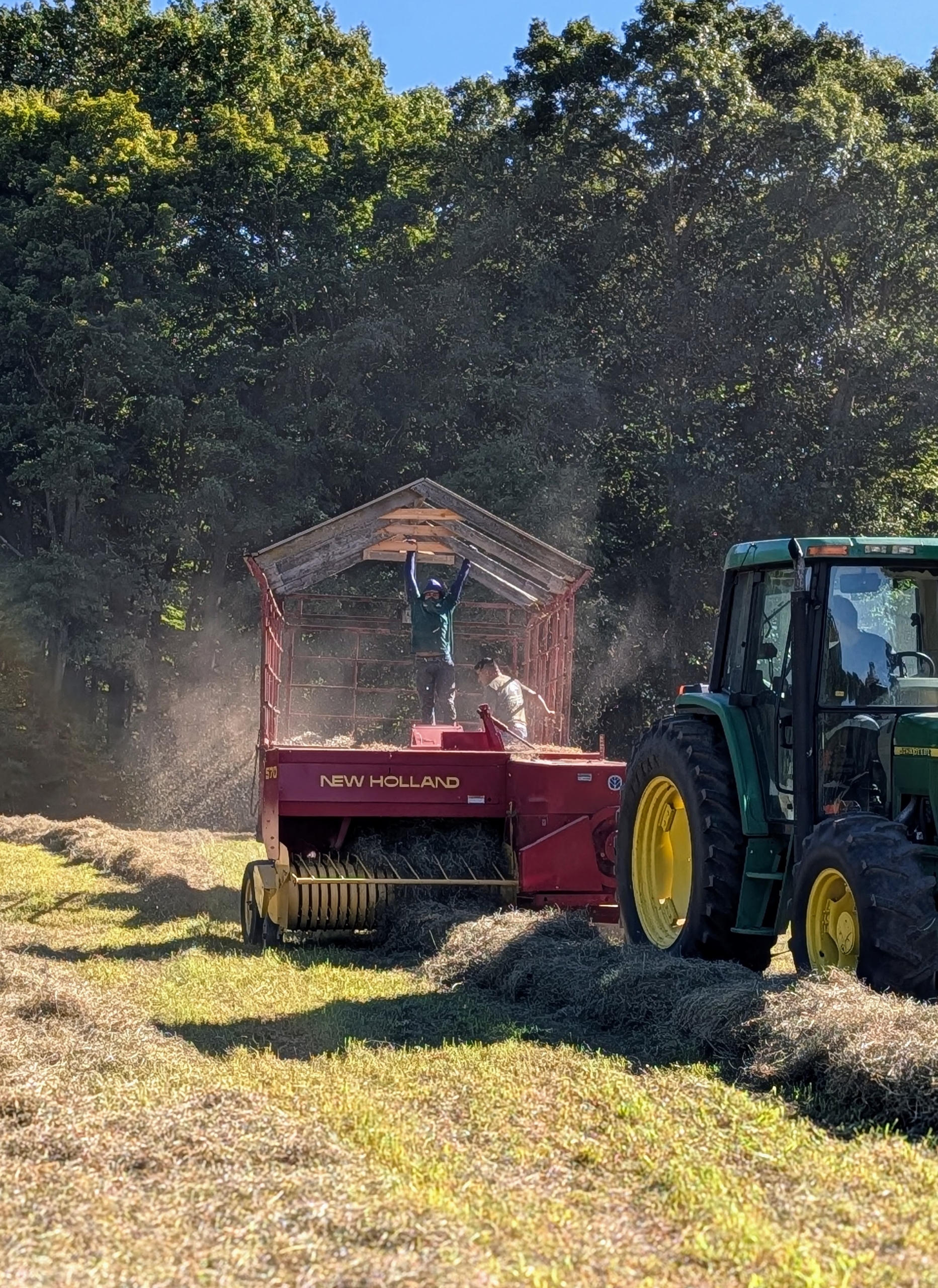
- A baler is a piece of farm machinery that compresses the cut and raked crop into compact bales that are easy to handle, transport, and store. The baler is attached to the tractor, and then the hay wagon is attached to the baler.
-
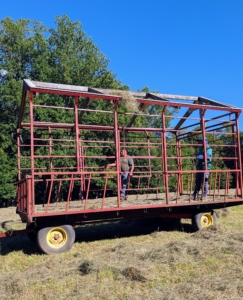
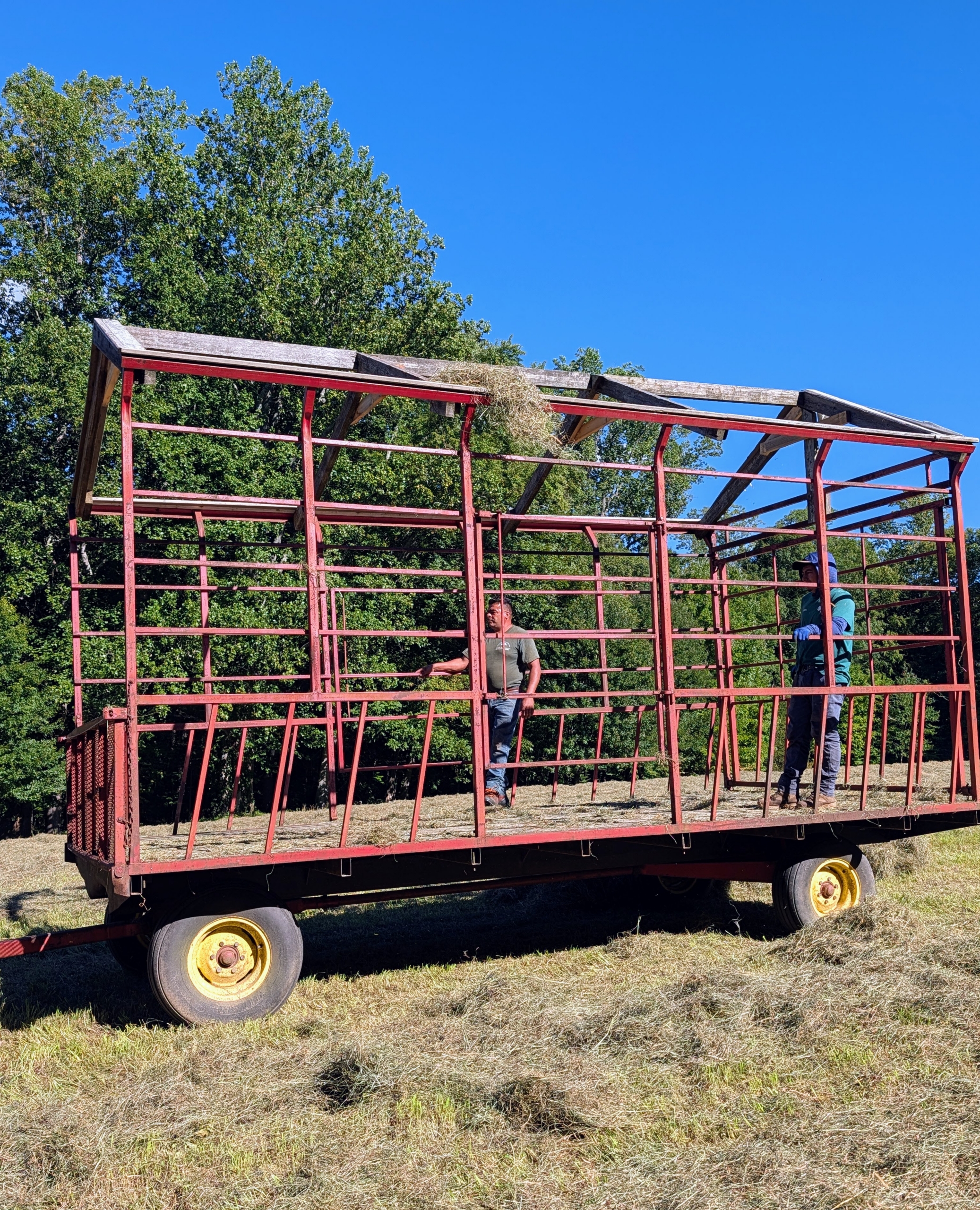
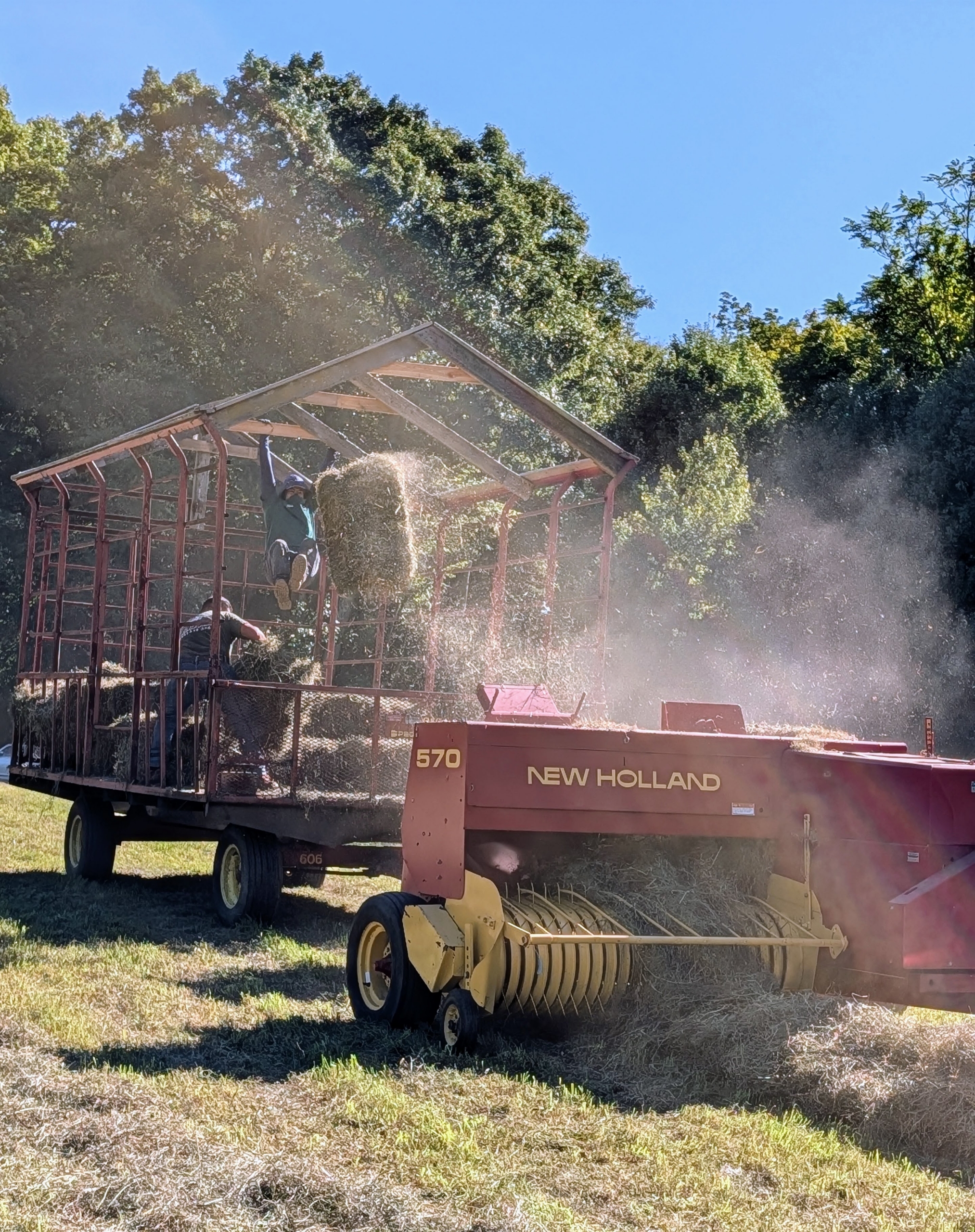
- The bales get thrown into this wagon, which holds about 150 bales. Two outdoor grounds crew members ride in here and work together to grab the bales and stack them. Everyone is ready to go!
-
- The tractor rides to one side of the windrow while the baler passes directly over it to collect the hay.
-
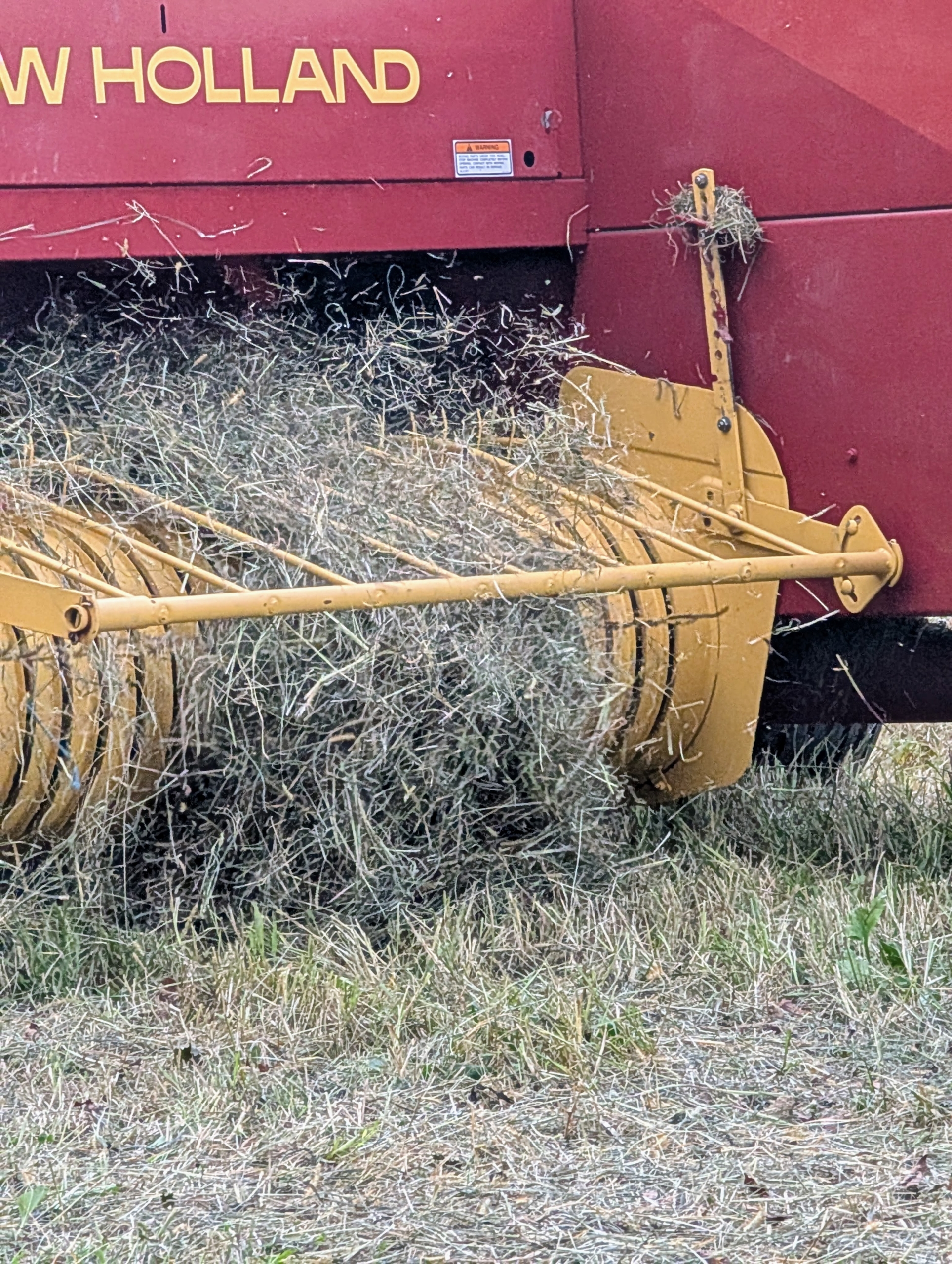
- The baler picks up windrowed hay using a rotating pickup reel designed to lift the crop cleanly from the ground and feed it into the baling chamber.
-
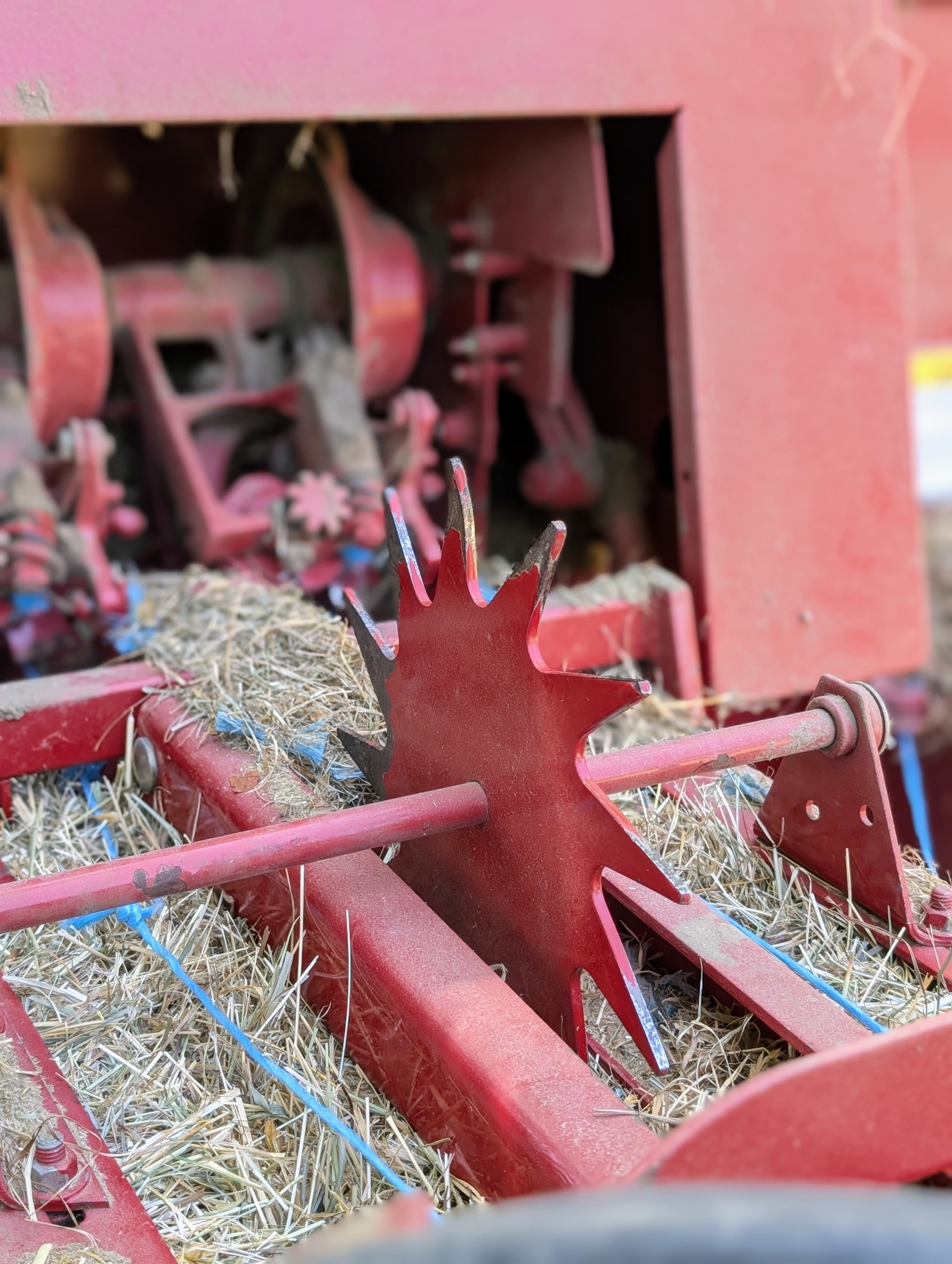
- The motor helps to move and propel the bales into the wagon. A measuring device – the spiked wheel – is turned by the emerging bales. It measures the amount of material that is being compressed and then the knotters wrap the twine around the bale and tie it off.
-
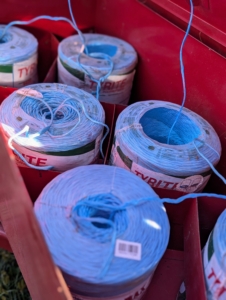
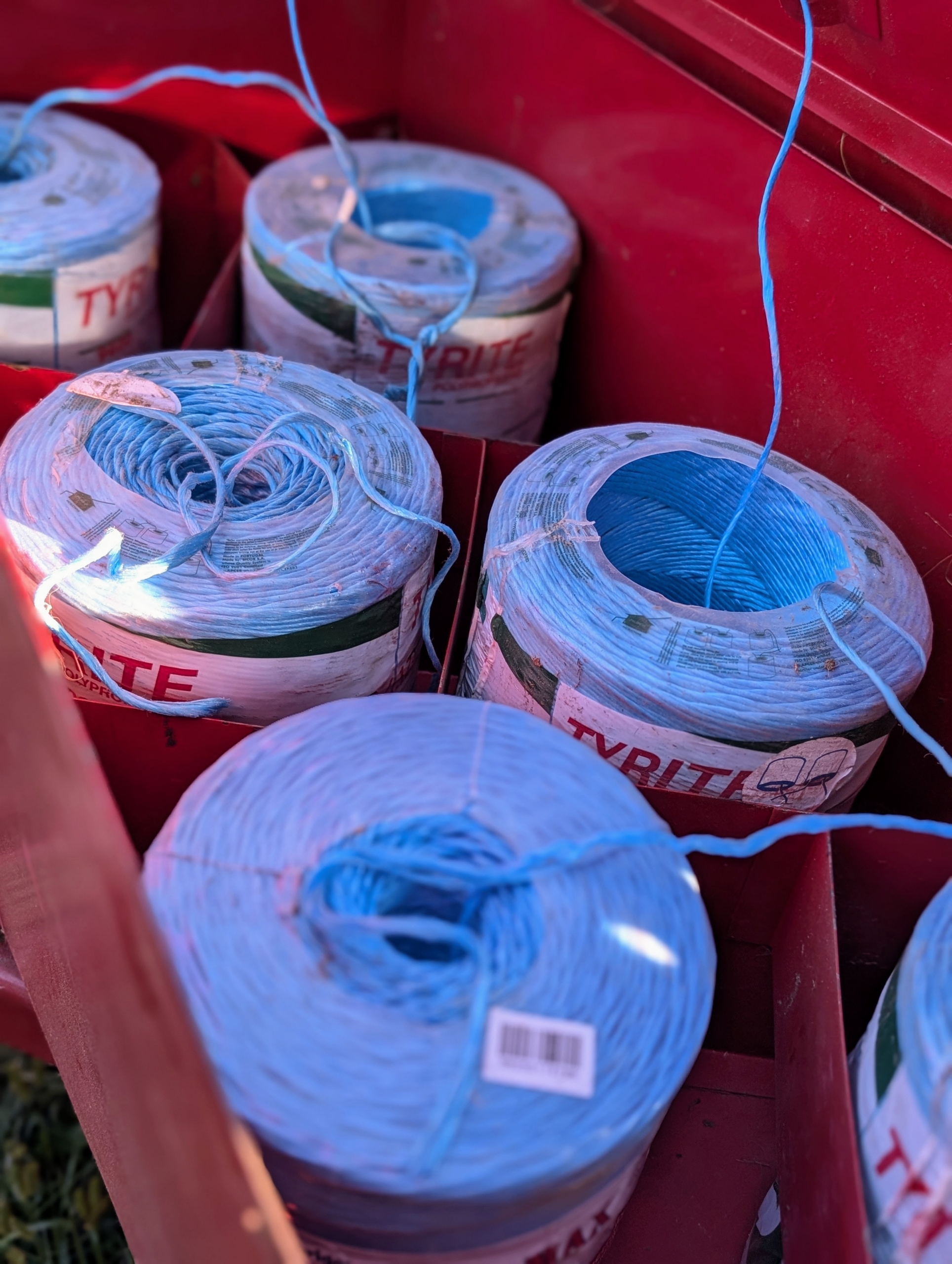
- Large rolls of twine are positioned and tied to each other, so they can feed into the baler and secure the hay just before it shoots out into the wagon.
-
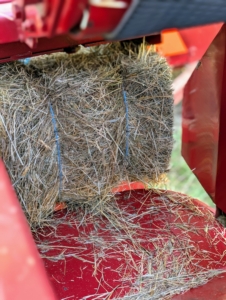
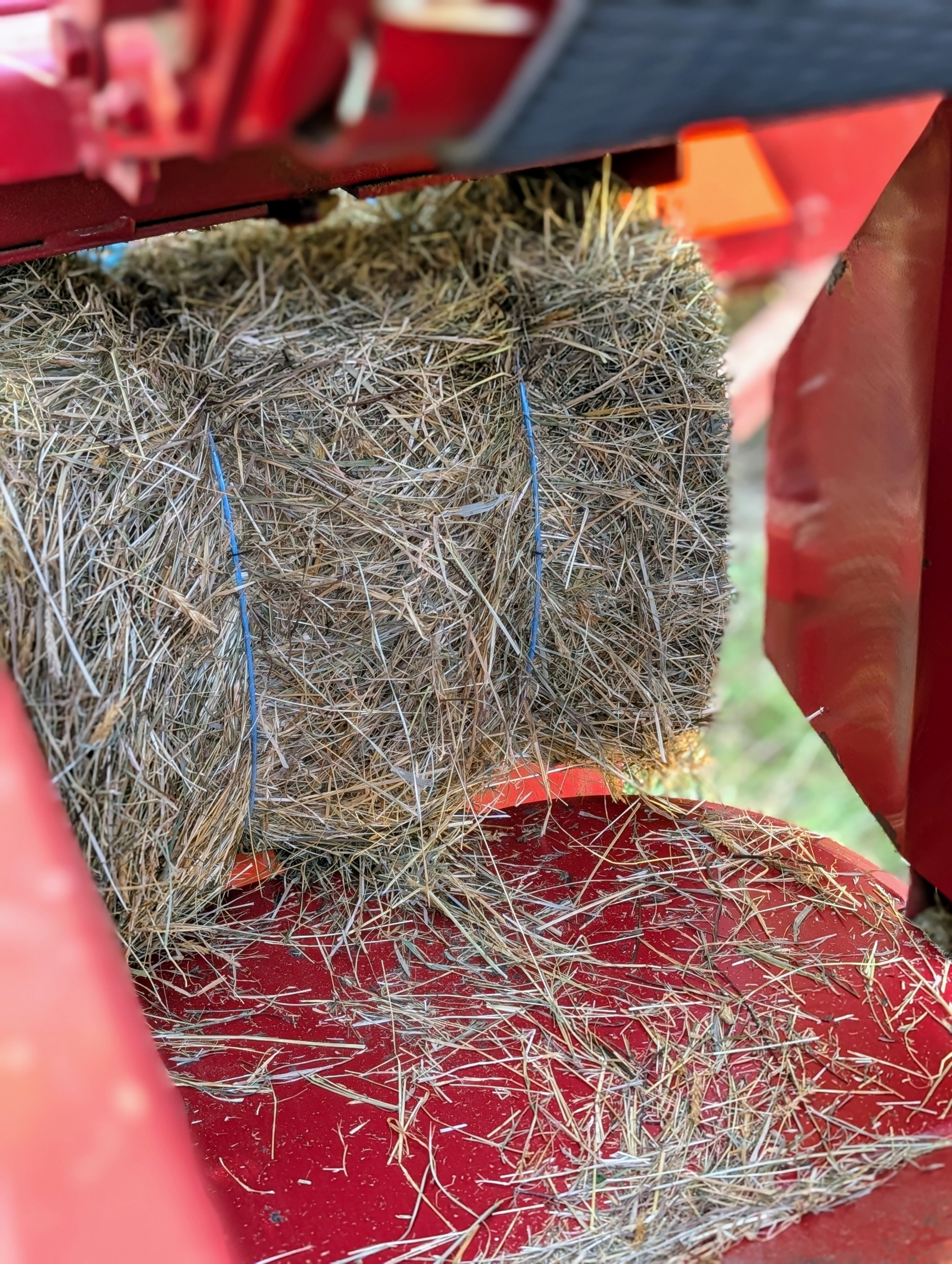
- Once it is tied, it moves up this conveyor belt…
-
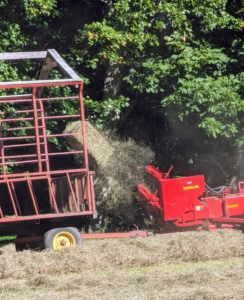
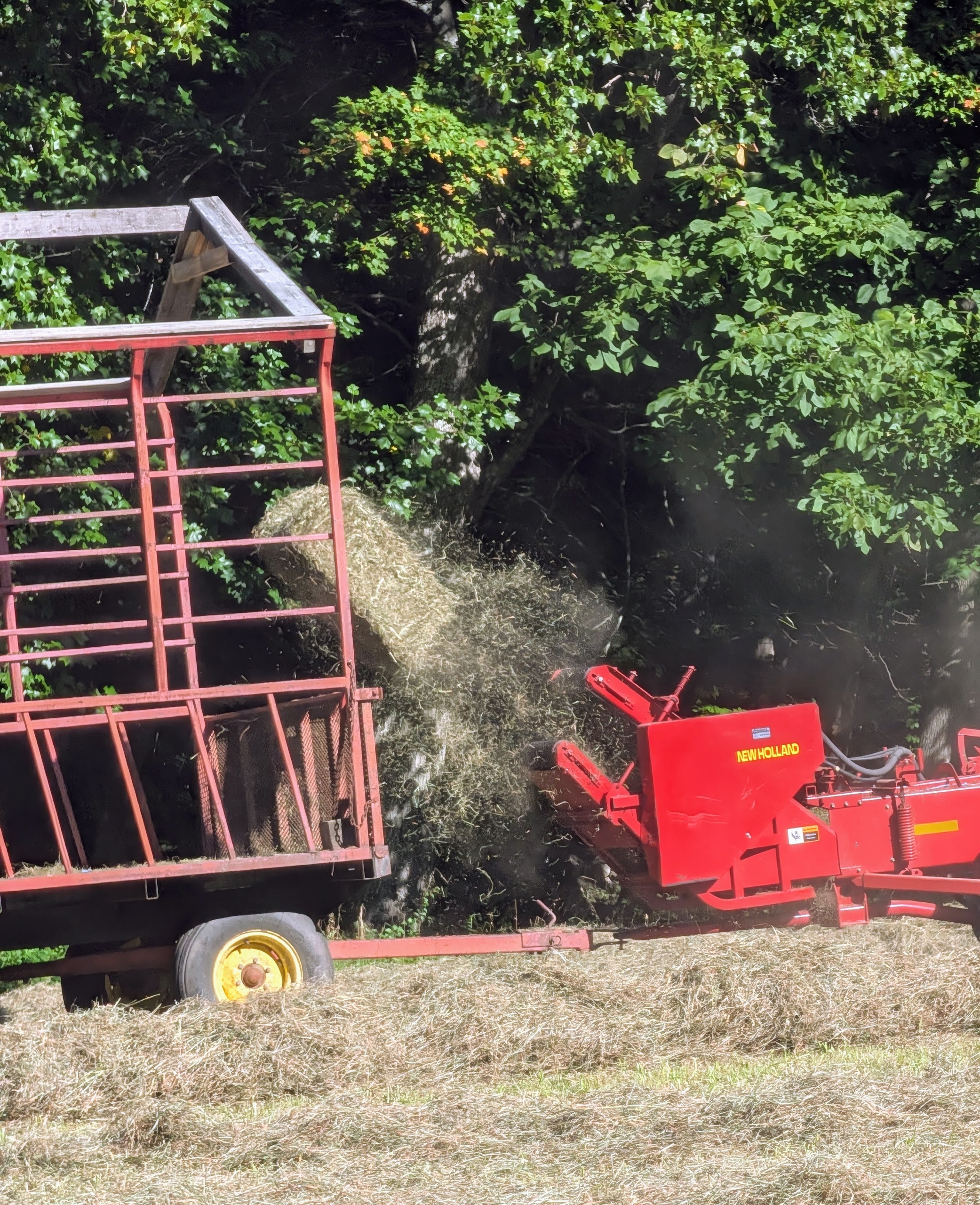
- Here is a bale of hay as it is lifted in the baler’s reel, moved, and finally propelled into the wagon by a mechanical arm called a thrower or a kicker.
-
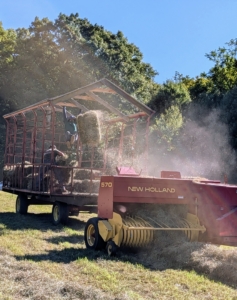
- Here’s a view from the front. The crew is ready to kick the bale to stop, so it can be picked up and stacked.
-
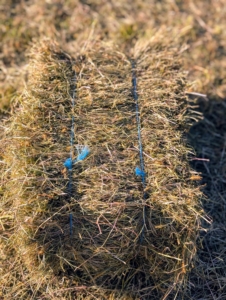
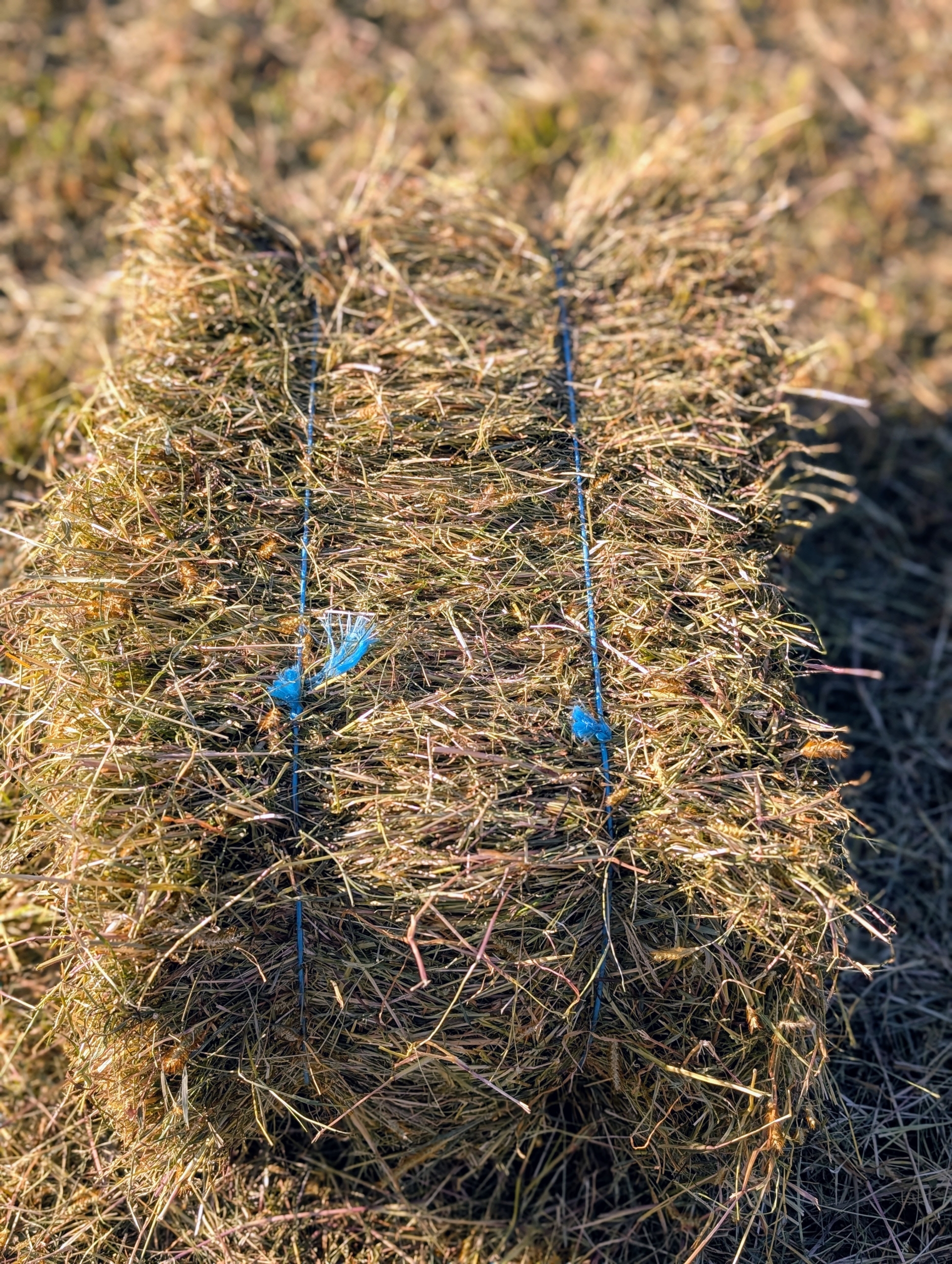
- The bales are manageable for one person to handle, about 45 to 60 pounds each. The crew must work quickly with someone always on the lookout for the next shooting bale.
-
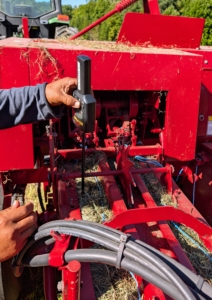
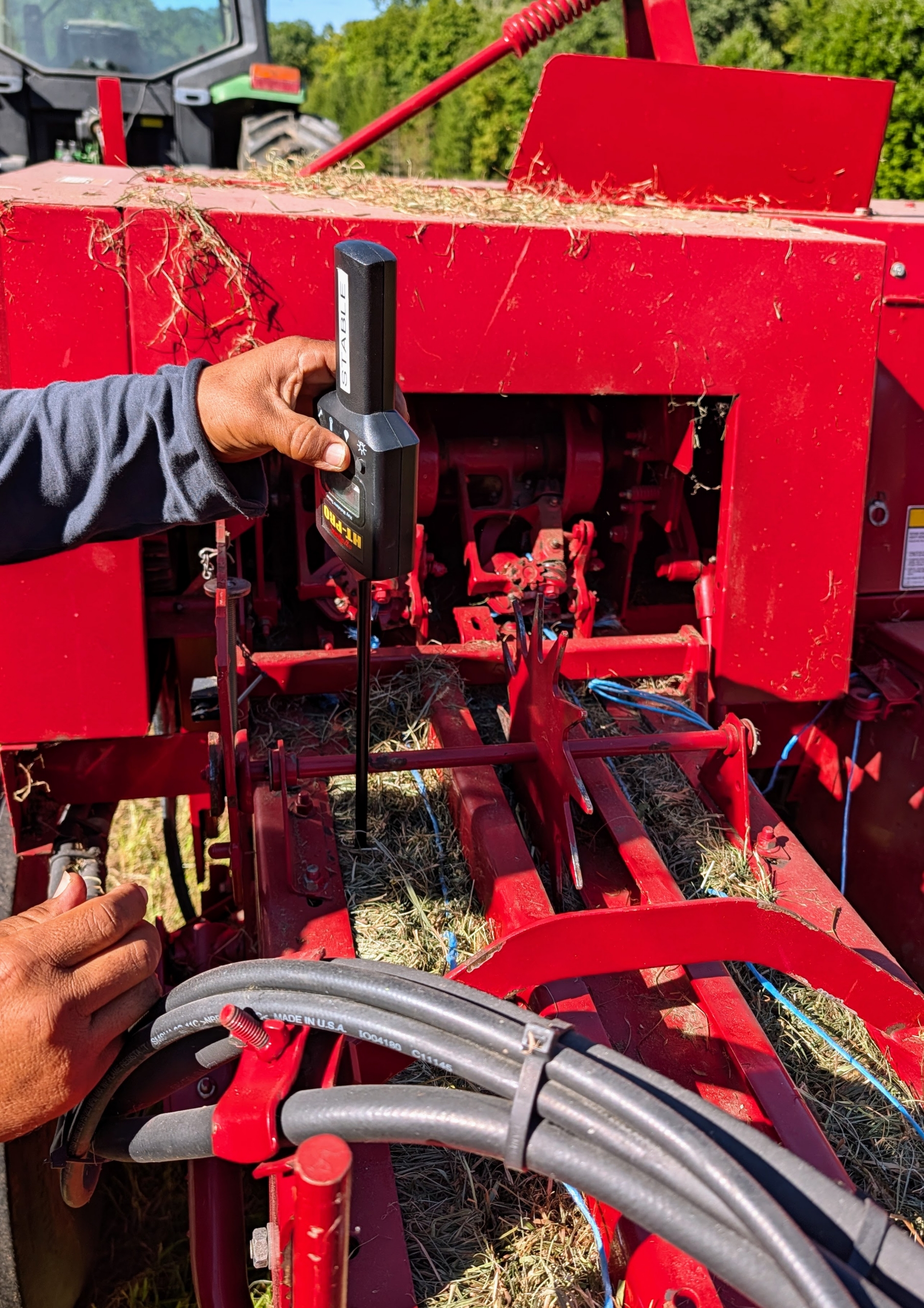
- The best moisture range for hay bales is generally between 12 and 18-percent. This range is crucial for maintaining the hay’s nutritional value and preventing spoilage. Chhiring tests several bales to make sure they are within the desired range.
-
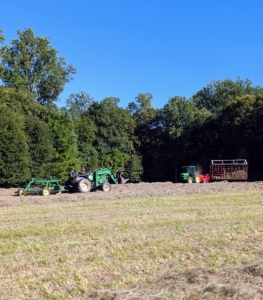
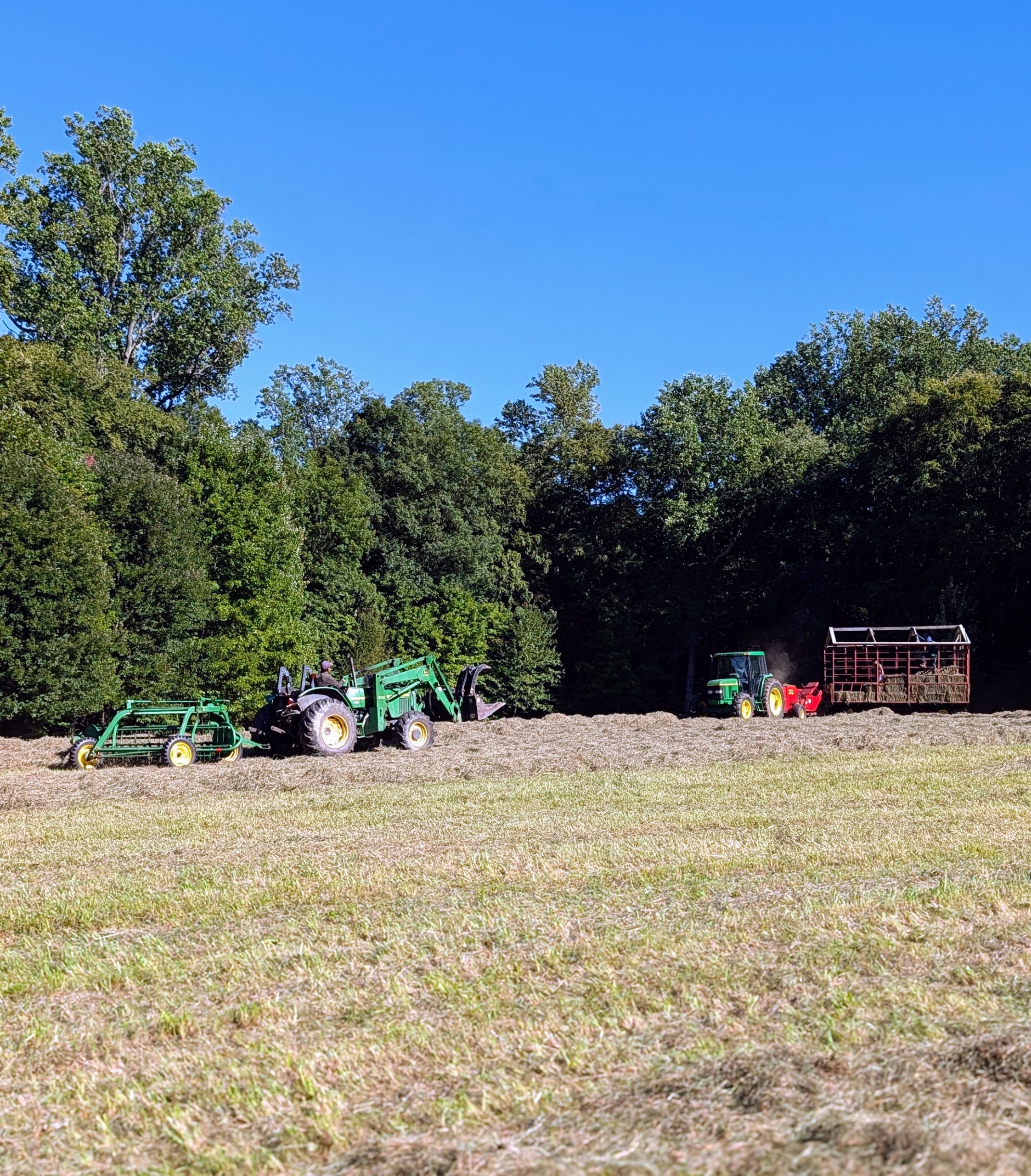
- As one makes windrows, the other pulls the baler up and down the field.
-
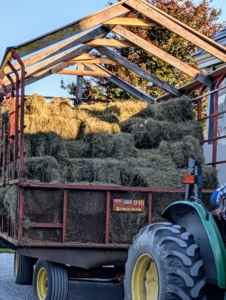
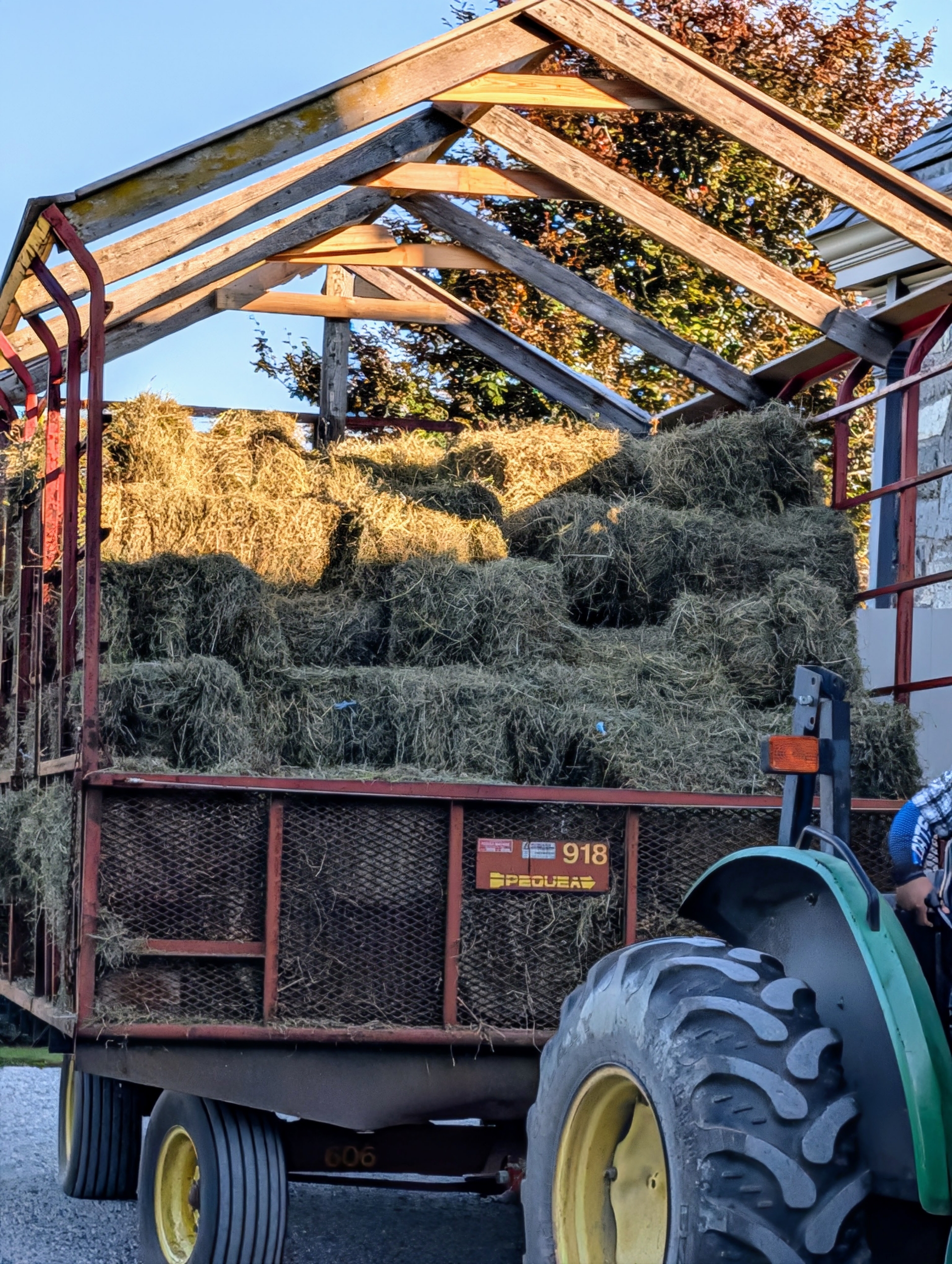
- Once a wagon is full enough to unload, it is brought to my stable hayloft.
-
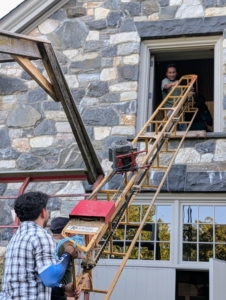
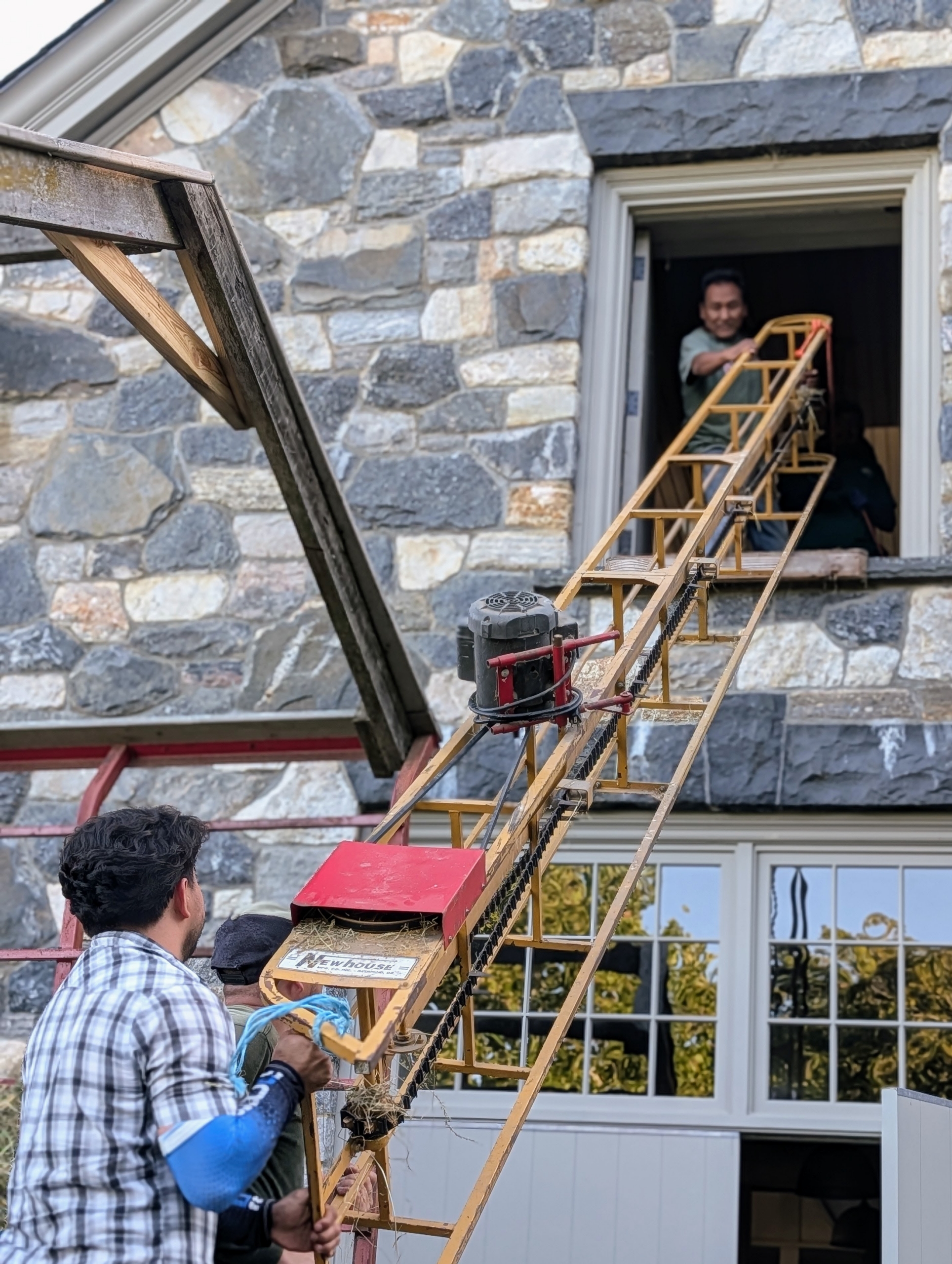
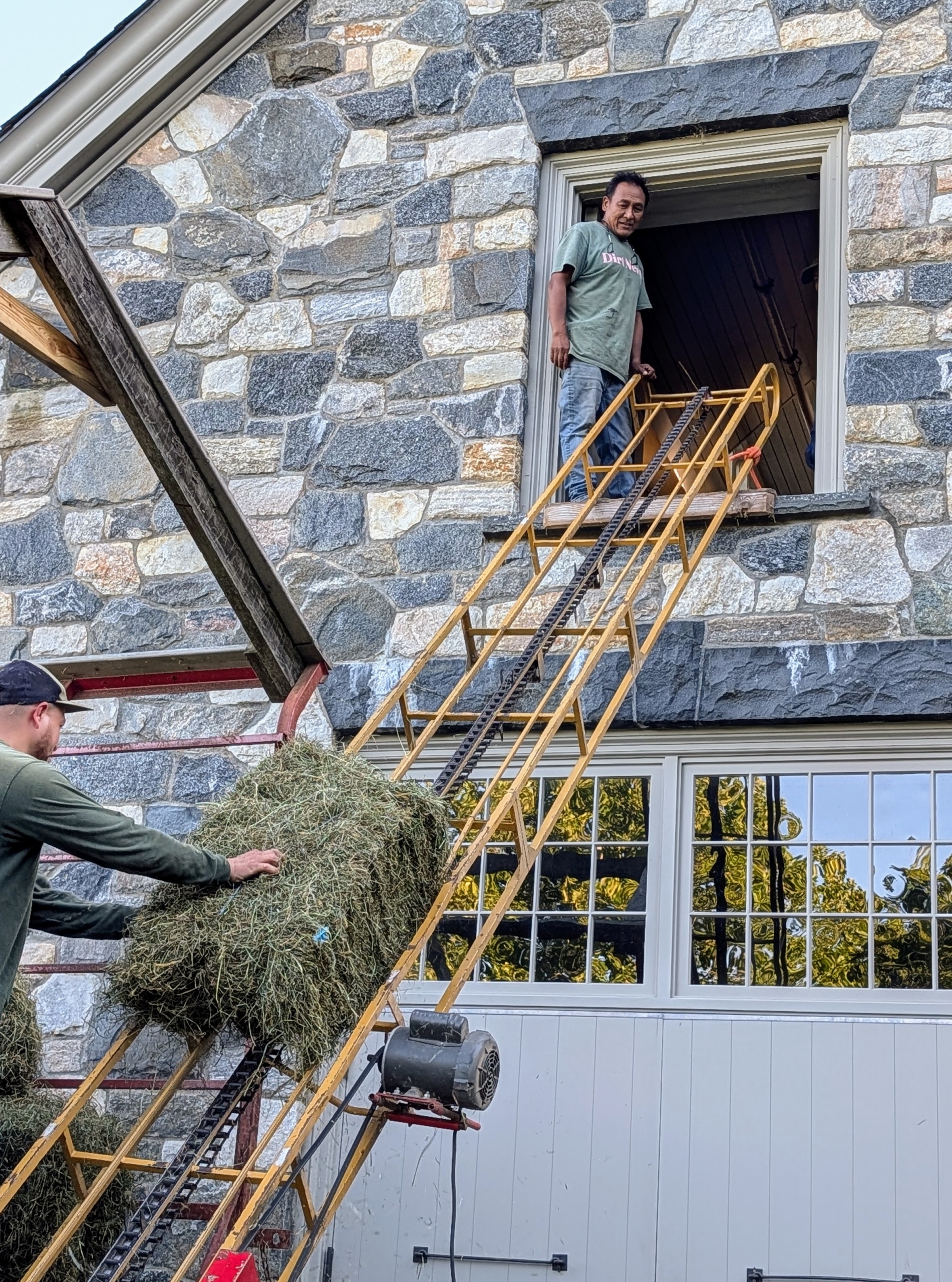
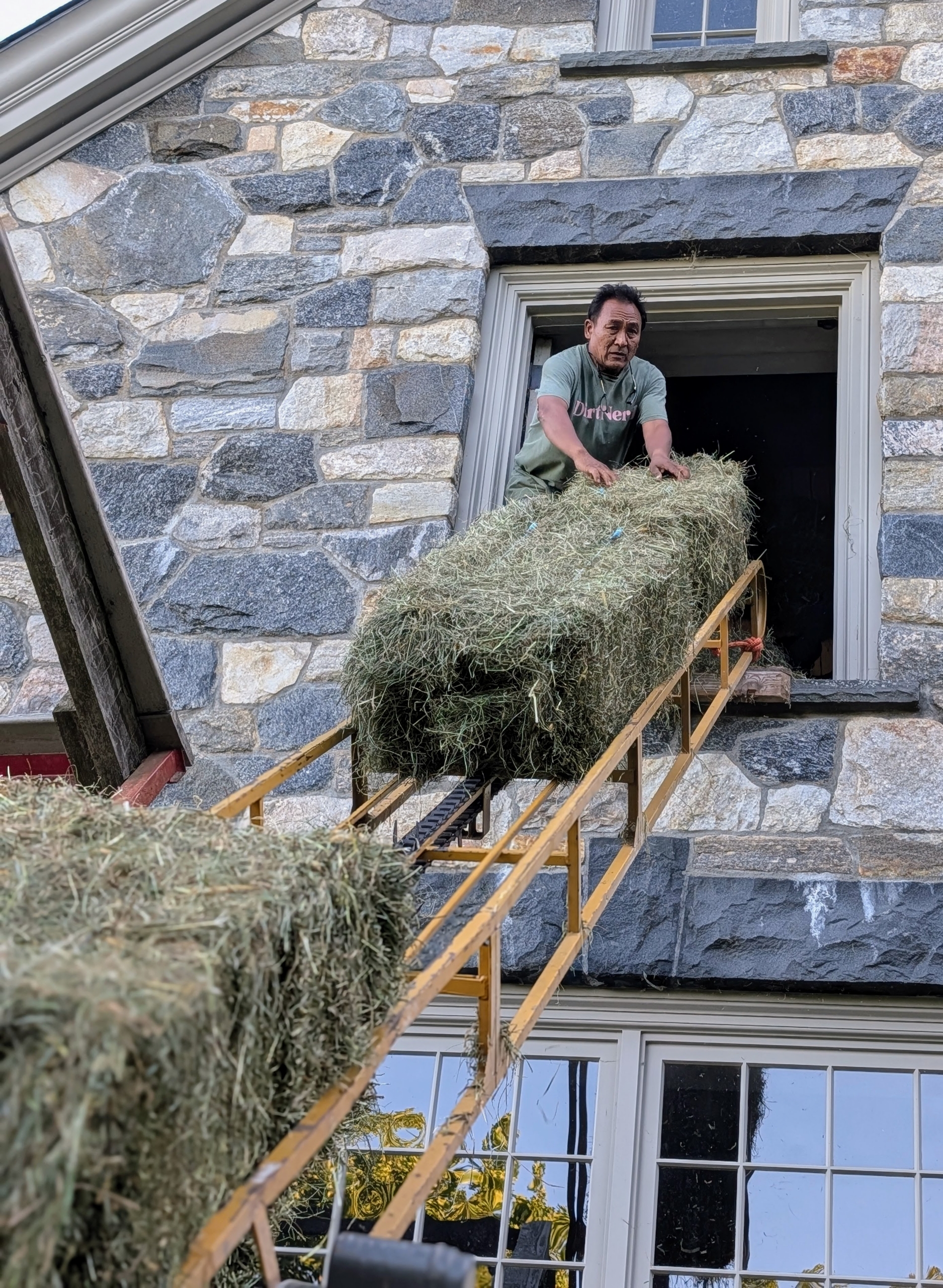
- To get the bales up into the hayloft of my stable, a long motorized bale conveyor, or hay elevator, is set up from the wagon to the window of the loft.
-
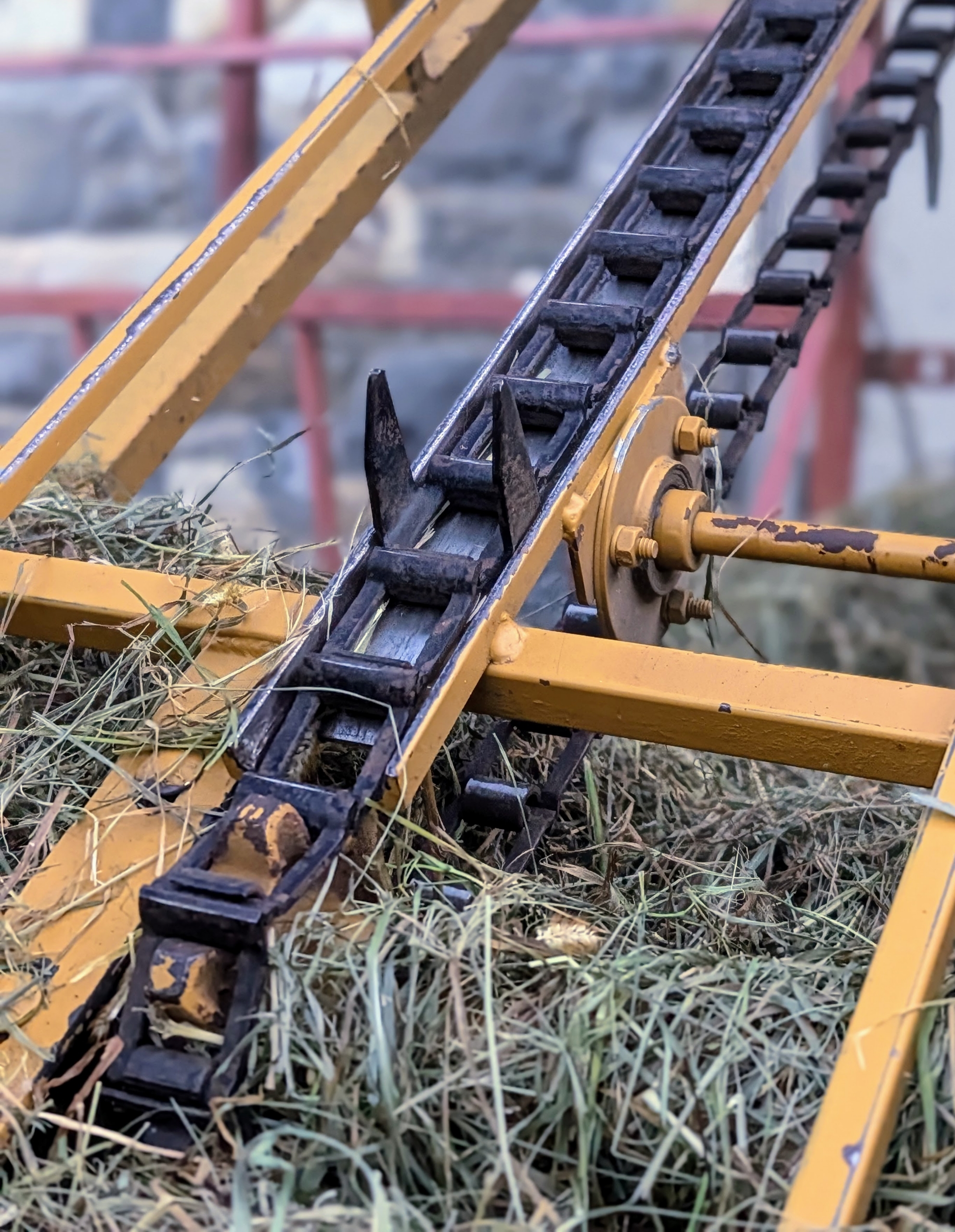
- A hay elevator is an open skeletal frame, with a chain that has dull three-inch spikes every few feet to grab bales and drag them along.
-
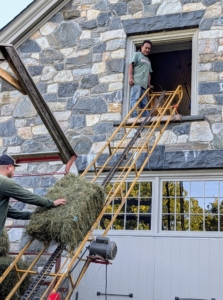
- The apparatus works as a pulley system on a track that moves the bales up to the loft.
-
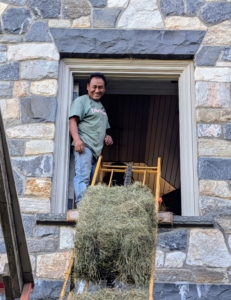
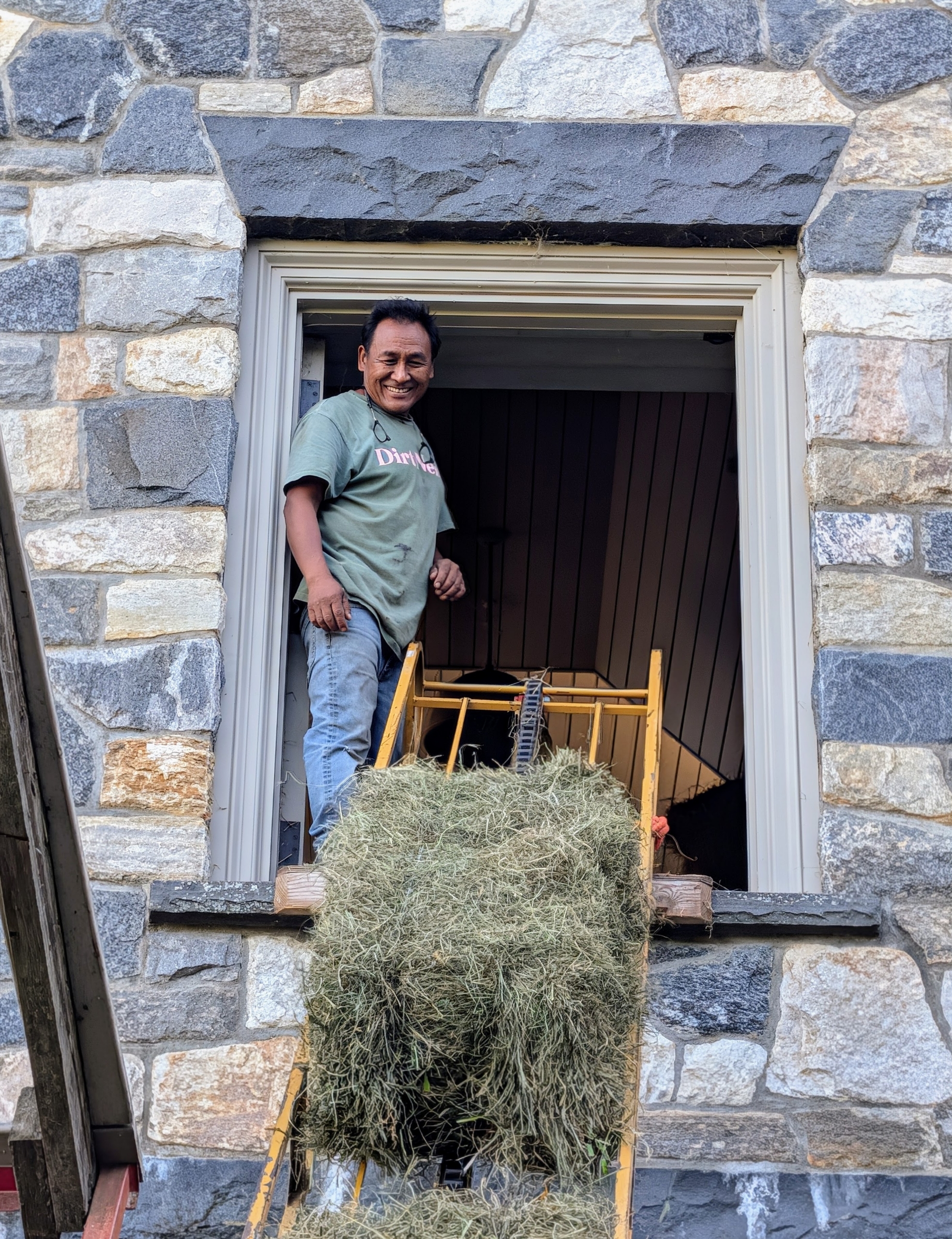
- As bales ride up, Pete stands by to accept them.
-
- One by one, Pete pulls the bale off the elevator and passes it to someone else for stacking.
-
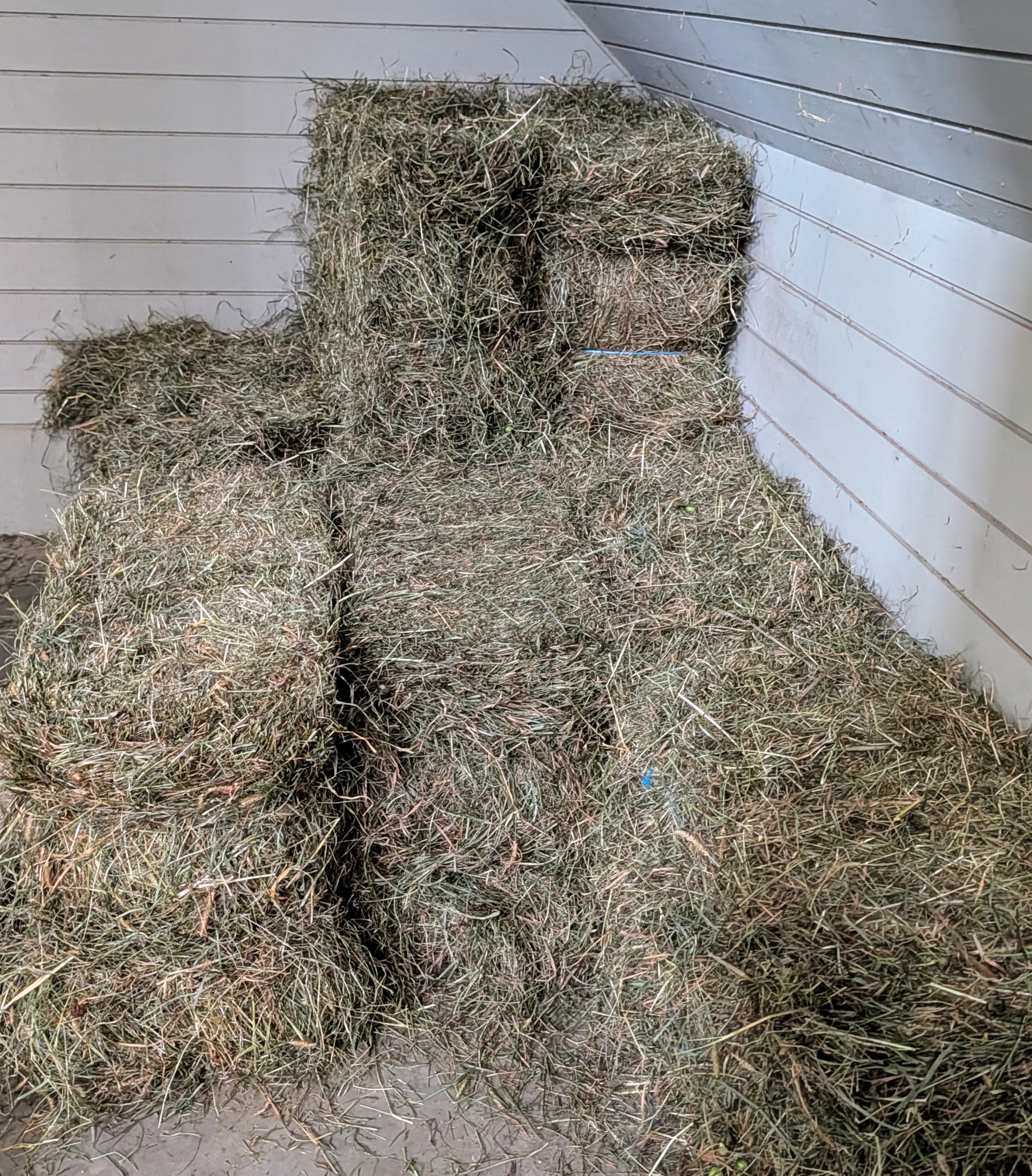
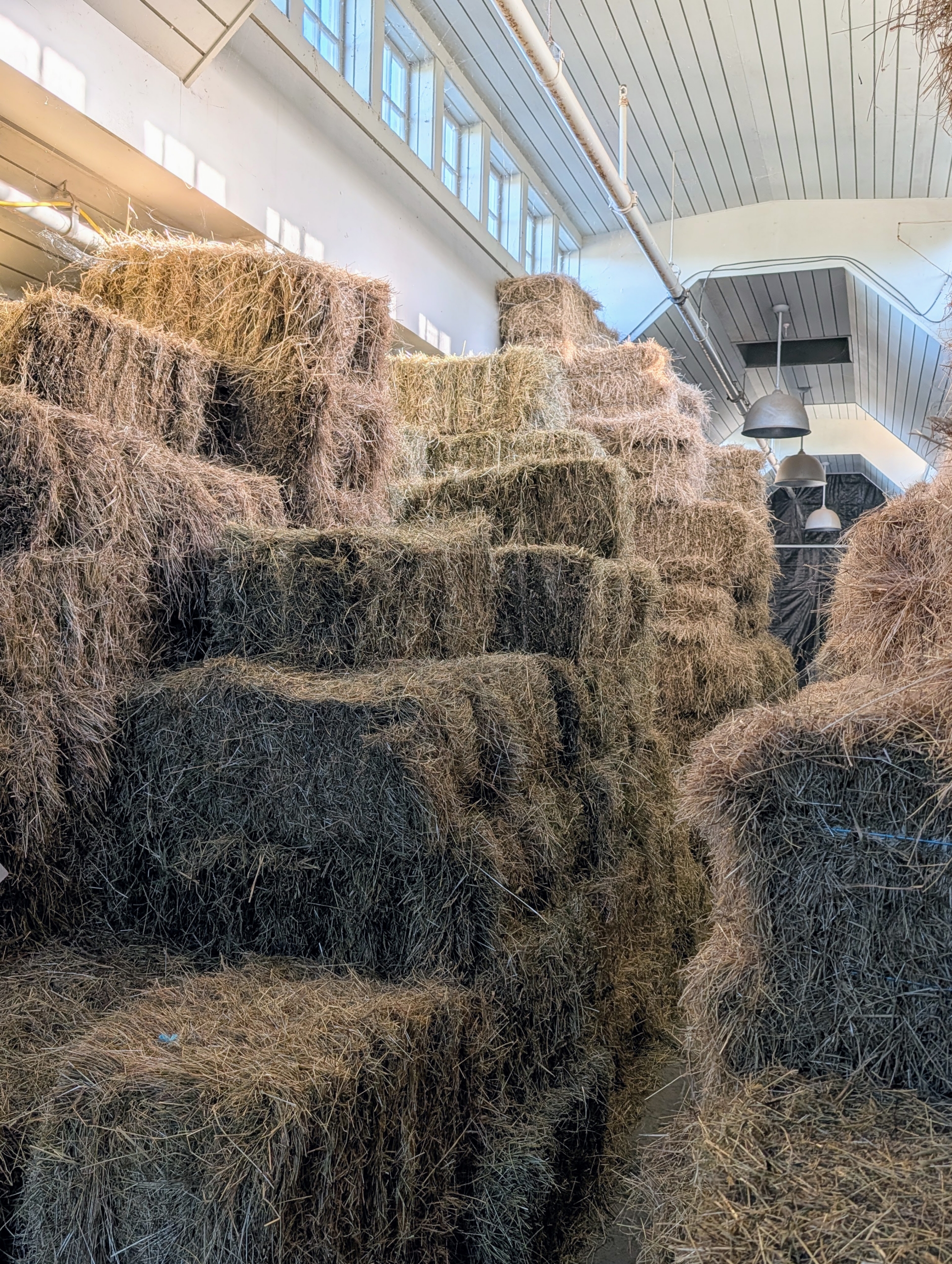
- Neat, tight stacks of hay are made in the loft – there are a lot of bales to store here.
-
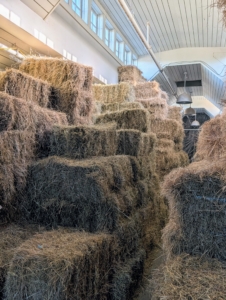
- These bales will stay here until needed. With a full stable, this does not take long. It makes me so happy to know I can grow good, nutritious hay for my horses right here at my farm.
This story originally appeared on Martha Stewart Blog

