


If you’re not going to put it on your desk, at least do these things.
More often than not, where you set up a new PC comes down to convenience. Since the towers are so large, setting them up on top of the desk isn’t always an option, especially if you don’t have a ton of space. So under the desk it goes! It’s out of the way, and before long, you forget about it until you have to press the power button or you need to unplug some cable.
That’s great and all until, months later, your fans start screaming and games begin stuttering. Although it may be more convenient to keep your PC on the floor, this can result in temperature spikes and thermal issues as your PC turns into a burrow for a whole fluffle of dust bunnies. Ultimately, where a PC lives affects how well it runs and how long it lasts. With PC parts becoming pricier by the month, protecting your investment matters, and there are multiple ways to do this even if you’re tight on space.
How floor placement turns your PC into a dust magnet
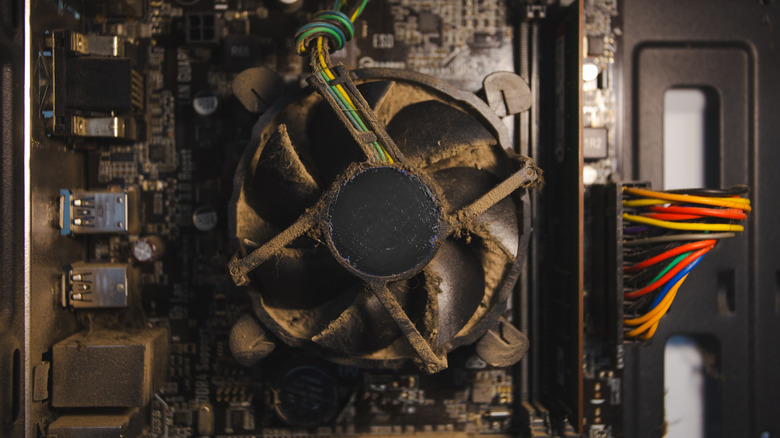
Floors collect far more debris than desks or shelves. From carpet fibers to pet hair, skin cells and pollen, they all settle at ground level. If your PC is directly on the floor, the intake fans pull that debris directly into the case. Once inside, dust coats everything, from the heatsinks to the filters to all those tiny circuits. In time, components meant to stay cool become insulated. The buildup blocks airflow and forces fans to work harder just to maintain normal temperatures. Then, as heat rises, systems increasingly rely on thermal throttling, a safety measure that reduces clock speeds to prevent damage. This ultimately results into your computer slowing down when you really don’t want it to, like when you’re gaming.
The consequences extend beyond rough gaming sessions because consistently high temperatures accelerate capacitor wear and thermal paste breakdown, meaning that a system that should last six to eight years could fail in half that time. And if you haven’t checked GPU prices this year, let us tell you that they’re high (much like pretty much all other components, particularly RAM and storage).
Dust isn’t the only issue with floor placement. If you push the tower too close to the wall, it could block out the intake and exhaust paths, which are essential for airflow. Restricted airflow traps heat, and hardworking fans spin louder and wear out faster. It all adds up to a well-built PC underperforming simply because of where it sits.
Where should you actually put your PC?
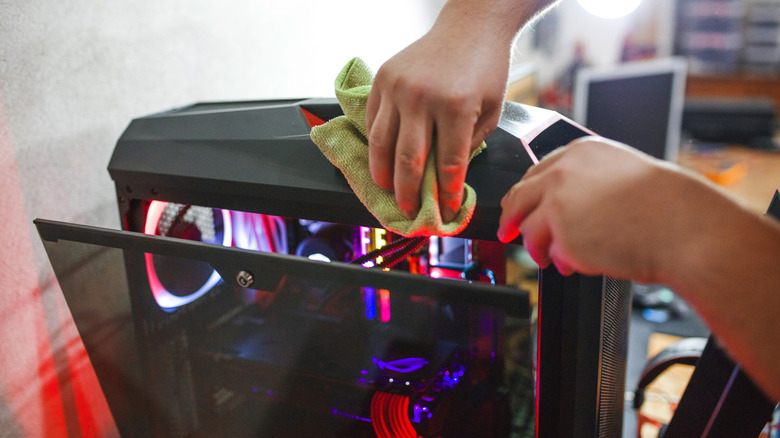
So where should you put your PC? Is it supposed to be on the floor? Not ideally, but if that’s the only option, there are adjustments you can make to improve the situation.
First of all, elevate your PC. If you can’t put it on a desk or on a shelf, then you’ll want a dedicated PC stand to keep the intake fans away from ground-level dust and debris. Then, you should absolutely avoid placing the PC directly on the carpet or in humid areas because that will increase the need for regular cleaning and maintenance. Just put it on a hard, non-carpeted floor with a stand or a wheeled cart.
Don’t forget to also give the PC some breathing room, keeping several inches of clearance from the wall and furniture so rear exhaust vents can function properly. Lastly, make sure you dust the case often and open it up every few months to do a thorough clean-up by cleaning filters, using compressed air, and so on.
PC placement rarely gets the attention it deserves, yet it directly affects just how much dust your system pulls in, how efficiently it cools itself and how many years it delivers a good performance. Spending a bit on a shelf or stand and keeping up with a cleaning schedule will save you a lot of money and headache in the long run.
This story originally appeared on Engadget

