


Anthropic CEO Dario Amodei had dinner with President Trump at the White House on Sunday but not before Amodei’s critics circulated a memo to the president criticising the AI chief, according to the WSJ. The memo argued that Amodei had “a long record of attacking Trump,” “deep Democratic ties,” and that “he doesn’t trust President Trump,” according to Axios.
It is the second recent memo that Republicans have written criticising AI executives. A previous one, titled “Effective Altruism Opposition Research File,” argued that people in the AI industry who had safety concerns were effective altruists, left-wing, vegan, polyamorous, and not against sex with animals.
- The memos introduce a new wrinkle for CEOs who want or need a relationship with the White House: Even if you agree to break bread with the president, his allies may smear you before you sit down at the table.
The problem is that Anthropic and other frontier AI model makers have disclosed a string of incidents in which their models and agents have gone out of control, escaping sandboxes intended to isolate them from the internet, and hacking multiple companies and government websites. Those companies—including Amodei’s—have suggested creating some sort of international mechanism for reviewing models for flaws before they are released.
But the Trump White House doesn’t want to slow down the development of AI because it believes this is a race against China that the U.S. must win. At the same time, both Anthropic and OpenAI are heading for $1 trillion-plus IPOs—making them impossible for the White House to ignore.
“The WH is trying to get everyone seated at the table,” a source told Axios.
MORE FROM FORTUNE
Inside Chevron’s massive bet on AI and energy | Fortune Daily
U.K. government’s AI lead has a message on frontier risks—it’s time to ‘harden and build defenses’ – Kamal Ahmed
The U.S.-China relationship is on ‘tactical autopilot’ after the Xi-Trump summit. Maybe that’s not so bad – Nicholas Gordon
Your 401(k) is funding the AI boom. Here’s what that means for your retirement – Allie Garfinkle
Airbnb CEO Brian Chesky says he spends three hours a day on recruitment—and if his hiring managers don’t like his input, he tells them to leave – Orianna Rosa Royle
Ex-Meta exec says Mark Zuckerberg taught him a lesson in work-life balance. Now he has strict rules for meetings and emails at his $1 billion tax firm – Orianna Rosa Royle
HARD ASSETS
Oil tankers seized by the U.S. are slowly making their way to Texas
The U.S. may soon receive $600 million worth of Iranian oil that was seized in the war, under an ancient body of maritime law, Fortune’s Jason Ma reports.
“Nearly six million barrels (valued at nearly $600 million) of seized Iranian crude oil are quietly crossing the Atlantic Ocean towards the United States of America,” Tanker Trackers posted on X on Wednesday.
The Tifani and Majestic X are now off the coast of Brazil after they were boarded in the Indian Ocean in April. A third ship, known as the Lenore as well as the Davina, just cleared the Cape of Good Hope at the southern tip of Africa and is headed west into the Atlantic after being interdicted in the Indian Ocean in June.
The silver lining inside the manufacturing cloud
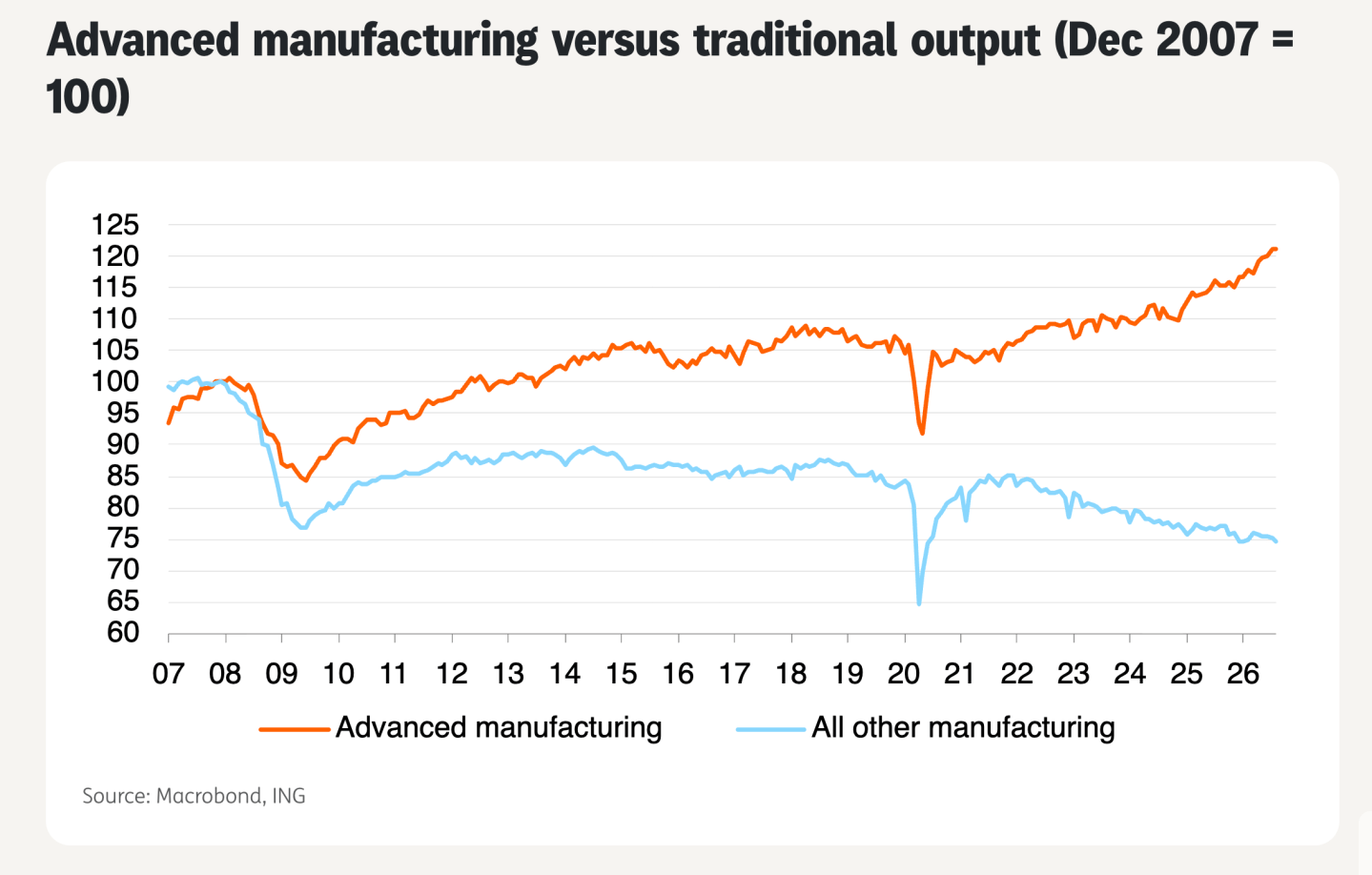
Manufacturing employs one million fewer workers in the U.S. today than it did 20 years ago, as this depressing chart from ING’s James Knightley and Coco Zhang shows. Output is 10% below the peak of 2007.
“Reasons for this poor performance include consumer demand preferences shifting ever further toward services over physical goods, underinvestment in advanced production facilities relative to international competitors, high U.S. labor costs and the removal of trade barriers allowing foreign manufacturers to gain market share,” the pair said in a recent deep-dive on the topic.
There is one bright spot, however: tech. “High value-added or advanced manufacturing, within which we group tech, electronics, transport, and power-related sectors, has significantly outperformed other sectors,” they said:
THE MARKETS
Stocks flinch at rising oil prices
Markets in Europe ticked up this morning, but U.S. futures were down before the New York open. The price of oil went over $107 per barrel this morning, and all the major indexes fell in Asia, where countries are more dependent on imported fuel.
- S&P 500 futures were down 0.55% this morning. The index rose 0.51% on Friday.
- In Europe, the Stoxx 600 was up 0.17% in early trading, and the U.K.’s FTSE 100 was up 0.31% before lunch.
- Asia: South Korea’s KOSPI was down 2.7%. Japan’s Nikkei 225 was down 0.73%. India’s Nifty 50 was down 1.46%. China’s CSI 300 was down 2.22%.
- Brent crude rose to $107 per barrel this morning.
- Bitcoin was at $82,886.
Why stocks are resilient in the face of bond market drama
Despite the ructions in the bond market—with the yields on benchmark U.S. Treasuries topping over 5%—the S&P 500 remains points away from another all-time high. That’s unusual, according to Kriti Gupta of JPMorgan Private Bank.
“Historically, this environment would have posed a significant challenge for equities. Higher yields increase borrowing costs, reduce the present value of future cash flows, and raise the hurdle rate for investment. In prior cycles, a move of this magnitude in global bond markets would likely have weighed heavily on stock valuations. That’s not at play to the same extent this time around,” she said in a recent note. “Both economic growth and corporate earnings have consistently exceeded expectations. Largely driven by the AI build-out, but accompanied with breadth across industries and sectors. As a result, volatility in the equity market has not matched the volatility in the bond market.”
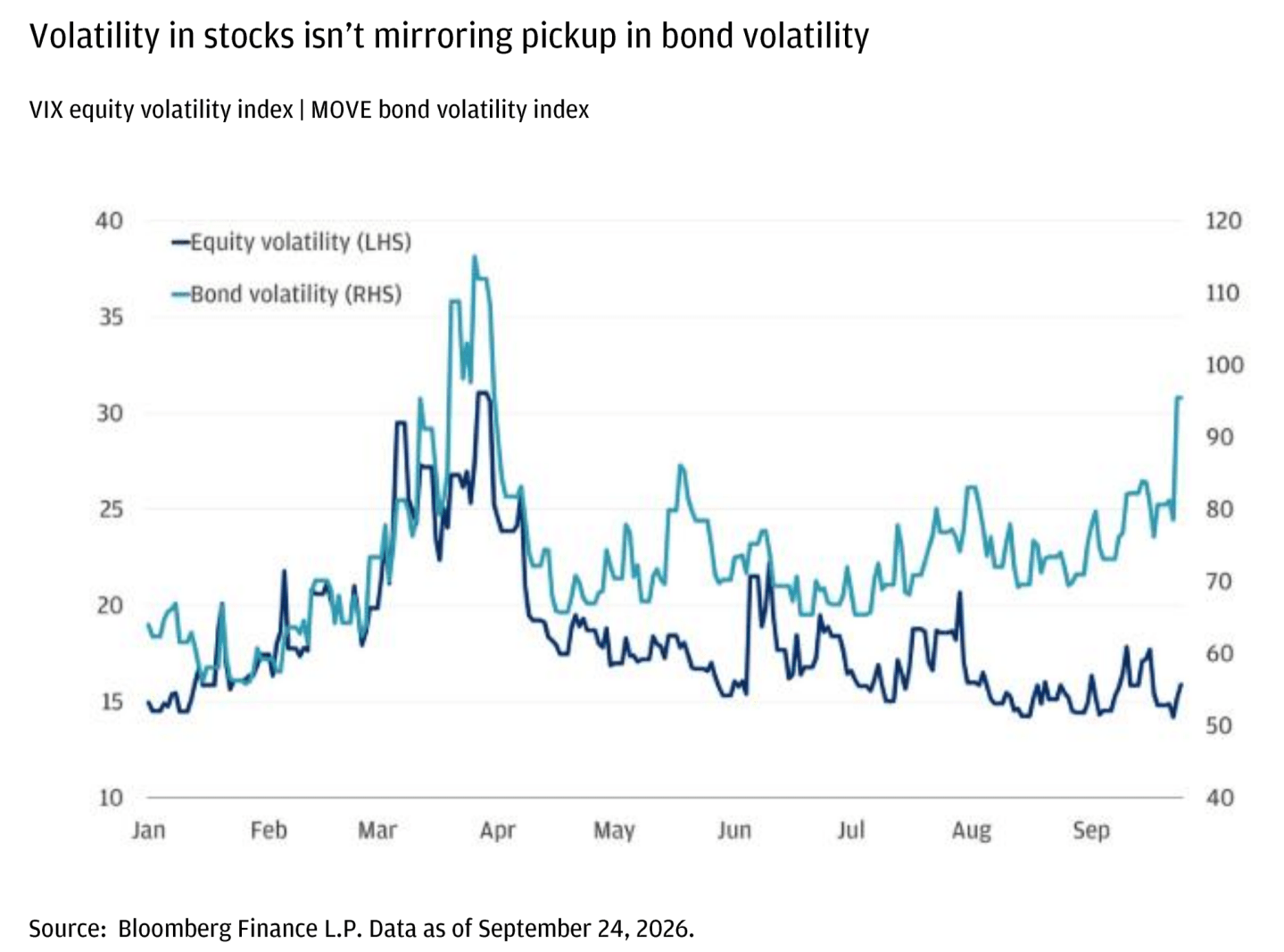
CHART OF THE DAY
As the price of solar power approaches zero, adoption soars
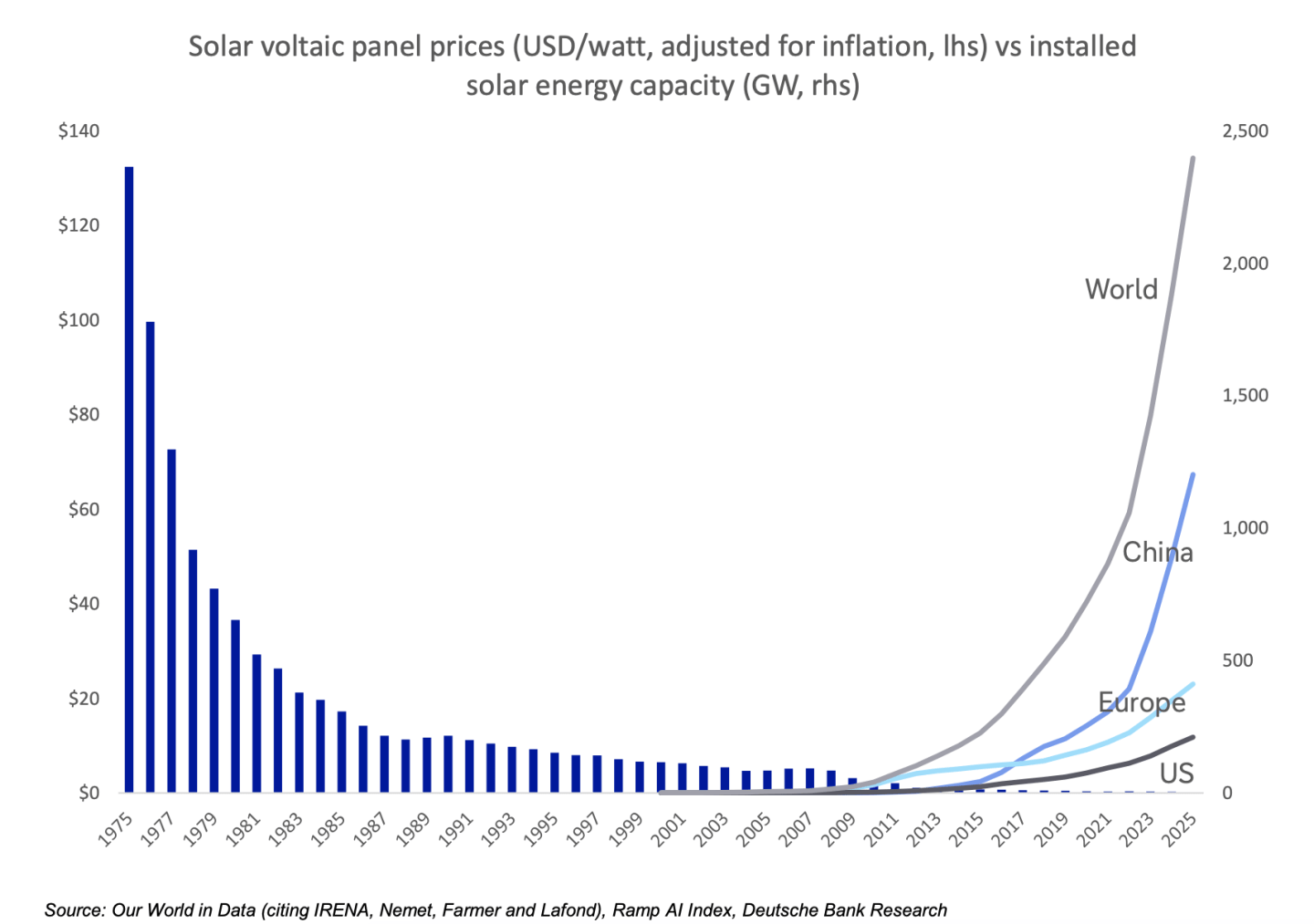
“Tech use accelerates when the cost falls far enough,” according to Adrian Cox of Deutsche Bank. “Solar and now AI are following similar patterns to horsepower, electricity, and mainframes.”
NUMBER OF THE DAY
15 minutes
The length of time an average American consumer must work in order to have earned enough money to buy one pound of coffee. That’s “one of the highest work-time-to-caffeine ratios of modern times,” notes UBS’s Paul Donovan.
THE FRONT PAGES TODAY
Counter-terror police investigate Iran link over suspected bomb plot at RAF base used by U.S. – The Guardian
AI hyperscalers are transforming debt – FT
Trump ‘very seriously’ considering diesel export ban as global supply crunch worsens – CNBC
Every household in this rural town receives $10,000 if a data center gets built – WSJ
After nixing Iran proposal, Trump tells Axios he expects talks this week – Axios
Qatar extends LNG force majeure as Hormuz disruptions drag on – Bloomberg
South Korea President Lee Jae Myung on the growing problem with North Korea – NYT
U.S. jury says Apple owes record $5.7 billion in patent case against San Diego company – NY Post
ONE MORE THING
Japanese companies are paying older workers to sit by a window and do nothing
As corporate America and Europe drag workers back to five days in the office and squeeze for ever more efficiency, Japan is quietly paying thousands of older employees to show up, sit down, and do almost nothing at all, Fortune’s Orianna Rosa Royle reports.
Meet the madogiwazoku cohort—older, underperforming, or redundant employees who are assigned desks near the window with little to no work to do. These “window workers” are mostly Gen X and baby boomer men in their late 50s and 60s, who were hired on the promise of lifetime employment shushin koyo and a seniority‑based pay system.
They spend their days answering the occasional email, shuffling a few documents, and sorting paperwork—kept on comfortable salaries but carefully steered away from any real responsibility.
They aren’t office troublemakers—they’re often loyal, non-confrontational workers who’ve simply been overtaken by changing technology or strategy. Rather than push them out, employers quietly move them aside. “They’re not aggressive people, so we just let them work, and they don’t complain, and they’re happy with it, and they work for the company for a long time,” explained @papafromjapan on TikTok.
This story originally appeared on Fortune

