Apple TV is making history with its upcoming “unfilmable” sci-fi adaptation. Over the years, Apple TV has built a reputation as the streaming industry’s leading science fiction destination, producing an acclaimed mix of sci-fi originals and classic adaptations. With Severance‘s satirical, high-concept look at society’s work-life balance, Dark Matter’s multiverse-hopping journey, the epic world of Isaac Asimov’s Foundation saga, and more, Apple TV has something for every sci-fi fan.
Next year, Apple will officially join the increasingly popular cyberpunk space, finally bringing one of the subgenre’s most seminal novels to the small screen after years of development limbo. William Gibson’s multi-award-winning debut novel Neuromancer, first published in 1984, is widely recognized as the foundation for modern cyberpunk stories.
While Ridley Scott’s 1982 cult masterpiece movie Blade Runner, inspired by Phillip K. Dick’s Do Androids Dream of Electric Sheep?, popularized much of the visual neon-noir aesthetic that cyberpunk is known for, Gibson’s own neon-drenched world is an increasingly predictive, futuristic masterpiece (which began with the 1981 short story “Johnny Mnemonic”), exploring concepts like cybernetic augmentation, AI, urban development, humanity’s growing dependency on technology, and corporate monopolies. Gibson is even credited with coining the terms “cyberspace” and “matrix” to describe interconnected, digital landscapes, years before the internet became part of everyday life.
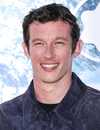
Apple TV’s Neuromancer adaptation, executive produced by Gibson himself, follows super-hacker Case (Callum Turner) and razor-girl assassin Molly (Brianna Middleton) as they embark on a dangerous, high-stakes digital heist. For years, decades even, Neuromancer was considered “unfilmable,” its complex ideas, structure, and evocative, introspective prose difficult to translate to the big screen. Multiple attempts have failed.
In 2000, director Chris Cunningham was tapped to helm a theatrical adaptation. Several years later, director Joseph Kahn began working on a film version, with Milla Jovovich and Hayden Christensen rumored to star as Molly and Case, respectively. In 2012, Mark Wahlberg and Liam Neeson were in talks for a Neuromancer adaptation led by Vincenzo Natali, before Simon Kinberg and Tim Miller’s attempt came along in 2017. None of these projects ever made it past development, however. Apple TV’s upcoming 10-part Neuromancer series is finally breaking the cycle, and it could have a long, successful future.
Apple TV’s Neuromancer Can Last For Multiple Seasons
Apple TV has proven that intricate science fiction stories can thrive on the small screen, and that audiences are hungry for them. Just look at sci-fi novel adaptations like Foundation and Silo. Streamers have the budget and the freedom to approach these worlds without breaking them down into unrecognizable stories fit for a two-hour format. Science fiction, much like fantasy, relies on its worldbuilding. Without the chance to build that foundation properly, most adaptations are doomed to fail, or at the very least, fall into obscurity.
Ten episodes are perfect for a Neuromancer adaptation. This gives the series room to explore the story’s most complex concepts, dense narrative, and massive urban world without adding unnecessary plot threads and characters to fill its runtime. Gibson himself has publicly supported the show, writing on his Bluesky account that he’s been “very satisfied throughout production.” It certainly doesn’t have to end with Neuromancer, though, as there are other stories Apple TV could use to expand the series into a three-season show (or more).
Signal Received · Deep Space Broadcast The Ultimate Sci-Fi TV Trivia Quiz “The truth is out there.”
🚀Deep SpaceFinal frontiers
⌛Time TravelWibbly wobbly
👽AliensWe are not alone
👁DystopiaThe black mirror
💡Upside DownHawkins, 1983
01
The most famous opening monologue in TV sci-fi begins: “Space: the final frontier. These are the voyages of the ___.” Complete the line from the original 1966 Star Trek series.
✓ Engage! William Shatner’s iconic opening — “Its five-year mission: to explore strange new worlds, to seek out new life and new civilizations, to boldly go where no man has gone before” — has become one of the most quoted passages in all television. Later Trek series would adapt it, but the Enterprise is the one that started it all.
✗ Subspace interference! The answer is Starship Enterprise. USS Voyager belongs to the 1995–2001 series, the Defiant to Deep Space Nine, and the Discovery to the modern 2017 series. It’s the original Enterprise, captained by James T. Kirk, that William Shatner immortalized in that final-frontier monologue.
02
The Doctor’s time machine is disguised as a 1960s British police box and is famously bigger on the inside than the outside. What is the acronym it’s known by?
✓ Allons-y! TARDIS stands for Time And Relative Dimension In Space. The name was coined by the Doctor’s granddaughter Susan in the very first 1963 episode. The police-box shape is the result of its chameleon circuit getting stuck while parked in 1963 London — and it’s stayed that way for sixty-plus years.
✗ Chronal distortion! The answer is TARDIS — Time And Relative Dimension In Space. The other options are invented distractors. The TARDIS first appeared in 1963 and has followed every regeneration of the Doctor since, though its interior famously redesigns itself whenever the showrunners want a fresh look.
03
The acclaimed 2004 Battlestar Galactica reboot — considered one of the greatest sci-fi TV shows ever made — was developed by which writer-producer, a veteran of Star Trek: The Next Generation and Deep Space Nine?
✓ So say we all! Ronald D. Moore developed the modern Battlestar Galactica, reimagining Glen A. Larson’s 1978 original as a gritty, post-9/11 political allegory. Moore had cut his teeth writing many of TNG and DS9’s best episodes. His BSG aired 2004–2009 and tackled terrorism, torture, faith, and what it means to be human.
✗ Frak! The answer is Ronald D. Moore. J. Michael Straczynski created Babylon 5, David Eick was Moore’s co-executive-producer on BSG, and Glen A. Larson created the original 1978 Battlestar Galactica. Moore took Larson’s cheesy space opera and rebuilt it into a Peabody Award-winning meditation on war and morality.
04
Netflix’s ’80s-drenched sci-fi hit Stranger Things is set in a small American town sitting above a secret government lab that tore a hole into the “Upside Down.” What is the town called?
✓ Friends don’t lie! Hawkins, Indiana is the fictional town the Duffer Brothers invented for Stranger Things — home to Hawkins National Laboratory, where Dr. Brenner’s MKUltra-style experiments opened a rift into the Upside Down. The show is actually filmed in Jackson, Georgia, but the Hawkins sign is now an iconic TV landmark.
✗ The Upside Down! The answer is Hawkins, Indiana. Derry is Stephen King’s fictional town from IT, Castle Rock is another King town (and an anthology series), and Springwood is from A Nightmare on Elm Street. The Duffer Brothers deliberately evoked King’s small-town horror tradition when creating Hawkins.
05
In The X-Files, Fox Mulder has a famous poster hanging in his FBI basement office — a UFO photograph with a three-word tagline beneath it. What does the tagline say?
✓ The truth is out there! “I Want To Believe” sits below a blurry UFO photo on the poster that hangs in Mulder’s basement office throughout the series. The line became so associated with the show that it was used as the title of the 2008 feature film, The X-Files: I Want to Believe.
✗ File that one away! The answer is “I Want To Believe.” “Trust No One,” “Deny Everything,” and “The Truth Is Out There” are all iconic X-Files taglines — but it’s “I Want To Believe” that’s literally printed on the UFO poster in Mulder’s office, and which became the title of the franchise’s 2008 movie.
06
Apple TV+’s Severance — about office workers whose memories are surgically divided between their work and personal lives — was created by a first-time showrunner who used to be a customer service rep. Who is he?
✓ Praise Kier! Dan Erickson wrote the Severance pilot while working soul-crushing office jobs — literally daydreaming about splitting his mind so the “work-him” would suffer instead. Ben Stiller came on as executive producer and directed most episodes, but Erickson is the creator whose personal ennui gave us Lumon Industries.
✗ Outie interference! The answer is Dan Erickson. Damon Lindelof created Lost, The Leftovers, and Watchmen; Ben Stiller is Severance’s executive producer and primary director (but not its creator); Jonathan Nolan created Westworld and Person of Interest. Erickson’s script sat on the Black List for years before Stiller championed it.
07
In 2018, Charlie Brooker’s Black Mirror released a groundbreaking feature-length episode that let viewers make choose-your-own-adventure style decisions for the protagonist. What was it called?
✓ Interactive transmission received! Bandersnatch followed young programmer Stefan as he adapted a choose-your-own-adventure novel in 1984. Viewers could make choices at key moments, branching the story into multiple endings. It was Netflix’s most ambitious interactive experiment — and the meta commentary on viewer control remains quintessential Black Mirror.
✗ Null pointer! The answer is Bandersnatch. USS Callister is the Emmy-winning Star Trek riff, San Junipero is the beloved ’80s romance episode, and Metalhead is the black-and-white robot-dog thriller. All are Black Mirror, but only Bandersnatch was the interactive choose-your-own-adventure special that launched in December 2018.
08
Joss Whedon’s space-western Firefly became a legendary cult classic after Fox infamously cancelled it — airing episodes out of order, burying the pilot, and pulling the plug. How many episodes aired on Fox before cancellation?
✓ Shiny! Only 11 of the 14 produced Firefly episodes aired on Fox in late 2002 before the network pulled the plug. The remaining three (including the two-hour pilot “Serenity”) first aired in proper order on the Sci-Fi Channel and eventually on DVD. Fan outcry led to the 2005 film Serenity — a rare cinematic rescue for a cancelled series.
✗ Fox strikes again! The answer is 11. Fourteen episodes were actually filmed, but Fox only aired 11 before cancellation, and they aired them out of order with the pilot held until last. The complete set finally aired on Sci-Fi Channel and DVD, and the fan-driven “Browncoats” campaign eventually convinced Universal to greenlight Serenity.
Transmission Complete · Signal Decoded Your Sci-Fi Rating
👽
/ 8
Trekkie-level canon — or still buffering?
Neuromancer is the first of three novels in the Sprawl trilogy. Each novel takes place in the same shared fictional world and builds on the ideas first presented in Neuromancer, though they’re set several years apart and feature new protagonists. The TV format is the best chance for these stories to be adapted, as both sequels contain multiple perspectives and storylines.
The second novel, Count Zero, published two years later in 1986, is set seven years after Neuromancer. The third Sprawl book, Mona Lisa Overdrive, was published in 1988 and is set 15 years after Neuromancer. It includes the return of Neuromancer’s assassin, Molly (operating under an alias), as well as one of Count Zero’s lead characters. Gibson also wrote multiple short stories set in the world of the Sprawl trilogy, which predate Neuromancer‘s publication.
These include the aforementioned “Johnny Mnemonic,” which inspired the 1995 Keanu Reeves movie of the same name (and introduces Neuromancer’s Molly), “Burning Chrome,” and “New Rose Hotel,” which likewise inspired a movie adaptation. These short stories could be incorporated into upcoming seasons or be adapted individually, perhaps as limited series or TV movies. In any case, there’s more than enough source material to make Apple TV’s Neuromancer one of the defining sci-fi adaptations and franchises of the 2020s.
Neuromancer premieres with two episodes on January 22, 2027, exclusively on Apple TV.