


October 6, 2026
Picking Saffron
Every year, I look forward to growing one of the world’s most precious spices: saffron.
Saffron comes from Crocus sativus, or saffron crocus — a beautiful, fragrant purple flower with vivid crimson-red stigmas, or threads, that are carefully harvested by hand to produce the spice. My longtime friend, Hannah Milman, founding craft editor of Martha Stewart Living, has planted thousands of saffron corms here at my farm. They’re planted under my Gravenstein apple espalier, in the beds beneath my Cotinus allée, near my blueberry patch, behind my gym building, and in one of the raised beds of my vegetable garden. Saffron is planted in summer and then in October and early November, the delicate flowers emerge and are picked. This year, some are ready to pick a little early.
Here are some photos, enjoy.
-
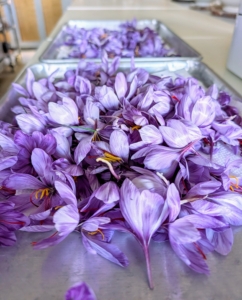
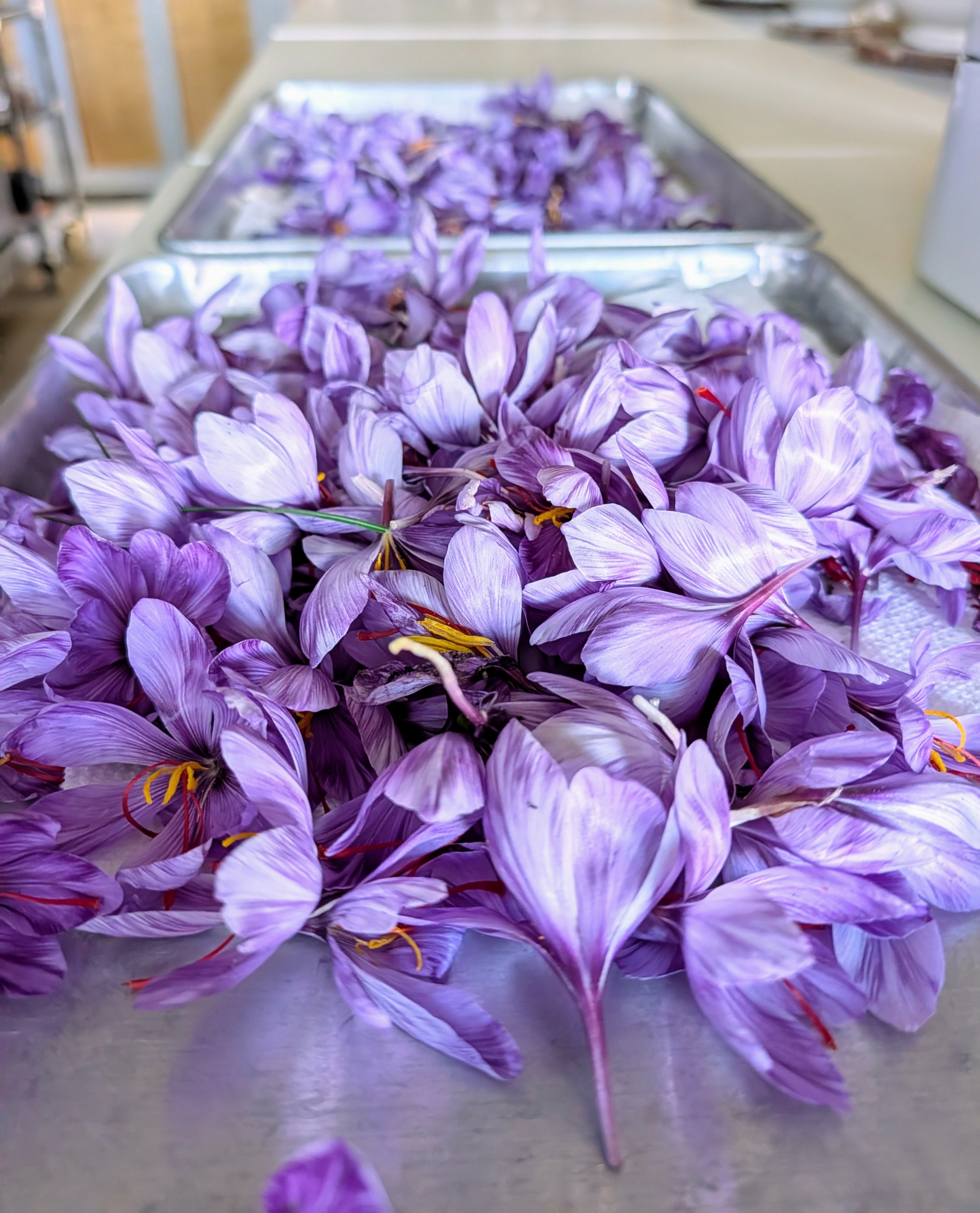
- Saffron harvest season at my farm has begun a couple weeks ahead of schedule. I’ve already filled two trays of flowers and their beautiful red-gold stigmas.
-
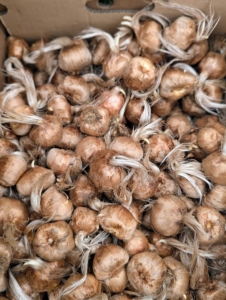
- Hannah first started planting saffron at my farm in 2020 and has planted a generous amount of saffron corms every year since.
-
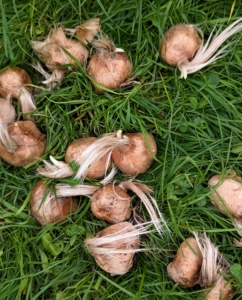
- Saffron, Crocus sativus, is planted in late summer. It is a sun-a worshipping plant so it loves to be planted in dry open areas rather than in the shade. Saffron does best with at least six hours of direct sunlight a day and well-drained soil.
-
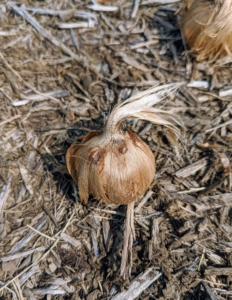
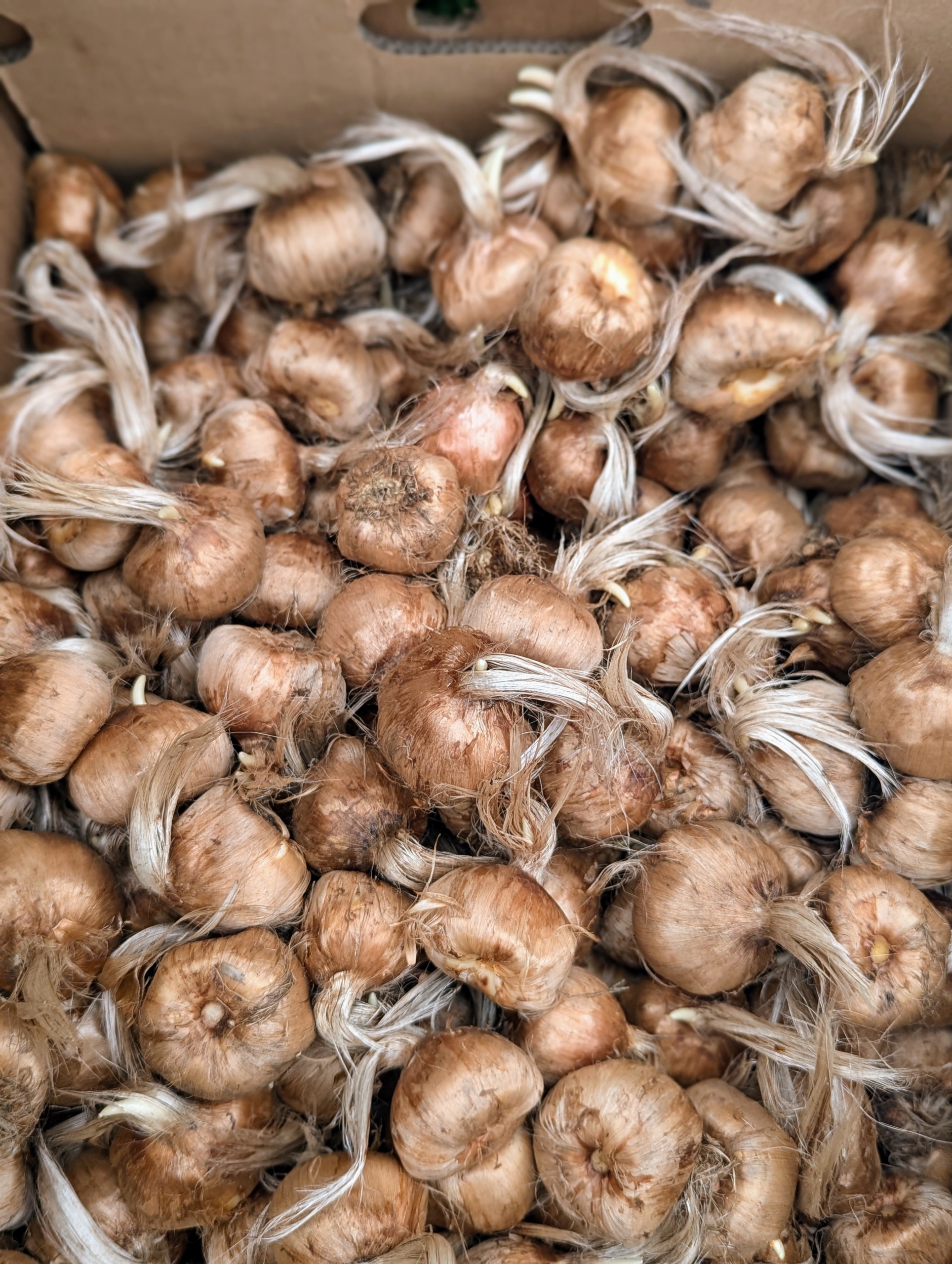
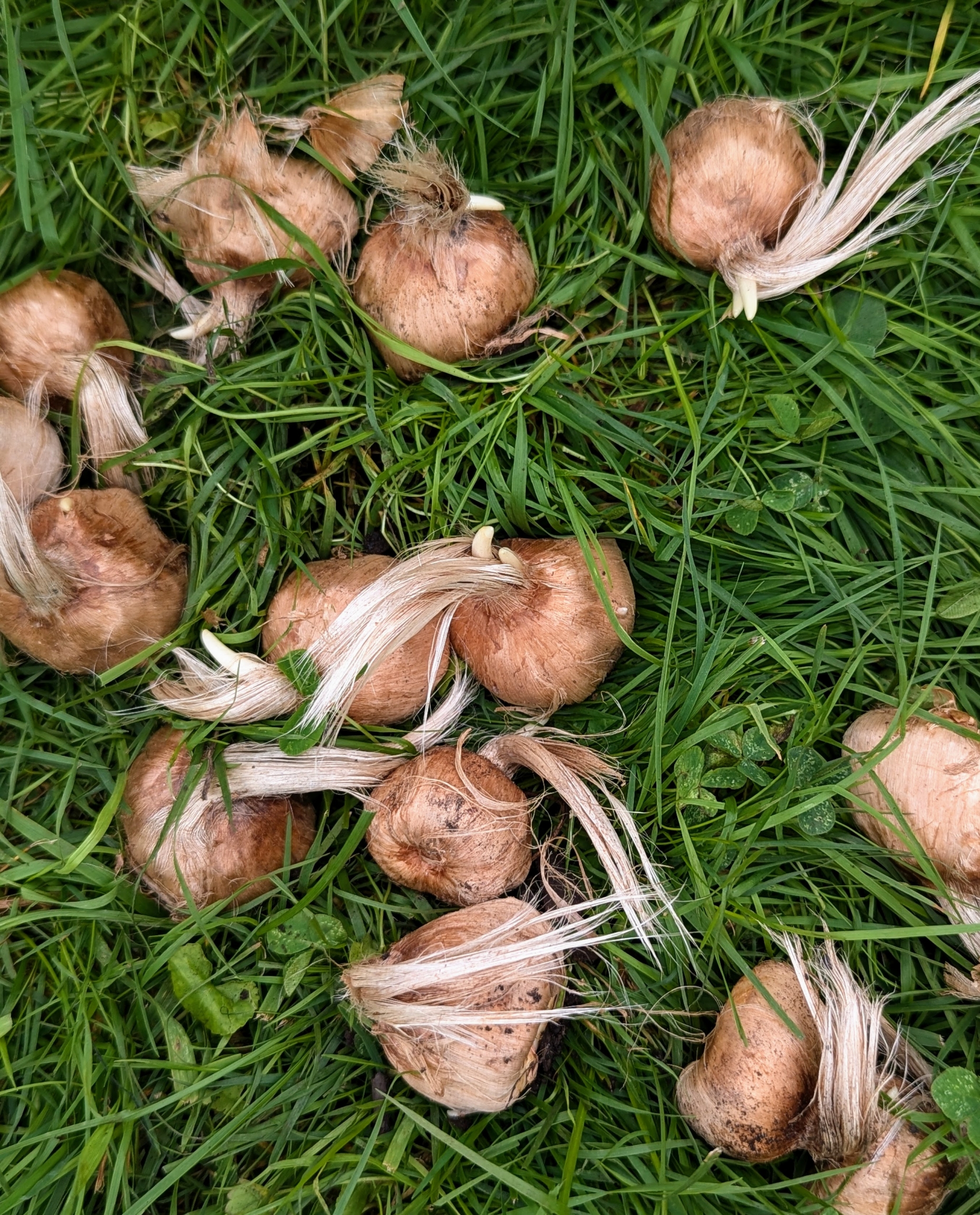
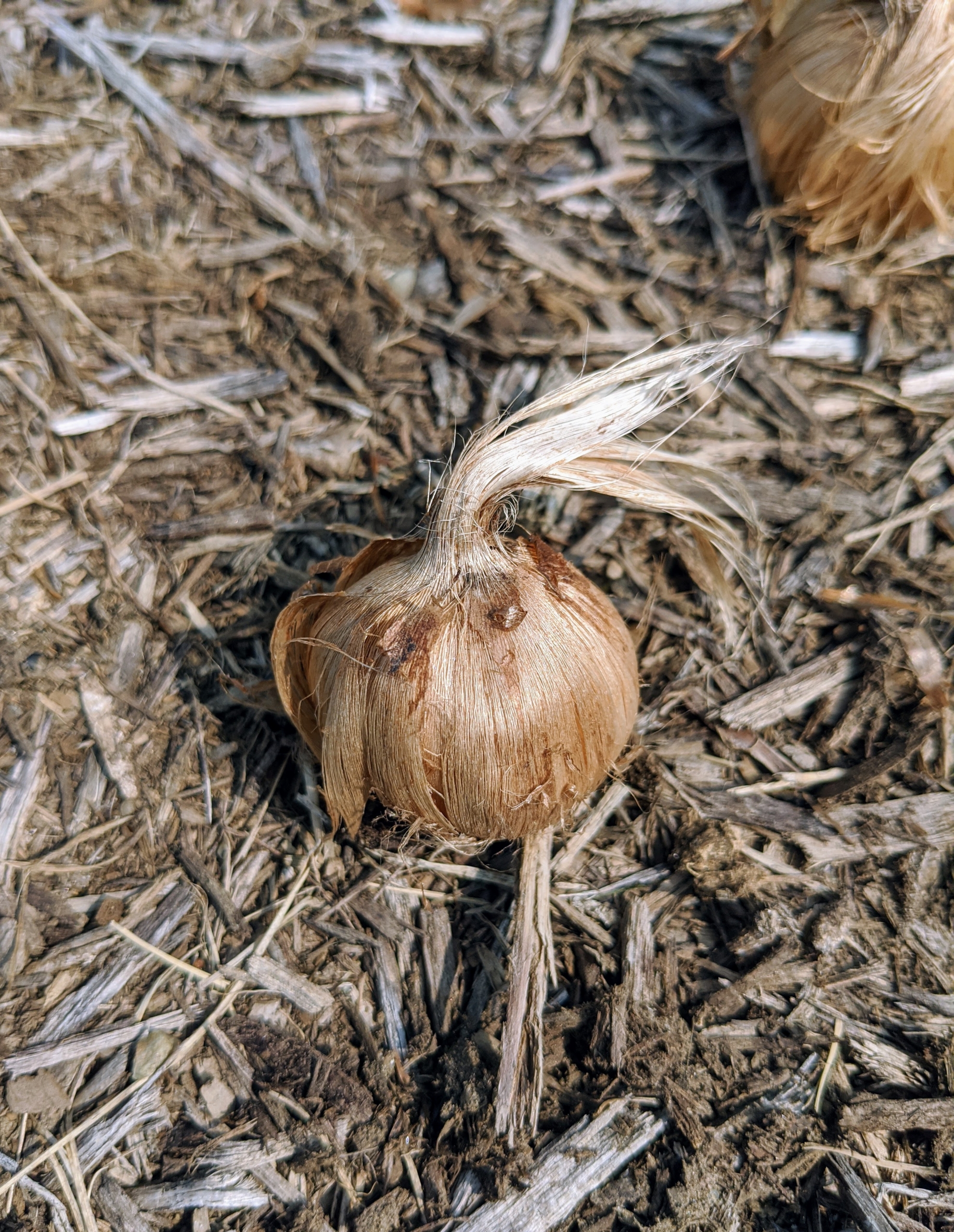
- The compact corms are small, brown globules that can measure as large as two-inches in diameter, have a flat base, and are shrouded in a dense mat of parallel fibers referred to as the “corm tunic”.
-
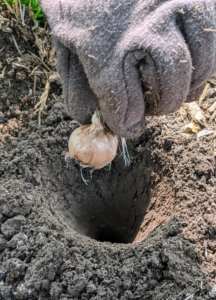
- Do you know the difference between a corm and a bulb? Both corms and bulbs are parts of the plant that store food to help it grow and bloom. A bulb is a plant stem and leaf that grows underground in layers. A tiny version of the flower is at the center of the bulb. Tulips, lilies, iris, daffodils and onions are examples of bulbs. A corm is an underground stem that serves as the base for the flower stem and is solid, not layered.
-
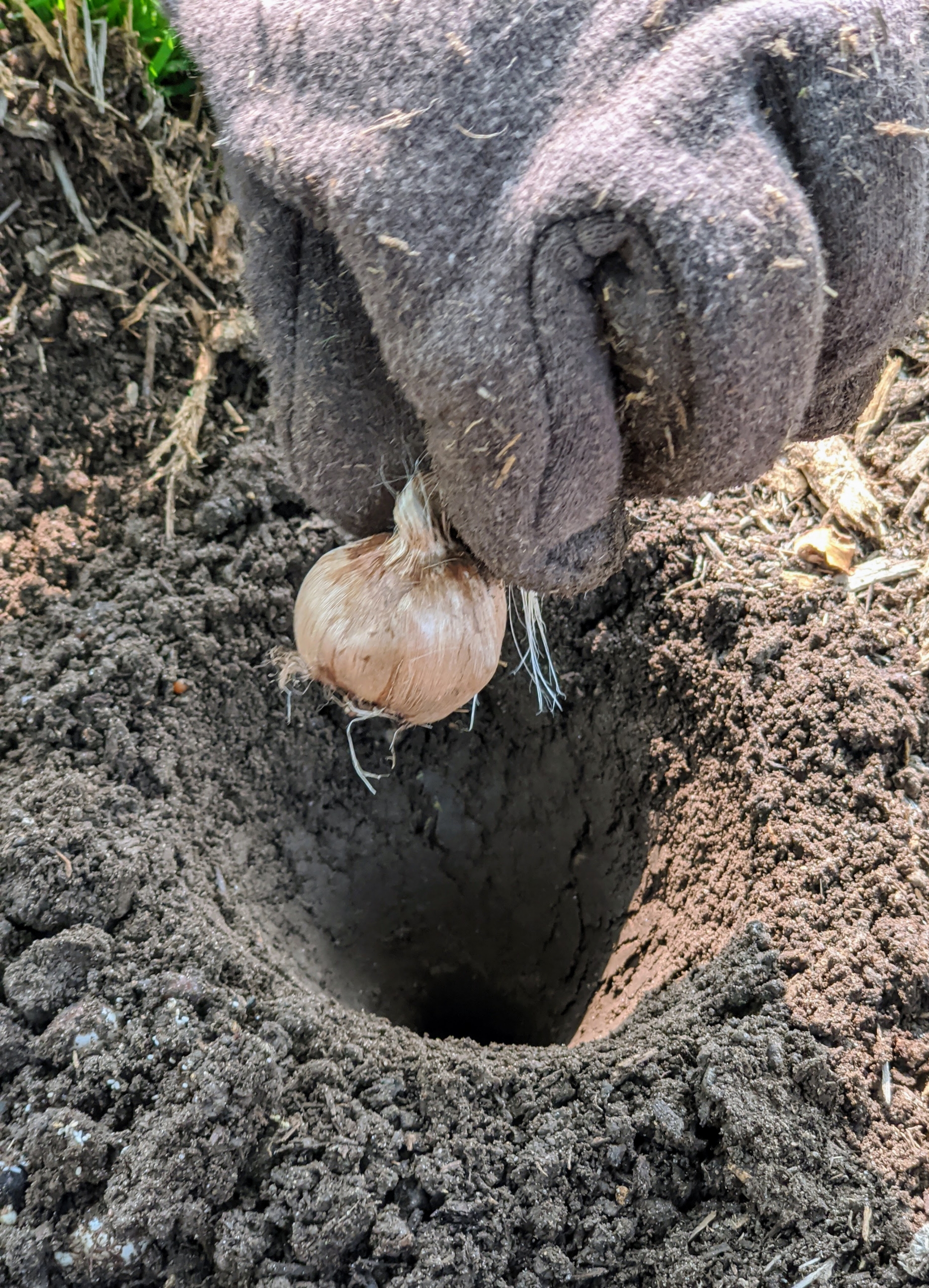
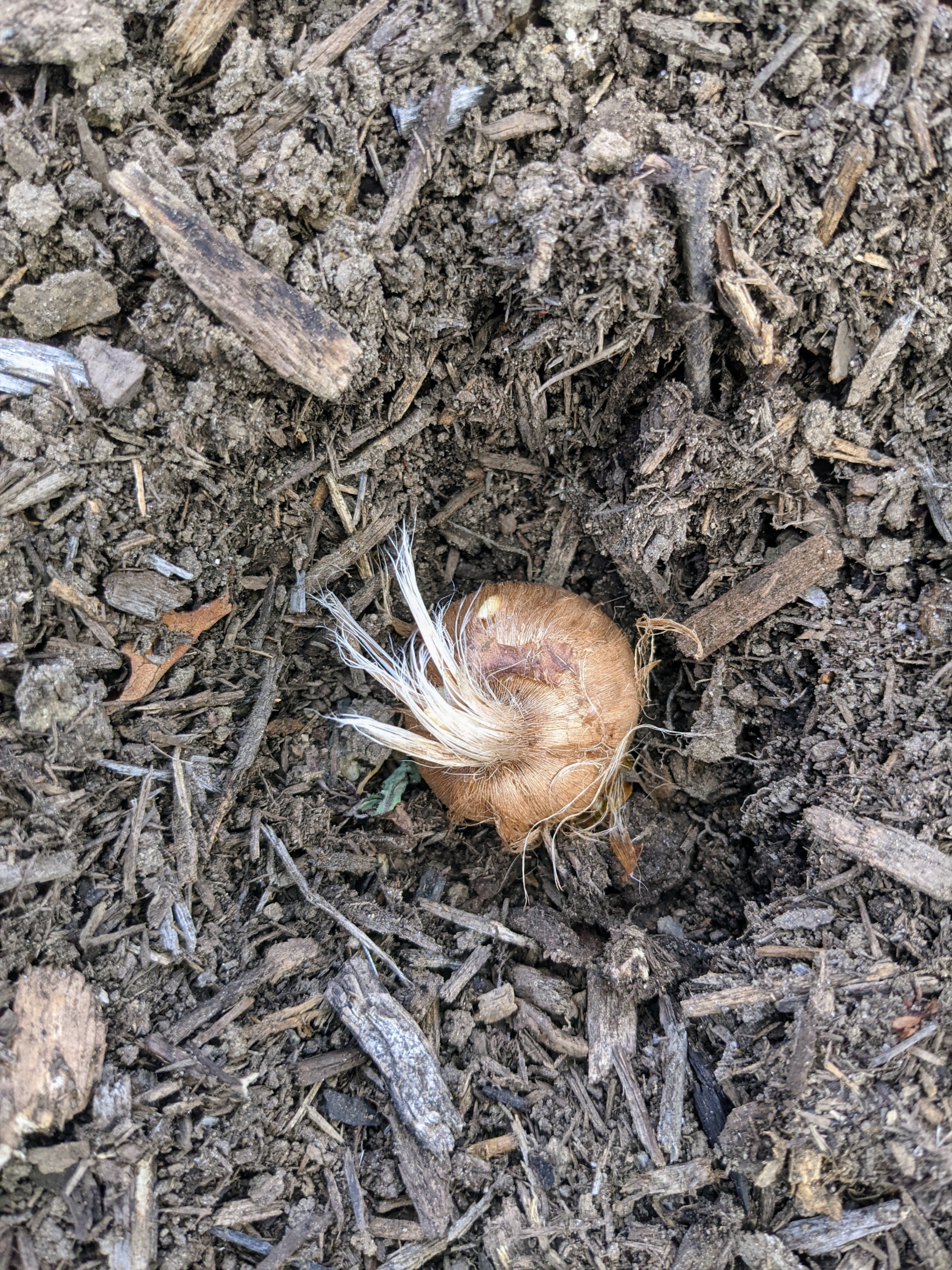
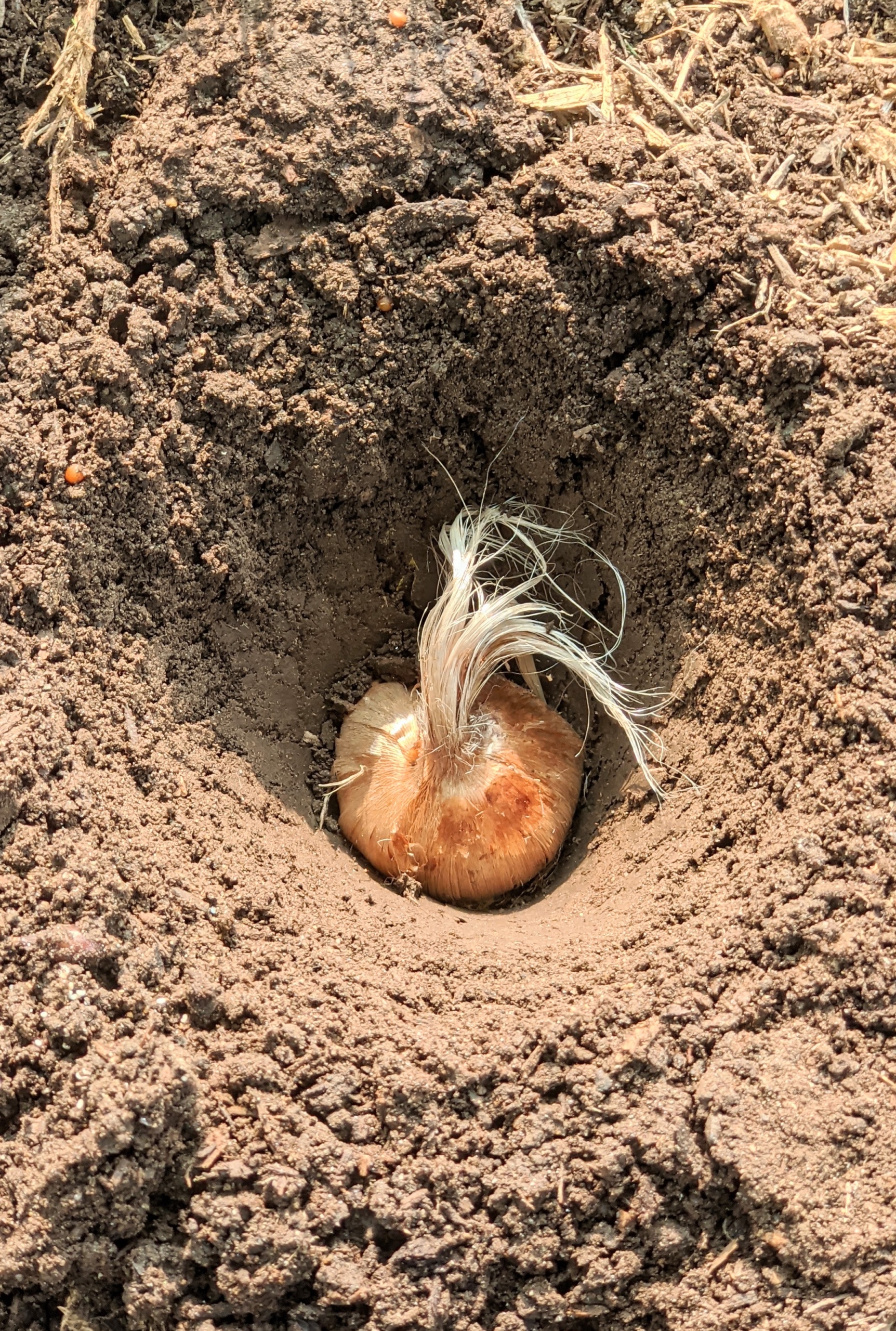
- When planted, each saffron corm is carefully placed in a hole, with the pointed end faced up, or root end faced down. This is very important, so the plant grows properly. When purchasing bulbs and corms, always look for those that are plump and firm, and avoid those that are soft.
-
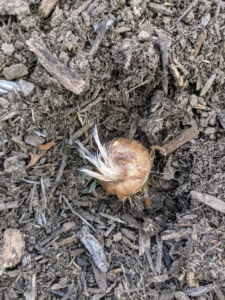
- Here is the saffron corm just at the top of the hole before it is pushed in more deeply and backfilled – see how it is faced up. Under optimal conditions, saffron typically takes about five to eight weeks from planting to first bloom, with leaves emerging in four to six weeks and flowers following within another two to four weeks.
-
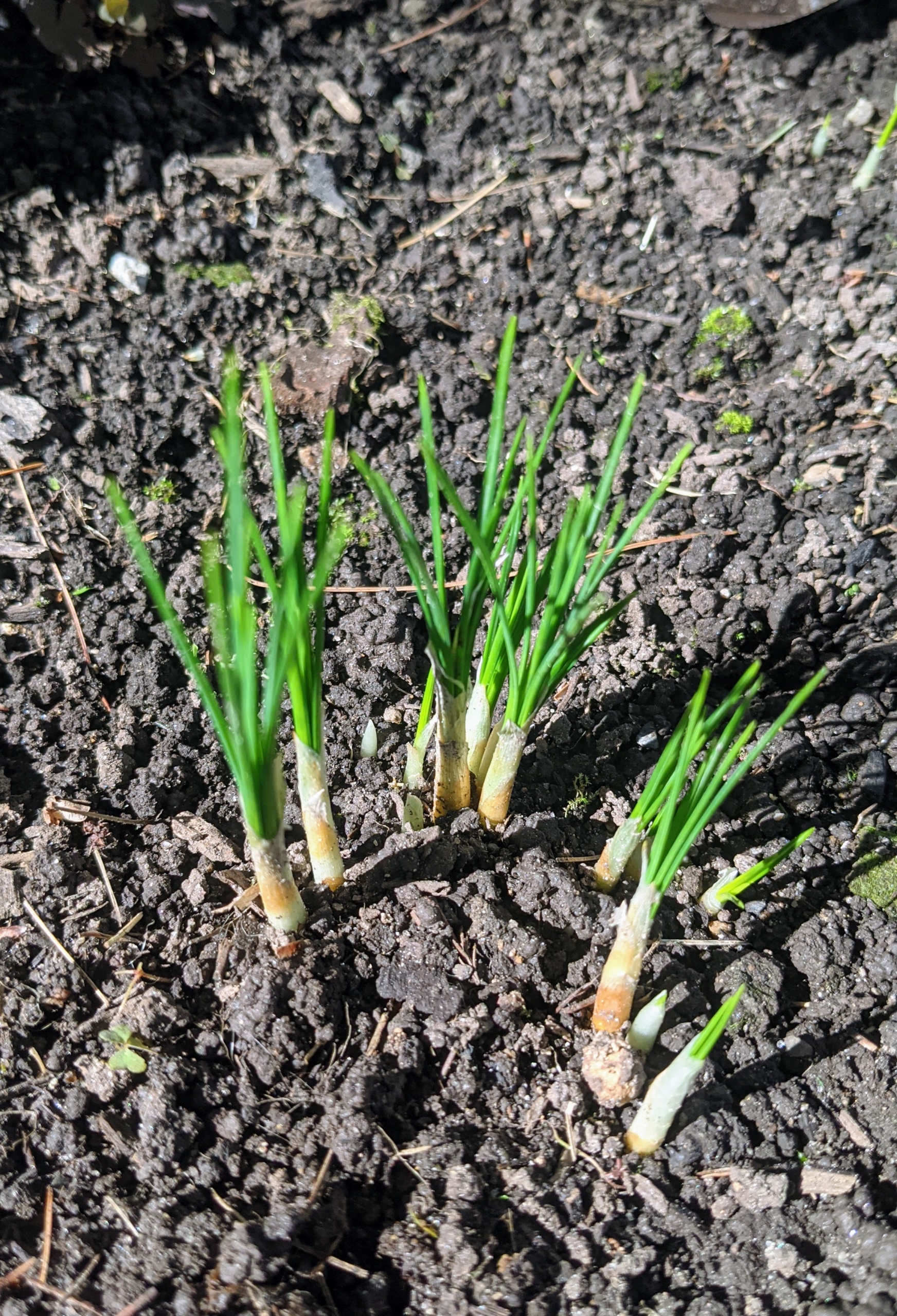
- By early October, or in this year’s case a little sooner, the saffron sprouts are visible. They emerge with thin, straight, and blade-like green foliage leaves, which expand after the flowers have opened. Saffron is a perennial plant, meaning it lives for more than two growing seasons and returns year after year from its underground corms without needing replanting.
-
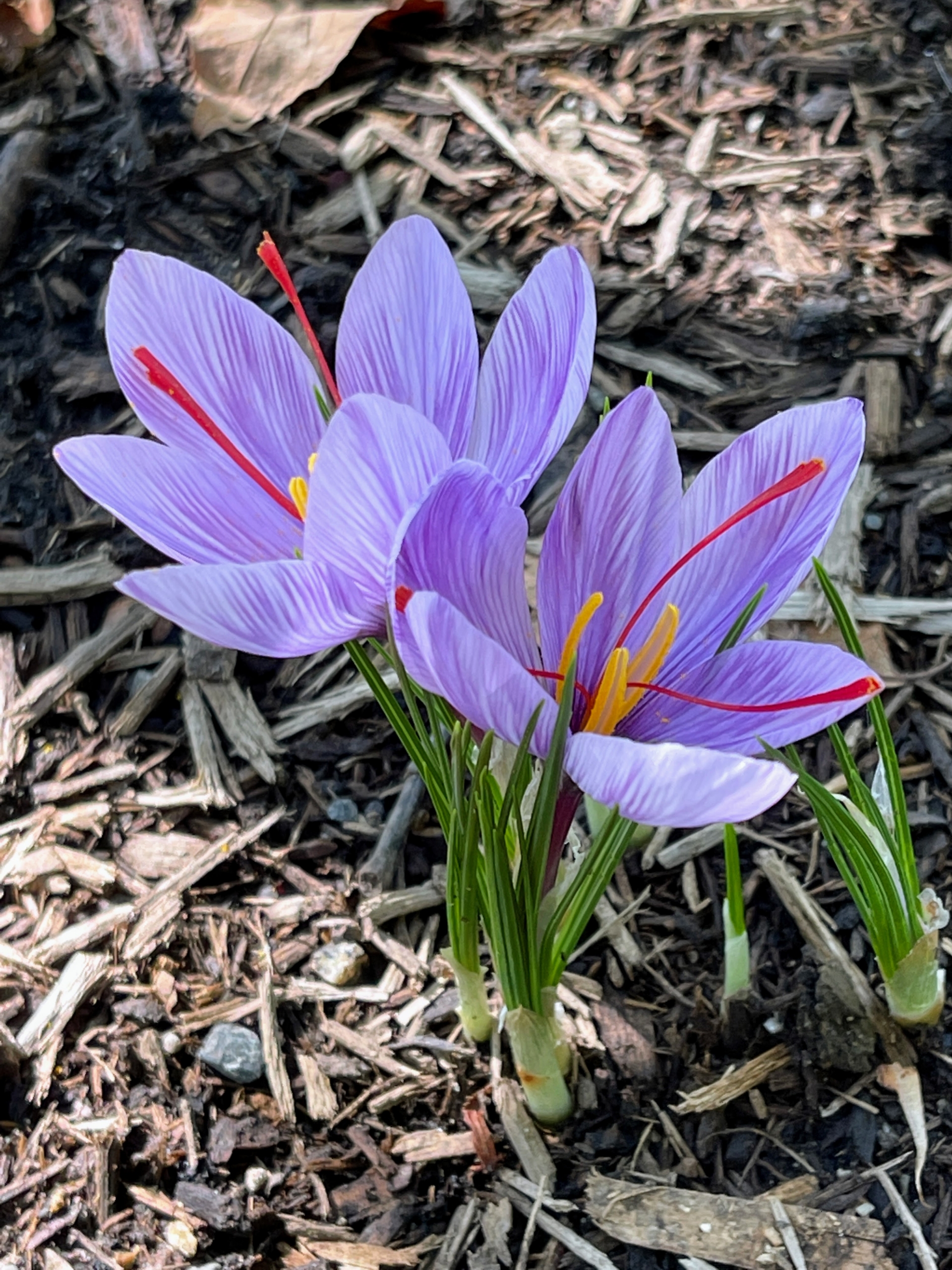
- The lilac-colored flower appears next. The blooms last about three weeks, so I asked my housekeepers to check them often and pick what’s ready.
-
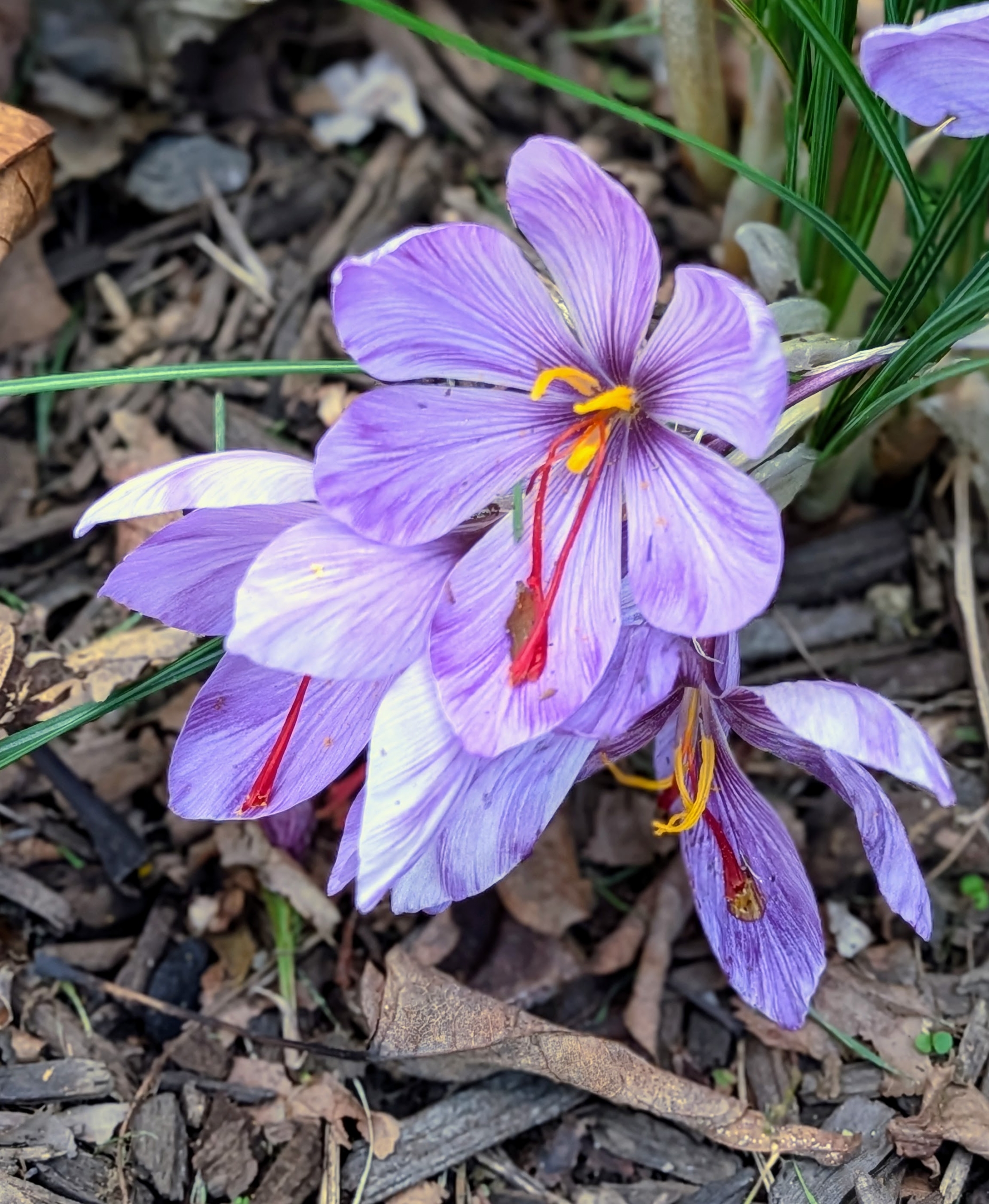
- It is the bright red-orange threads of saffron, the stigmas, or female portion, of the saffron crocus flowers that make up the spice.
-
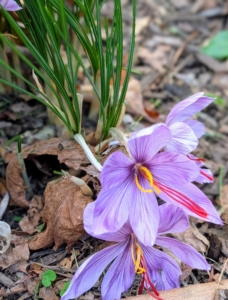
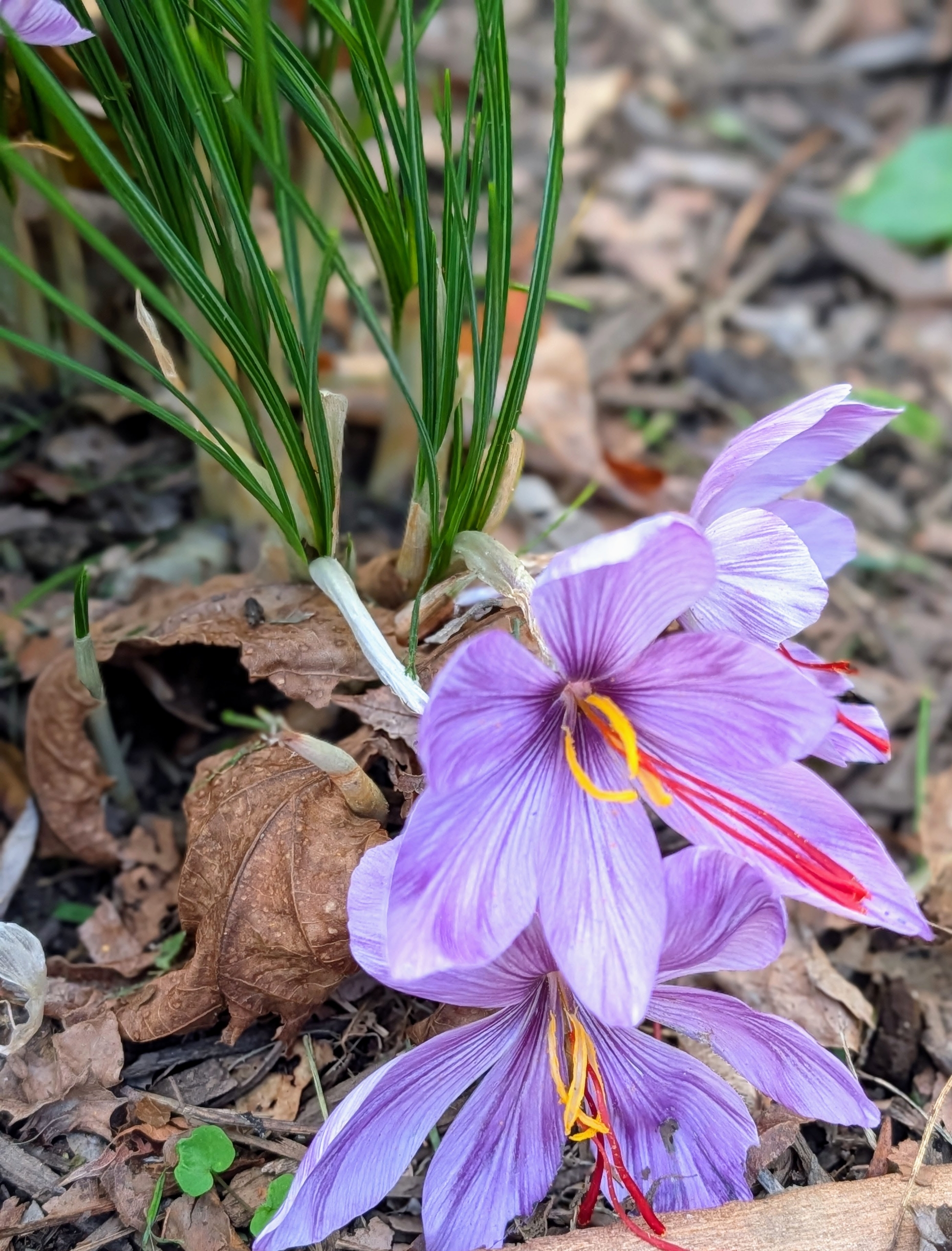
- Three stigmas are borne in the center of each cup-shaped bloom. The best time to harvest the stigmas is mid-morning on a sunny day when the flowers have fully opened and are still fresh. The stigmas on this flower are ready to harvest. And don’t confuse them with autumn crocus, which I also grow at my farm. Autumn crocus belongs to a different plant family, and is highly toxic. Look for the key features of saffron – three long, vivid red stigmas and three yellow stamens.
-
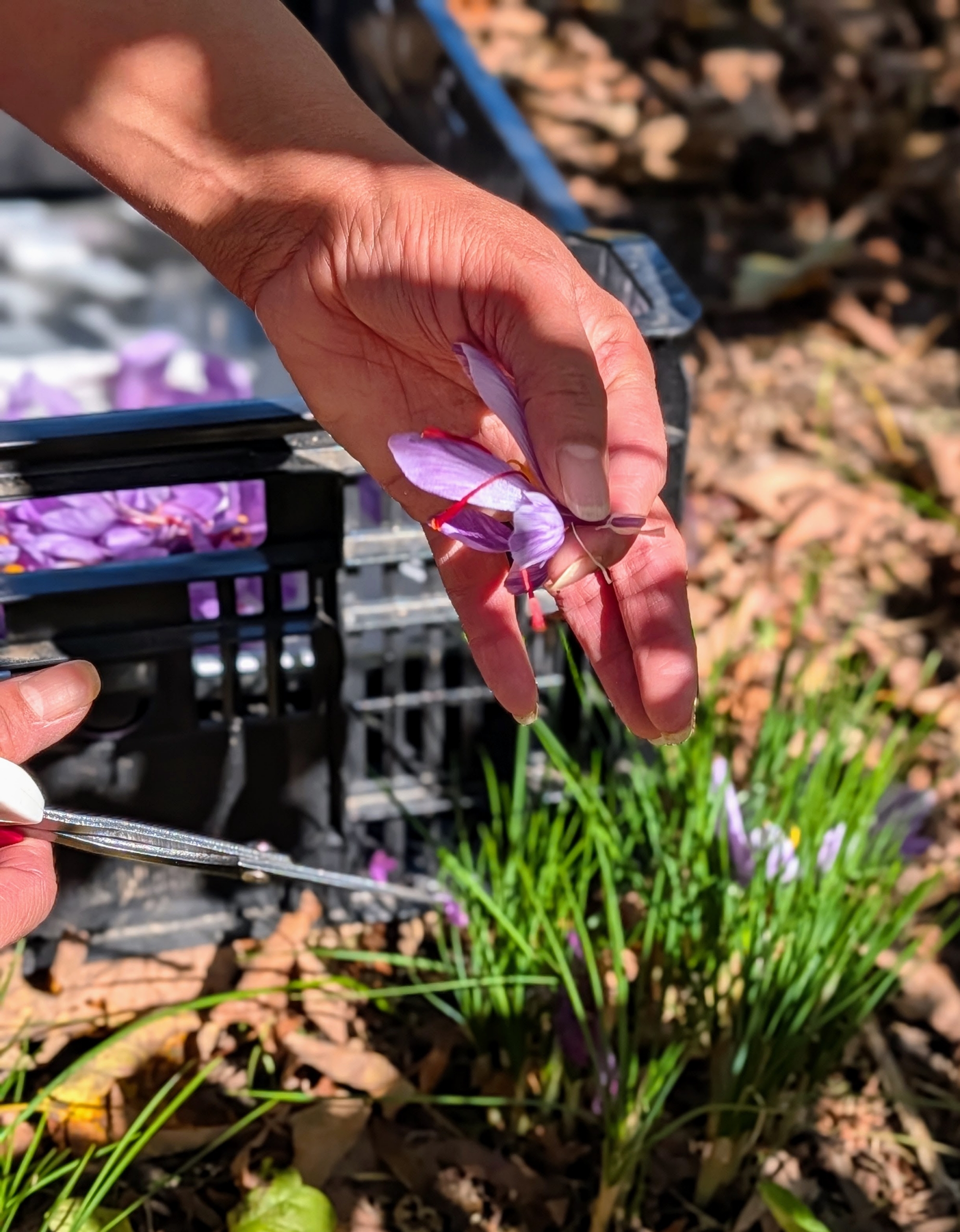
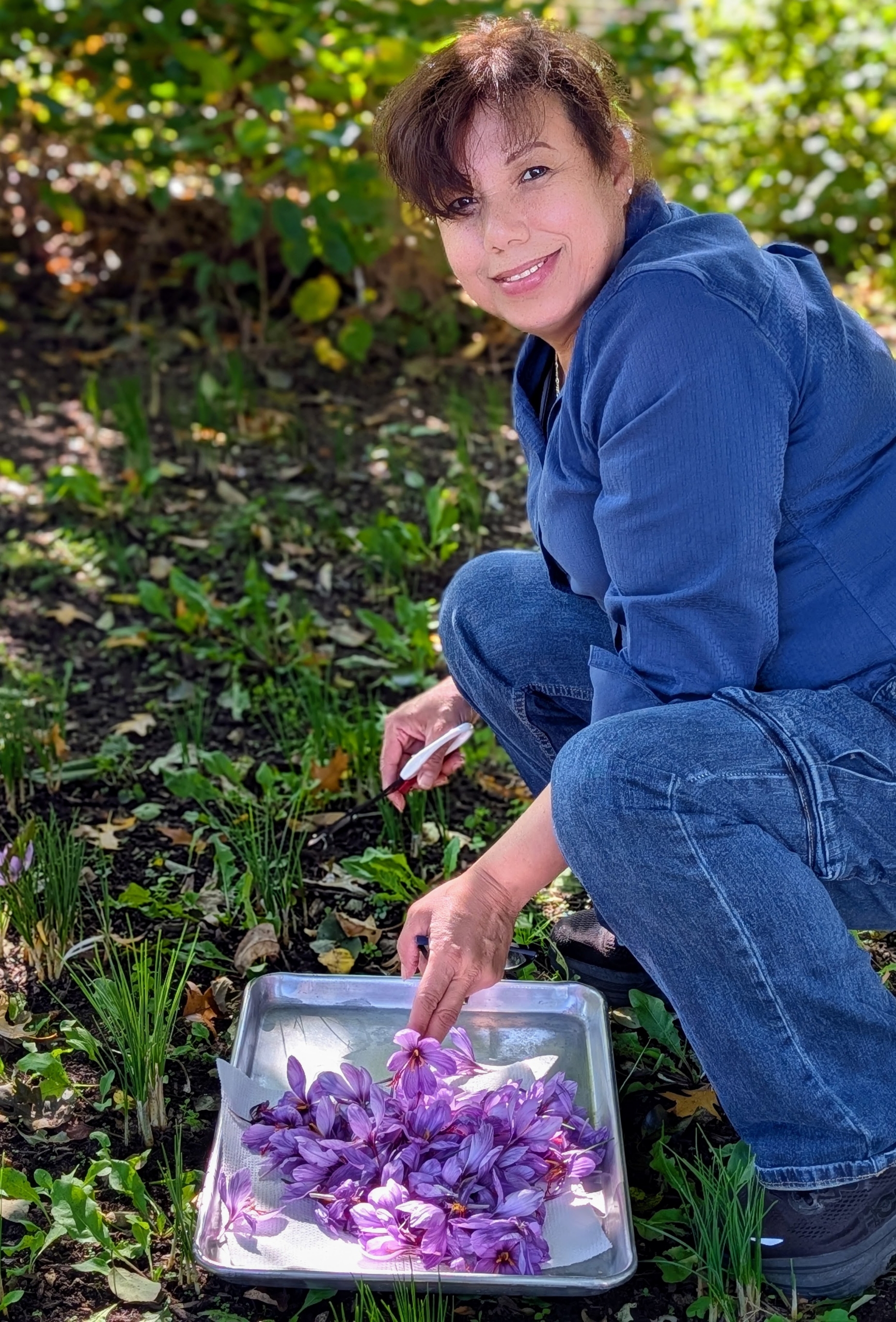
- Elvira harvests the blooms and places them gently on a baking sheet tray. They smell wonderful – a sweet, honey-like fragrance. The leaves of the saffron will persist for eight to 12 weeks, then wither and vanish, leaving no trace of the corms below until the flowers appear again next fall.
-
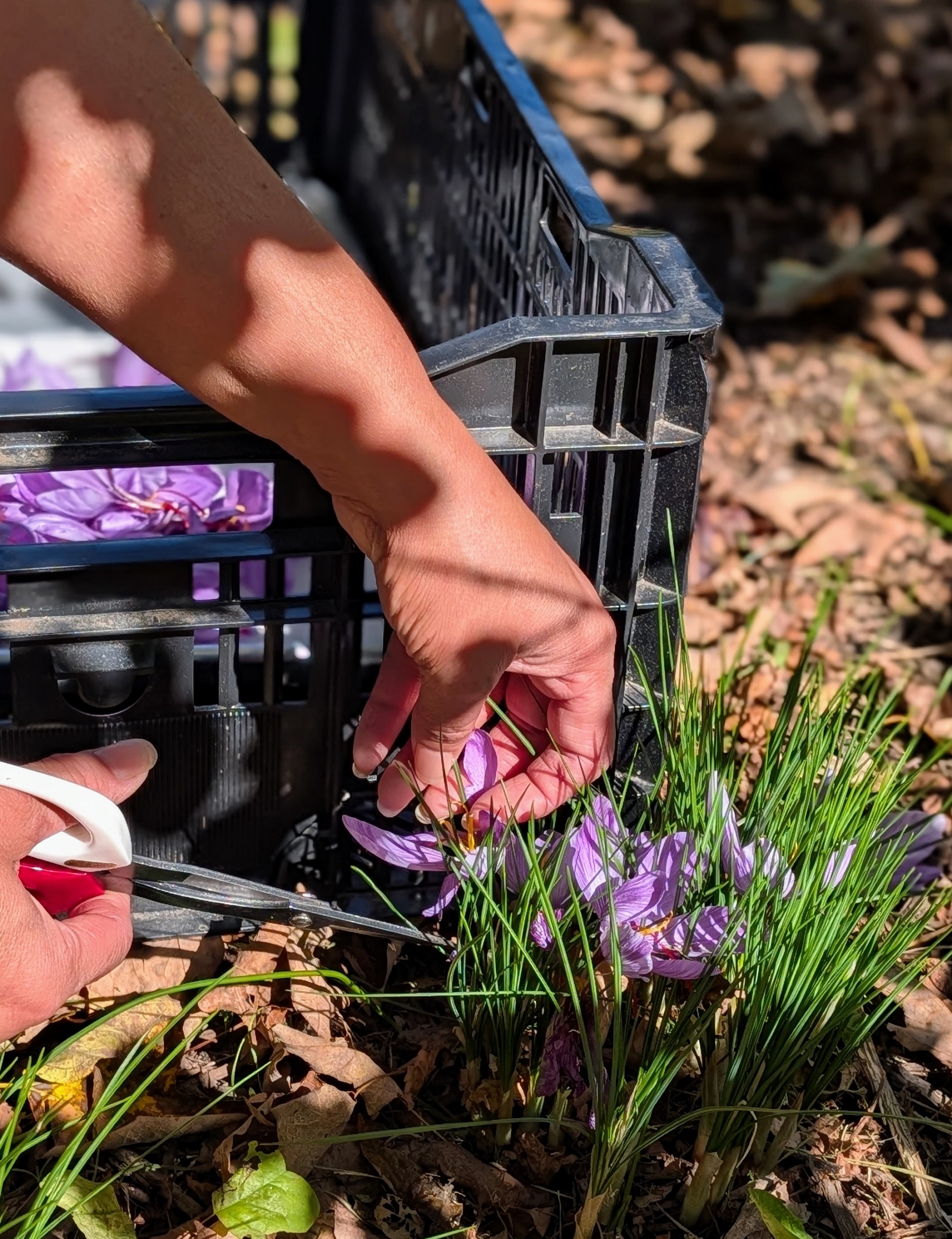
- I instructed Elvira to cut carefully, but the blooms can also be pinched off at the base using one’s thumbnail and index finger.
-
- It doesn’t take Elvira long to harvest a good amount of saffron. But one must pay close attention to the crop. Saffron crocus blooms at dawn and must be harvested the same day, because the flower withers within hours.
-
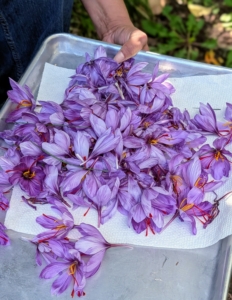
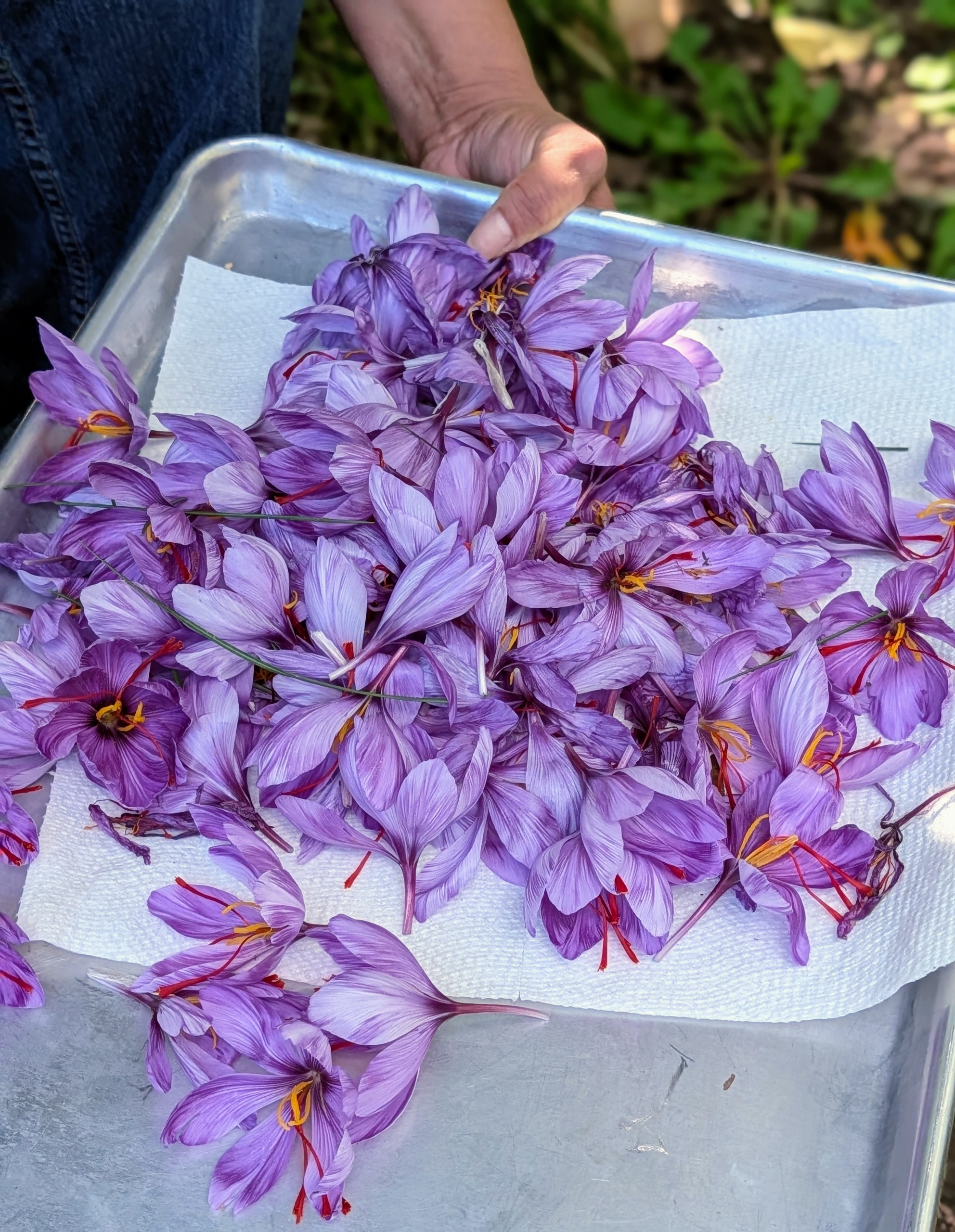
- Here is the harvest from just one day. The saffron harvest window is typically only about two to three weeks.
-
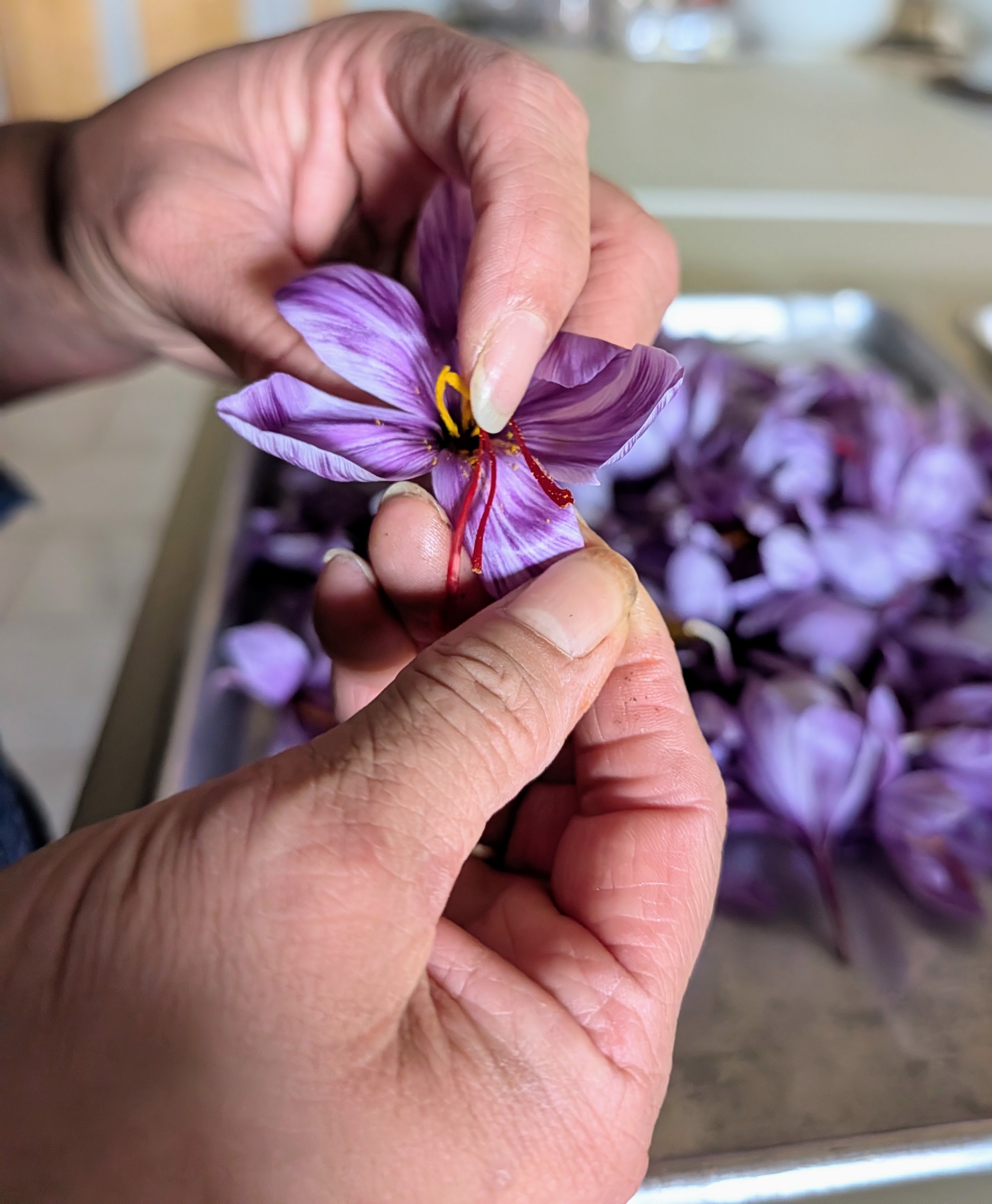
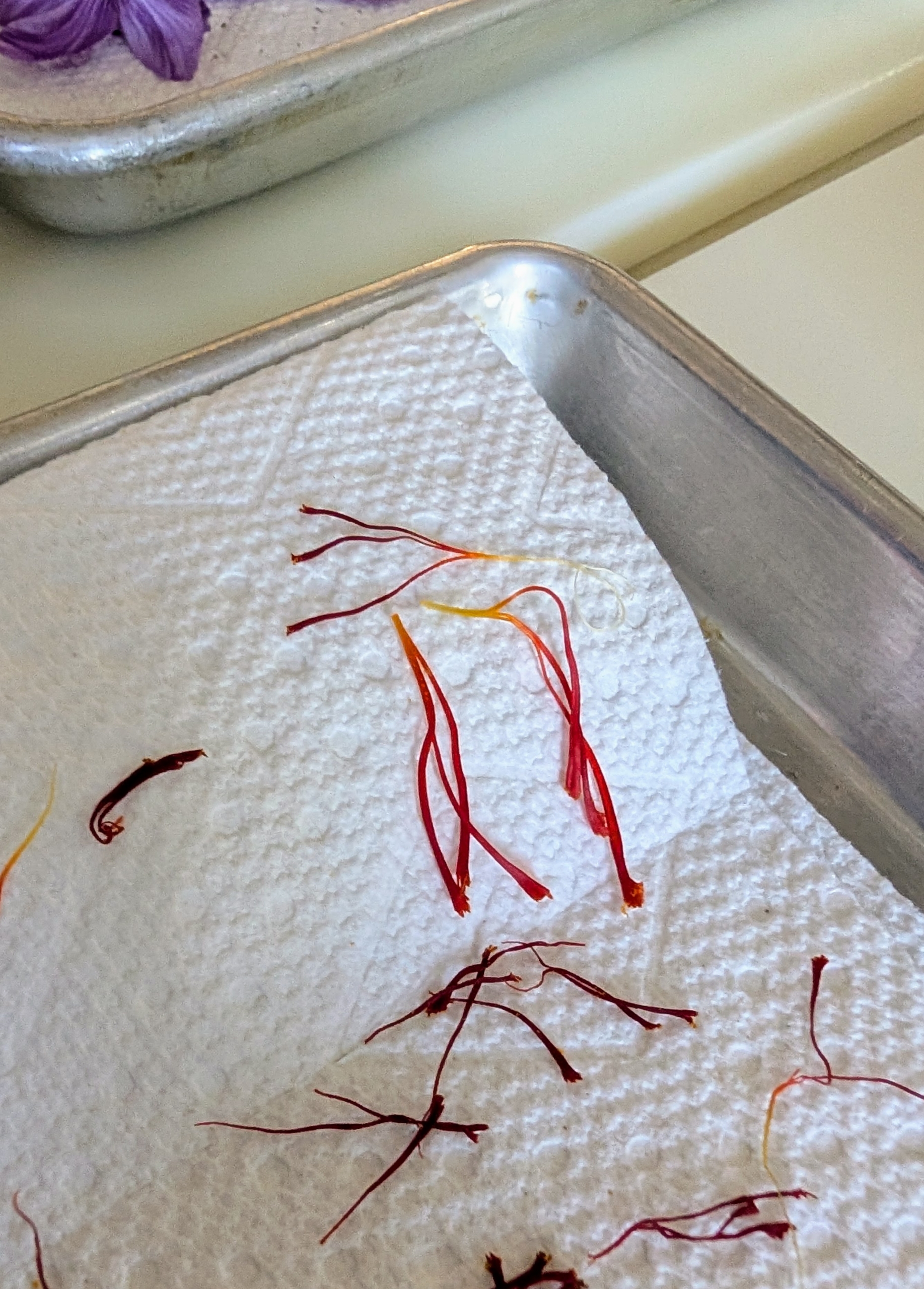
- Elvira brings them all to my Winter House kitchen. These are the red stigmas that make up the spice. It takes hundreds of flowers to produce a commercially useful amount, and lots of labor, which explains why saffron has long been the world’s most costly spice by weight.
-
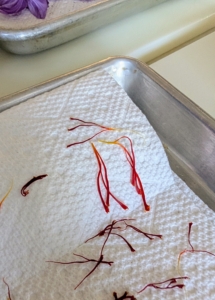
- Elvira carefully pulls off the saffron stigmas, separating them from the flowers and setting all of them on a paper towel lined baking sheet to dry.
-
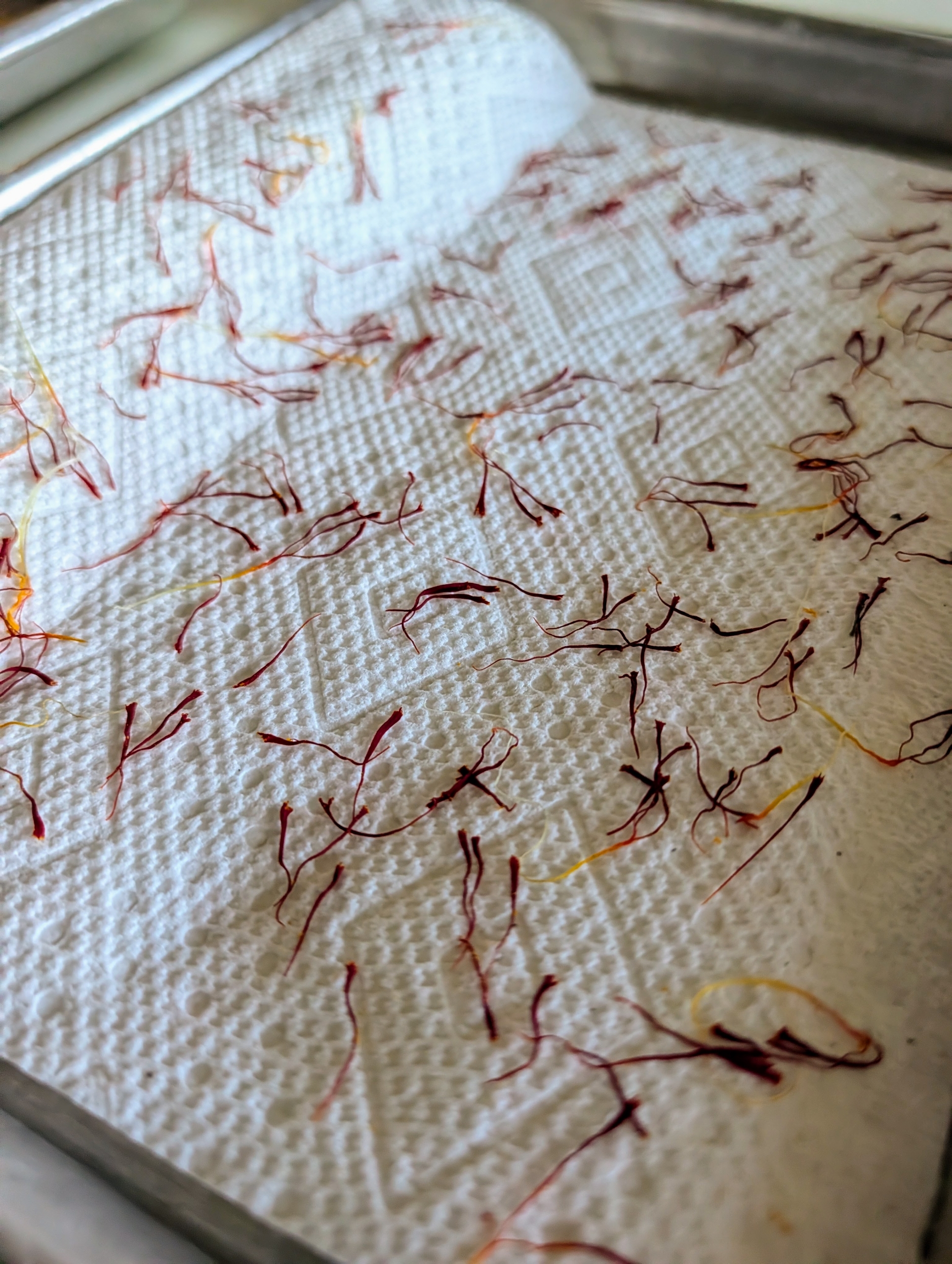
- These were picked over the weekend. They will all be left to air dry for several days.
-
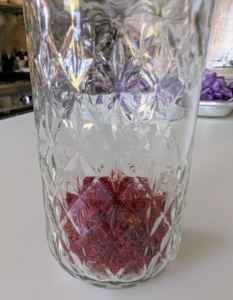
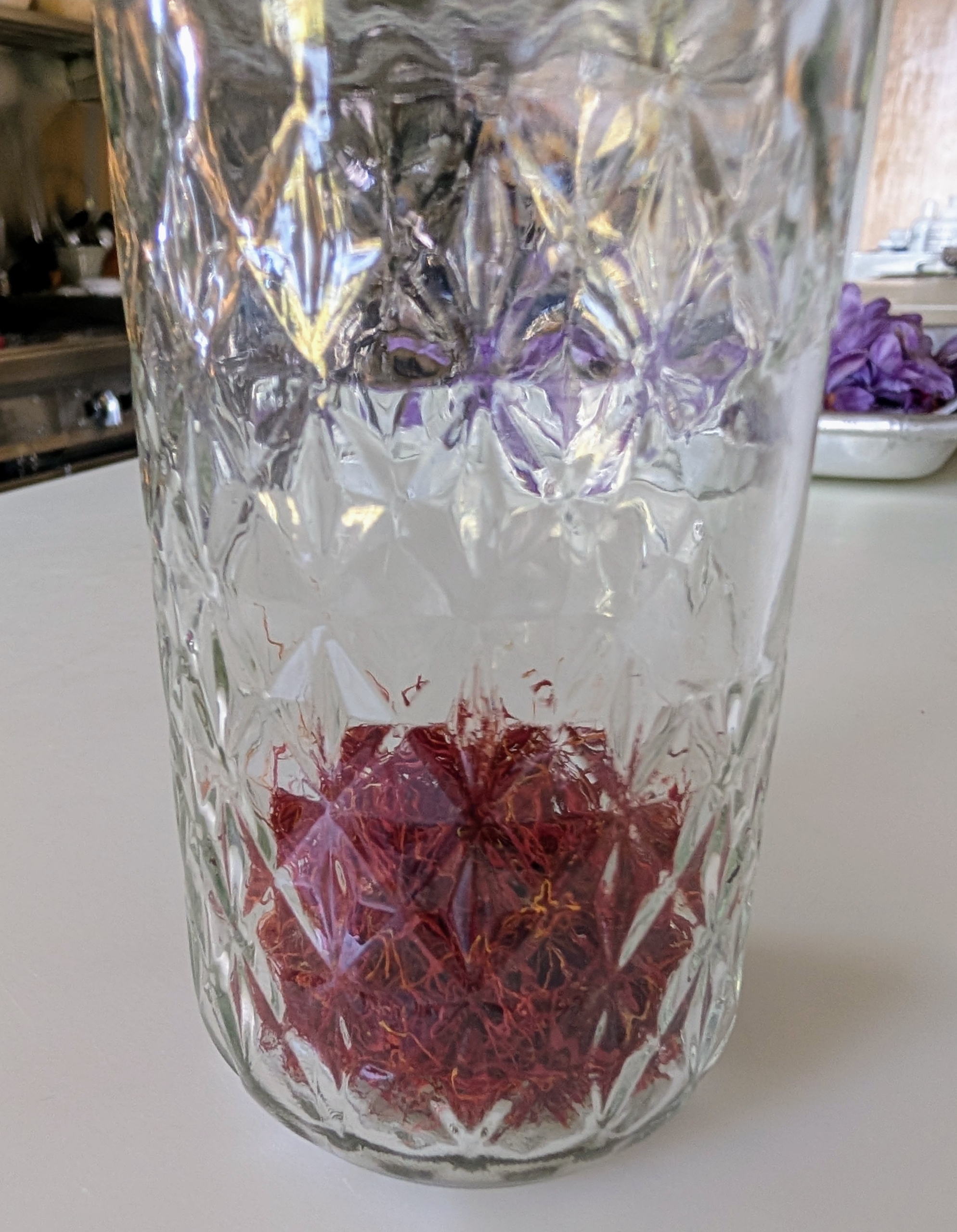
- Once dried, they can be stored in a jar until used. Here is some of the dried saffron from last year’s harvest. I am so excited to be able to grow this precious spice right here at my farm.
-
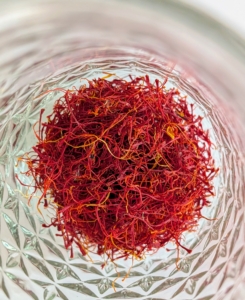
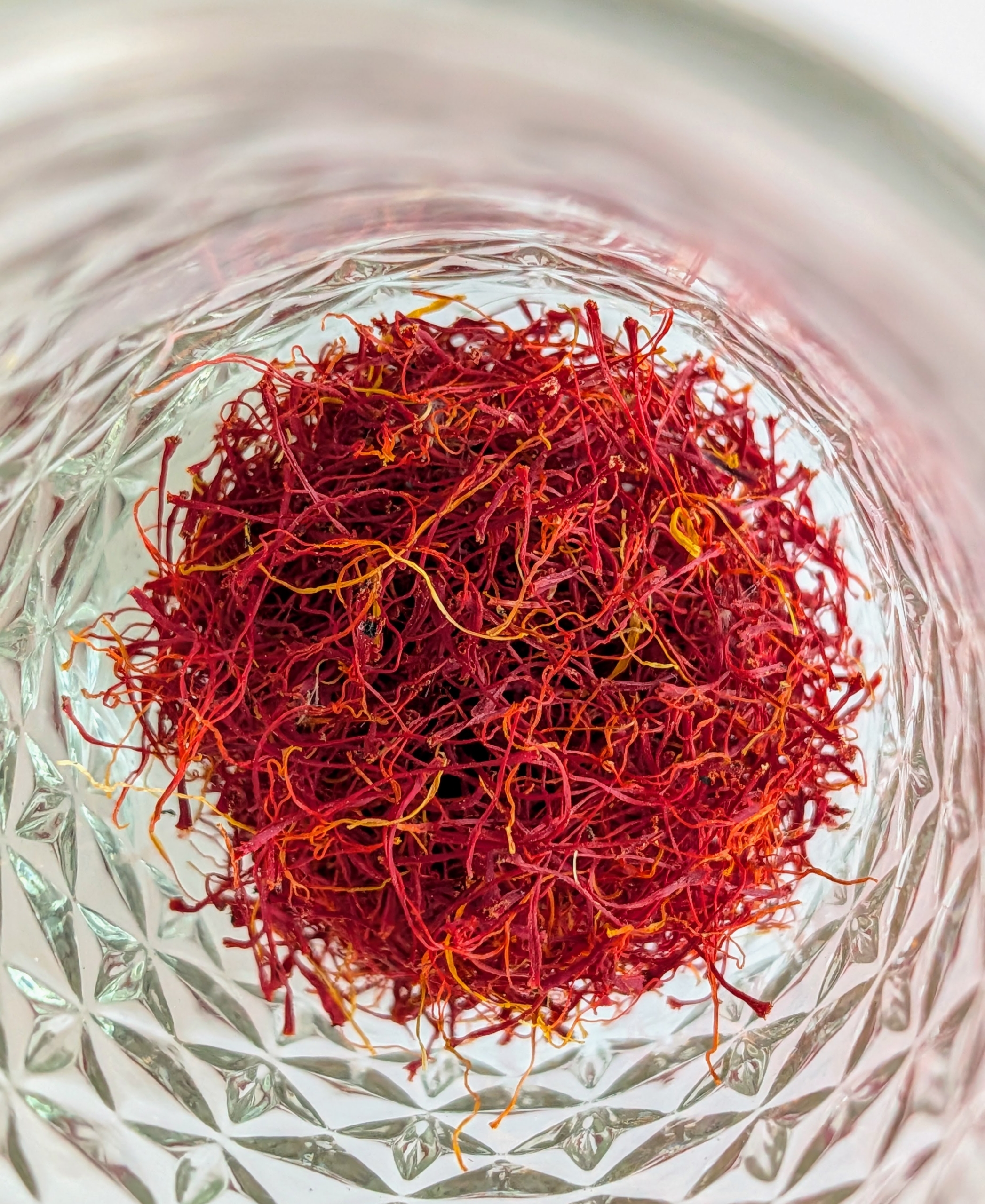
- Fine quality saffron is is deep crimson with a vivid, almost glowing red tone that darkens to maroon at the tips. Do you cook with saffron? Learn more about this wonderful spice on Hannah’s Instagram page @hannahcmilman.
This story originally appeared on Martha Stewart Blog

