


October 16, 2026
Making Sweet Apple Cider
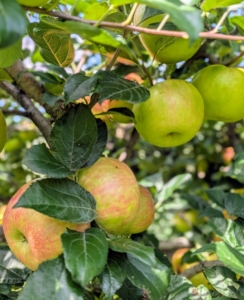
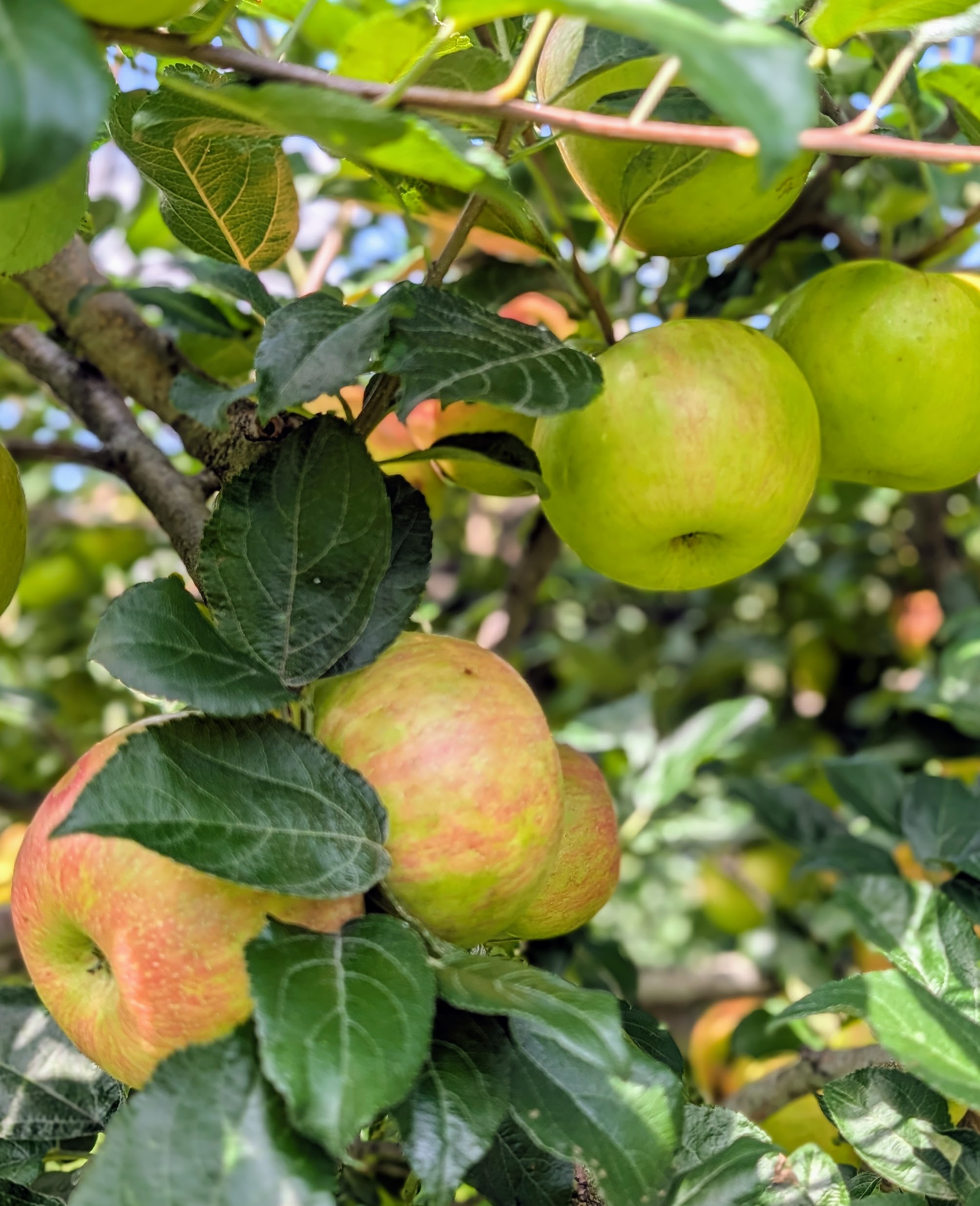
Once autumn arrives, it’s time to harvest the crisp, juicy apples from the hundreds of trees throughout my farm and turn them into fresh apple cider. Did you see my Instagram posts on @Marthastewart48? There’s something so gratifying about this good, old-fashioned cider making process.
Historically, cider was very important to early Americans. One in every 10-farms in New England operated its own cider mill by the time of the American Revolution. In fact, President John Adams famously drank cider every morning, believing it contributed to his good health – maybe so, he lived to the remarkable age of 90. This week, cider-making was in full swing at Cantitoe Corners. It was a lovely way to welcome the season, put my apple harvest to good use, and enjoy a most refreshing and naturally sweet drink.
Here are some photos, enjoy!
-
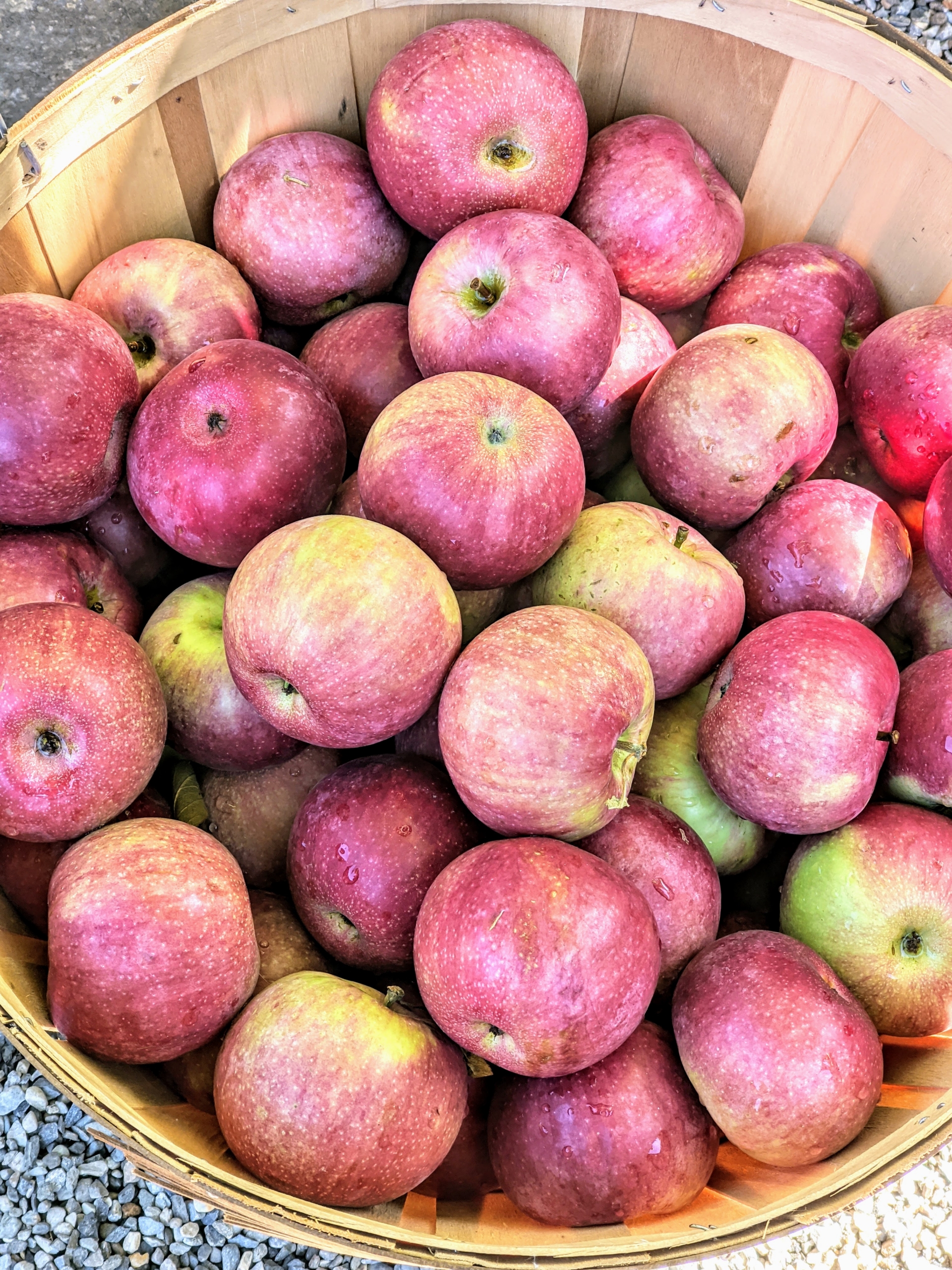
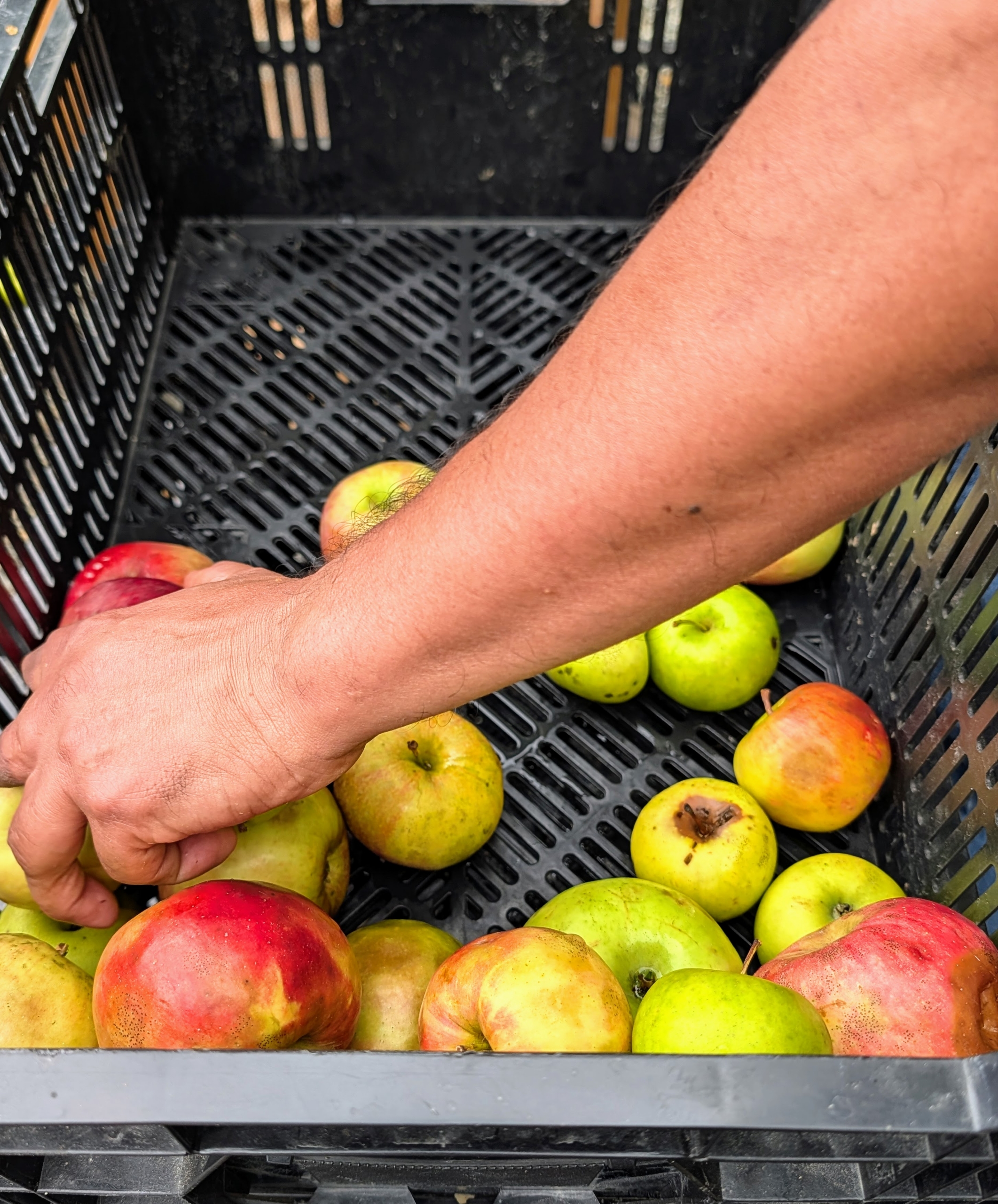
- The apples used don’t have to look pristine, but they need to be free from spoilage, which would cause the juice to ferment too rapidly. They should also be well-washed, so they’re ready to go through the press. Bruised apples are put aside for my horses to enjoy.
-
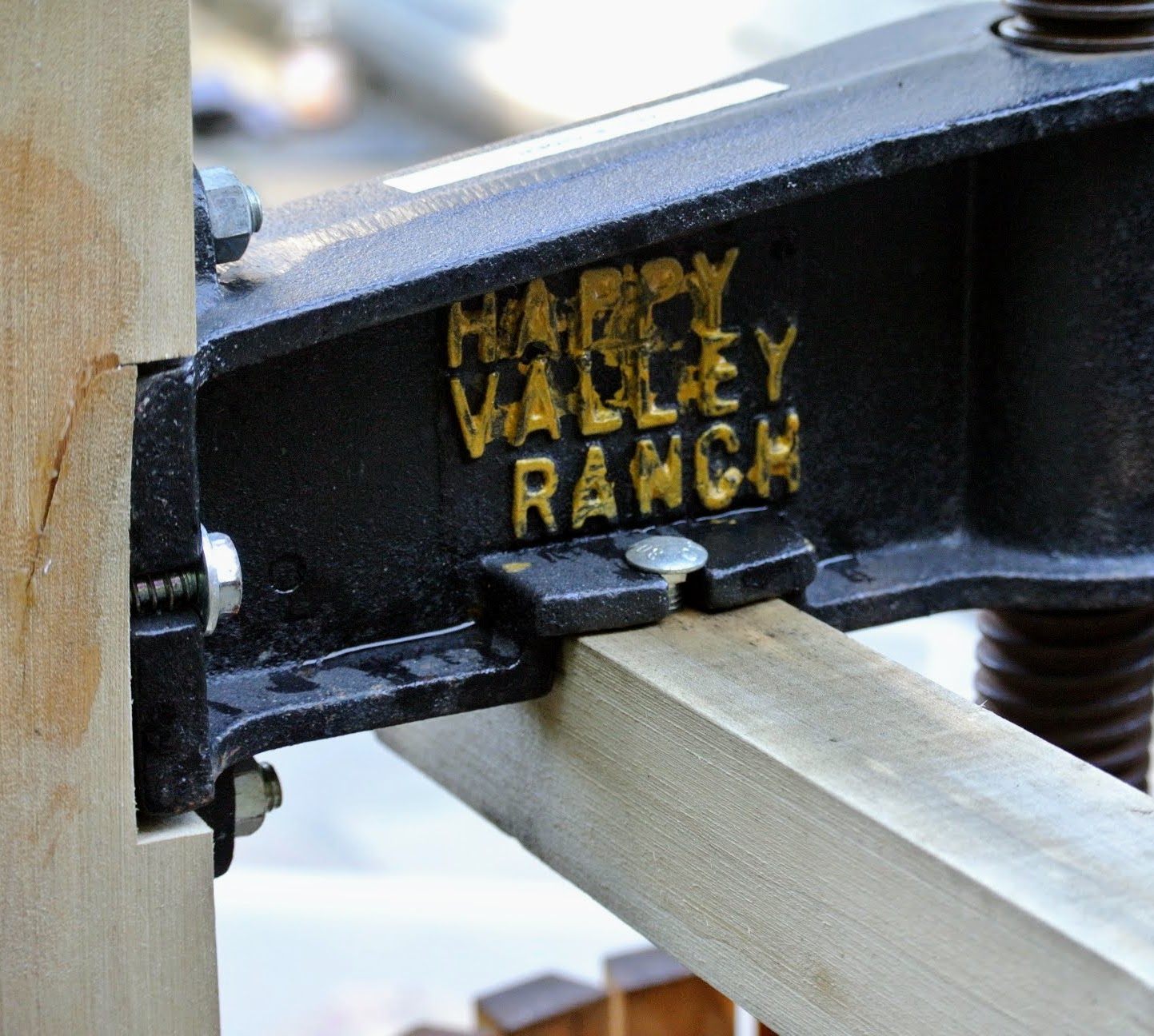
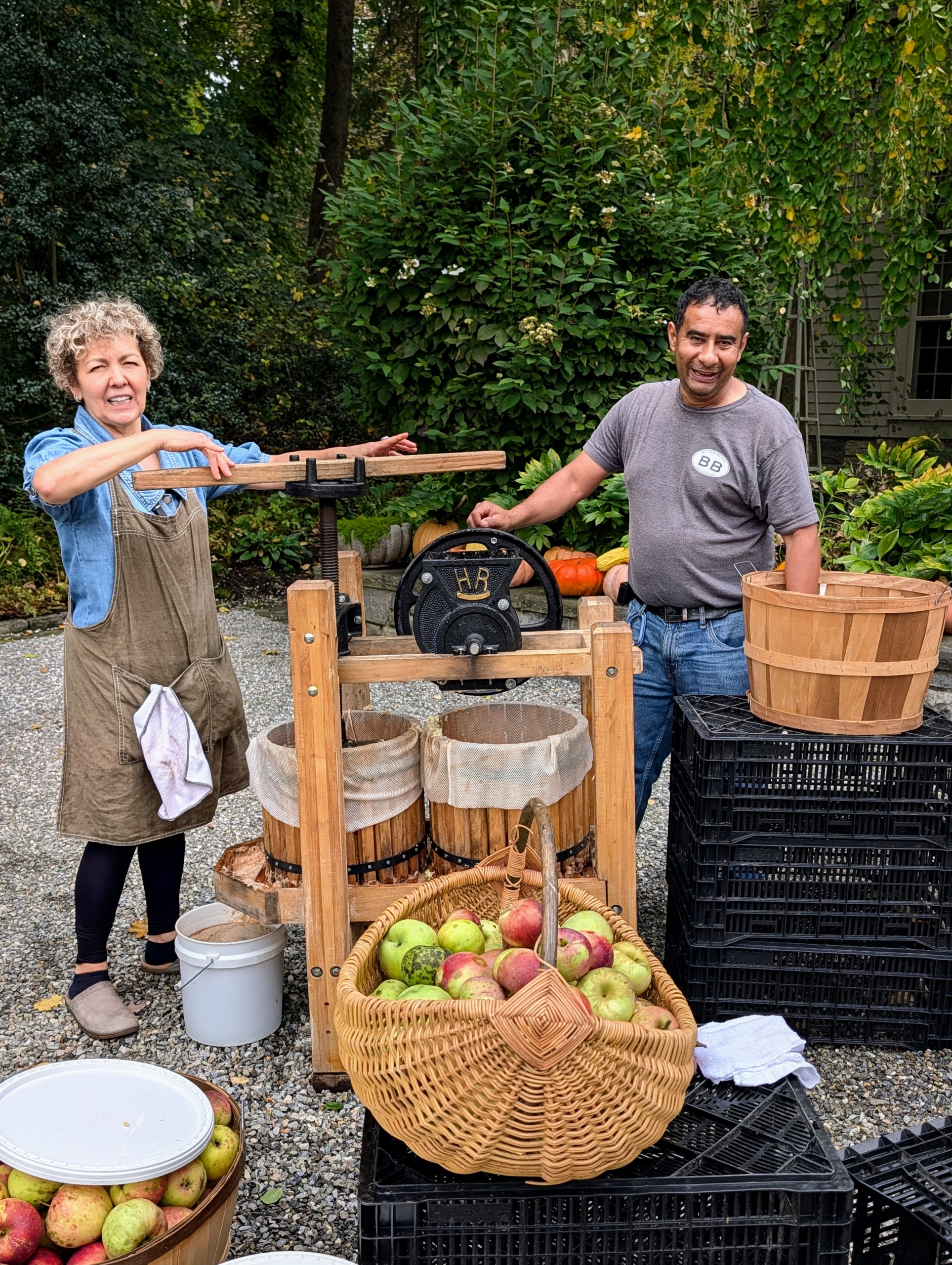
- I’ve had this manual Happy Valley Ranch press for more than 20 years. It is designed to grind and squeeze at the same time.
-
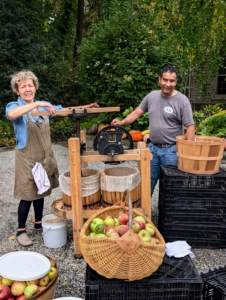
- Pati and Carlos are getting some great exercise pressing apples. This “American Harvester” model consists of a hand-crank grinder affixed to a basket press. The grinder, pressing screw, and flywheel crank are all made of durable cast iron.
-
- The apples are pulled from the basket or crate one by one.
-
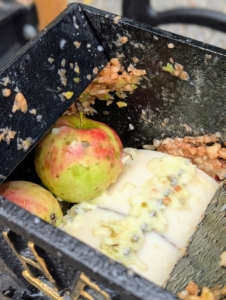
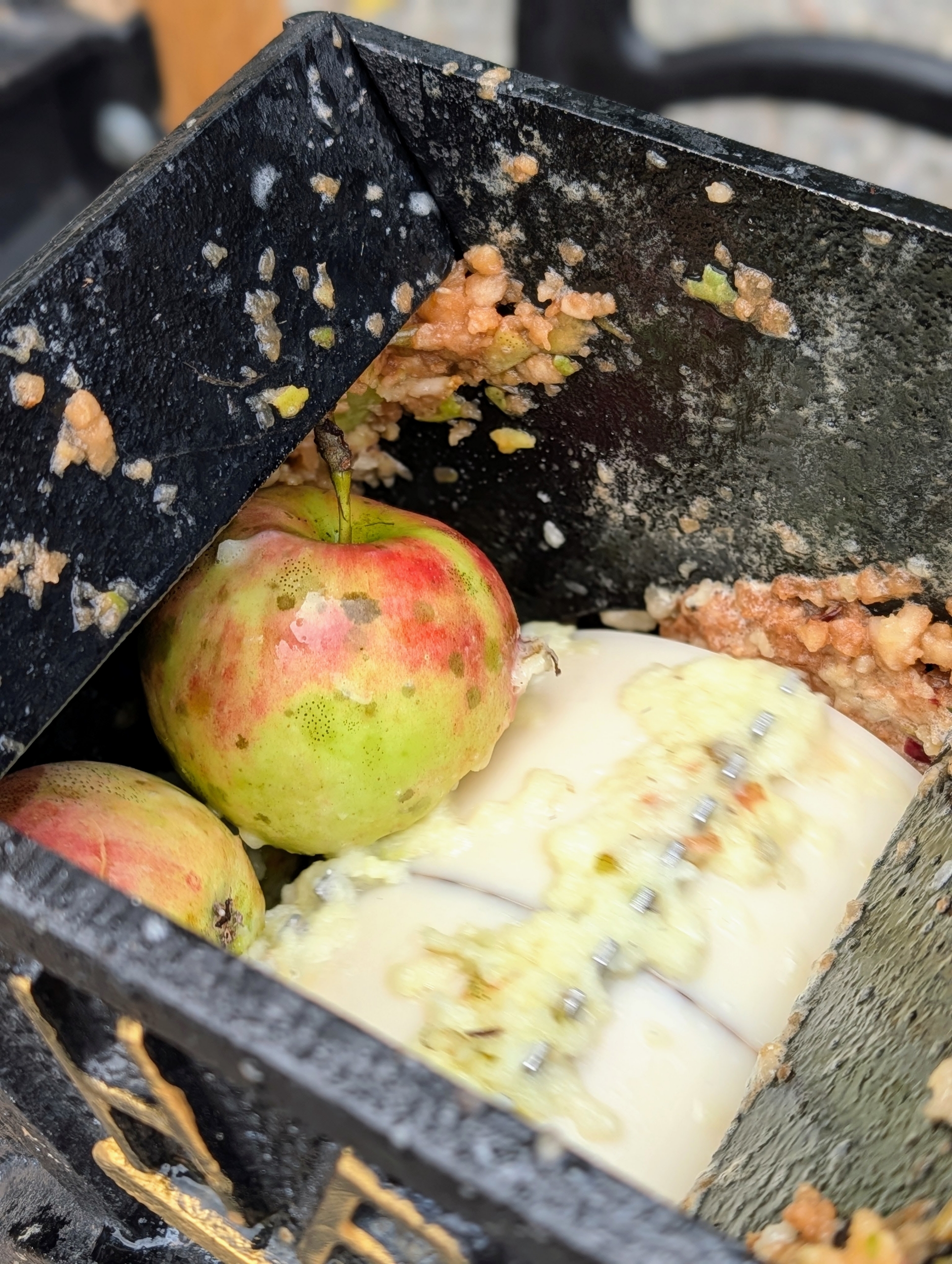
- Each apple is dropped onto the rotating drum. The embedded teeth grind up the apples as they are placed into the chamber.
-
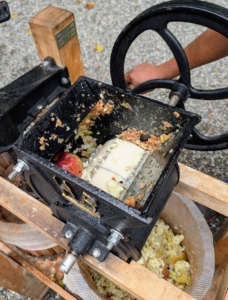
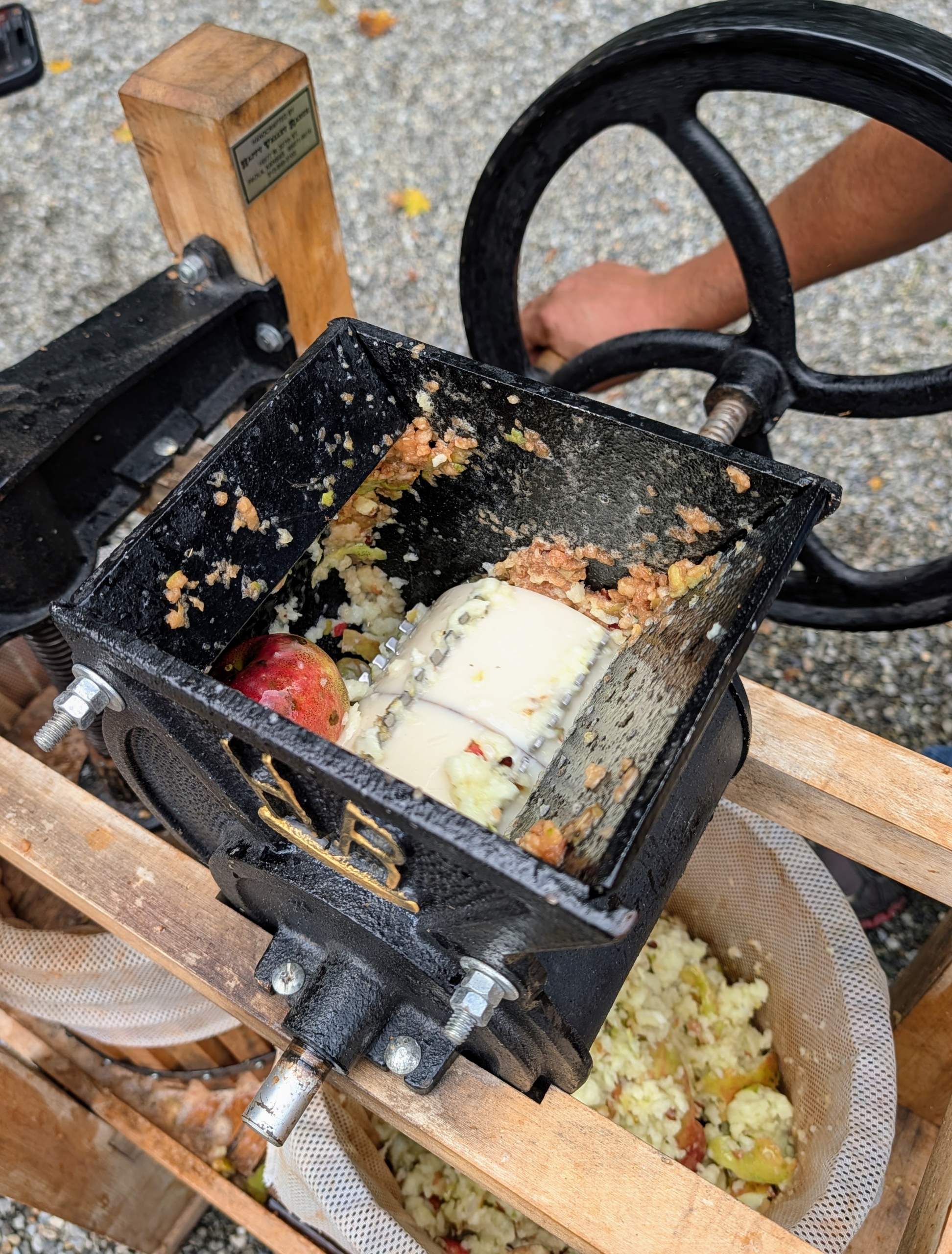
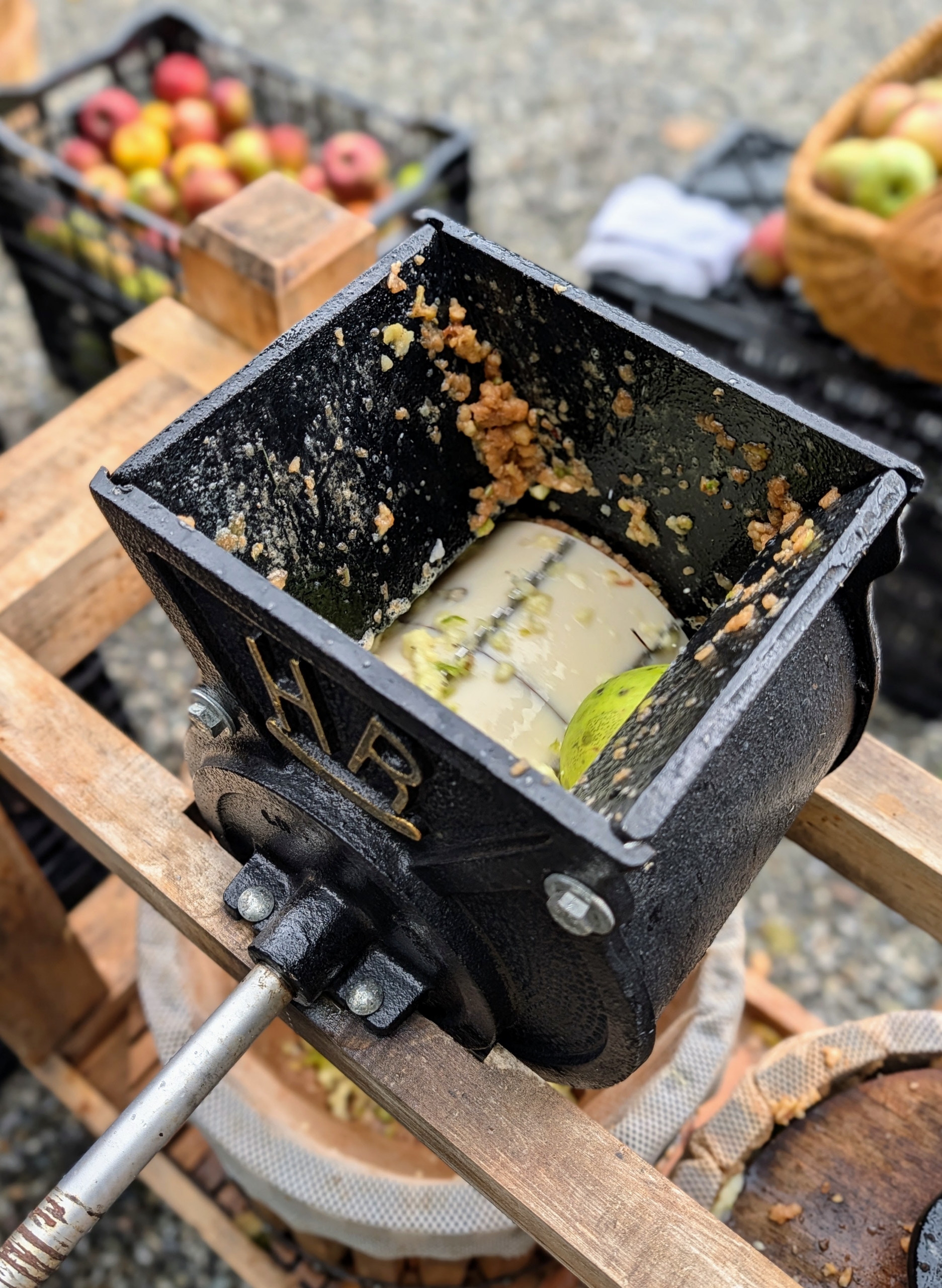
- Looking closely, one can see the small blades – they are very sharp. As the wheel is turned, the apples are pressed into the teeth and cut into small pieces.
-
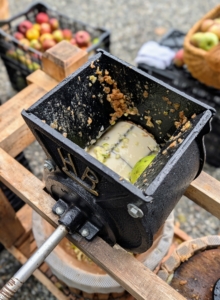
- The rotating drum works very quickly to chop up the fruits. This process is best done with two people, so one can drop the apples as the other turns the wheel.
-
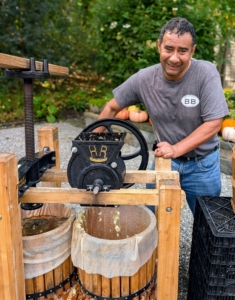
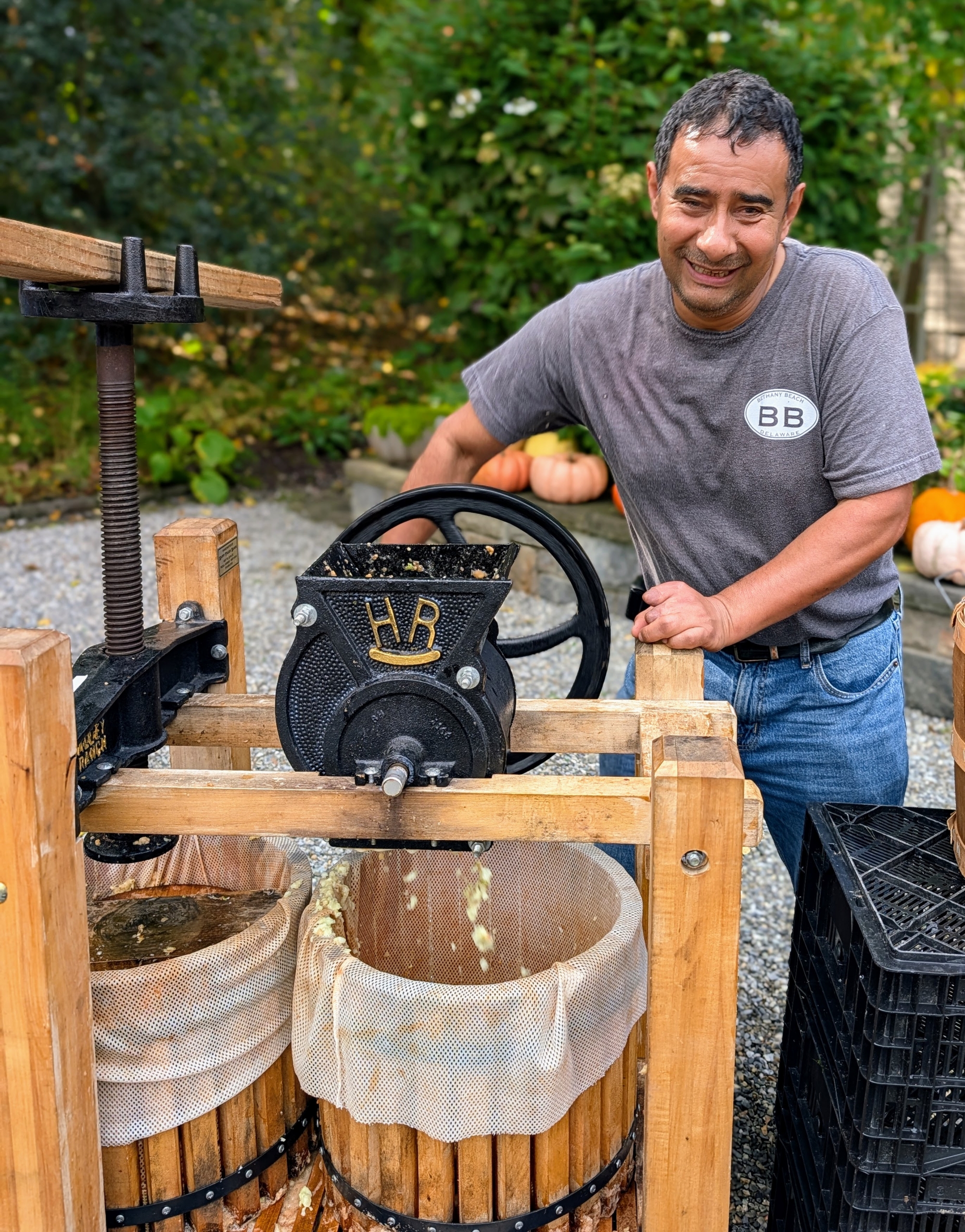
- The flywheel is an 18-pound cast iron wheel attached to the grinding shaft. This allows the operator to turn the drum which grinds the apples. It takes quite a few apples to fill the tub. Once the tub is filled with apple pulp – skins, seeds and cores – the pressing process can begin.
-
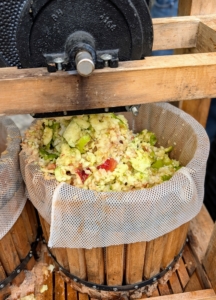
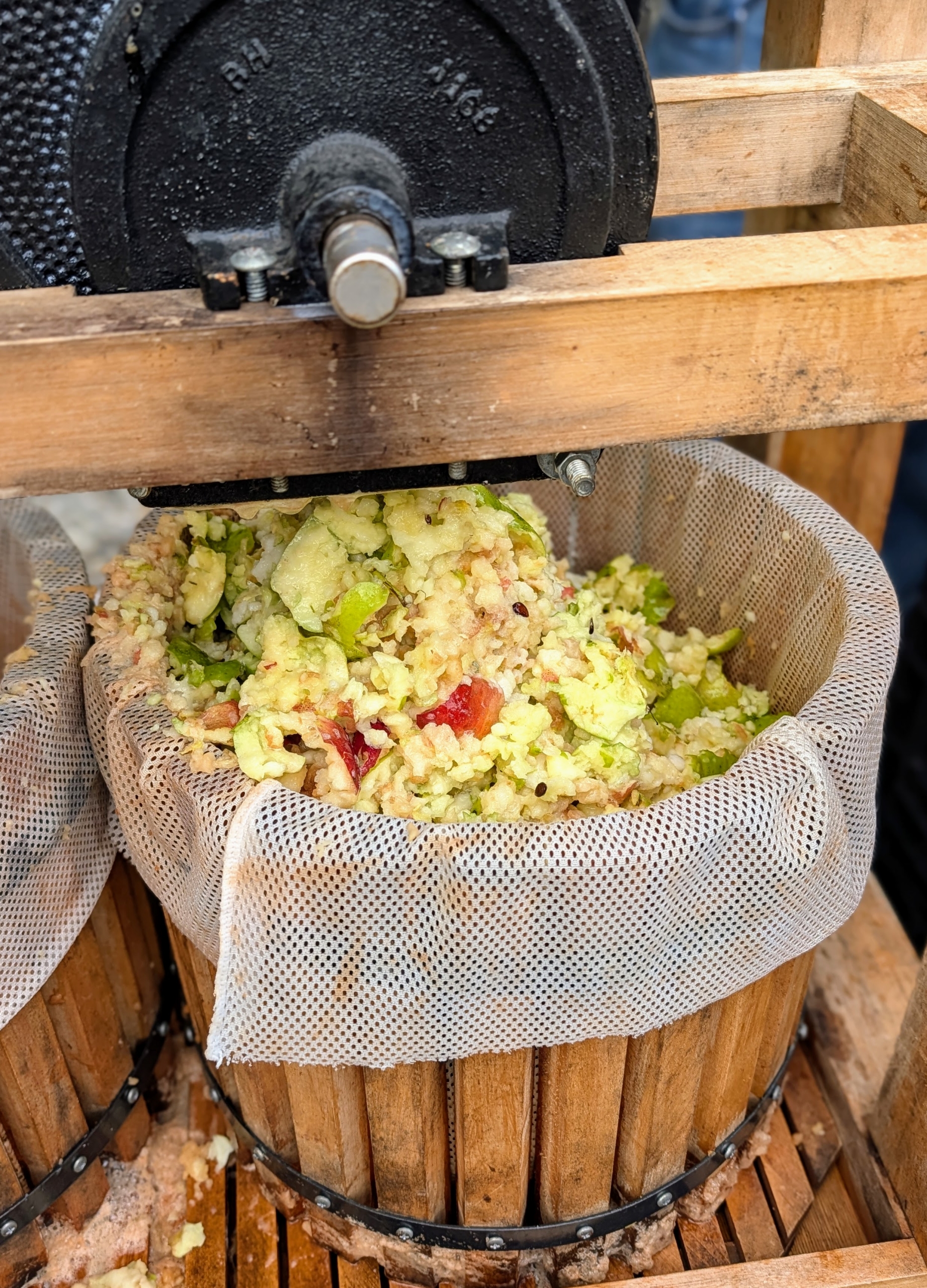
- The tub where the apples fall after going through the grinder is called the hopper. The hopper catches the apple pulp while another tub is used for pressing.
-
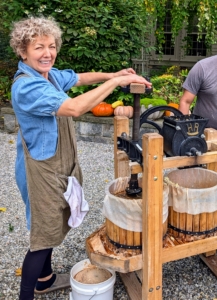
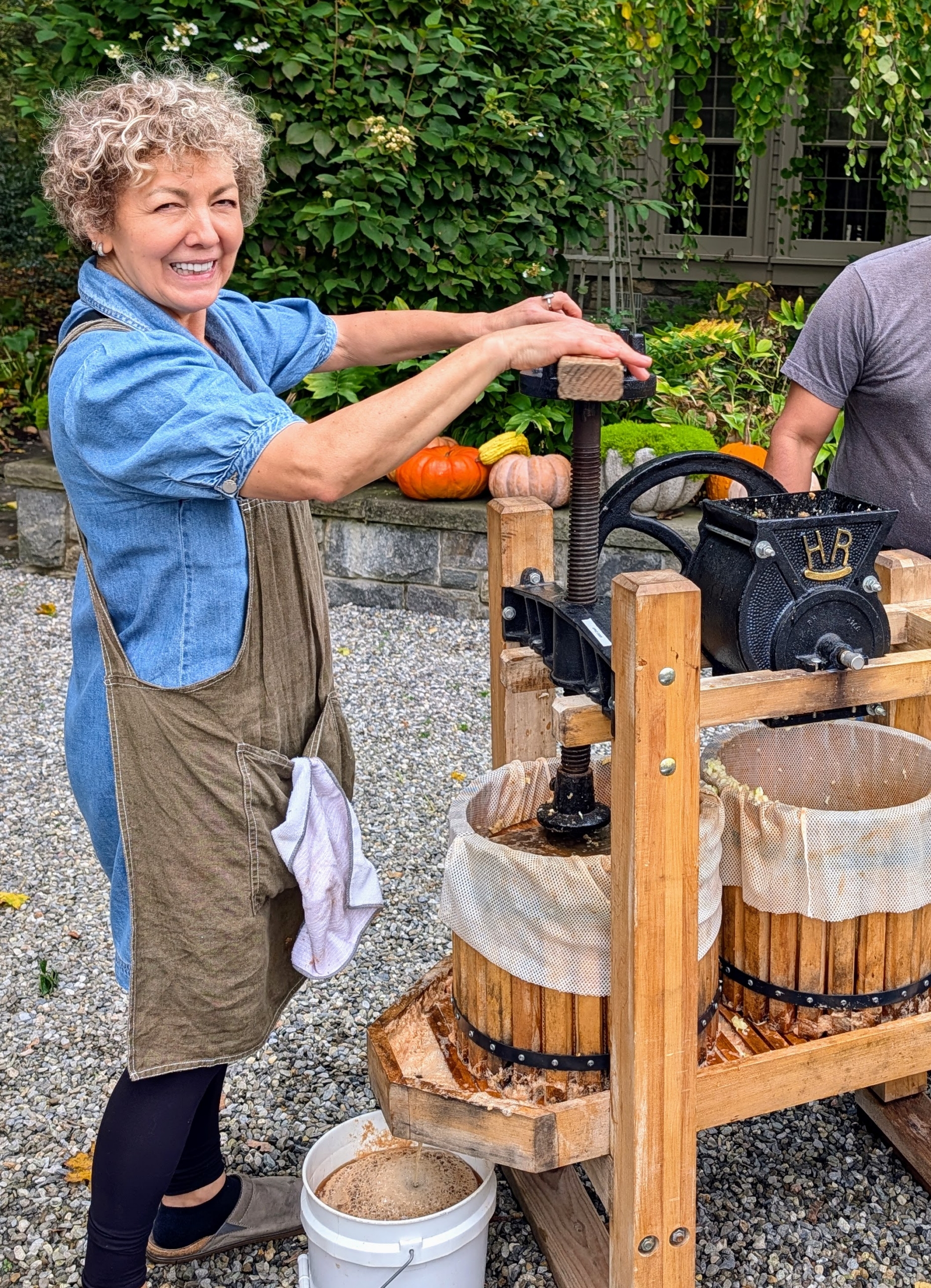
- The basket press relies on a large screw to add pressure to the crushed apples, or pomace, that are in the tub. It takes some strength to turn the screw efficiently. The 2×4 piece of wood helps add more torque. The hardwood tubs have beveled staves which make them easy to clean. They measure 12-inches high, 13-and-a-half-inches in diameter and are supported by steel hoops.
-
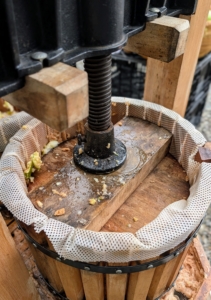
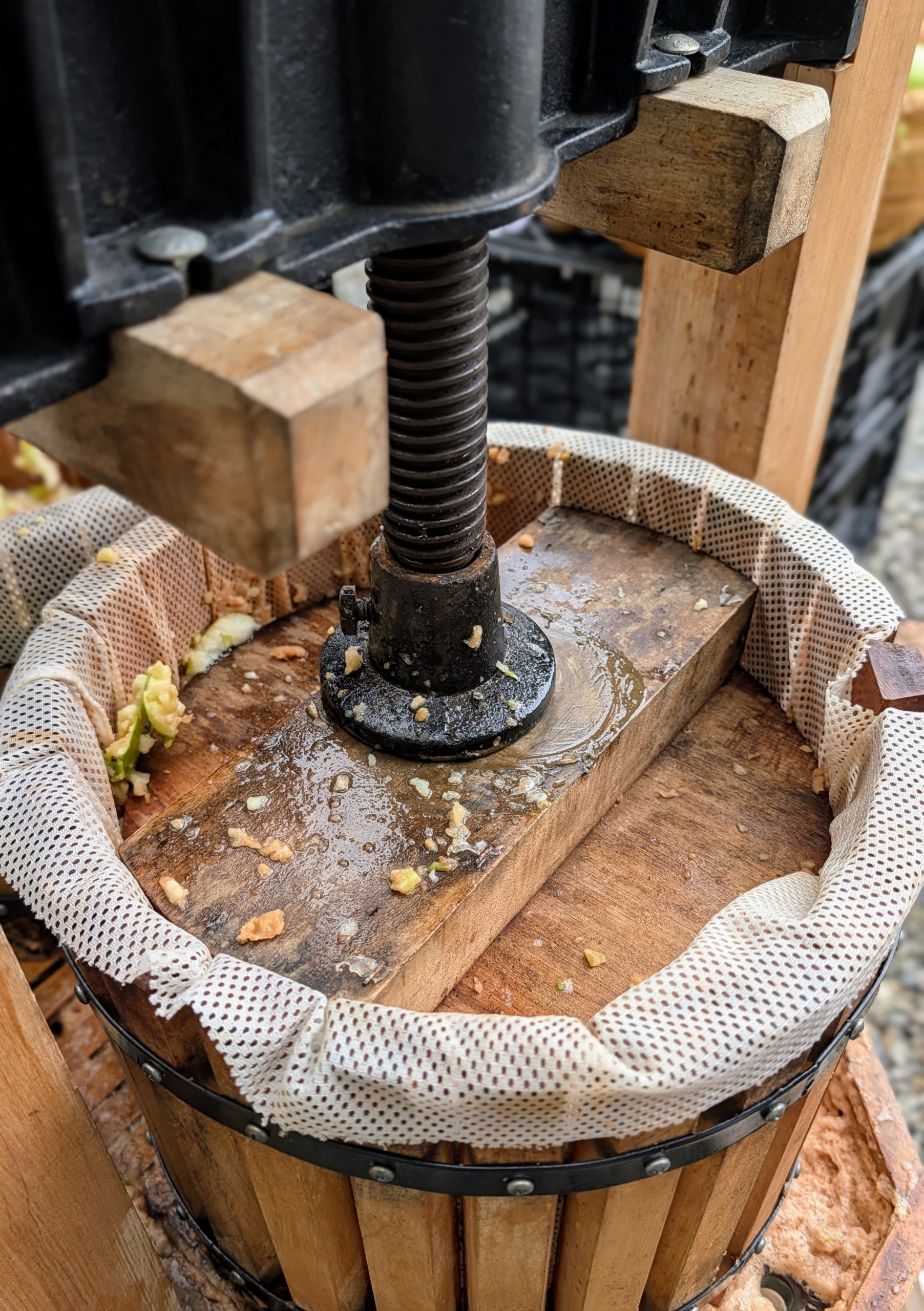
- The screw pushes down on this press plate that is placed on top of the chopped apples. The pressing disk is made of maple wood.
-
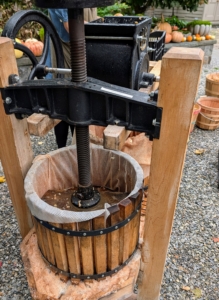
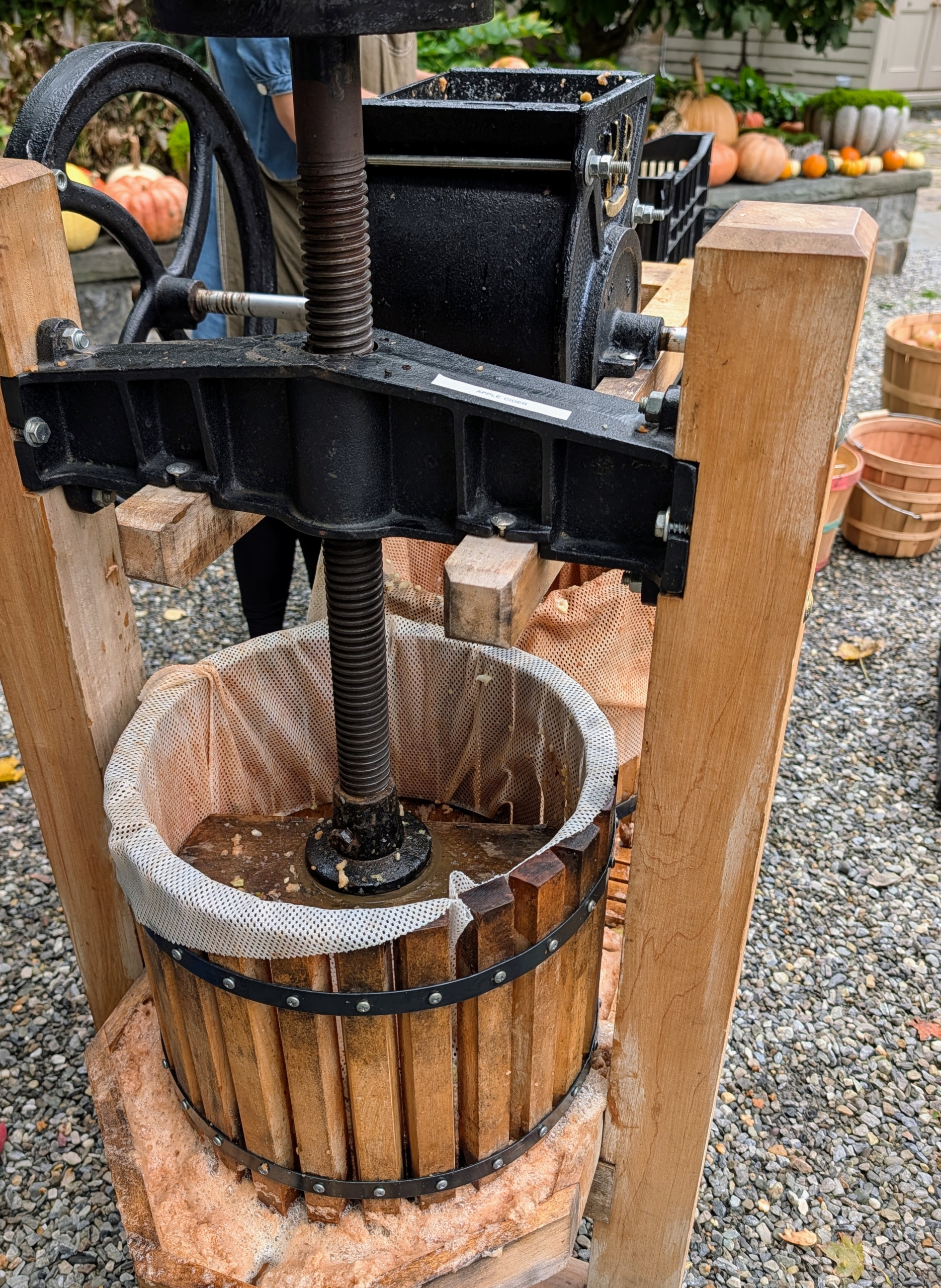
- The screw is a one-and-a-half inch thick cast iron threaded acme screw – an industry-leading thickness that can withstand the pressing pressure needed.
-
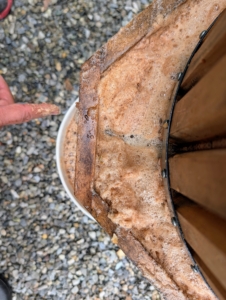
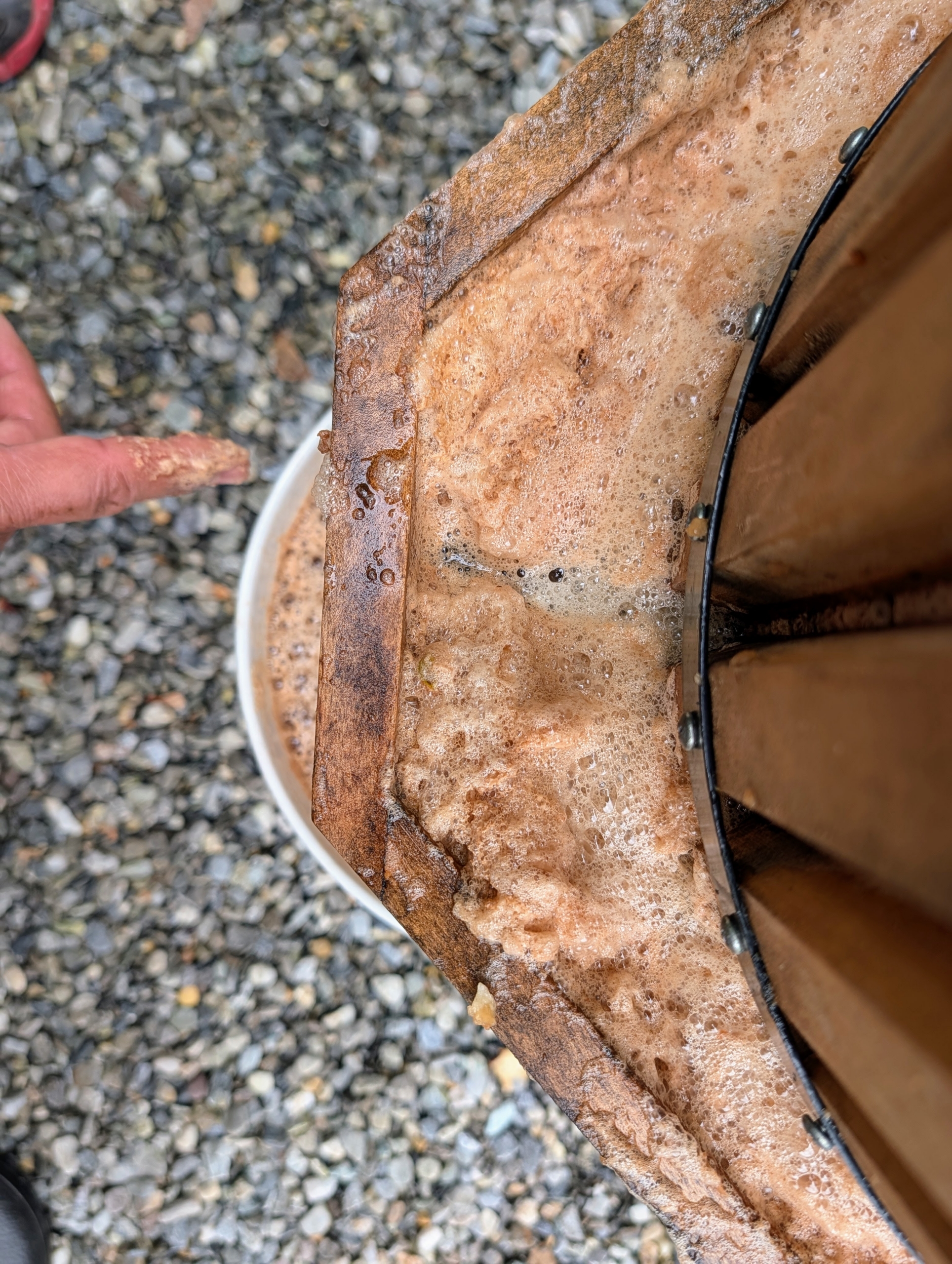
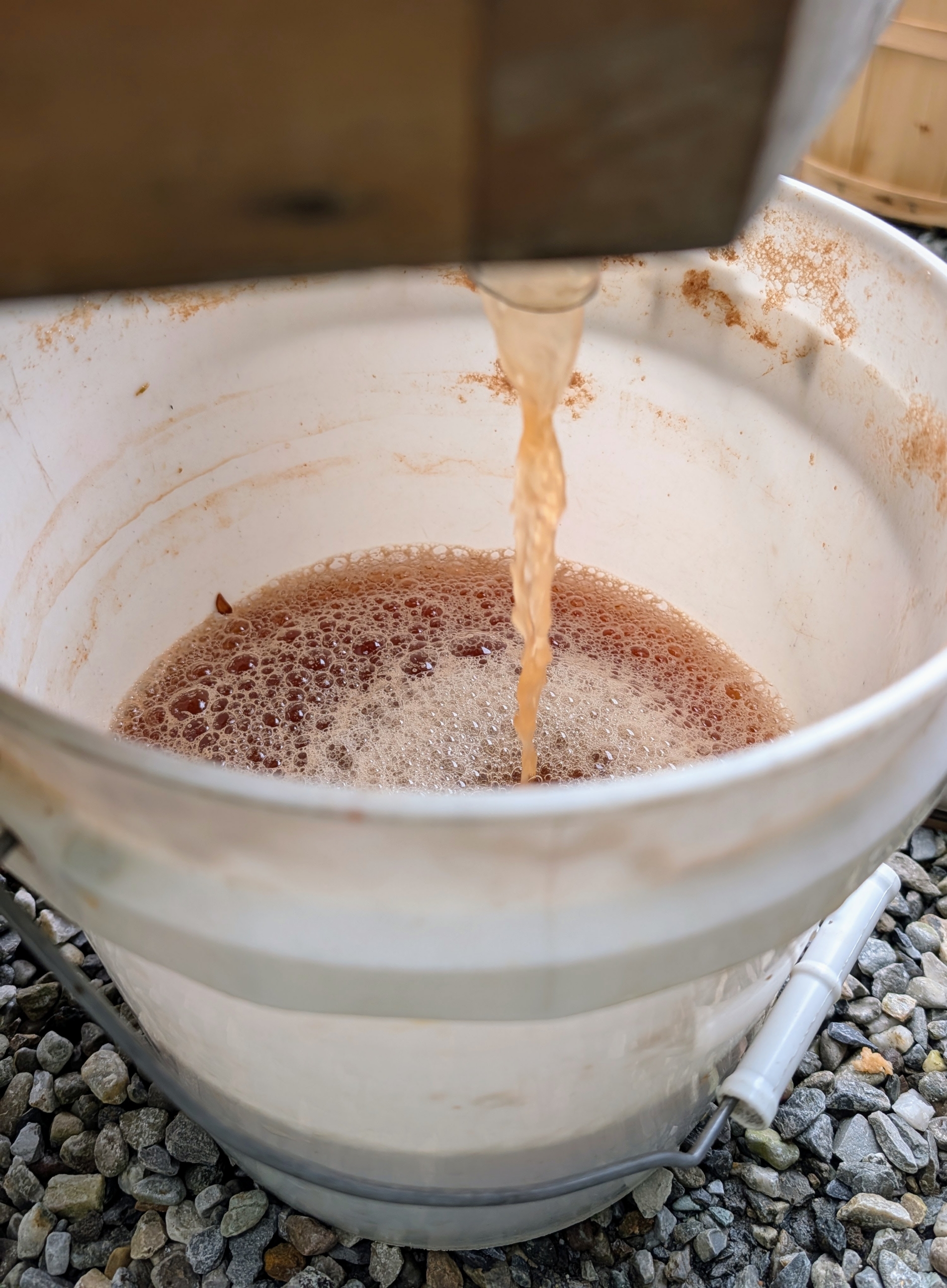
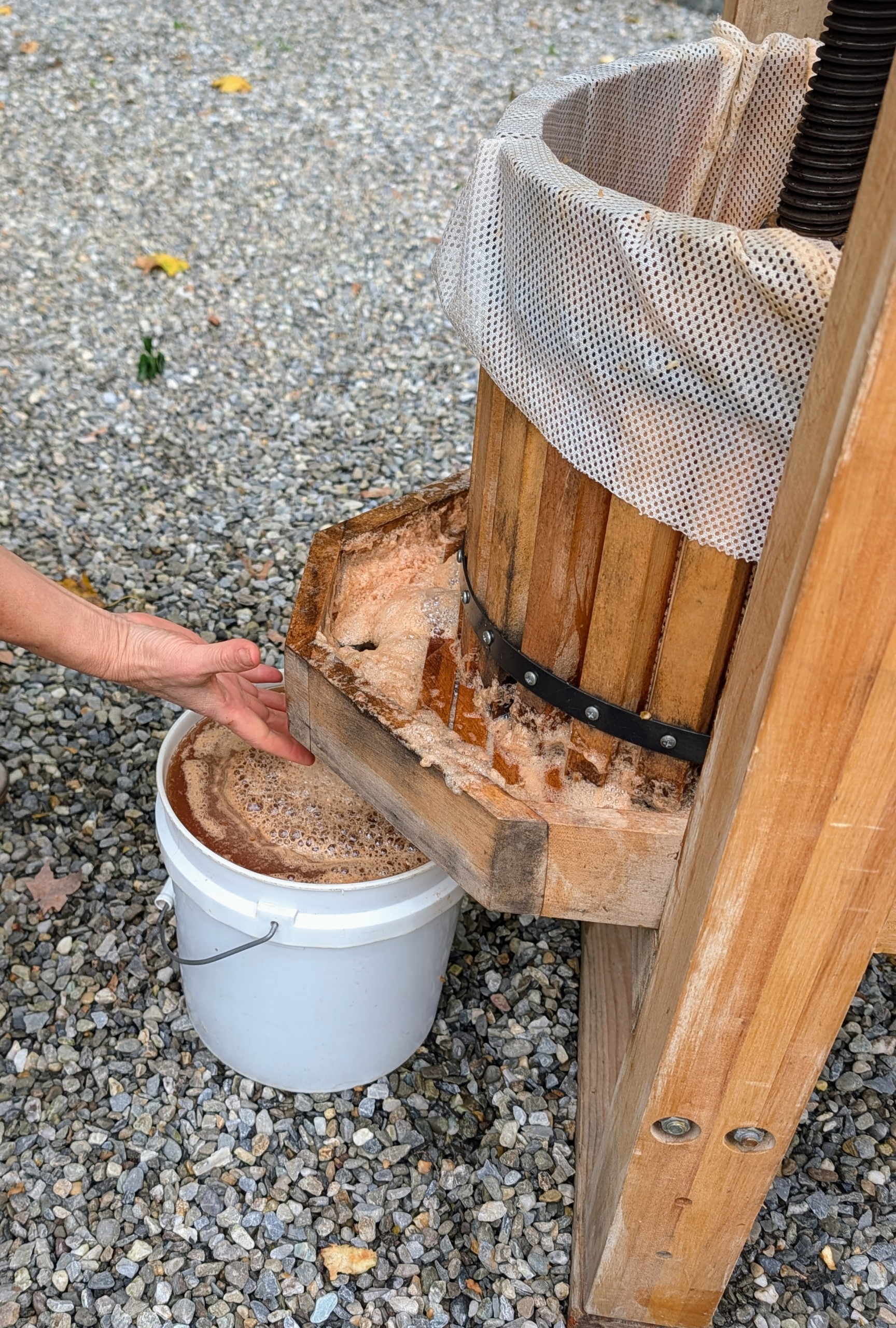
- As the apples are compressed, the juice flows out of the sides, through a downspout, and into a collection vessel below.
-
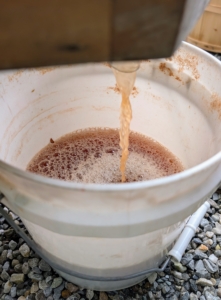
- A bushel of apples makes about three gallons of cider. A bushel of apples typically holds about 125 medium apples.
-
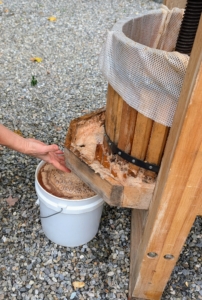
- Do you know the difference between apple cider and apple juice? Juice has already been filtered to remove any solids or sediment, and then pasteurized to extend its freshness. Fresh cider is pure, raw juice from the apples.
-
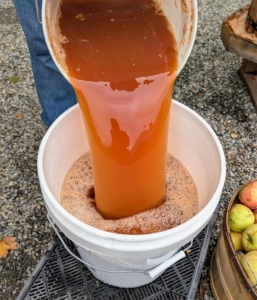
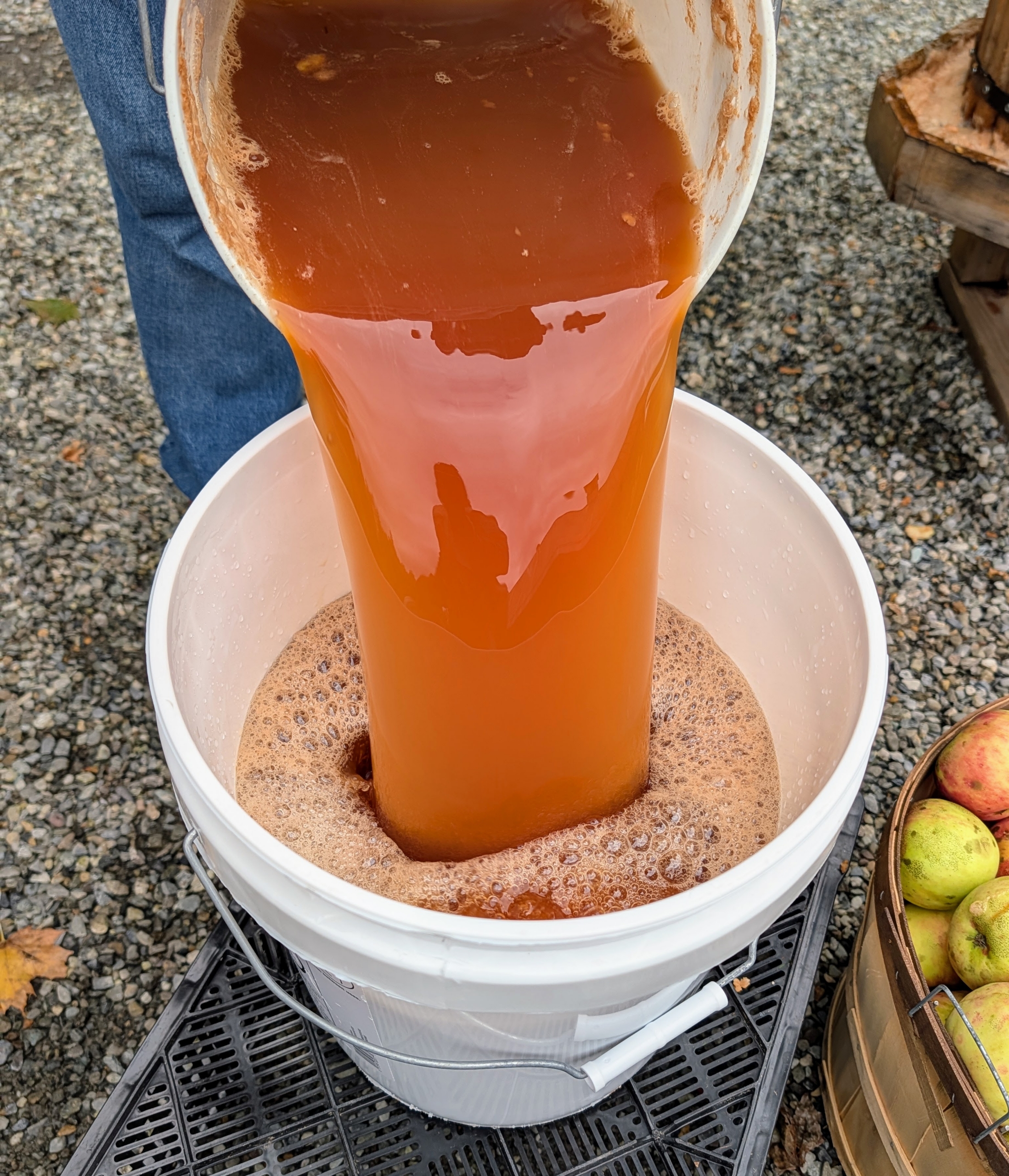
- Look how beautiful the cider is – such a rich, amber color.
-
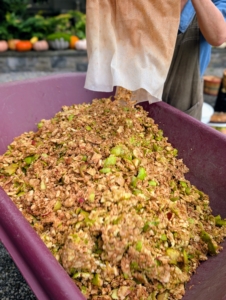
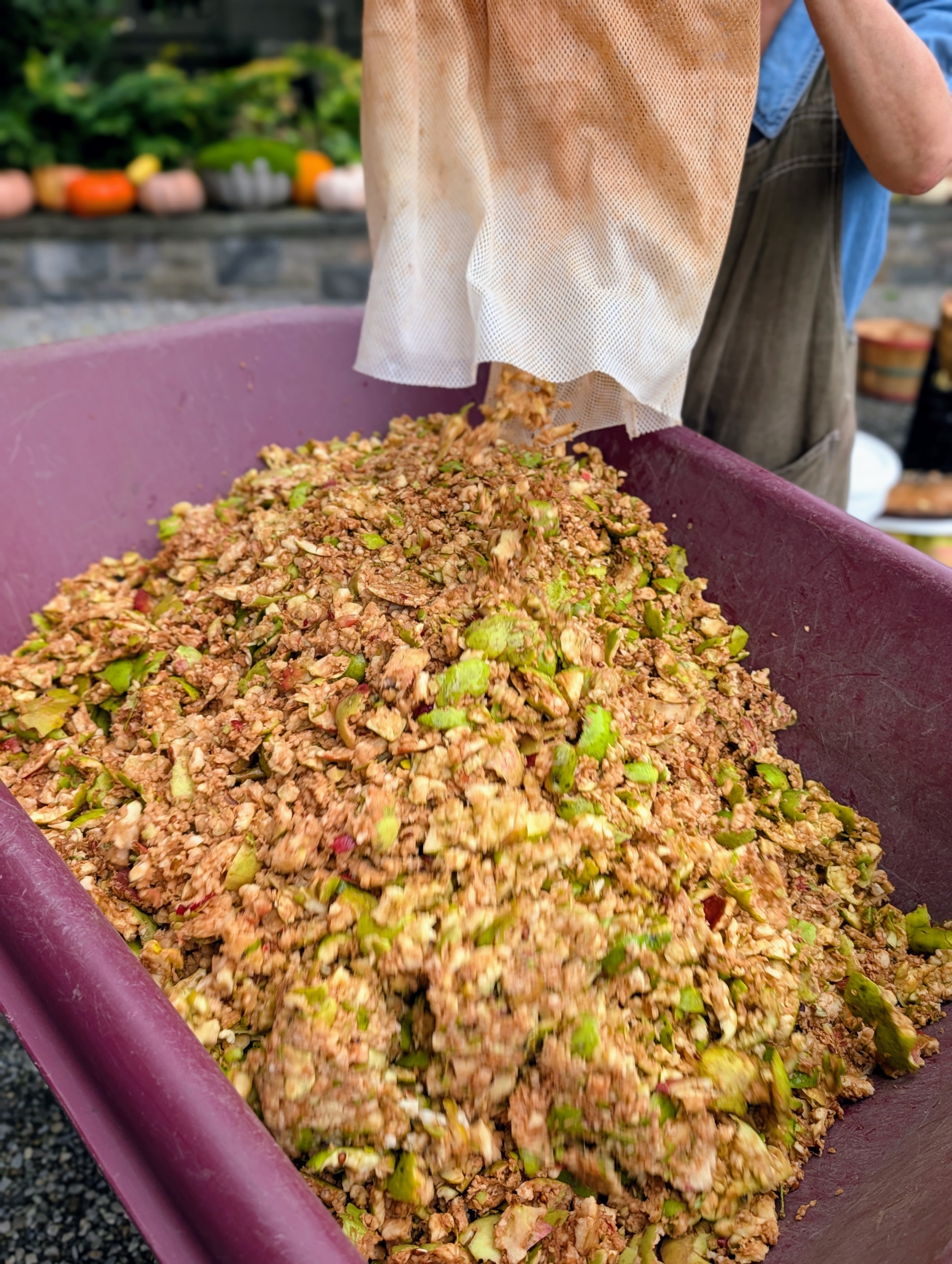
- All the compressed apple pulp is emptied into a bin and set aside for my chickens – they love pecking at the scraps.
-
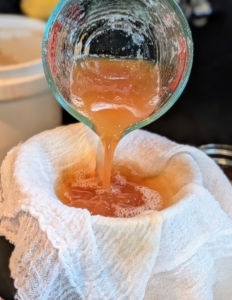
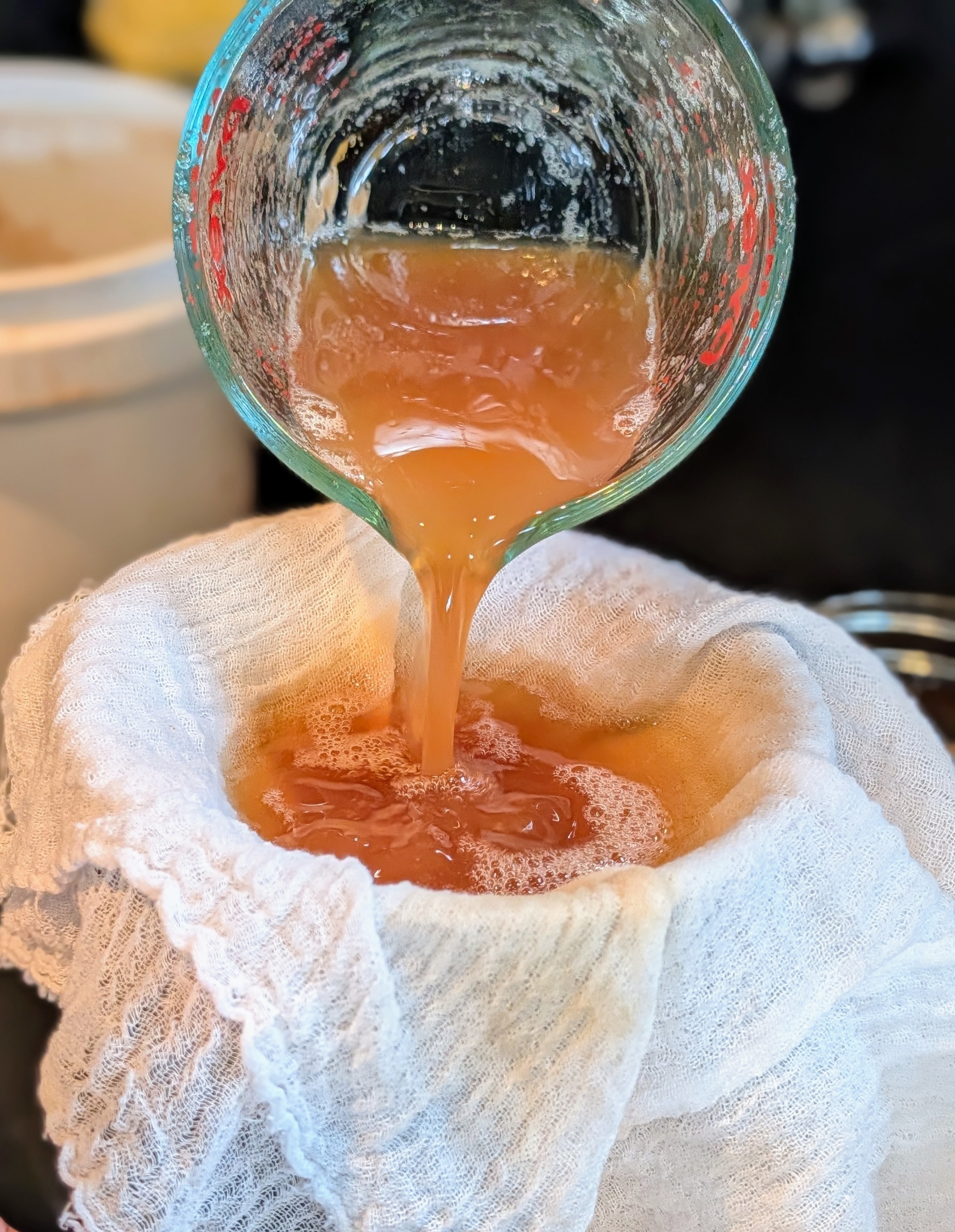
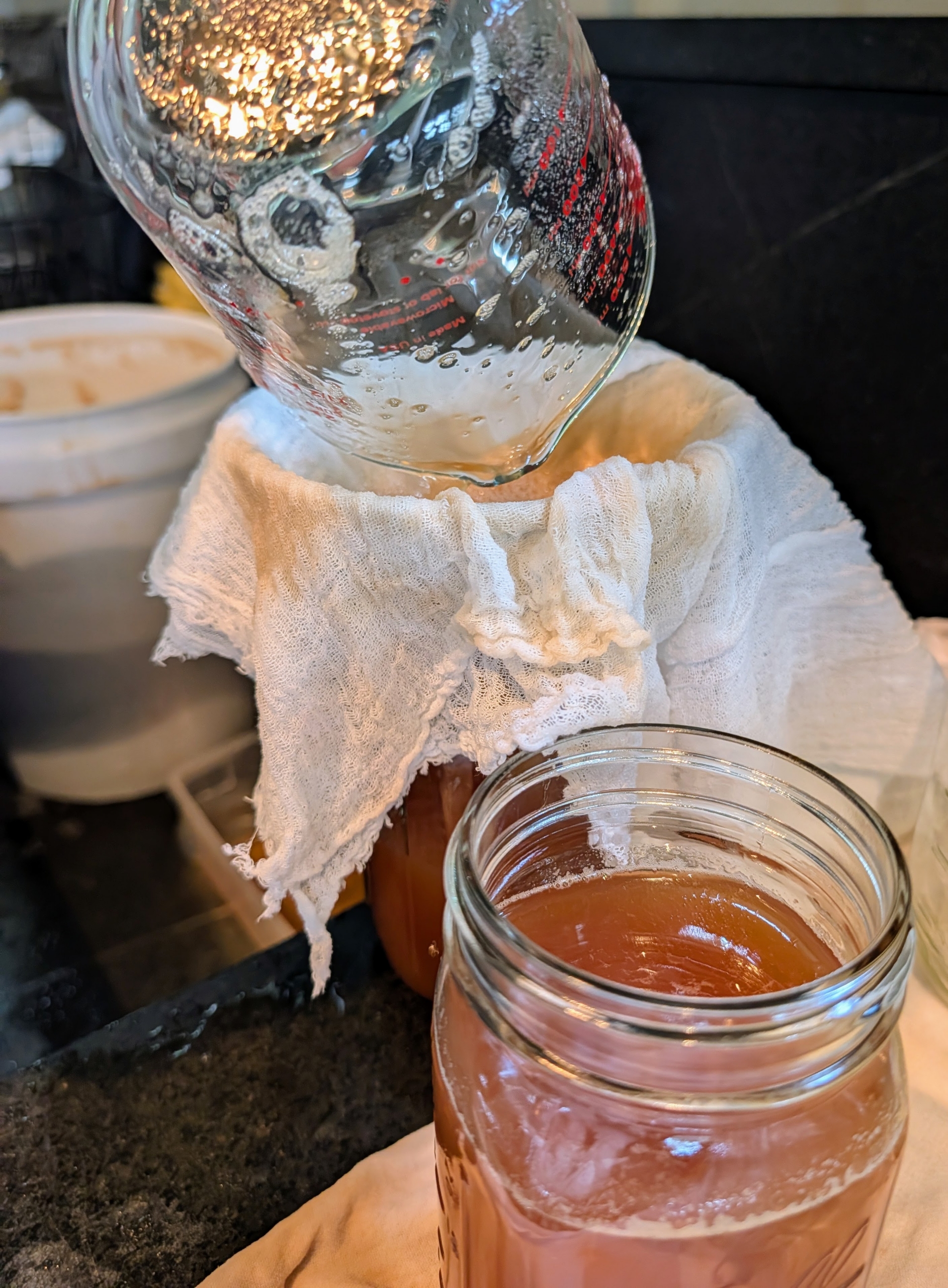
- I add a step, which is to strain the cider through layers of damp cheesecloth. This removes all the foam.
-
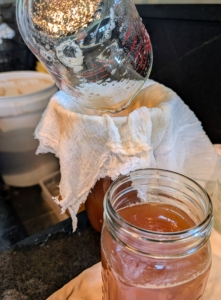
- The juice is poured into a strainer and directly into a jar.
-
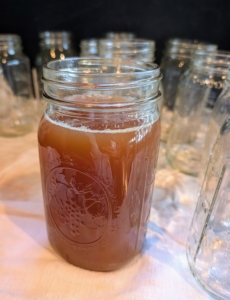
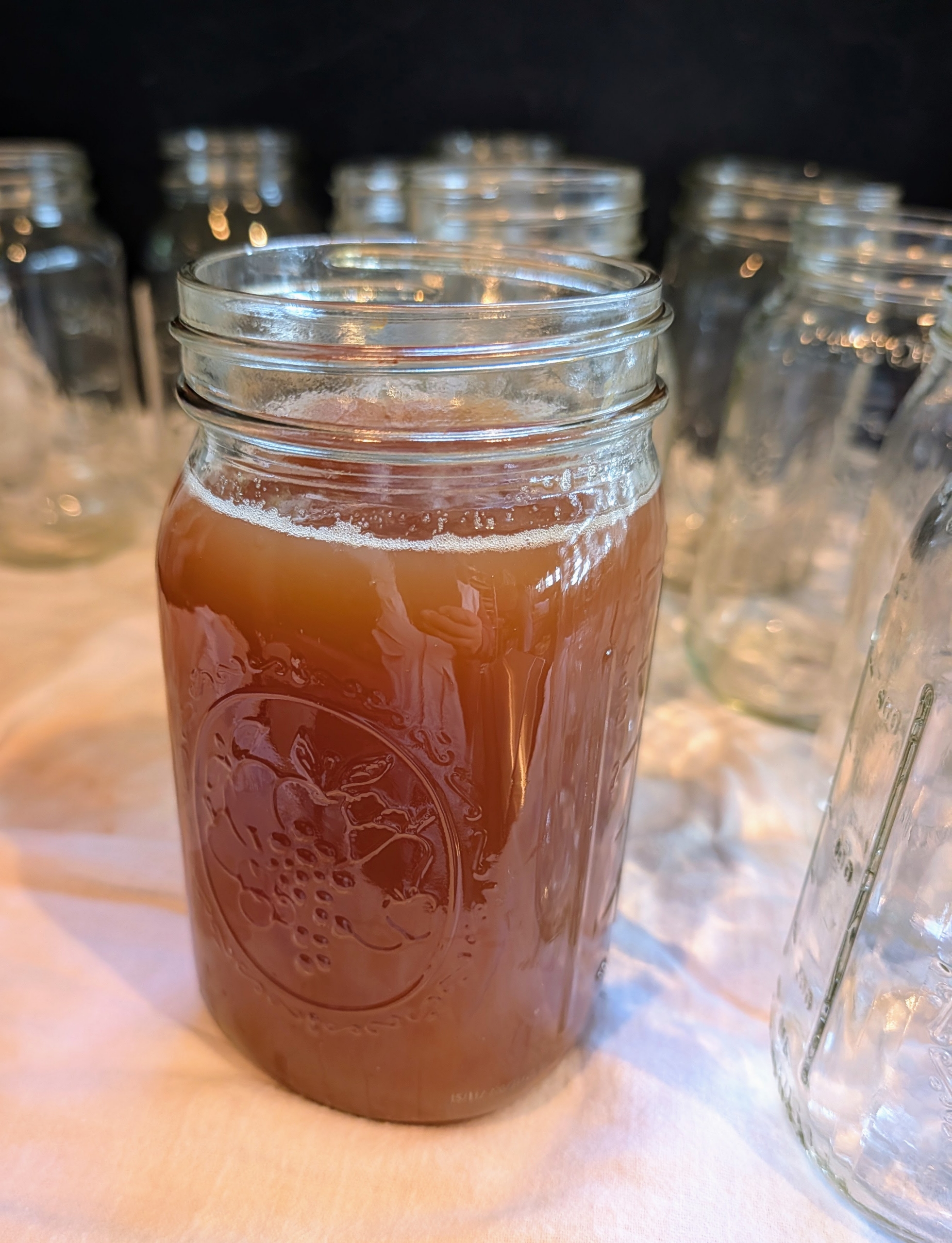
- Pure, fresh apple cider made from crisp, sweet, organic fruits. It’s well-worth all the effort.
-
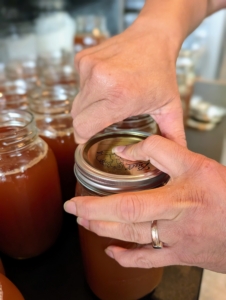
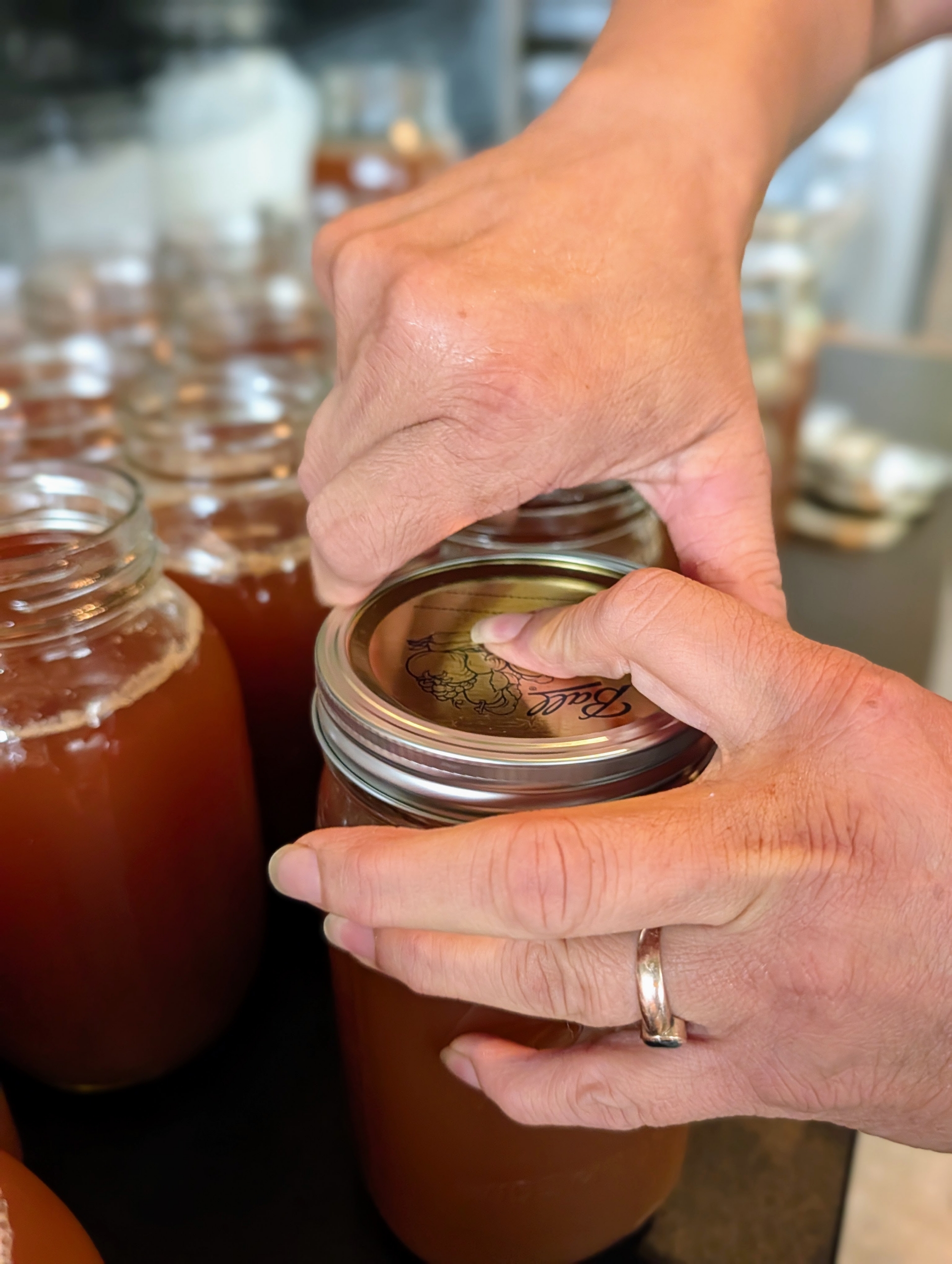
- After the cider is poured, the top of the jar is wiped perfectly clean and the lids are screwed on top.
-
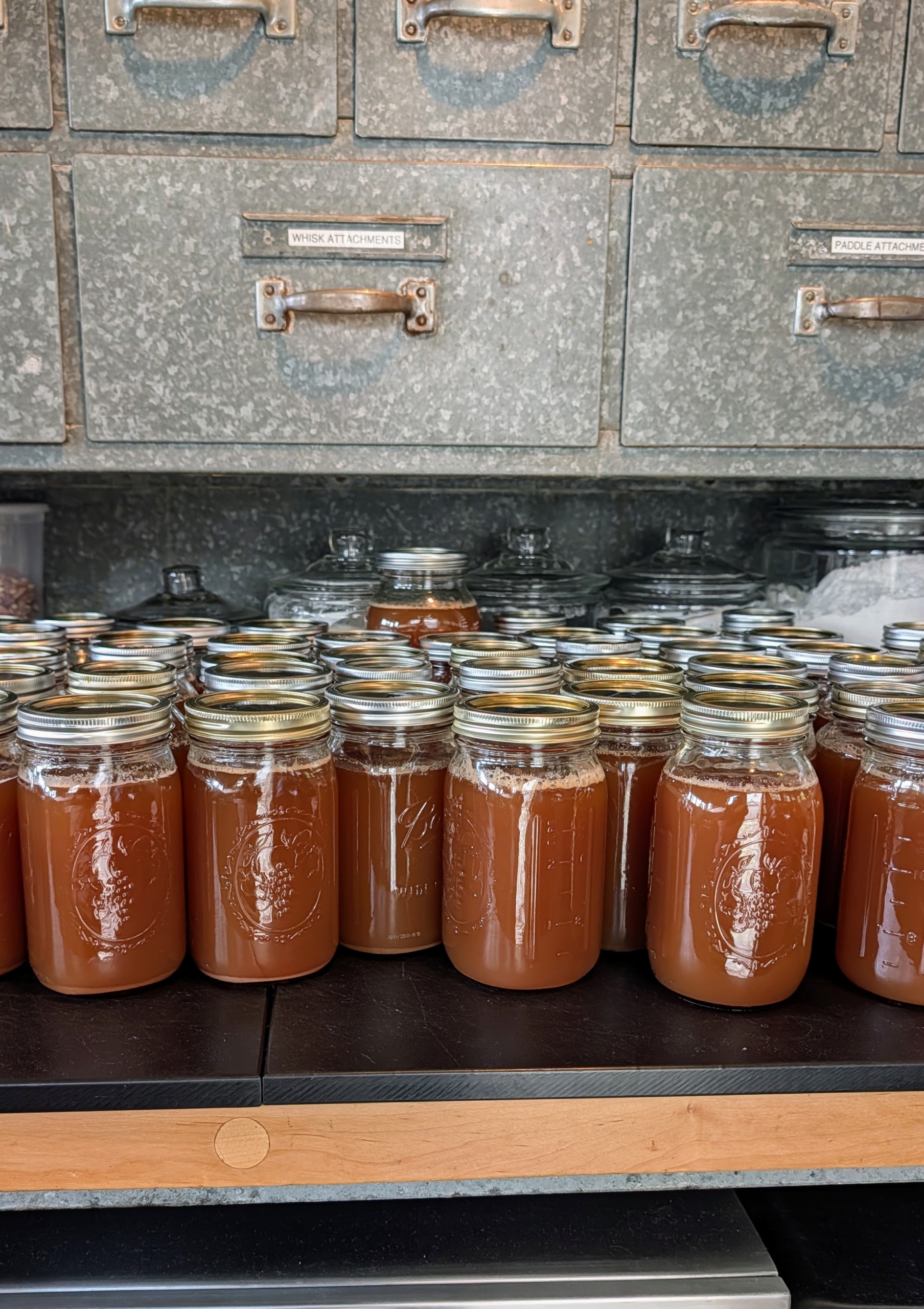
- More than 60 quarts of cider made so far at the farm…
-
- … And still more to go. And it’s all delicious.
This story originally appeared on Martha Stewart Blog

