


November 2, 2026
A New Home for a Japanese Maple Tree
Japanese maples have always been among my favorite trees – I’ve planted many over the years.
Recently, a friend told me about a beautiful, old Japanese maple at a neighboring property that needed a new home. The house had just been sold, and the new owner planned to redesign the landscape. After seeing the tree, I knew I wanted to transplant it here at my farm, where it could continue to thrive. Moving a mature specimen was no small undertaking. Removing it from the ground and transporting it required careful planning, ingenuity, and strength, but it was well worth the effort.
Enjoy these photos.
-
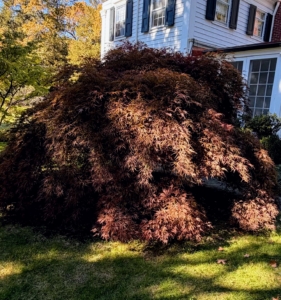
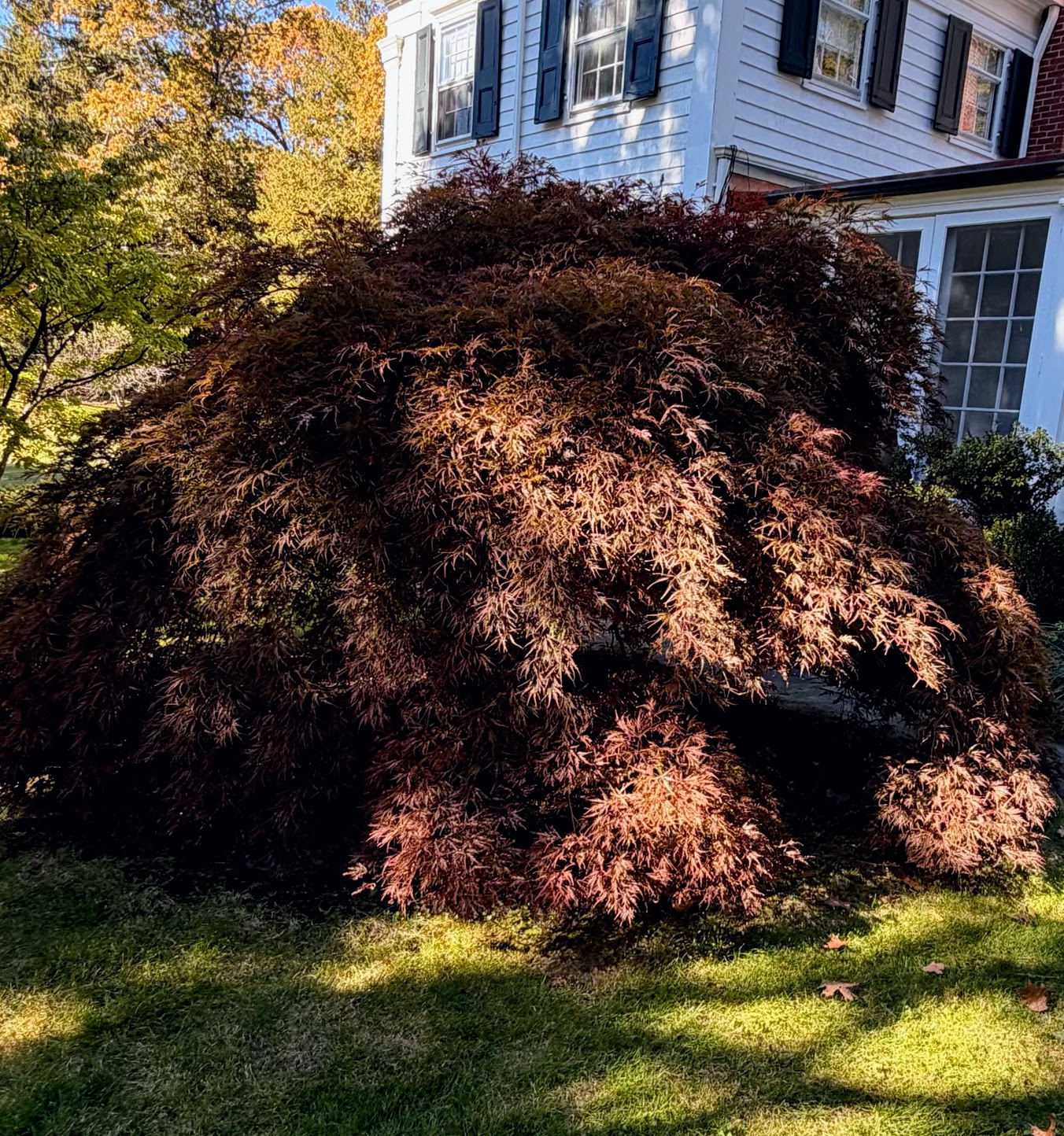
- This Japanese maple is a beautiful specimen tree. It’s in excellent condition at more than 80-years old. I knew it would look wonderful at my farm.
-
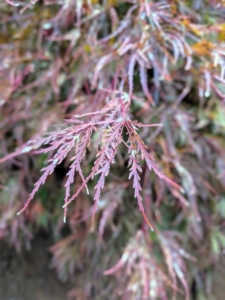
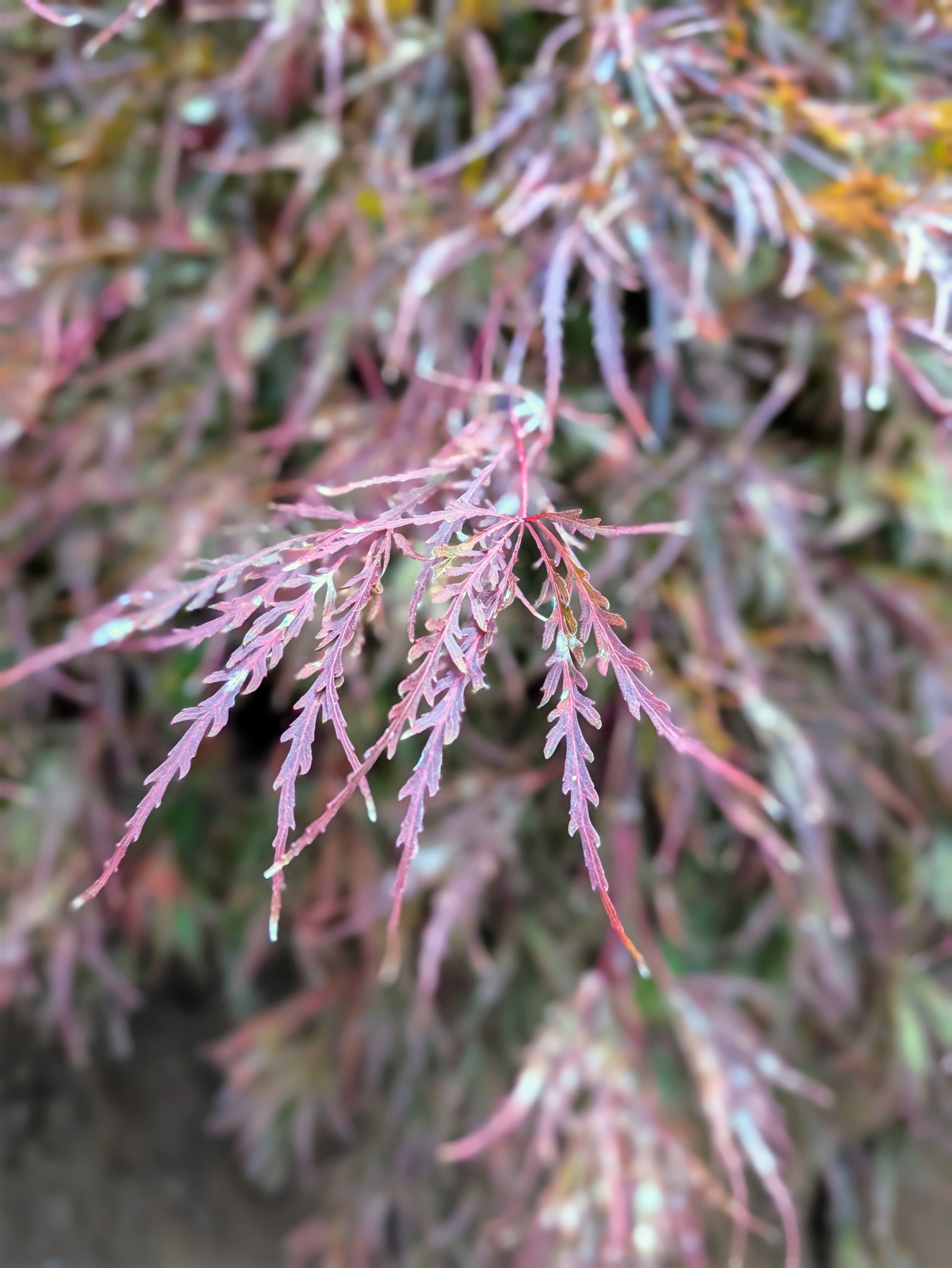
- Few trees are as beautiful as the Japanese maple. With more than a thousand varieties and cultivars including hybrids, the iconic Japanese maple tree is among the most versatile small trees for use in the garden.
-
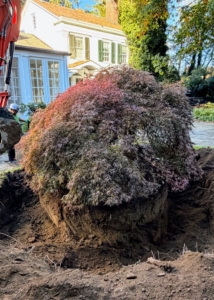
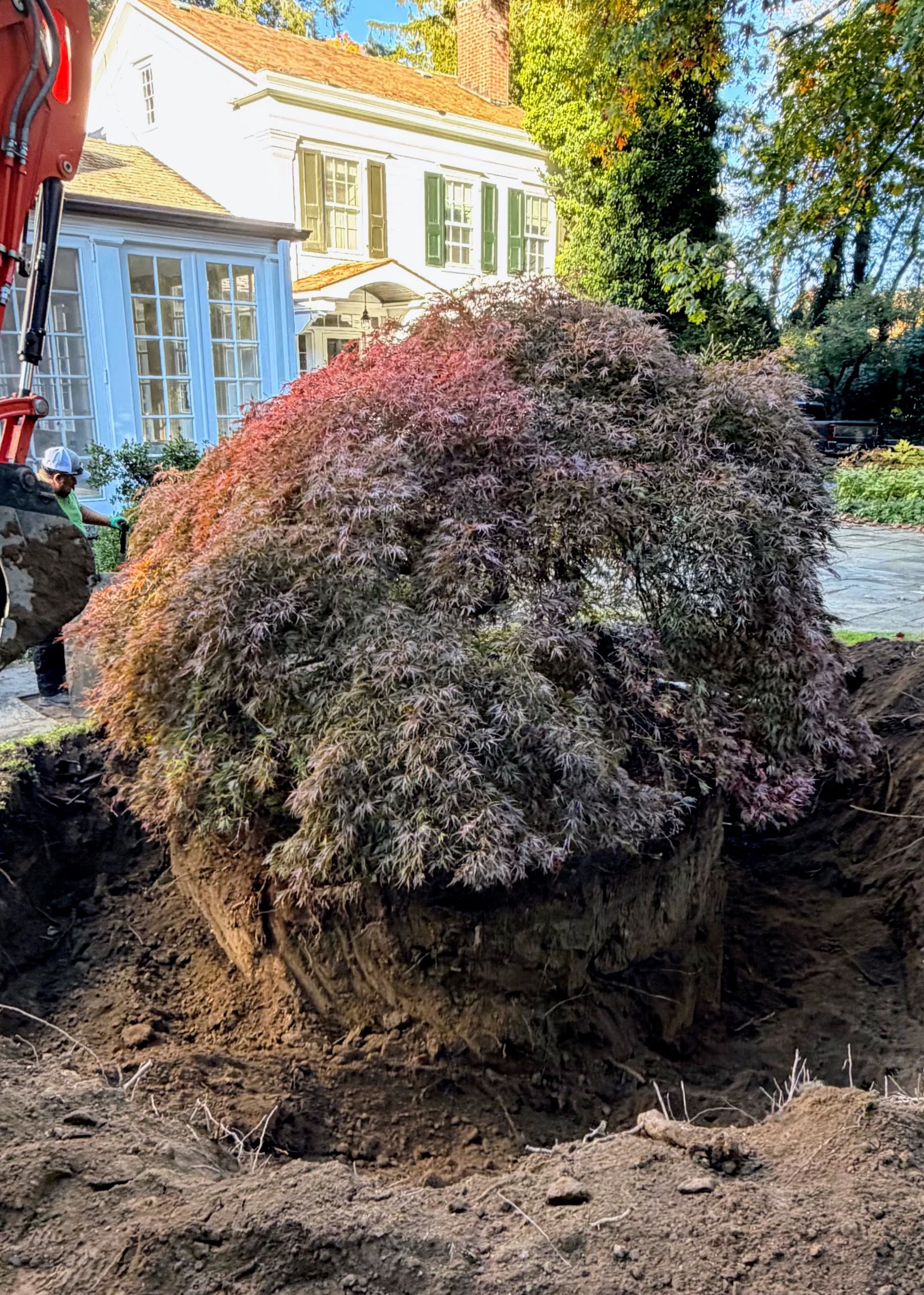
- The first step is digging it out of the ground. The crew spends time carefully digging the soil from around the tree.
-
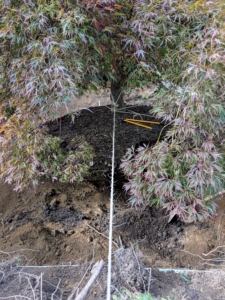
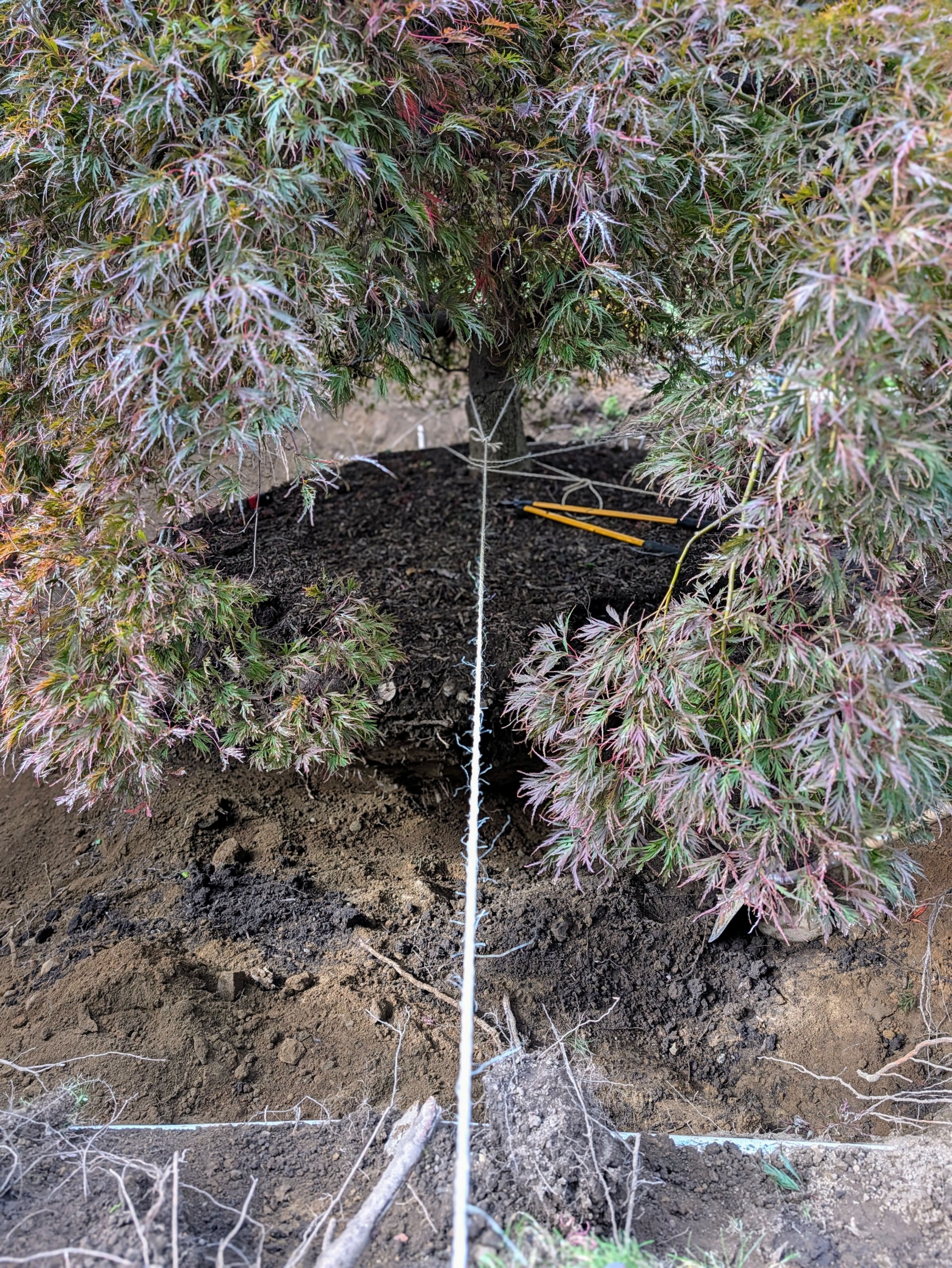
- Rope is tied around the trunk of the tree and secured at two points, so the root ball does not move.
-
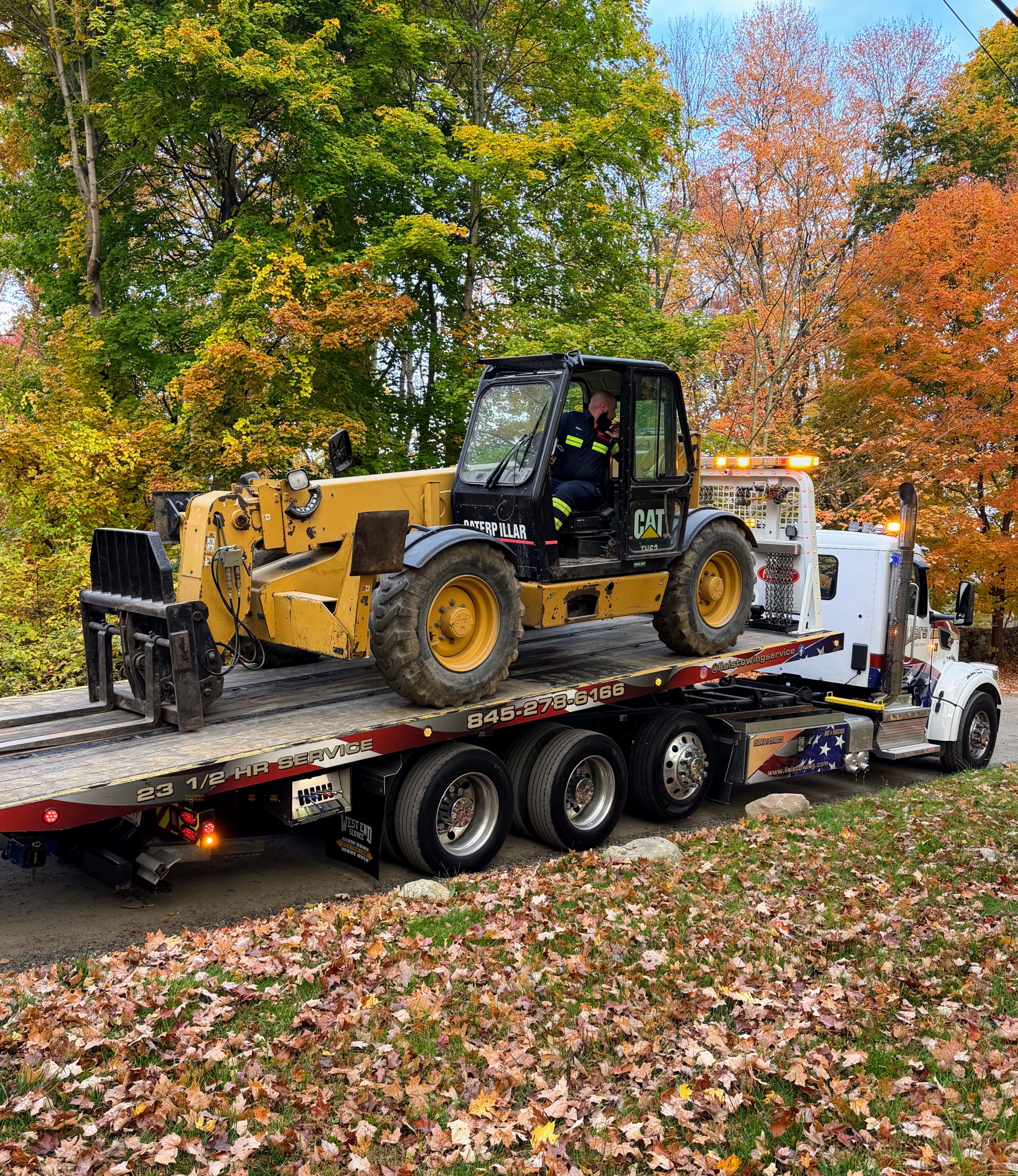
- We had my trusted Hi-Lo transported to the location to help with the removal process. This is a strong machine and can handle the weight of the tree.
-
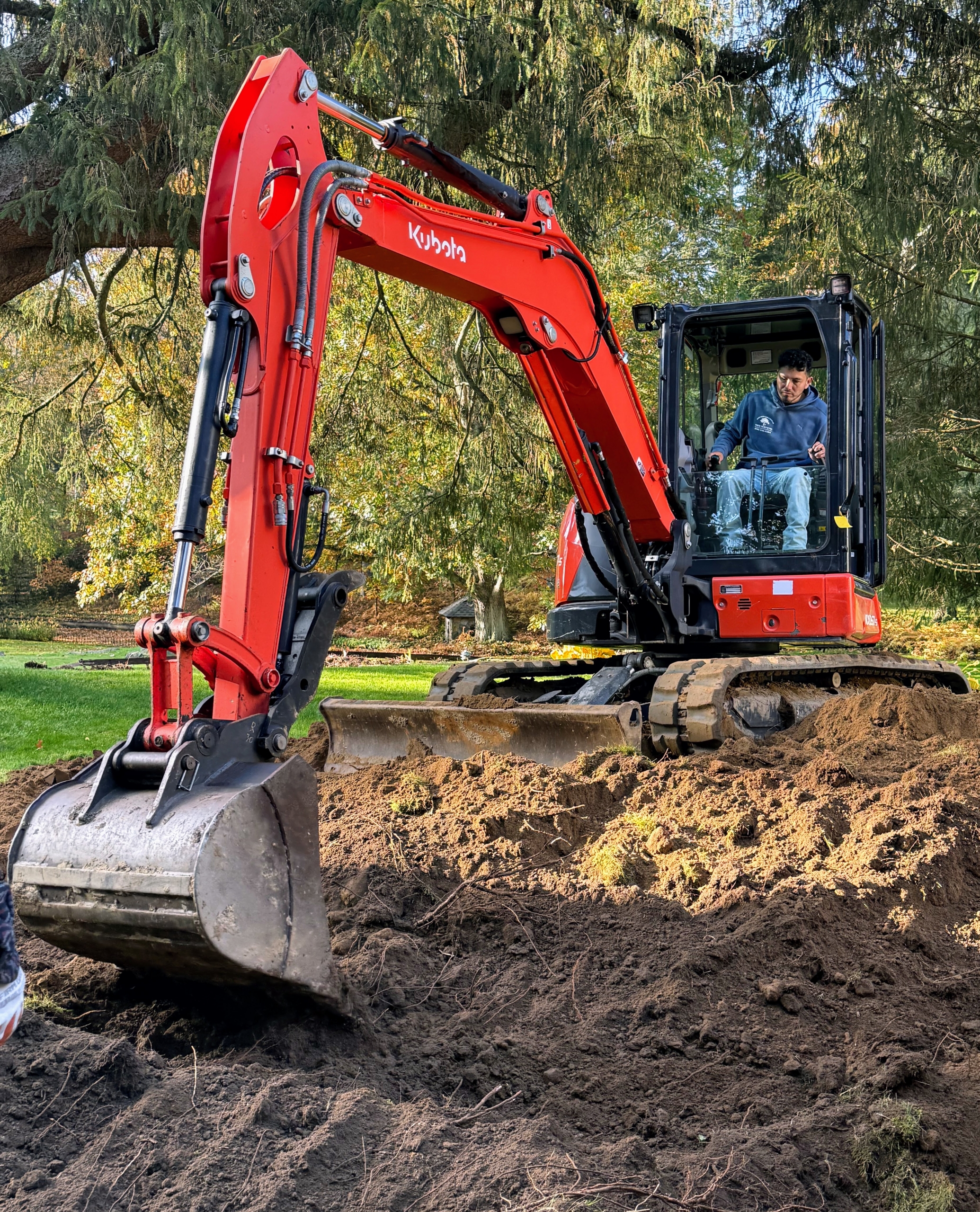
- Meanwhile, an excavator digs a level area for the Hi-Lo near the tree.
-
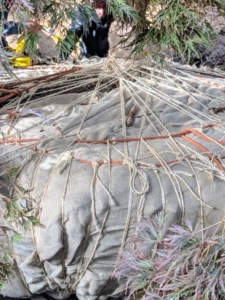
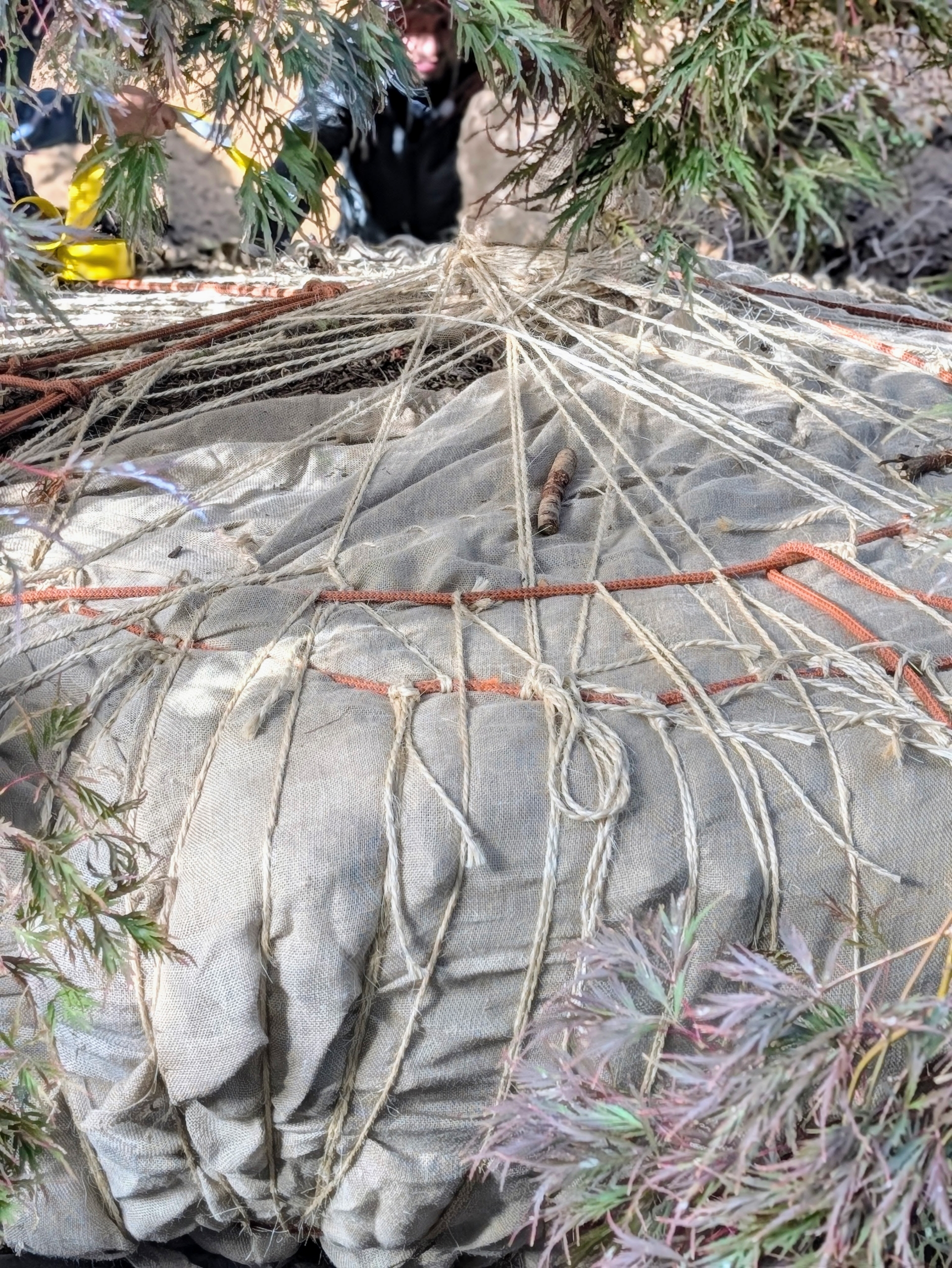
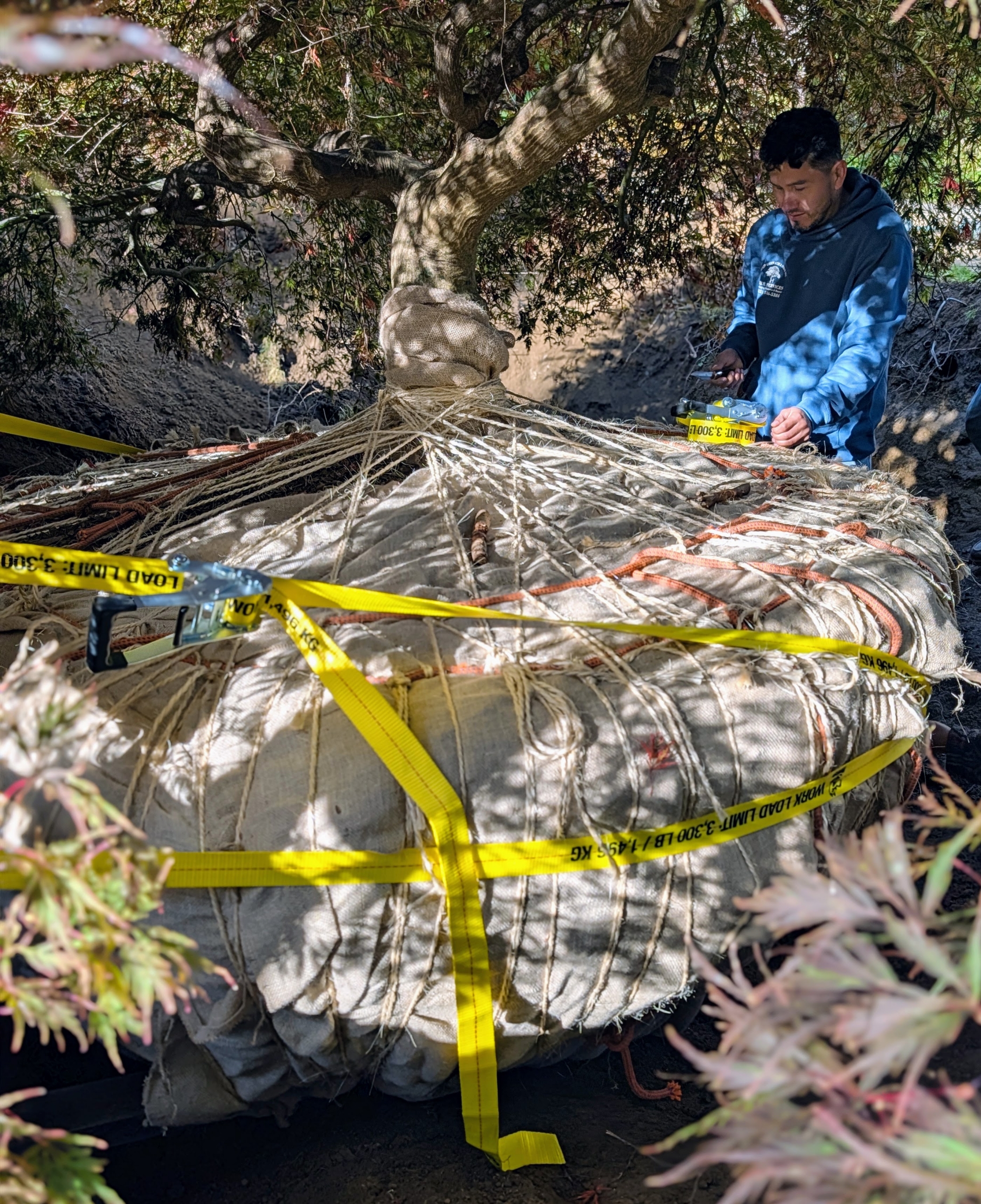
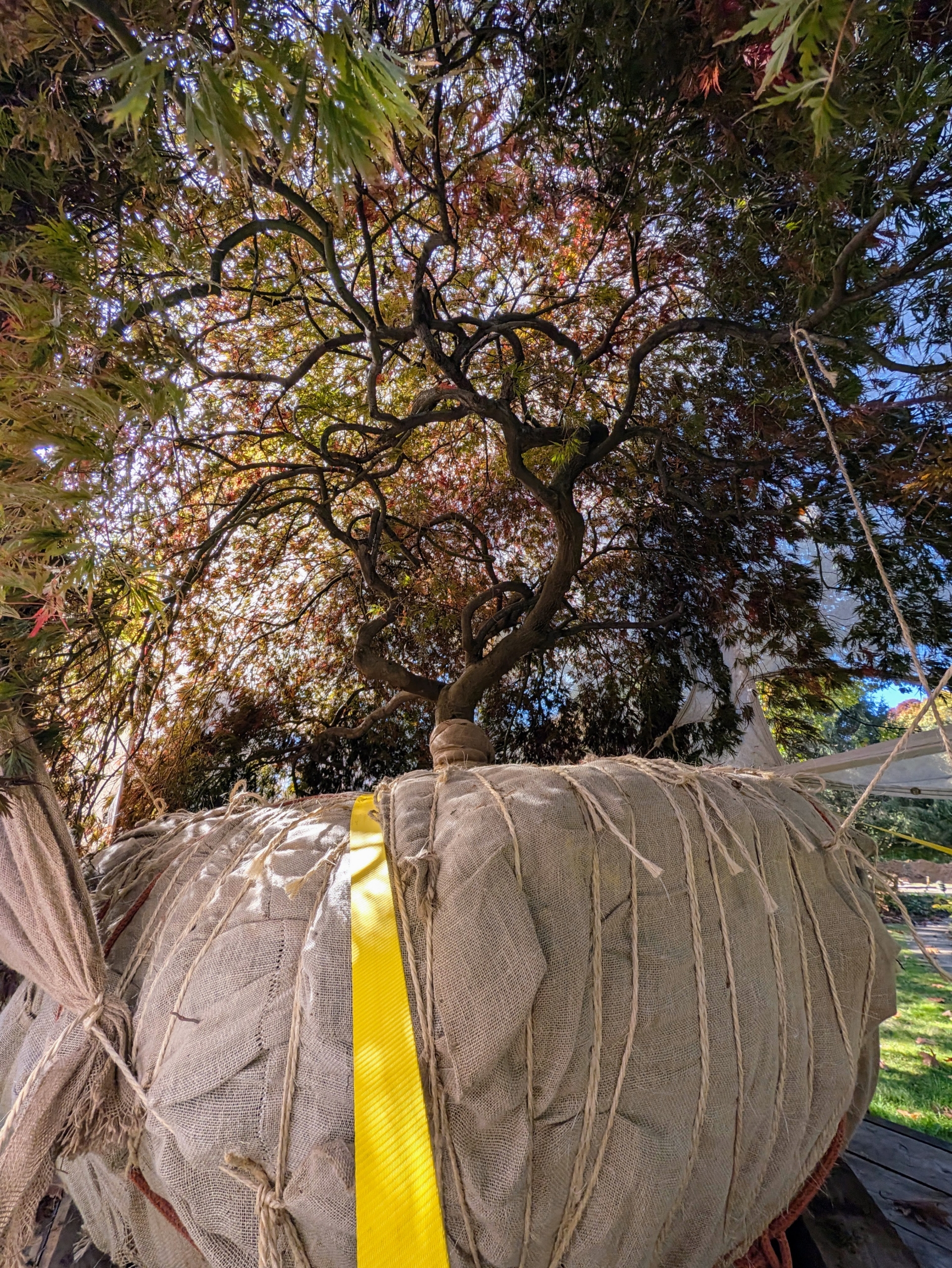
- The root ball of the Japanese maple is wrapped in burlap and tied with twine. This process is known as balling and burlapping. It is an important part of the process because it protects the root system, maintains soil integrity, and greatly improves the tree’s survival chances after transplantation.
-
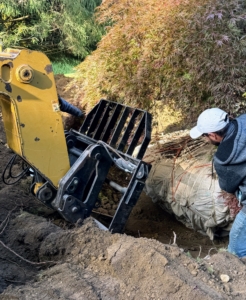
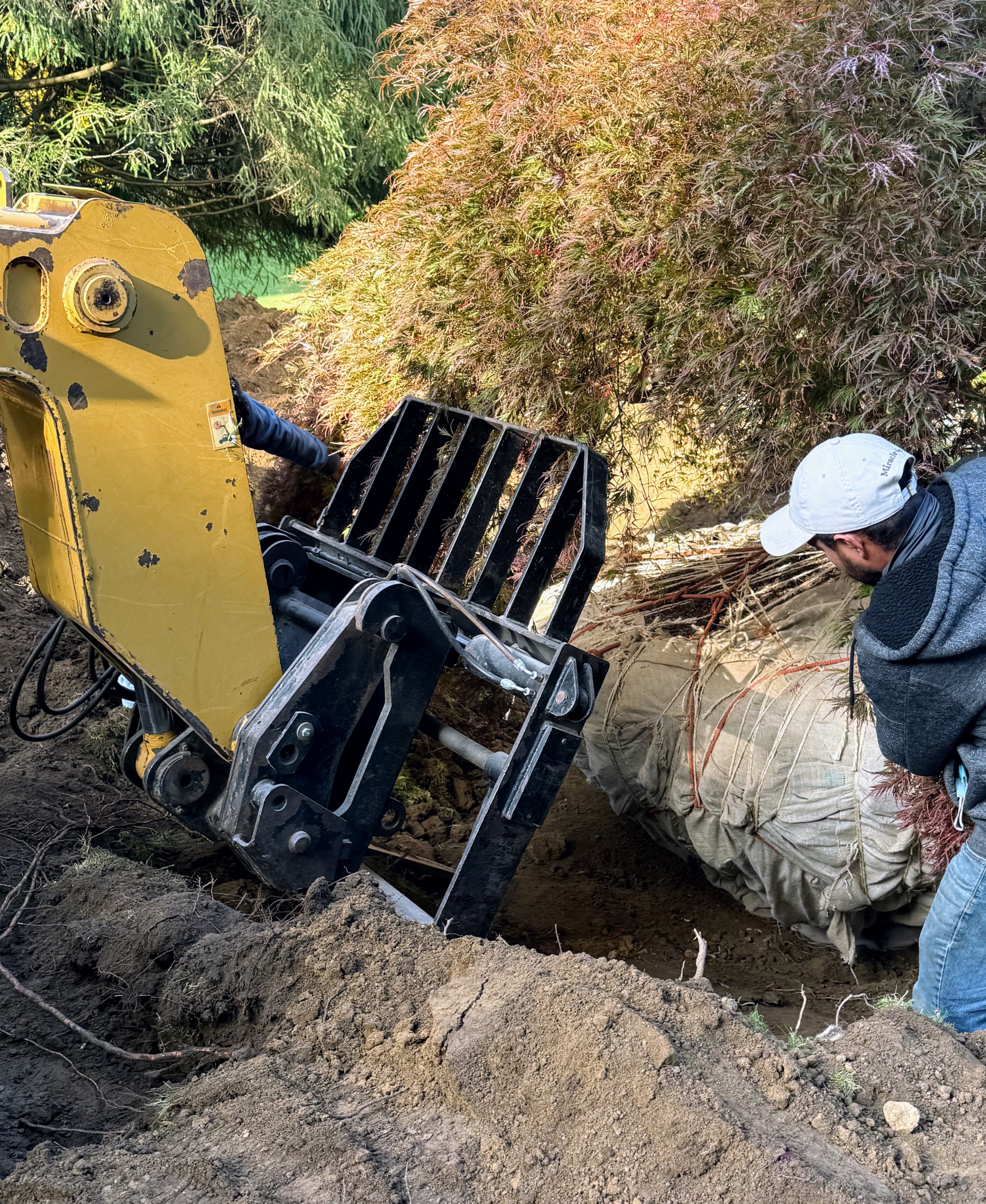
- The Hi-Lo’s fork is carefully placed next to the root ball.
-
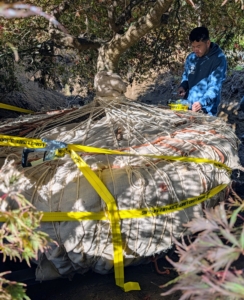
- Straps are attached to the rootball to keep it even more secure as it moves.
-
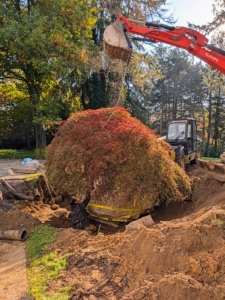
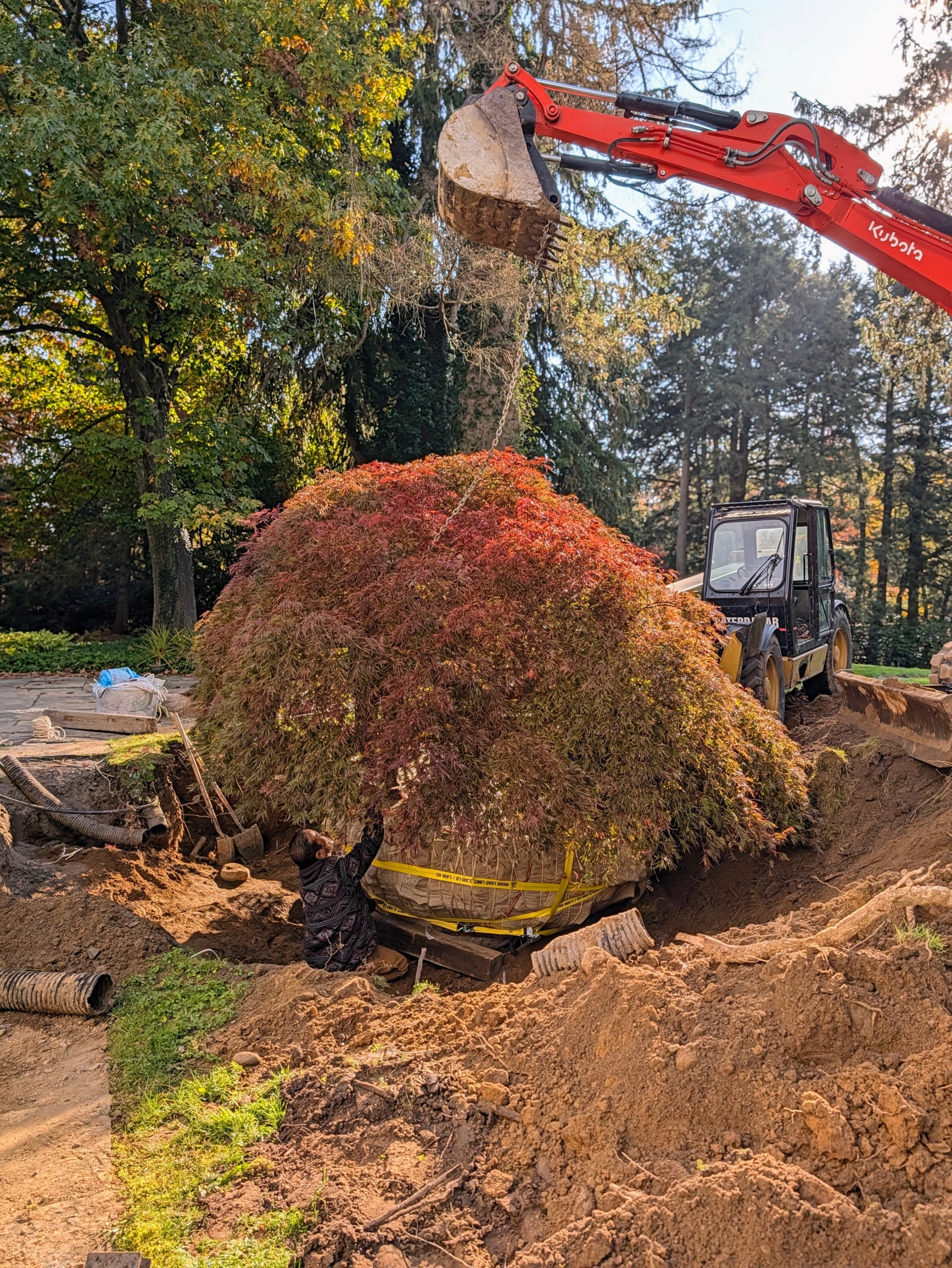
- Next, chains are also secured around the root ball, so it can be supported from above. Don’t always rely on ropes or straps, which could break in the process. Chains are a good option.
-
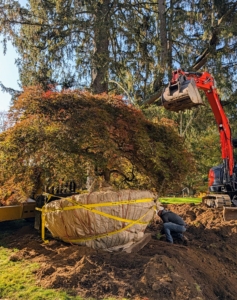
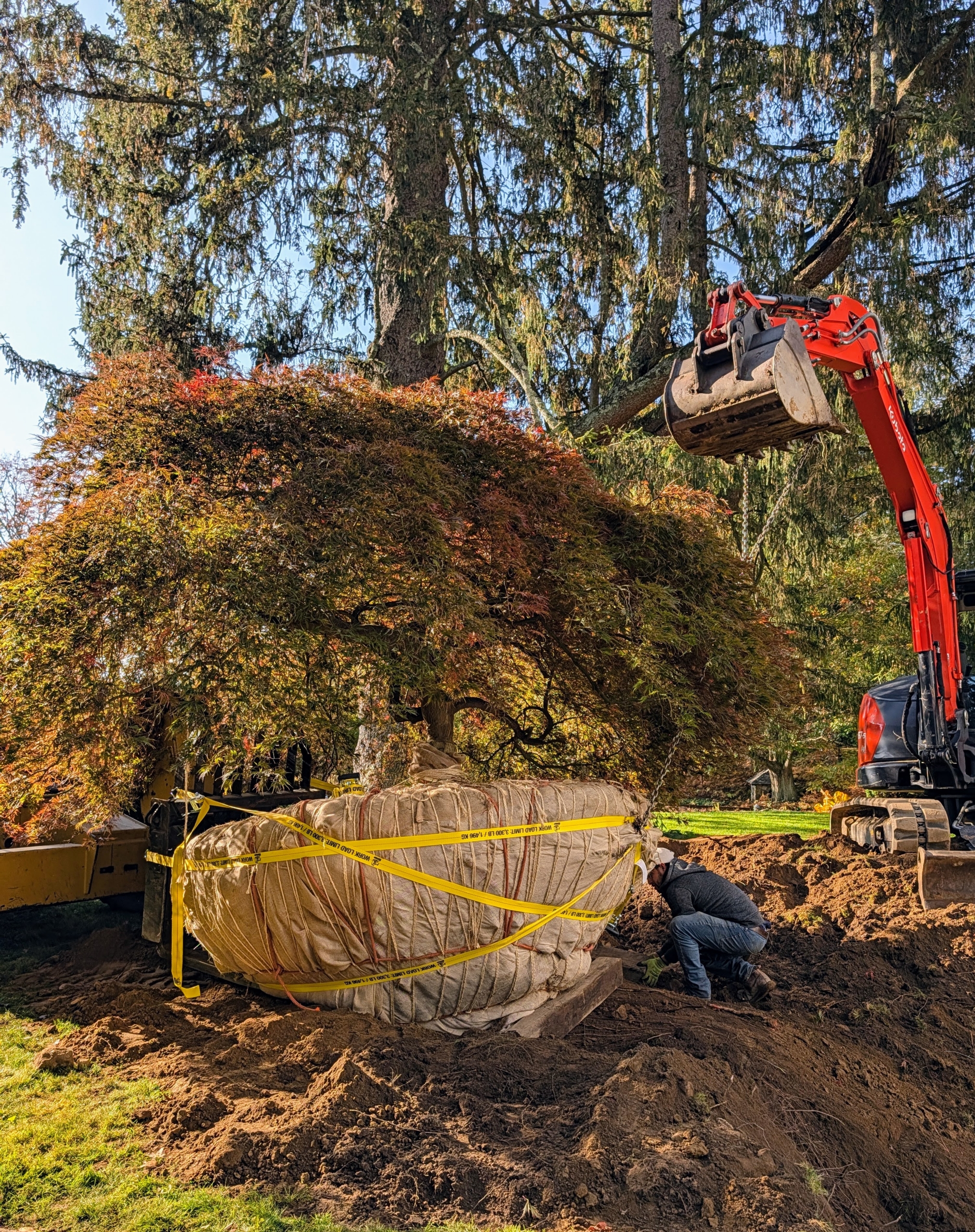
- A few minutes later, the six to eight thousand pound tree is lifted to higher ground.
-
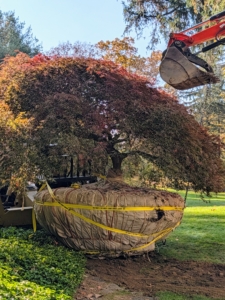
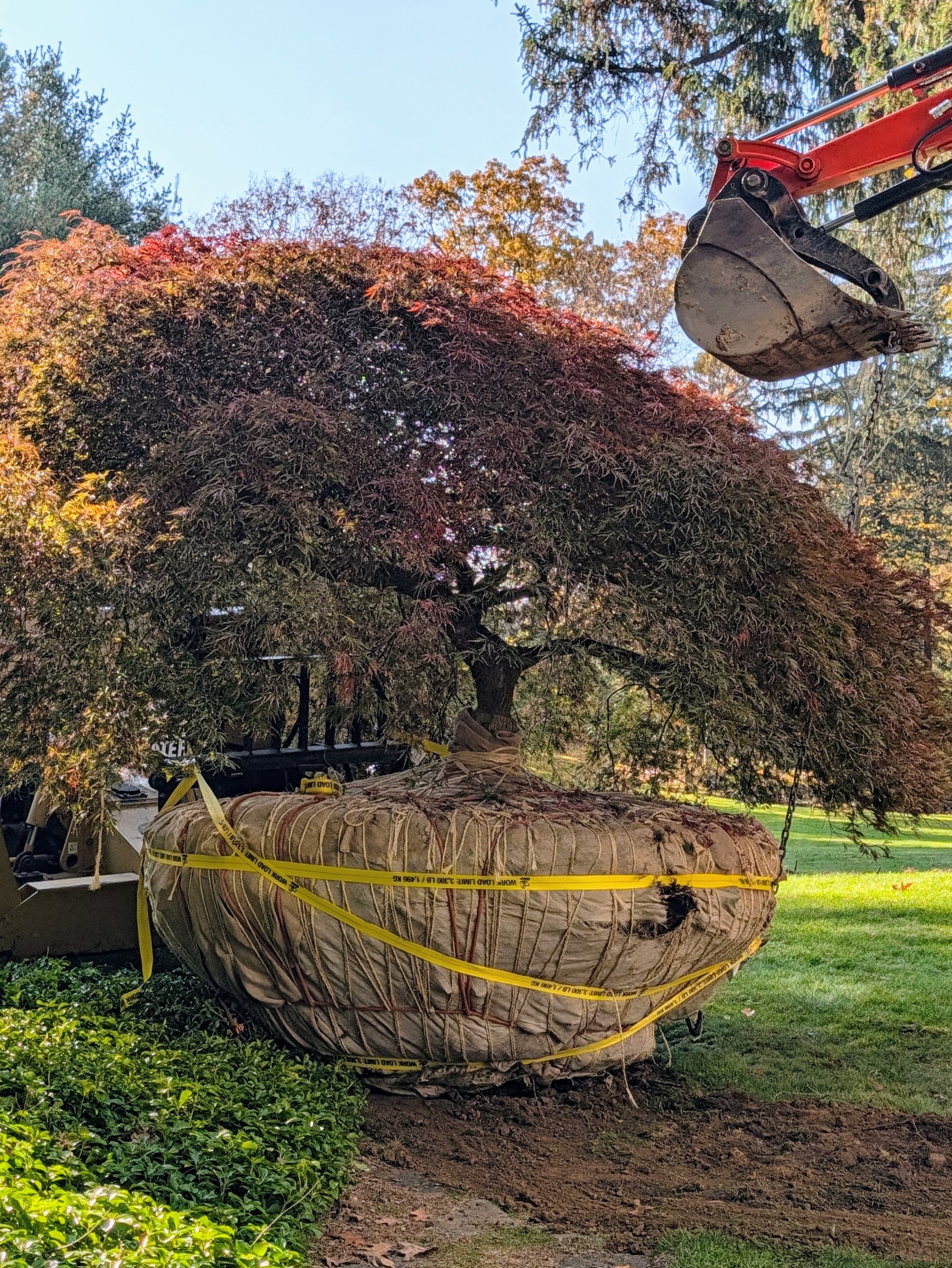
- Look how beautiful this Japanese maple is – in form and in size.
-
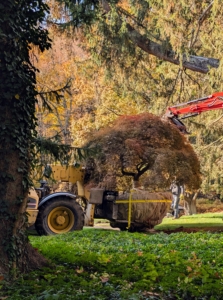
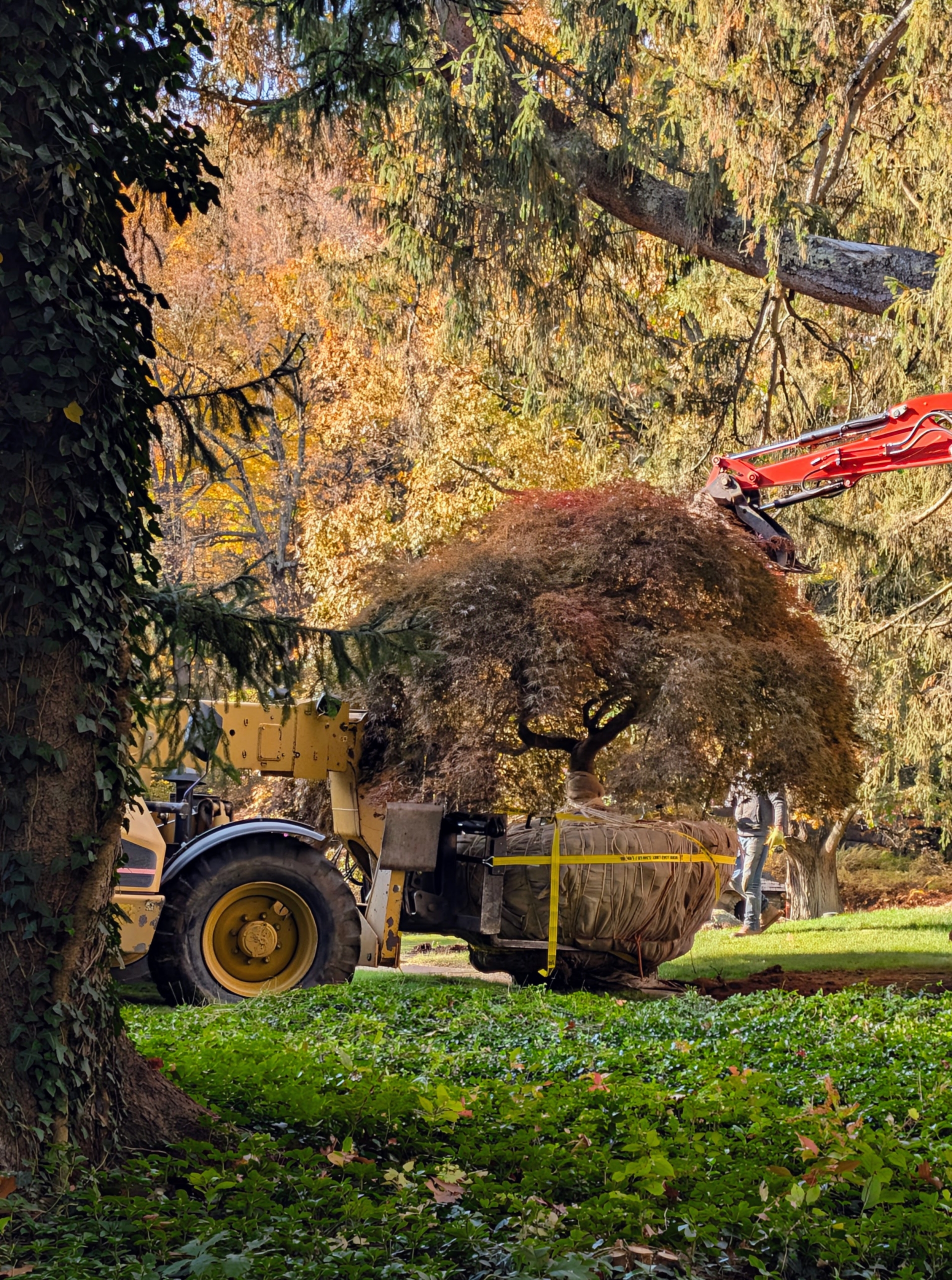
- Chhiring, who is driving the Hi-Lo, and Norman, who is controlling the excavator, move slowly across the lawn. It is being supported from the top and bottom.
-
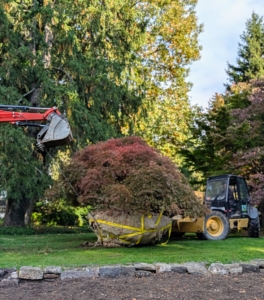
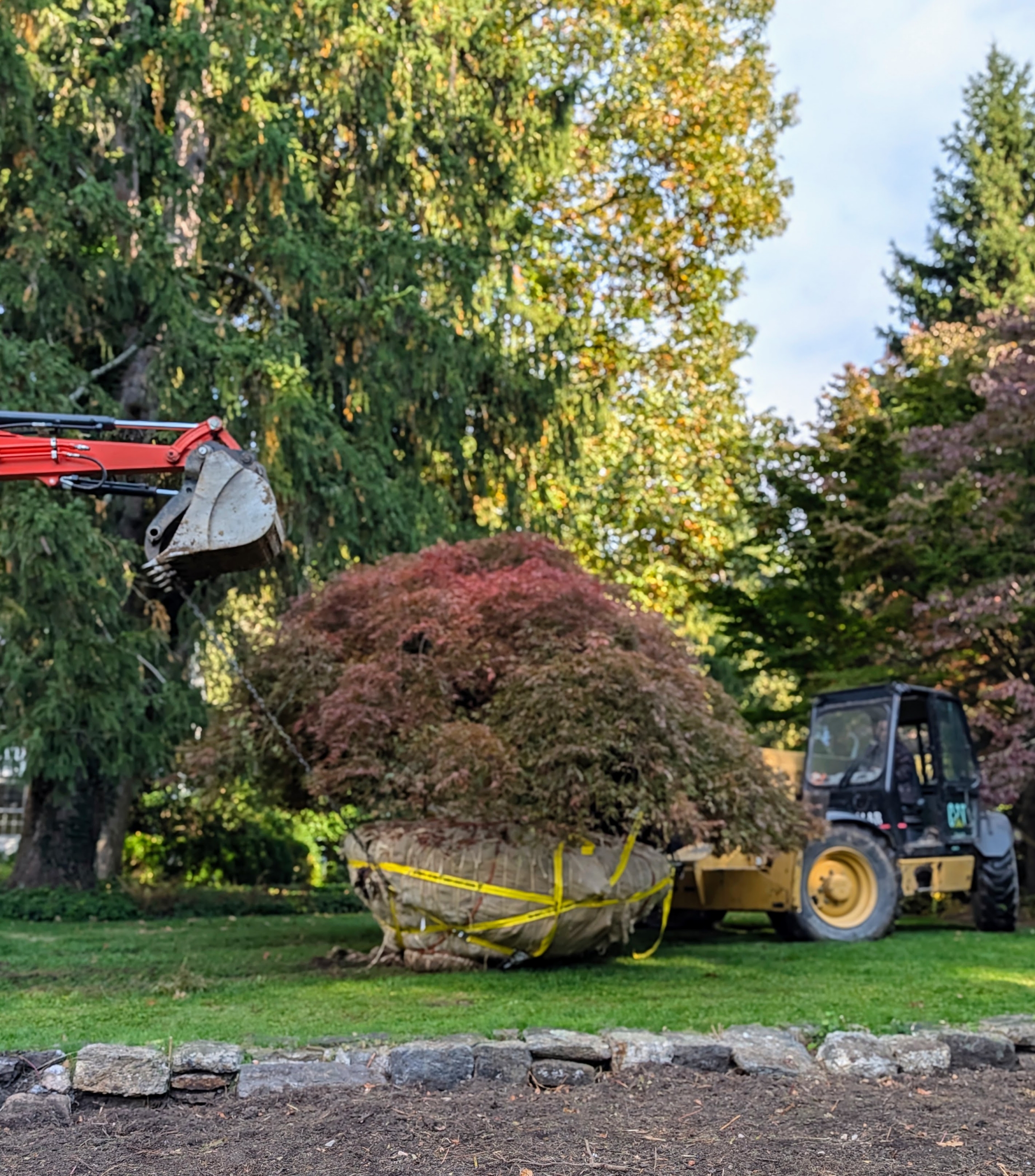
- It doesn’t take long to move it to the waiting trailer, but it does take care and skill to move it through tight spaces, under branches, together at the same speed, so the tree moves safely.
-
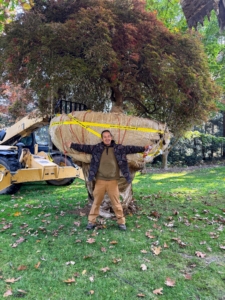
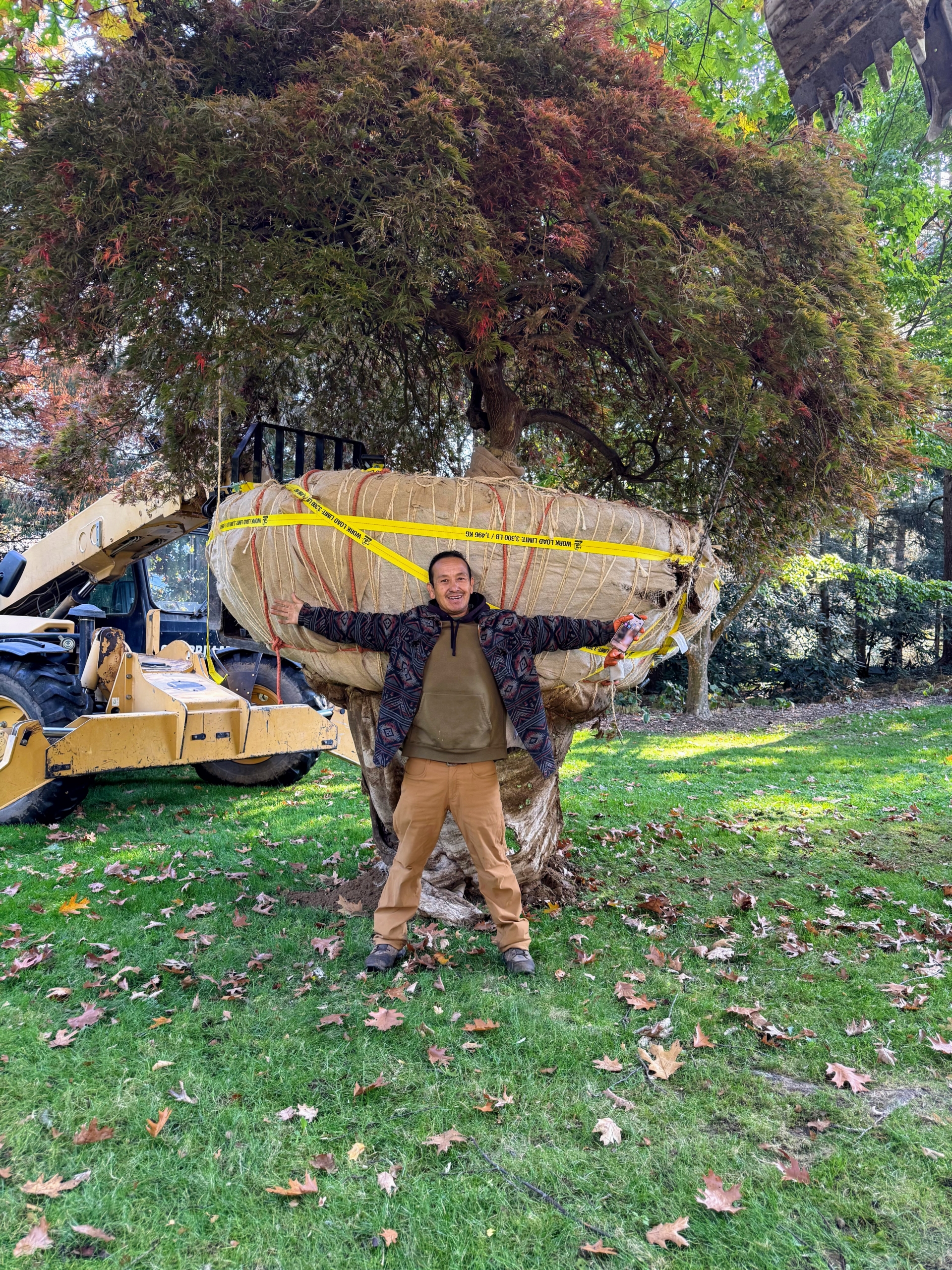
- Here is Chhiring showing the root ball. A tree’s root ball should generally be eight to 12 inches of diameter per inch of the trunk’s caliper, with depth at about 75% of that same diameter.
-
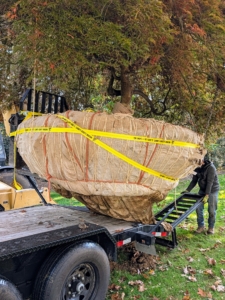
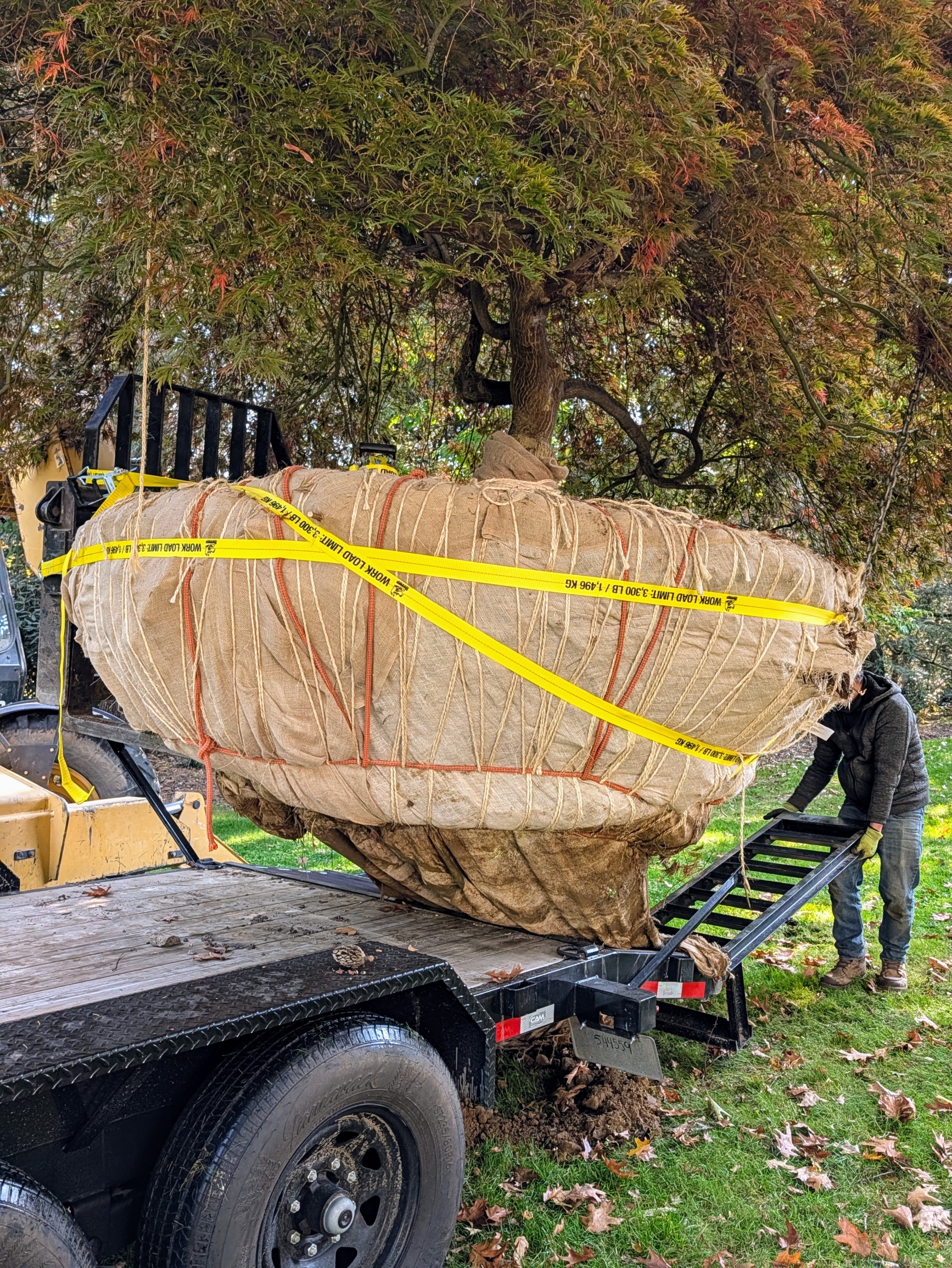
- Using the machines, the tree is carefully moved onto the trailer.
-
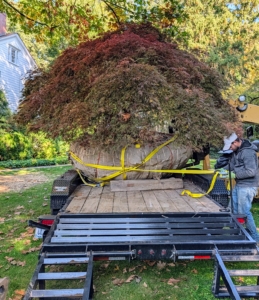
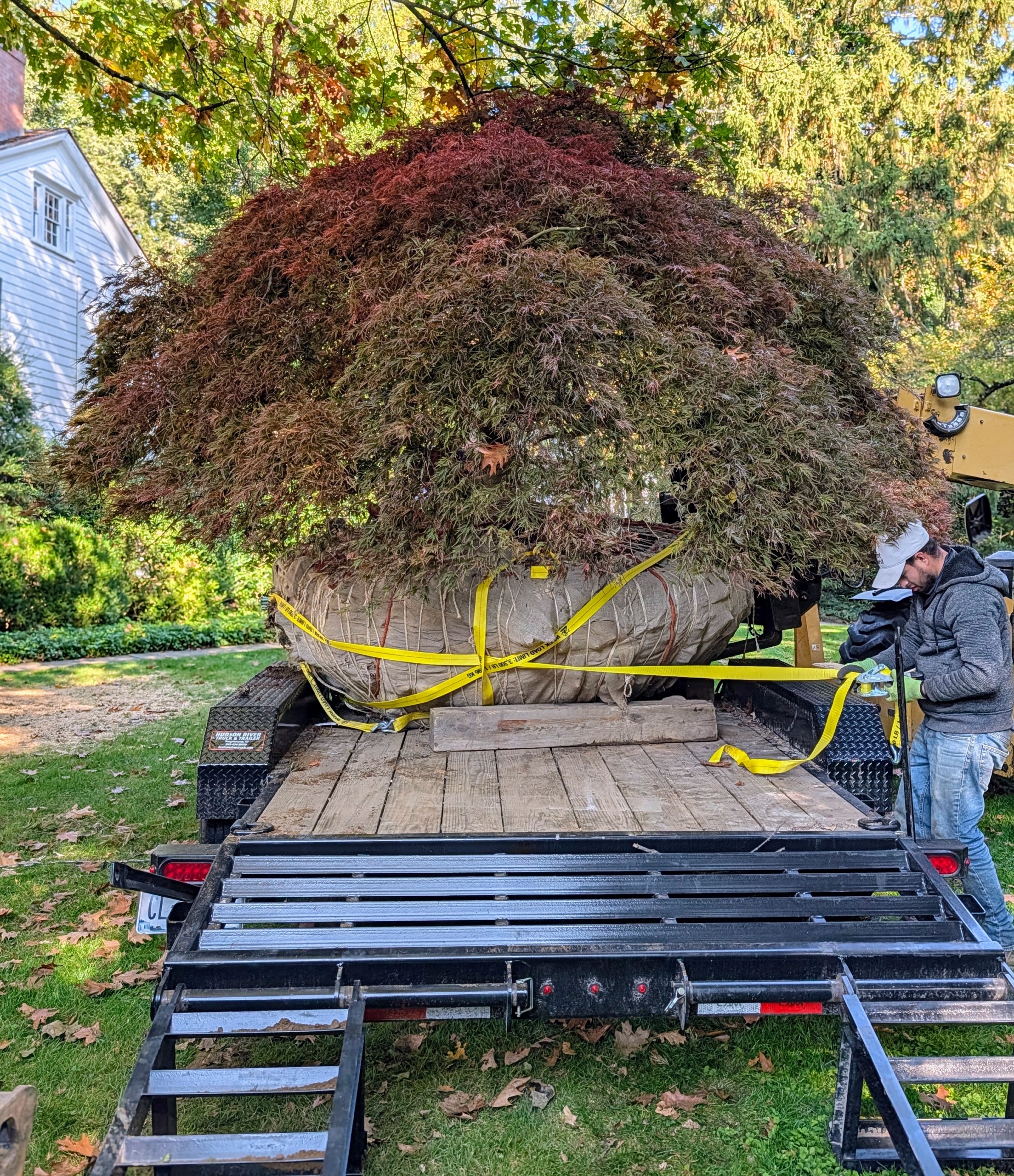
- Here it is getting strapped into the trailer bed for the ride to its new home.
-
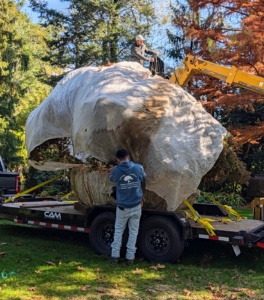
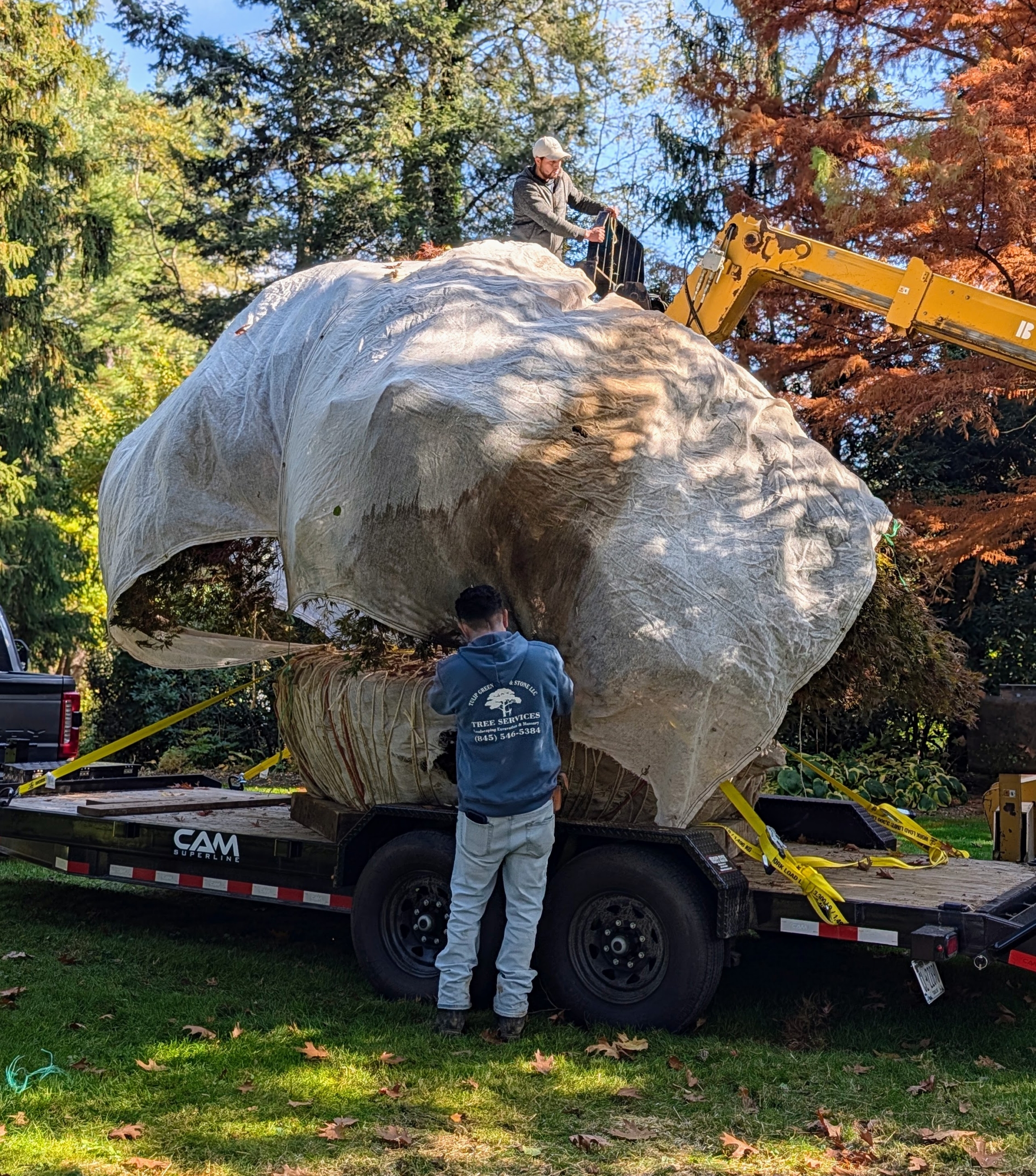
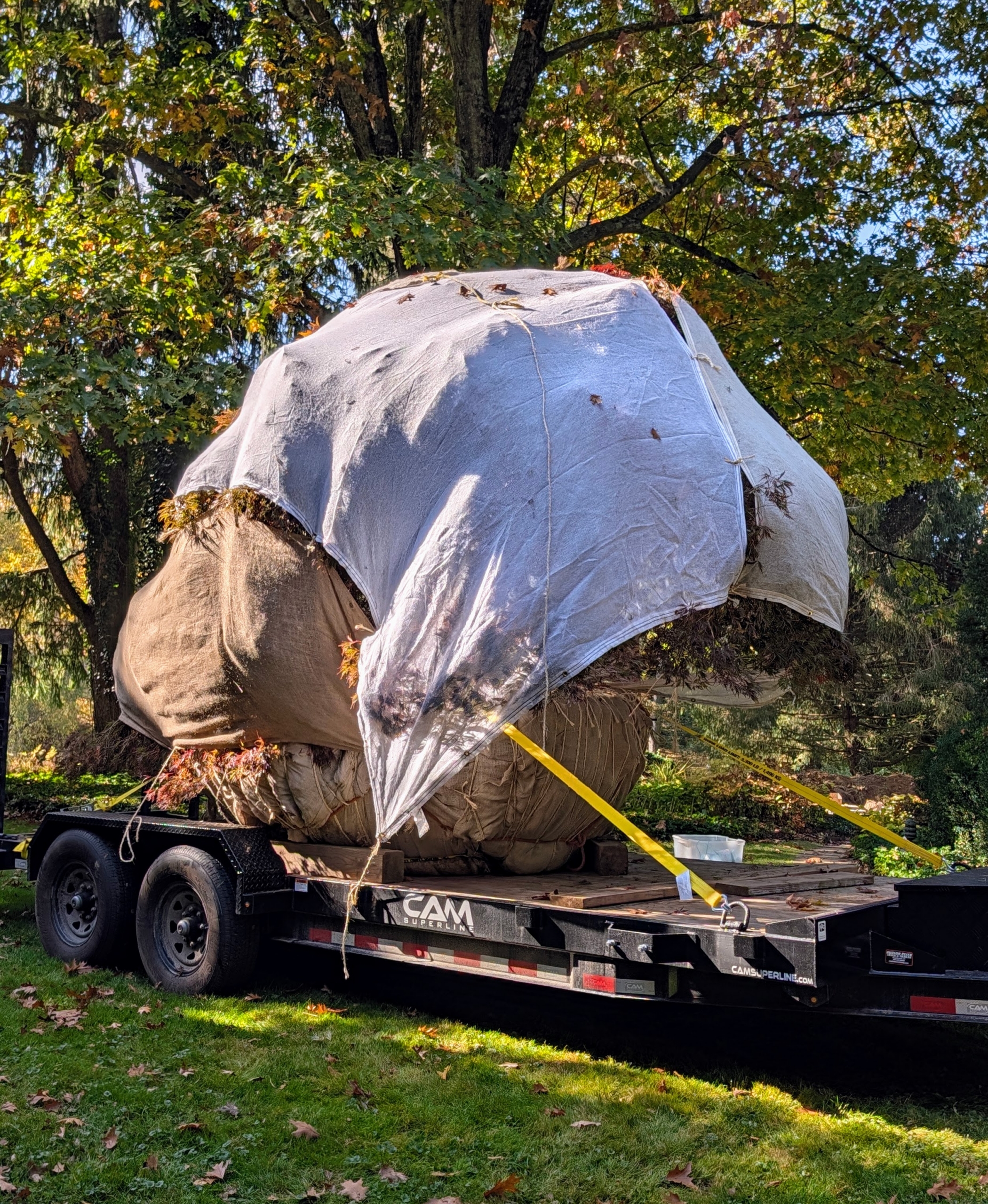
- For safety, the entire tree is covered before leaving the property.
-
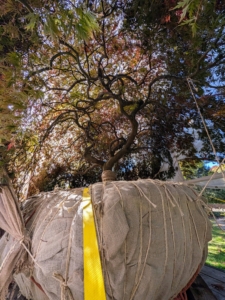
- The branches are now well-protected.
-
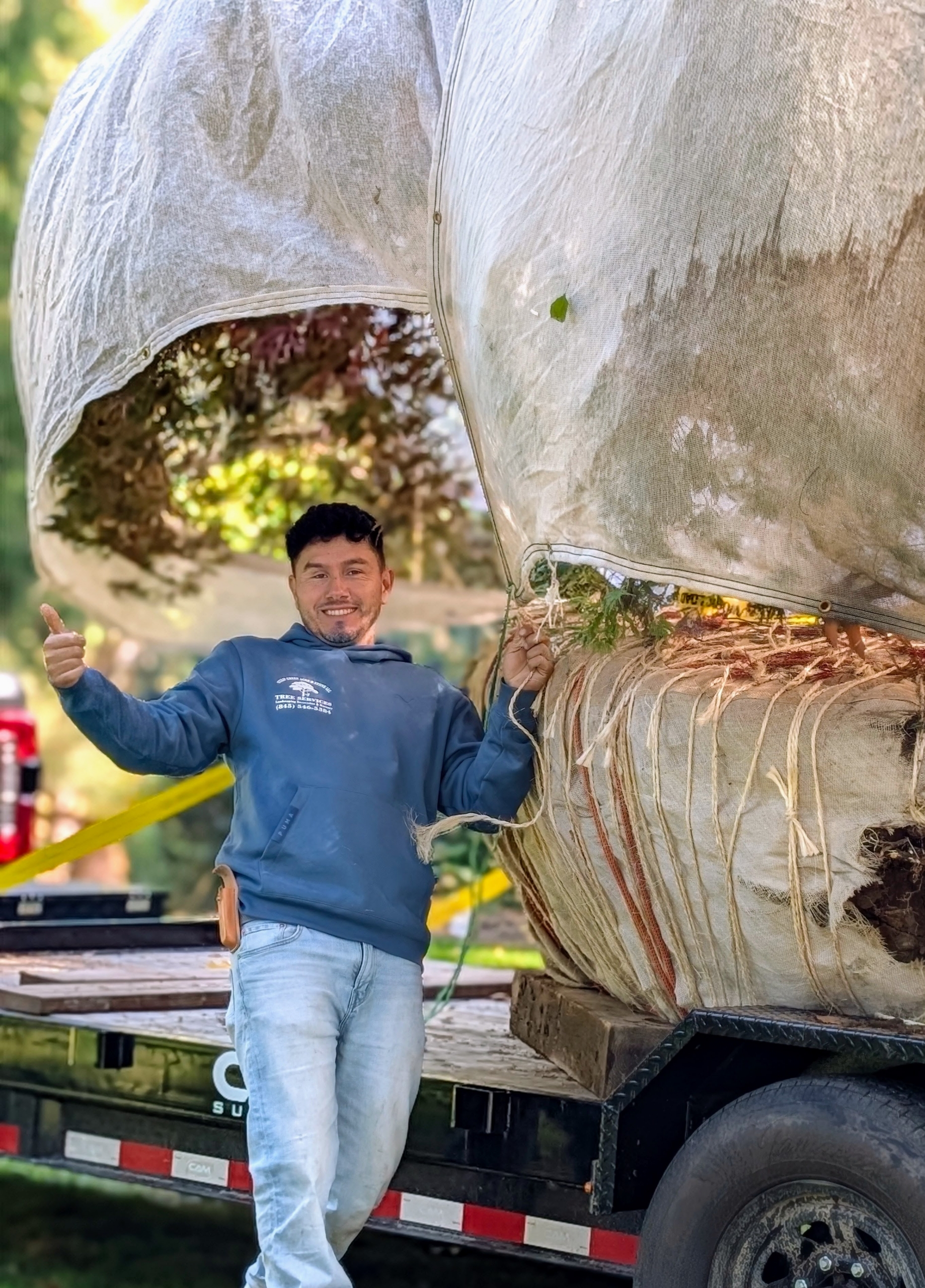
- Here’s Norman making the last adjustments before moving.
-
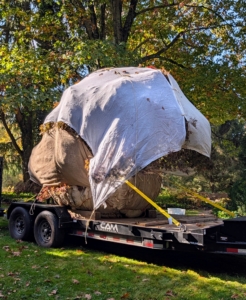
- It is now covered, properly secured, and ready for its short ride to my farm. Stay tuned for my next blog when I show where it is planted.
This story originally appeared on Martha Stewart Blog

