


November 4, 2026
My Beautiful Japanese Maple Woodland
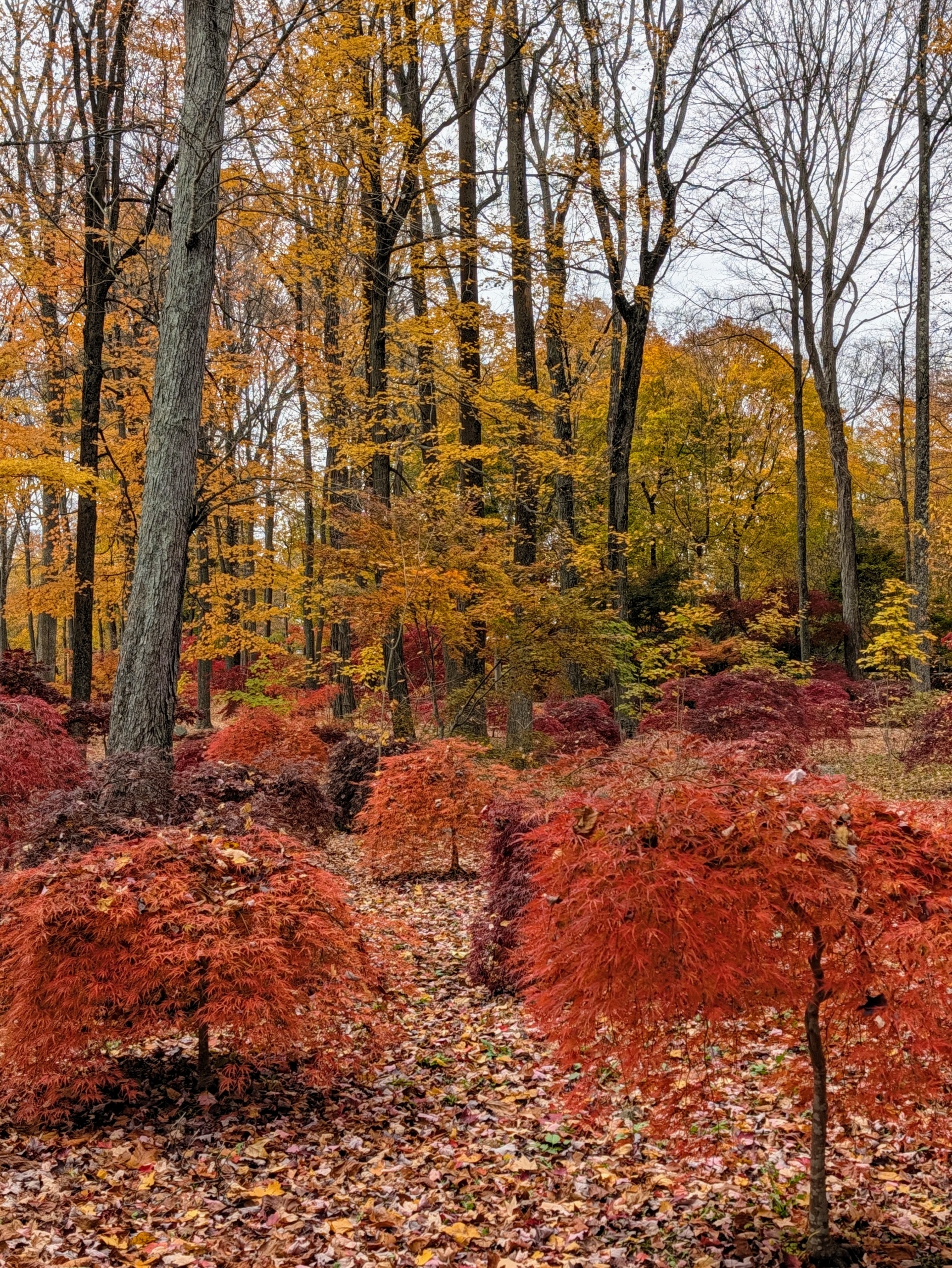
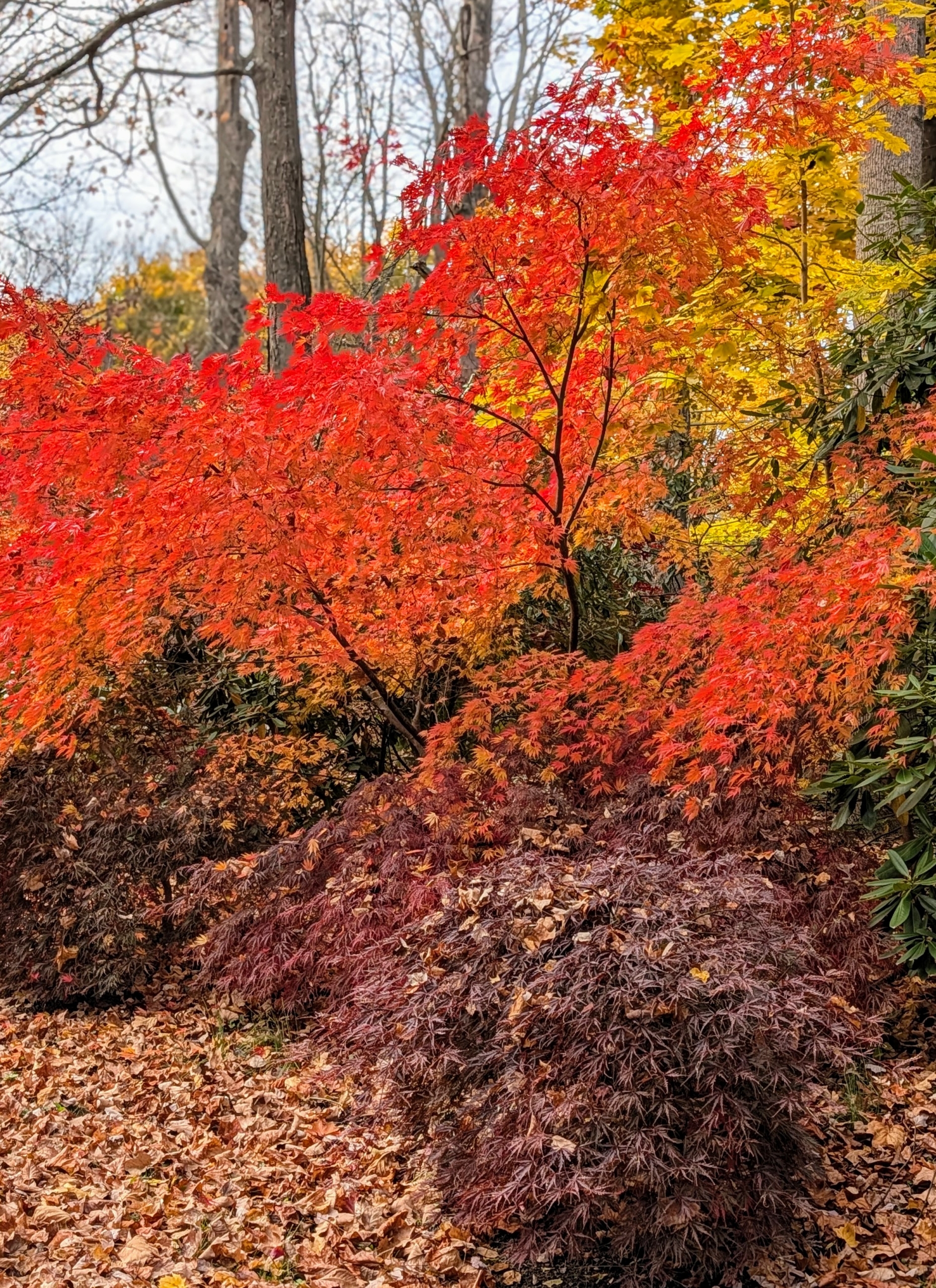
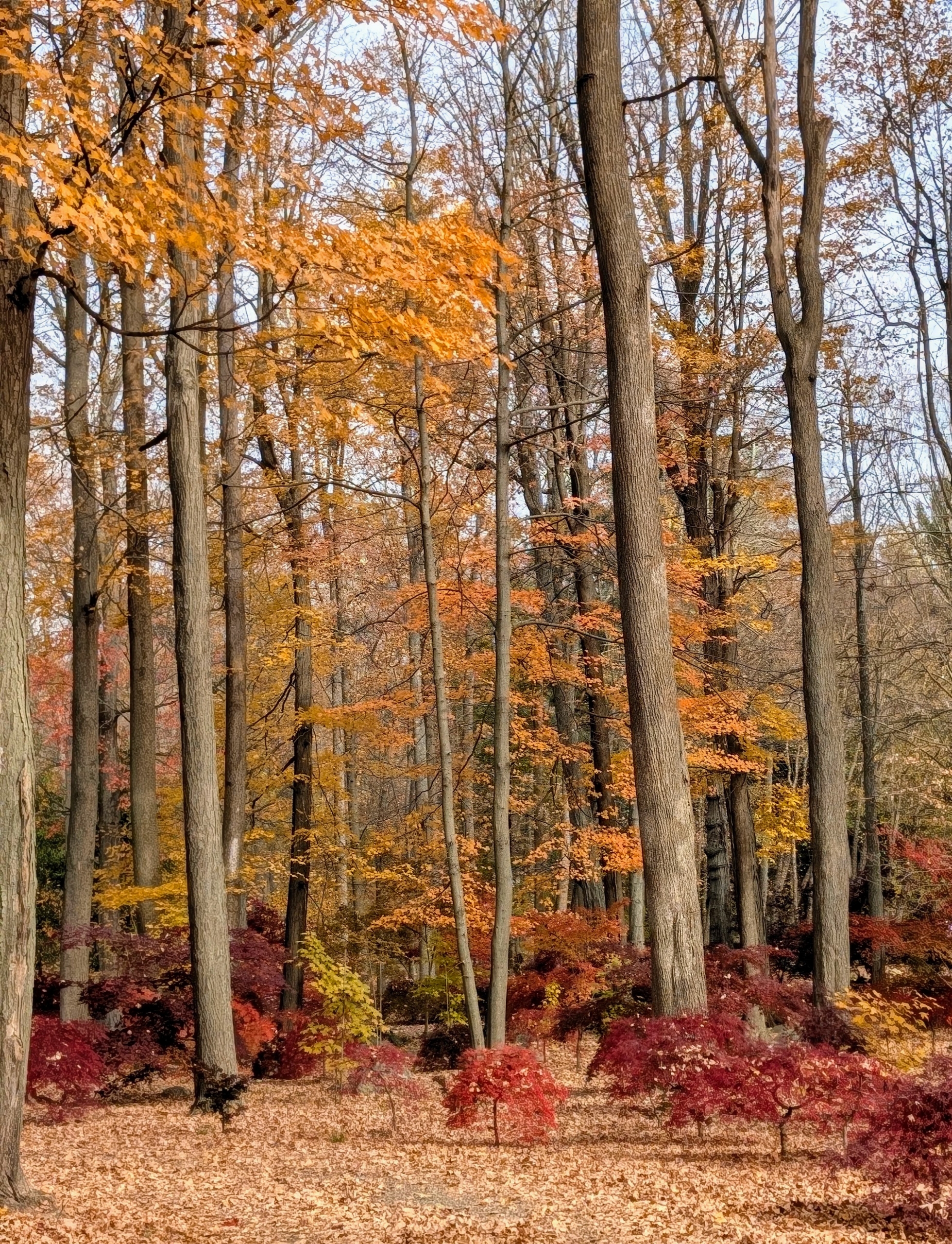
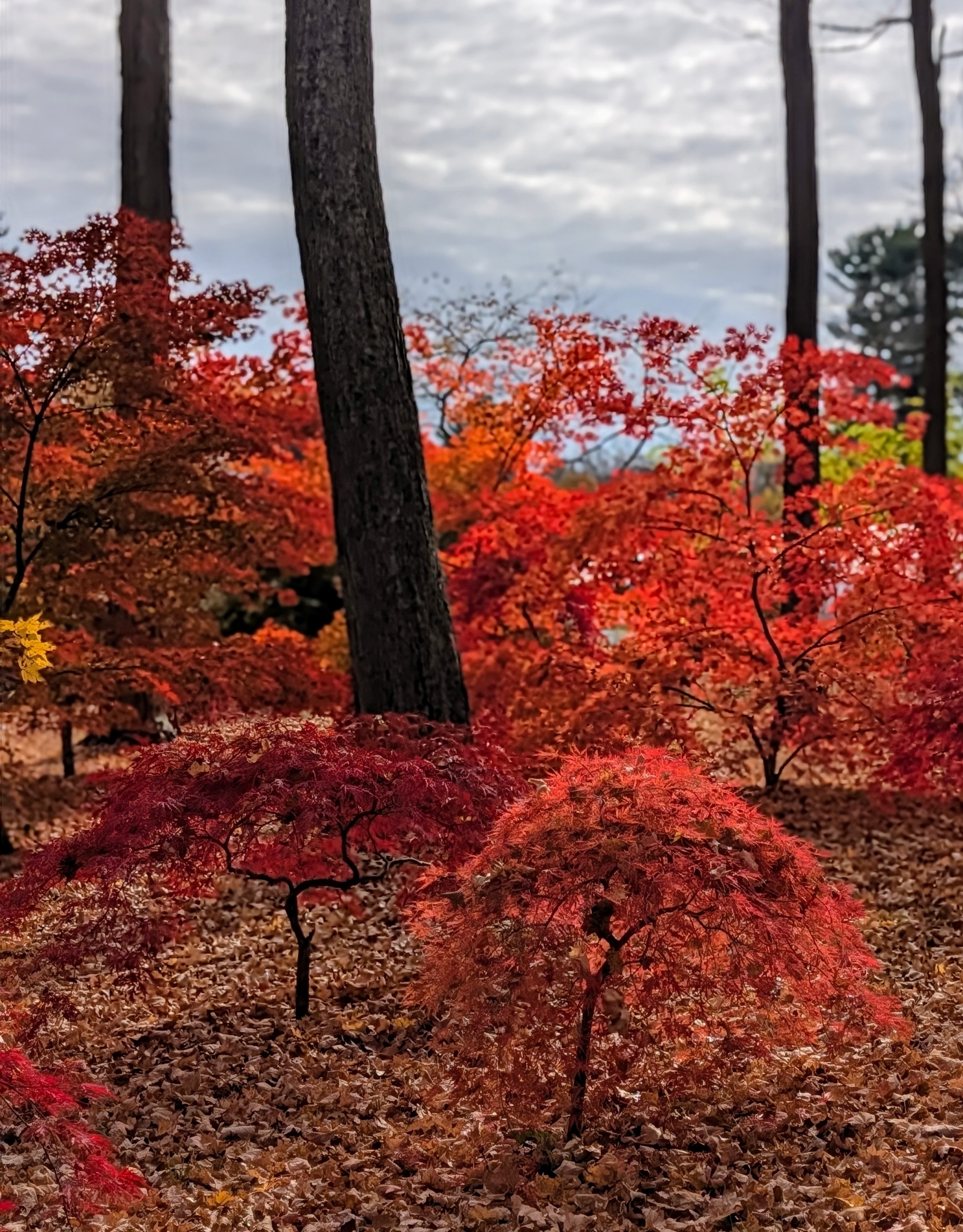
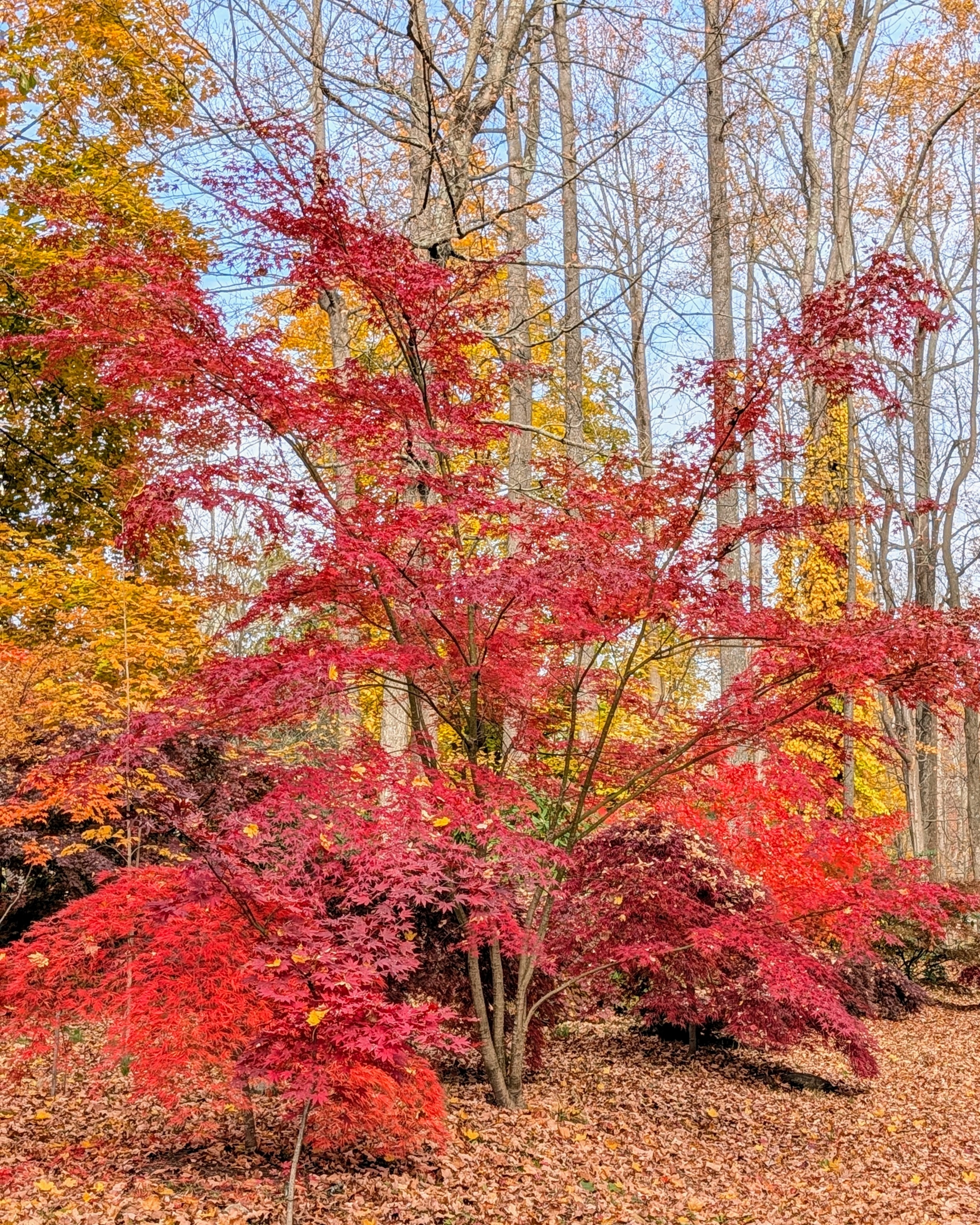
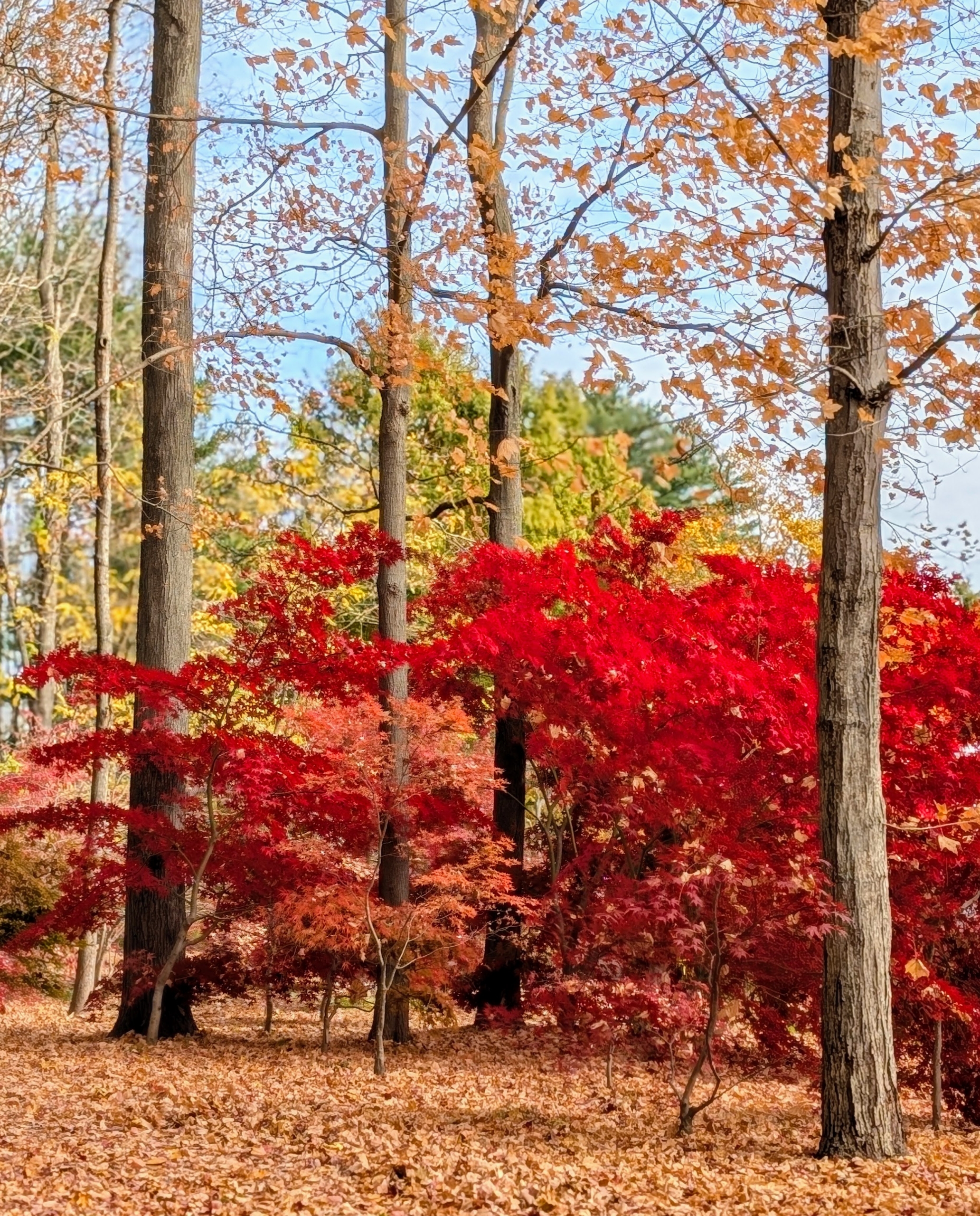
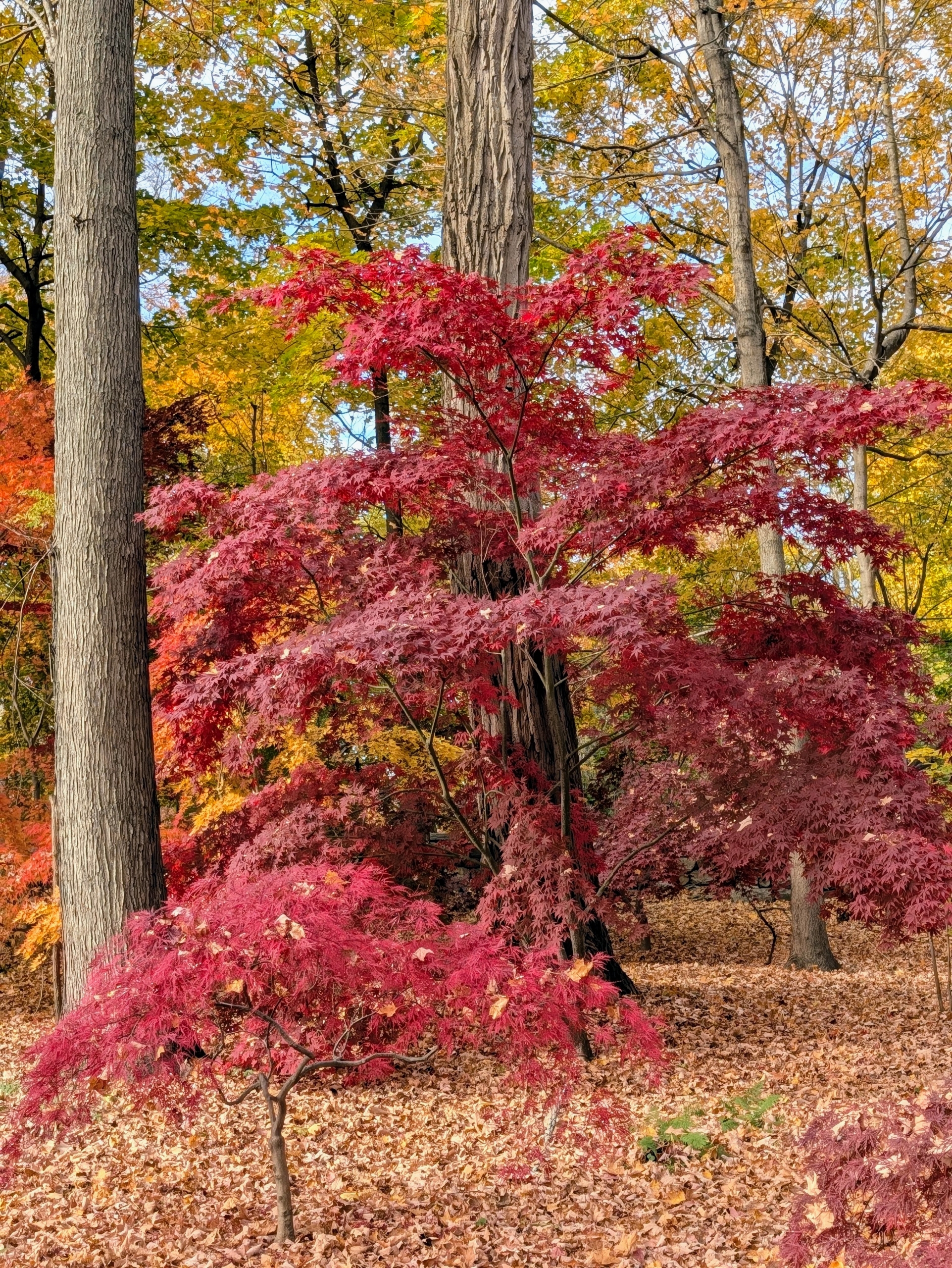
This time of year, my grove of Japanese maples is ablaze with autumn color, displaying a palette of brilliant yellows, glowing oranges, and rich reds.
Many of these trees are varieties of Acer palmatum, a species that has been cultivated in Japanese gardens for centuries. Over the years, I’ve planted an extensive collection in a section of my shade garden, not far from my chicken coops and tropical hoop houses. This garden was planted in honor of my late sister, Laura Plimpton, who was especially fond of Japanese maples. Each fall, I look forward to seeing them put on their spectacular display. With their remarkable diversity of sizes, leaf shapes, and colors, these beautiful specimens create a landscape full of texture and visual interest that only becomes more stunning with each passing year.
Enjoy these photos.
-
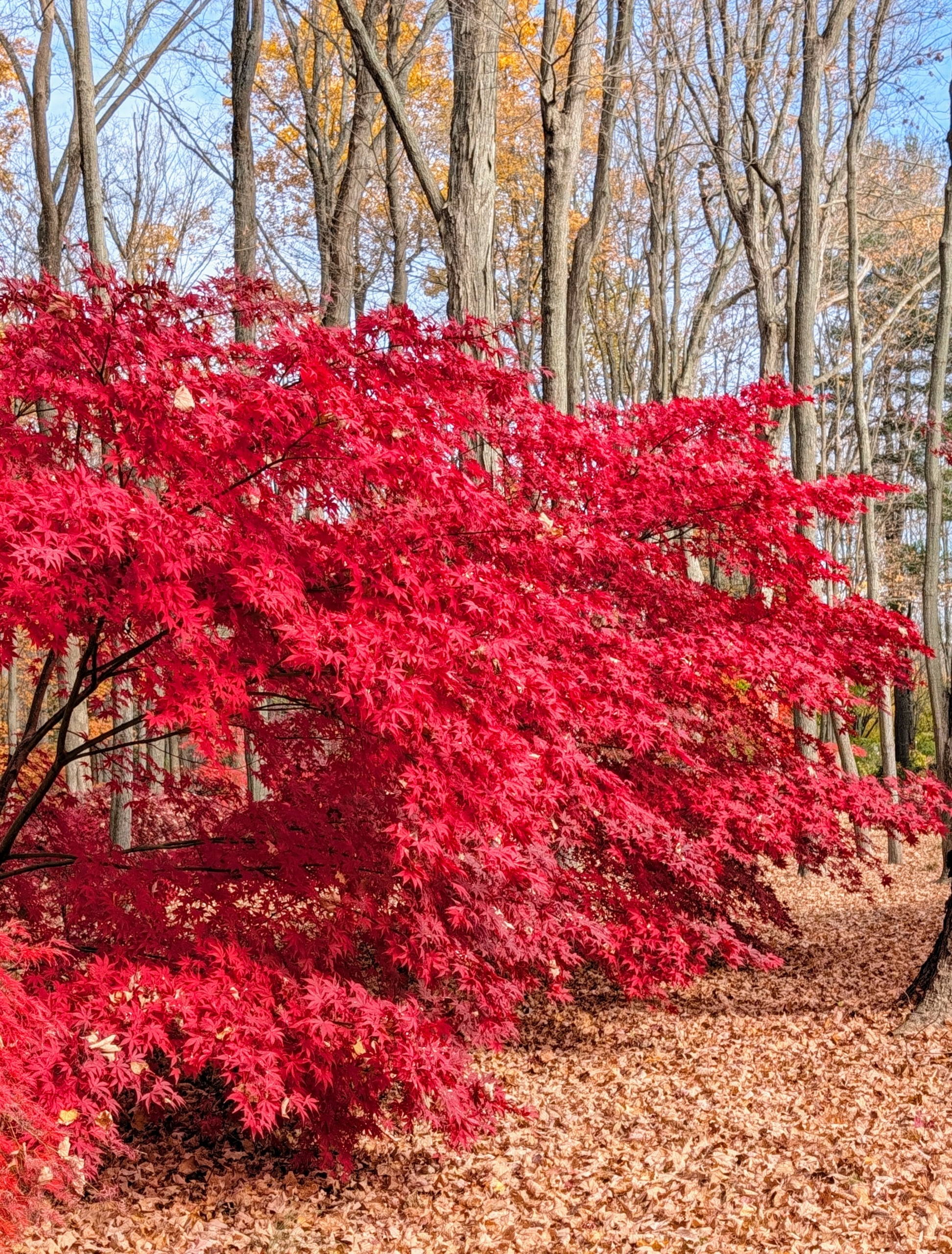
- Every year, all of us here at my farm wait for this woodland to burst with color. Few trees are as beautiful as the Japanese maple. With more than a thousand varieties and cultivars including hybrids, the iconic Japanese maple tree is among the most versatile small trees for use in the landscape.
-
- Japanese maples are native to areas of Japan, Korea, China, and Russia. In Japan, the maple is called the “autumn welcoming tree” and is planted in the western portion of gardens – the direction from which fall arrives there.
-
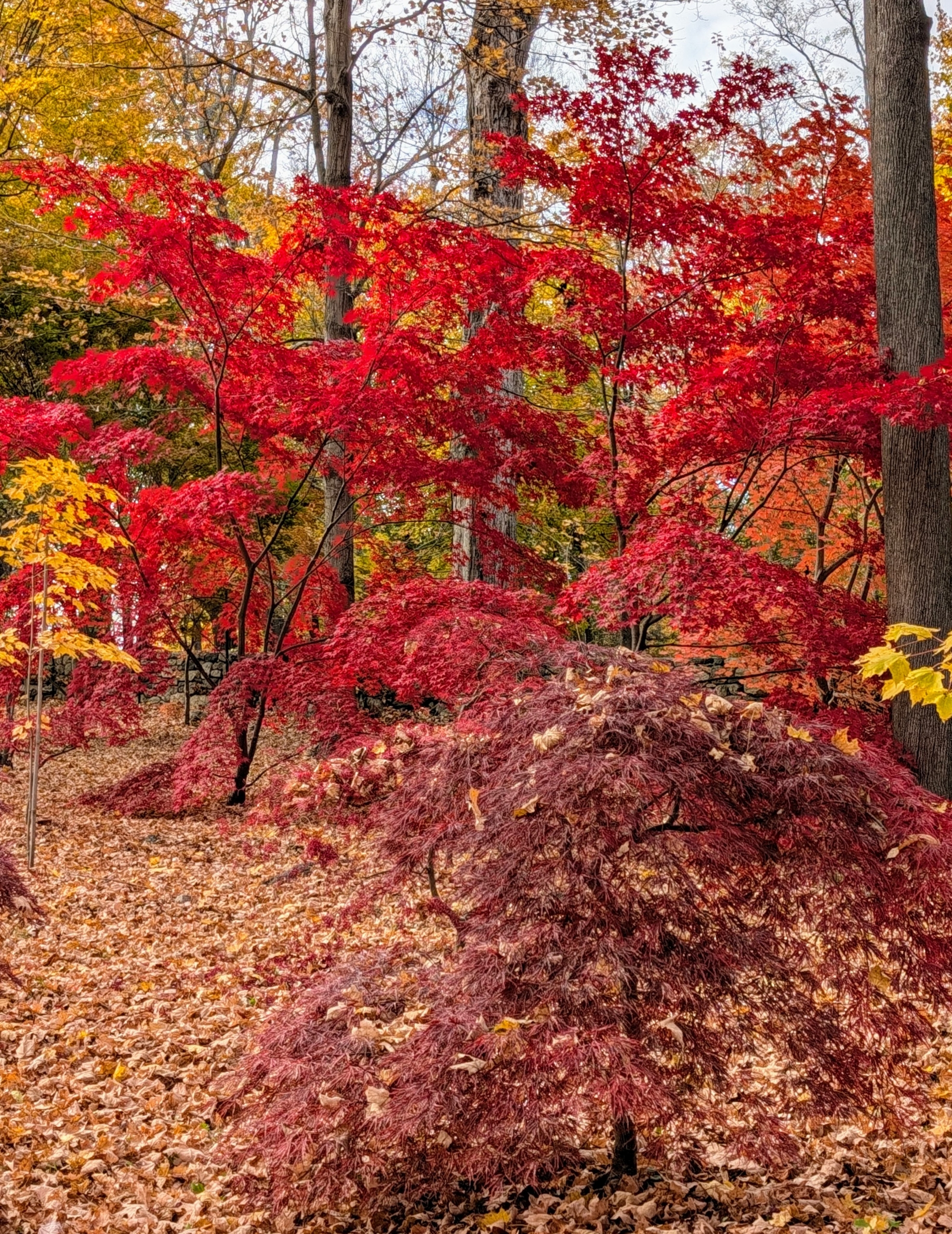
- The contrast between the colors in this grove is stunning.
-
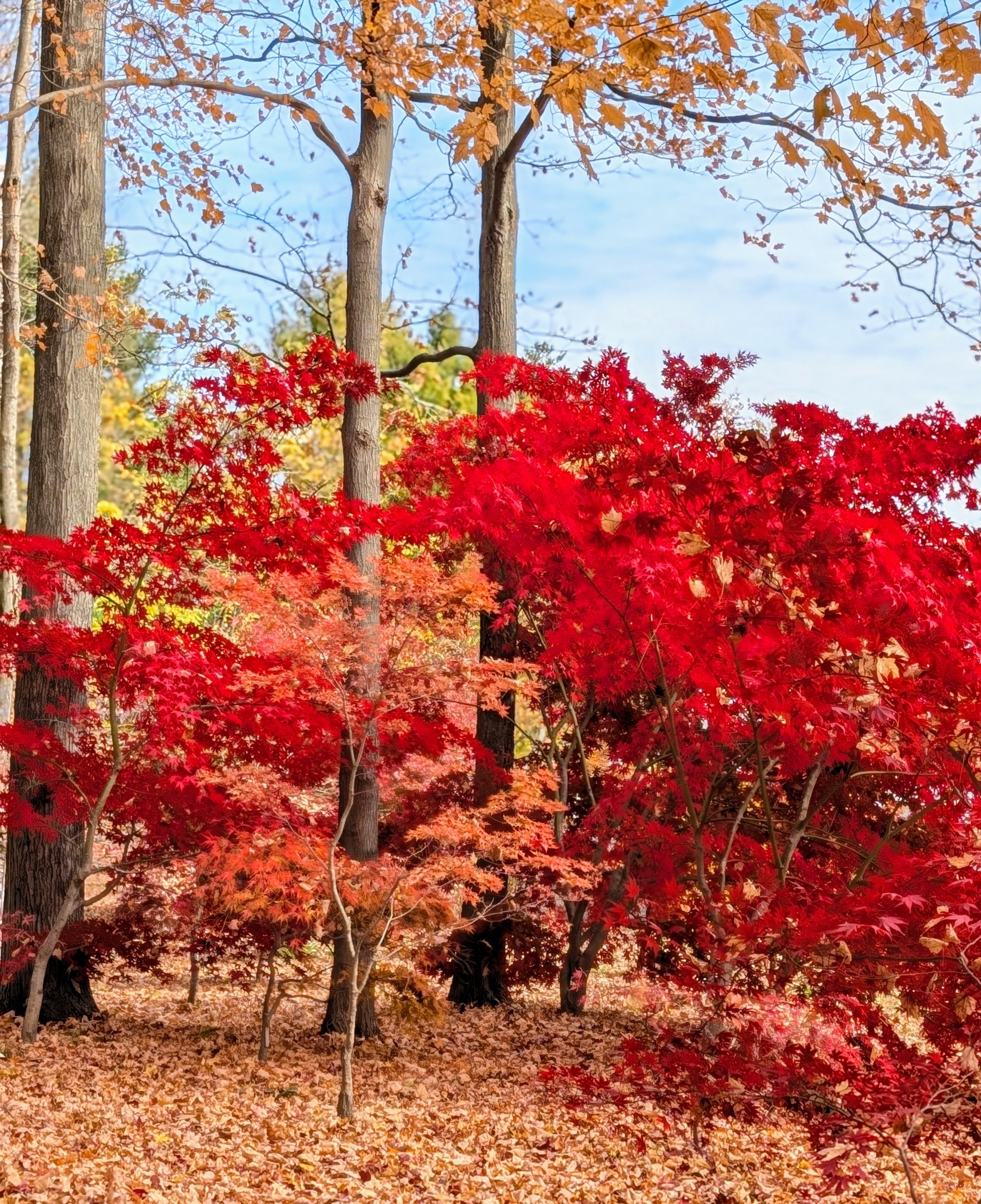
- But the brilliant fall colors aren’t a guarantee. The colors are a result of climate, weather, and environmental conditions. Here in the Northeast, fall weather usually arrives in September, with temperatures cooling off rapidly at night even when the days are still warm. These cool nighttime temperatures trigger the leaf-changing process. Unusually warm early fall weather may even prevent the leaves from turning red. This is because the color changes occur with gradually cooling temperatures – not cold snaps.
-
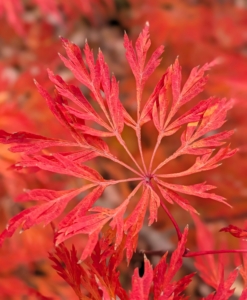
- Leaf color best develops when nighttime temperatures remain above freezing but below 45-degrees Fahrenheit. A sudden cold snap could turn the leaves more plum-brown seemingly overnight, skipping the vibrantly orange and red stage altogether. Weather here at the farm has been excellent for the Japanese maples this season.
-
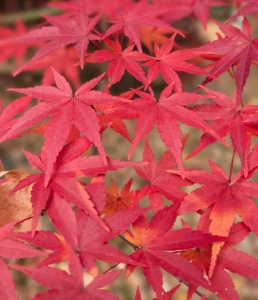
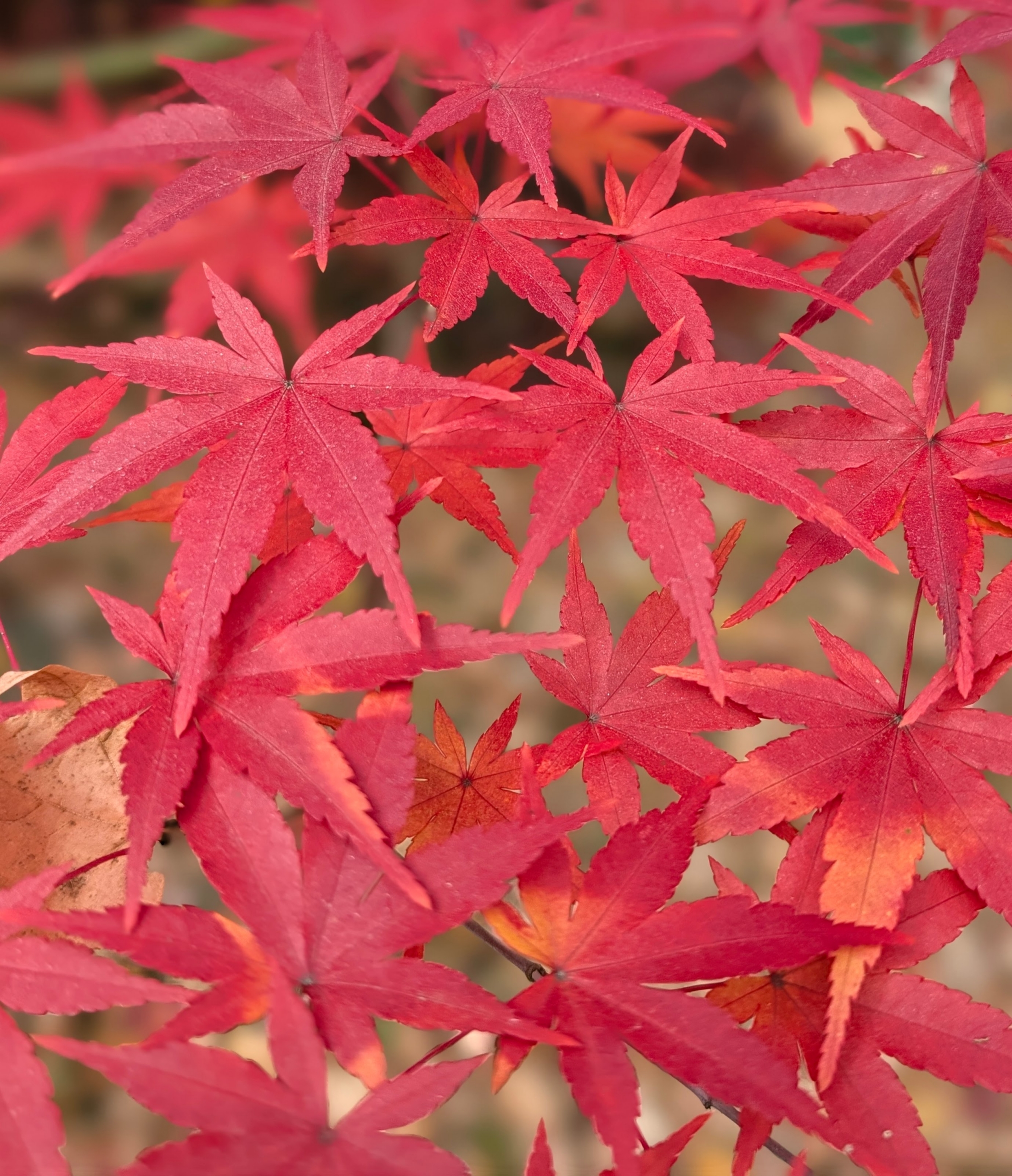
- Red leafed cultivars are the most popular, followed by green shrubs with deeply dissected leaves.
-
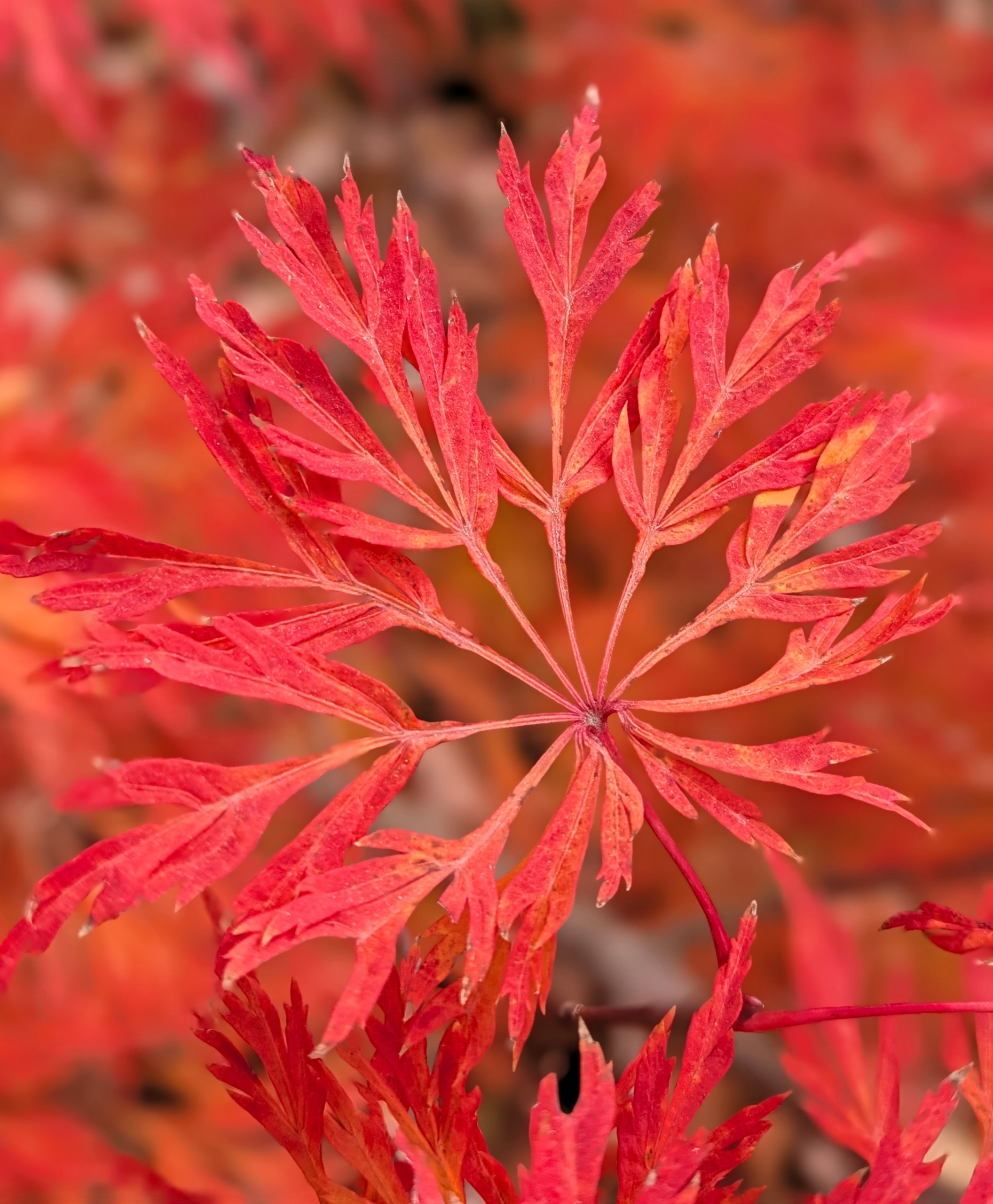
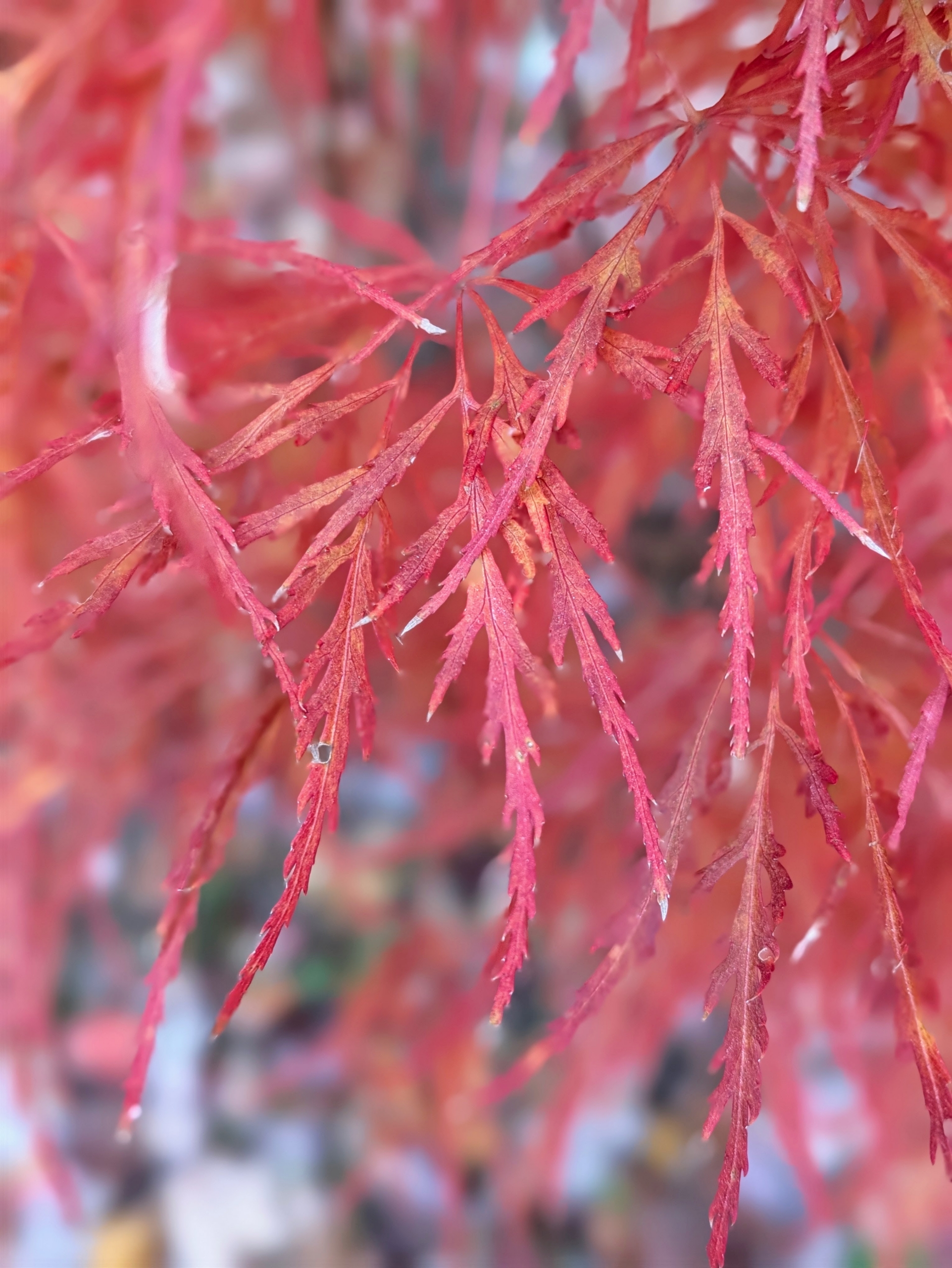
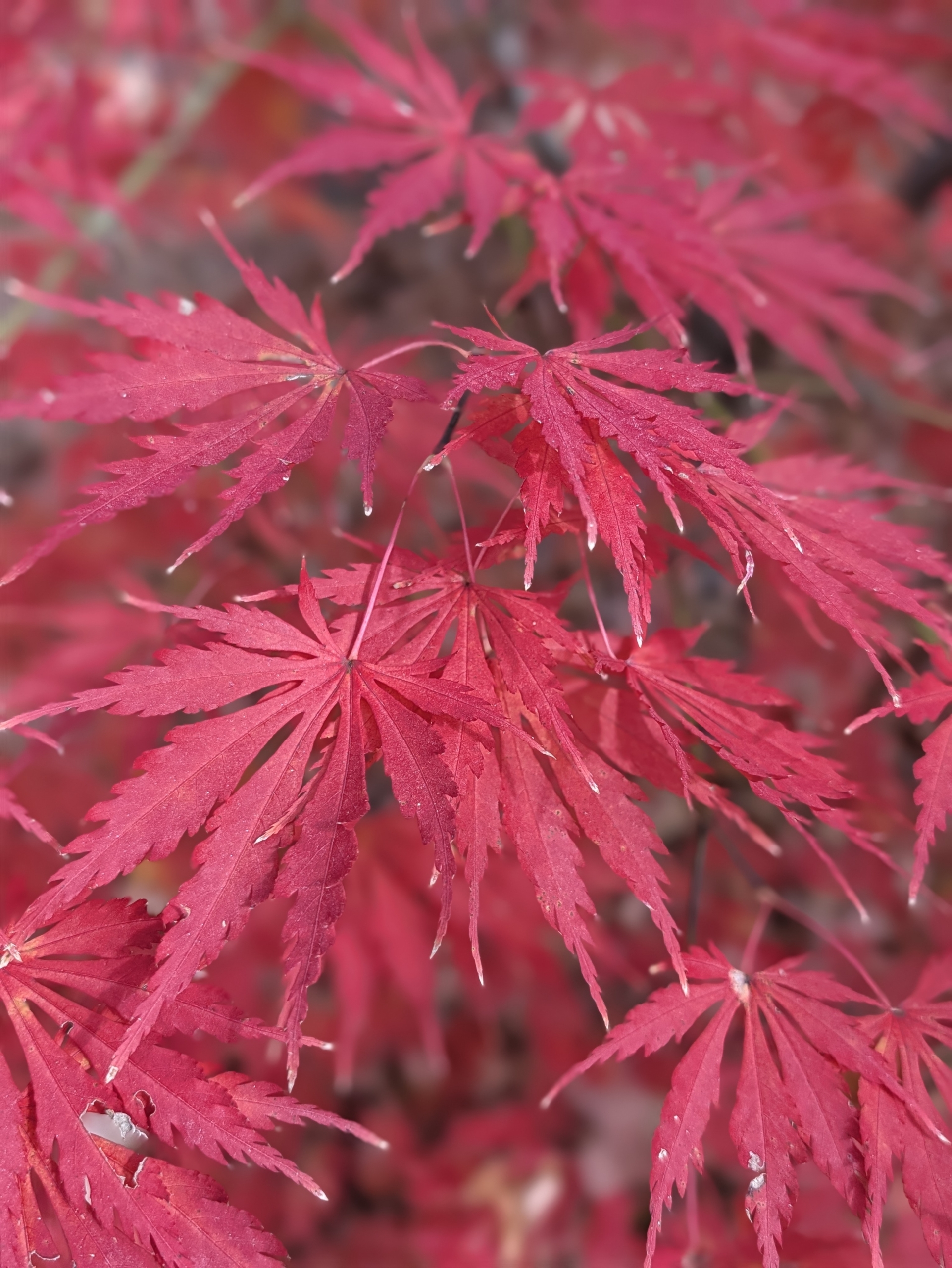
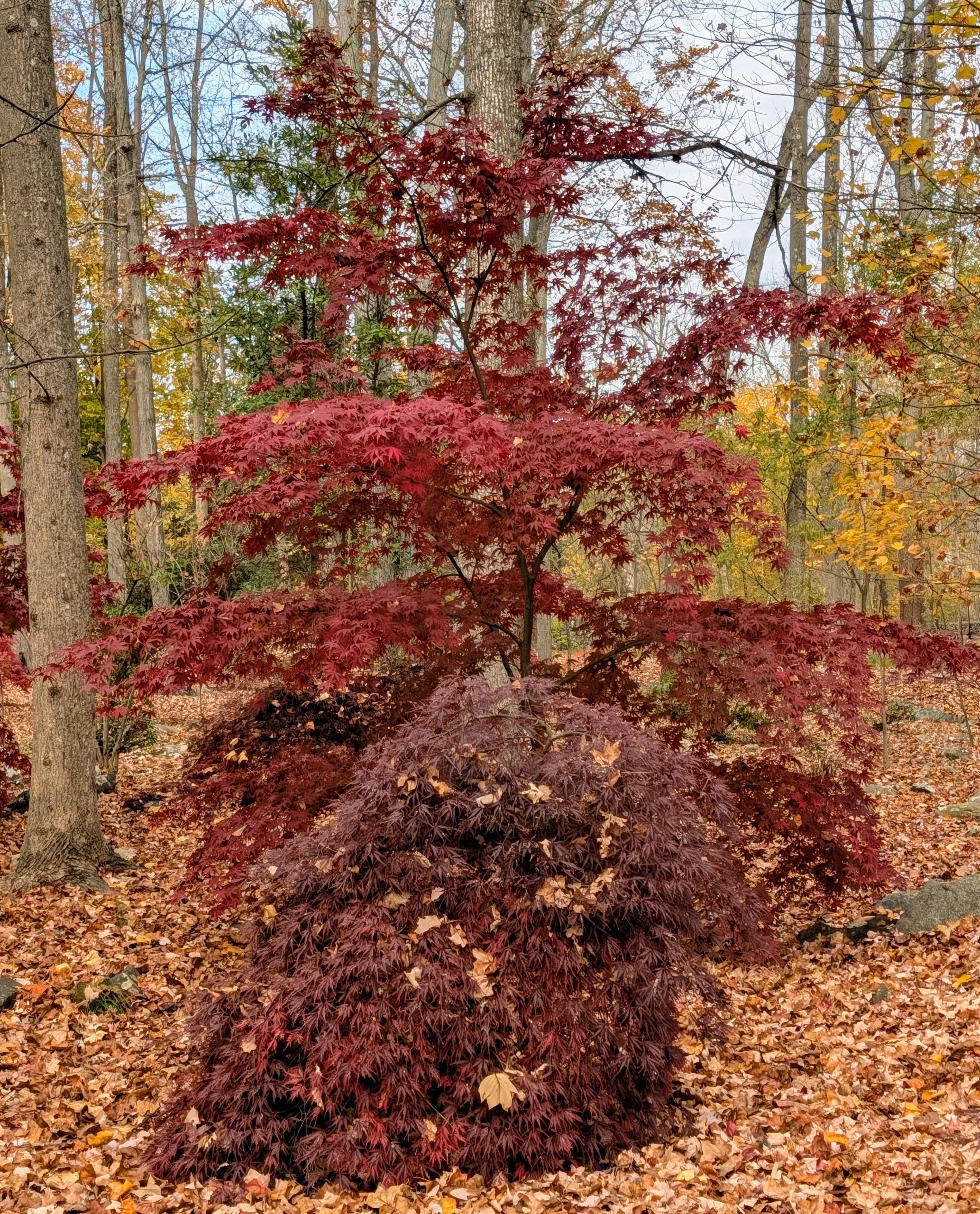
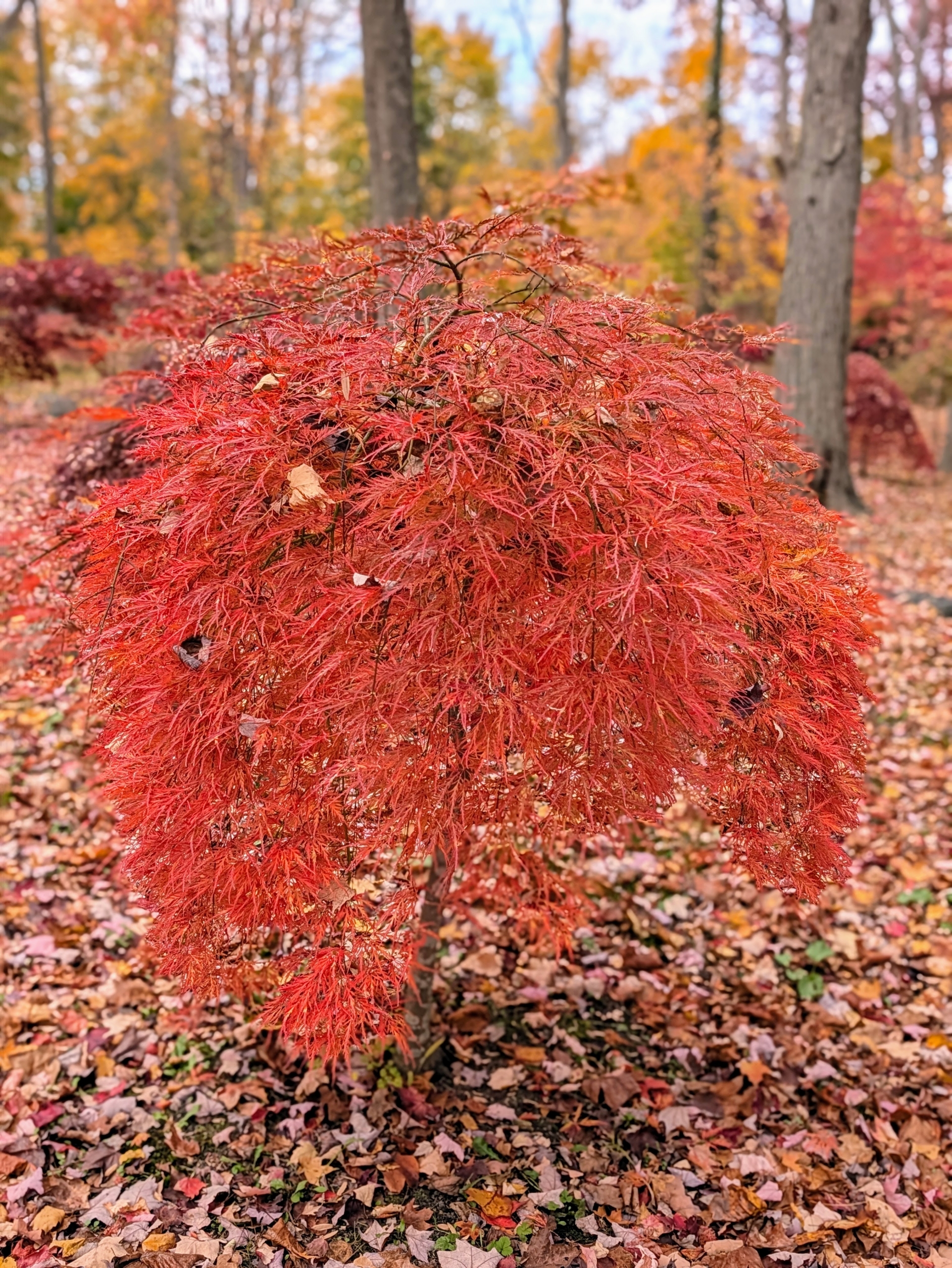
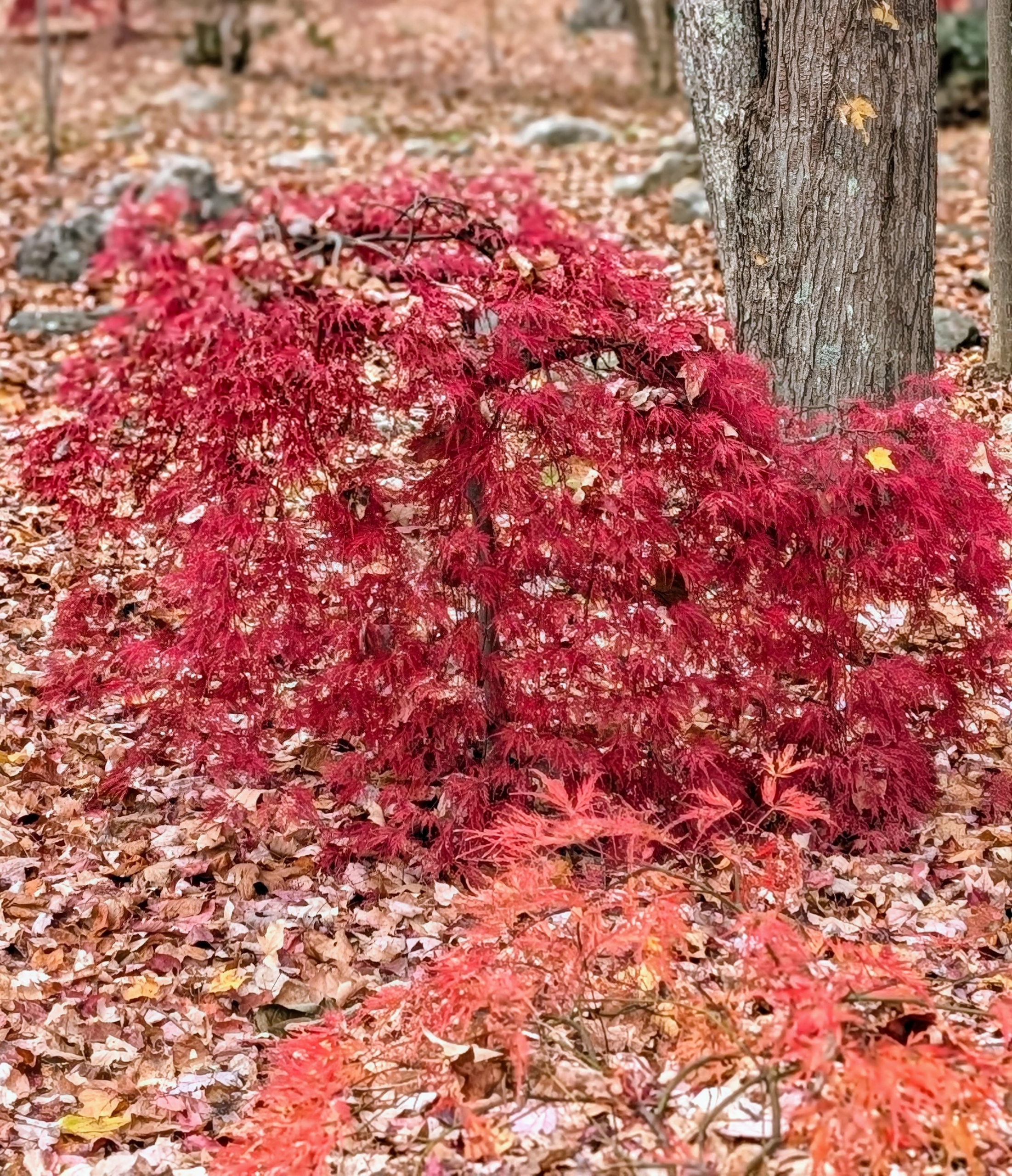
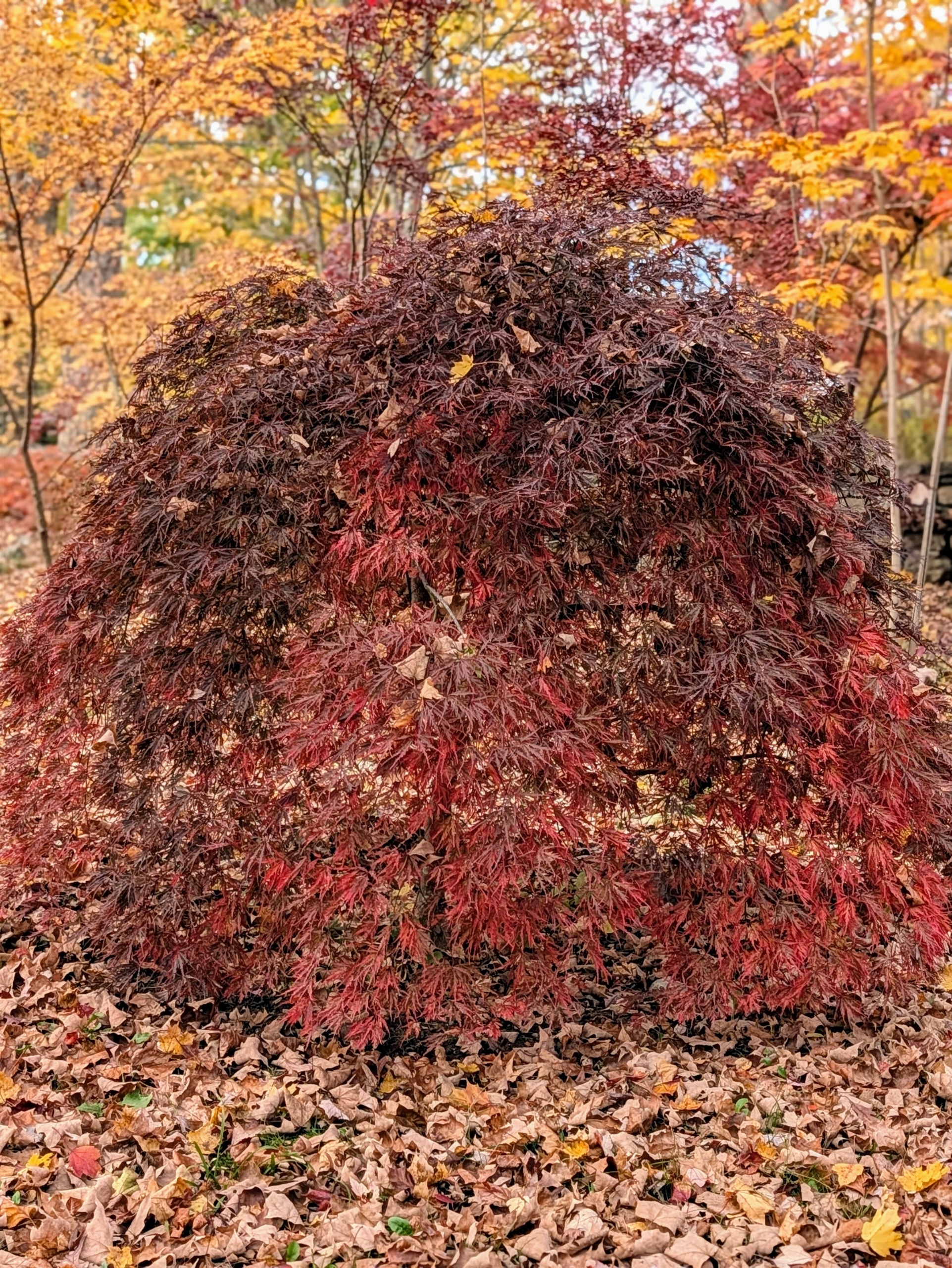
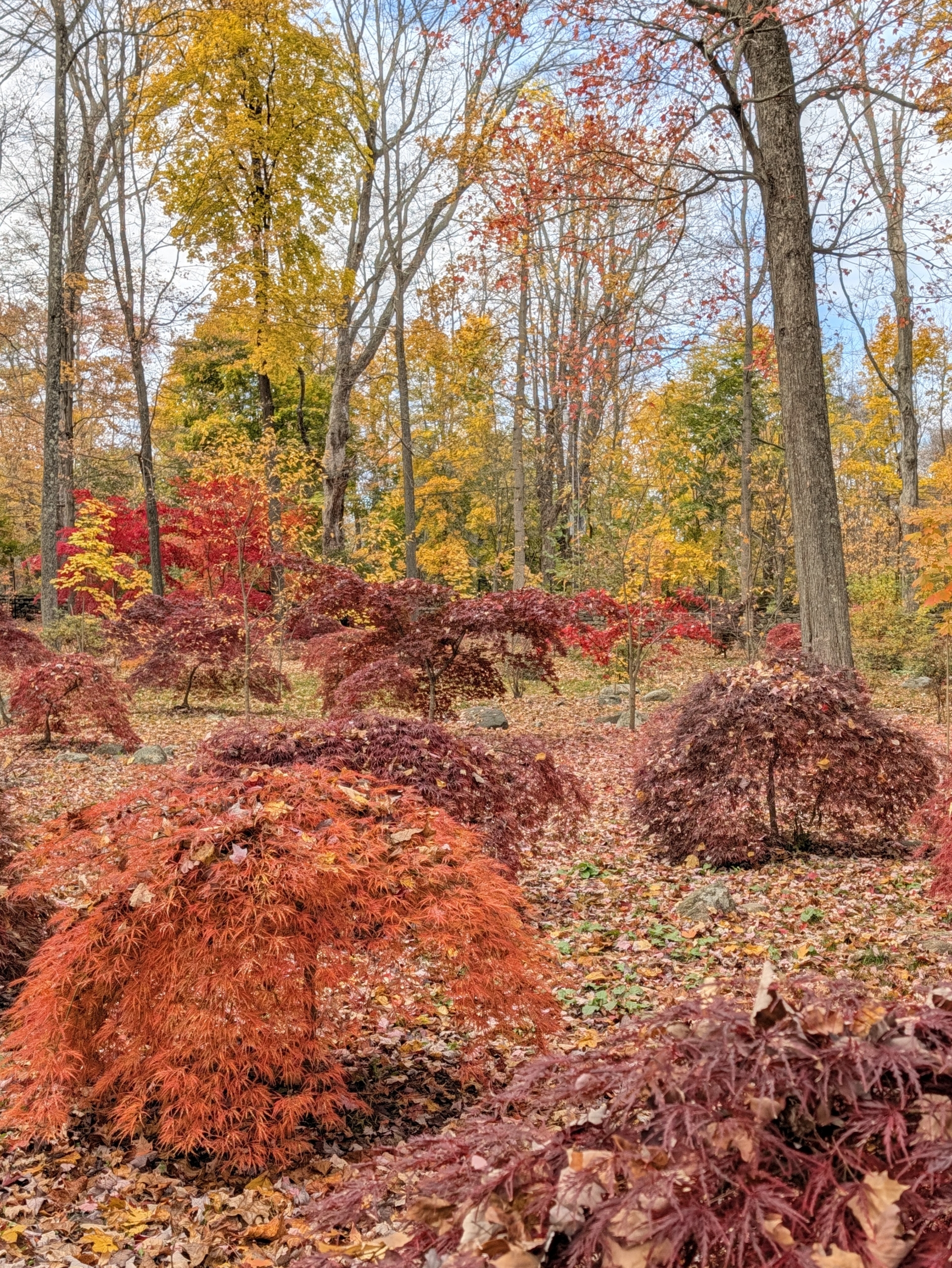
- I also have more rare varieties. These leaves are deeply divided, but each lobe is also dissected, giving them a lacy effect.
-
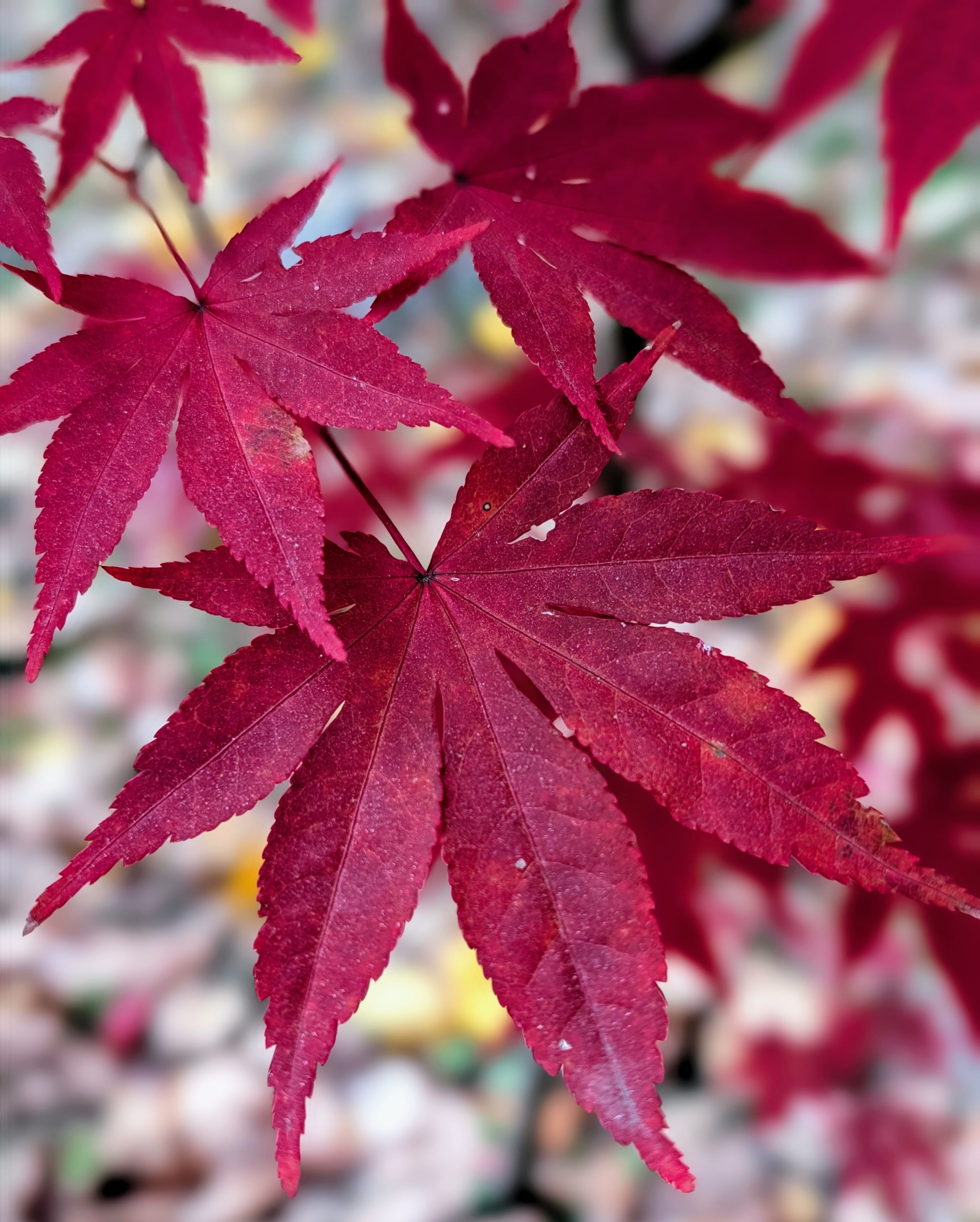
- Japanese maples are divided into categories based on their distinct leaf structures. Among them is palmate, which is the classic maple-shaped leaves with bold lobes. Another is dissectum characterized by deeply cut, feathery foliage. Atropurpureum contains some of the most recognizable Japanese maples that are upright with deeply lobed red leaves containing “five fingers.” There are also variegated varieties with multi-colored leaves. There are 17 different groups in all.
-
- The leaves range from about an inch-and-a-half to four-inches long and wide with five, seven, or nine acutely pointed lobes.
-
- Japanese maple forms also vary. They can be weeping, rounded, dwarf, mounding, upright, or cascading.
-
- Japanese maples typically grow about one-foot per year for the first 50-years and can live to be more than a hundred.
-
- Any heavy pruning should be done in late winter before leaf buds begin to open. Cut out scraggly interior twigs and branches, but leave the structural branches alone. Small, corrective cuts can be made any time of year. If I can, I like to prune and groom these Japanese maples myself.
-
- Japanese maple trees are particularly suitable for borders and ornamental paths because their root systems are compact and not invasive. Through this woodland grove, they line both sides of my carriage road.
-
- They can withstand very cold temperatures, but in summer, they should be watered deeply during dry spells and cut back in late summer to intensify the autumn color.
-
- As young trees grow, their colors become even more vibrant. It’s exciting to see how they develop through the seasons – many have such interesting growth habits.
-
- With the right conditions, the fall colors of the Japanese maple may last for several weeks. Unfortunately, as it gets colder, the colors begin to dull.
-
- These trees are hardy in USDA plant hardiness zones 5 through 8 and thrive in slightly acidic, well-draining soil.
-
- If growing in containers in colder zones, allow the plants to go fully dormant outside and then bring them into an unheated garage or other sheltered, cool area. In warmer zones, place them in a shaded location where they can be protected from drying winds.
-
- The best location is a sunny spot with afternoon shade. Red and variegated leaves need relief from hot afternoon sun in summer but need the light to attain full color.
-
- I purposely planted my Japanese maples beneath larger trees. The varying heights and layers make the grove so much more interesting. I love this woodland and continue to add more and more Japanese maples to this collection. If you can, stop and enjoy the magnificent colors of the Japanese maples where you live.
This story originally appeared on Martha Stewart Blog

