


November 6, 2026
Planting Near My Pond
Here at my farm, we’re in the midst of a very busy fall planting season, making the most of the mild weather before the ground becomes too cold.
I make a point of planting many trees every year – the more, the better – for the environment and for my developing landscape. A recent project involved planting a variety of evergreens near my pond. In addition to adding year-round color, texture, and interest to the area, these trees will eventually create a lush, green privacy screen.
Enjoy these photos.
-
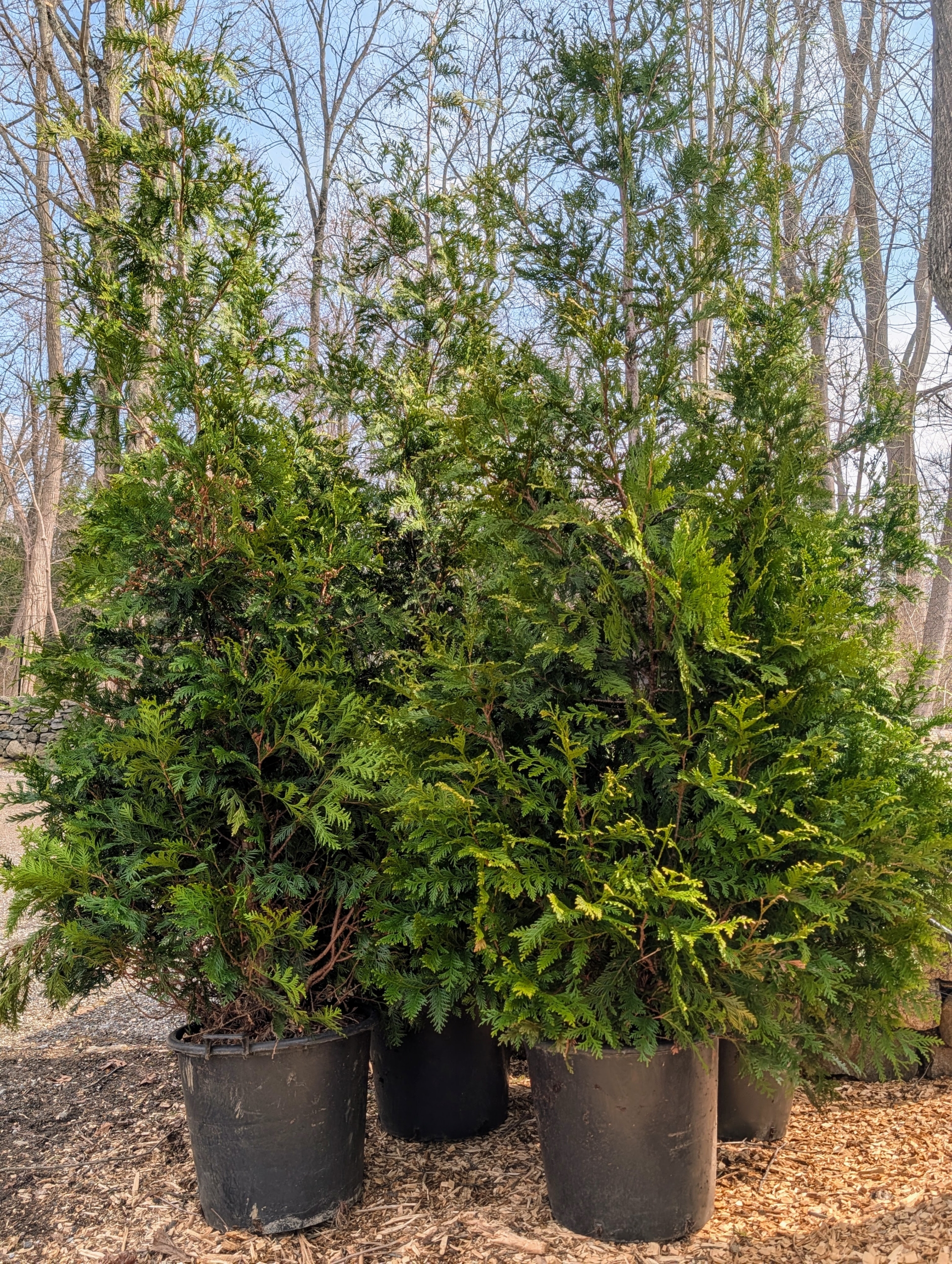
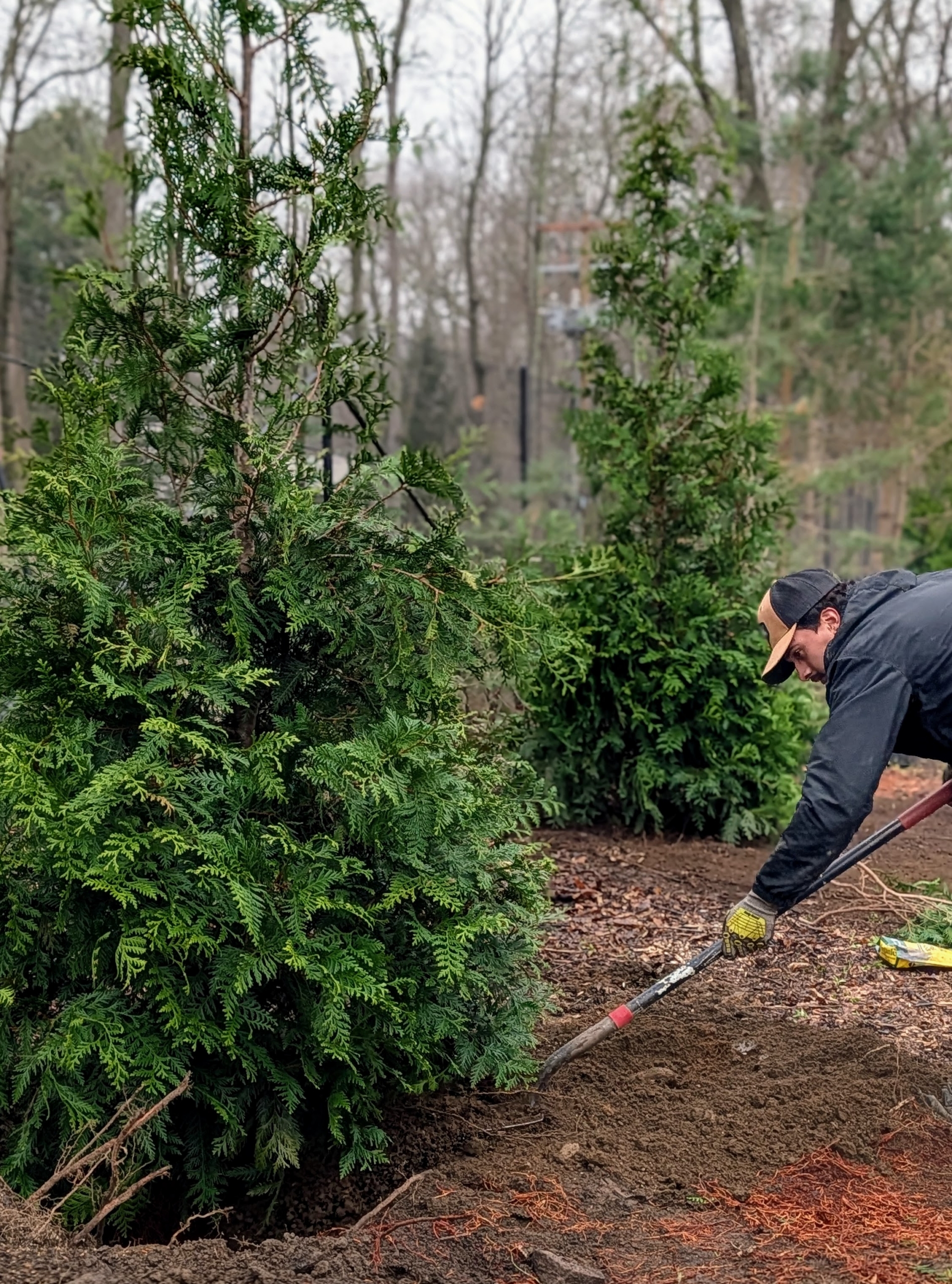
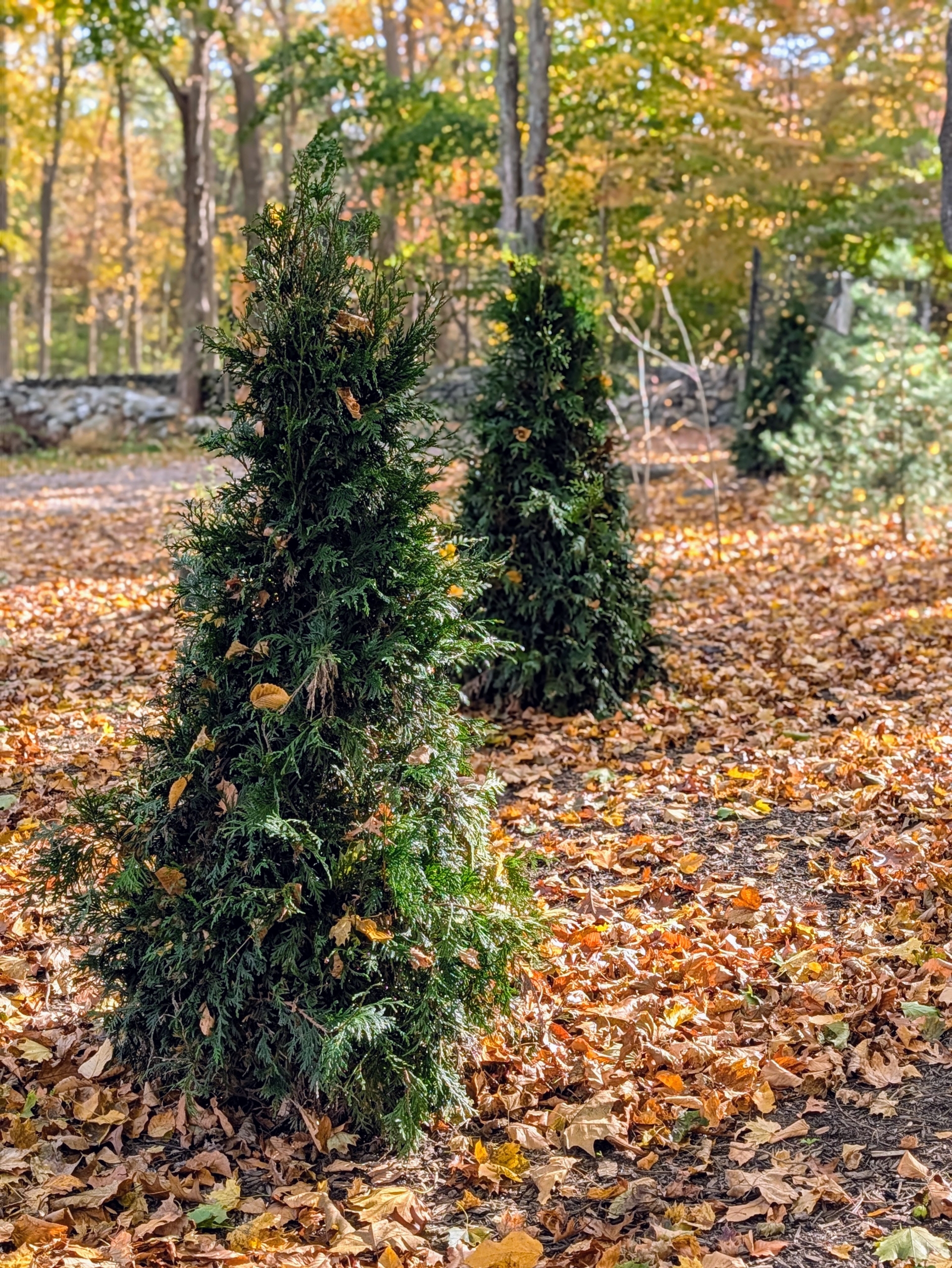
- Among the evergreens already planted here are these arborvitae, Thuja plicata ‘Green Giant’ – fast growing evergreen conifers with pyramidal growth habits.
-
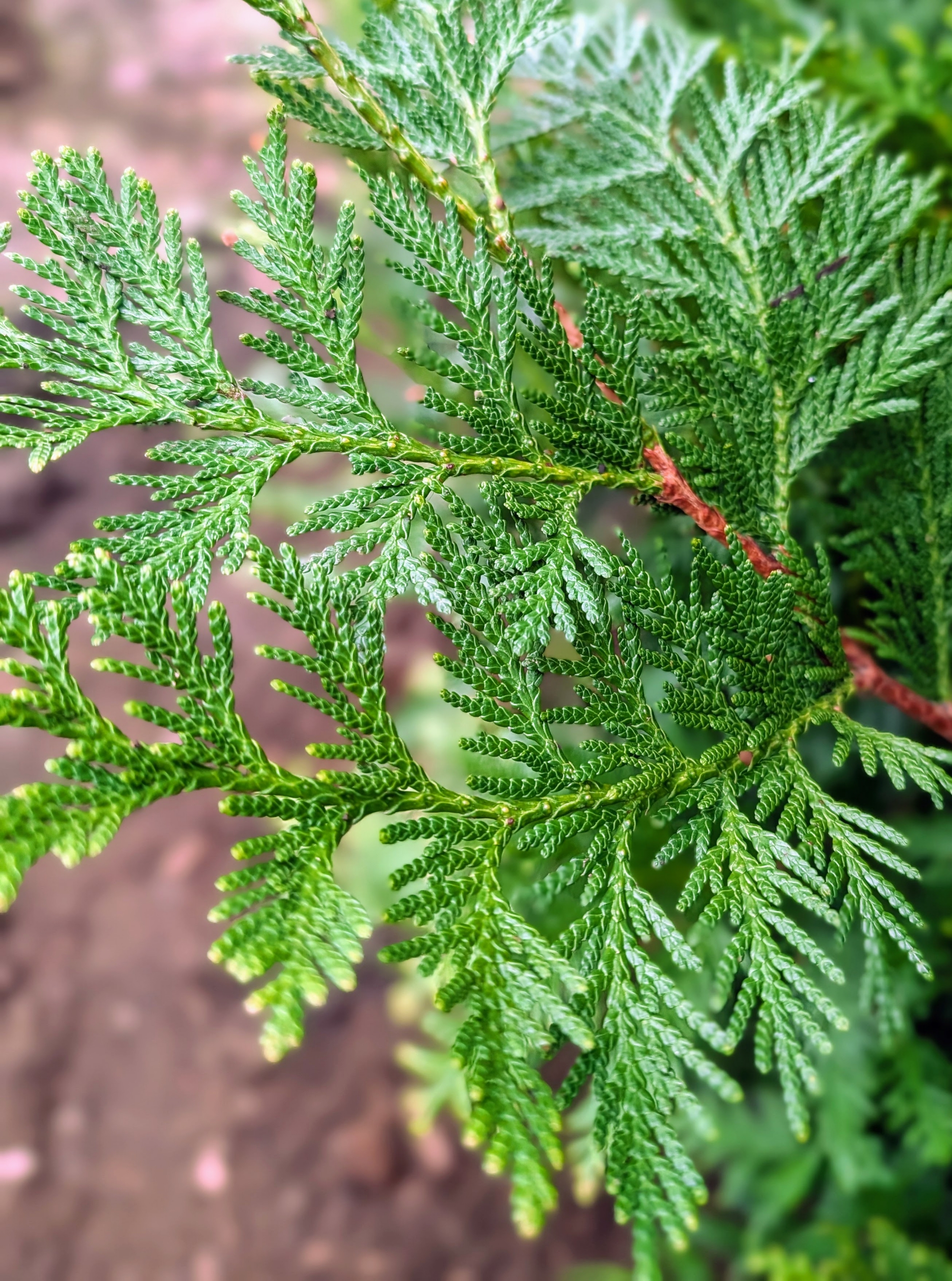
- The foliage is dense, rich green, scale‑like, and arranged in flattened sprays, often turning a slight bronze color in winter.
-
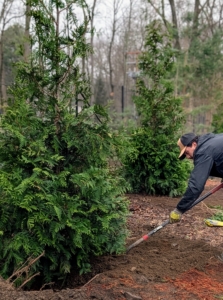
- In the most ideal conditions, these trees grow about three to five feet a year, topping at a mature size of up to 60-feet tall and 20-feet wide.
-
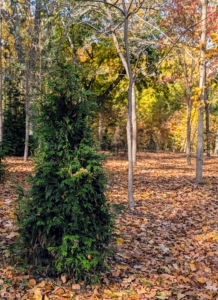
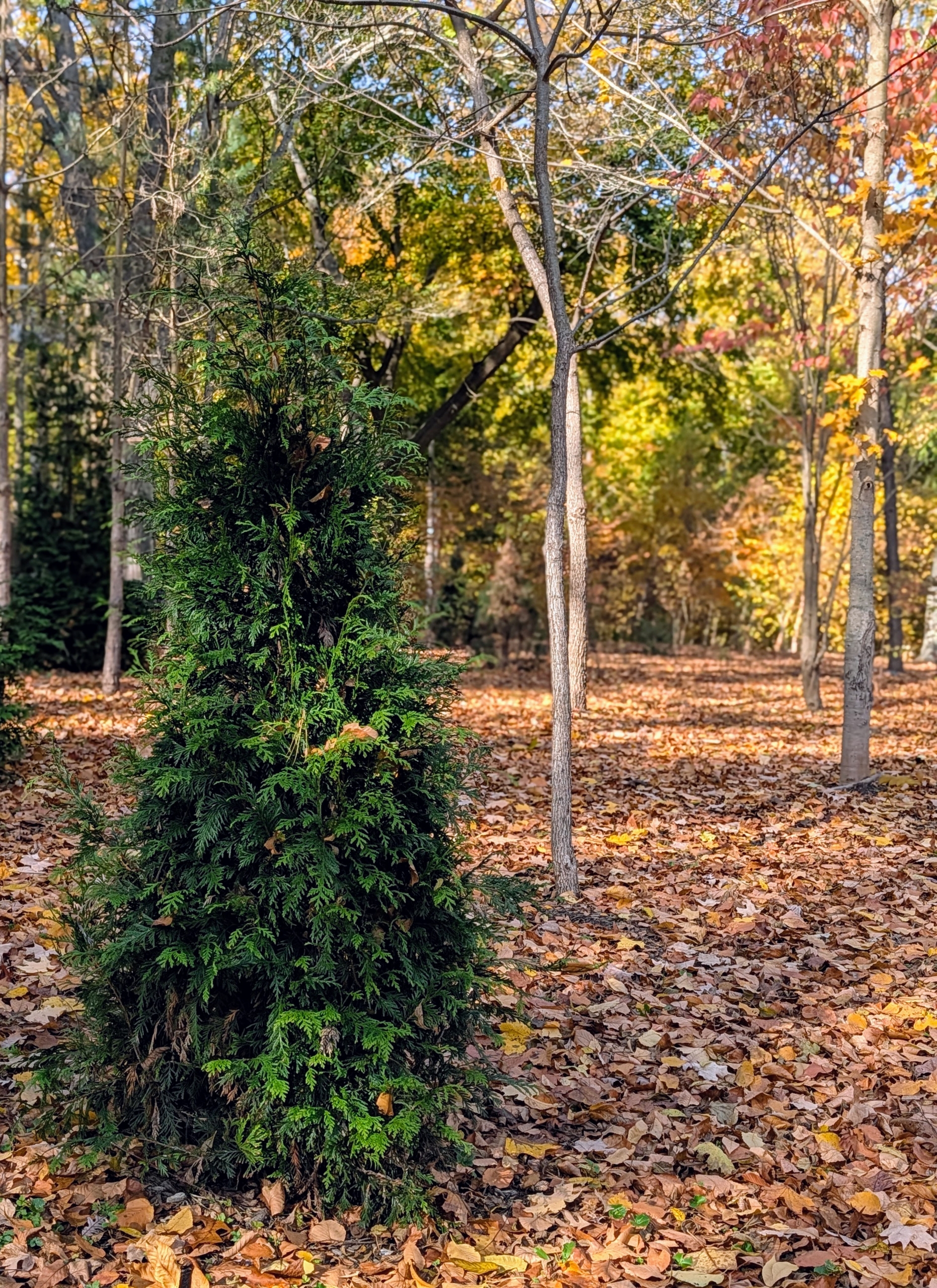
- These trees are now established and doing very well in this area not far from my small pond.
-
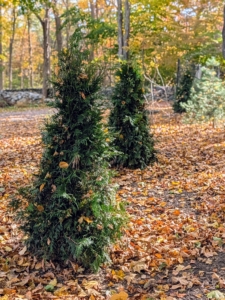
- They are planted about six to seven feet apart to provide ample room and good privacy screening when mature.
-
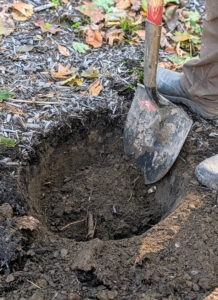
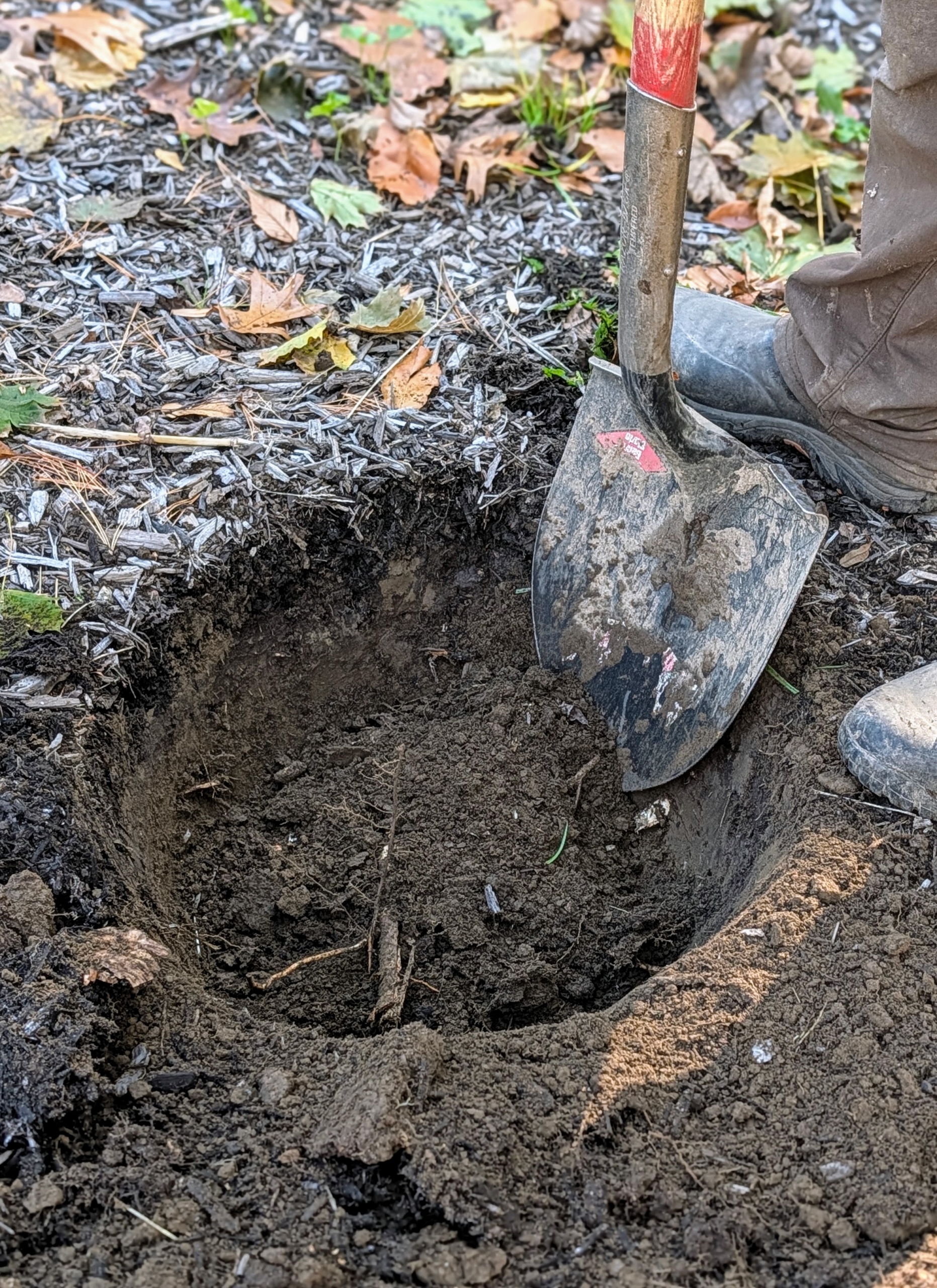
- Planting continues with an assortment of spruce, white pines, red pines, firs, and others. First the hole is dug at least twice the size of the plant.
-
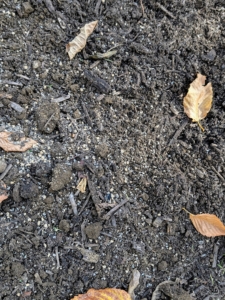
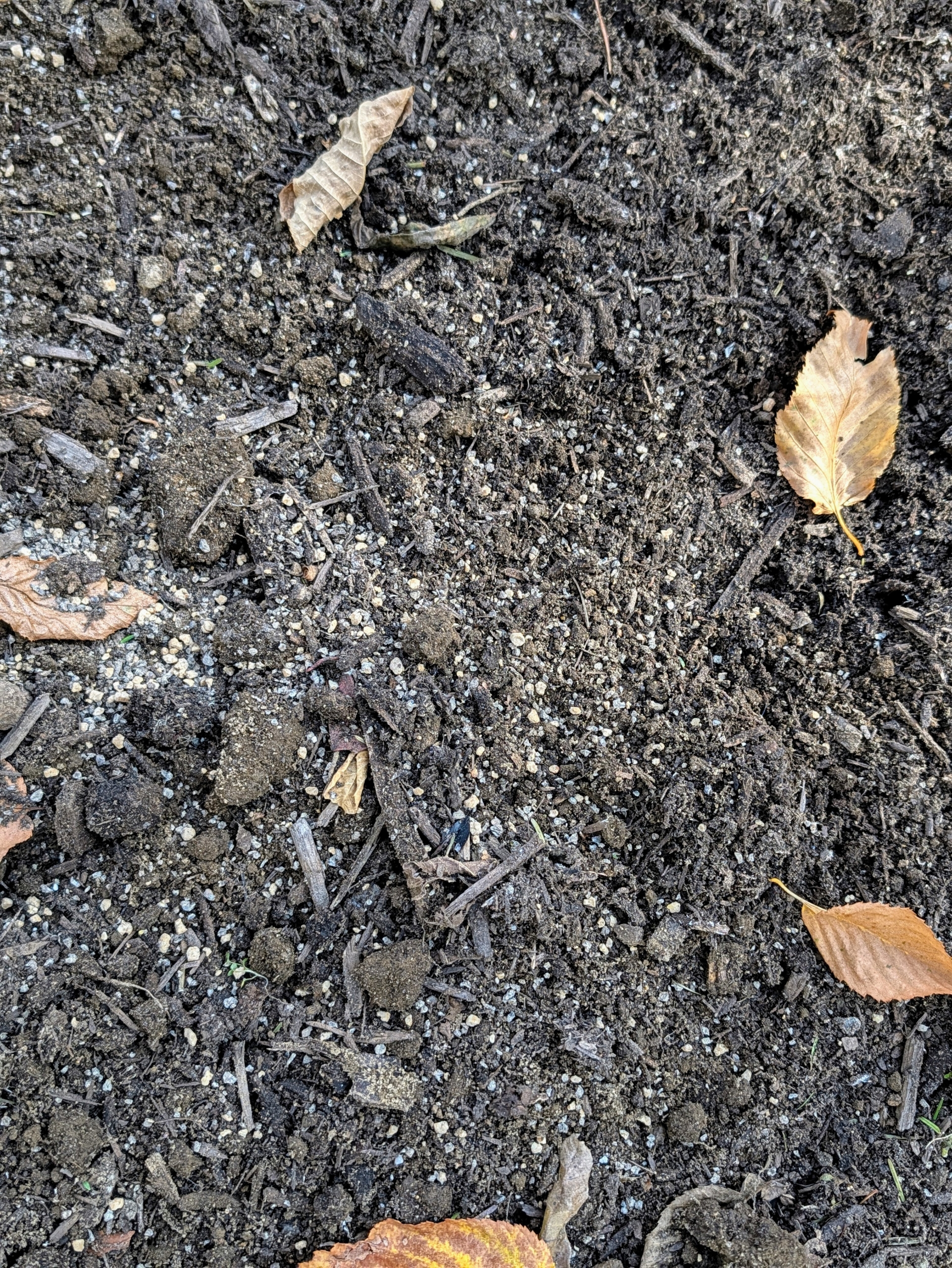
- Fertilizer is sprinkled in the hole and in the surrounding soil.
-

- I use Miracle-Gro Organic All Purpose Plant Food. It’s good for both outdoor container and in-ground plants and feeds for up to three-months.

-
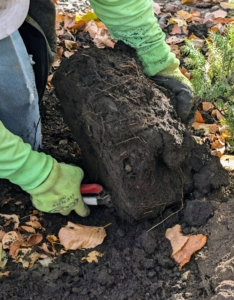
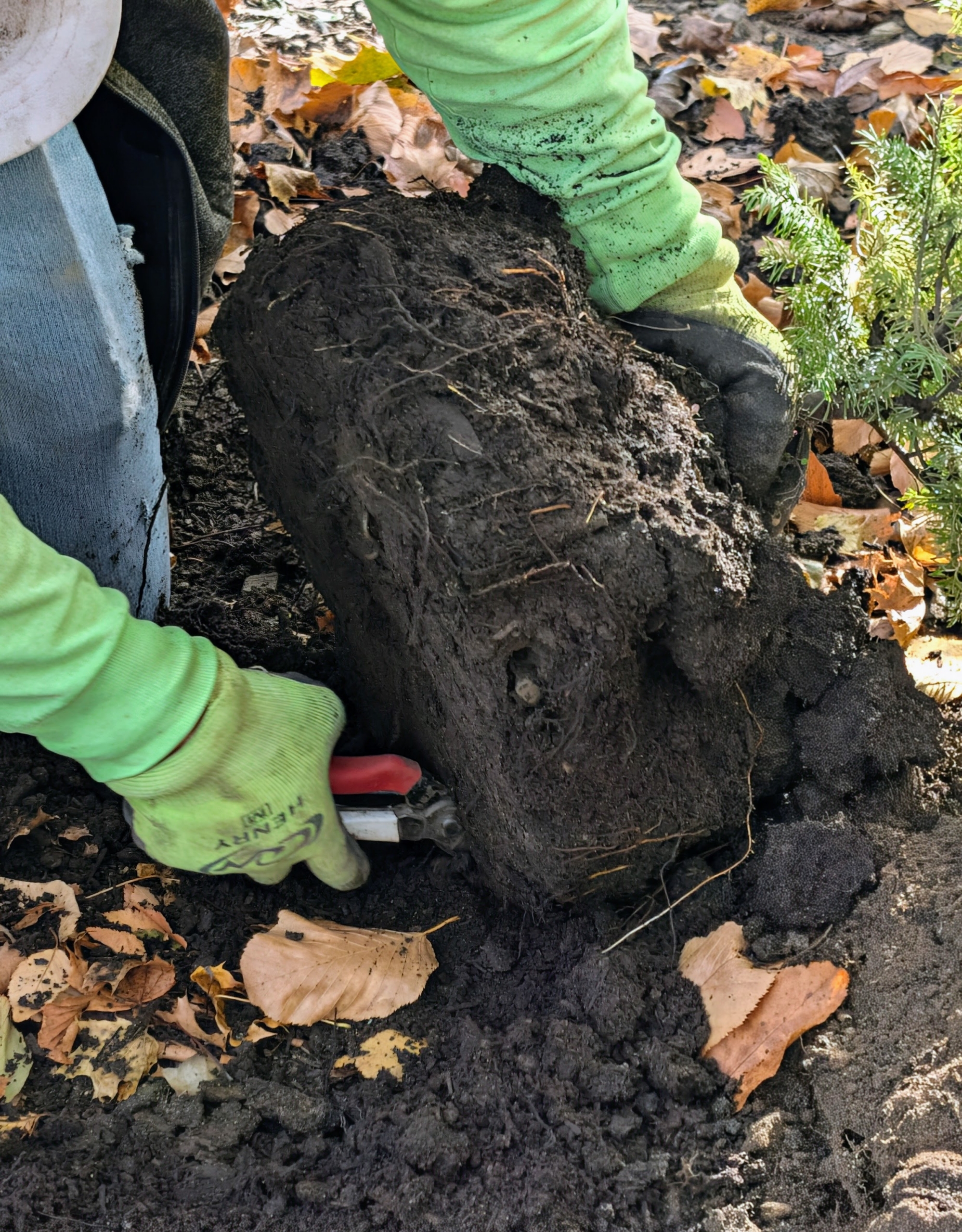
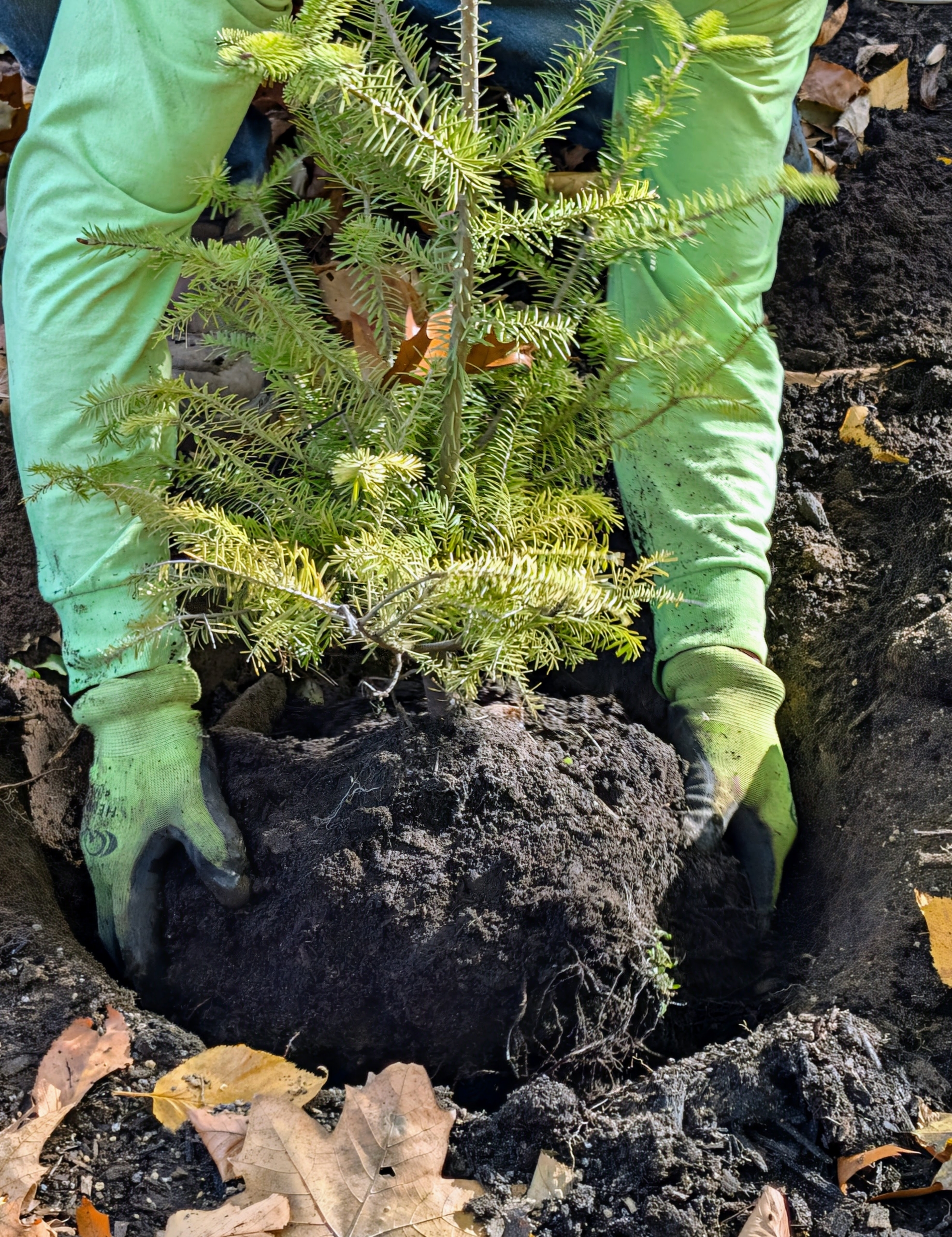
- This young tree is removed from its pot and the root ball and its roots are scarified. Scarifying helps promote healthy growth and nutrient absorption by loosening the roots and allowing them to expand into the new soil.
-
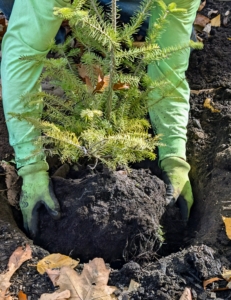
- It is then placed into the hole and checked for proper depth. Planting a tree too deep can kill it. Plant it only at its flare – the bulge just above the root system where the roots begin to branch away from the trunk.
-
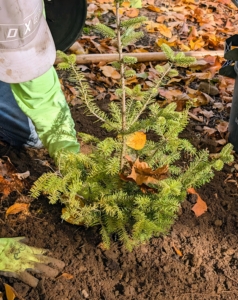
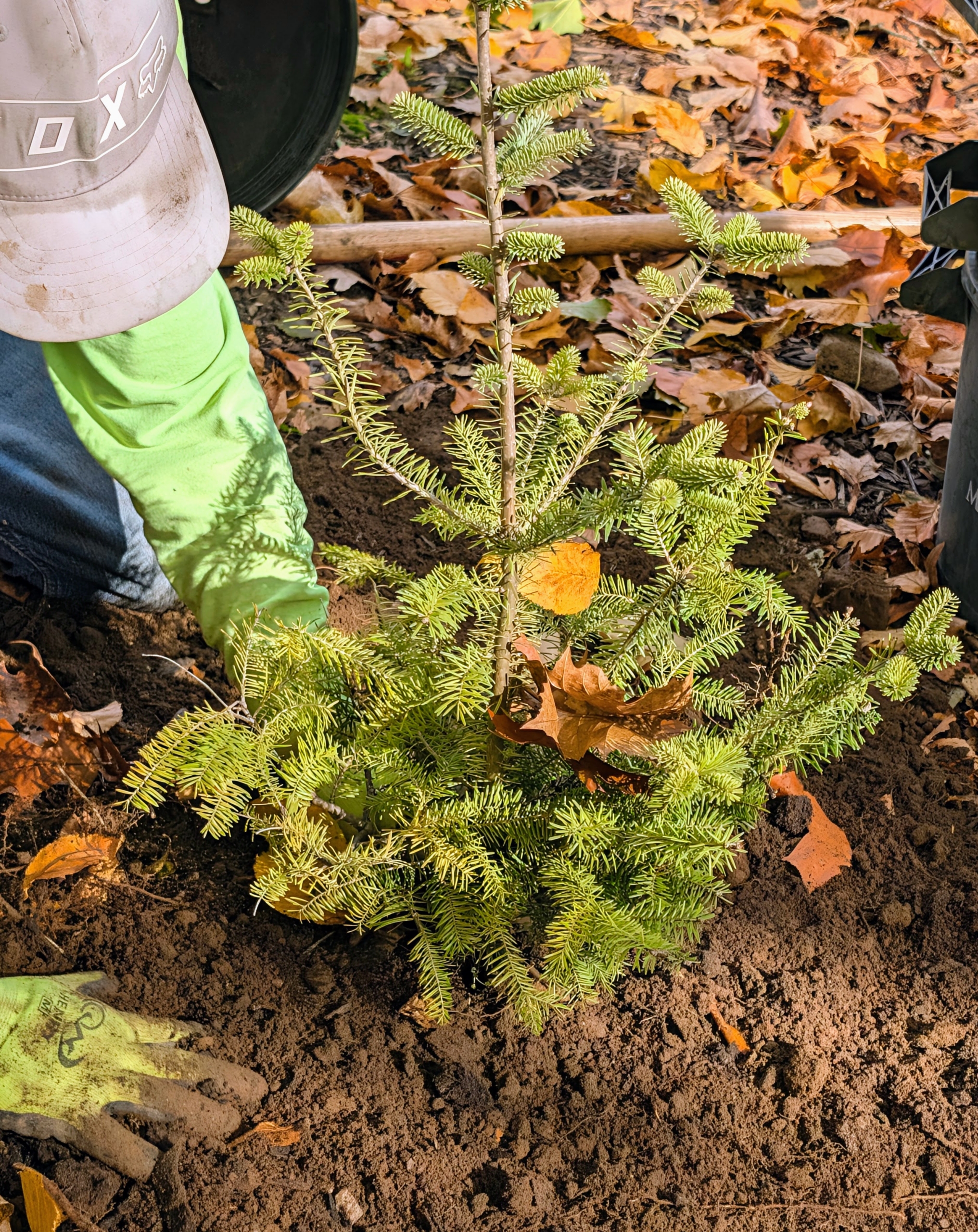
- Next, the hole is back filled and the top soil is groomed neatly. In time, this tree will fill out nicely in the space.
-
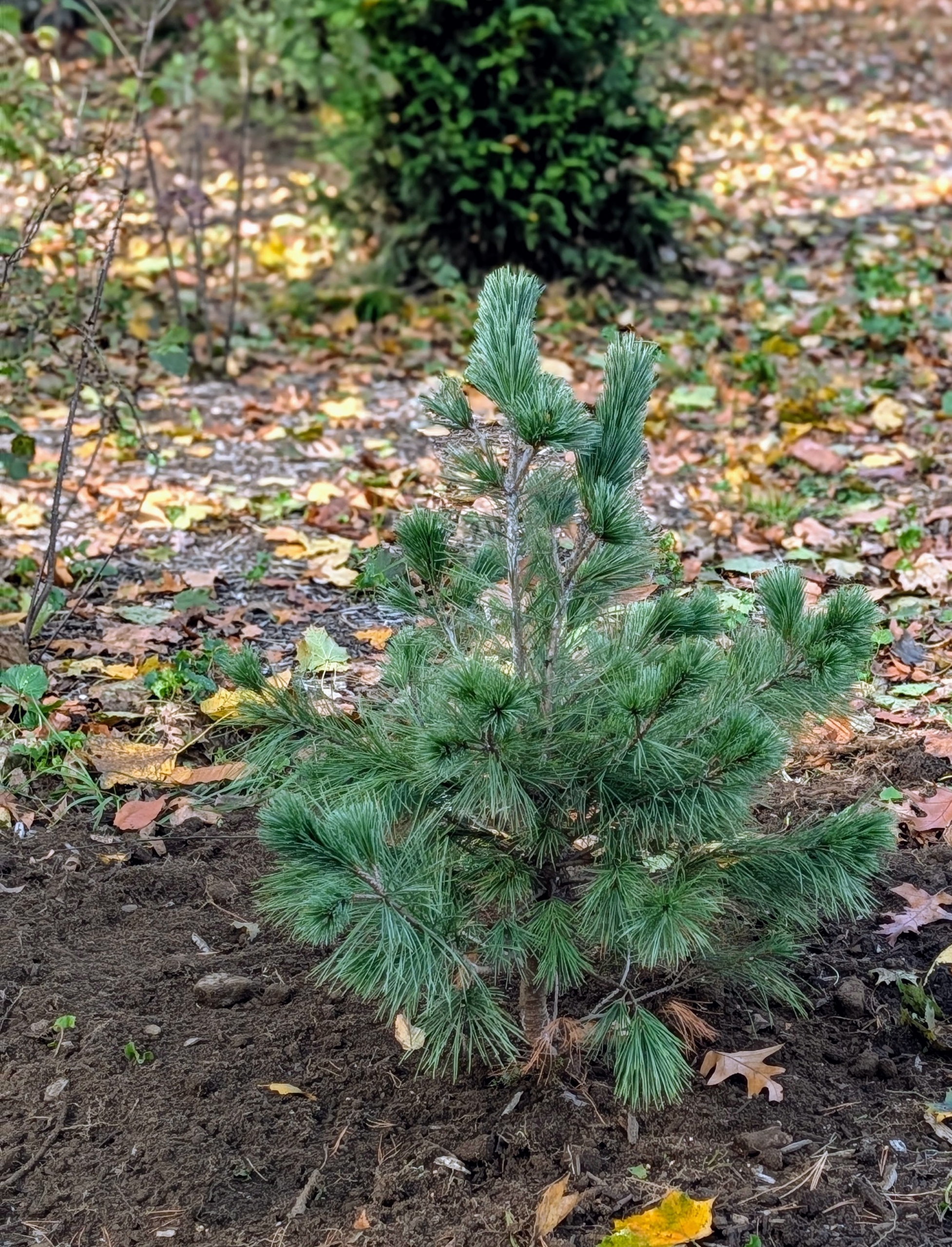
- This white pine tree was also just planted. In most managed landscapes, these trees typically reach heights of 50 to 80 feet, but can grow much taller in undisturbed forests.
-
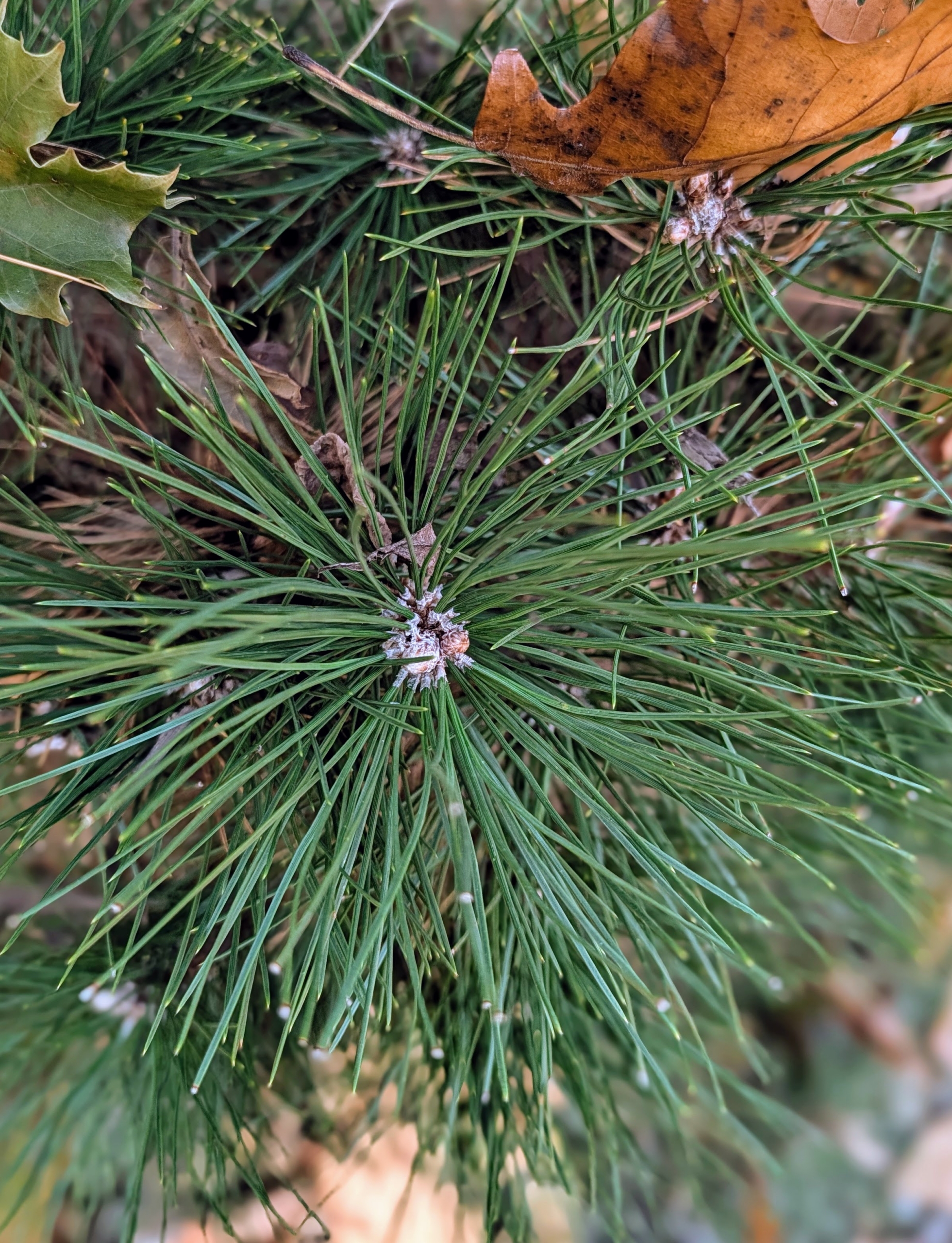
- Pine leaves are long, needle-shaped and typically grow in bundles.
-
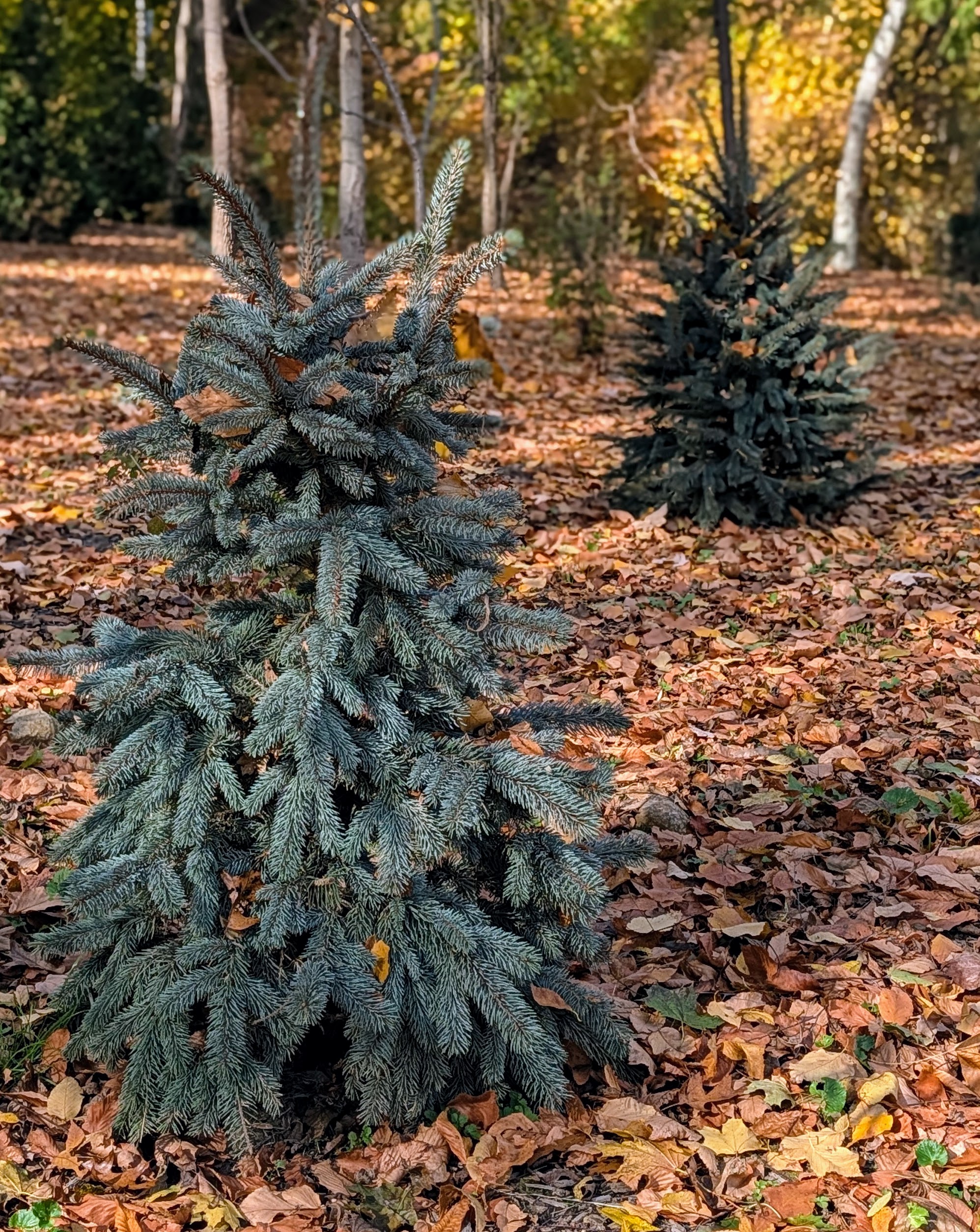
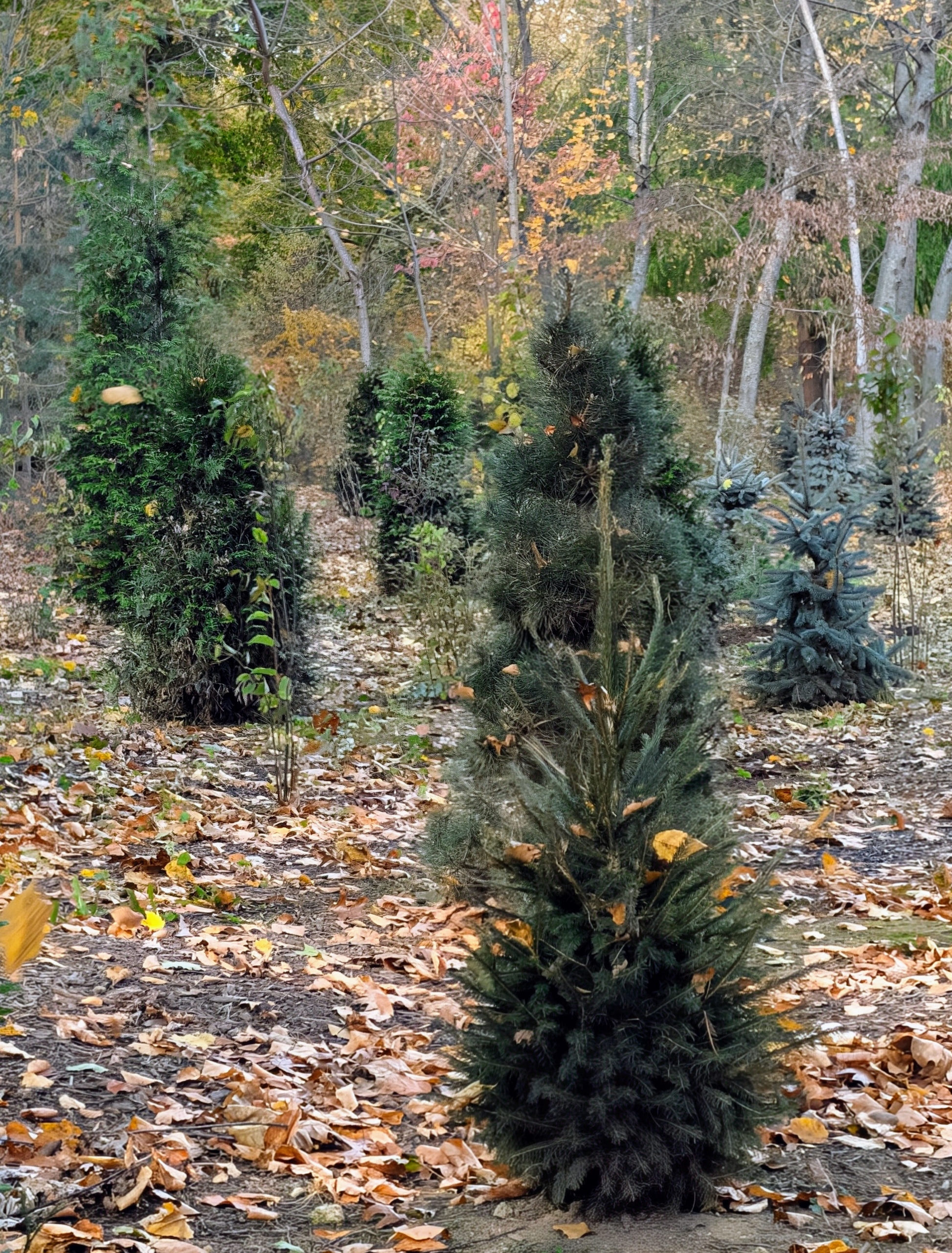
- In contrast, blue spruces are cone‑shaped evergreens with stiff, silvery‑blue needles arranged radially around the branches, giving the tree its dense appearance.
-
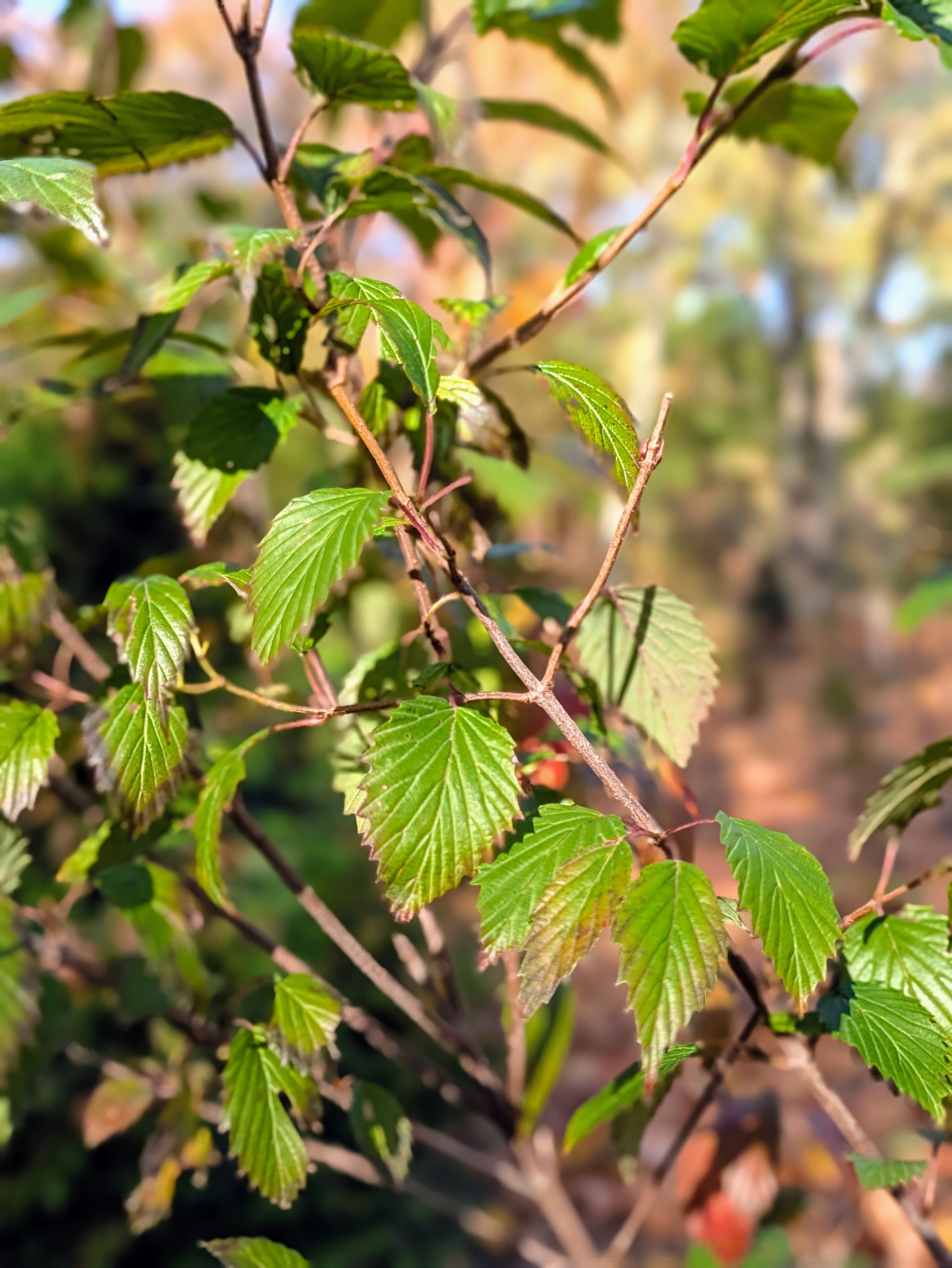
- I also have viburnums in this space. And while many viburnums are deciduous and lose their leaves in winter, they show off spectacular displays of fragrant flowers that bloom in early to mid‑spring.
-
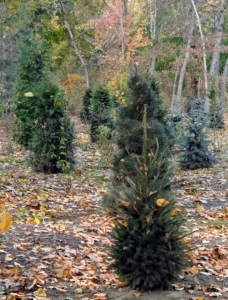
- Trees planted in varying sizes creates visual interest and depth in the landscape.
-
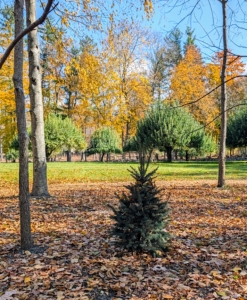
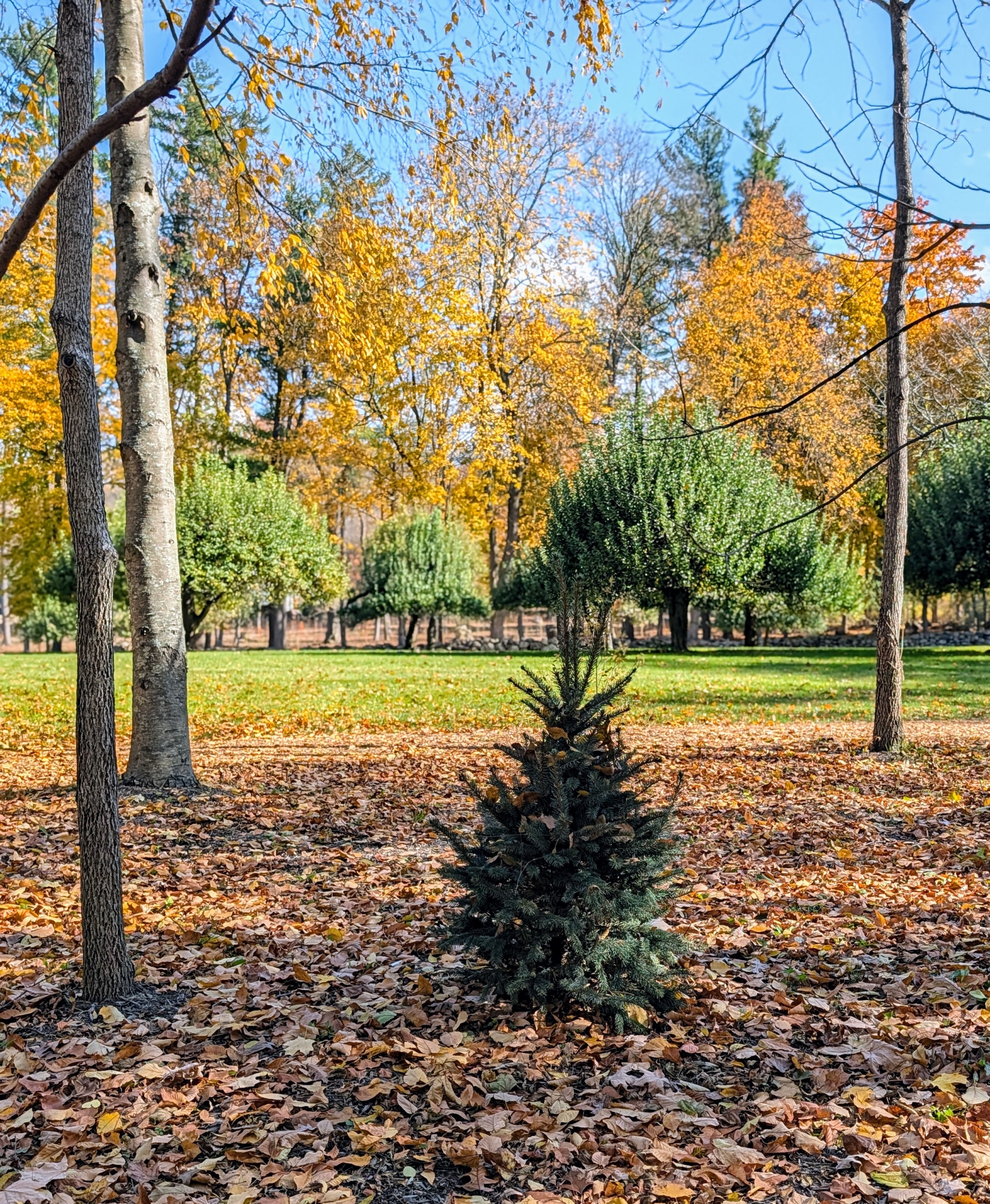
- Larger trees provide partial shade and some windbreak for the trees below.
-
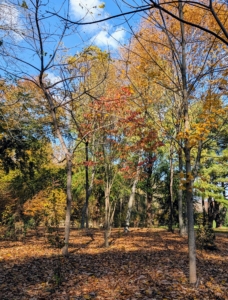
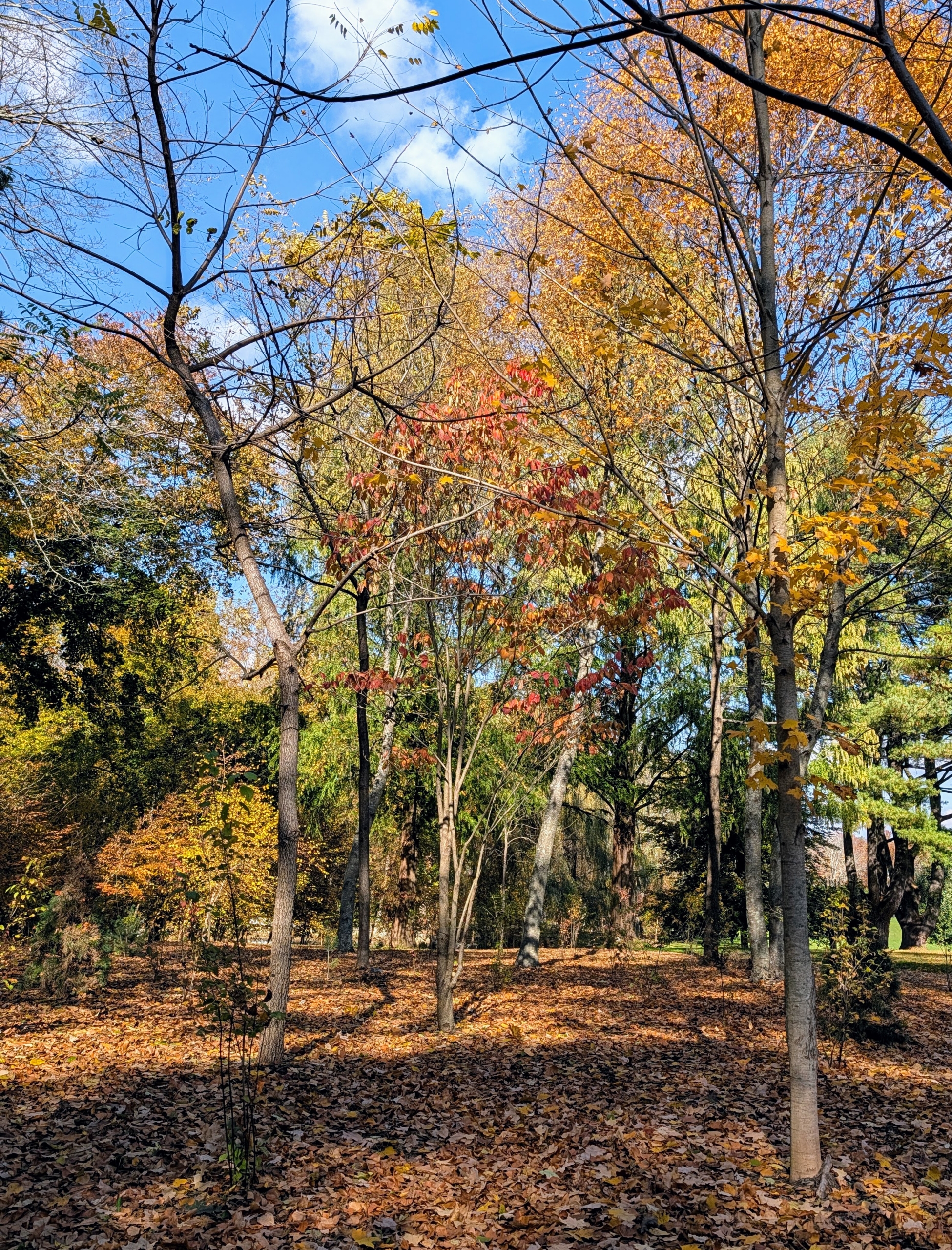
- I’ve planted most of the trees here at my farm – thousands and thousands of trees. This time of year, the evergreens stay green while nearby deciduous trees turn yellow, orange, or red – all creating seasonal contrast and beauty.
This story originally appeared on Martha Stewart Blog

