


November 9, 2026
Late-Autumn Color at My Farm
The autumn color show continues at my farm, where the landscape is now taking on the rich, warm hues of late fall.
As the days grow shorter and temperatures begin to cool, deciduous trees undergo a remarkable seasonal transformation. The production of chlorophyll slows and eventually stops, allowing the leaves to turn from green to beautiful shades of red, yellow, orange, and gold. These same seasonal changes also trigger abscission, the natural process by which a layer of cells forms at the base of each leaf stem, gradually weakening its connection to the branch until it falls.
Enjoy these photos of the beautiful late-season colors at my farm.
-
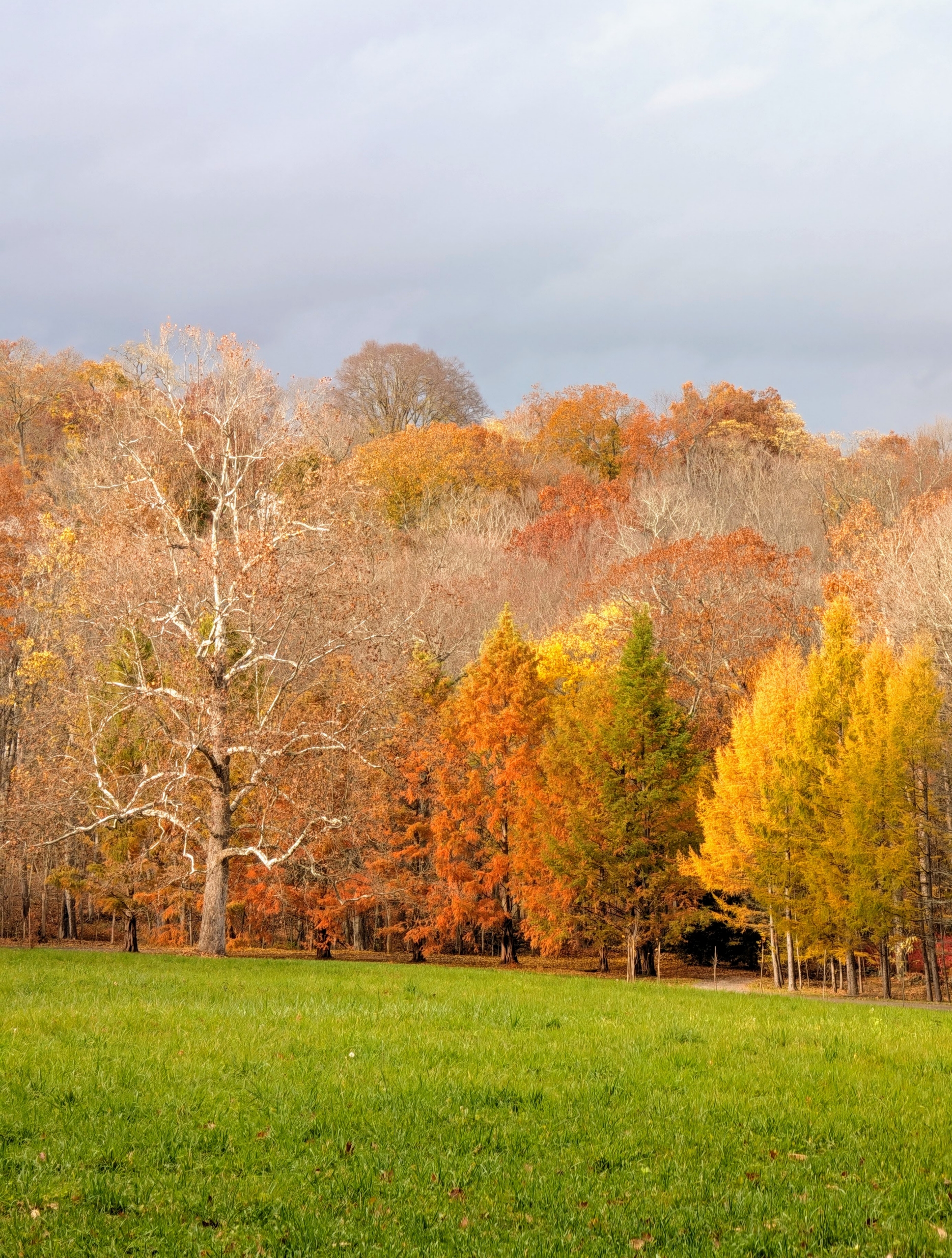
- Here at my farm, the peak of fall color has pretty much ended, but look at the gorgeous show. By this time in early November, the trees show off a warm, earthy palette of russet, bronze, tan, and gold. On the left is my sycamore tree, the symbol of my farm. It has already lost most of its leaves for the season.
-
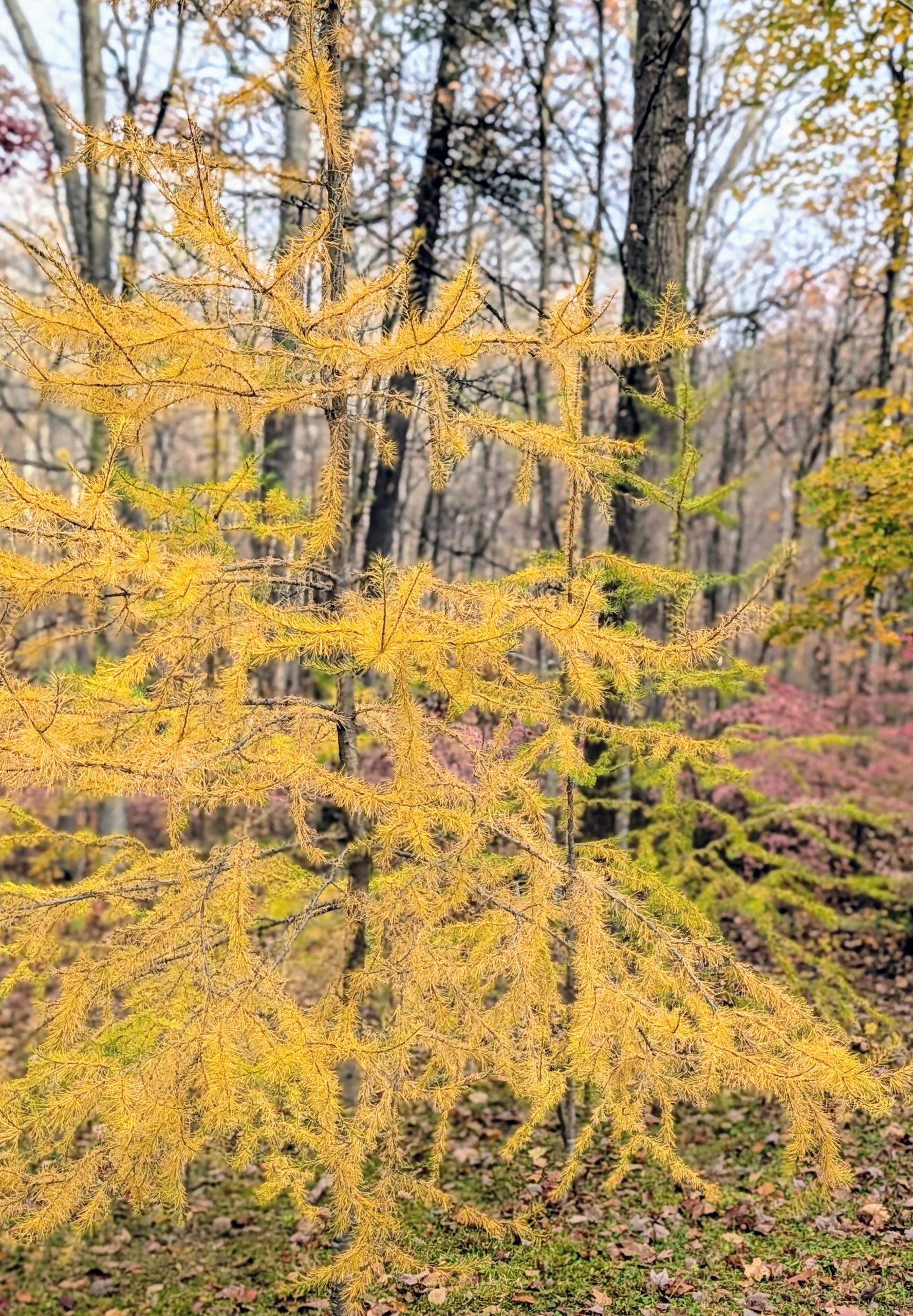
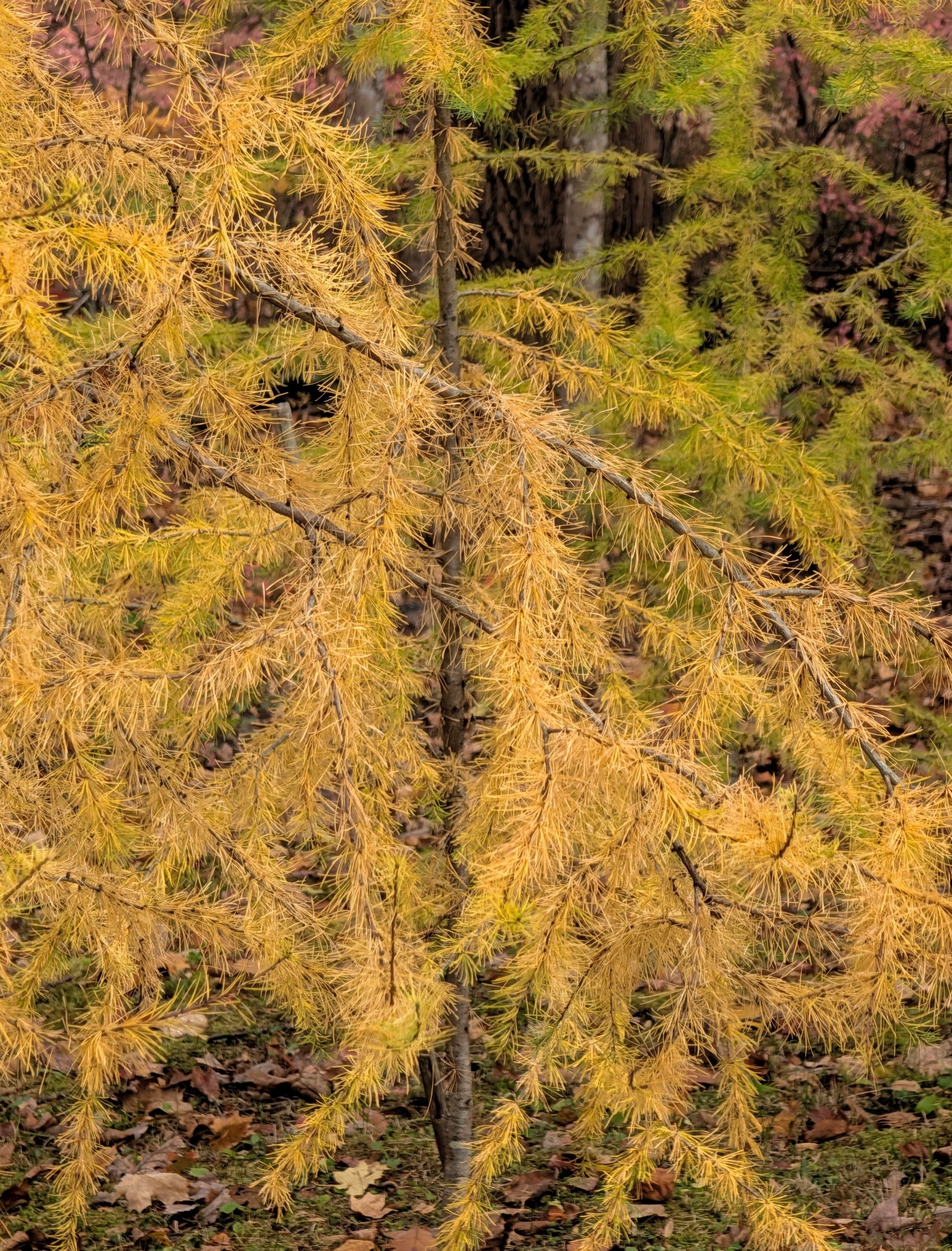
- Also lining a section of the carriage road in this upper hay field are several American larch trees, Larix laricina, also called tamarack. I planted all of them here at the farm. Larches are one of the few coniferous trees to change colors and lose their needles in the fall.
-
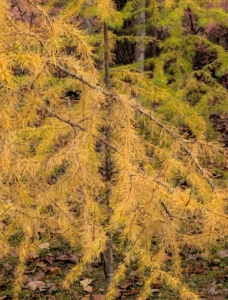
- Larch trees turn a brilliant golden‑yellow before dropping all its needles.
-
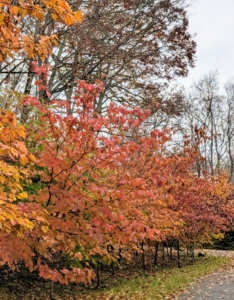
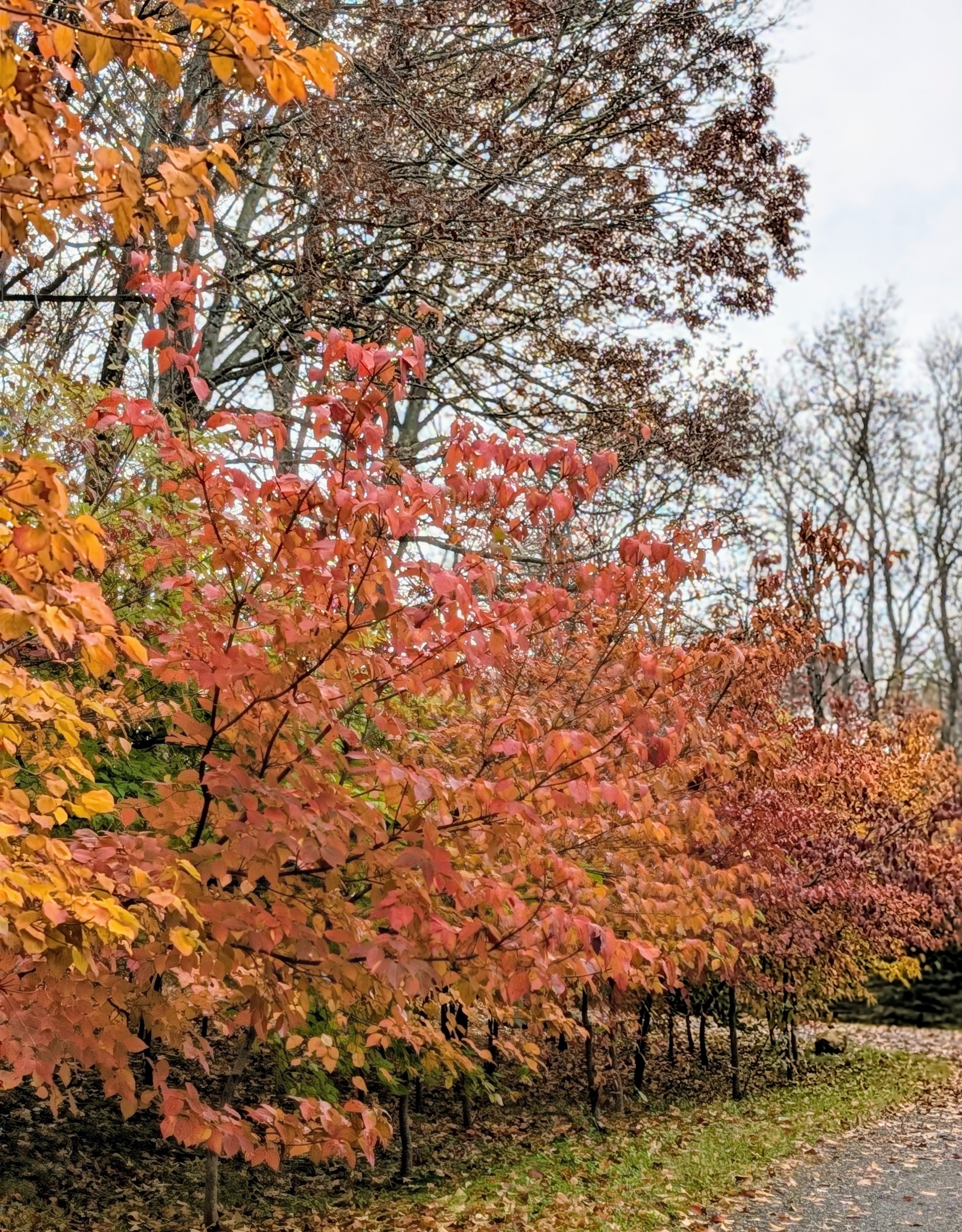
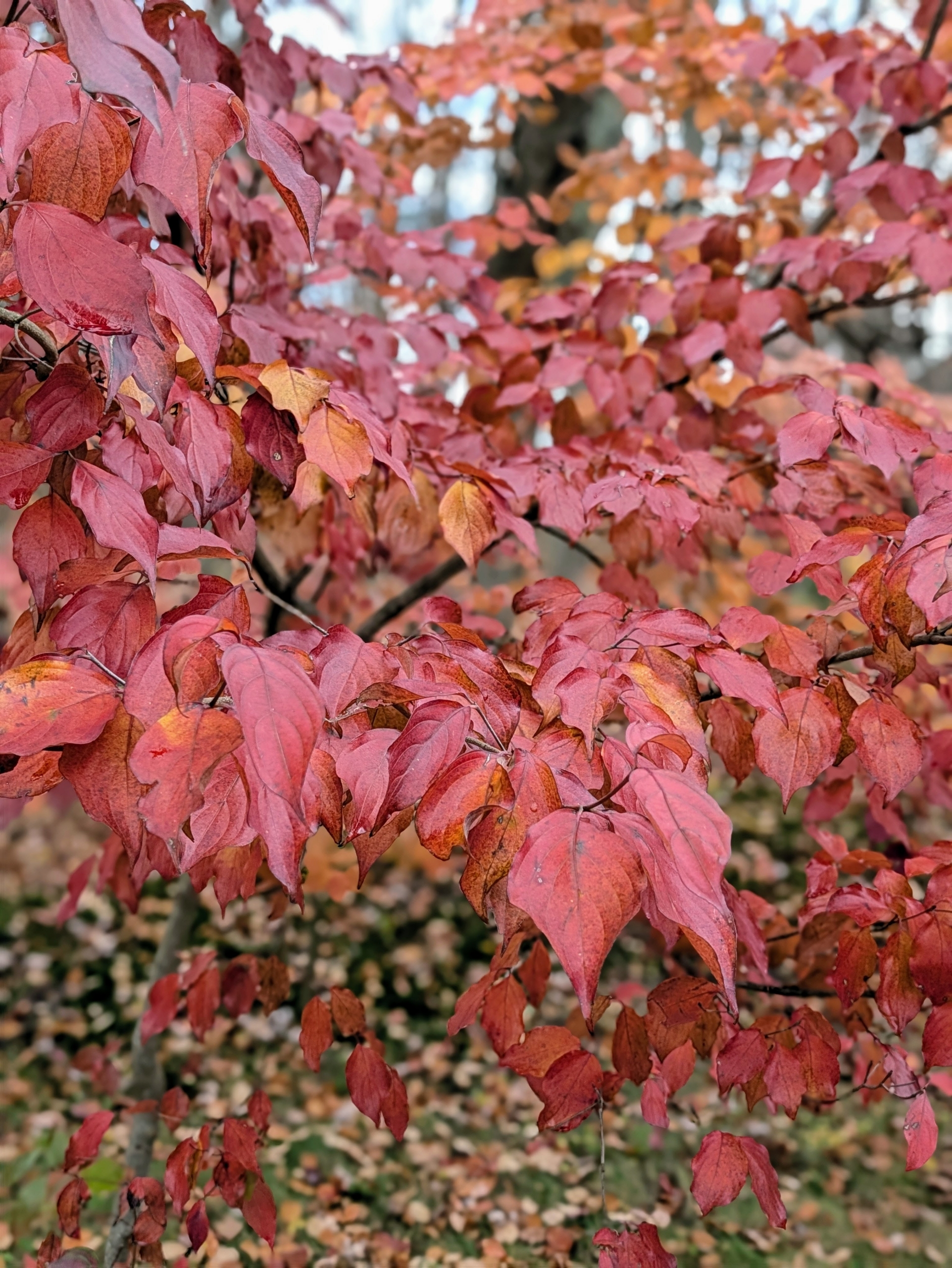
- Along another side of the carriage road are the changing leaves of the Kousa dogwoods. Kousa dogwoods are small, ornamental flowering trees known for their star-shaped white bracts and red berry-like fruit.
-
- Right now, they are showing off this rich burgundy to bold red foliage.
-
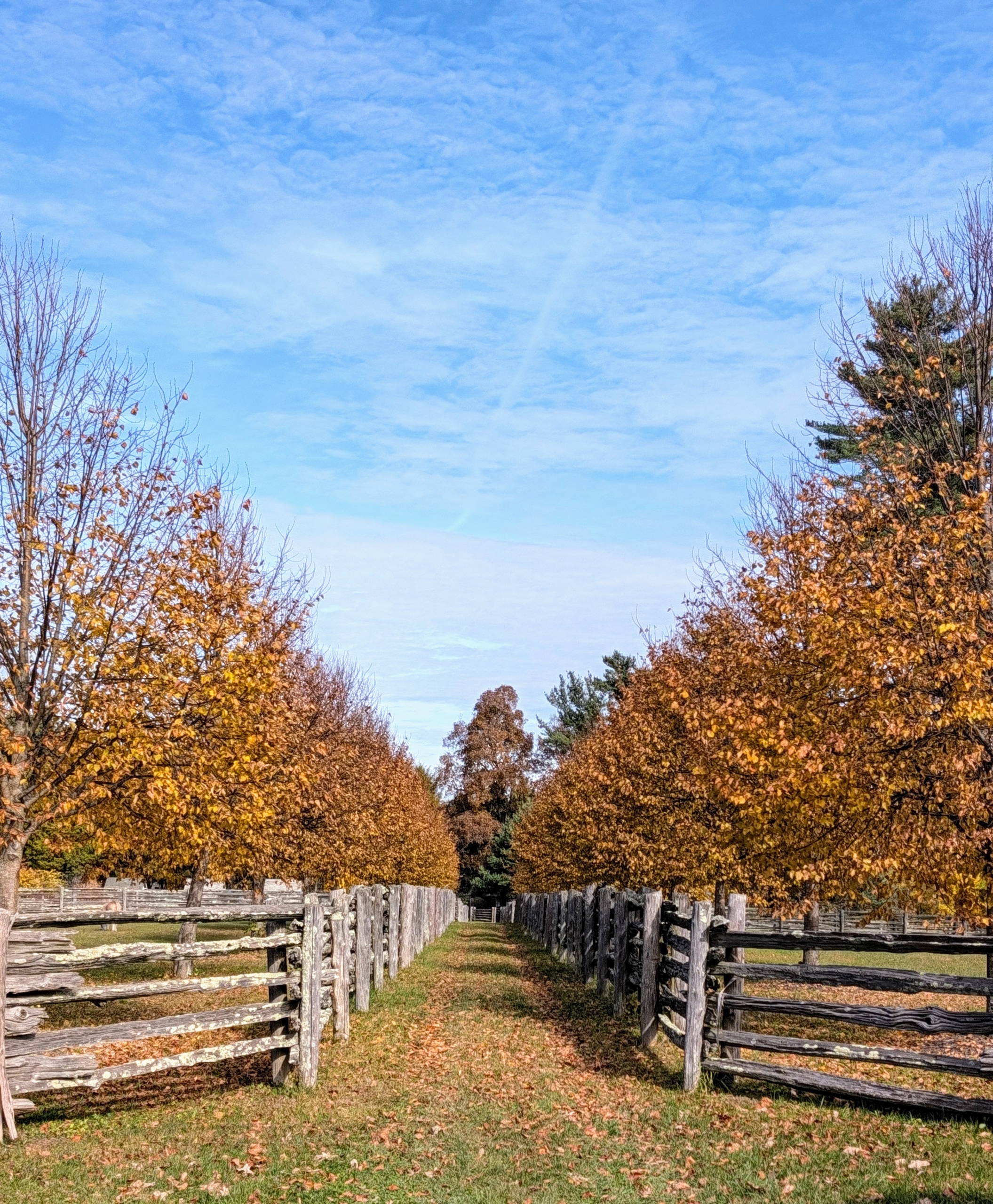
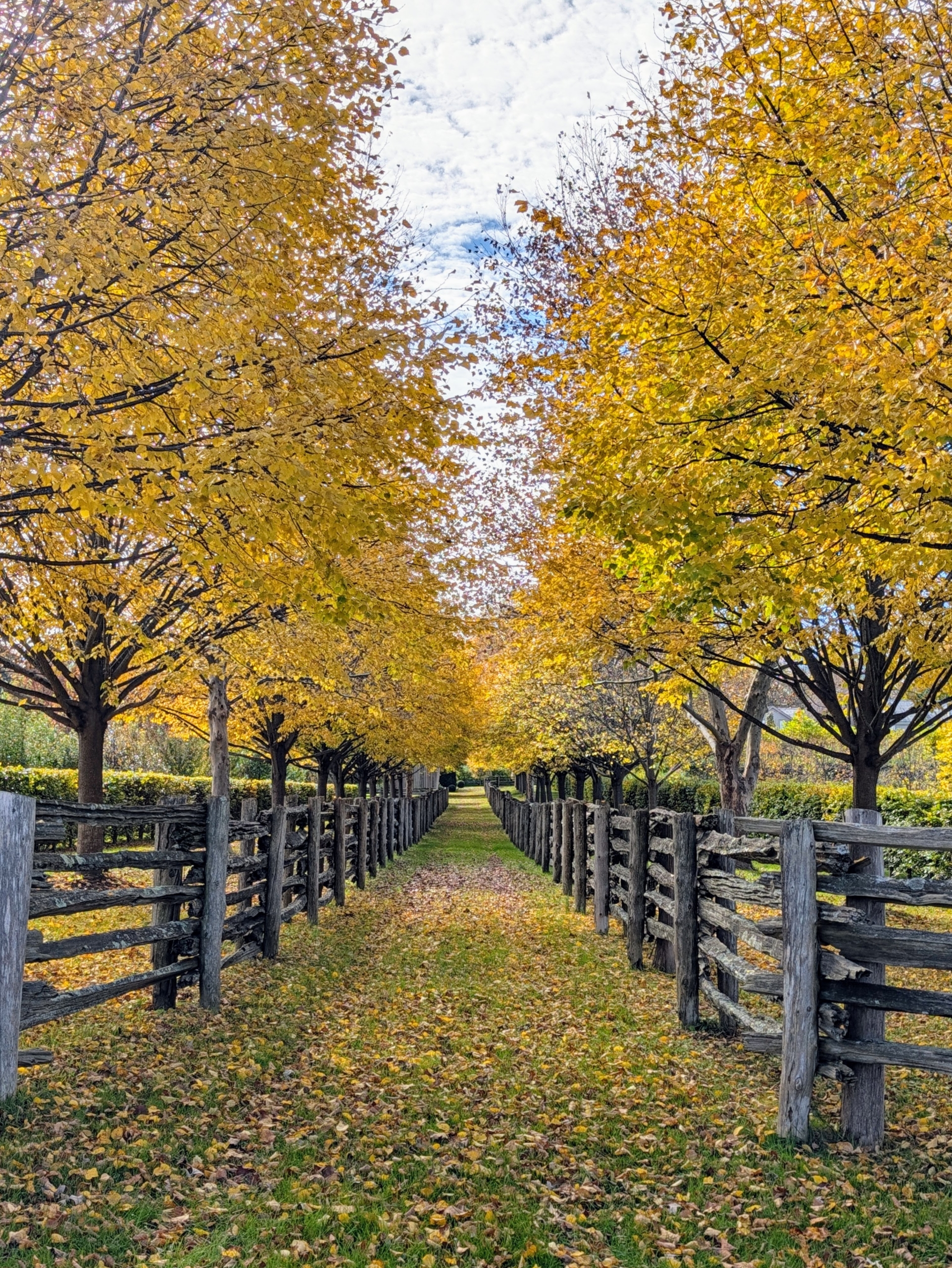
- This linden allée extends from my long pergola down to my chicken coops. These lindens can be seen from so many areas of the farm.
-
- Lindens, Tilia, are medium to large shade trees that are easy to maintain and beautiful in any landscape. They turn pale green to pale yellow in autumn.
-
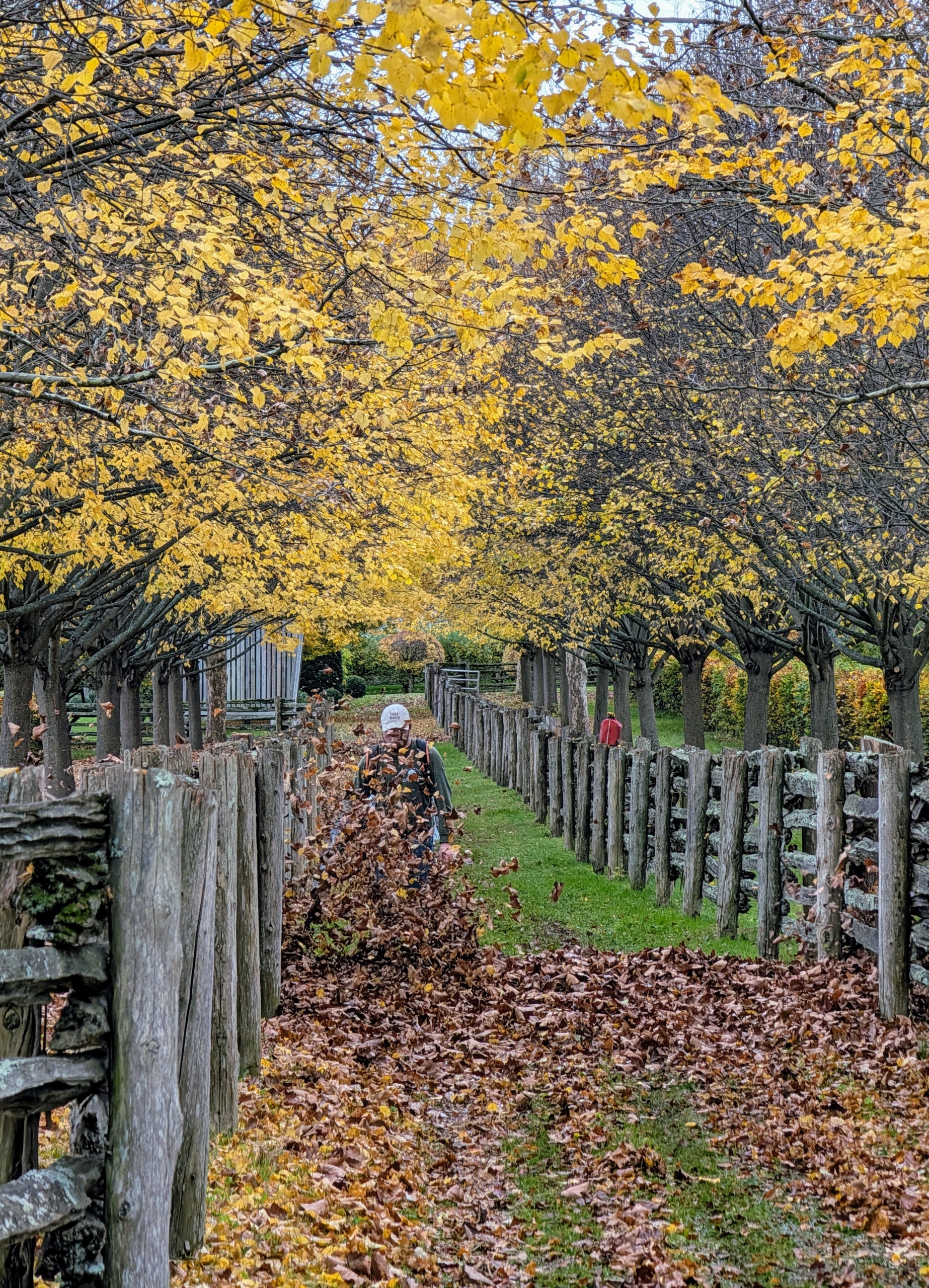
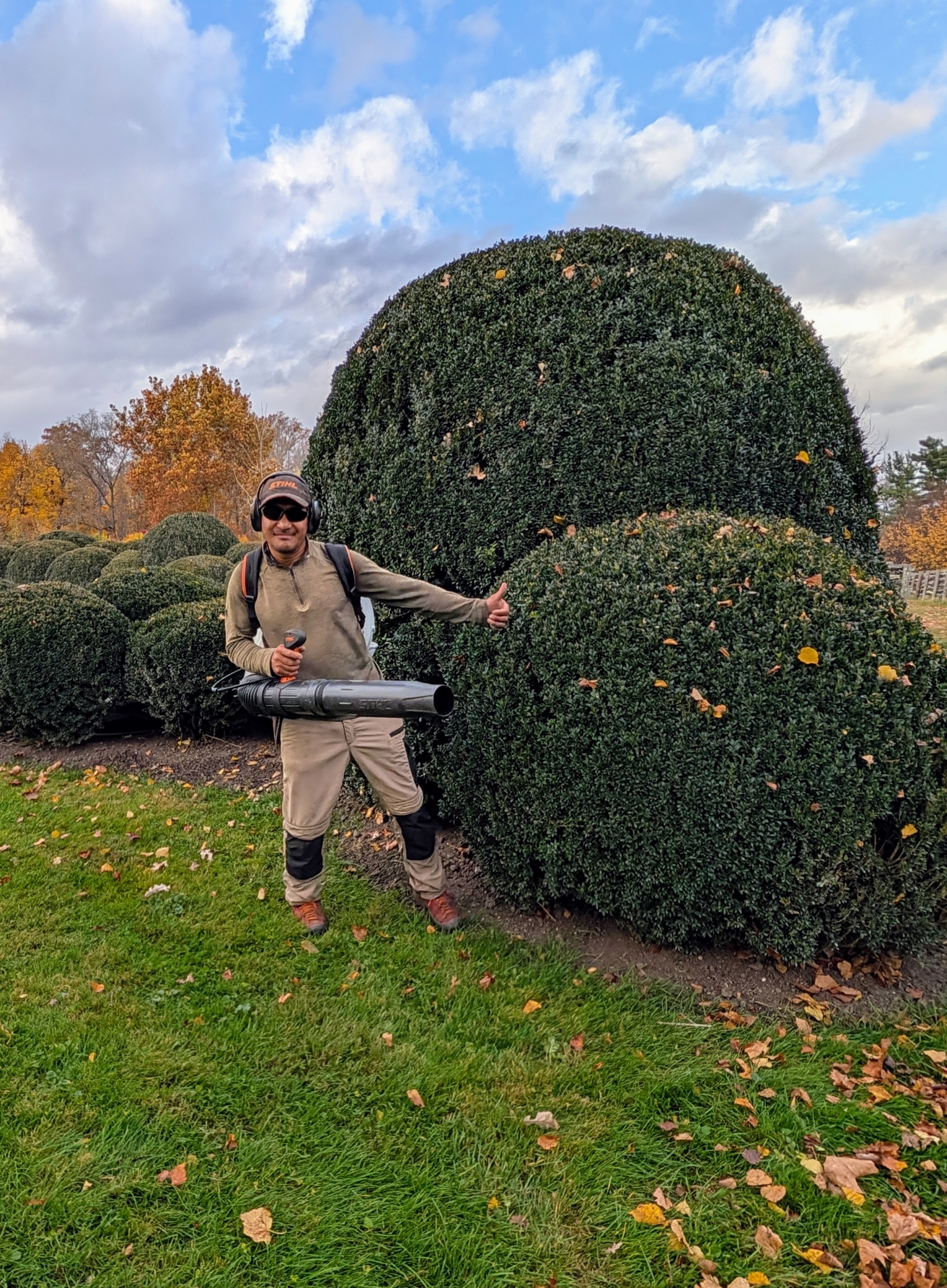
- My outdoor grounds crew has begun the tedious task of blowing all the fallen leaves.
-
- Here’s Pasang blowing leaves around my Boxwood Allée.
-

- My crew has long used STIHL’s strong backpack blowers. The 800 Magnum series is the most powerful – efficiently removing leaves, clippings, and other debris from large areas.

-
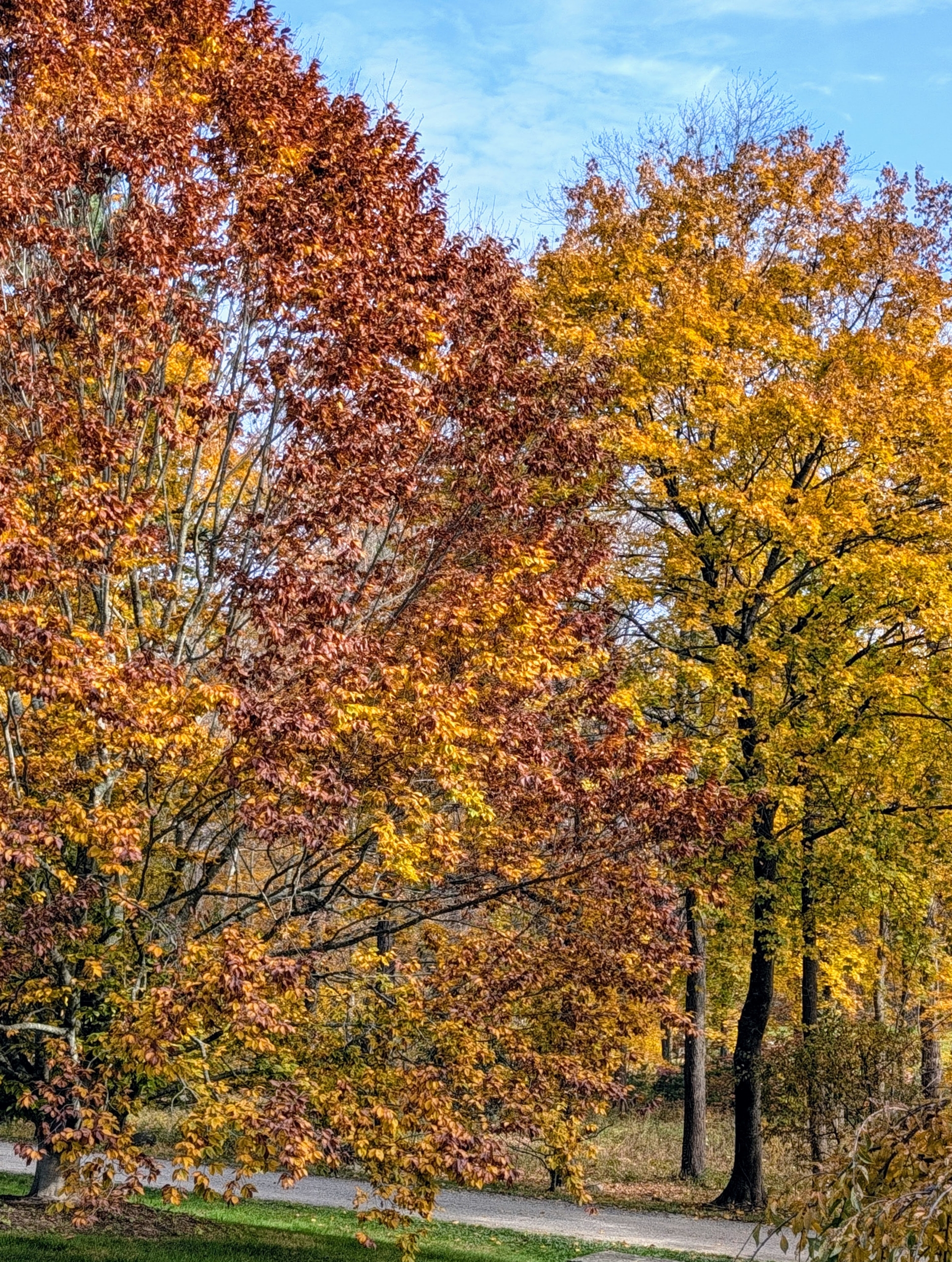
- Here are the late-season leaves of the American Beech. American beech is native to the eastern United States and Canada. American beech trees turn golden yellow to warm bronze in fall, with many leaves fading to pale tan and often remaining on the branches through winter.
-
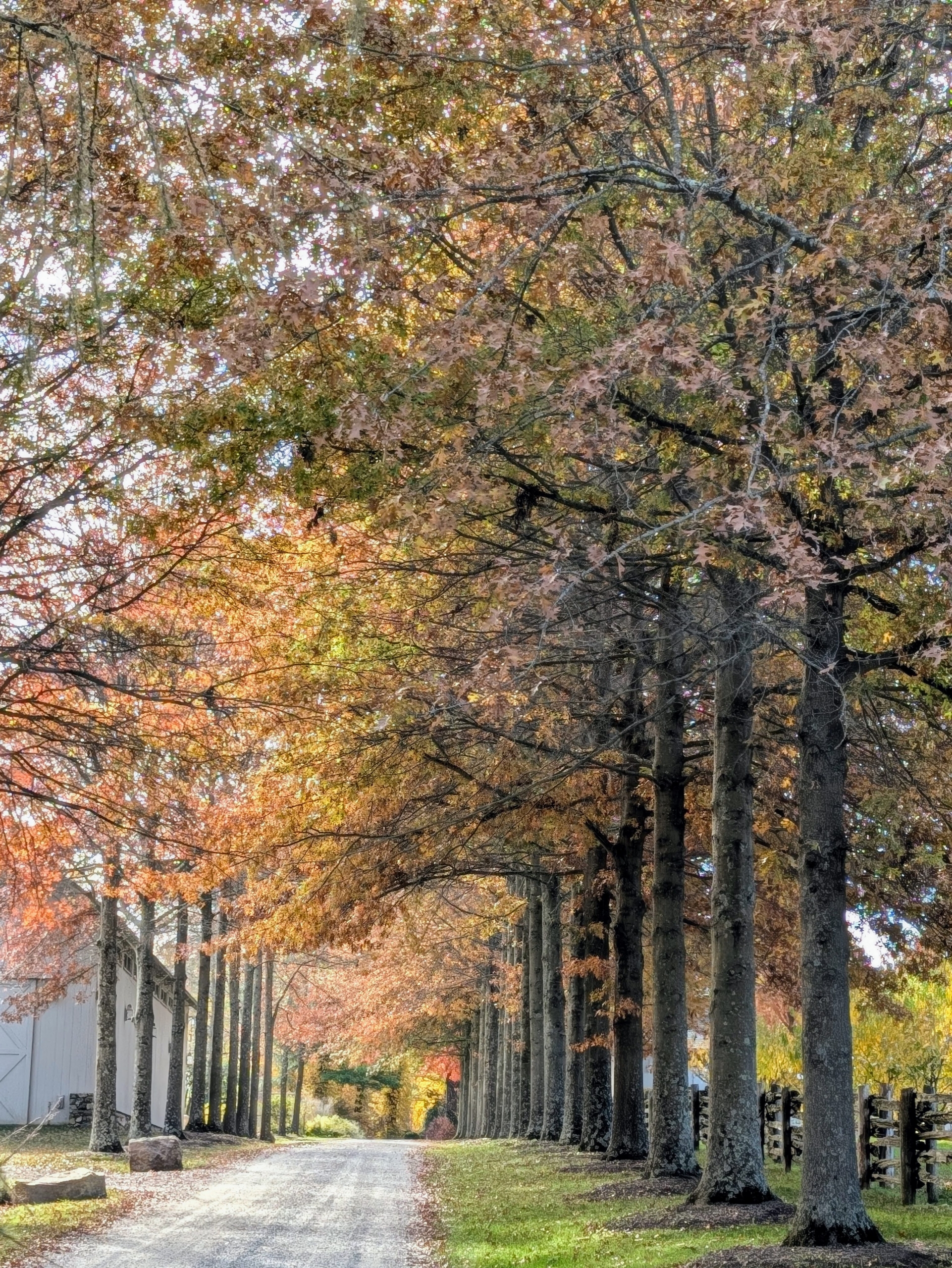
- And here is a view of my majestic pin oaks. The pin oak allée is the first allée guests see when entering my farm. These trees are tall and impressive. Pin oaks, Quercus palustris, are popular landscape trees because they are fast-growing and easy to maintain.
-
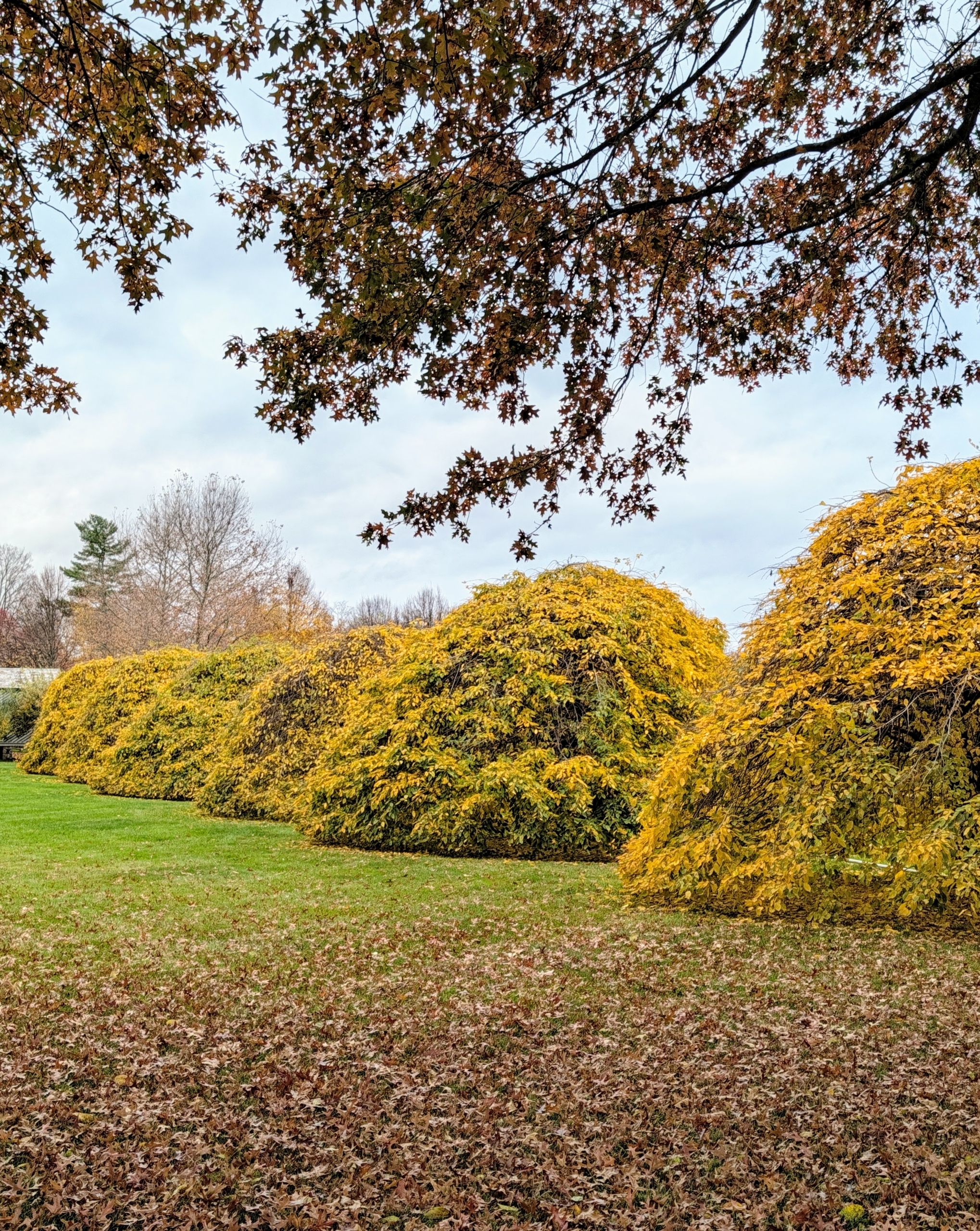
- In fall, rare weeping European hornbeams, Carpinus betulus ‘Pendula’, display a striking golden-yellow foliage that contrasts beautifully with their graceful, arching branches.
-
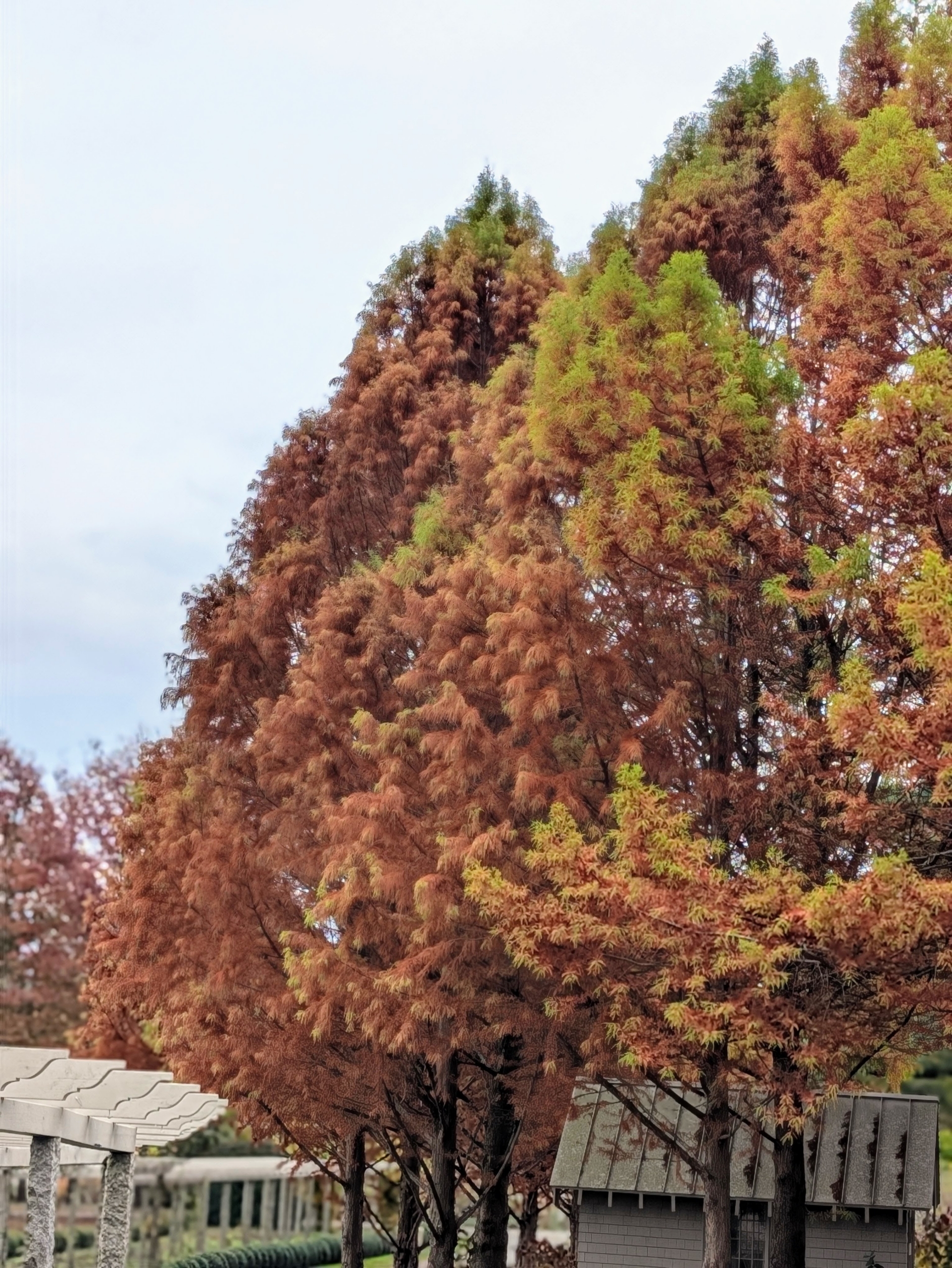
- Across from my winding pergola is a row of towering bald cypress, Taxodium distichum – a deciduous conifer. These trees change colors to rusty orange, copper, bronze, cinnamon brown, and sometimes fiery orange before shedding the needles.
-
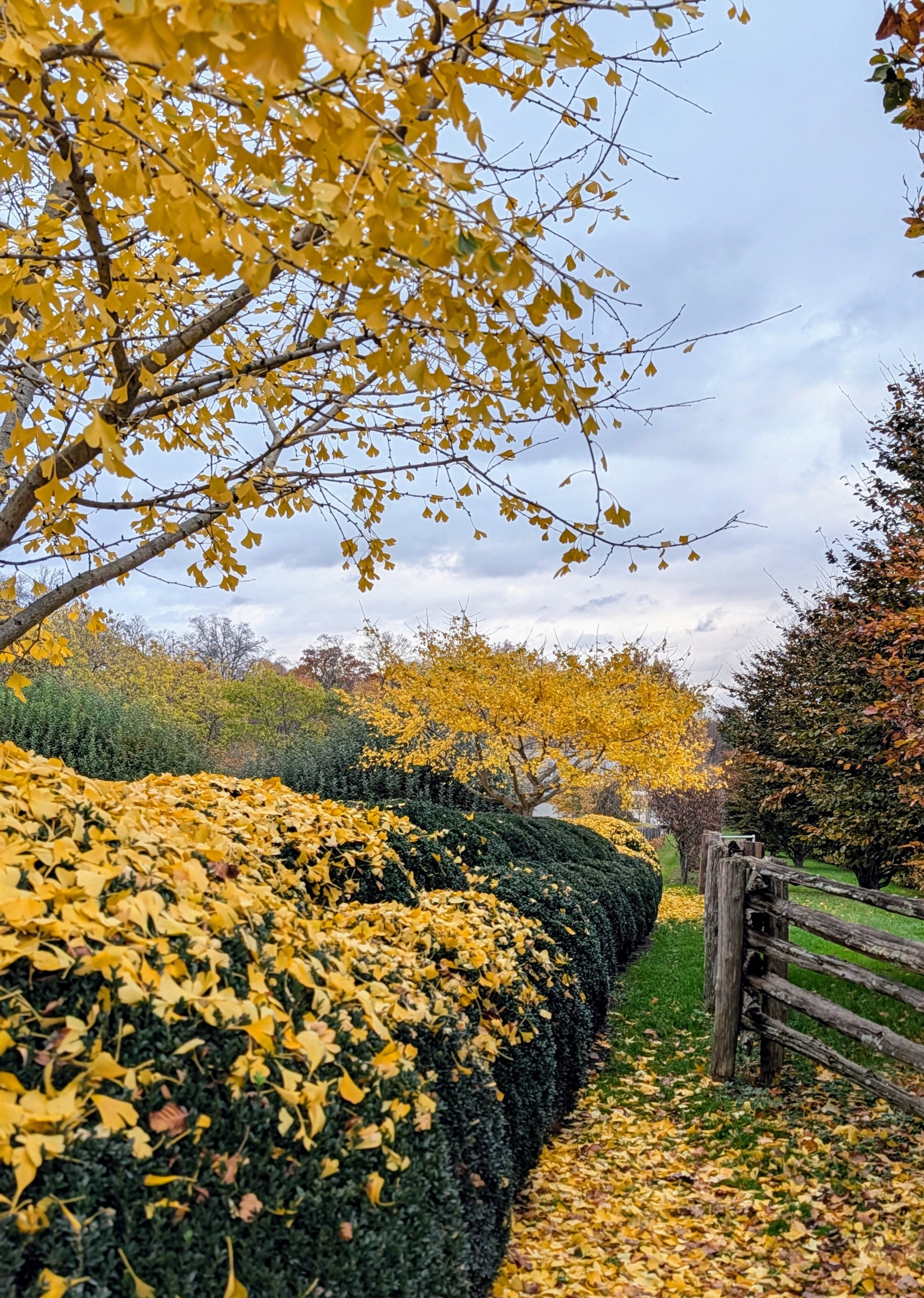
- Ginkgos lose most of their leaves at the same time because of the way their petioles, known as stems, work. As the weather gets colder, the petioles get what’s called scars to protect the tree from disease after the leaves fall. For most trees, that happens on a leaf-by-leaf basis. But in the case of the ginkgo, all the scars form mysteriously on the same day.
-
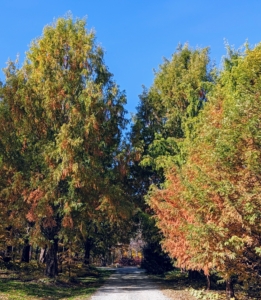
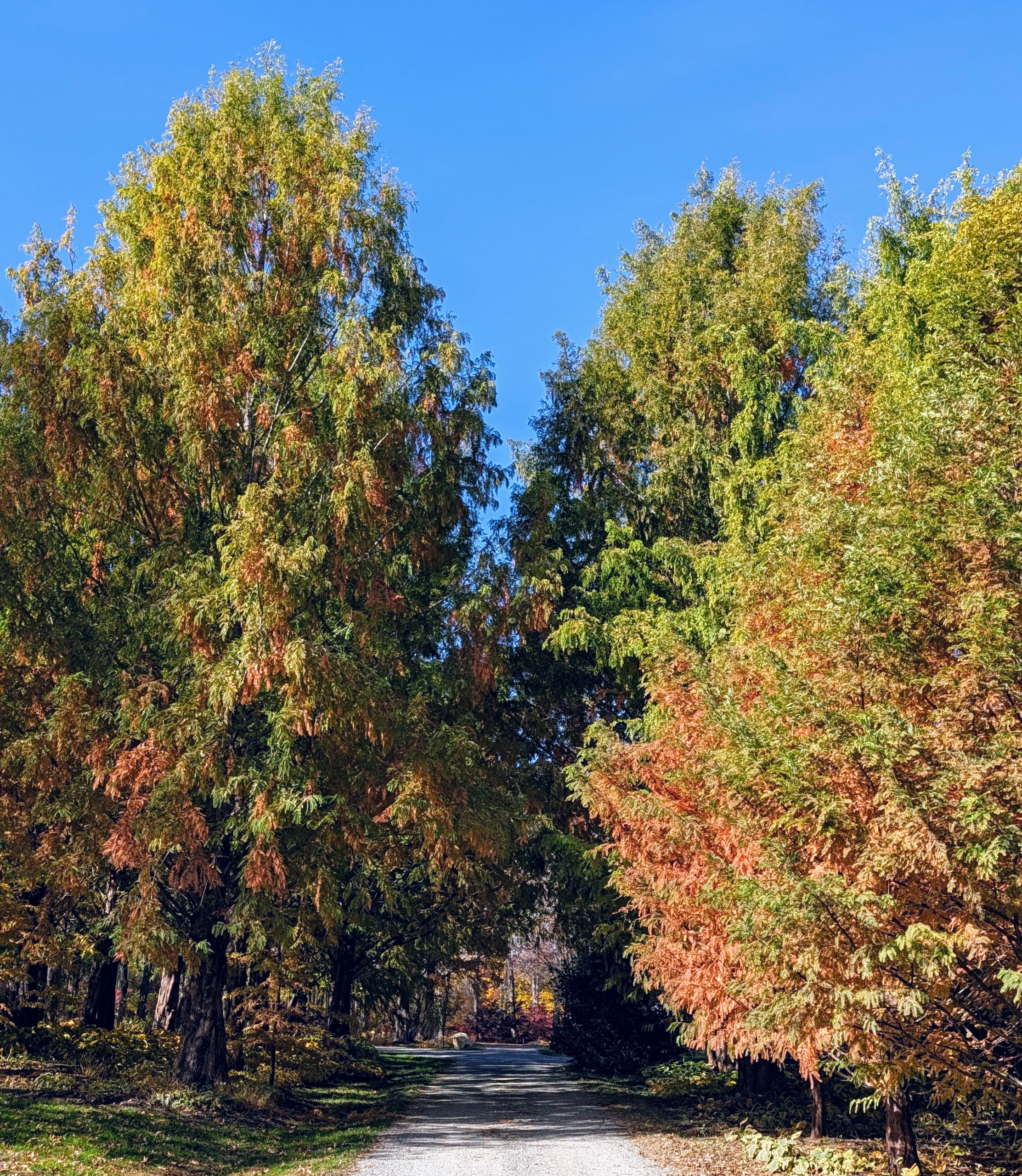
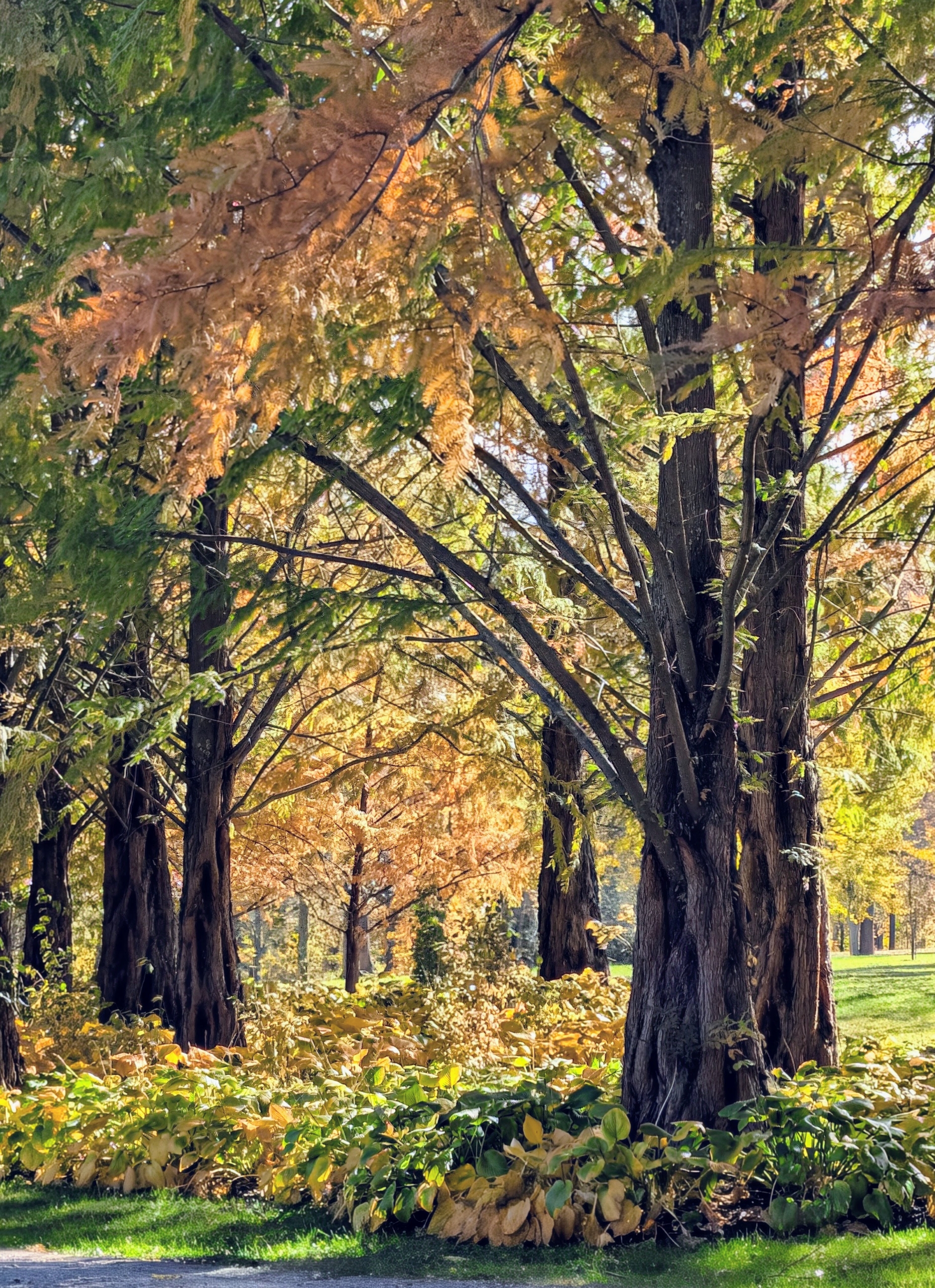
- Down behind my chickens I have a grove of dawn redwoods, Metasequoia. These trees are also changing color. In autumn, these dawn redwood needles are different shades of golden-brown.
-
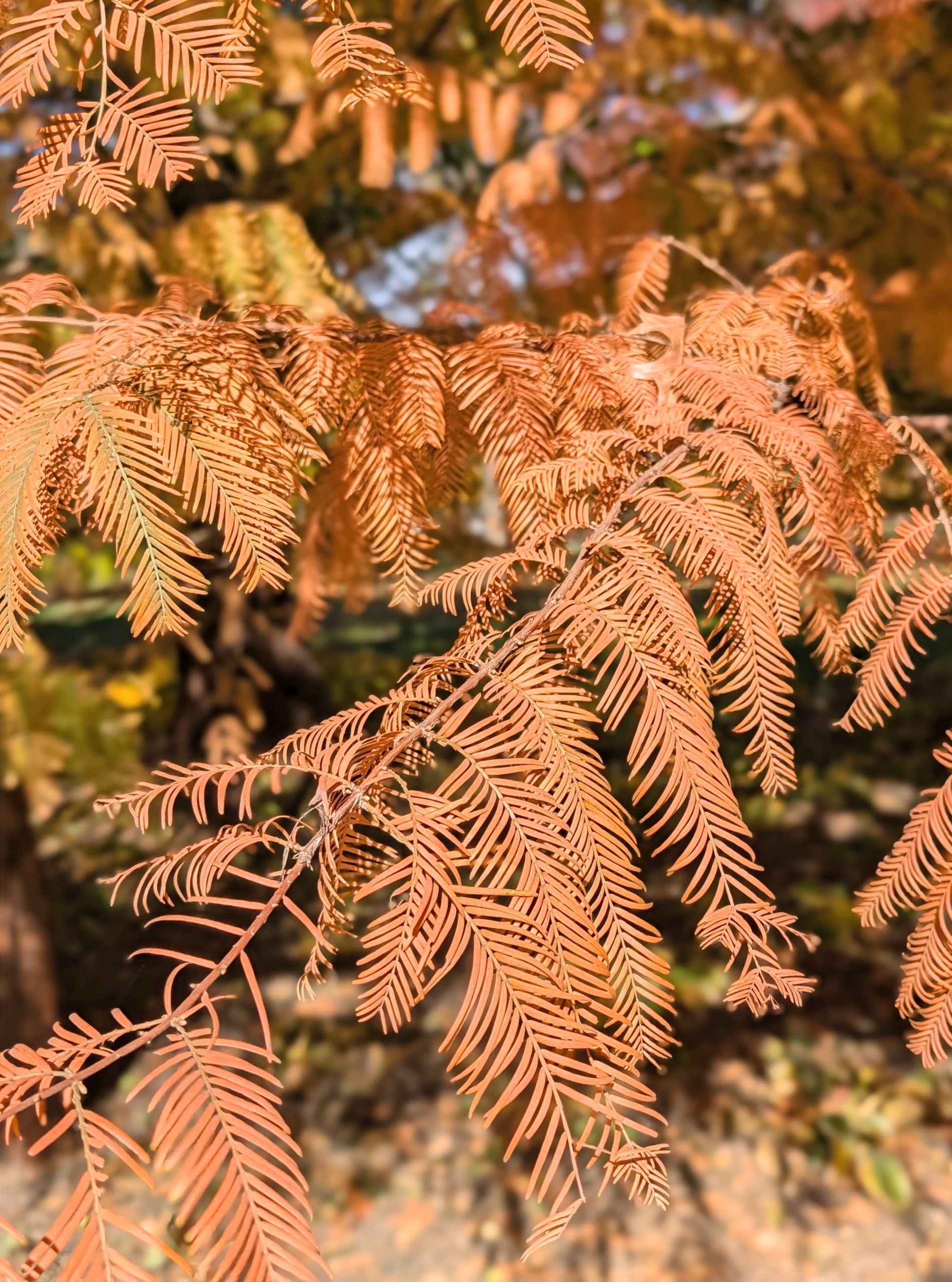
- Dawn redwoods, Metasequoia, have feathery, fine-textured needles that are opposite each other and approximately a half-inch long. Don’t confuse them with the bald cypress needles, which grow alternately.
-
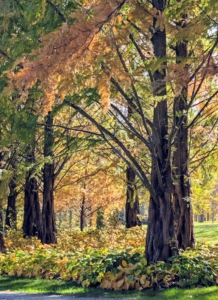
- What’s even more interesting are the trunks of the Metasequoia. They are fluted — meaning they have deep vertical grooves or ridges running up the main stems. These trunks also have broad, flaring shoulders that provide stability at the base.
-
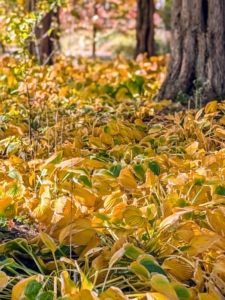
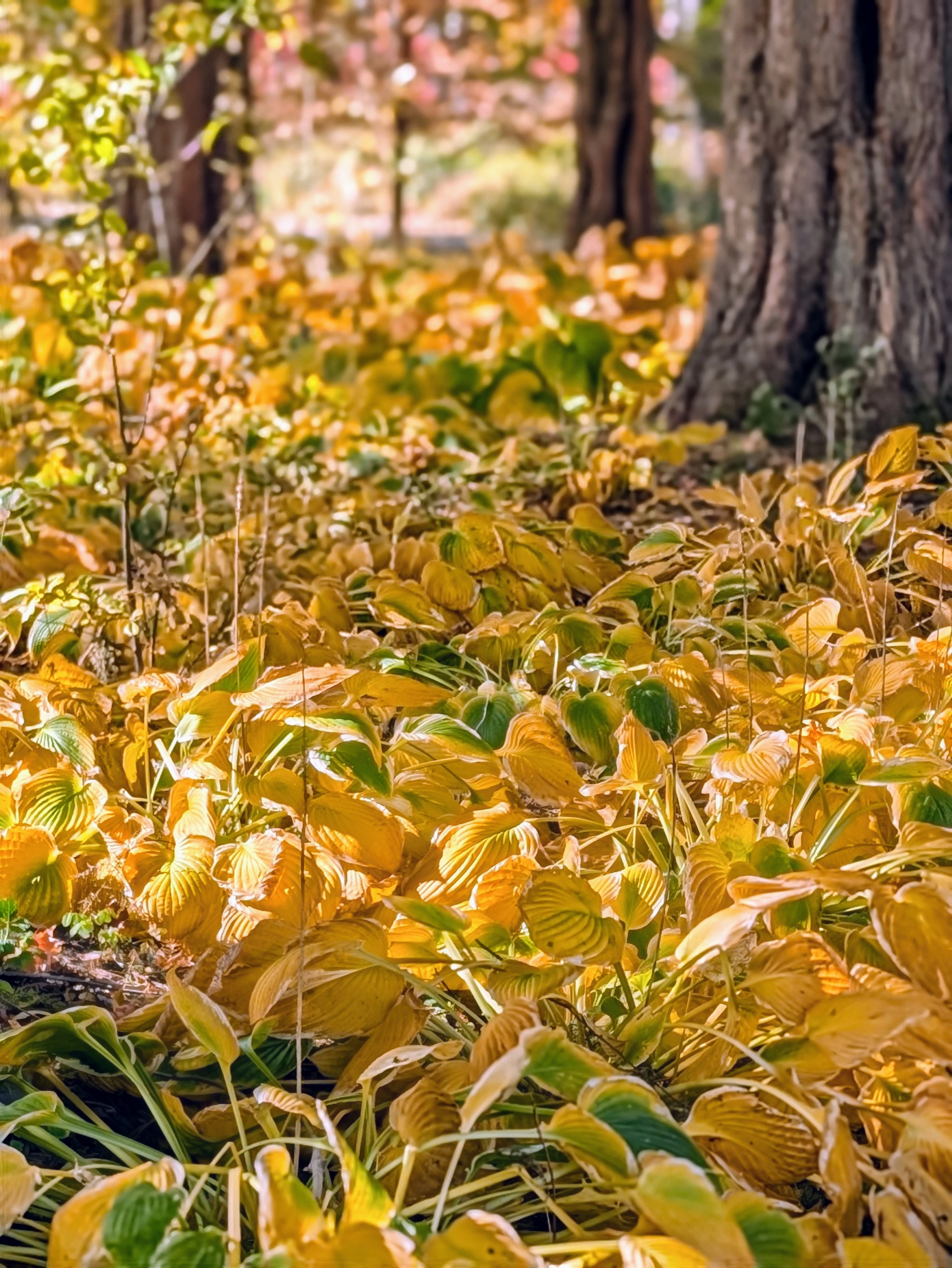
- Beneath the Metasequoia are my hostas, which typically turn shades of yellow or gold, with foliage gradually softening and collapsing as they enter dormancy.
-
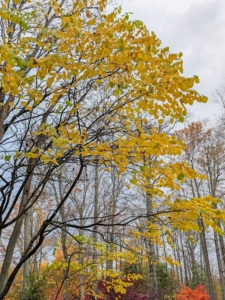
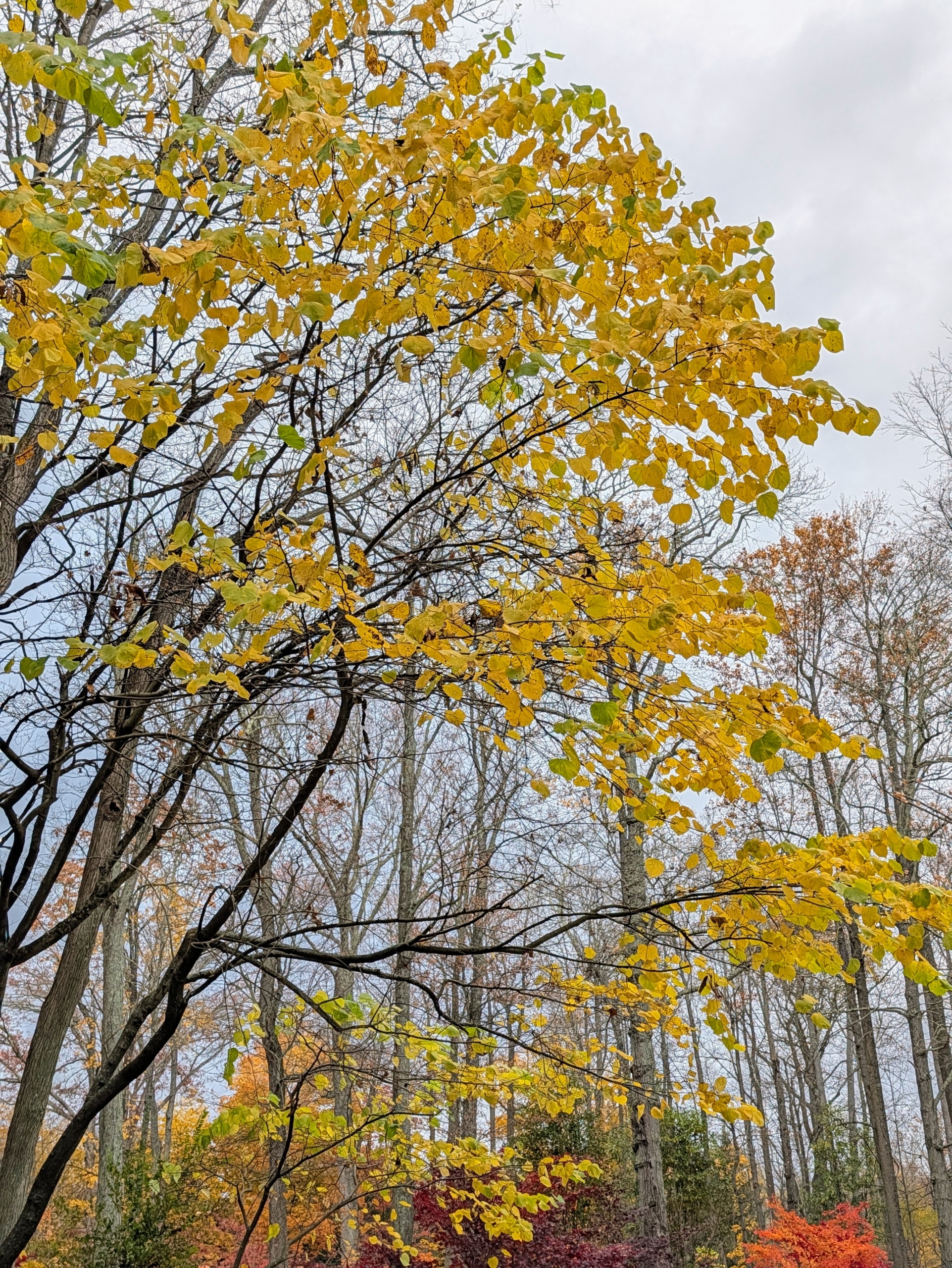
- This is one of my many Eastern redbud trees. In fall, redbud trees, Cercis canadensis, turn bright golden‑yellow, sometimes with orange or red tones.
-
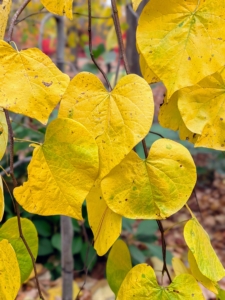
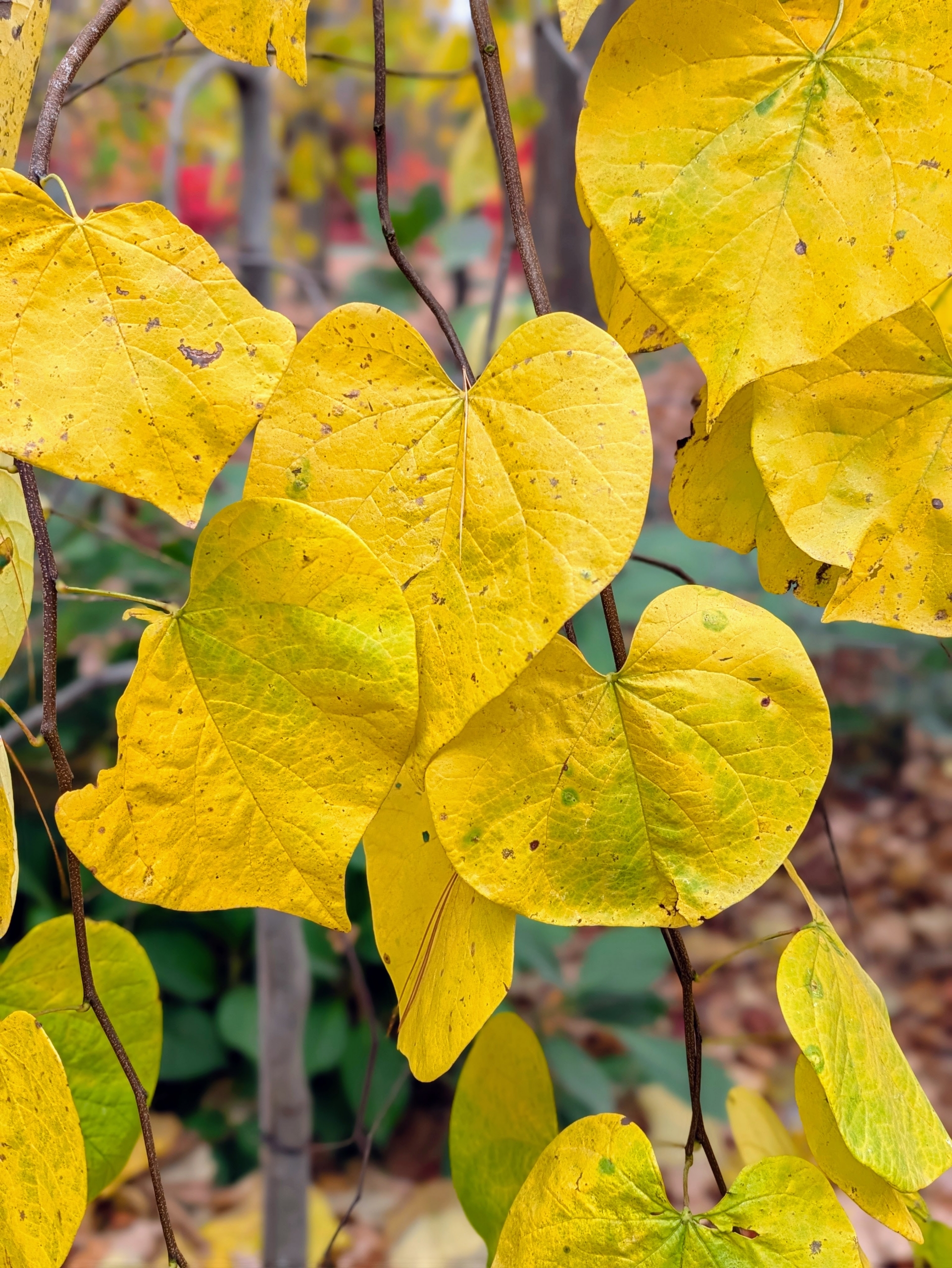
- Their big heart‑shaped leaves shift as chlorophyll breaks down. Here, one can see the changing colors on the leaves.
-
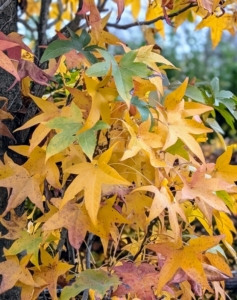
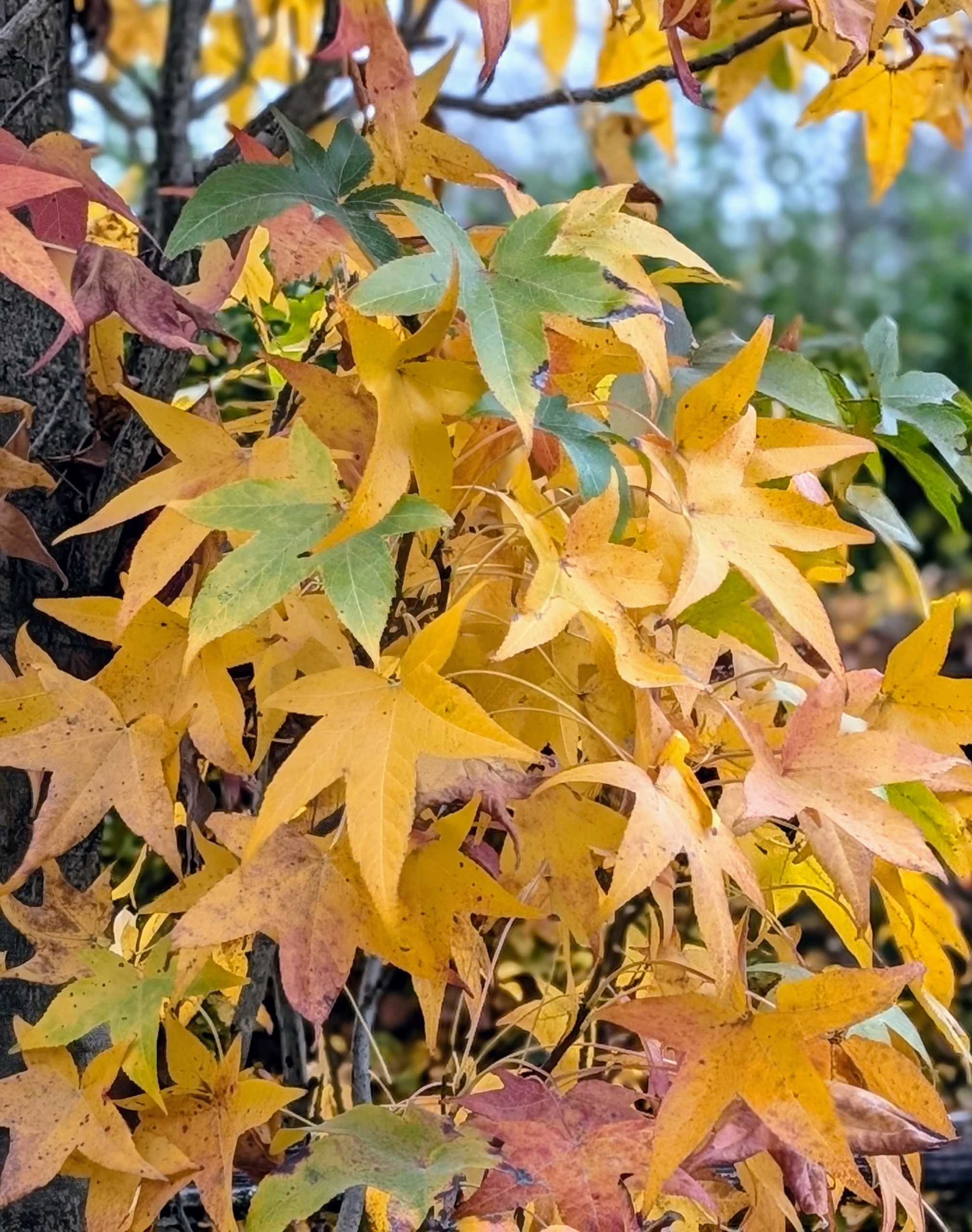
- Here’s an autumn leaf from the sweetgum tree, Liquidambar styraciflua. The sweetgum’s glossy green, star-shaped leaves turn bold shades of gold, red, and orange in fall.
-
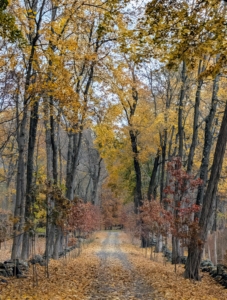
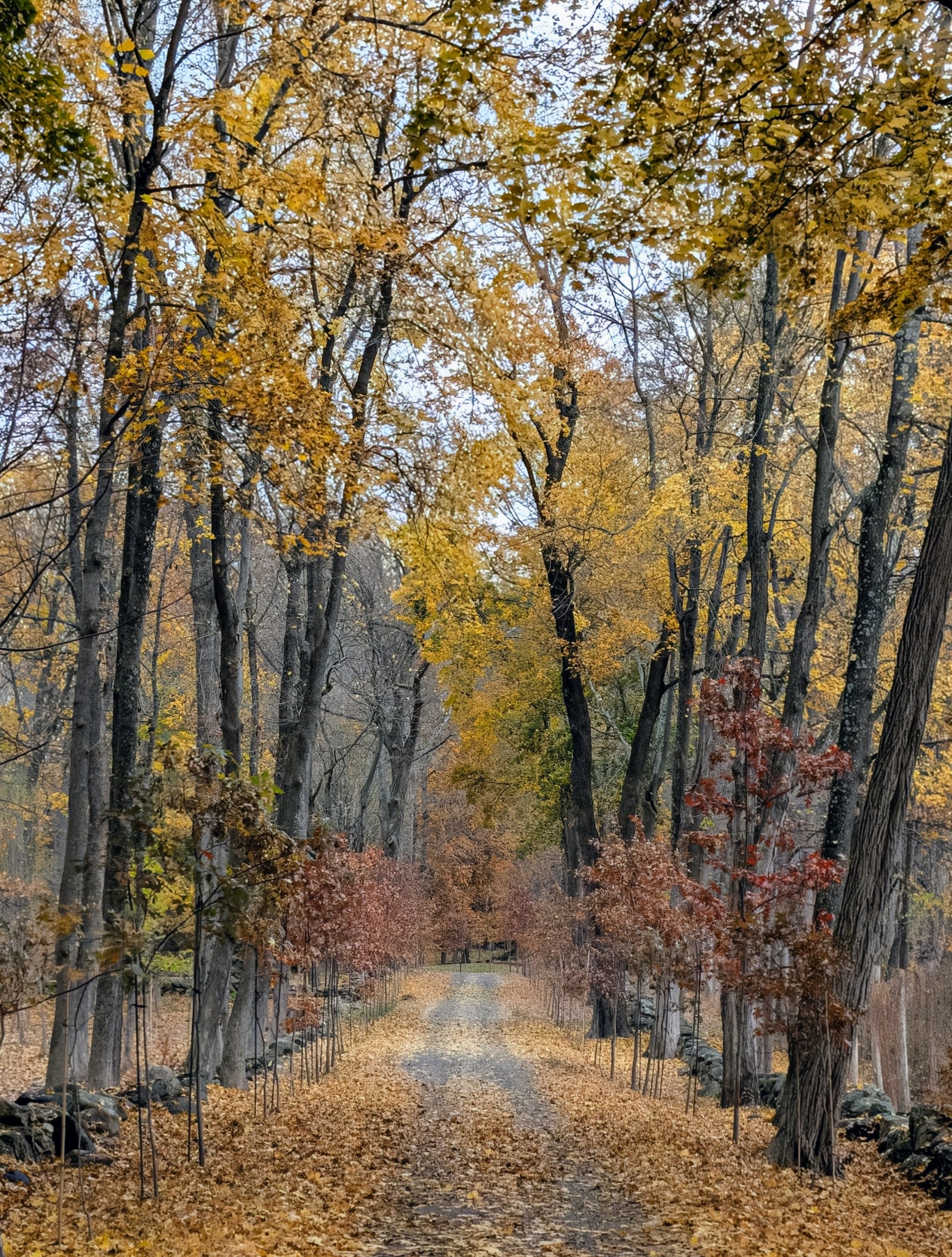
- And, look closely beneath the towering maples at this newer allée of pin oaks I planted several years ago – it’s doing great. 104 pin oaks are lined up along both sides of this carriage road at the far end of my farm. In time, these trees will grow to 60 or 70 feet. Soon, after all the leaves have changed and fallen, the trees will be bare and dormant for the winter. This is when they conserve energy by stopping active growth while roots remain active, absorbing water and nutrients from the soil, and preparing for new growth come spring.
This story originally appeared on Martha Stewart Blog

