


November 17, 2026
A Guest Blog from a Visit to Juniper Level Botanic Garden
Whenever I travel for business, I try to set aside a little time to visit local gardens, museums, or shops. It’s a great way to learn more about an area’s history, culture, and natural environments – I encourage others to do the same.
Last week, a photo shoot brought our own Ryan Mesina, Marquee Brands’ VP of Creative Services, to High Point, North Carolina. While there, Ryan took the opportunity to visit Juniper Level Botanic Garden and Plant Delights Nursery in nearby Raleigh. Established in 1986 by renowned plantsman, Tony Avent, Juniper Level Botanic Garden is a 10-acre educational, research, and display garden dedicated to ex-situ plant conservation, plant exploration, breeding, and propagation. The property is also home to Plant Delights Nursery, a mail-order nursery offering an impressive selection of plants.
Enjoy his photos.
-
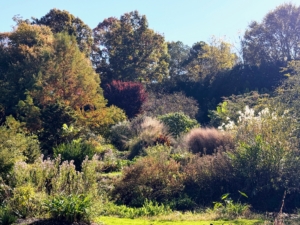
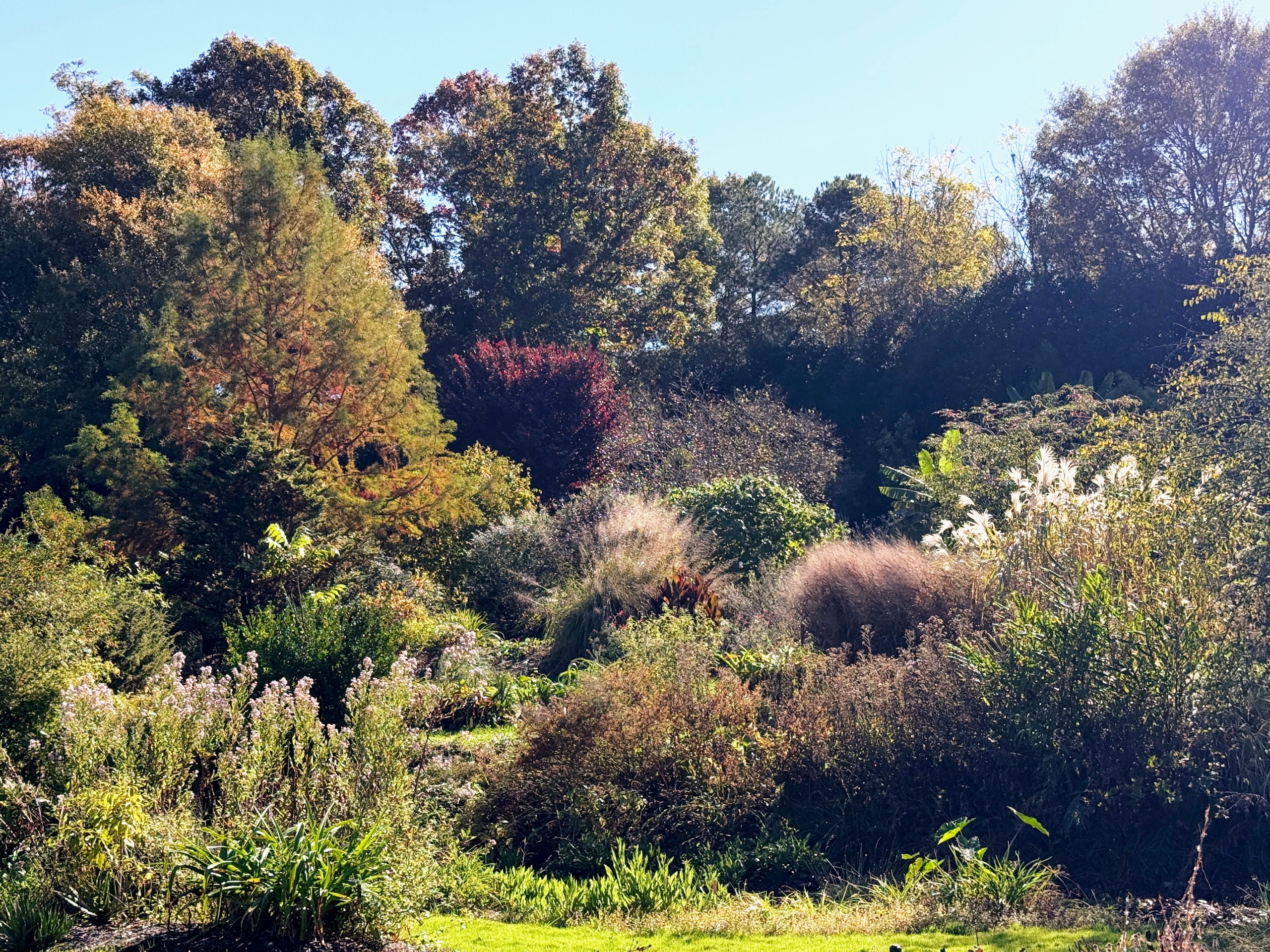
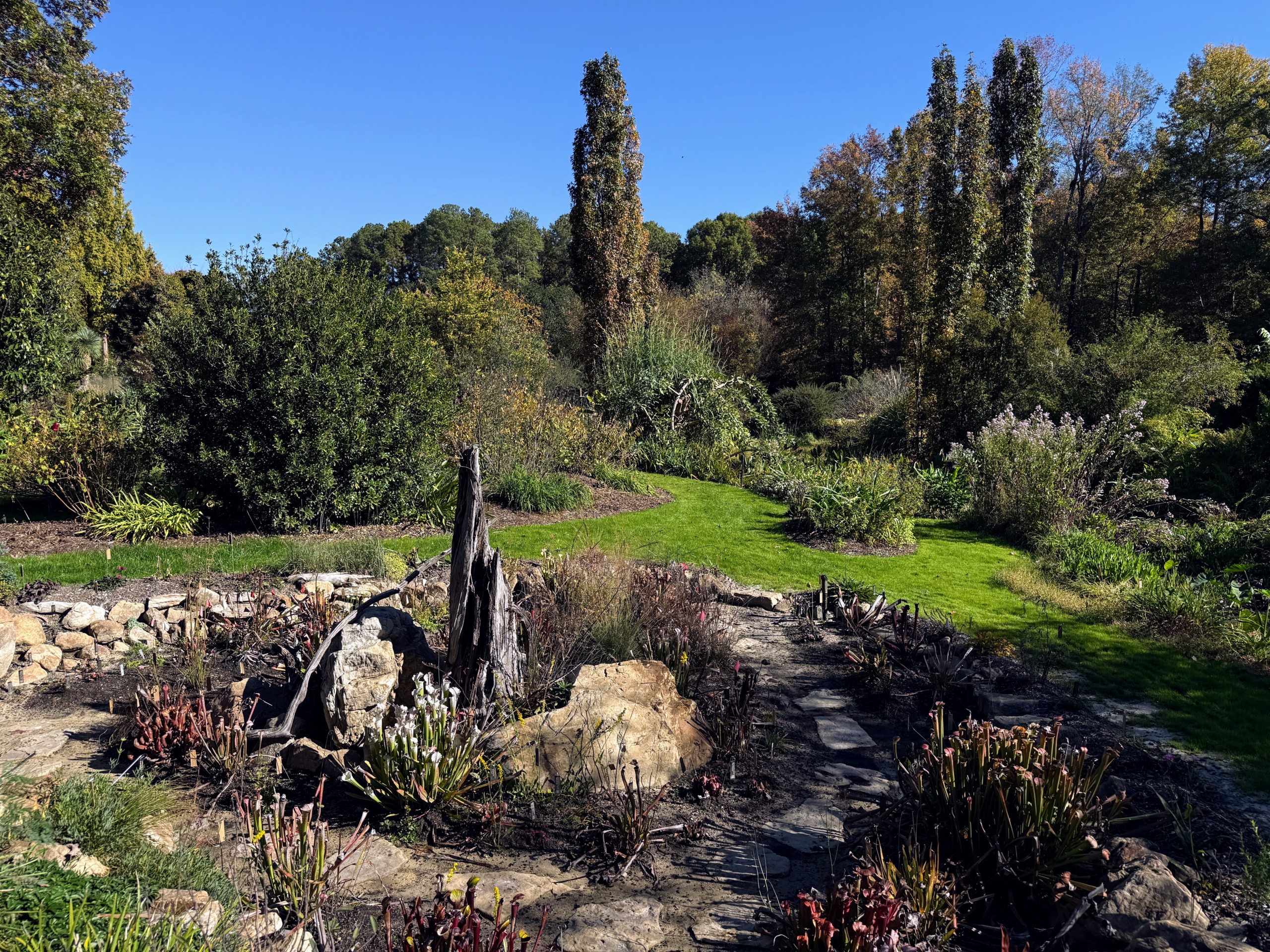
- Juniper Level Botanic Garden maintains more than 27 thousand different plants across more than 10 acres of public display gardens. Shown here is a layered view of their Souto Garden, home to a network of 17 interconnected rain gardens, a dryland berm, and rock bog.
-
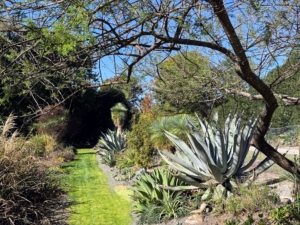
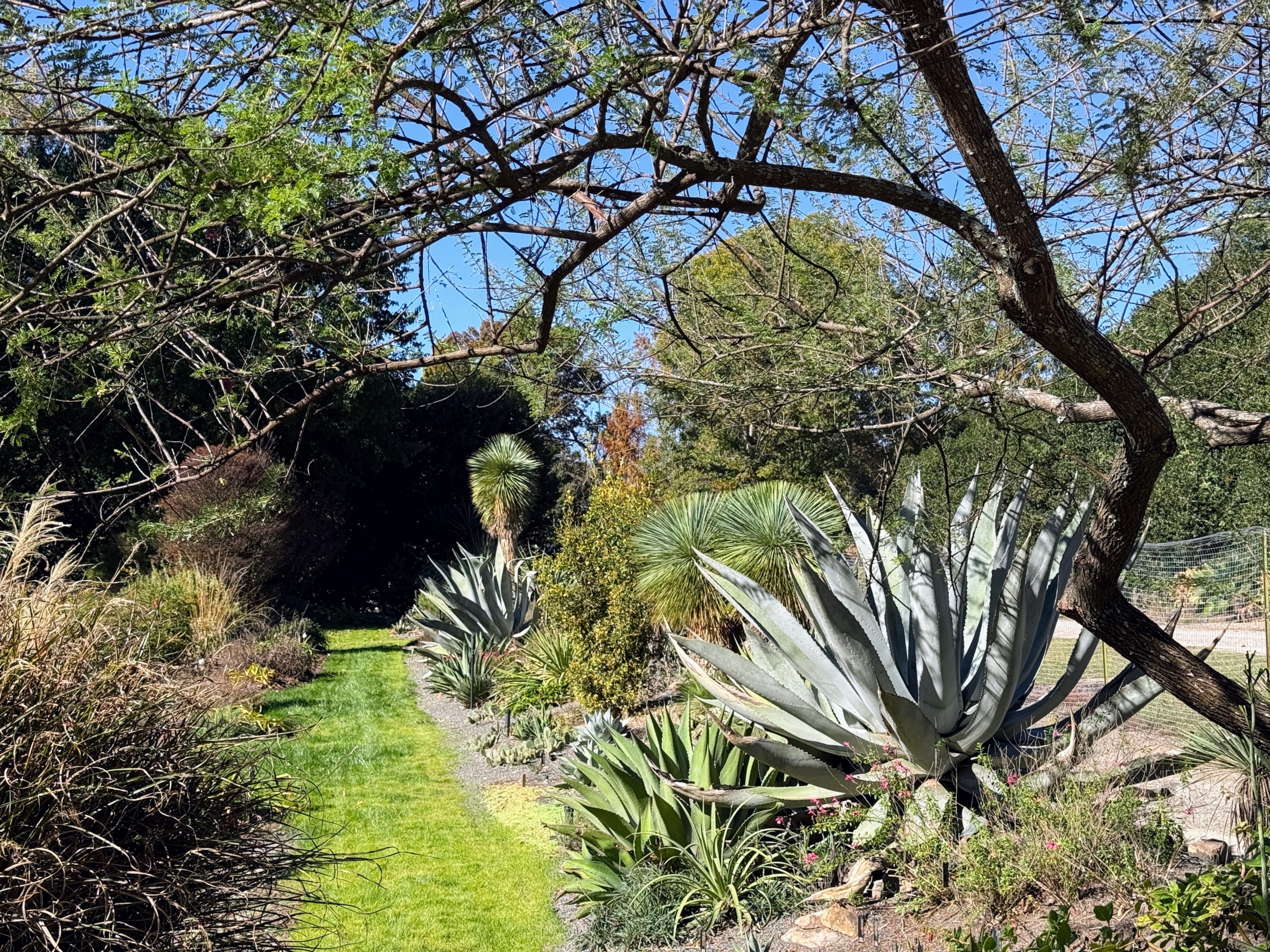
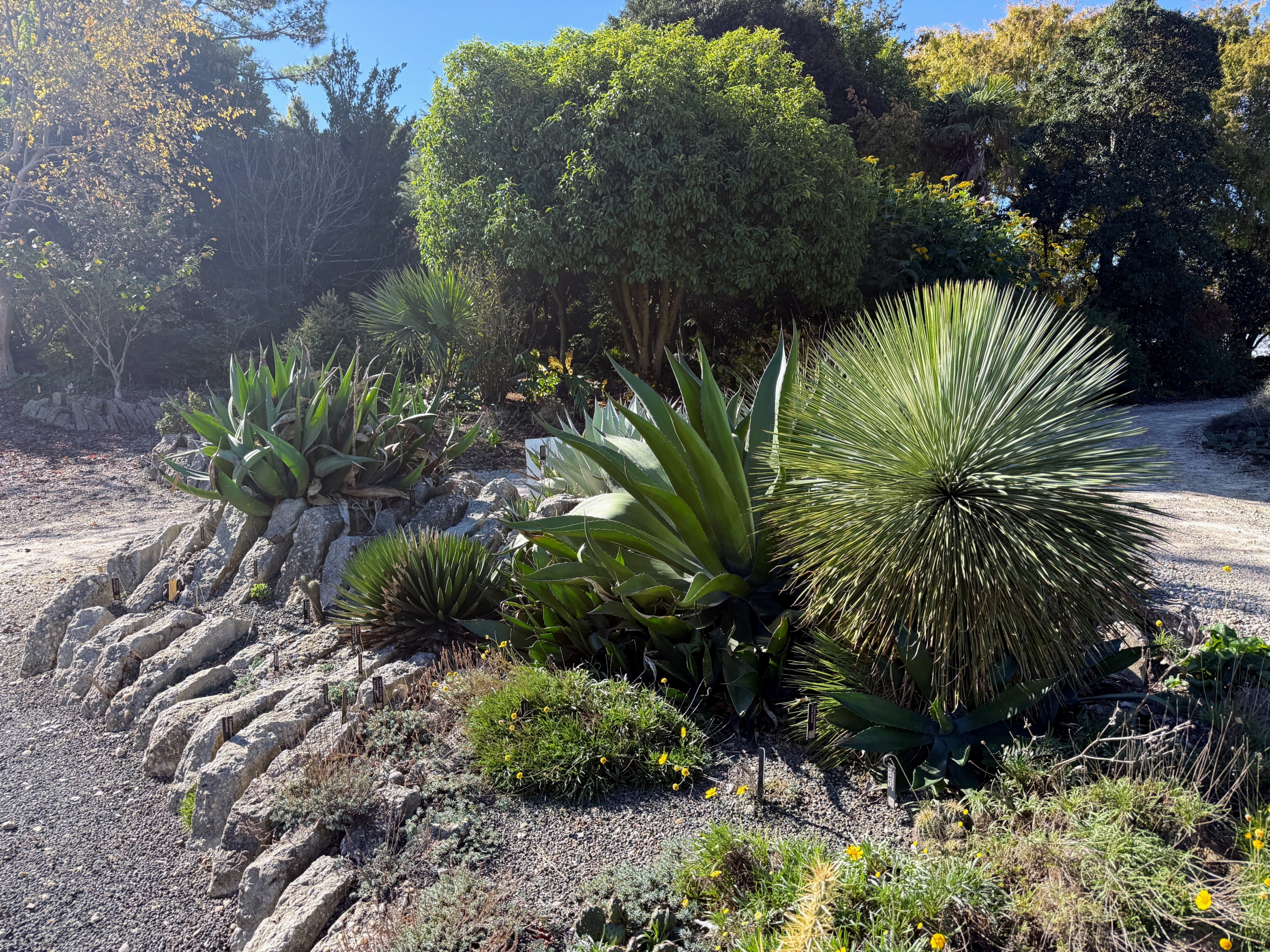
- Raleigh is in Zone 7b/8a so, although there were many plants familiar to Ryan and his 5b garden in upstate New York, there were also many more that were new, or that he only saw in pots. For example, these large agaves growing in the Souto Garden’s dryland berm. Ryan remembered my large collection of agaves at my Bedford, New York farm and up at Skylands, my home in Maine.
-
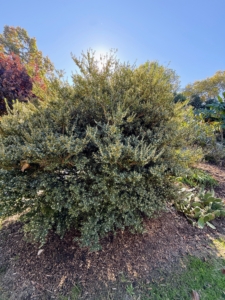
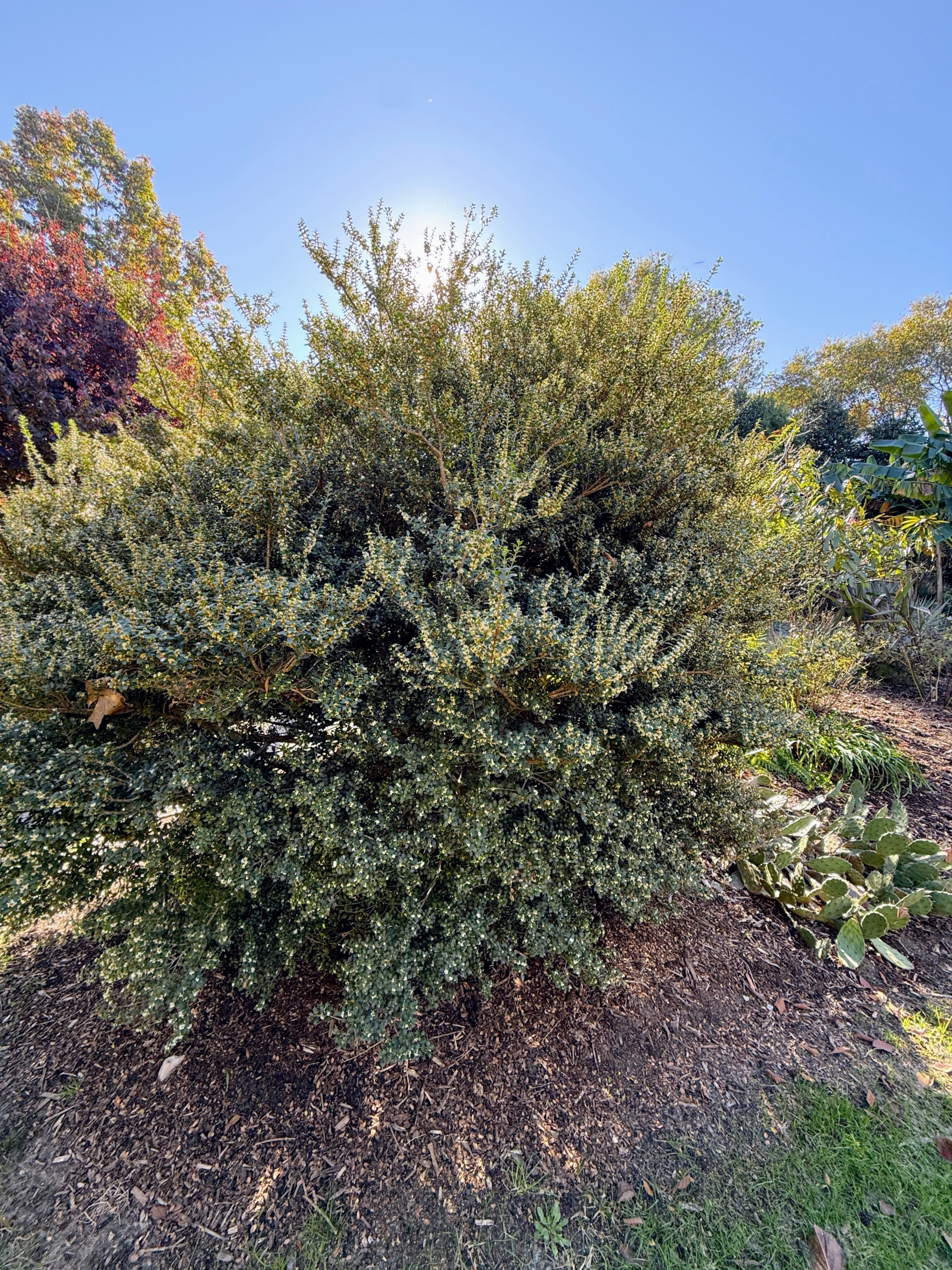
- This plant, Osmanthus heterophyllus ‘Kaori Hime’, caught Ryan’s attention with its sweet floral scent. He says it made him think of spring, until he realized it was mid-November.
-
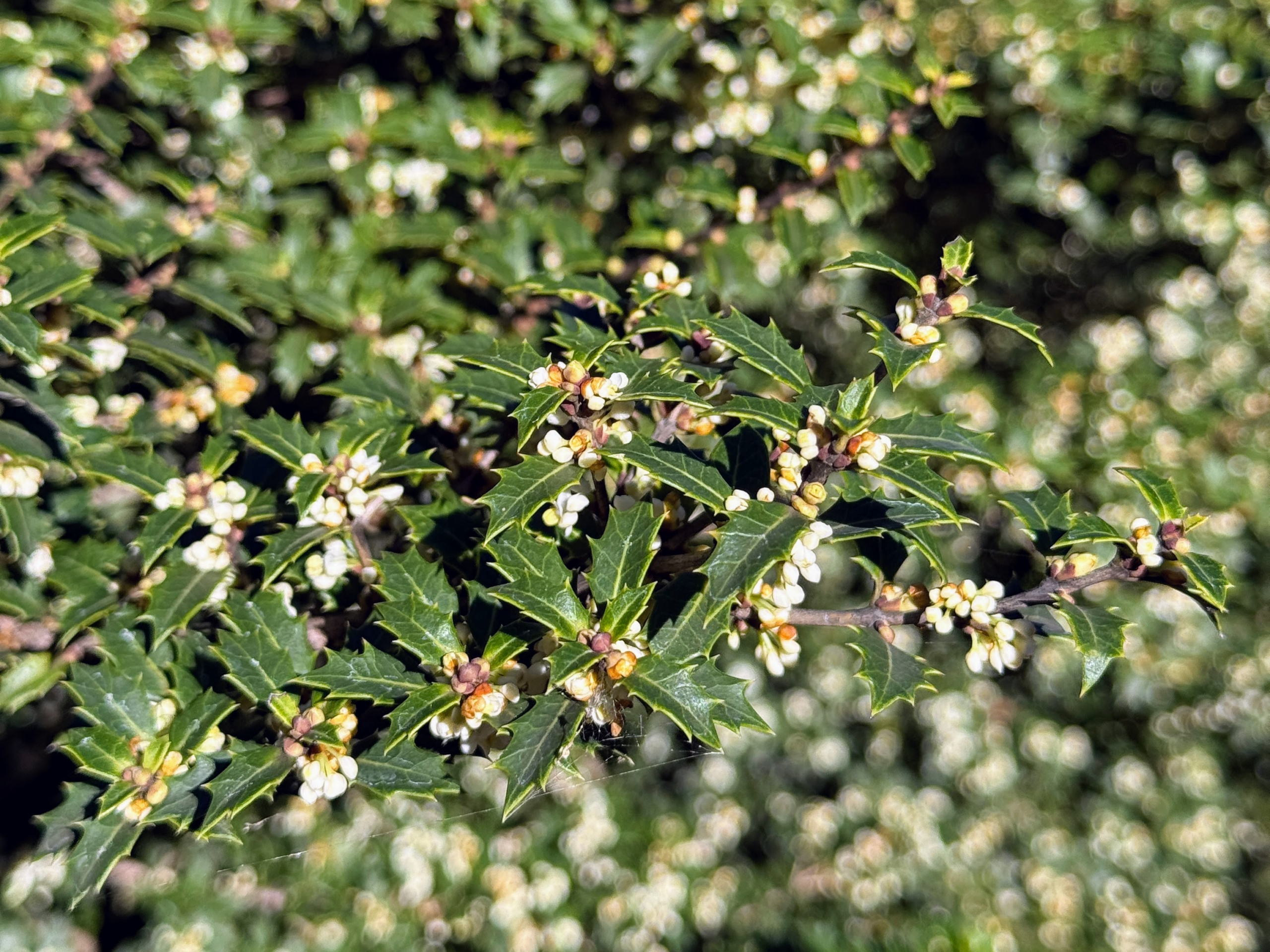
- Here’s a closeup of its diminutive but abundant flowers and buds.
-
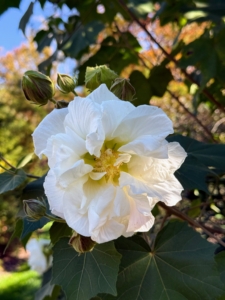
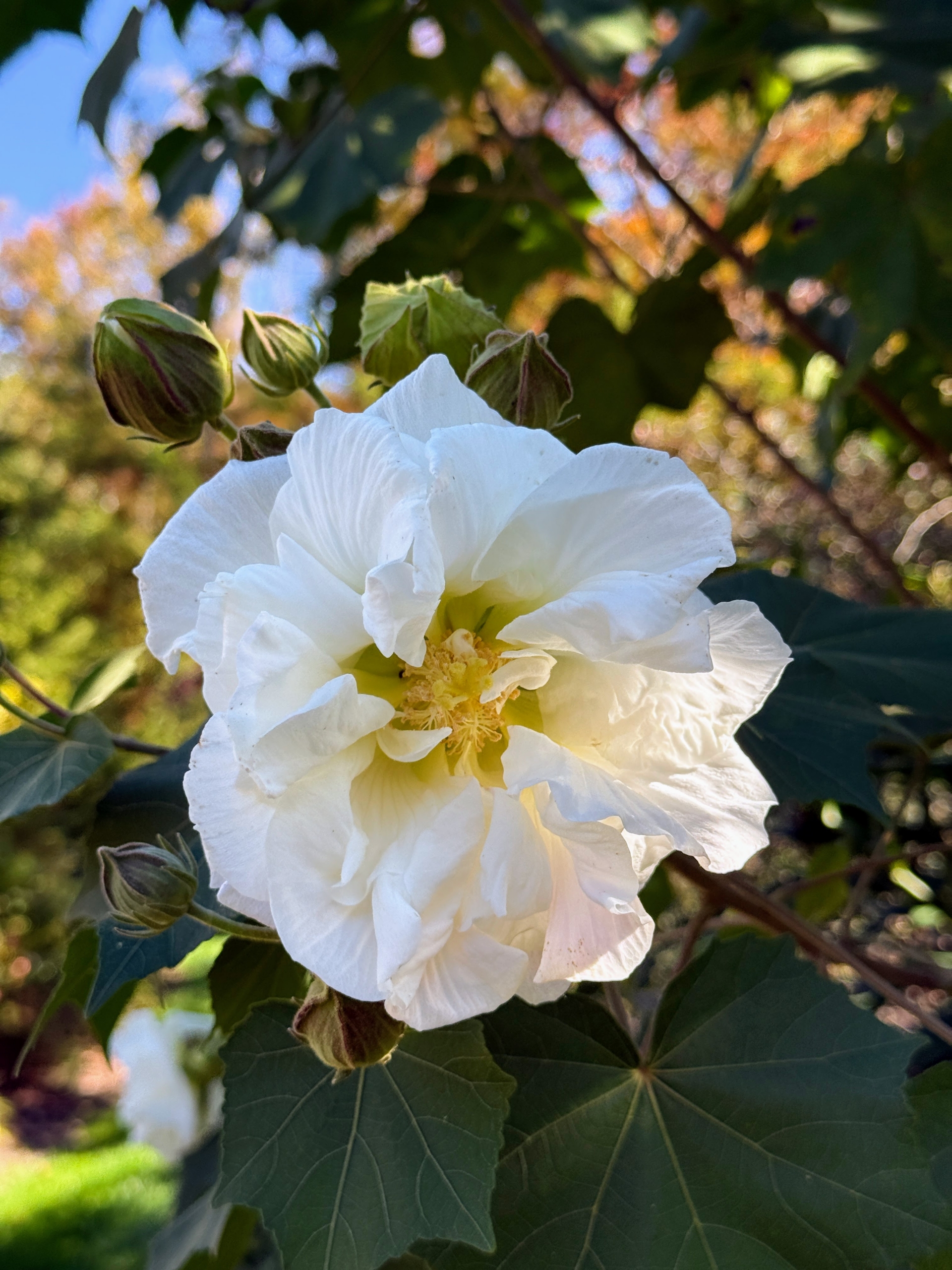
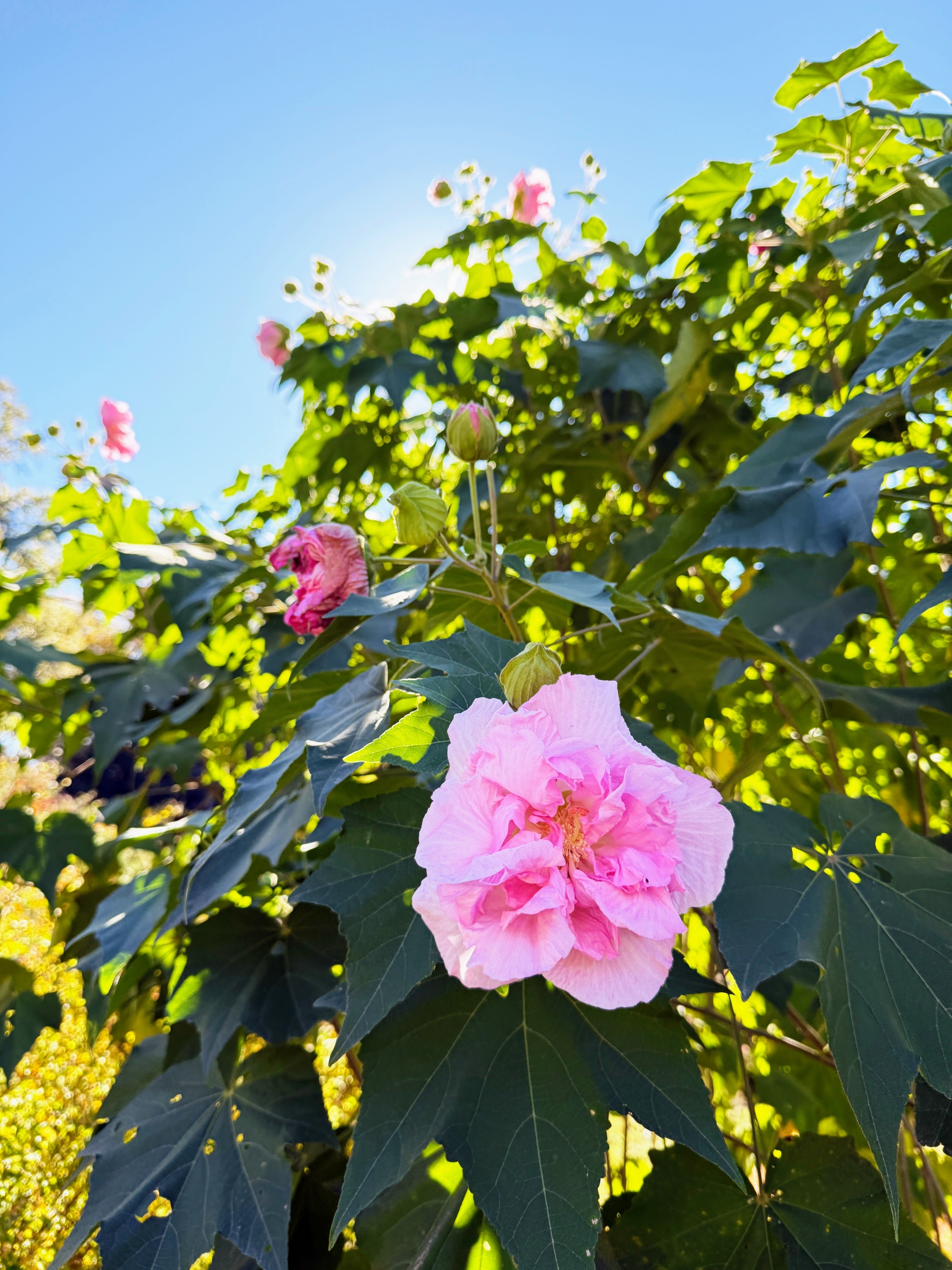
- Ryan also says, “I‘ve never wanted to to grow hibiscus, but I loved these.” This one is Hibiscus mutabilis double pink/white – a fast-growing, large shrub or multi-stemmed small tree famous for its dramatic daily color-changing blooms. Hibiscus mutabilis is also commonly known as the Confederate Rose or Cotton Rose.
-
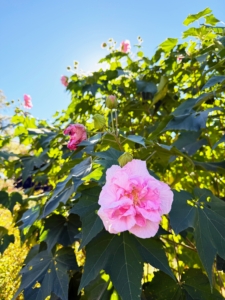
- This is Hibiscus mutabilis ‘Flora Plena’ with its fully double, peony- or camellia-like blooms, which are four to six inches across and open to white or pale pink, then shift to deeper pink and rosy-red as they mature.
-
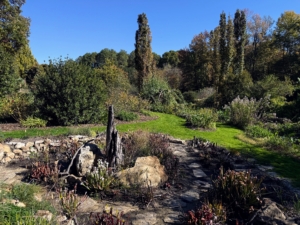
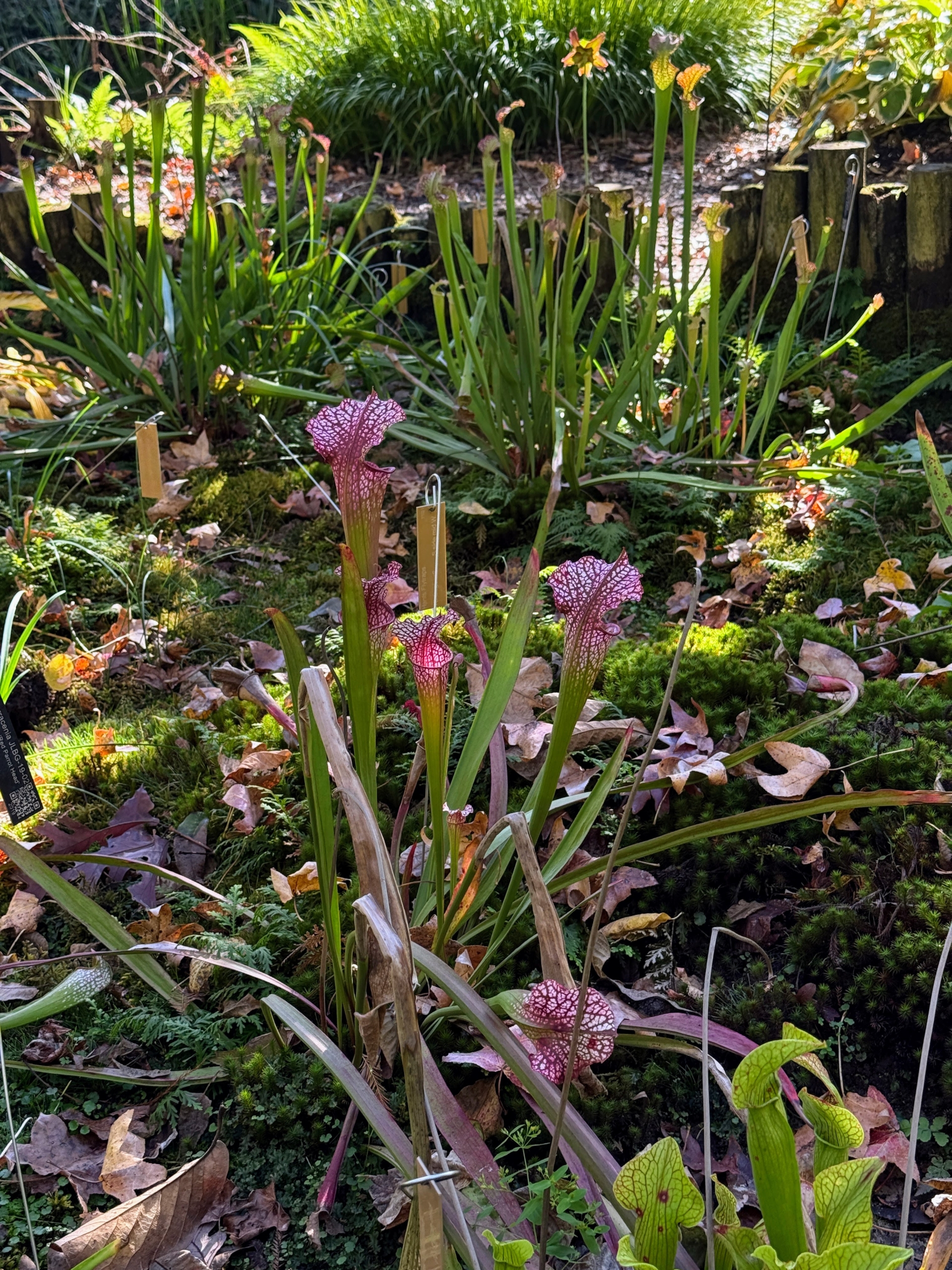
- Ryan says he has always loved carnivorous plants, especially pitcher plants or sarracenias, but usually only encounters them in greenhouses. JLBG grows them outdoors in two areas – in this rock bog, in the foreground, and in their aquatic garden.
-
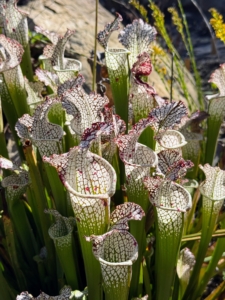
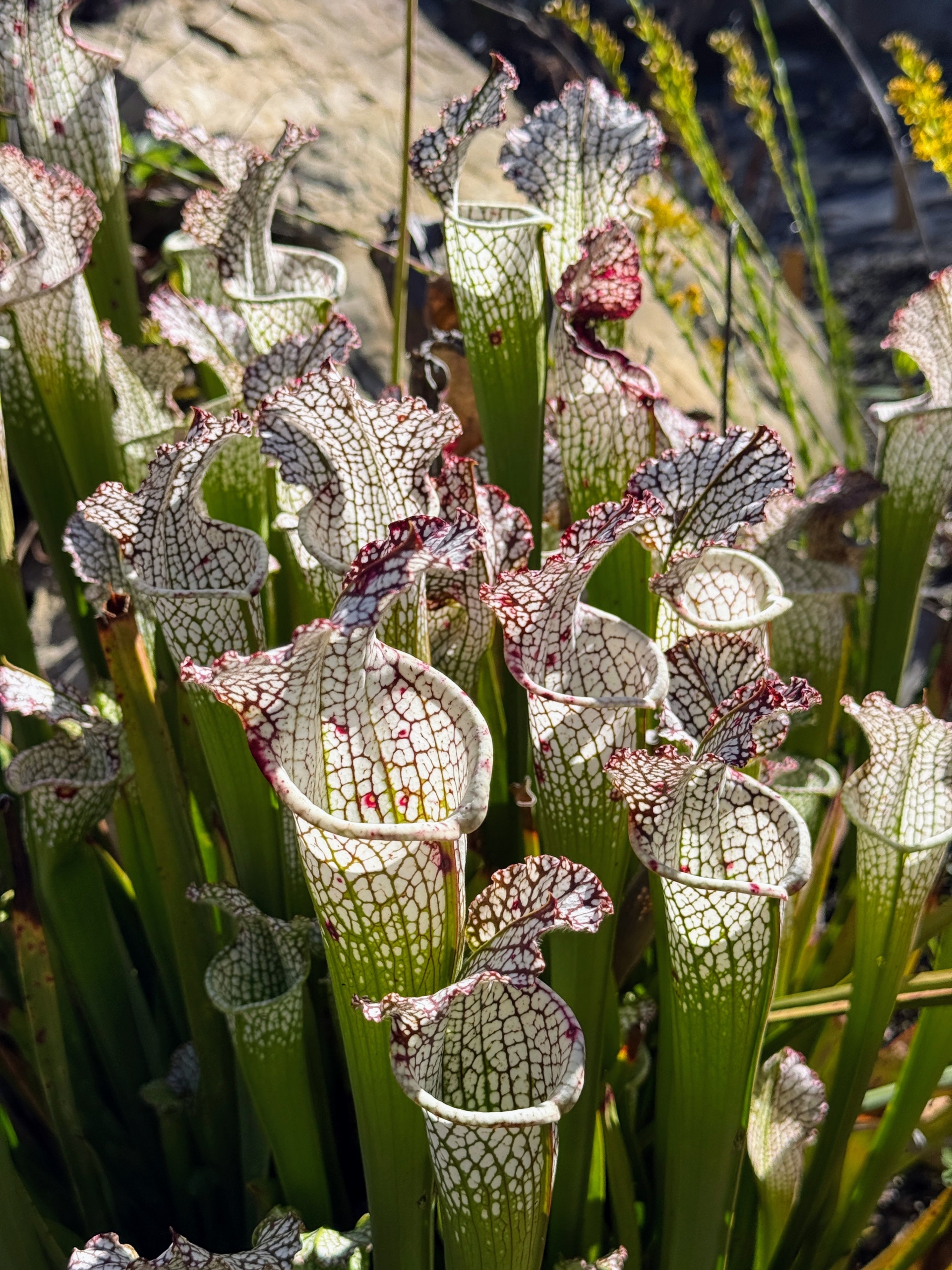
- The white patches of this Sarracenia leucophylla act as “windows”. Light shines through them, tricking insects inside the pitcher into thinking they are escaping toward the sky or an exit. Instead, they are caught and fly or crawl deeper down into the plant’s digestive trap.
-
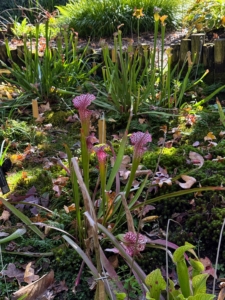
- These plants capture insects without any moving parts, and they are able to avoid accidentally eating the bees and other insects that pollinate them because Sarracenia flowers grow on tall stalks far above the pitcher traps.
-
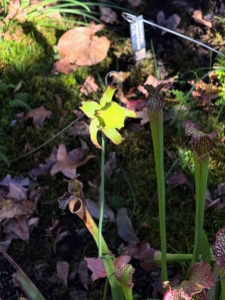
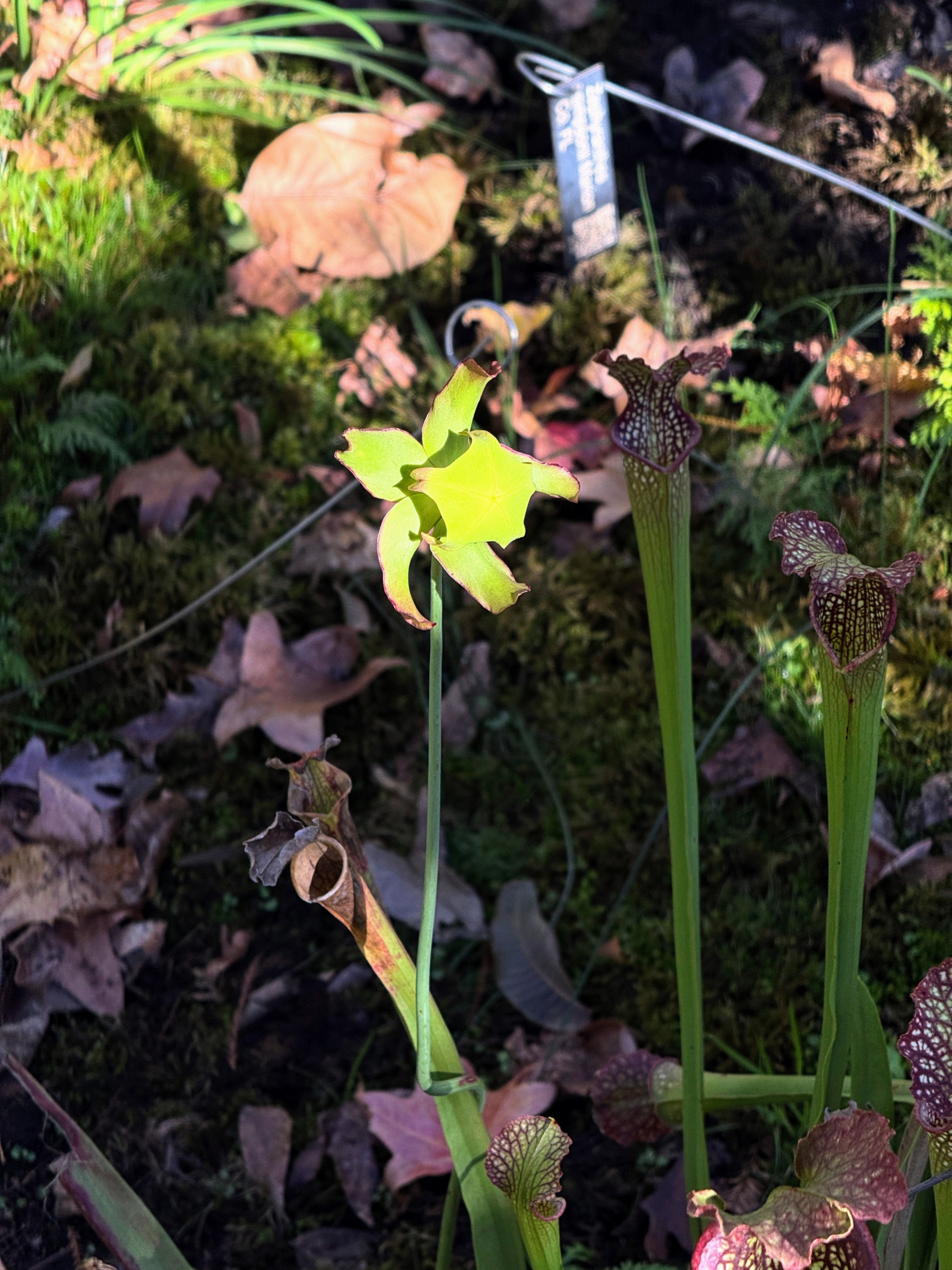
- Although most of their sarracenias were no longer blooming during Ryan’s visit, he was delighted to find exactly one perfect alien flower in the aquatic garden.
-
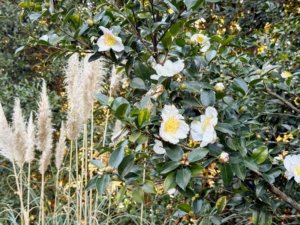
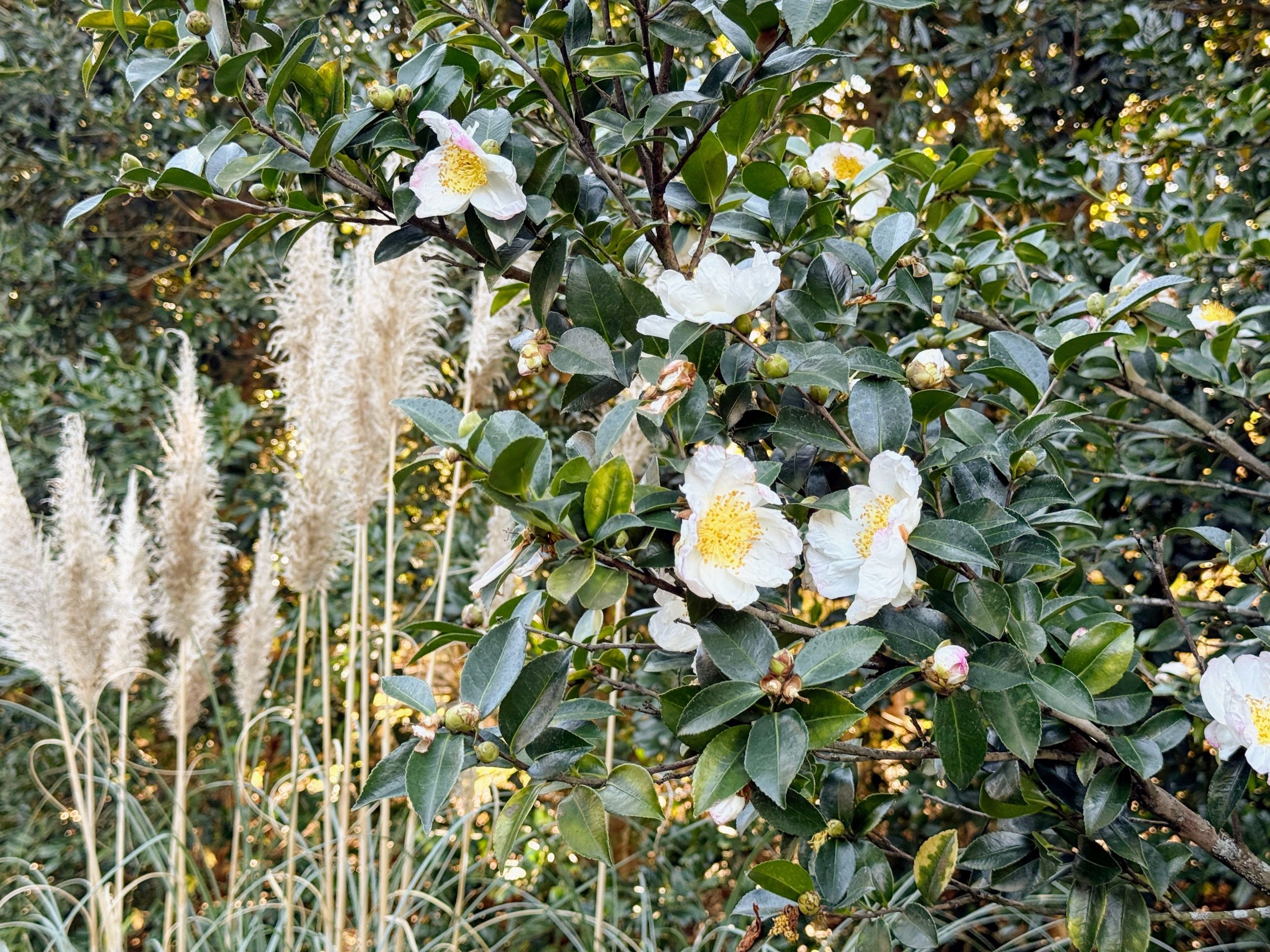
- In shadier areas Ryan found an abundance of camellias in bloom. Ryan keeps some of these beautiful plants in pots as they are not hardy in his area. Here, Ryan noted that he loves the juxtaposition of this white Camellia sasanqua ‘Narumigata’ against the grassy seed heads behind it.
-
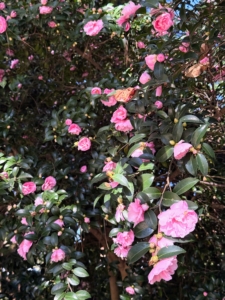
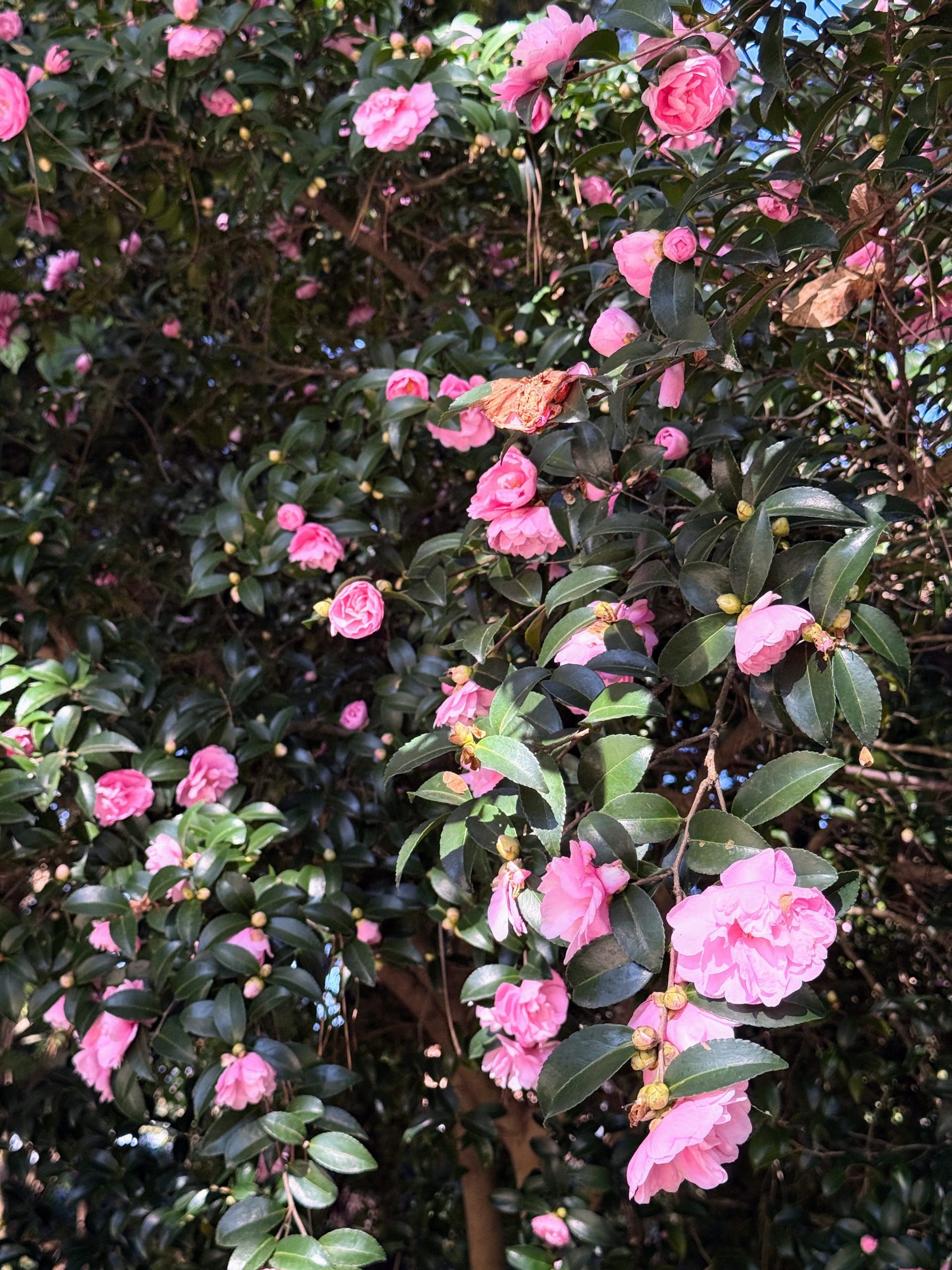
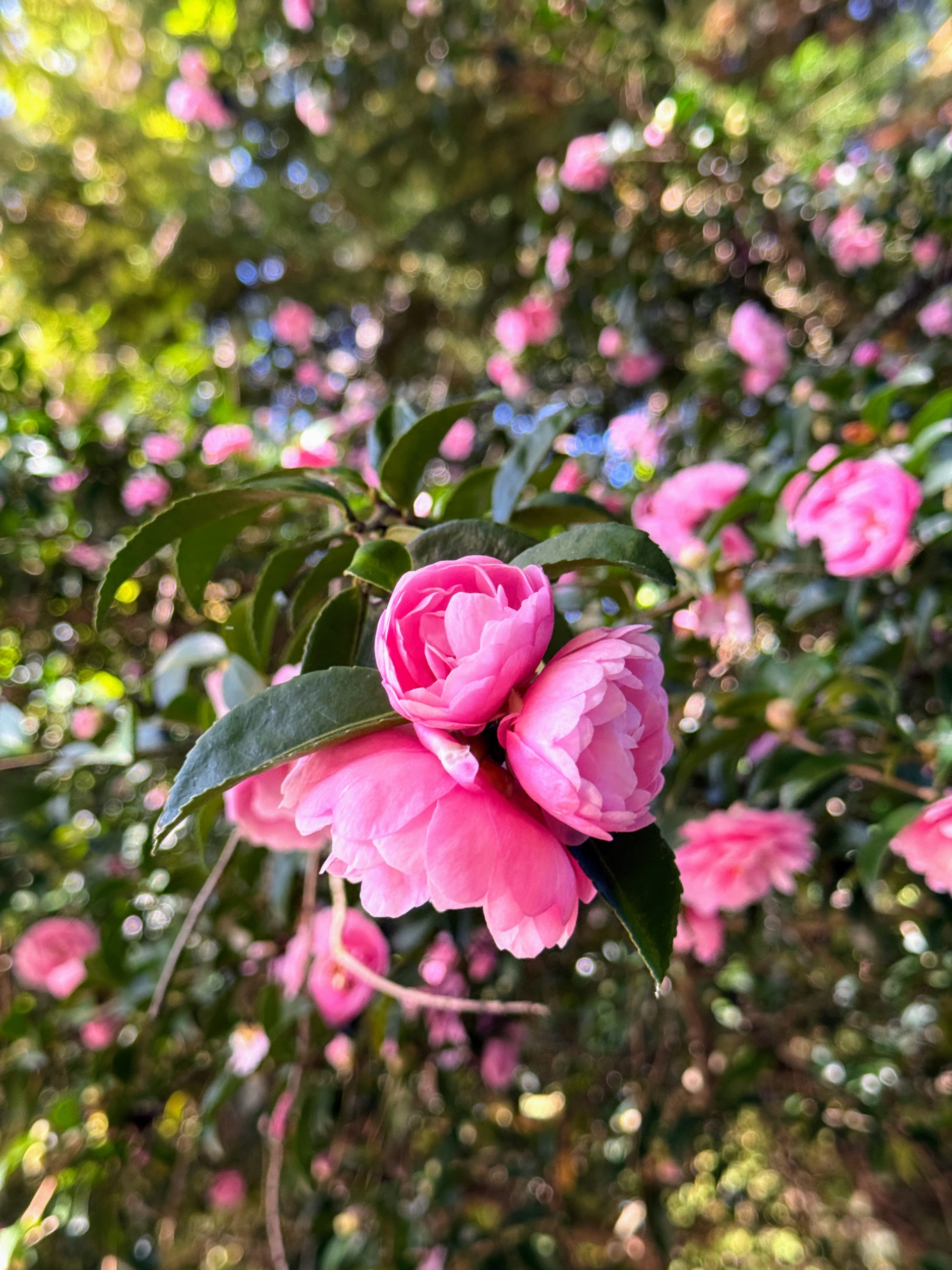
- This is Camellia japonica ‘Otome’ growing next to a brook and dripping with blooms. This camellia, also widely known as ‘Pink Perfection’, ‘Pink Pearl’, or Frau Minna Seidel, is a classic, slow-to-moderate growing evergreen shrub known for its symmetrical, formal double flowers and dense, glossy, dark green leaves.
-
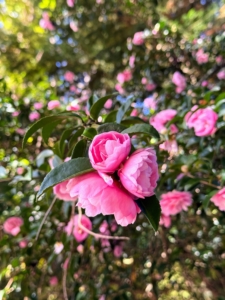
- The light-to-pale shell pink medium-sized flowers are tightly petaled in a formal double or rose-form double shape.
-
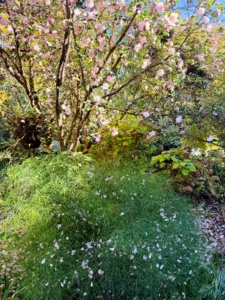
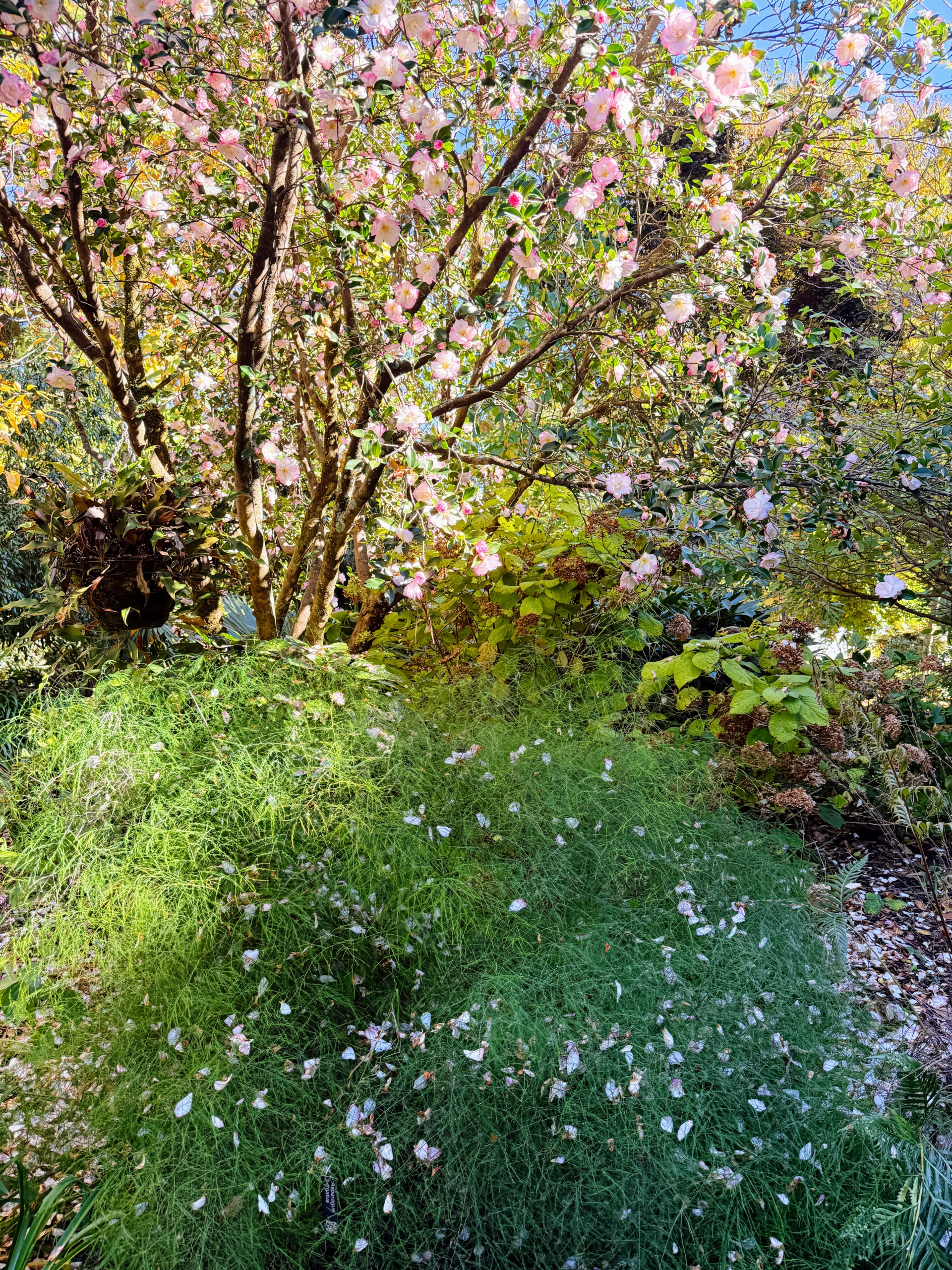
- Ryan says, “I am fond of asparagus, not just as a vegetable, but as an ornamental in the garden and cut in vases.” He was so happy to spot asparagus plants growing under this Camellia sasanqua ‘Leslie Ann” and its shower of soft pink petals. This variety is a popular, slow-growing evergreen shrub prized for its distinct bi-colored blossoms and narrow, upright shape.
-
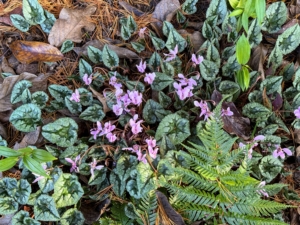
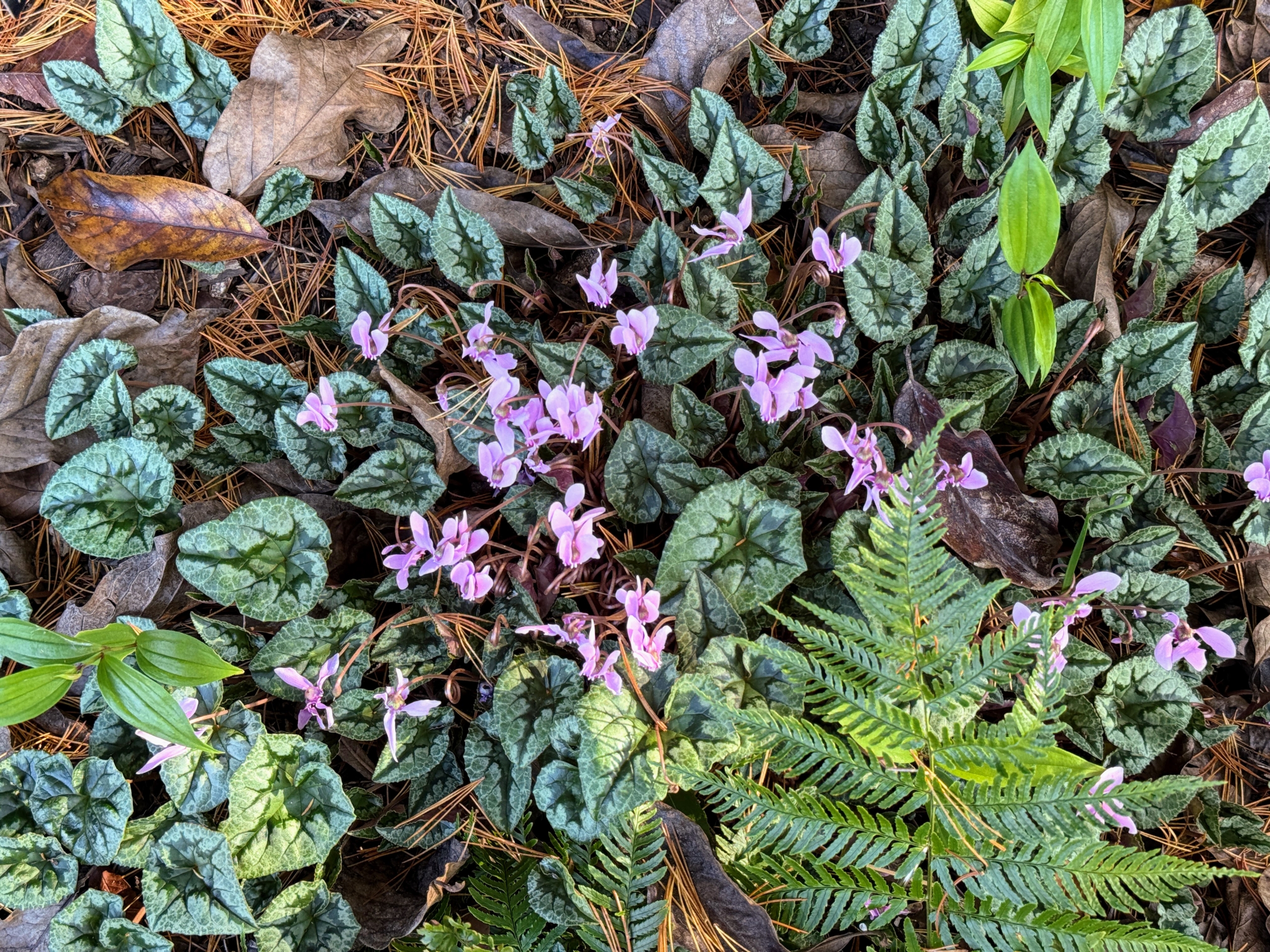
- Ryan says he makes it a point to plant a few hardy cyclamen in his garden every year. He likes its mottled foliage and its fall blooming time, when everything else is winding down for the season.
-
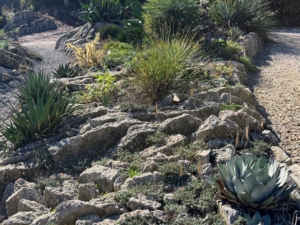
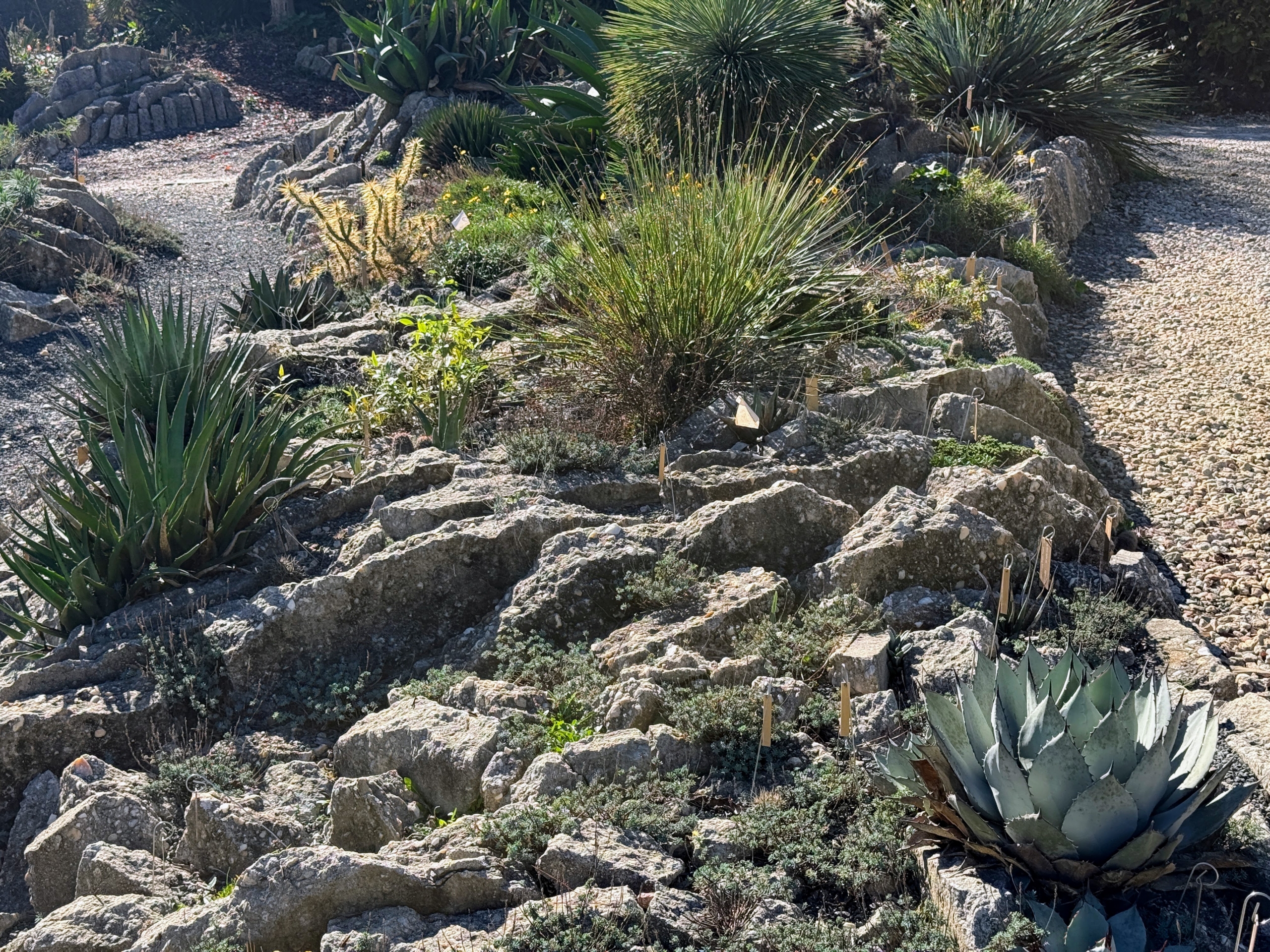
- In their crevice garden, large pieces of old concrete recycled from elsewhere on the property are positioned into the ground with a vertical orientation, creating several ideal environments for plants native to dry and mountainous areas. If you’re curious about this style of gardening, you might want to check out the Oct 26 episode of the Away to Garden podcast by past Living editor-in-chief, Margaret Roach. Or you could find the transcript here: https://awaytogarden.com/the-art-of-crevice-gardening-with-kenton-seth-paul-spriggs/
-
- Ryan shares that he recently started to dabble in growing auricula primroses, but hasn’t quite nailed the overwintering part of their growth cycle. Last spring he went to a talk at the Berkshire Botanical Garden by Jodie Mitchell of Barnhaven Primroses, and learned about their native habitats in mountainous regions of central Europe. Ryan says if he ever creates a crevice garden at home, on a much smaller scale, he will most definitely plant it with auriculas.
-
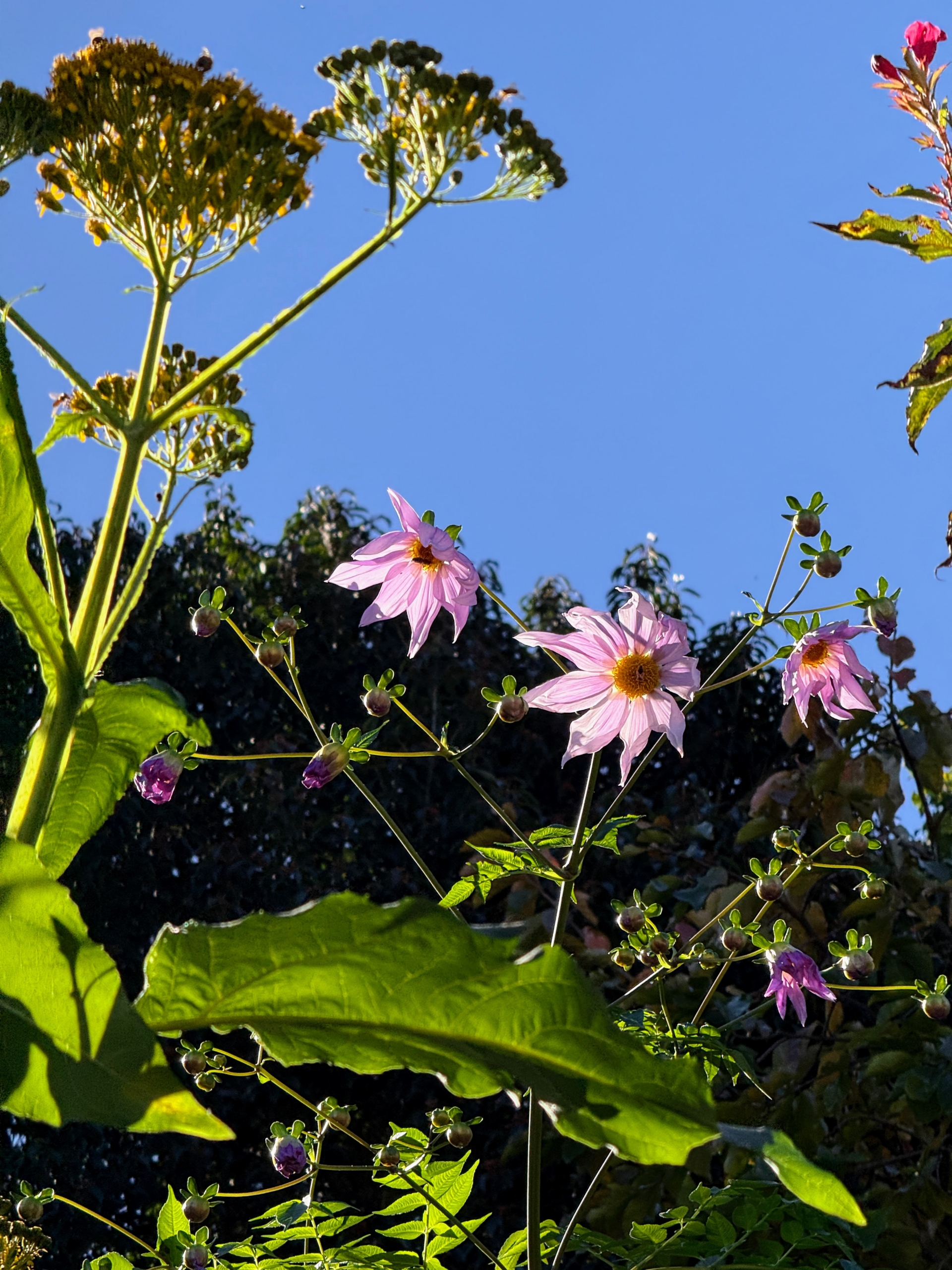
- Ryan found this Dahlia imperialis growing adjacent to the crevice garden. Also known as the Tree Dahlia, it was well over 10 feet tall! He tried growing one in his garden a few years ago, but unfortunately his garden’s growing season was not long enough and it was zapped by frost before it could bloom. The equally impressive yellow plant in the foreground, which looks like a giant yarrow, is Verbesina olsenii, commonly known as the Mexican Winged Crown-Beard. It is a giant herbaceous perennial belonging to the aster family.
-
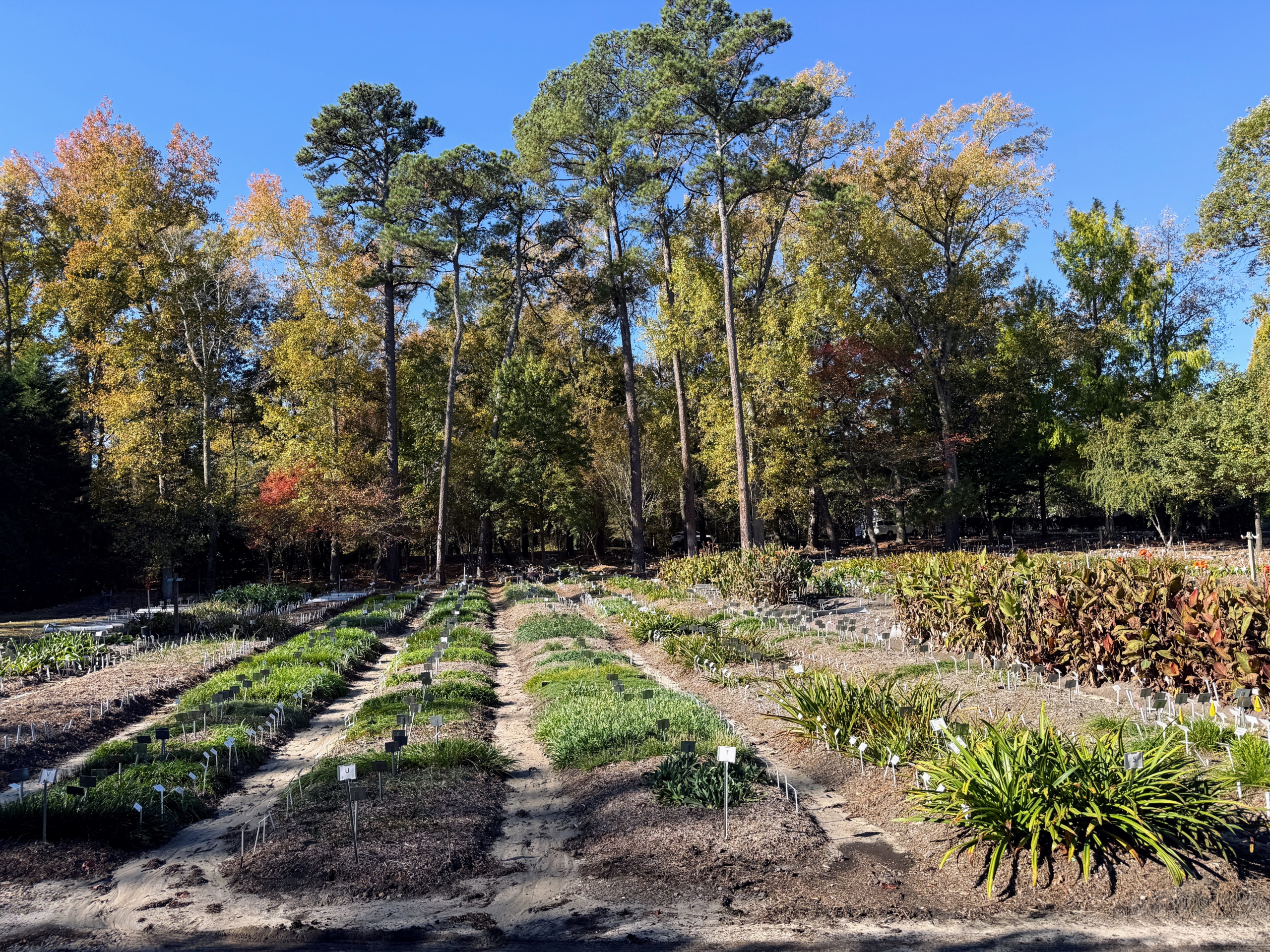
- Although the garden covers an area of 10-acres, JLBG/Plant Delight’s total campus covers almost 28 acres. Around the perimeter of the garden are several large growing fields and various greenhouses.
-
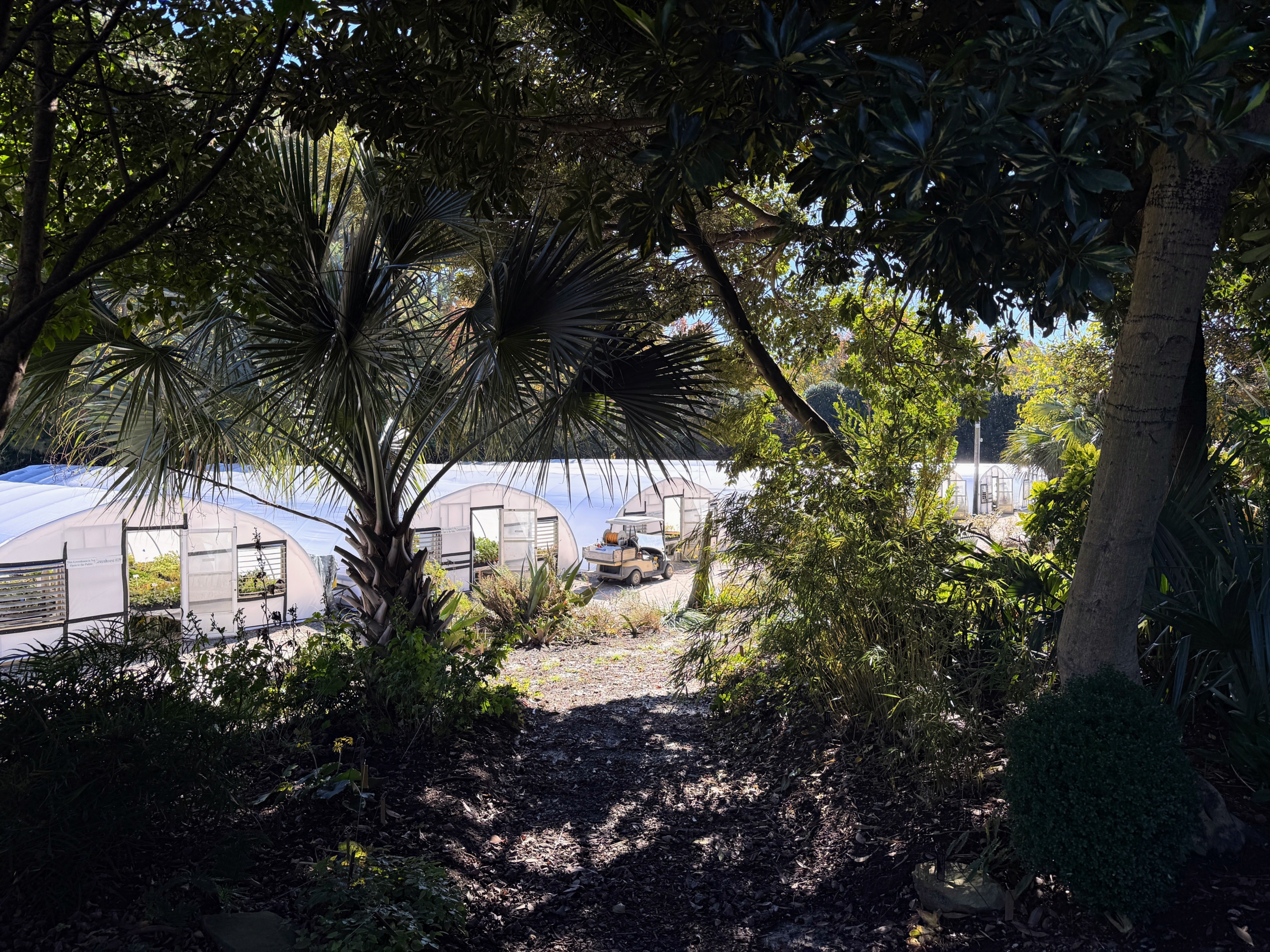
- Ryan counted nearly 20 hoop houses in this one area alone.
-
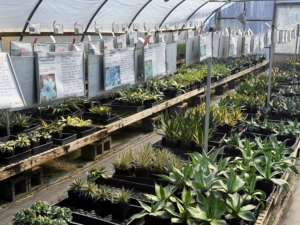
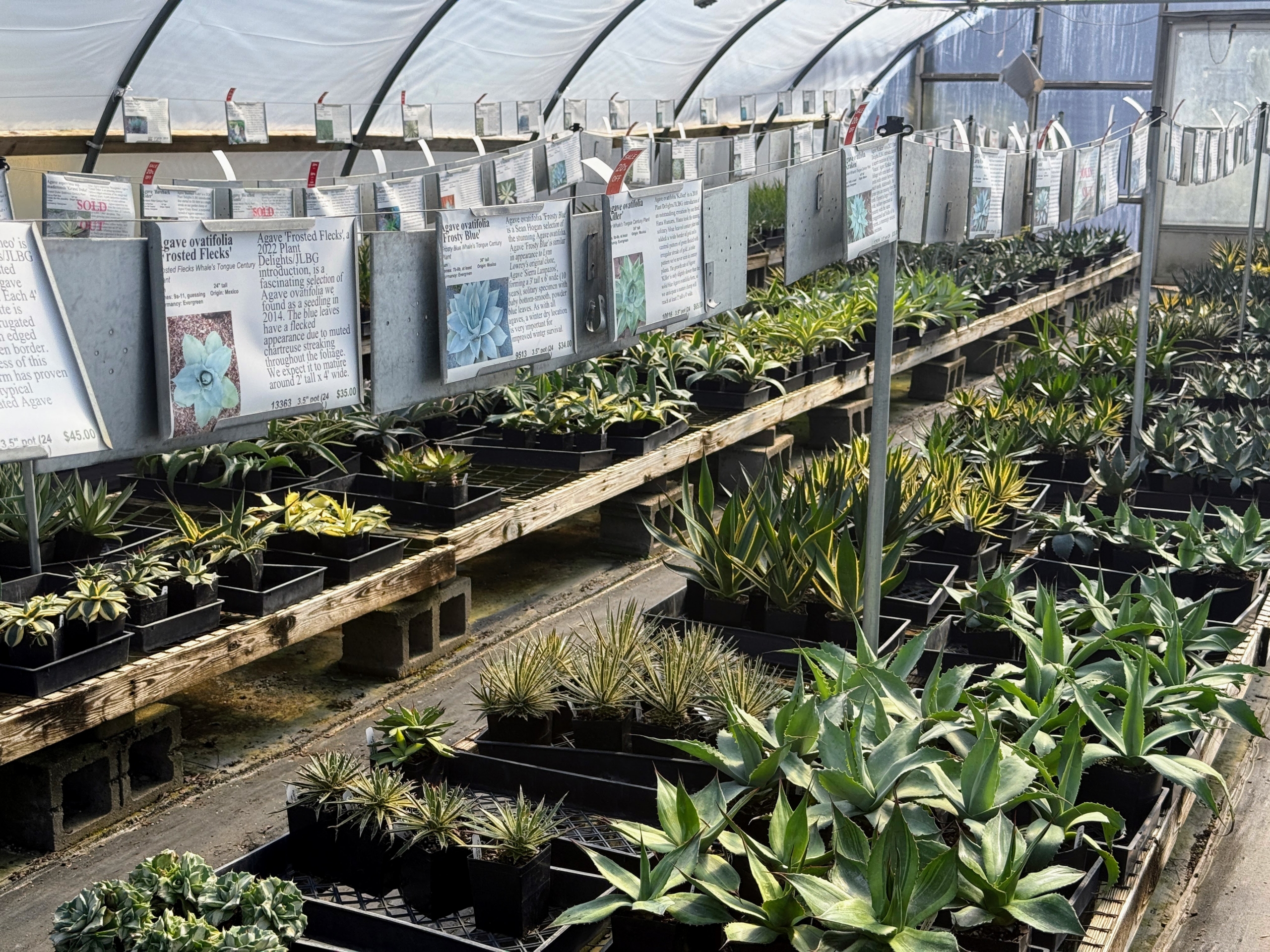
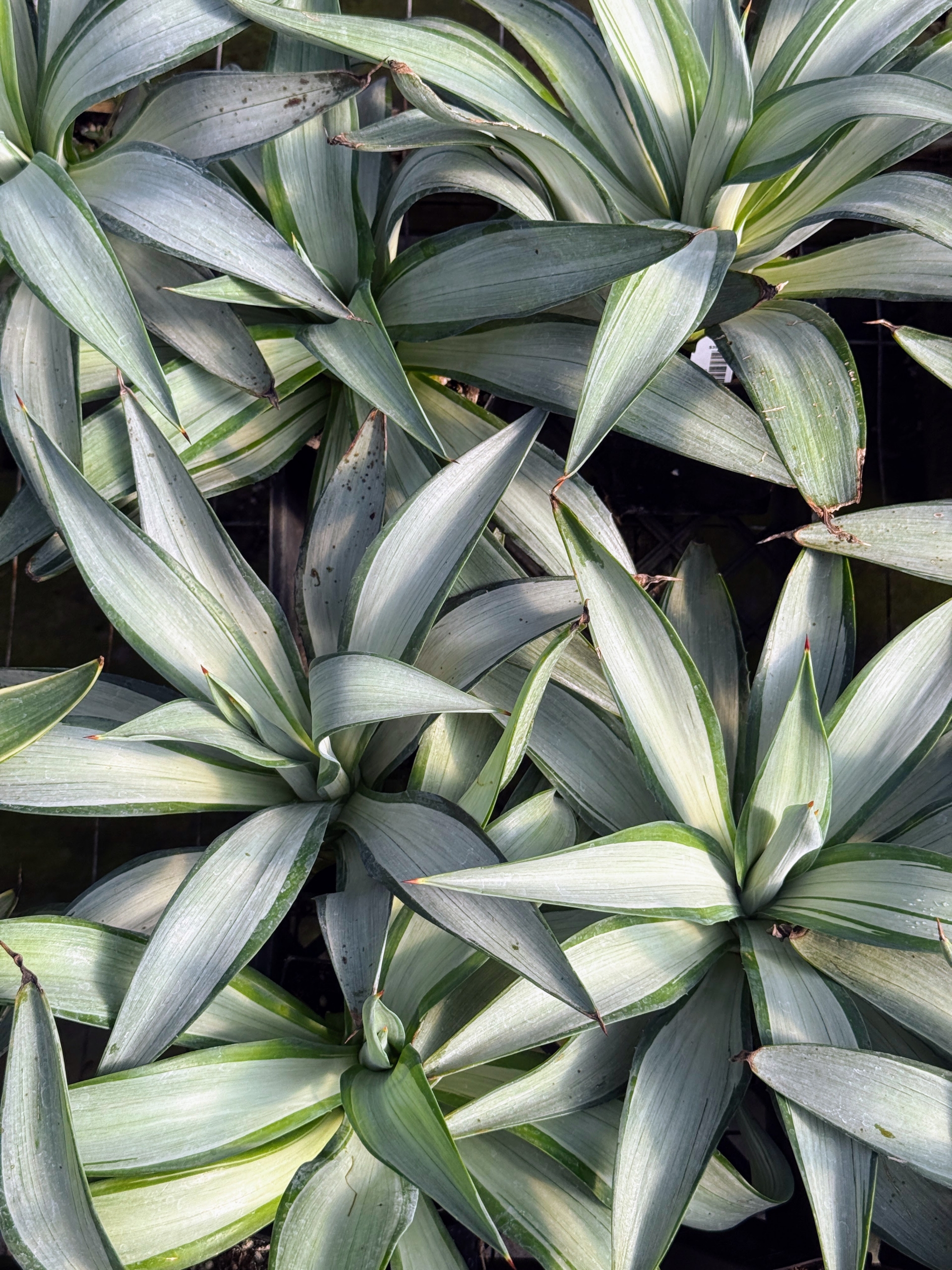
- Some of the hoop houses are open to the public for retail sales. Although Ryan had very limited space in his carry-on luggage, he definitely indulged. A large portion of this hoop house was dedicated to agaves. I also love agaves and have a large collection at my farm.
-
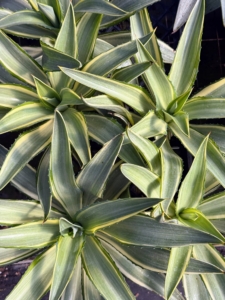
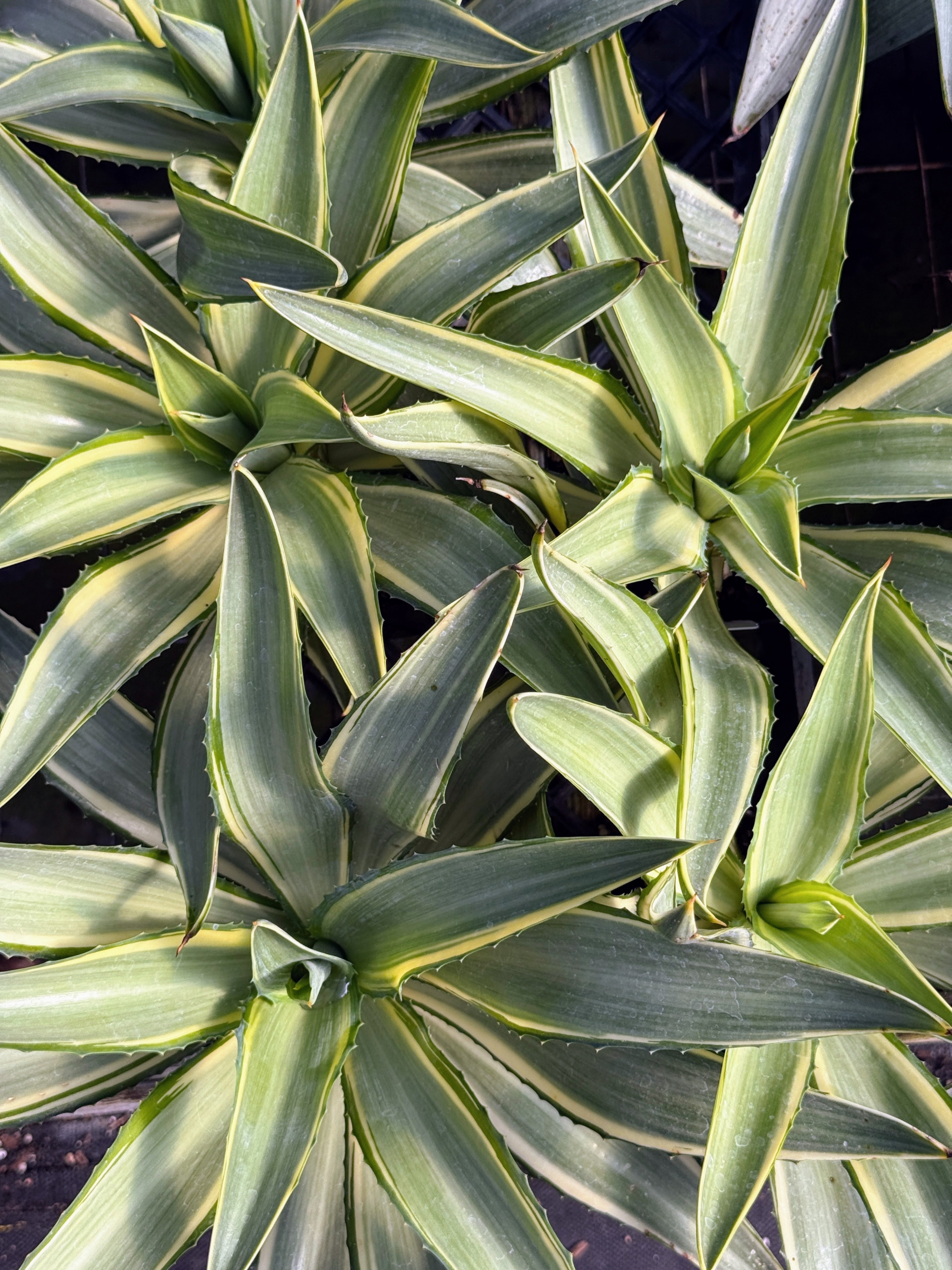
- Agaves are fascinating, slow-growing desert and arid-region succulents known for their unique survival traits and rich history.
-
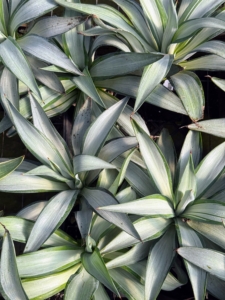
- Most agave species are monocarpic, meaning they can easily grow to 30 years or more.
-
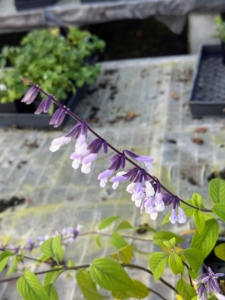
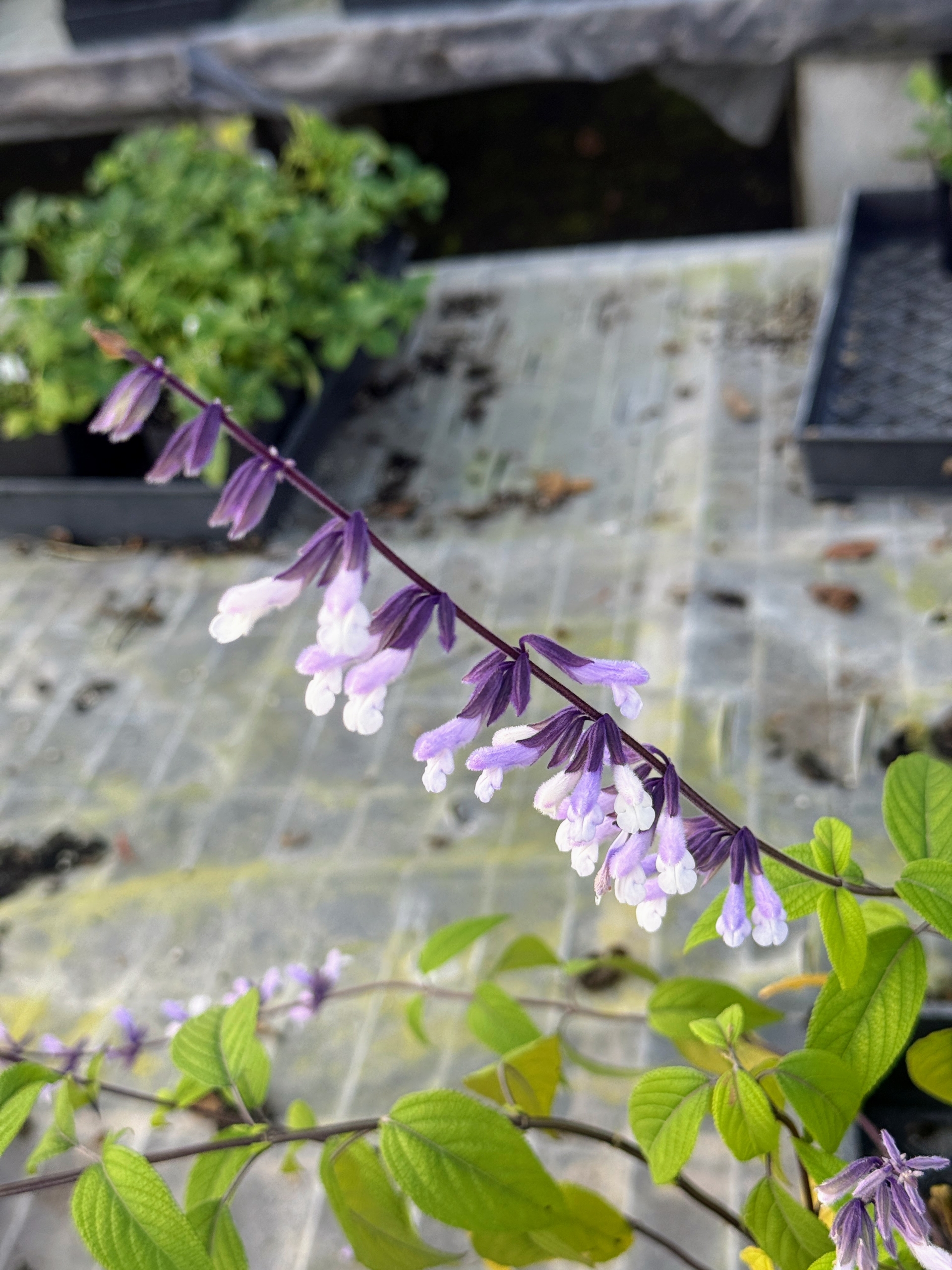
- Ryan also captured photo of this lovely salvia called ‘Phyllis Fancy,’ a striking, vigorous hybrid perennial sage that produces one-foot-long spires of soft, fuzzy, light lavender-white flowers in deep purple and green bicolor calyxes.
-
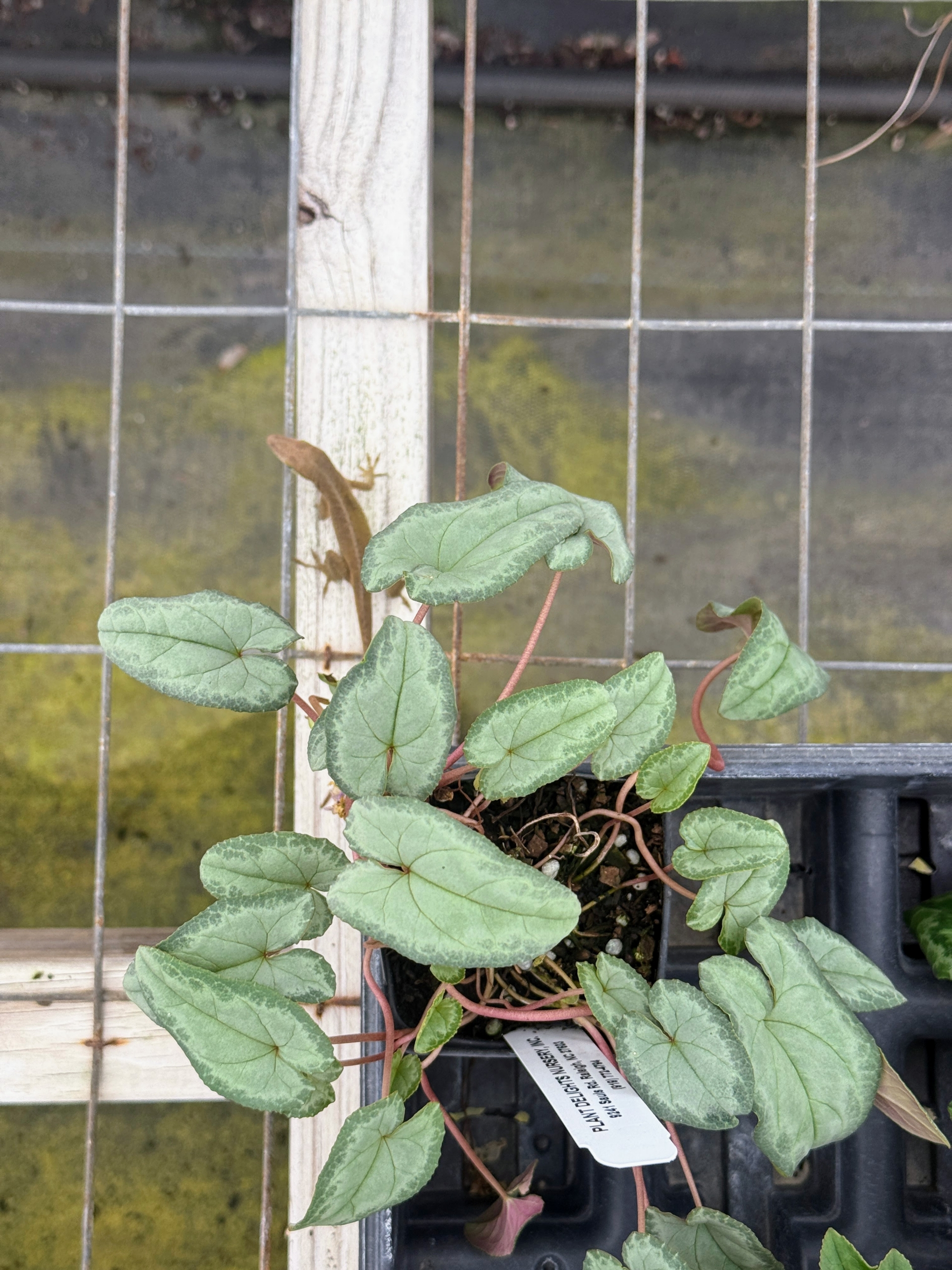
- At the end of his visit, Ryan took home this silvery hardy cyclamen and a bright green epimedium with long flower stalks. Good choices, Ryan! Thanks for sharing your photos.
This story originally appeared on Martha Stewart Blog

