


When The Hunger Games ended with Mockingjay – Part 2 in 2015, it felt like Panem’s story was finished. Katniss Everdeen’s rebellion had toppled the Capitol, the original trilogy had reached a natural conclusion, and viewers did not expect Suzanne Collins to revisit the franchise at all. Then came The Ballad of Songbirds & Snakes, taking us back to a young President Snow, followed by Sunrise on the Reaping, which is now in theaters.
The newly released big-screen adaptation follows Haymitch Abernathy during the Second Quarter Quell, 24 years before Katniss Everdeen’s story begins. It’s another chance to see how the Capitol maintains its grip on the districts, how the Hunger Games shape the lives of their victors, and how resistance can take root even under Snow’s watch.
The Hunger Games franchise has endured because its arena spectacle is always tied to something bigger, whether that’s propaganda, class division, or the cost of surviving another authoritarian regime. Every movie brings an enormous amount of history. With two successful prequels expanding the timeline, it’s easier to imagine the tantalizing stories the franchise could adapt after Sunrise on the Reaping.
The Capitol’s First Generation of Gamemakers
The Hunger Games weren’t always the elaborate televised spectacles we see in Katniss’ time. The first nine editions were comparatively primitive, with tributes forced to fight inside the Capitol’s amphitheater and few of the features that would eventually define the competition.
The Ballad of Songbirds & Snakes already gives us a glimpse of this early period through Dr. Volumnia Gaul, Dean Casca Highbottom, and a young Coriolanus Snow, whose ideas help introduce sponsorships and betting. However, there’s still an entire decade of Games that hasn’t received its own cinematic treatment.
A prequel centered on the first generation of Gamemakers could show how the institution developed its sophisticated arenas, broadcasts, mutts (short for muttations), and methods of controlling public attention. It would also give us a different perspective on the franchise, one that focuses on the machinery of the game that eventually consumed generations of tributes.
Finnick Odair’s Tragic Victory (65th Hunger Games)
-
 Lionsgate
-
 Lionsgate
-

Sam Claflin in The Hunger Games: Catching Fire Lionsgate
Finnick Odair is one of the most memorable victors in The Hunger Games franchise. He first appears in Catching Fire as a charming, impossibly confident tribute from District 4. Played by Sam Claflin in the original movies, he’s presented as a formidable Career who has won the Hunger Games and become something of a Capitol celebrity.
However, the books reveal just how young he was when he entered the arena. Finnick won the 65th Hunger Games at the age of 14, making him one of the youngest victors in Panem history. His fishing skills, exceptional combat training, and use of a trident and net helped him survive.
But his victory hides a darker story. Finnick eventually reveals to Katniss that Snow exploits the victors by selling access to them to wealthy Capitol citizens, with his clients paying him in secrets. A prequel could follow Finnick’s rise from a gifted District 4 teenager to the Capitol’s prized celebrity. His eventual role in the Second Rebellion would make the character study rich and meaningful.
Plutarch Heavensbee’s Secret Rebellion


Plutarch Heavensbee is introduced in Catching Fire as the new Head Gamemaker following Seneca Crane’s execution. At first, he appears to be another Capitol loyalist who enjoys the spectacle of the Hunger Games, but his true allegiance is revealed when Katniss discovers that he’s been working with the rebels.
Played by Philip Seymour Hoffman in the original films and Jesse Plemons in Sunrise on the Reaping, Plutarch is an important figure in the eventual overthrow of Snow’s reign. He helps coordinate the rescue operation during the 75th Hunger Games and later oversees the propaganda campaign that turns Katniss into the Mockingjay.
Sunrise on the Reaping gives us a younger version of Plutarch, working as a Capitol television producer assigned to the District 12 tributes. That’s an interesting starting point for a standalone story because we already know where his career leads. A Plutarch Heavensbee movie could operate like a political thriller inside Panem, following his rise through the Capitol and his growing dissatisfaction with Snow’s ideals. It could also examine how rebel networks communicated beneath the Capitol’s surveillance apparatus.
Mags Flanagan’s Story


Mags Flanagan has a unique place in Hunger Games history. She is one of the oldest living victors in the series and one of the few survivors whose experiences stretch back toward the franchise’s earliest days. Played by Lili Taylor in Sunrise on the Reaping and originally portrayed by Lynn Cohen in Catching Fire, Mags is a District 4 victor who won the 11th Hunger Games.
In the latest prequel, she serves as one of Haymitch’s mentors, giving audiences a glimpse of the woman Katniss later encounters during the 75th Hunger Games. She’s also the mentor who helped Finnick prepare for his own Games, making her an important figure in his life.
There’s plenty of room for a movie about Mags, beginning with her victory and following her time as a mentor in a system that repeatedly sends children to their deaths. By the time of the Third Quarter Quell, Mags volunteers to take Annie’s place, despite knowing she has little chance of surviving. A movie could give this compassionate victor the attention she deserves.
Johanna Mason and Beetee Latier’s Pasts
Also introduced in Catching Fire, Johanna Mason and Beetee Latier are two of the most resourceful victors in the franchise, but their histories could not be more different. Beetee, played by Kelvin Harrison Jr. in Sunrise on the Reaping and Jeffrey Wright in the original movies, won the 34th Hunger Games by constructing an electrical trap that killed the six remaining tributes. His intelligence and expertise make him an invaluable member of the rebellion.
Johanna, meanwhile, won the 71st Games by pretending to be weak and frightened before revealing how dangerous she really was. Her ability to deceive the other tributes is one of her greatest advantages. Their respective victories could form two parallel stories about the different ways people survive the Capitol’s arena. Beetee’s story could follow his transformation into a genius, while Johanna’s could reveal why she became distrustful of the Capitol.
The Rise of District 13
-

The Hunger Games District 13 Lionsgate -
The Hunger Games District 13 Lionsgate -

The Hunger Games District 13 Lionsgate
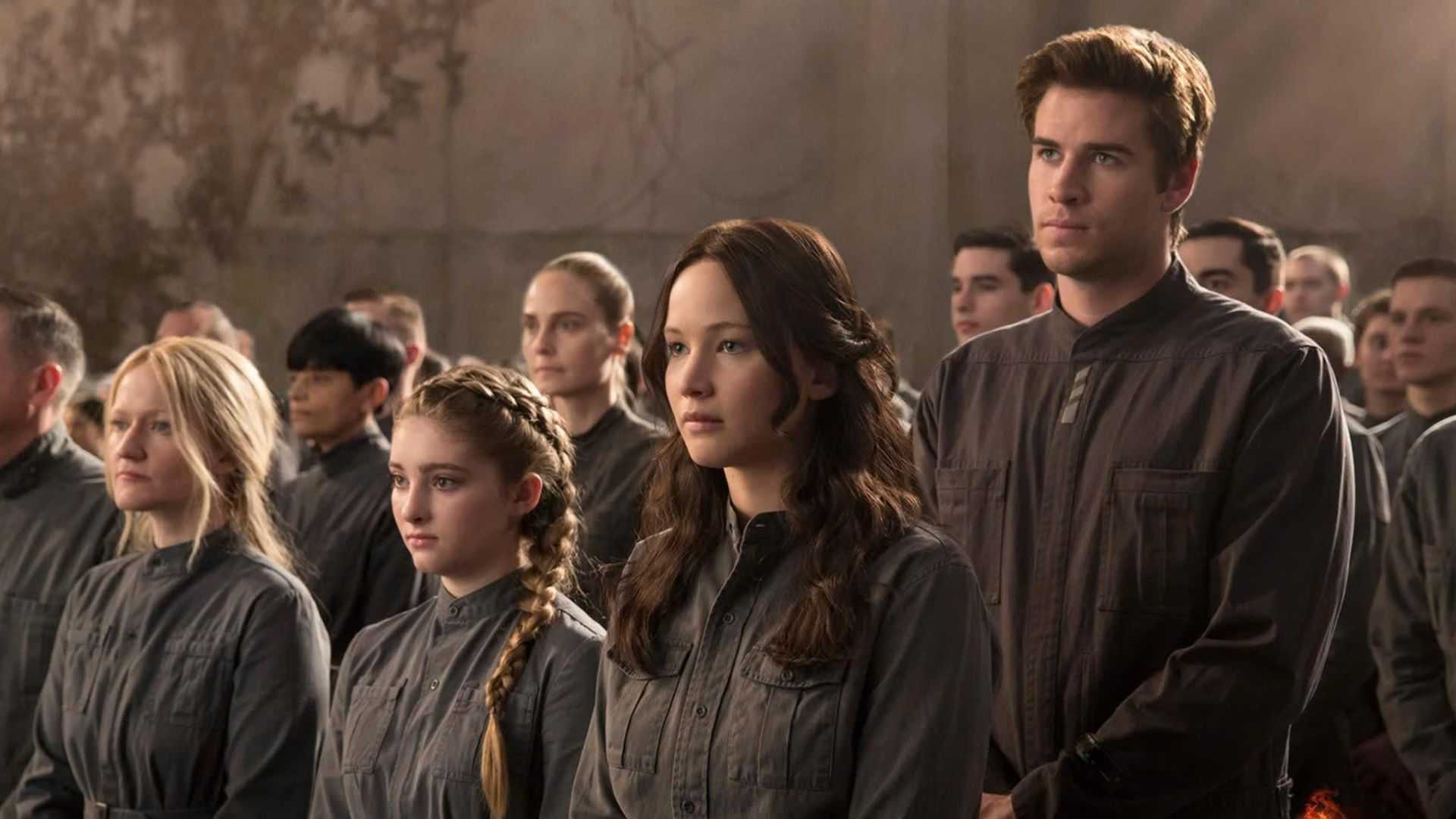
District 13 hovers over the original trilogy like a myth, especially because the Capitol spent decades convincing Panem that it was completely destroyed during the Dark Days. When Katniss finally reaches the district in Mockingjay – Part 1, she finds an underground society with a strict military structure, regulated routines, and a nuclear arsenal.
District 13 is one of the biggest revelations in the original Hunger Games trilogy, but the story of how it managed to endure for so long remains untold. The district had to maintain its population, protect its resources, and preserve its military capabilities while staying isolated from the rest of Panem.
A movie could establish that District 13 negotiated a secret agreement with the Capitol after seizing control of its nuclear weapons during the Dark Days. In exchange for appearing to have been destroyed, it was allowed to remain independent underground, with both sides knowing that an attack could trigger nuclear retaliation. The tension would come from espionage, political maneuvering, and constant risk of discovery.
The Dark Days (The First Rebellion)

The Dark Days are the defining event in Panem’s history, yet the franchise has never given us a full account of the first rebellion. We know that the districts once united against the Capitol, leading to a civil war that ended with the Capitol’s victory and the supposed destruction of District 13. The resulting Treaty of Treason established the Hunger Games as an annual punishment, forcing each district to surrender two children as a reminder of the uprising.
Both The Ballad of Songbirds & Snakes and the original trilogy touch on this story, but the actual conflict has never been visualized. A movie set during the Dark Days could finally show what life was like before the Hunger Games became Panem’s biggest institution. It could follow the rebellion and the Capitol’s military response. More importantly, it could give the franchise its biggest, most dramatic prequel yet.
The First Quarter Quell (25th Hunger Games)
-
 Lionsgate
-

Josh Hutcherson, Elizabeth Banks, and Jennifer Lawrence in The Hunger Games Lionsgate -
 Lionsgate
The Quarter Quells have given the franchise some of its most jaw-dropping twists. The 50th Hunger Games doubled the number of tributes, and the 75th Hunger Games forced previous victors back into the arena. However, if there is one Hunger Games we’ve wanted to see for years, it is the First Quarter Quell.
As revealed by President Snow in Catching Fire, the 25th Hunger Games required each district to hold an election and vote for the children who would represent it. This means that families and neighbors were forced to participate in selecting the tributes, making the annual reaping an even more disturbing exercise in Capitol-controlled division.
Unlike the 50th Hunger Games, which now has an entire novel and movie dedicated to it, the first Quarter Quell remains entirely unexplored. We don’t even know who won, how the districts handled the voting process, or what happened to the children who were selected. A prequel could show the first time Panem’s communities turned against their own, revealing how the Capitol used the anniversary to form cracks between the districts.
It would make for the bleakest entry in the Hunger Games lore, but after Sunrise on the Reaping, the First Quarter Quell feels like the right fit for the next chapter.

- Release Date
-
November 20, 2026
- Runtime
-
158 Minutes
- Director
-
Francis Lawrence
This story originally appeared on Movieweb

