


One of the most controversial Star Wars movies George Lucas ever made surprisingly got a sequel decades after it was initially released. Though George Lucas is responsible for creating Star Wars and many of the best and most beloved parts of the franchise, not all of his Star Wars films were equally loved. Before he sold the franchise to Disney in 2012, Lucas was responsible for the first six Star Wars movies, and some of them were much more controversial than others.
The prequel trilogy was very famously divisive when it came out, with critics and hardcore fans alike criticizing the trilogy’s overreliance on CGI, its stilted and wooden characters, and some of George Lucas’ other decisions as writer and director. The original trilogy fared much better, especially with regard to the original Star Wars, later retitled A New Hope, and The Empire Strikes Back. Return of the Jedi, however, wasn’t as universally loved.
Of all three original trilogy movies, Return of the Jedi is almost universally viewed as the worst of the bunch. Most Star Wars fans still view it as good, but it failed to live up to the highs of The Empire Strikes Back. Things like the second Death Star, the Ewoks, and the entire opening act at Jabba’s palace (especially the Slave Leia outfit) stand out as things about Return of the Jedi that haven’t aged well.
While George Lucas didn’t direct Return of the Jedi, he did write the film, and it did come out when he was the figurehead of both Lucasfilm and Star Wars as a whole. Despite Episode VI’s controversial nature, however, it surprisingly got a direct sequel this year, 43 years after it debuted in 1983. That sequel is The Mandalorian and Grogu, and it makes one of Star Wars‘ most divisive movies much more important than ever before.
The Mandalorian And Grogu Is A Direct Sequel To Return Of The Jedi
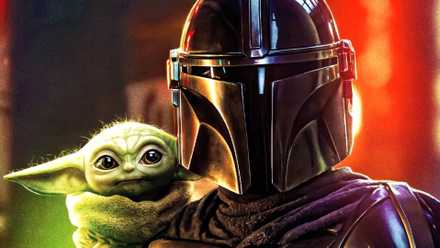
Though it doesn’t follow Luke, Leia, or any of the other characters from the original trilogy, The Mandalorian and Grogu is a direct sequel to Return of the Jedi. The newer film takes place in the immediate aftermath of the Galactic Civil War, just a few years after Return of the Jedi in the Star Wars timeline. Compared to The Force Awakens, which takes place 30 years after Return of the Jedi, The Mandalorian and Grogu is a much more direct sequel.
The Mandalorian and Grogu is a sequel because of its chronology, but it also deals heavily with the fallout of Return of the Jedi. Episode VI didn’t really show any of the aftermath of the Galactic Civil War or the Empire’s fall. Darth Vader tosses the Emperor down a reactor shaft, the Rebels blow up the second Death Star, and the galaxy rejoices without diving into any of the logistics of regime change.
Star Wars has explored the immediate aftermath of Return of the Jedi before, most notably in the Battle of Jakku comics and The Mandalorian show, but never in movie format. The Mandalorian and Grogu is the first film in the franchise to actually explain what happened after the Galactic Civil War, what happened to the Imperial survivors, what system of government replaced the Empire, and how the galaxy changed after Palpatine’s death.
The entire plot of The Mandalorian and Grogu is dealing with the fallout of the Galactic Civil War. Din Djarin and Grogu are sent on a quest to hunt down Imperial Warlords who have managed to retain power, they’re working directly for the New Republic, and they even explore the aftermath of Jabba the Hutt’s death and the impact his absence has on the Hutt Cartel. In everything but title, The Mandalorian and Grogu is a sequel to Return of the Jedi.
The Mandalorian And Grogu Also Took A Lot Of Inspiration From Return Of The Jedi

Warning! This article contains SPOILERS for The Mandalorian and Grogu.
The plot and timeline of The Mandalorian and Grogu firmly cements it as a sequel to Return of the Jedi, but the newer film also feels like a spiritual successor to it as well. The Mandalorian and Grogu was very clearly trying to recreate the aesthetics and feel of the original trilogy. The film’s entire marketing campaign made it seem like a pulpy sci-fi adventure, they used practical puppets as much as possible, and director Jon Favreau has outright said he wanted to recreate the feeling of watching the original Star Wars.
The Mandalorian and Grogu was trying to emulate the original trilogy as a whole, but it honed in on Return of the Jedi much more than it did A New Hope or The Empire Strikes Back. Take, for example, The Mandalorian and Grogu‘s third act. In it, Din is captured by the Hutt Twins, survives an attempted execution by being sent through a trapdoor to a Dragonsnake below, and eventually returns to free his previously captured friend, Rotta the Hutt, who kills the Twins. That’s almost a beat-for-beat remake of Return of the Jedi‘s opening act. Luke enters Jabba’s palace, he’s sent through a trapdoor to be executed by a Rancor, he eventually manages to free Han Solo, and then Leia kills Jabba.
8 Biggest Unanswered Questions After Watching The Mandalorian & Grogu
After watching The Mandalorian & Grogu, there are some lingering questions about the events of the new Star Wars movie and the franchise’s future.
There are also several other less overt but very noticeable similarities between The Mandalorian and Grogu and Return of the Jedi. The general focus on organized crime and the Hutt Cartel in particular, for example. Jabba’s death in Return of the Jedi is central to both the Twins and Rotta’s storylines. Even the giant monsters in the dejarik match and the stop-motion, jittery giant robots outside the Twins’ throne rooms harken back to Return of the Jedi.
One of the most emotional moments of The Mandalorian and Grogu also has a huge tie to Return of the Jedi. After Grogu saves Din’s life, Din says that “the young take care of the old. This is the Way.” It’s extremely similar to Return of the Jedi, where Luke has to take care of Yoda as he dies, which once again shows that the young take care of the old. Both movies also focus quite a bit on the concept of passing the torch to a younger generation, and there’s the ever-obvious fact that Grogu and Yoda are two of the three known members of the same species.
Return of the Jedi Should Continue Being Important To Star Wars

The Mandalorian and Grogu also marks the start of a new era for Star Wars, one that is set to be heavily informed by Return of the Jedi. The Mandalorian and Grogu was the first Star Wars movie in seven years since The Rise of Skywalker. While its box office numbers are currently shaky, it’s a return to the franchise’s movie efforts, and it’s ushering in a new era of upcoming Star Wars movies, like Star Wars: Starfighter.
It’s rather telling that Star Wars has chosen to restart its movie efforts with a film that is very closely aligned with Return of the Jedi. Many of the Star Wars stories on the horizon are set to follow this trend. While Starfighter takes place in the aftermath of The Rise of Skywalker, the next live-action Star Wars show, Ahsoka season 2, also deals heavily with Imperial Remnants and the aftermath of the Galactic Civil War.
|
Upcoming Star Wars Movies & Shows |
|
|---|---|
|
Title |
Release Date |
|
Star Wars: Visions Presents – The Ninth Jedi |
Late 2026 |
|
Ahsoka Season 2 |
Early 2027 |
|
Star Wars: Starfighter |
May 28, 2027 |
|
New Jedi Order |
TBA |
|
Simon Kinberg’s Trilogy |
TBA |
|
Dawn of the Jedi |
TBA |
|
Star Wars: Visions Season 4 |
TBA |
|
The Mandalorian Season 4 |
TBA |
Additionally, the Mandoverse as a whole essentially functions as a Return of the Jedi sequel for many of the same reasons The Mandalorian and Grogu does. It also deals with the carnage left by the Empire’s destruction, both in organized crime and in the New Republic, and it is also set just a few years later. Dave Filoni’s untitled Mandalorian movie, too, is still reportedly in development and promises to tie the entire Mandoverse together.
The Mandalorian and Grogu‘s box office may be worrisome now, but there’s more to the story than that. The Mandalorian and Grogu is getting rave reviews from viewers, and many people seem to be appreciating the movie’s similarities to Return of the Jedi in particular. Even if Disney decides to take a break from Din and Grogu, they still have a winning strategy in emulating Return of the Jedi. The future of Star Wars, for now, seems like it’s heavily tied to the events and aesthetics of Return of the Jedi.
This story originally appeared on Screenrant

