


A ship remains anchored on May 16, 2026 in the Strait of Hormuz near Larak Island, Iran.
Majid Saeedi/Getty Images Europe
hide caption
toggle caption
Majid Saeedi/Getty Images Europe
Stay up to date with our Up First newsletter, sent every weekday morning.
Crude oil prices sank on Sunday night after President Trump posted on social media that a deal to end the war with Iran was “complete.”

Oil futures markets promptly dropped 4%, after markets reopened for trading following their typical weekend break. Prices had already fallen significantly on Thursday and Friday in anticipation of a deal, bringing the per-barrel price of crude Sunday night down 12% from where it had been in the middle of last week.
Brent crude, the global benchmark, is now below $84 a barrel, and West Texas Intermediate, the U.S. benchmark, beneath $81. At one point in this conflict, global oil prices had touched $126 a barrel. They remain elevated compared to pre-war prices, which were in the $60s, but are now cheaper than they have been at any point since the very first days of this conflict.
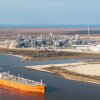
Trump’s initial post on Sunday evening said he was authorizing “the toll free opening of the Strait of Hormuz,” and directed ships to “start your engines.” Before the war, approximately 20% of the world’s oil and liquefied natural gas passed through that waterway, and the disruption of traffic has caused the greatest oil supply shock in history.
In a follow-up post, Trump later said that the strait would reopen “upon the signing of the Deal on Friday, for purposes of mine removal.”
Throughout this conflict, oil prices have repeatedly fallen on headlines promising an imminent deal to reopen the strait; however, they’ve never dropped this low. Significantly, Pakistan’s Prime Minister Shehbaz Sharif, who has played a central role negotiating between the U.S. and Iran, has confirmed that a deal has been reached.

A rapid reopening of the strait would ease pressure on the world’s oil consumers, particularly in Asia and Europe. However, it would not mean an immediate return to pre-war oil supply levels and prices.
“It could be months before things return to something like the way things were before the war, at least as far as flows out of the Strait of Hormuz go,” says Kevin Book, a managing director at Clearview Energy Partners, an independent research firm. That’s because some oil and natural gas production fields and refineries have been taken offline, or damaged in the conflict. “The facilities that have been shut down, some of them can start fairly quickly. Others may take months.”

Transit takes time, too. Ships also need to move in and out of the strait, and from there around the world.
And over the past few months, the world has tapped into its stockpiles of oil in order to make up for missing supplies; refilling those inventories could keep upward pressure on oil prices for months.
Before the war began, the world had been oversupplied with oil, which was keeping prices low. Book says it’s not clear whether returning to “normal” will mean returning to that status quo.
“It’s not obvious that we’ll be in a surplus any time soon,” he says.
This story originally appeared on NPR

