


Image source: Getty Images
A second income is the sort of prize usually reserved for Wimbledon finalists. But the weekend’s champions aren’t the only ones who can bank recurring rewards.
While Arthur Fery burst onto the Centre Court scene, the stock market quietly kept doing what it has done for four decades: compounding money for people patient enough to leave it alone.
What £100 a month can become
Since its 1984 inception, the FTSE 100 has delivered an average annualised total return of around 6.9%, with dividends reinvested. Add £100 a month at that rate and the results look like this:
| Timeframe | Portfolio value | Annual second income at 6.9% |
|---|---|---|
| 10 years | £17,214 | £1,188 |
| 20 years | £51,465 | £3,551 |
| 30 years | £119,617 | £8,254 |
There’s a pattern that’s worth noting here: the third decade adds more than the first two combined. That’s where the returns really start to take over. Of the £119,617 portfolio, just £36,000 is actual contributions. The rest is what comes back in dividends and increasing value.
Past performance isn’t a guarantee of future returns – if it were, investing would be a lot easier than it actually is. But the compound interest formula’s set in stone.
Why now looks interesting
UK shares remain unusually cheap by international standards. Even after the FTSE 100’s run past 10,000, the index trades at a forward price-to-earnings (P/E) ratio of about 13.4.
That compares with around 20 for the S&P 500. The US market’s multiple prices in years of uninterrupted earnings growth, the UK’s doesn’t.
The two indices aren’t the same – the US has a heavier tech focus than the UK. Ultimately however, money is money, regardless of which business it comes from. That’s why most of my Stocks and Shares ISA consists of UK-listed names. I think it’s a great place to look for potential opportunities.
A stock worth considering
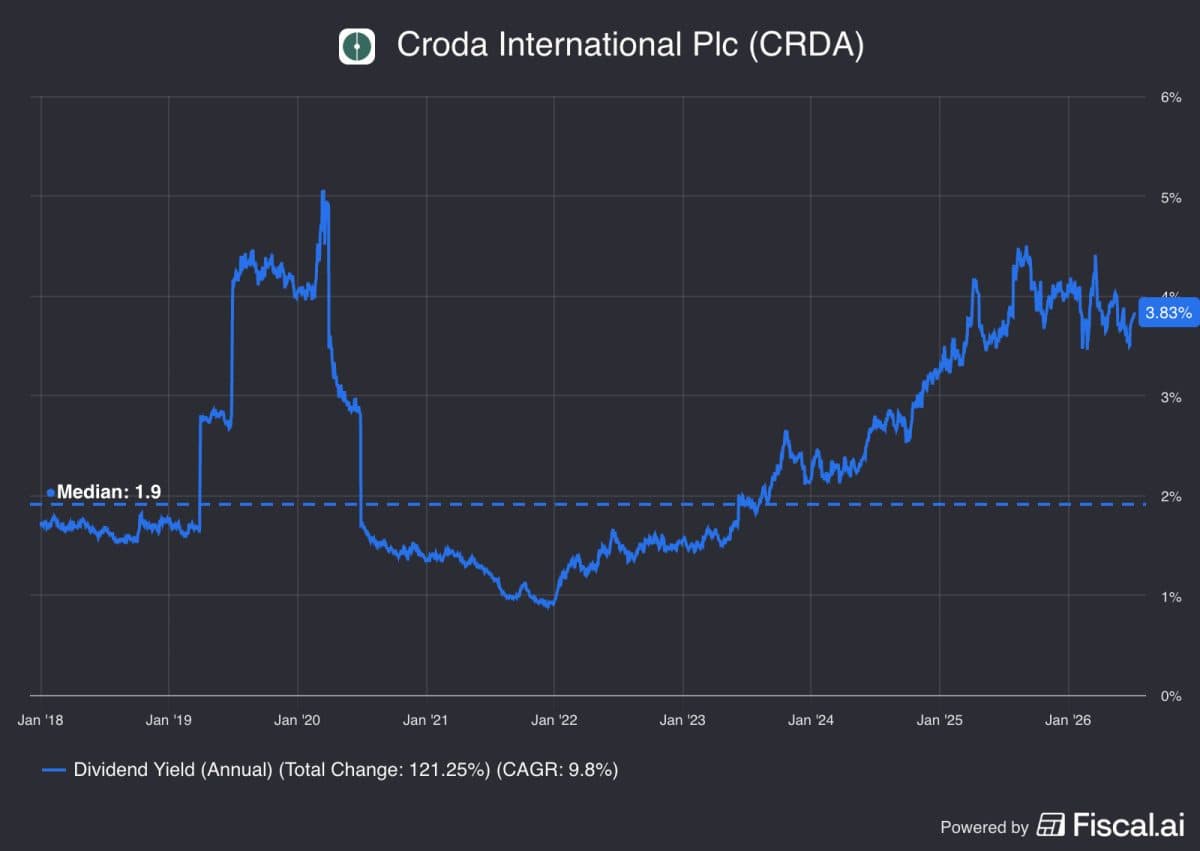
Croda International‘s (LSE:CRDA) a name I own that demonstrates what value looks like. And it has a terrific record when it comes to dividends.
The speciality chemicals firm has a strong record of dividend growth and the current yield is close to 3.7%. That’s very high compared to the 1.5% average over the last 10 years.
Long-term protection comes from Croda’s products being specified into customer formulations. That means switching involves re-testing and re-approving, so customers rarely leave to save pennies.
The lipids (organic, water-insoluble macromolecules) business remains the wildcard. Demand has been picking up, but the US regulatory environment remains a tricky one and a source of risk for the business in the near future.
Overall however, the latest results are encouraging. Strong growth across a number of divisions – including ceramides (essential fats) and fragrances – show real signs of recovery from cyclical lows.
Buy while it’s cheap?
Croda’s dividend yield isn’t just a passive income signal. It’s also a sign the stock’s unusually cheap – which is why I’m continuing to add to my own investment in the company.
Down 70% from its 2021 highs, that certainly seems to be the case. And that’s why I think it’s worth considering for investors looking to earn a second income by investing £100 a month.
What income stock do we like better than Croda International Plc right now?
One of our Share Advisor analysts has just released a brand new stock report that we think is a must-read for any investor looking to try and generate potential income.
And the best bit is that you can see if for yourself, right now, absolutely free of charge!
No jargon. No hard sell. Just a clear look at an income share we think is worth your time.
Stephen Wright owns shares in Croda International.
This story originally appeared on Motley Fool

