


July 28, 2026
Picking Farm Fresh Blueberries
The blueberries are ready for harvest!
With their plump, juicy sweetness and range of colors from vibrant red to deep purple-black, blueberries are truly one of nature’s finest delights. I use them in jams, jellies, and pies, but they’re equally delicious in pancakes, yogurt, cereal, and cobblers, or simply enjoyed by the handful. Low in fat and rich in vitamin C and antioxidants, it’s no wonder blueberries are one of America’s favorite fruits.
Enjoy the photos.
-
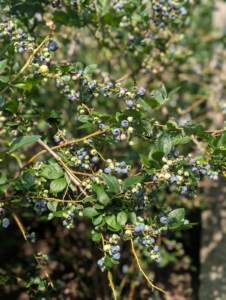
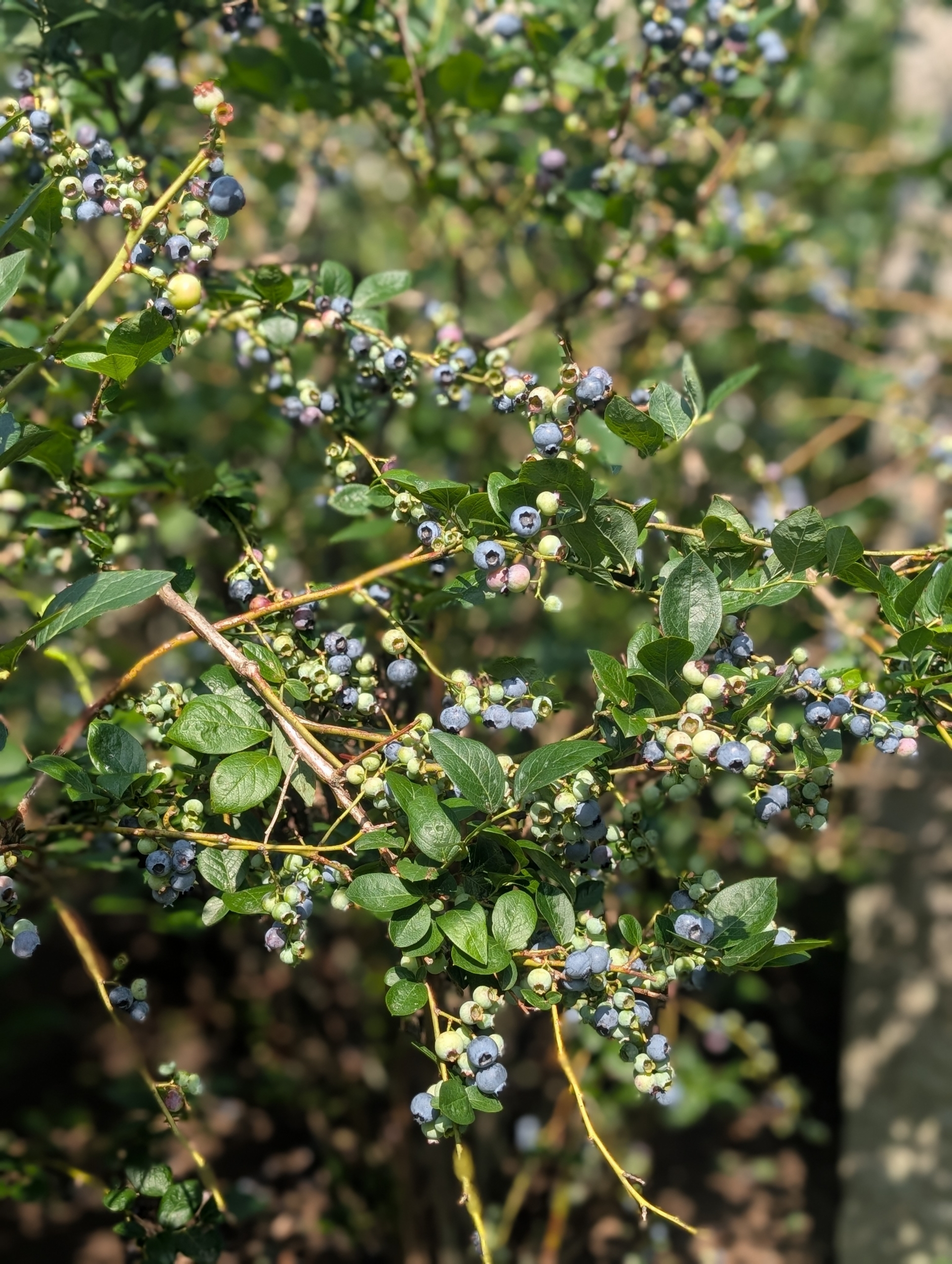
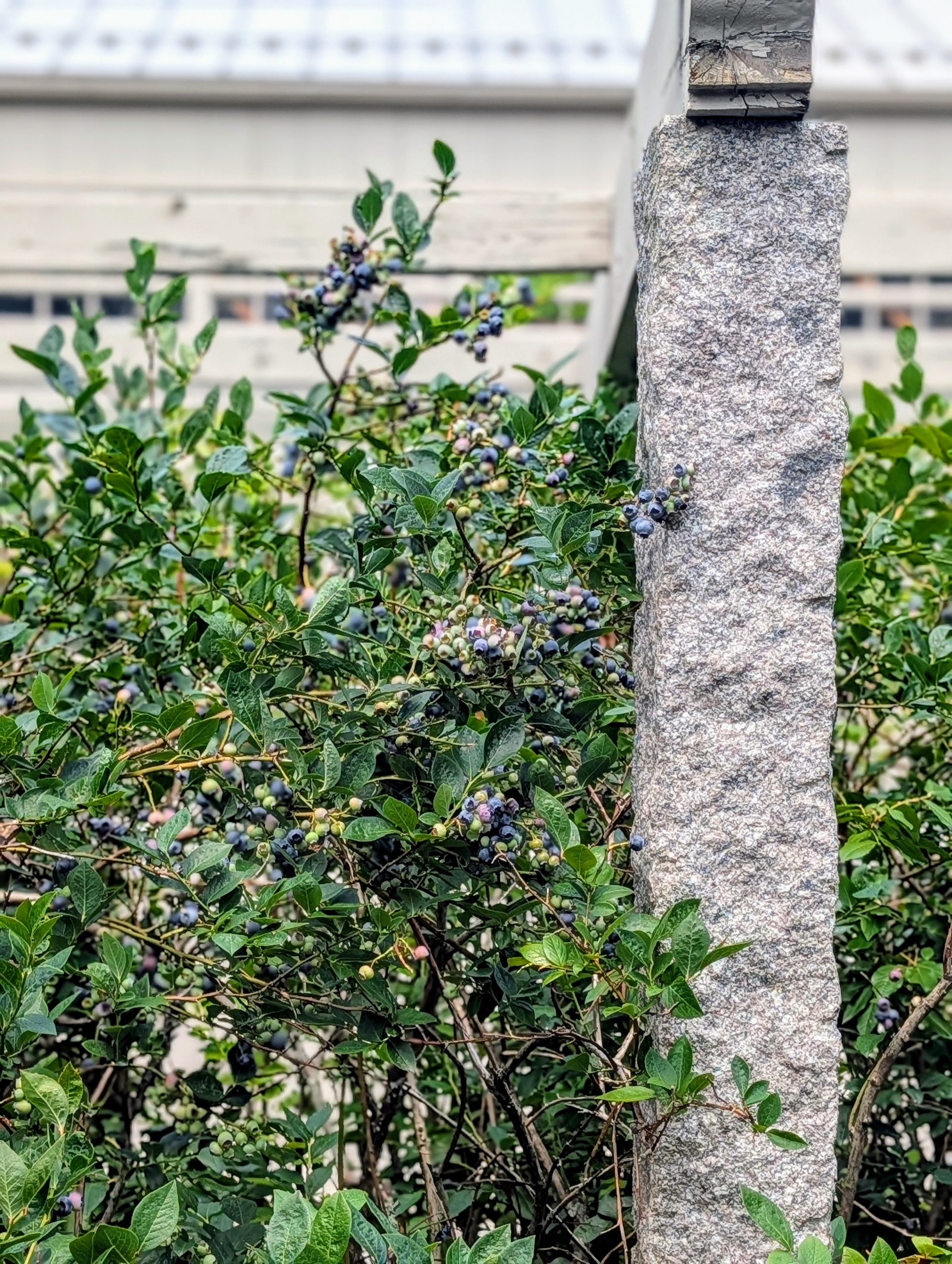
- Right now my blueberry bushes are laden with delicious fruits – almost every branch is full.
-
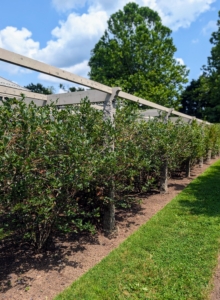
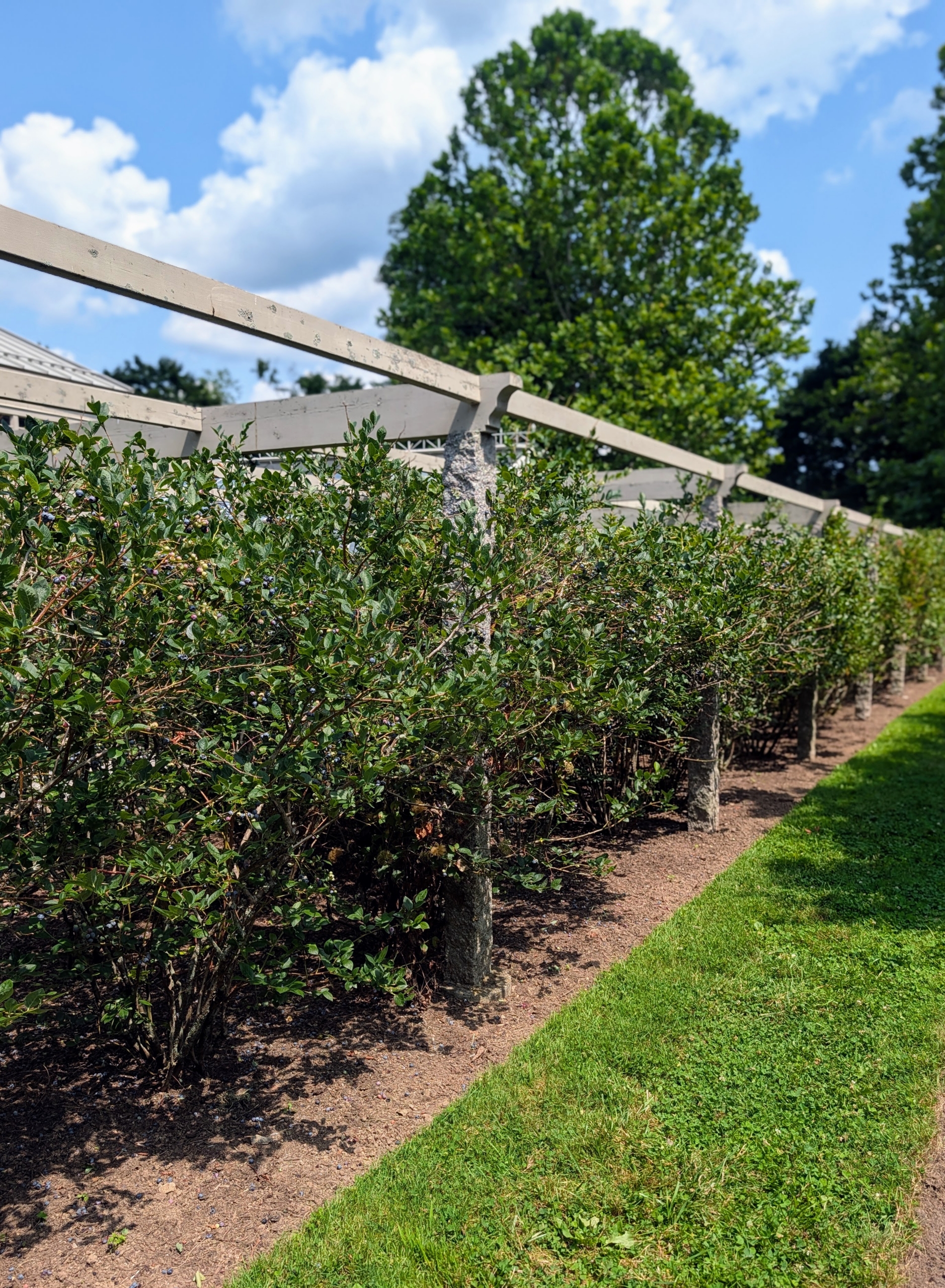
- My blueberries are all from bushes located between my flower garden and large Equipment Barn, next to a stand of quince trees.
-
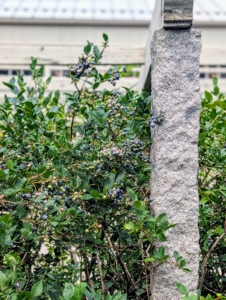
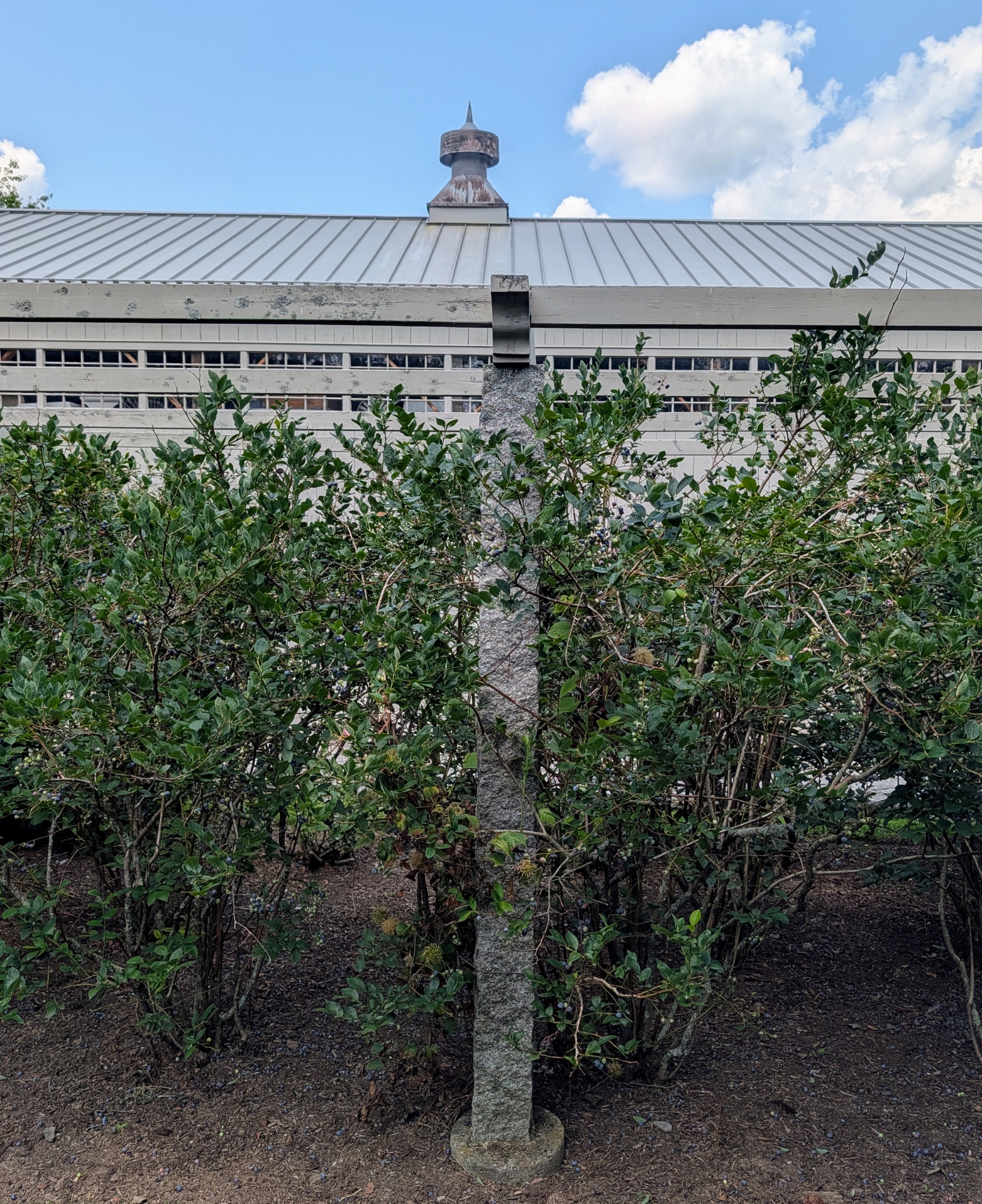
- The posts supporting the pergola above are the same 18th-century Chinese granite uprights I use for the clematis pergola, my apple espaliers, and my raspberry bushes.
-
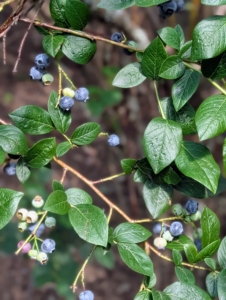
- Every year around this time, the patch is checked often until the berries are ready for picking.
-
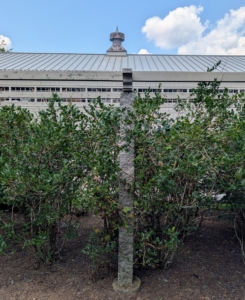
- Standard blueberry bushes grow about six to 10-feet tall. New shoots grow from the crown under the soil.
-
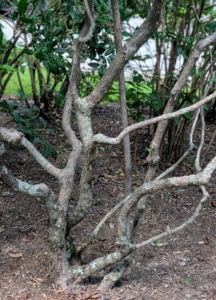
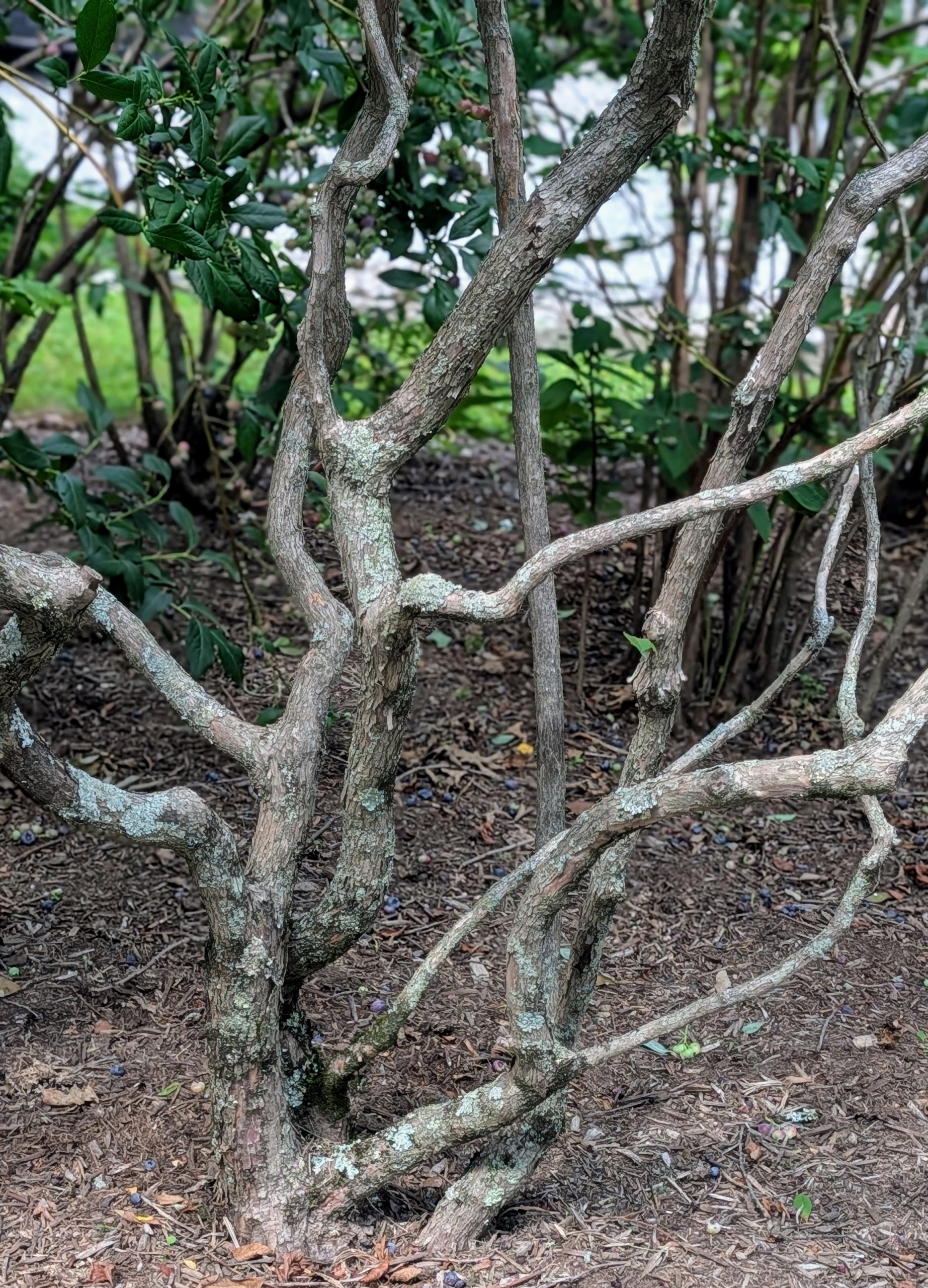
- At the base, blueberry shrubs have multiple canes growing directly out of the earth in clumps. The canes or branches are smooth and thornless. These bushes have done so well here at the farm. I am always so pleased with how prolific they are.
-
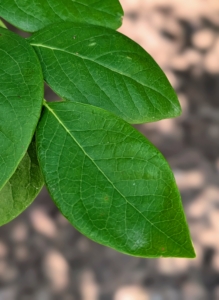
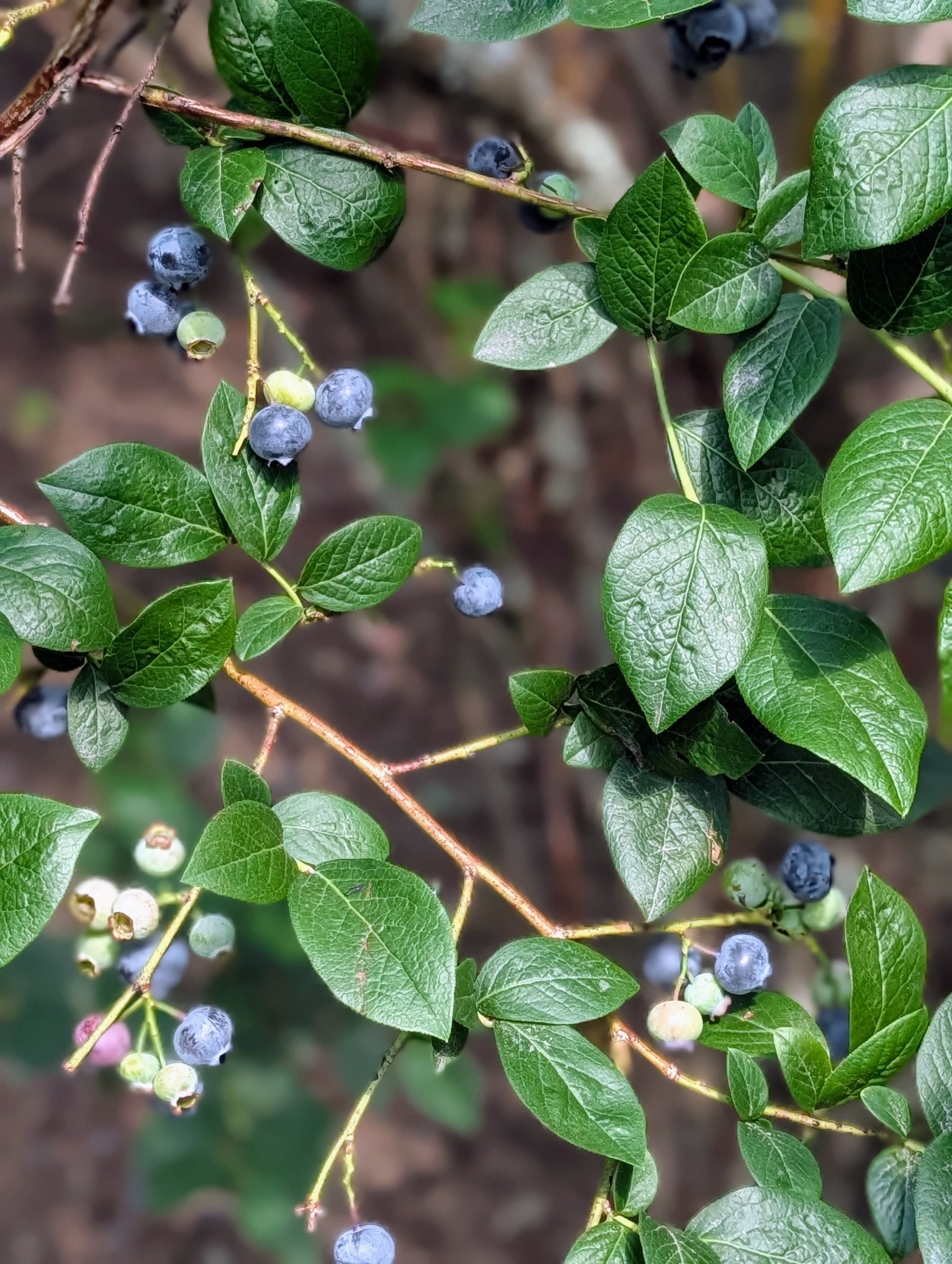
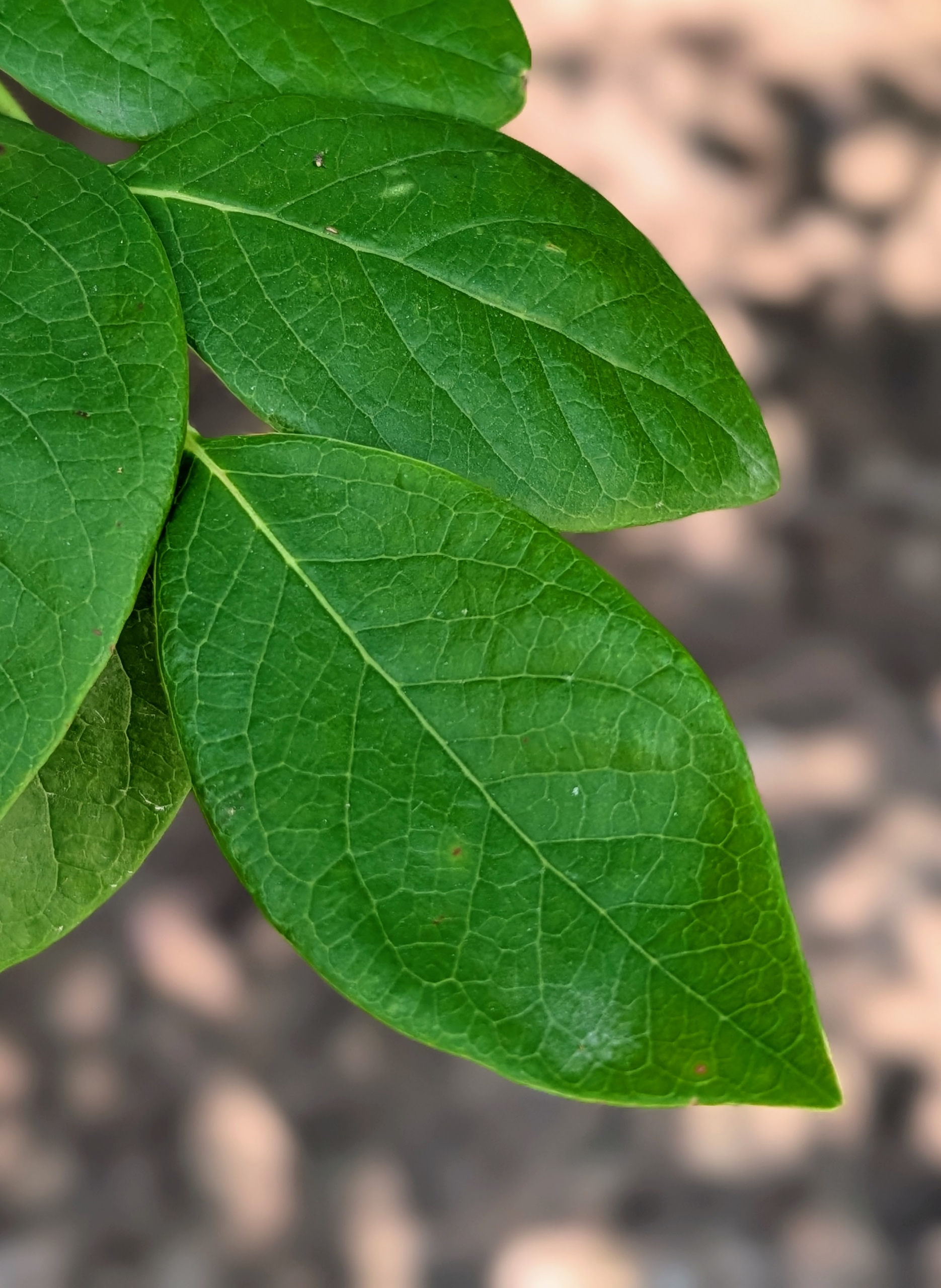
- Blueberry bushes have glossy leaves that are green or bluish-green from spring through summer. The leaves are ovate, in an irregular oval or slightly egg shape that is wider at the bottom than the top. Blueberry leaves can also be harvested and dried for teas.
-
- Blueberries are easy to grow when provided with acidic soil, consistent moisture, and adequate sunlight.
-
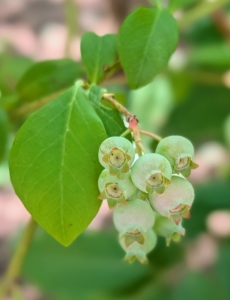
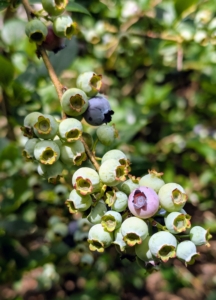
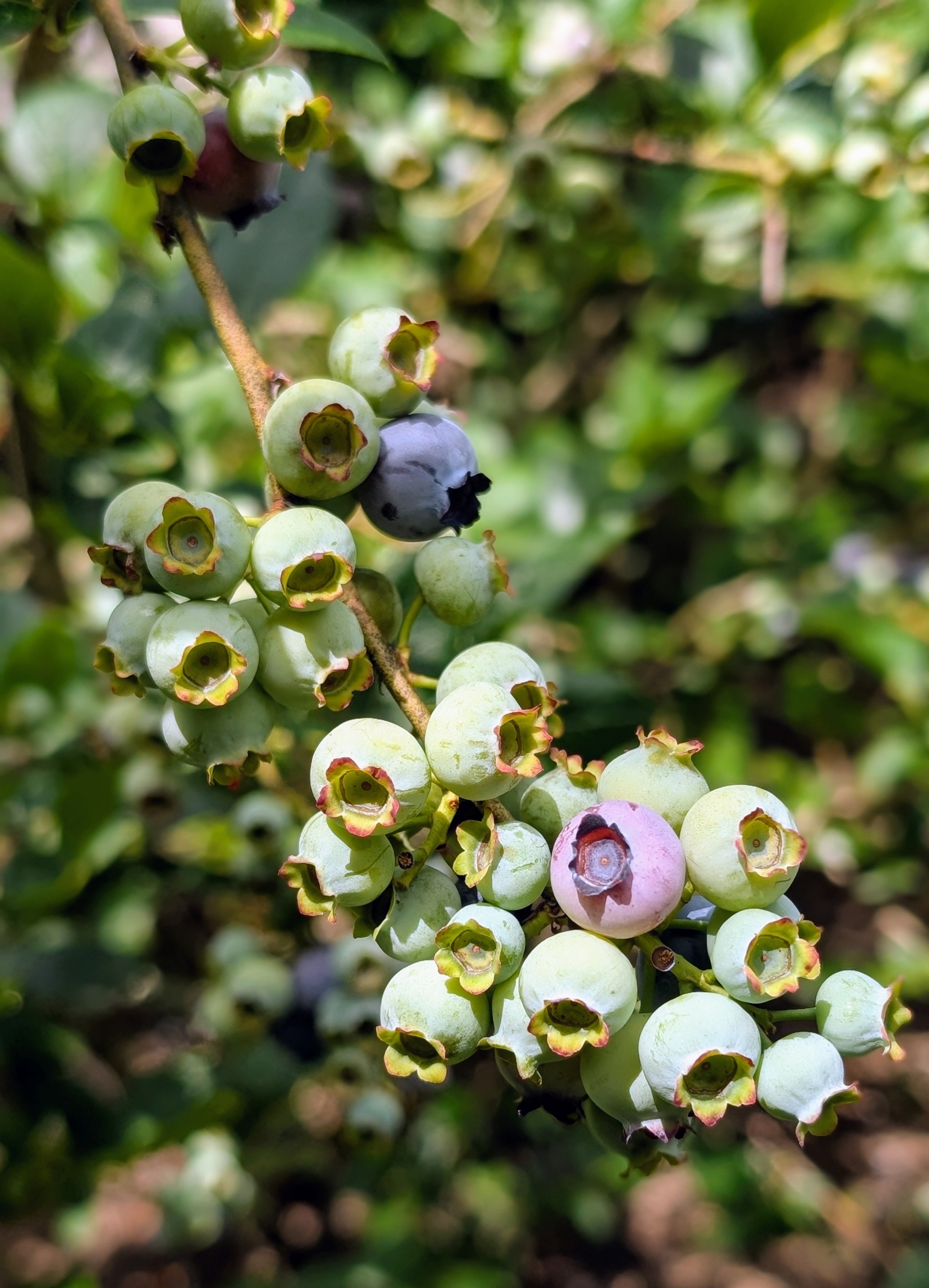
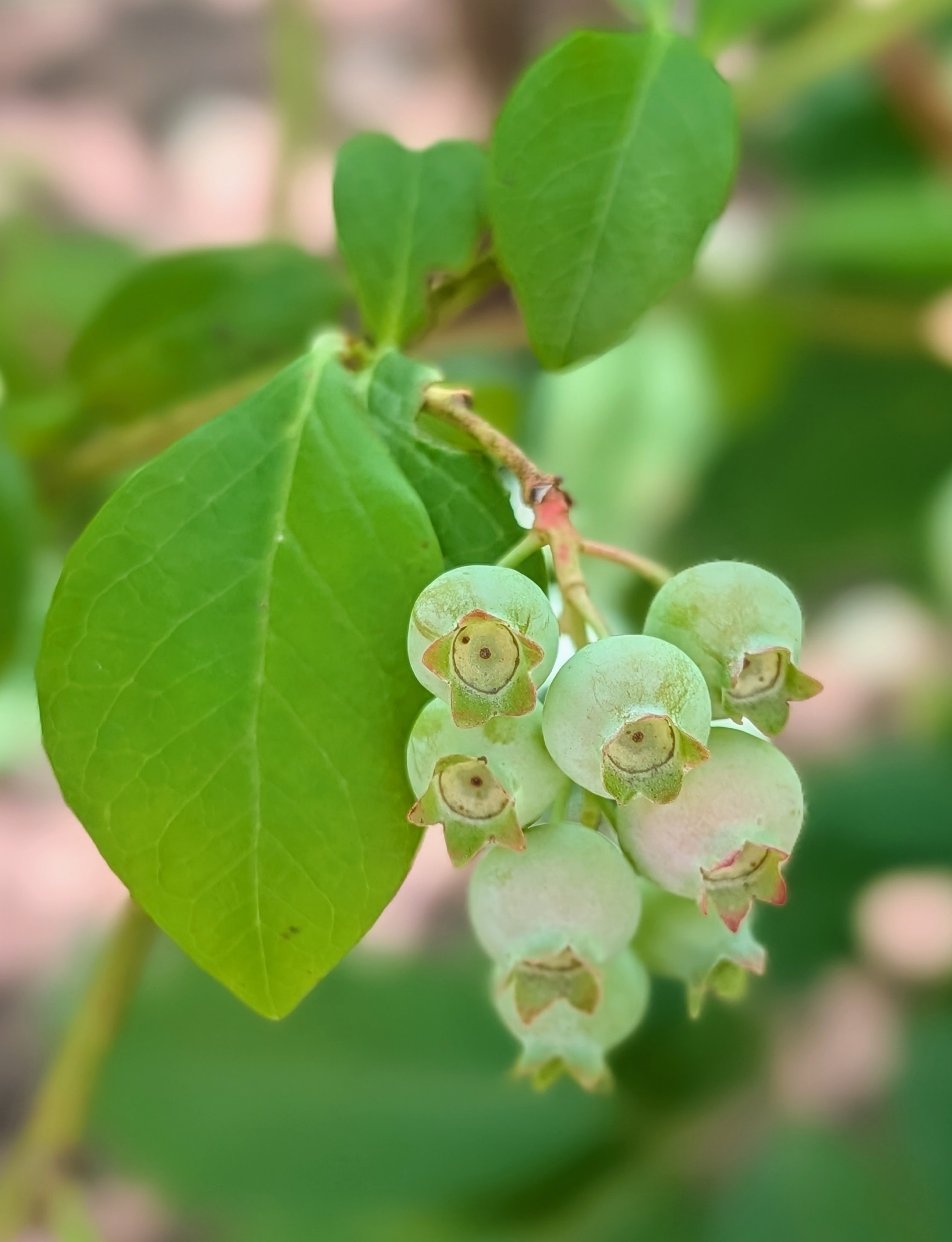
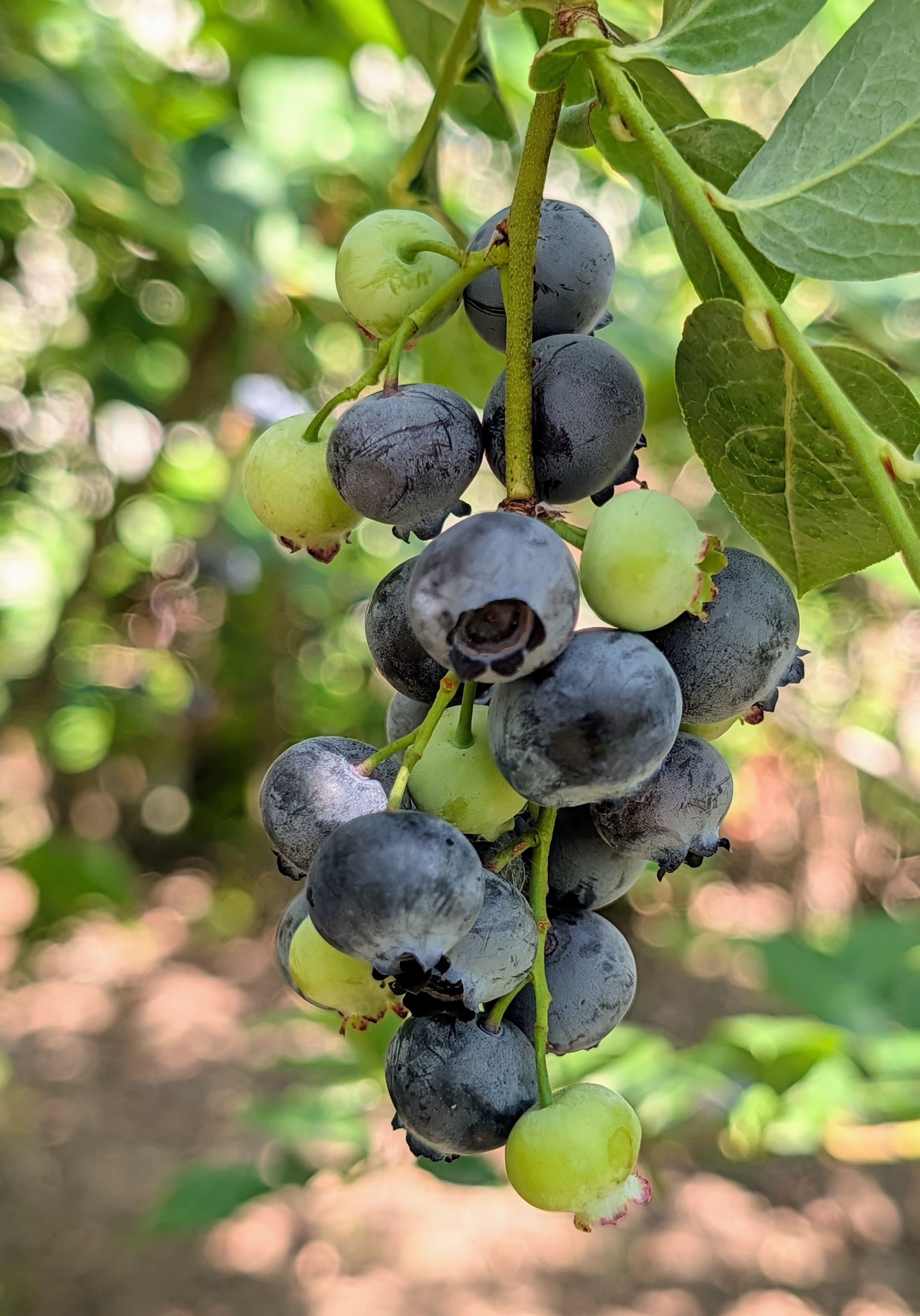
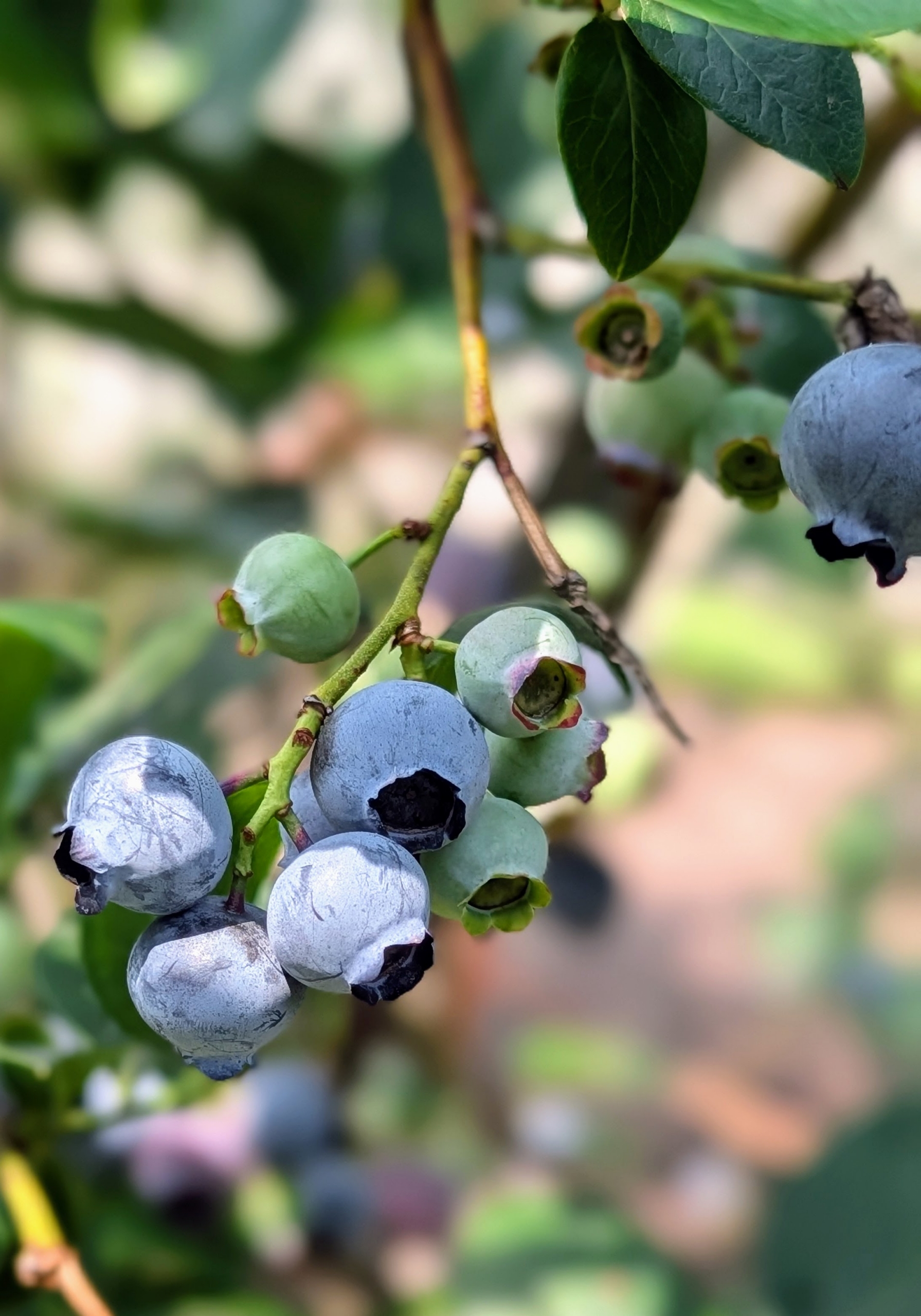
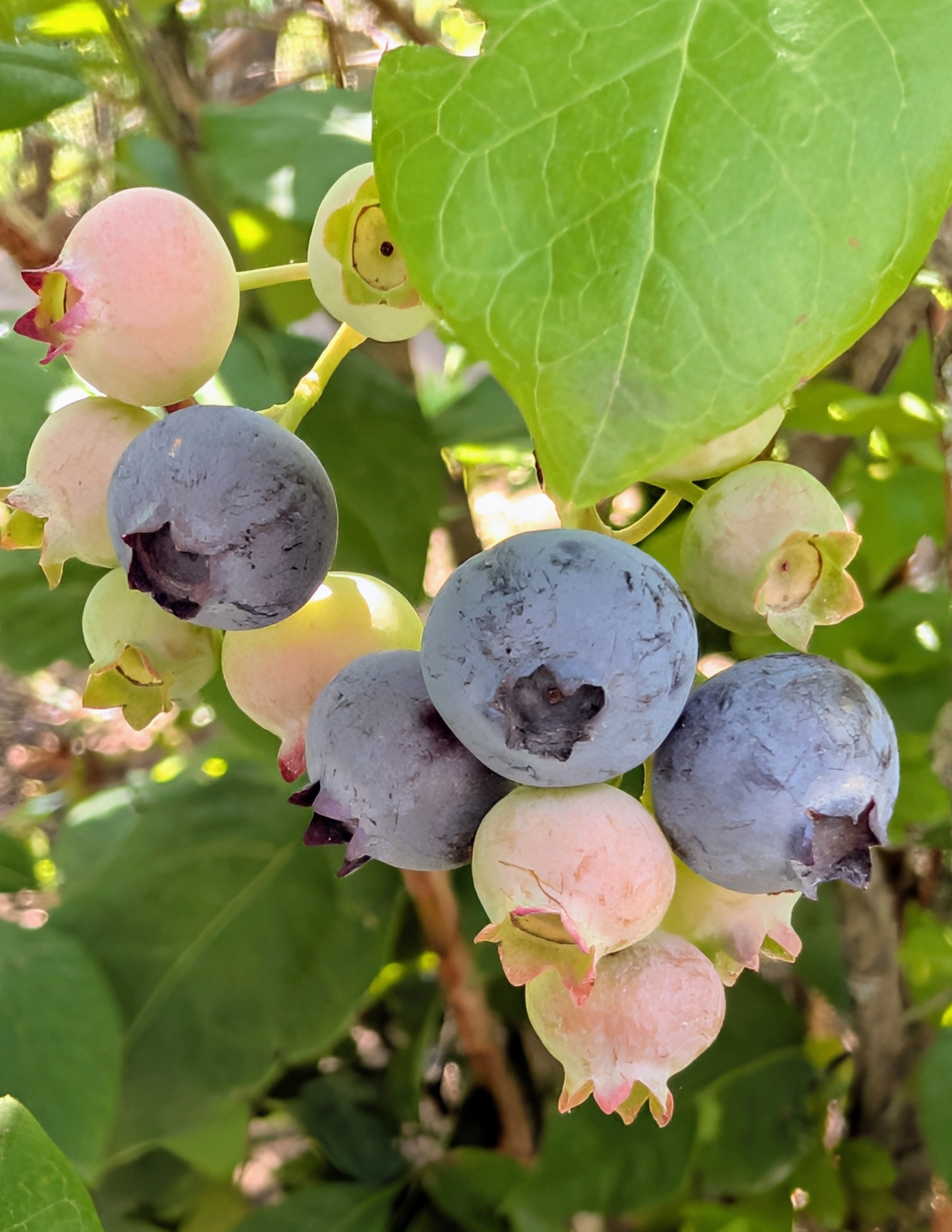
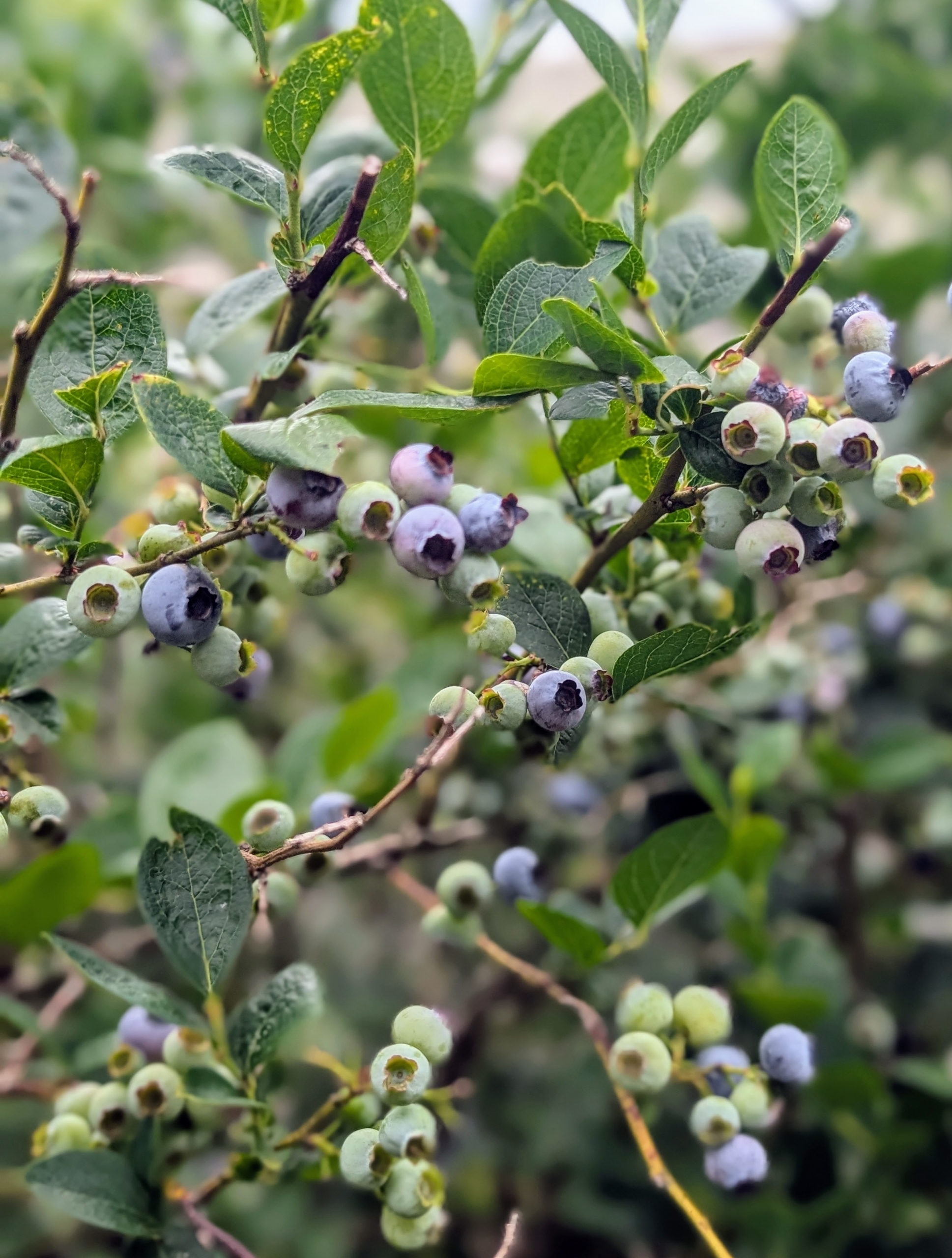
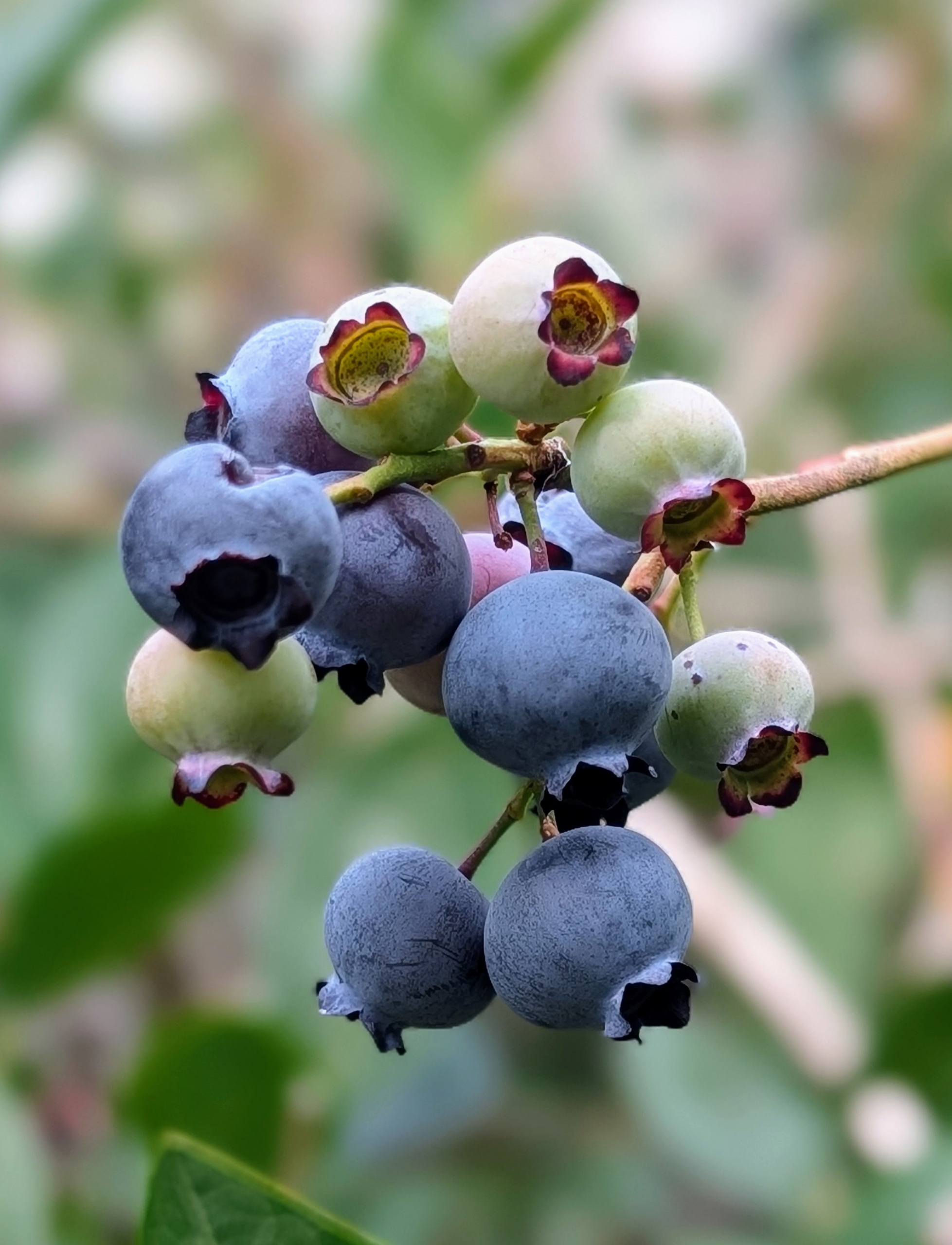
- When the blueberries start growing they are pale green.
-
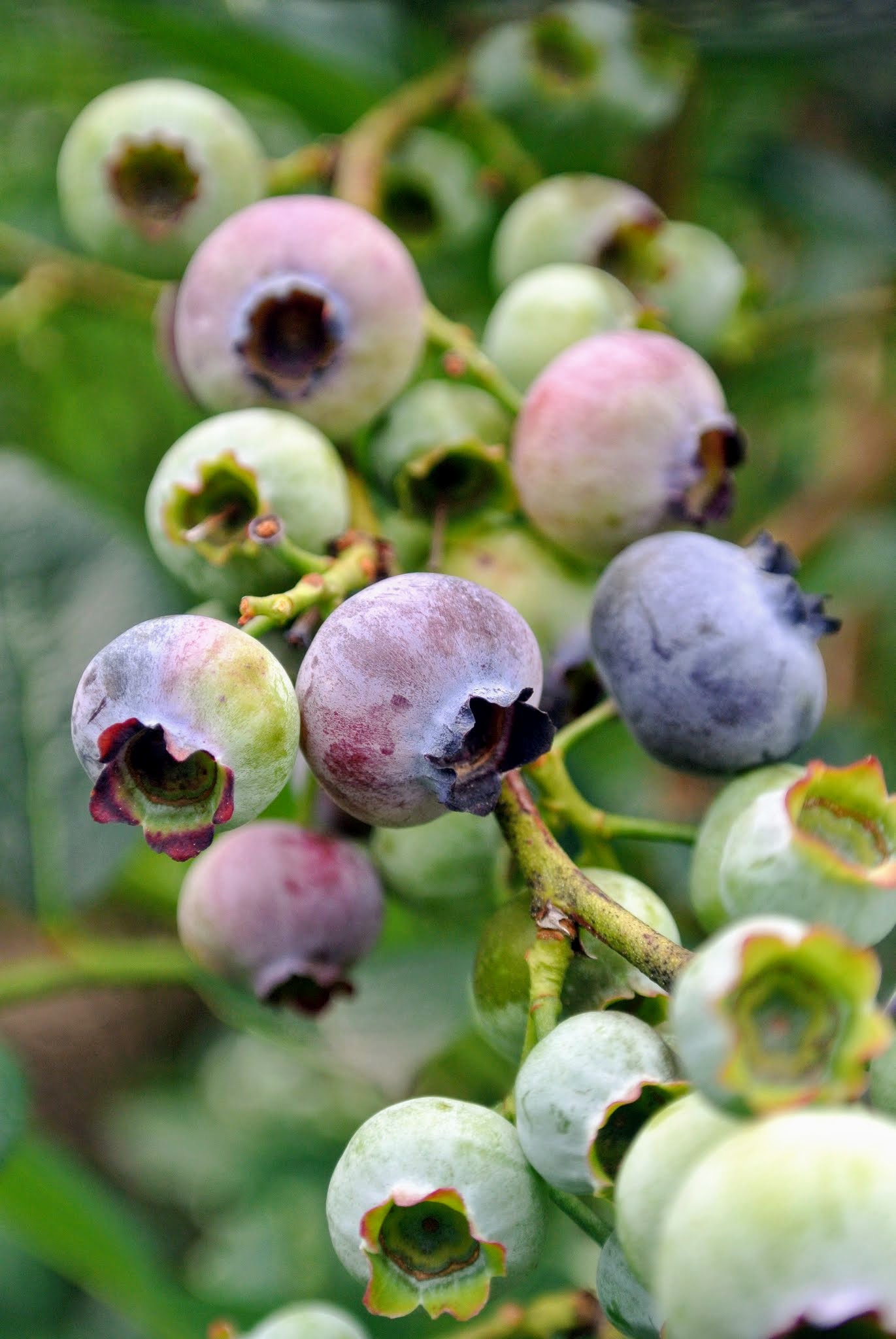
- Days later, they turn reddish-purple.
-
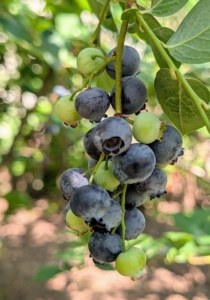
- And finally they deepen to a more uniform dark purple-blue when ripe. The full transformation to deep blue typically takes about one to two weeks depending on the variety, climate and growing conditions.
-
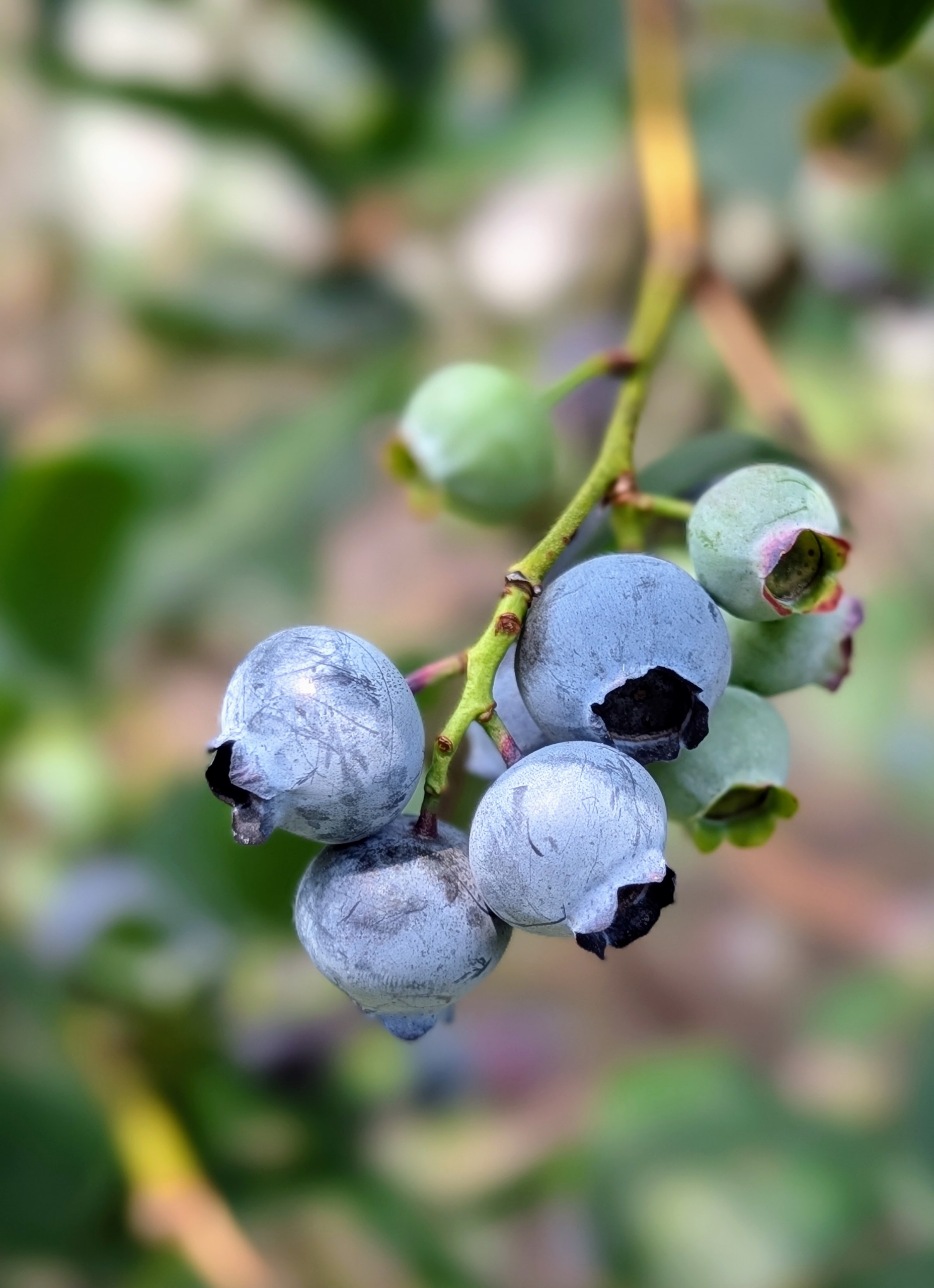
- And blueberries don’t actually reach their full flavor until a few days after they turn blue.
-
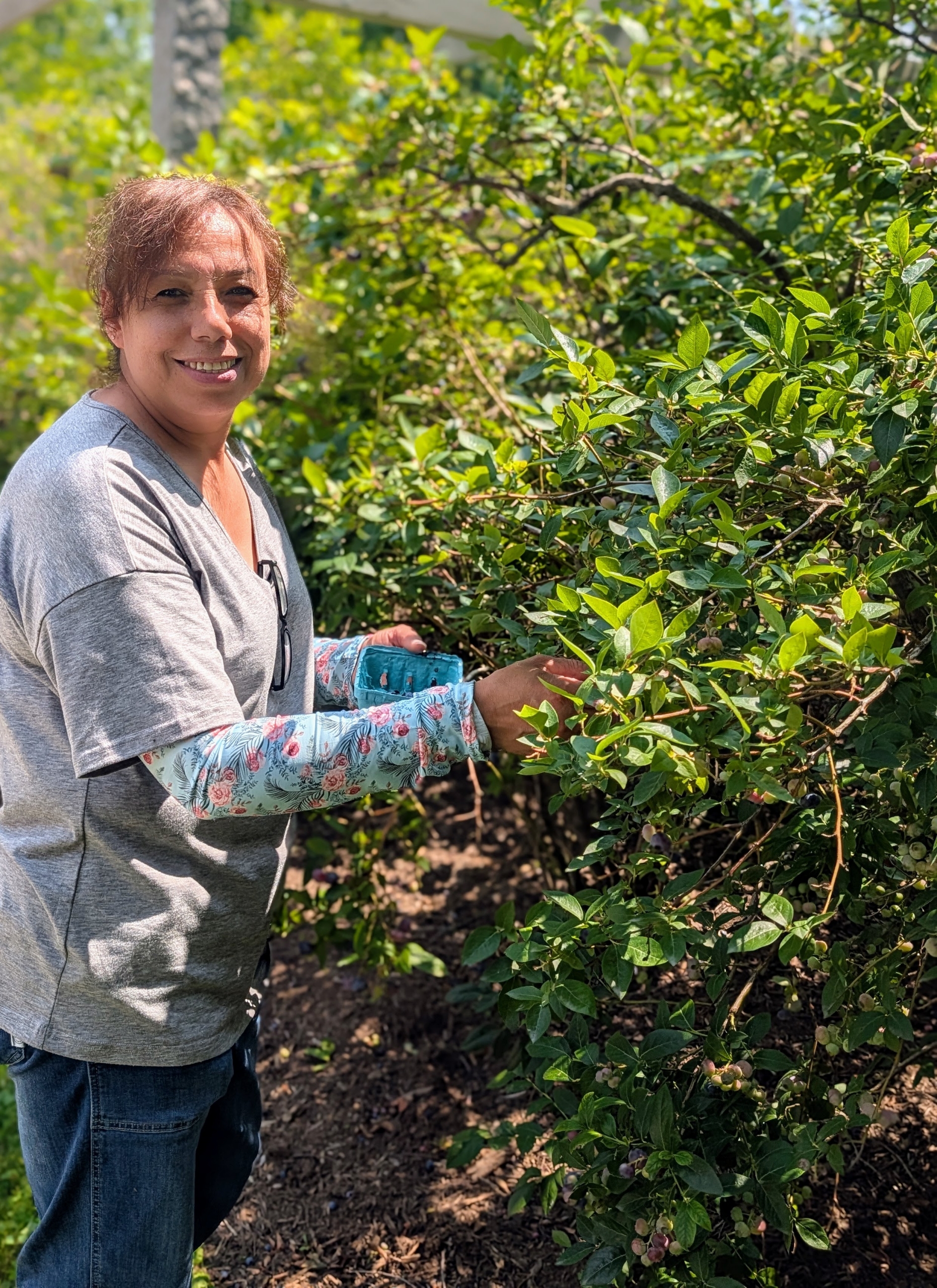
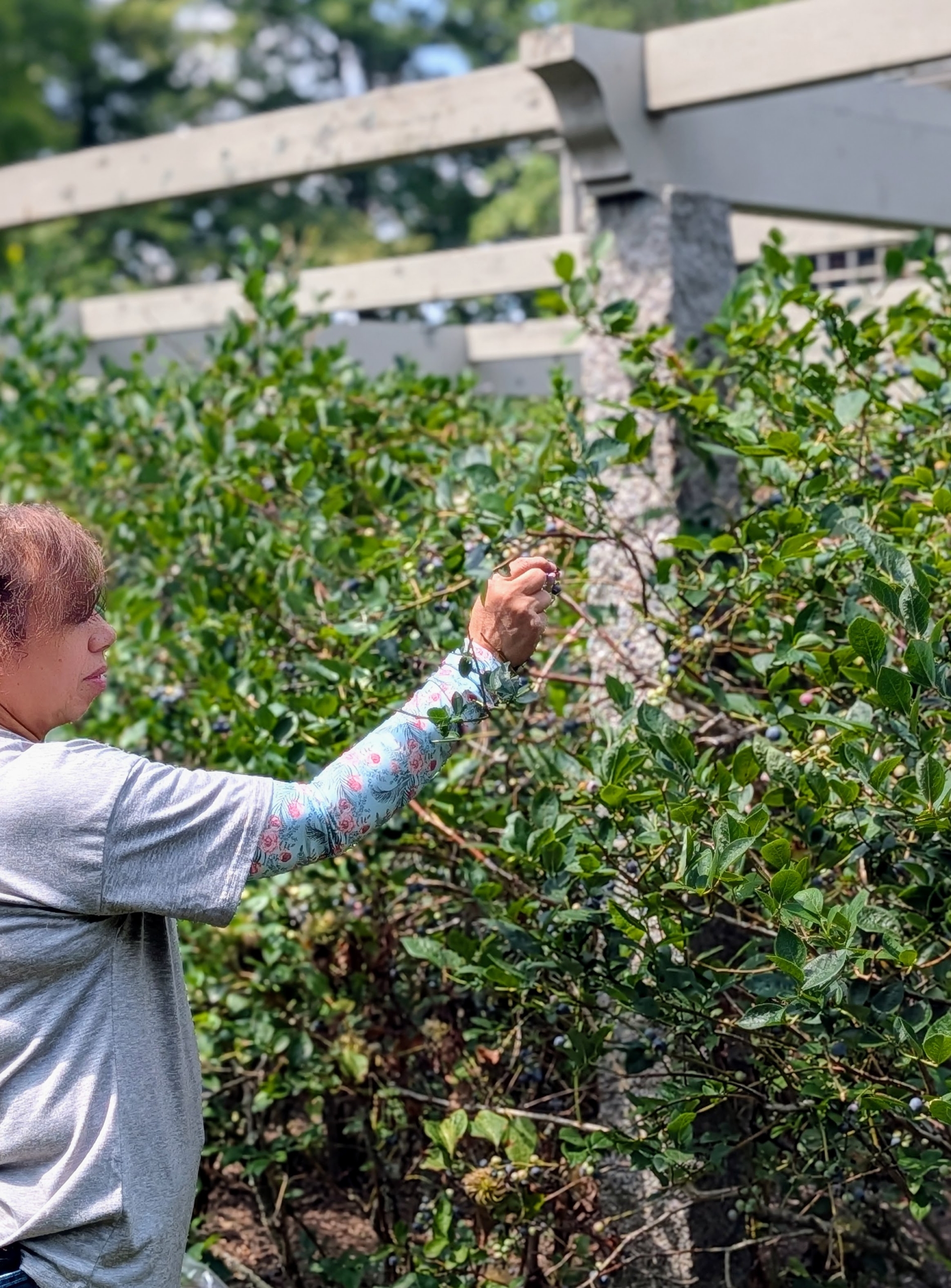
- Yesterday, Elvira was happy to start harvesting.
-
- There are different types of blueberries -Northern and Southern highbush. Rabbiteye, lowbush, and a hybrid called Half-High. Highbush blueberries are the types you commonly find at grocery stores and farmers’ markets. Lowbush blueberries are smaller, sweeter blueberries often used for making juices, jams, and baked goods.
-
- One tip to know which ones are ready – tickle the bunches lightly, and only the truly ripe ones will fall.
-
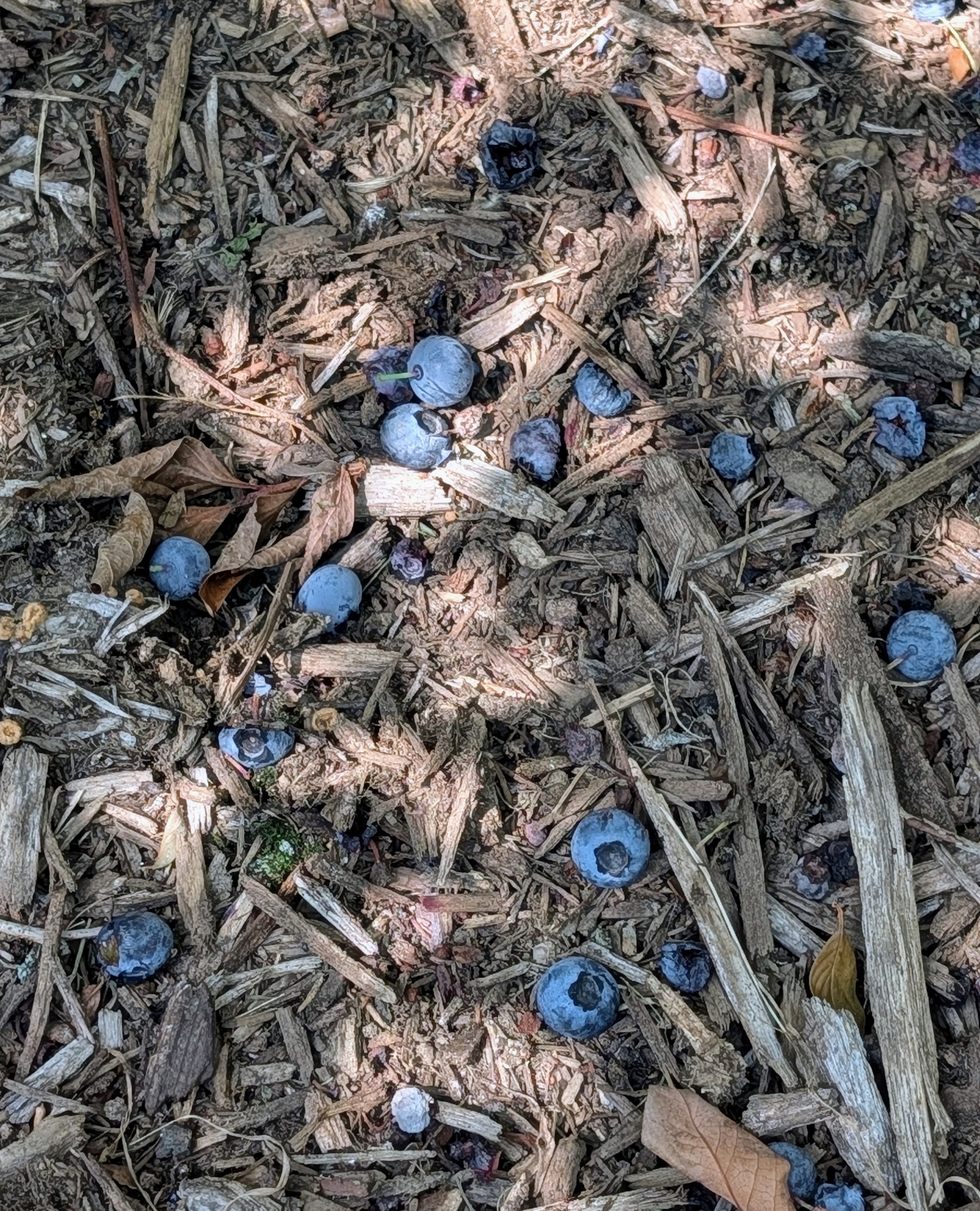
- Many blueberries also fall to the ground. All those picked are carefully inspected – only the best are saved. The rest are enjoyed by the birds.
-
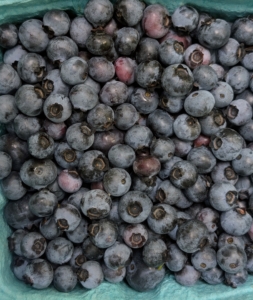
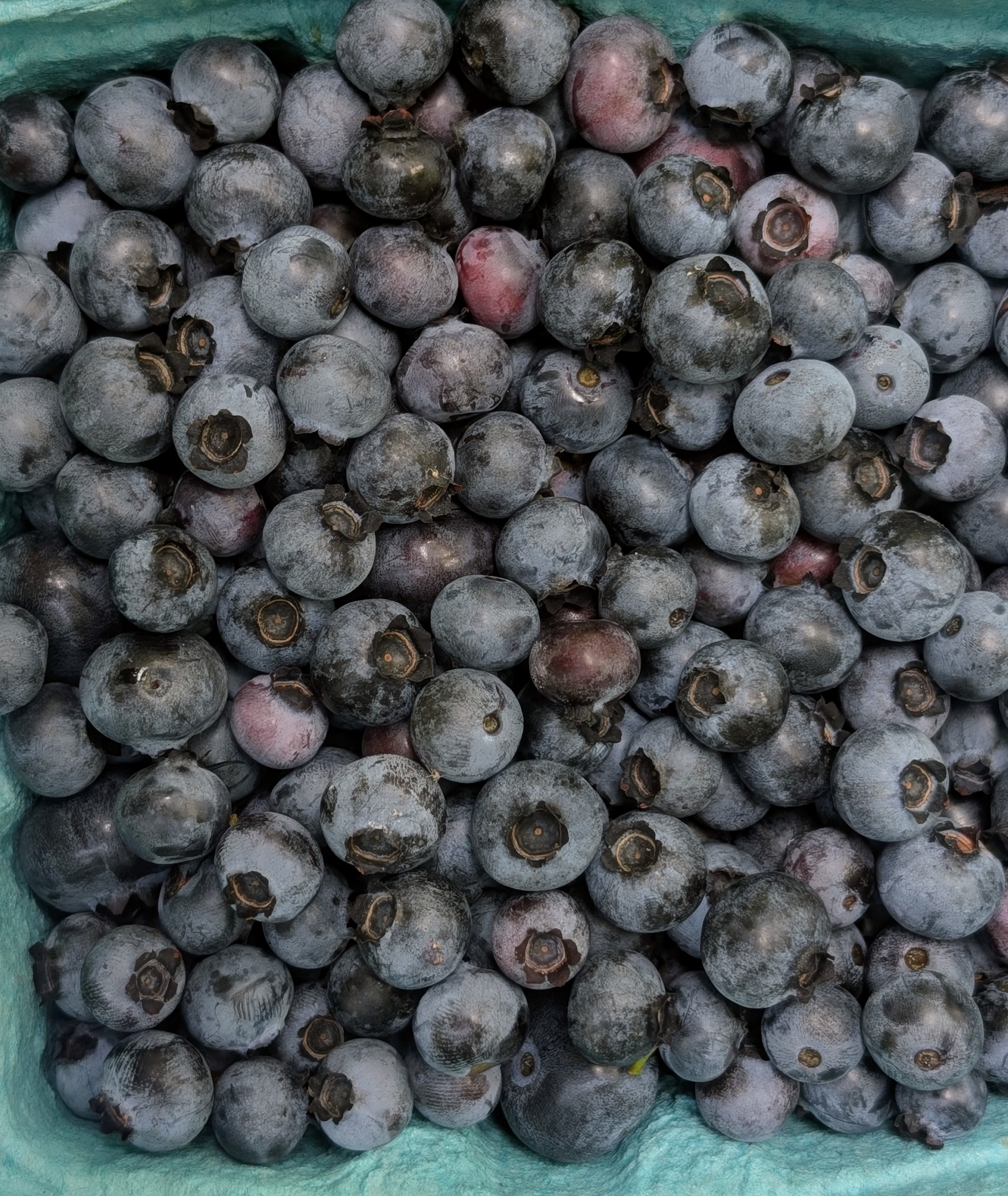
- Each of these fruits is about five to 16 millimeters large with a flared crown at the end. They were once called “star fruits” by North American indigenous peoples because of the five-pointed star shaped crown.
-
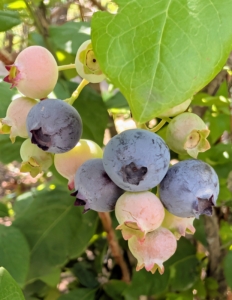
- Blueberries are covered in a protective powdery epicuticular wax known as the “bloom”.
-
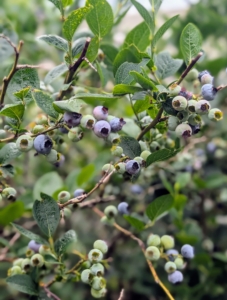
- I grow many blueberry varieties, including ‘Bluegold’, ‘Chandler’, ‘Darrow’, ‘Jersey’, and ‘Patriot’.
-
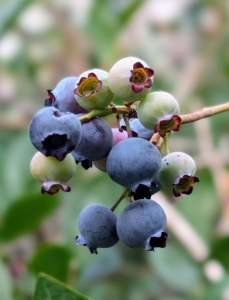
- A single healthy blueberry bush can produce thousands of berries a year.
-
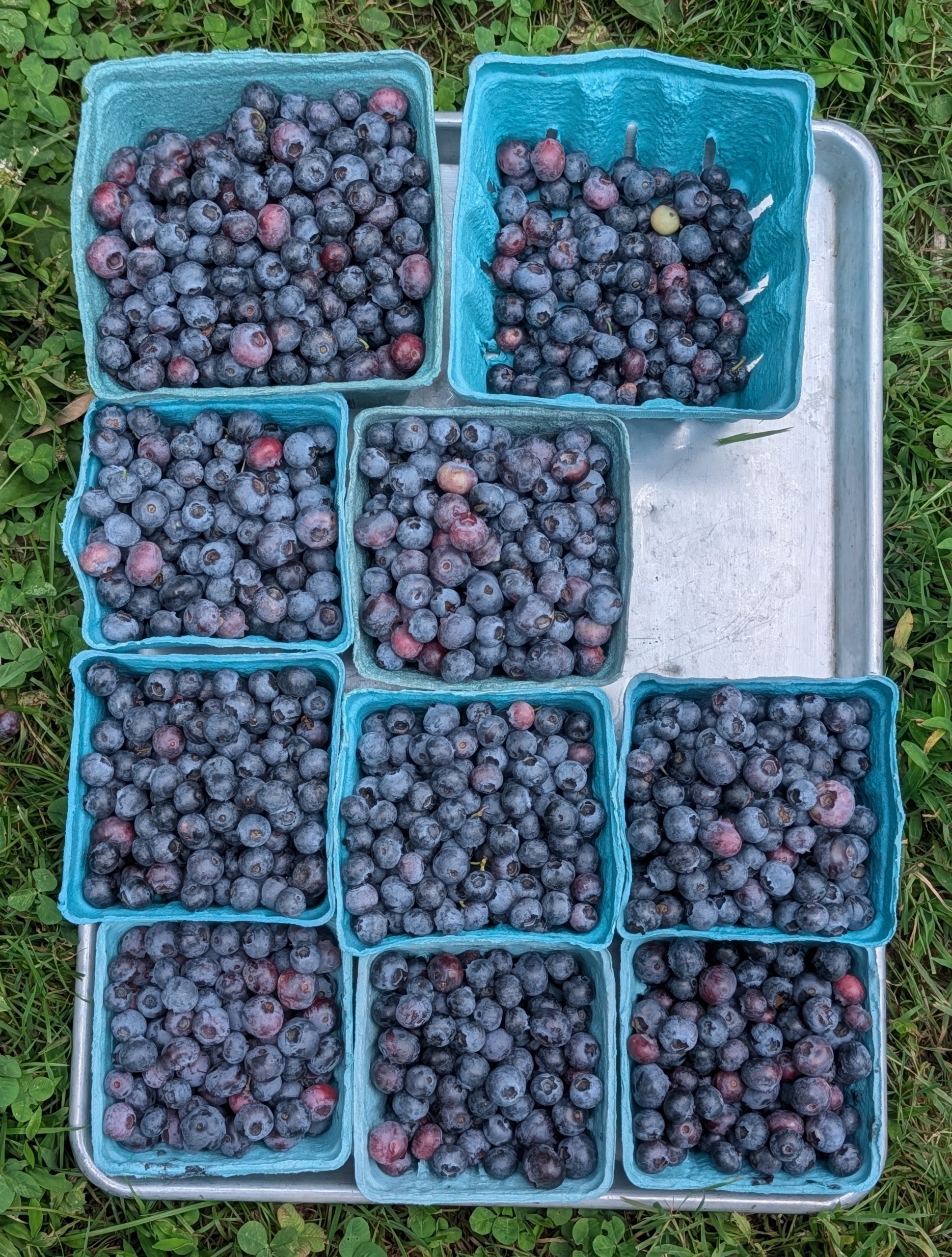
- These boxes were all picked in under an hour. Blueberries produce from early summer through late fall – we will pick lots and lots of berries before the end of the season.
This story originally appeared on Martha Stewart Blog

