


August 4, 2026
My Geese Enjoying the Rain
Here in the Northeast we’ve had several days of heavy rain, but one group around my farm couldn’t be happier – my gaggle of geese.
I share my farm with 14 beautiful geese, including Sebastopols, Toulouse, Africans, Chinese, and, of course, my ever-watchful Pomeranian guard geese. For these birds, rainy weather can be very beneficial. It gives them the chance to bathe and preen, keeps their feathers in top waterproof condition, softens the ground for easier foraging, and helps them stay cool and comfortable in the warmer weather.
Here are a few photos, enjoy.
-
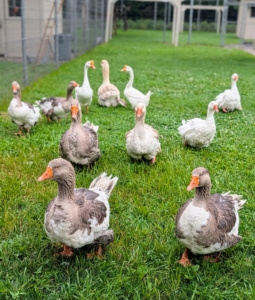
- Hard to tell, but this photo was taken when it was pouring rain – and the geese are loving it. My geese have a large yard located right outside my stable.
-
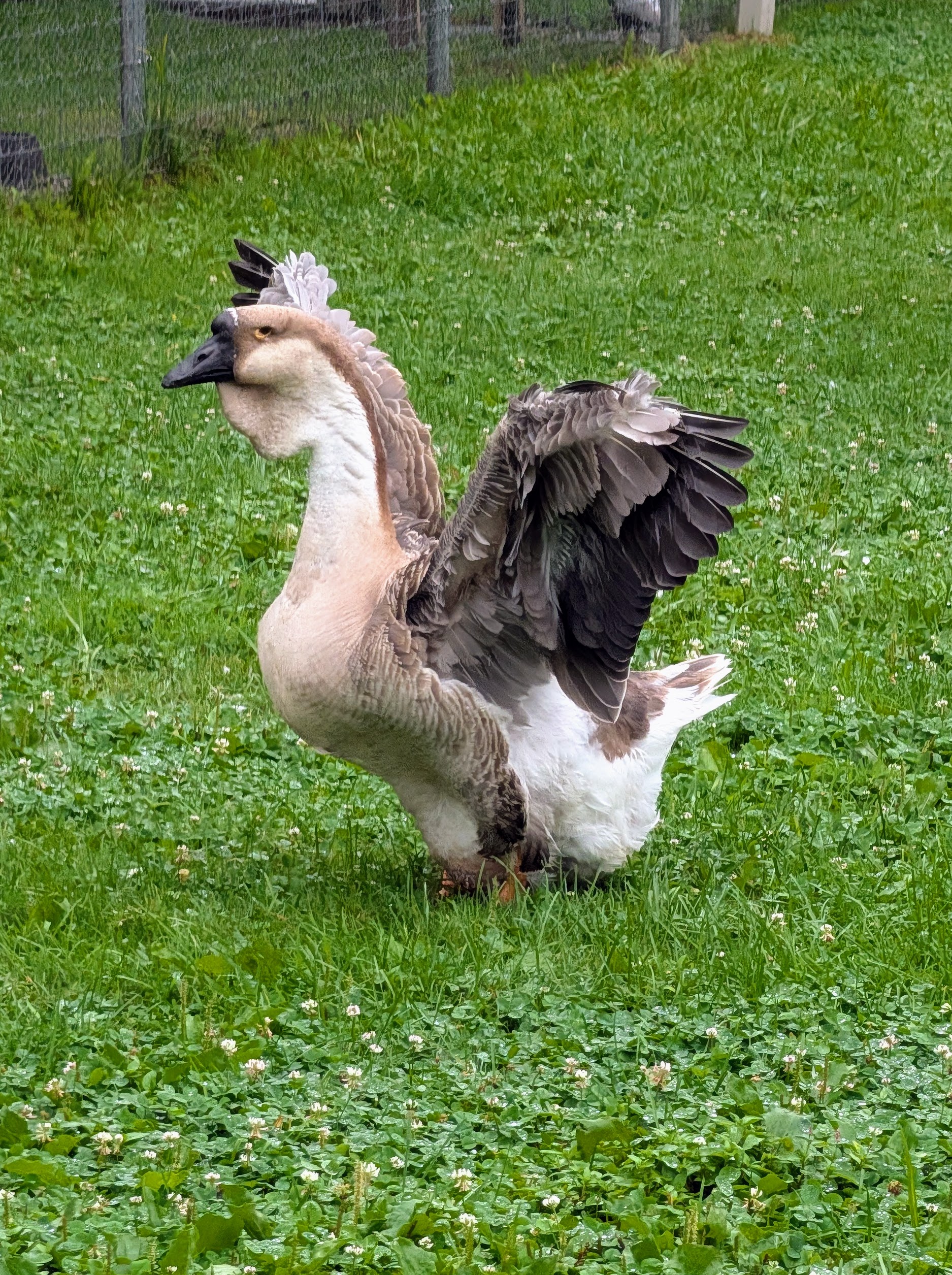
- They enjoy being out in the rain, flapping their wings and walking through the mud and muck.
-
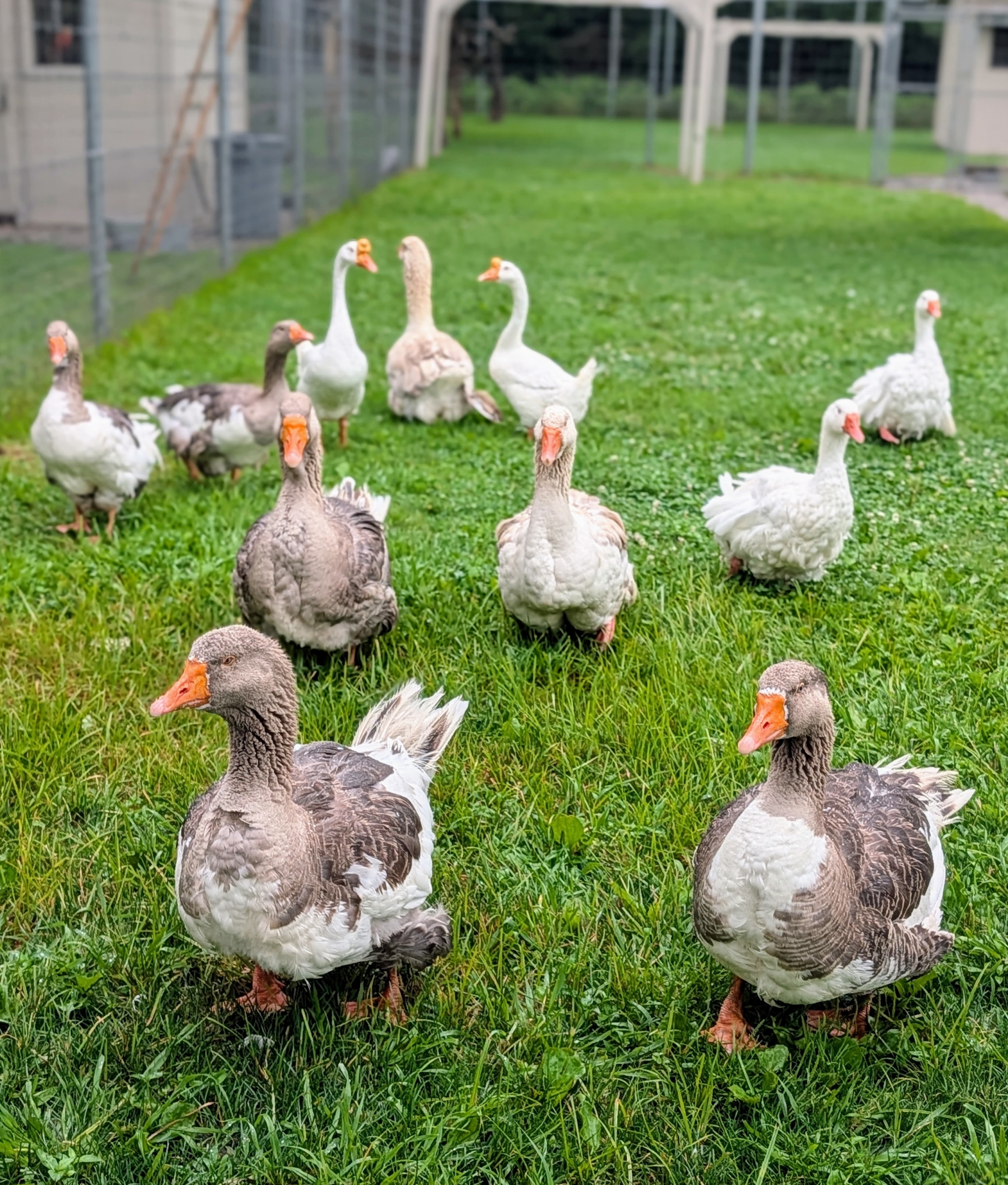
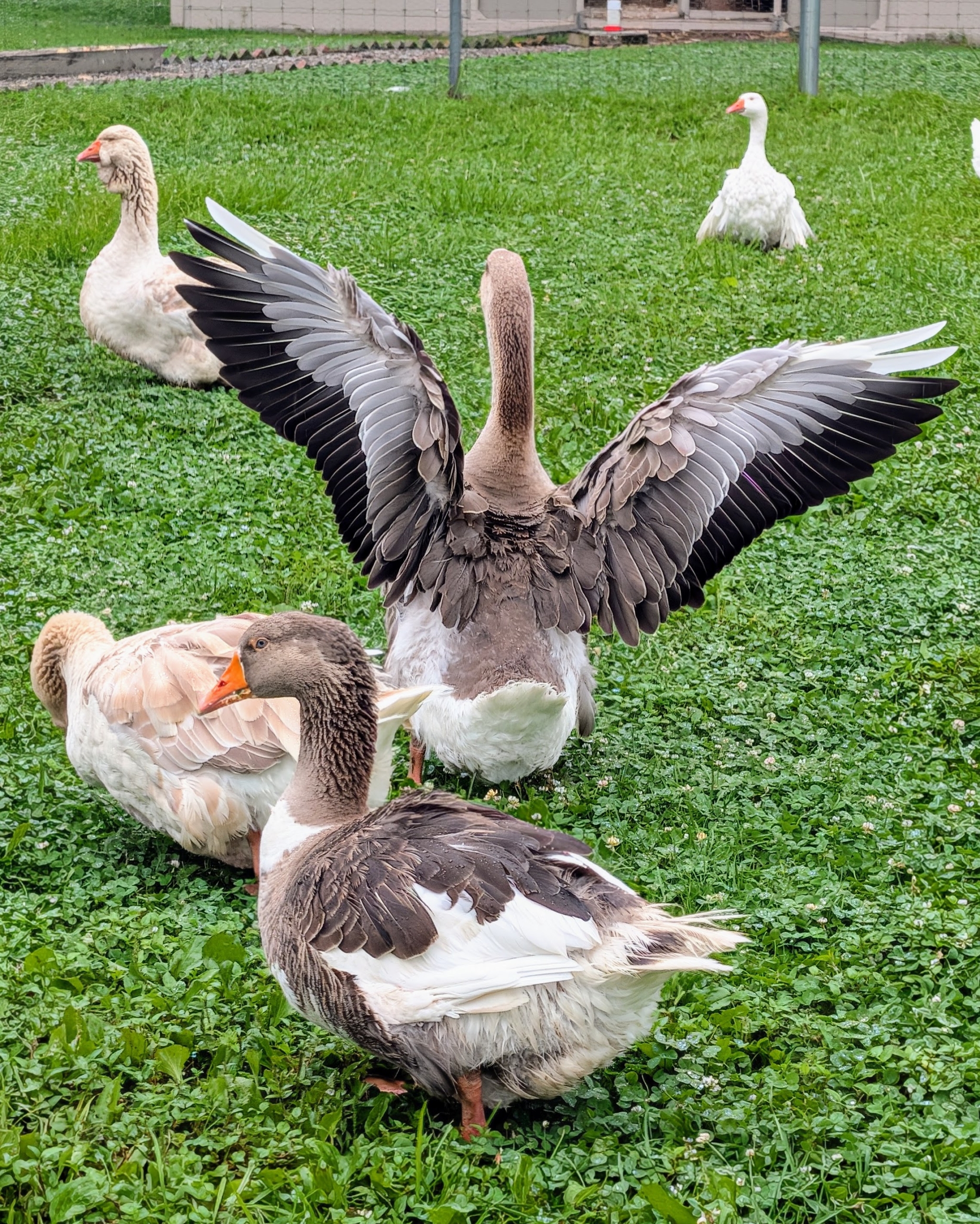
- They also love to gather close together most of the time. And do you know, a group of geese on land is called a gaggle. This is because when geese get together they can get quite noisy and rowdy.
-
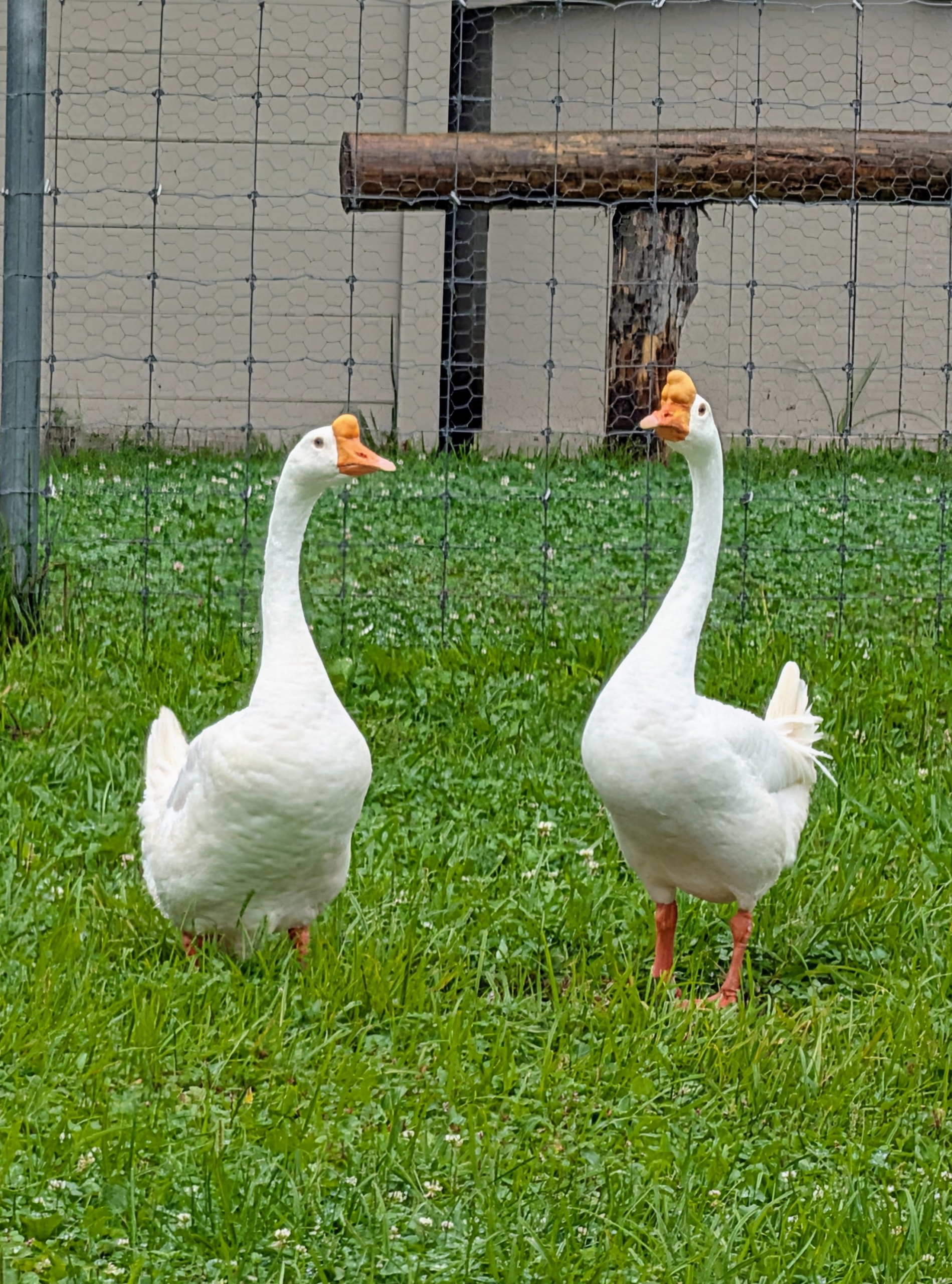
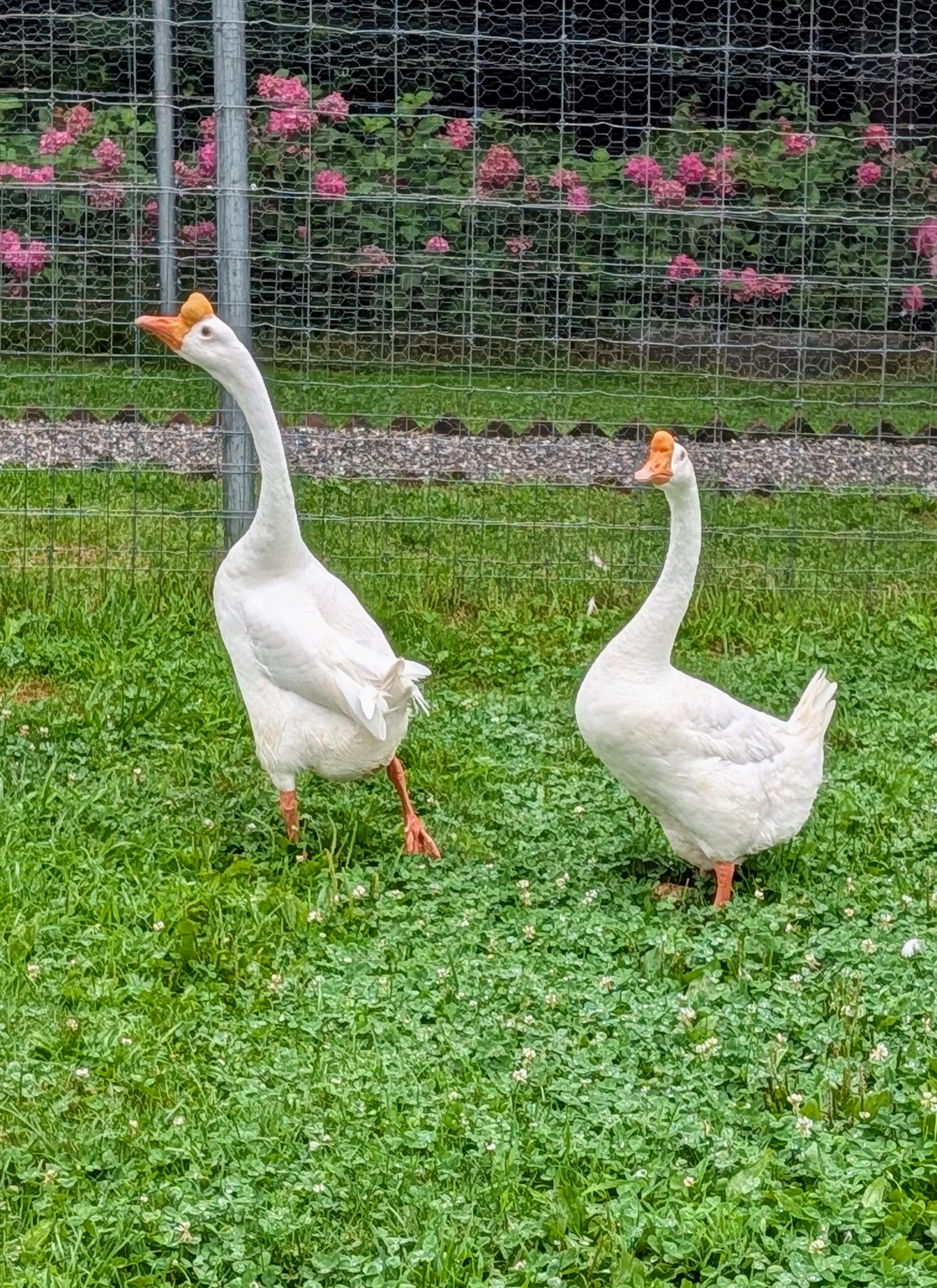
- And, while the term “goose” may refer to either a male or female bird, when paired with “gander,” the word goose refers specifically to a female. Gander is the term used to identify a male. Here is my pair of Chinese geese. The Chinese goose is refined and curvaceous.
-
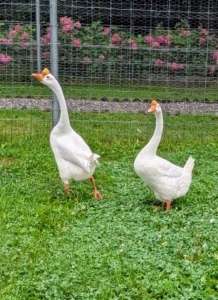
- The Chinese goose holds its head high. Its head flows seamlessly into a long, slim, well-arched neck which meets the body at about a 45 degree angle. Its body is short, and has a prominent and well-rounded chest, smooth breast and no keel. Mature ganders average 12 pounds, while mature geese average 10 pounds. Their bills are relatively long and slender, with a large, rounded, erect knob that attaches to its forehead.
-
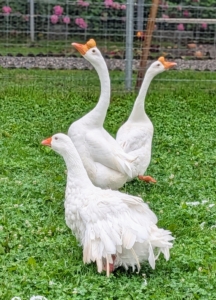
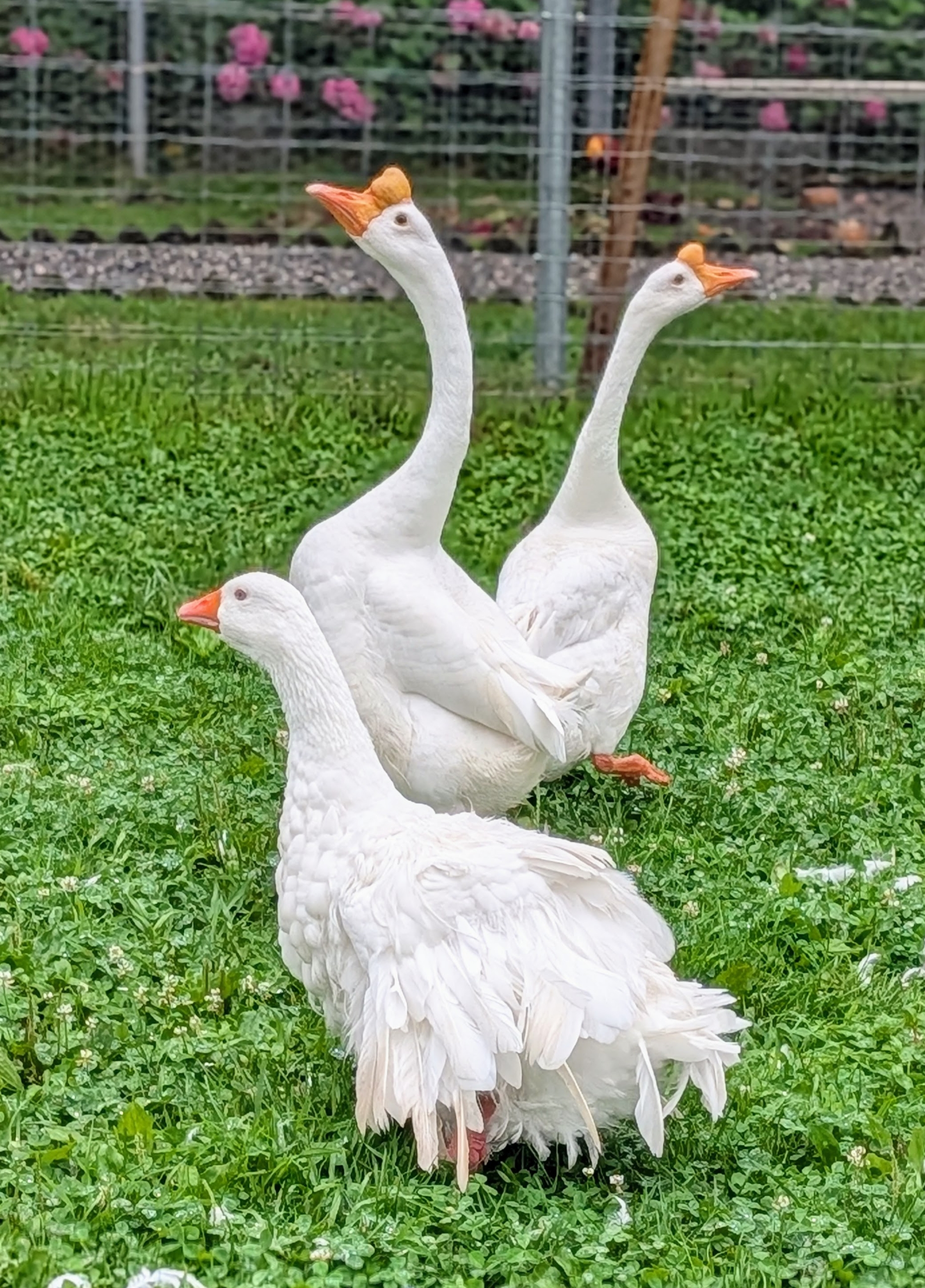
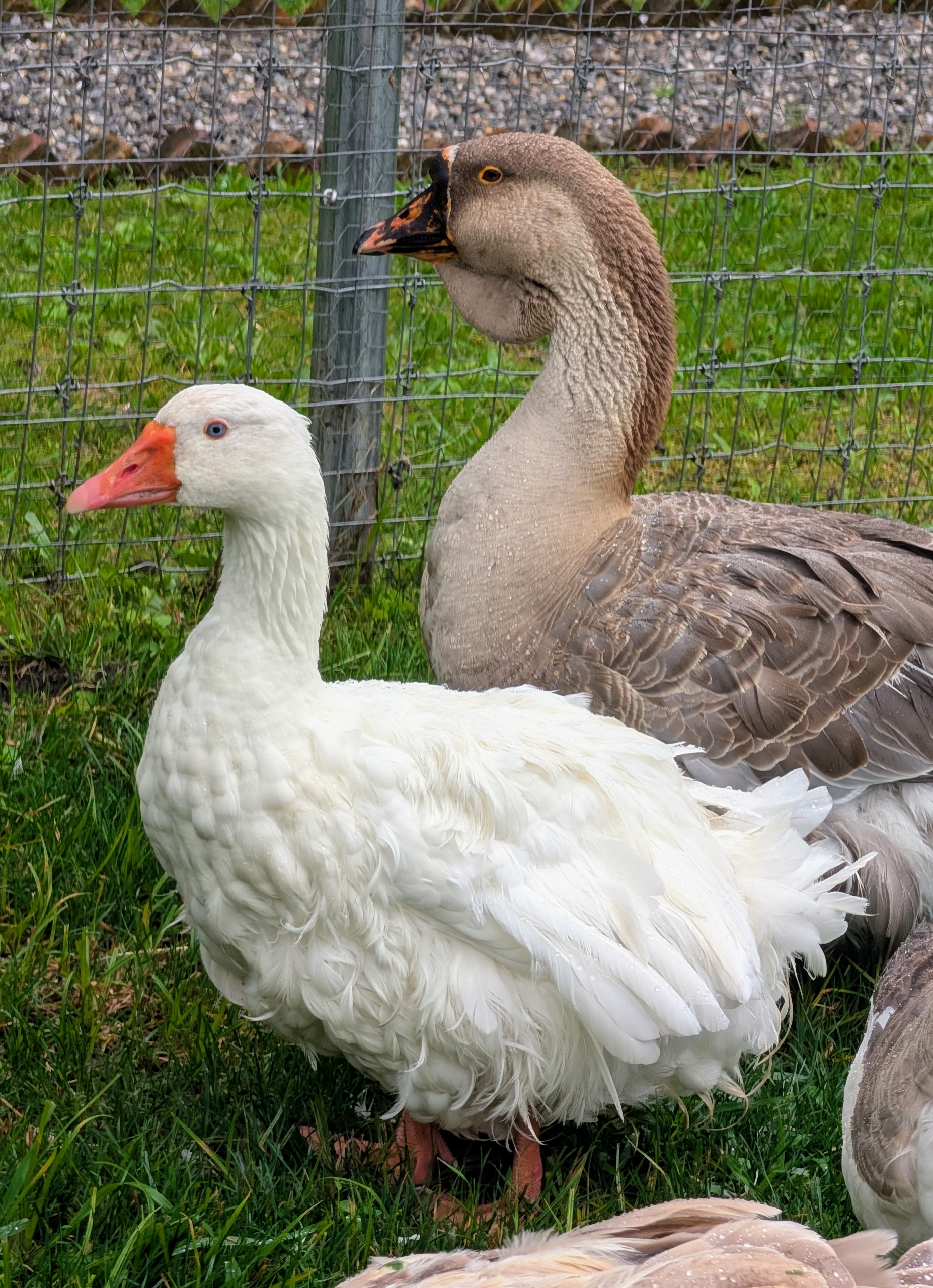
- Look closely at the Chinese geese in the back compared to the Sebastopol goose in front. The Chinese geese most likely descended from the swan goose in Asia, though over time developed different physical characteristics, such as longer necks and more compact bodies. The Chinese goose is a very hardy and low-maintenance breed.
-
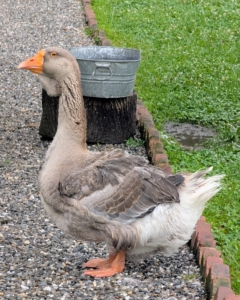
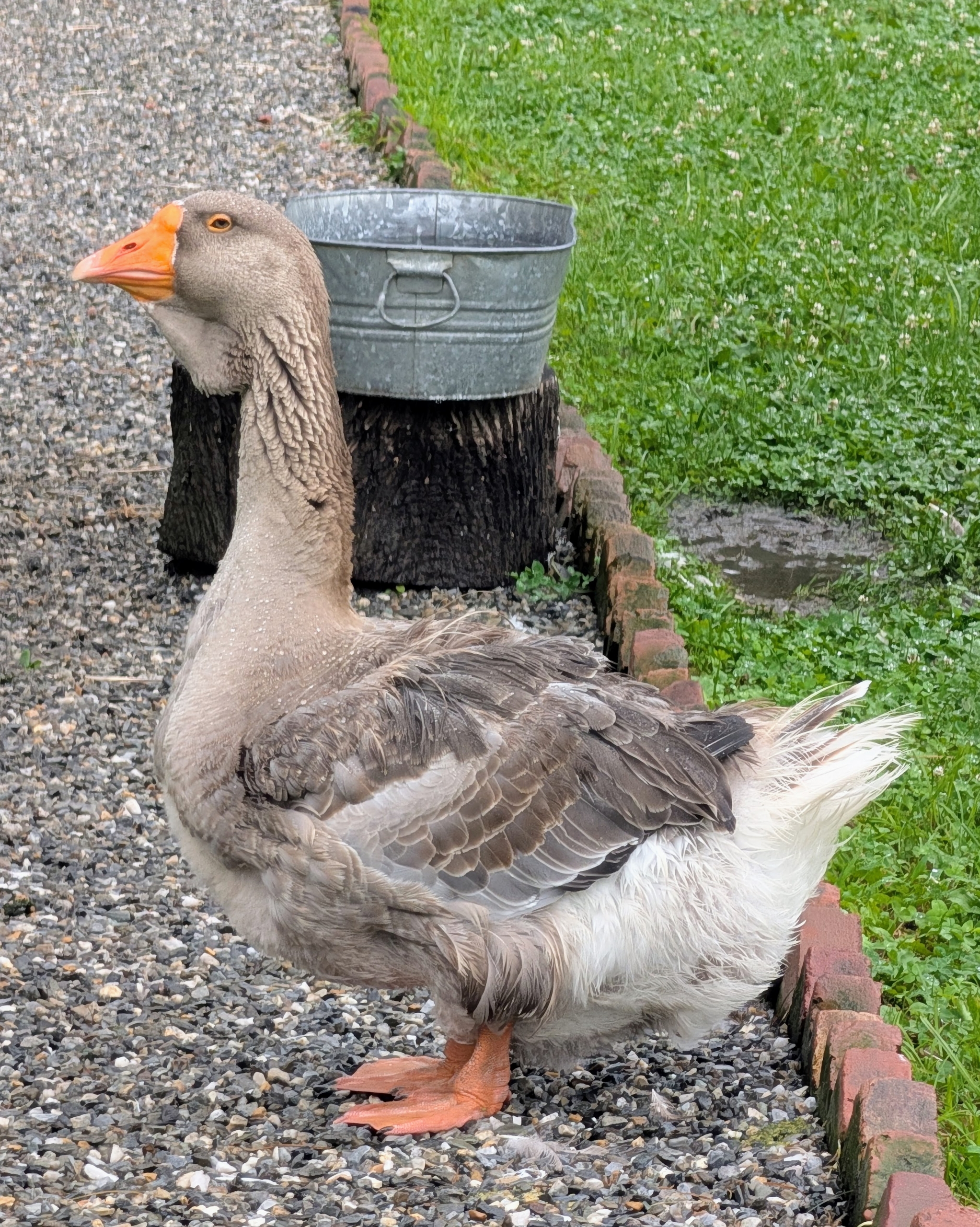
- Most domestic geese have larger back ends than their wild counterparts and stand more upright.
-
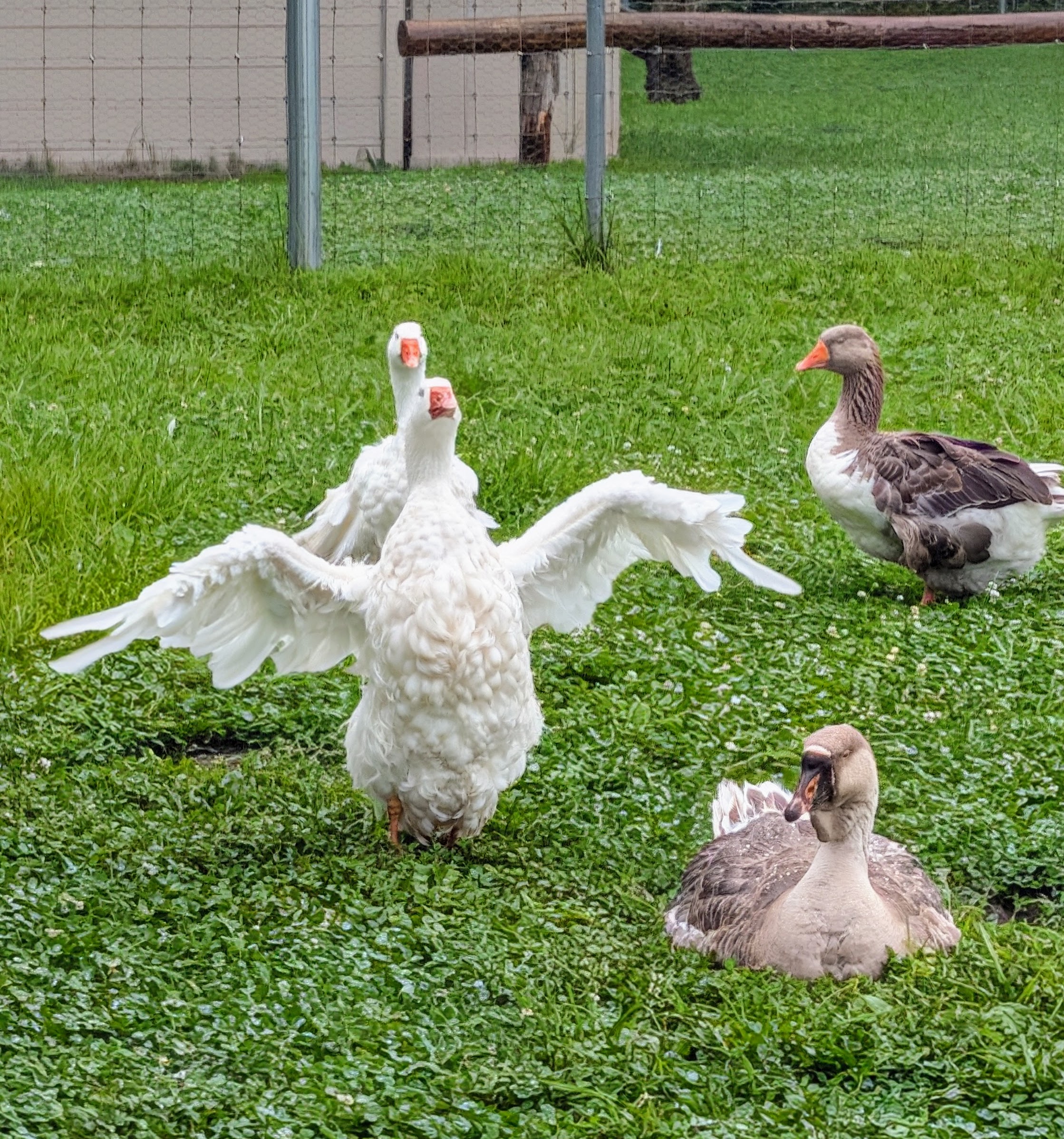
- In flight, a group of geese is called a skein. On the water or flying close together, specifically in a “V” formation, a group is referred to as a wedge of geese.
-
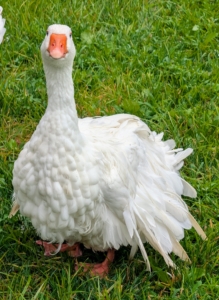
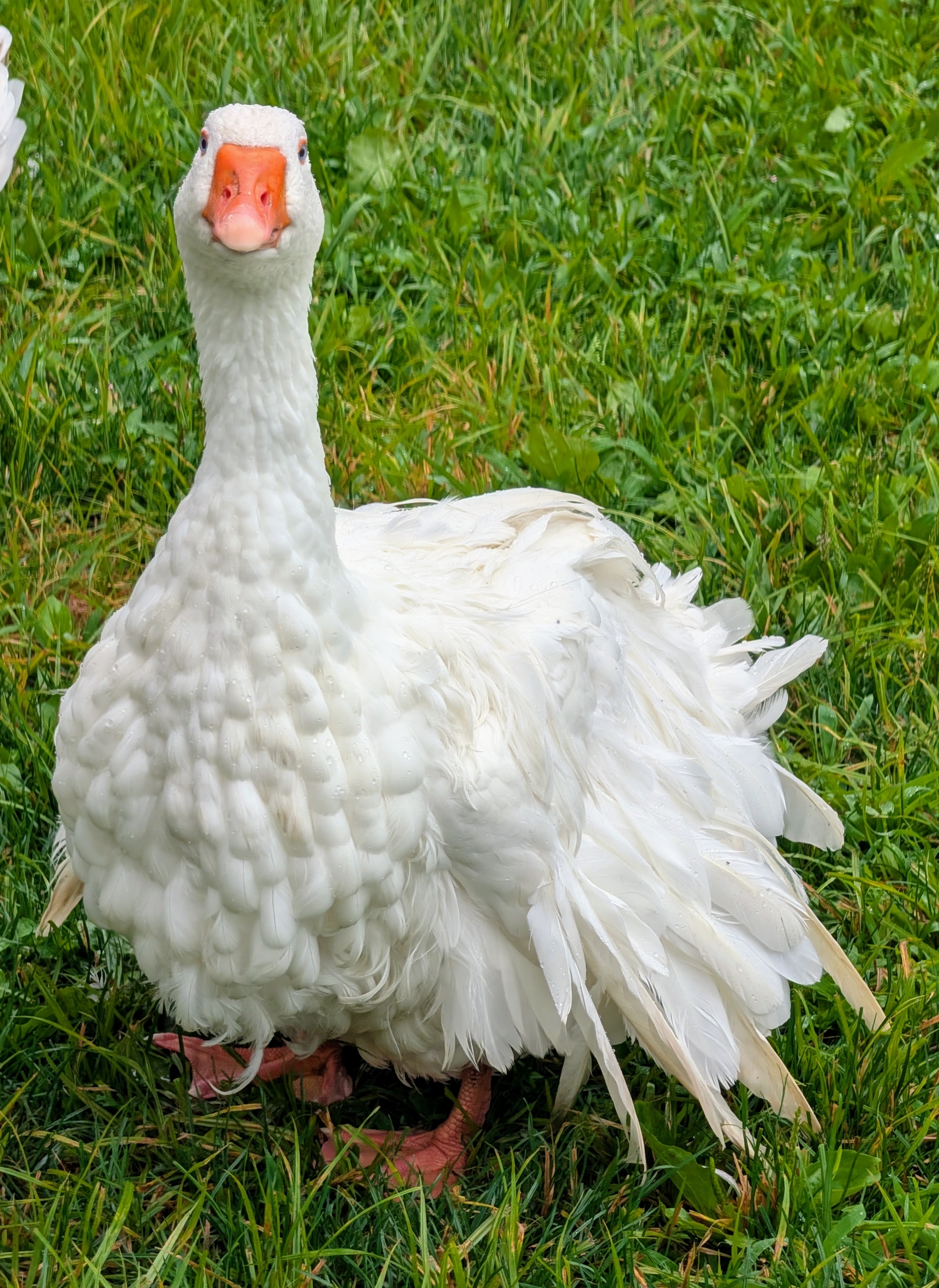
- Everyone asks about the Sebastopols. These birds are considered medium-sized birds. Both males and females have pure white feathers that contrast with their bright blue eyes and orange bills and feet. Sebastopol geese have large, rounded heads, slightly arched necks, and keelless breasts.
-
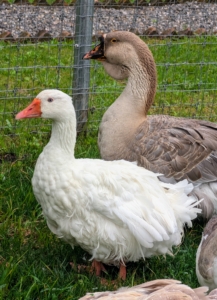
- And what is most striking is the plumage. A Sebastopol’s plumage of the head and upper two-thirds of the neck is smooth, while that of the breast and underbody is elongated and well-curled. Though domesticated breeds of geese generally retain some flight ability, Sebastopol geese cannot fly well due to the curliness of their feathers and have difficulty getting off the ground.
-
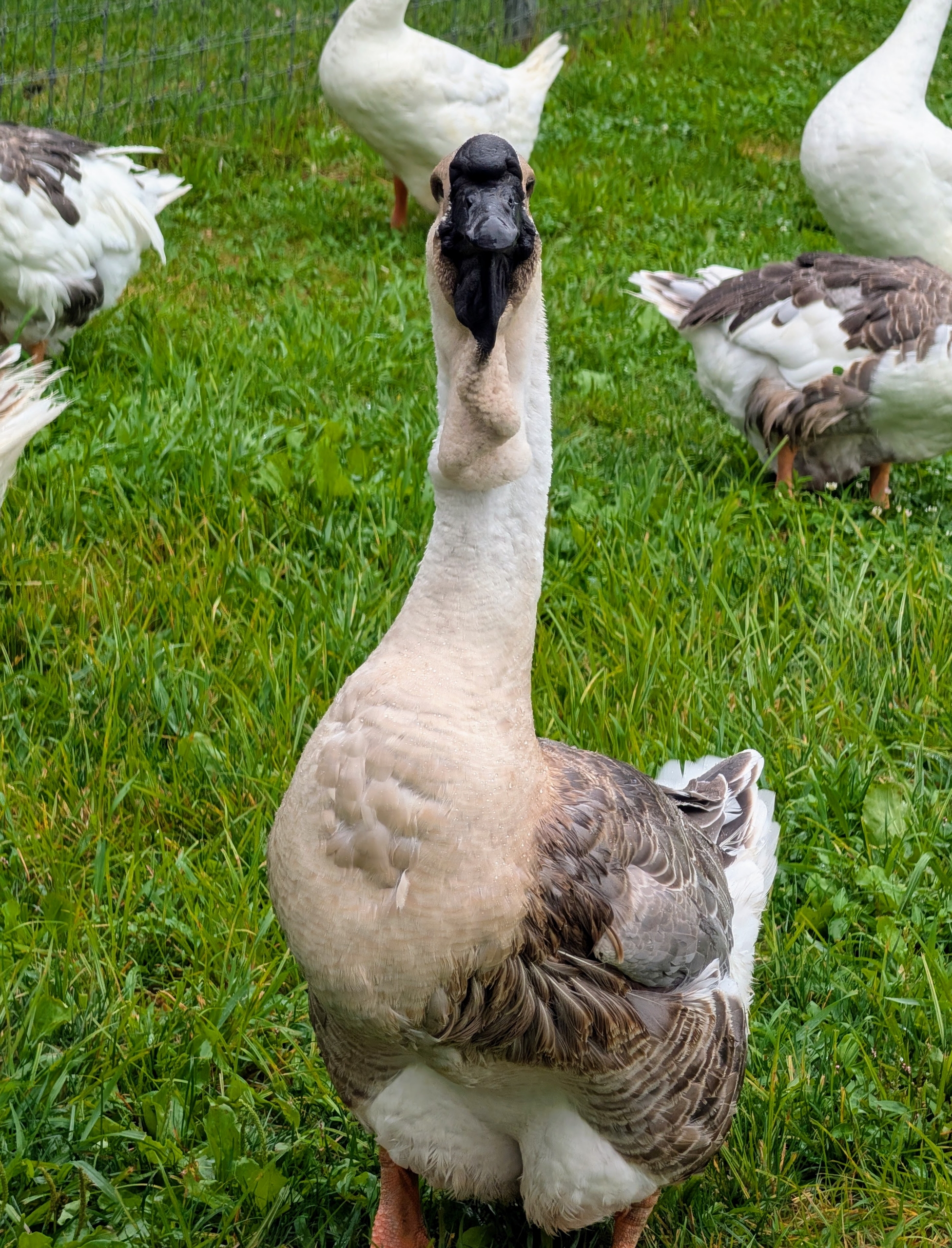
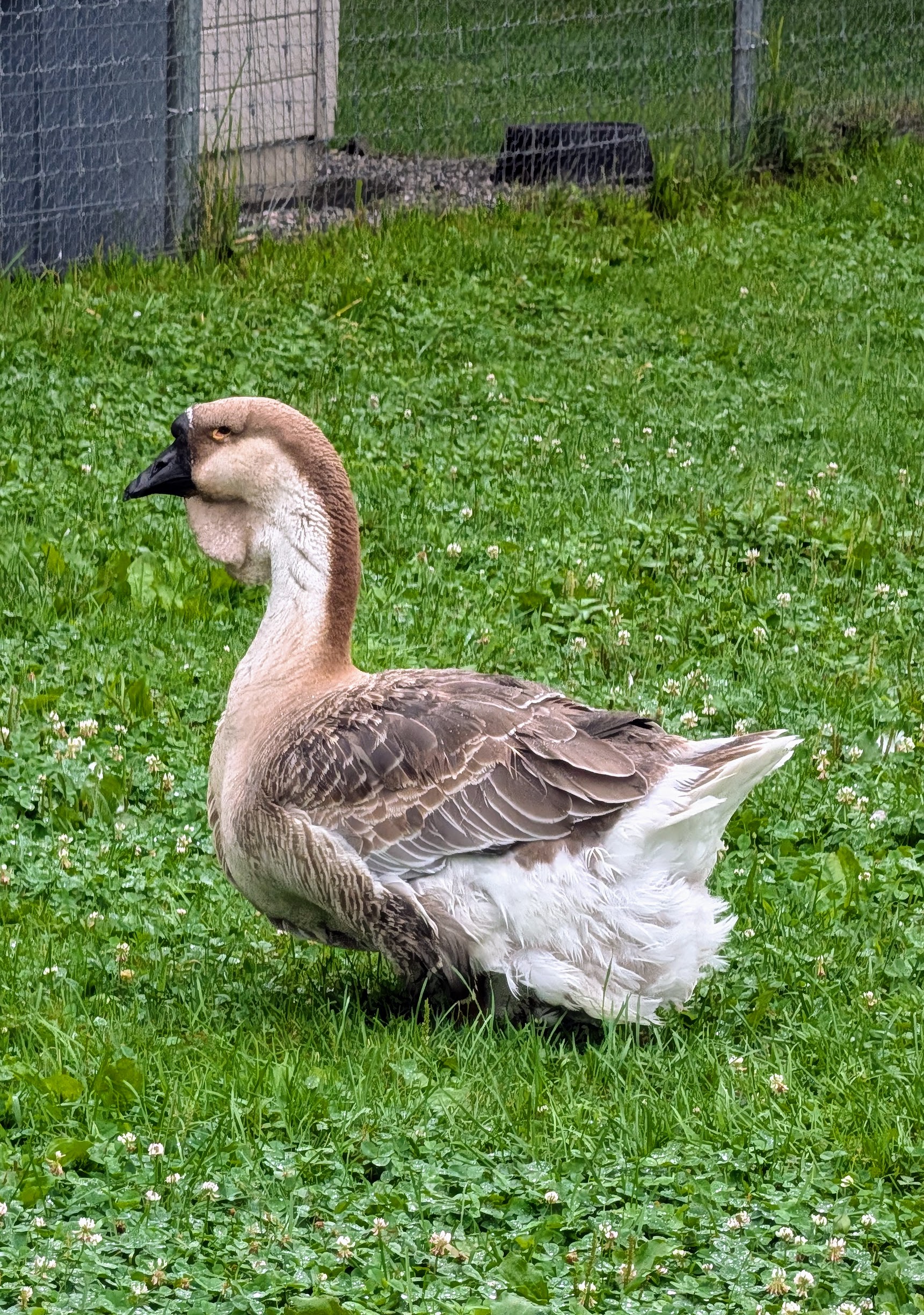
- This is a male African goose – a breed that has a heavy body, thick neck, stout bill, and jaunty posture which gives the impression of strength and vitality. The African is a relative of the Chinese goose, both having descended from the wild swan goose native to Asia.
-
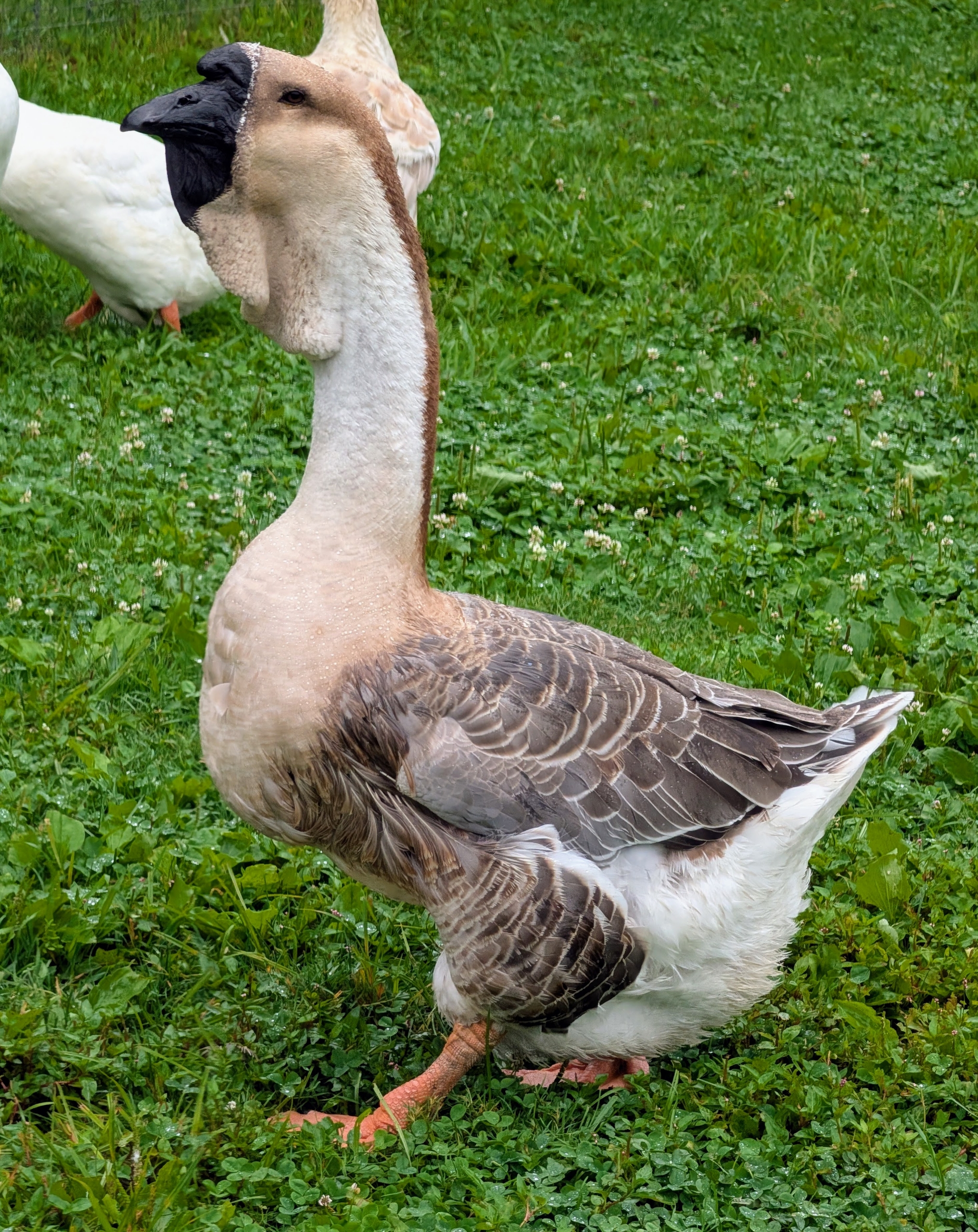
- The mature African goose has a large knob attached to its forehead, which requires several years to develop. A smooth, crescent-shaped dewlap hangs from its lower jaw and upper neck. Its body is nearly as wide as it is long. African geese are the largest of the domestic geese.
-
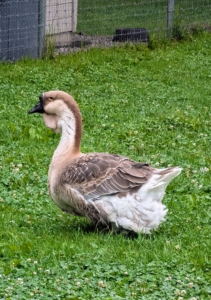
- His mate is never far behind.
-
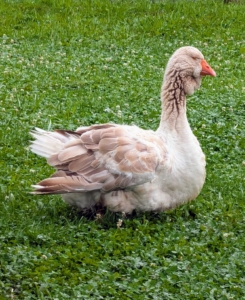
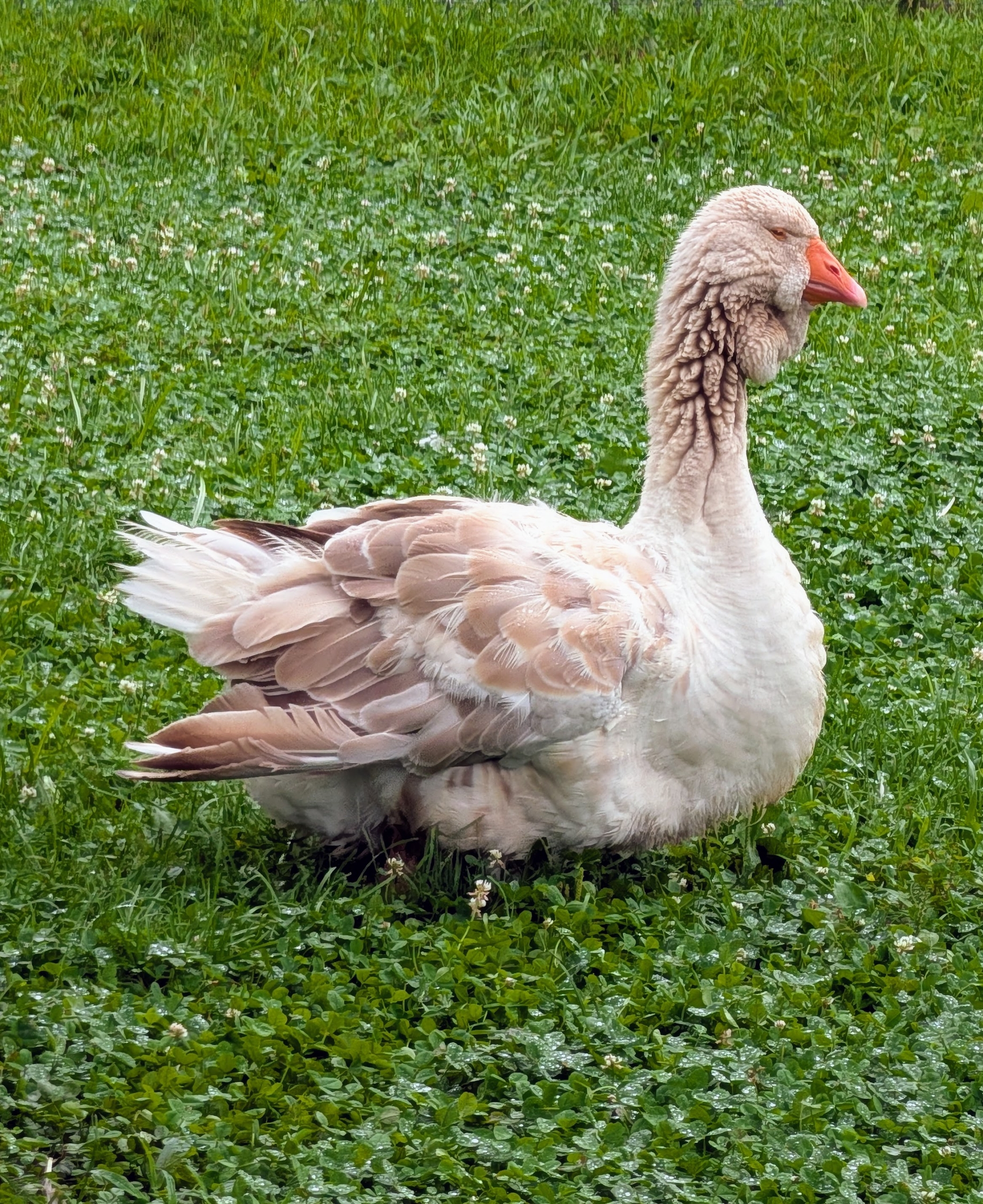
- And this buff-brown goose is called a Toulouse. On this breed, the bill is stout, the head large and broad, and the moderately long neck is thick and nearly straight. Often suspended from the lower bill and upper neck is a heavy, folded dewlap that increases in size and fullness with age. The body is long, broad and deep, ending in a well-spread tail that points up slightly. And thanks to the breed’s honks, my Toulouse geese make excellent guardians. They can scare off any animals on the ground and they’re great at spotting aerial predators, such as hawks and falcons.
-
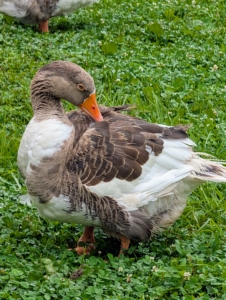
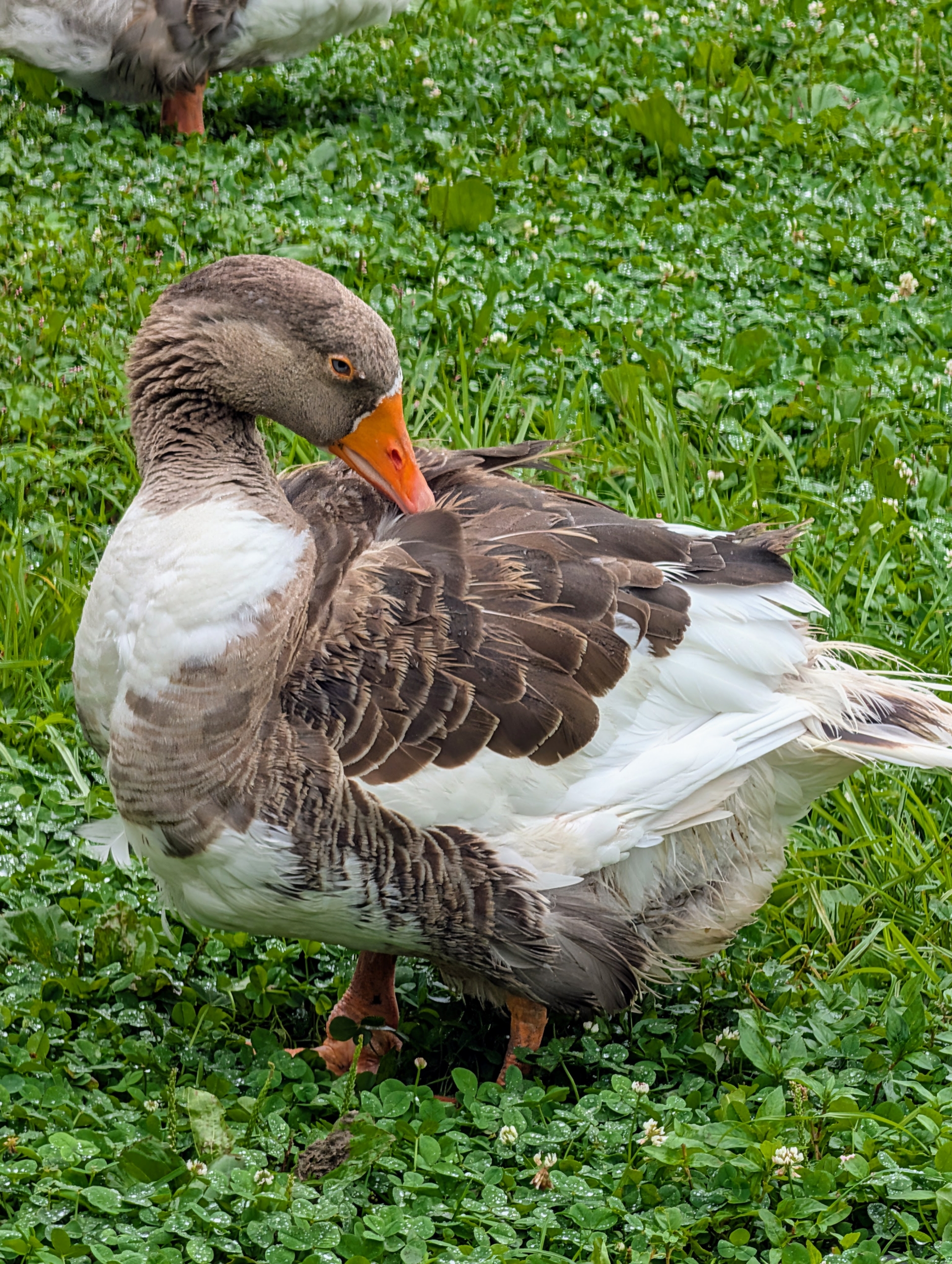
- Here is a Pomeranian guard goose preening, or cleaning its feathers with its beak.
-
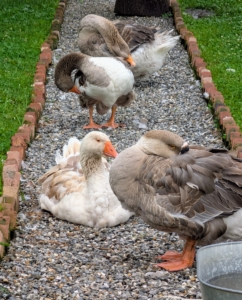
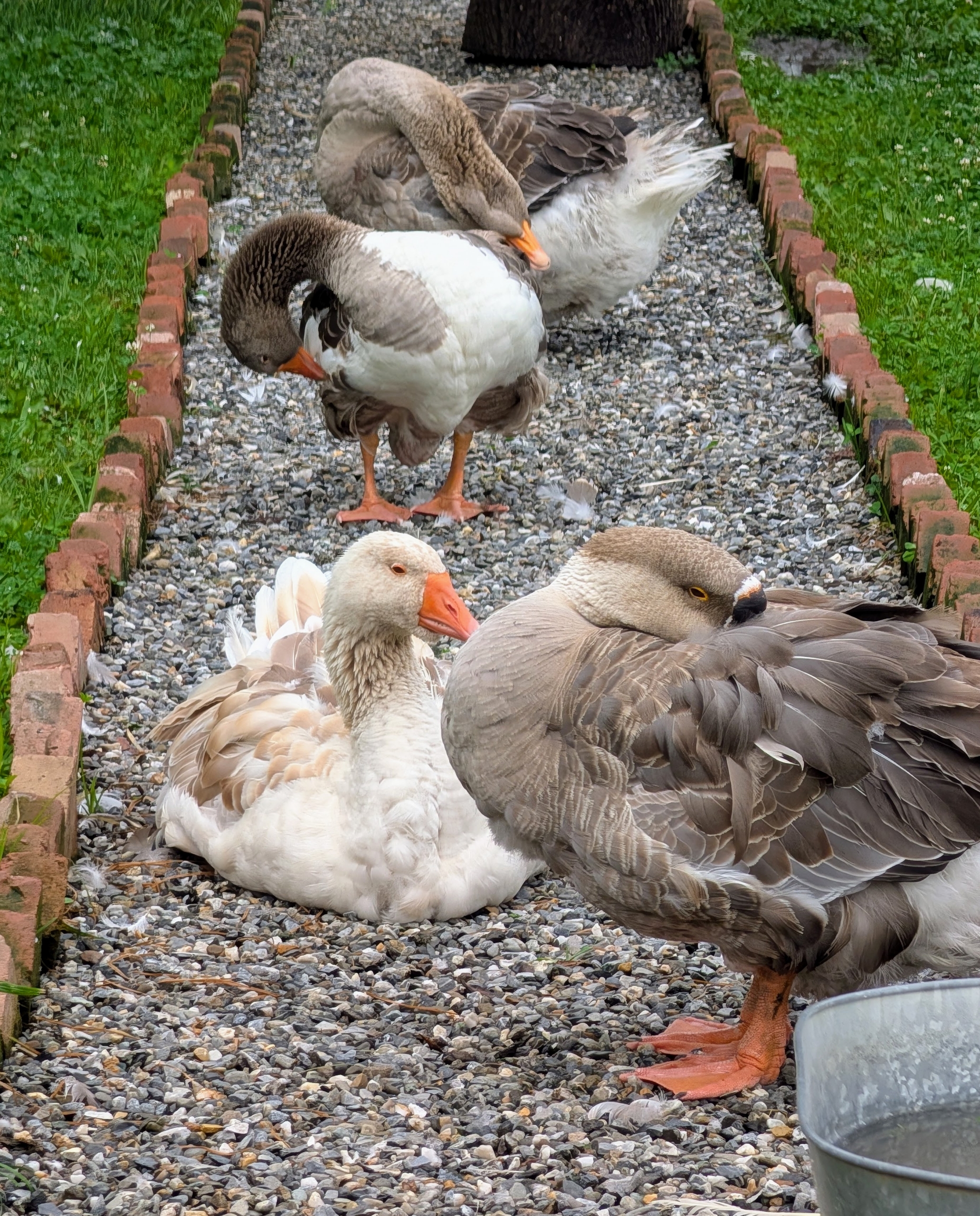
- The rain gives the geese a great opportunity to clean themselves.
-
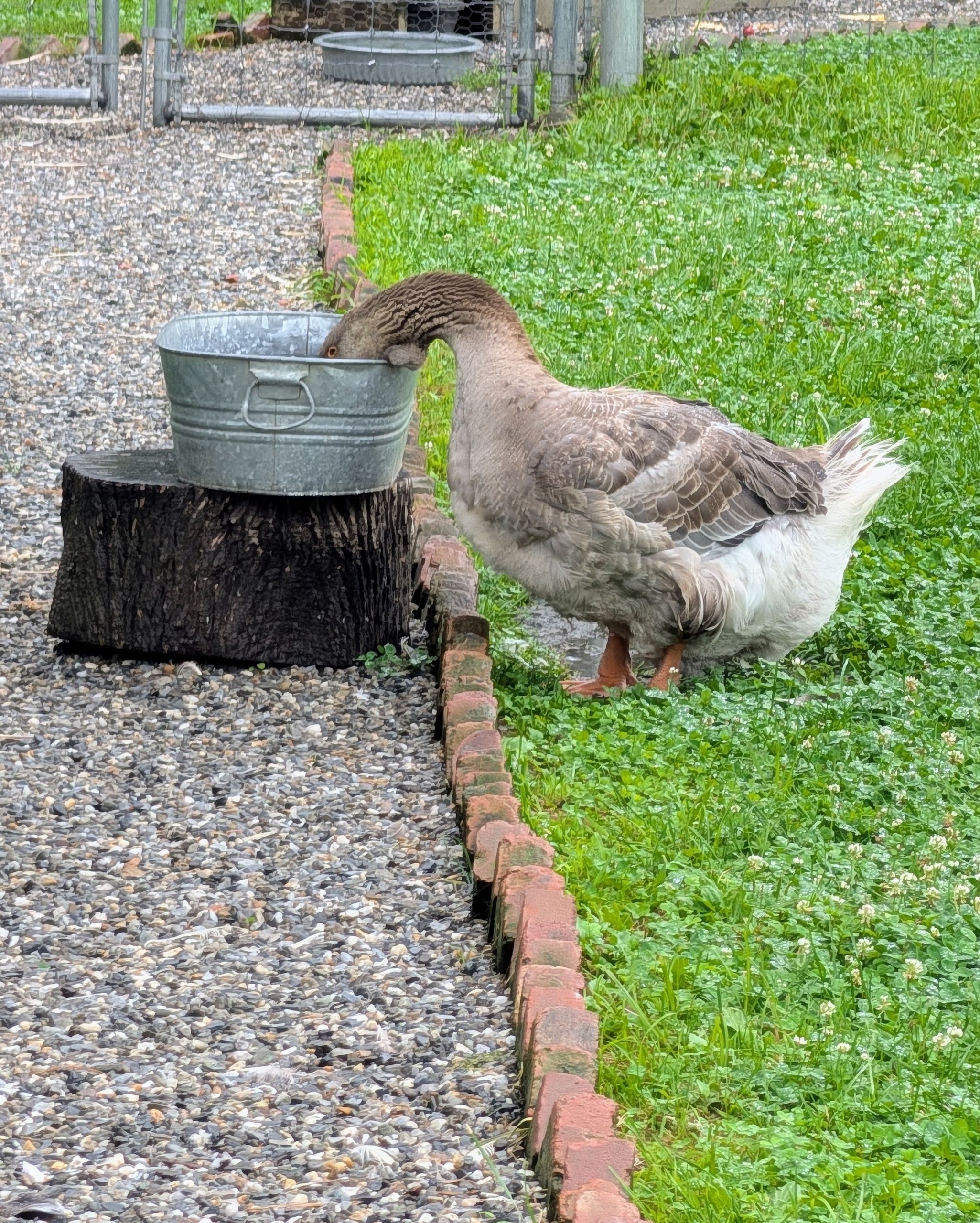
- While both ducks and geese love water, geese don’t require a pond or large swimming pool – they swim much less than ducks and are content with a small dipping pool where they can dunk and clean their noses and beaks. My geese have lots of vessels and pools in which to dunk their heads or entire bodies in refreshing water.
-
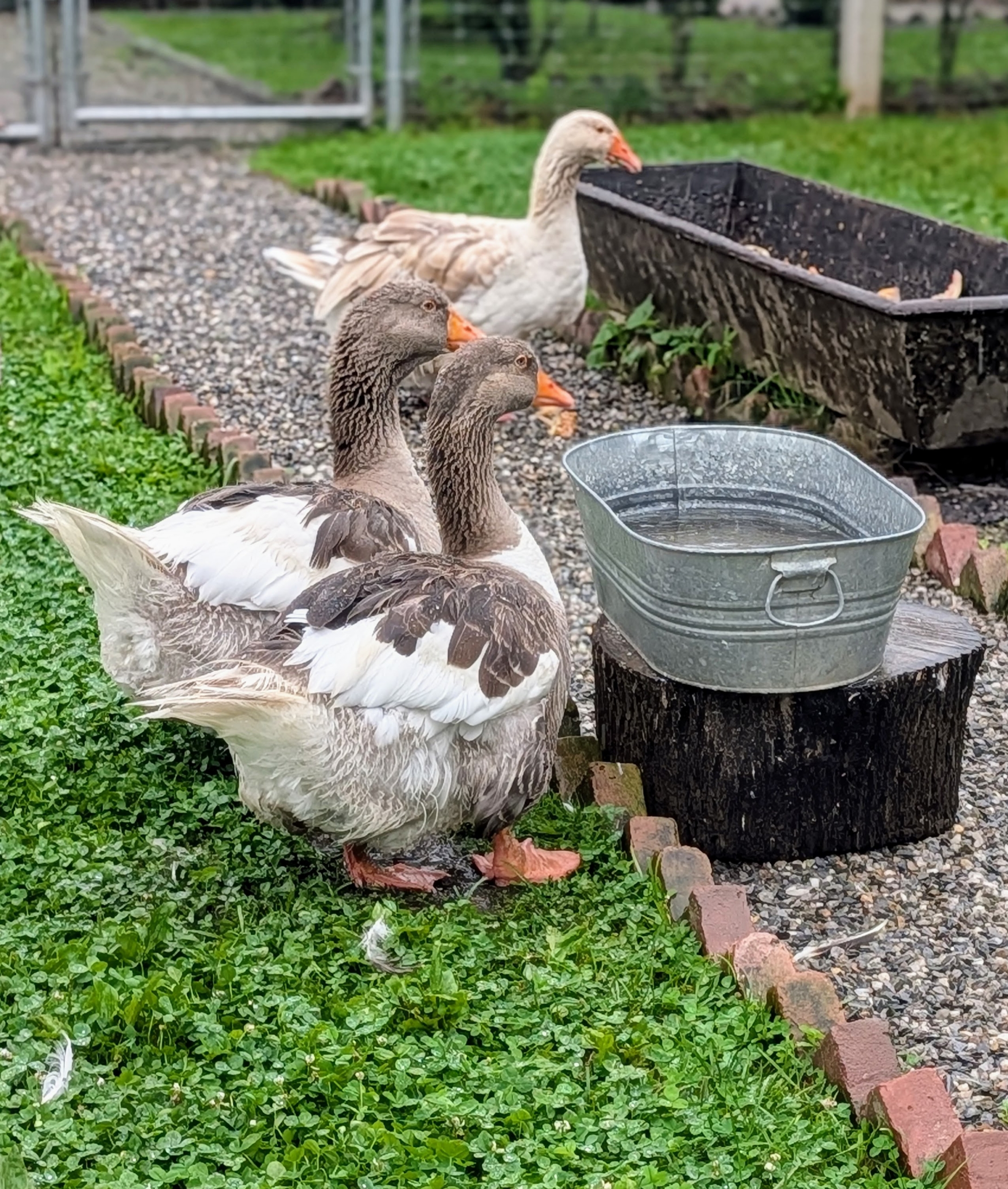
- Geese are grazing birds which means they eat a variety of different items. They eat roots, shoots, stems, seeds, and leaves of grass and grain, bulbs, and berries. They also eat small insects. In addition, I fortify their diet with a mix specifically made for waterfowl.
-
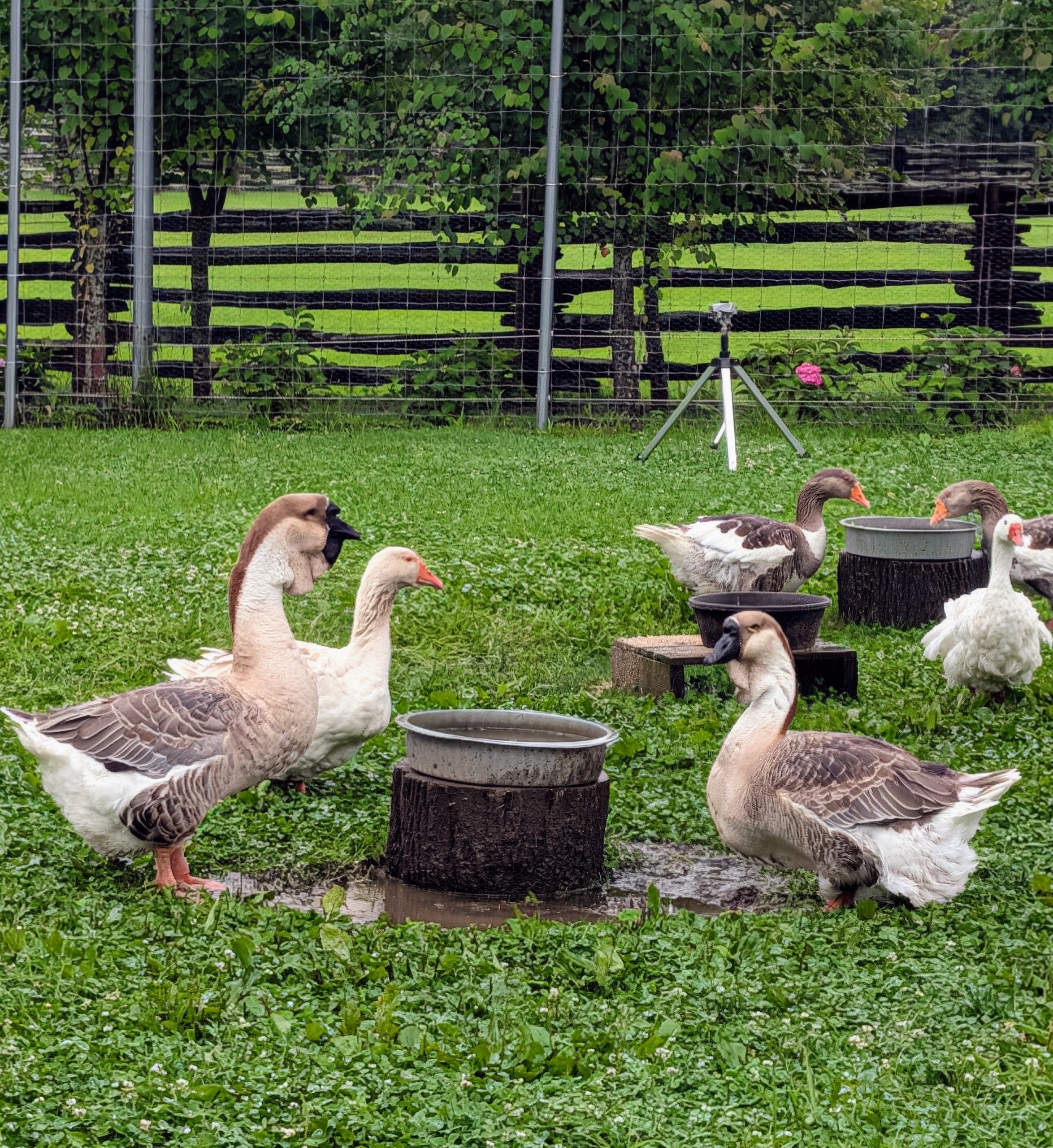
- Geese also have impressive visual capabilities. The way their eyes are structured allows them to see things in much finer detail at a further distance than humans. They can also see UV light and can control each of their eyes independently.
-
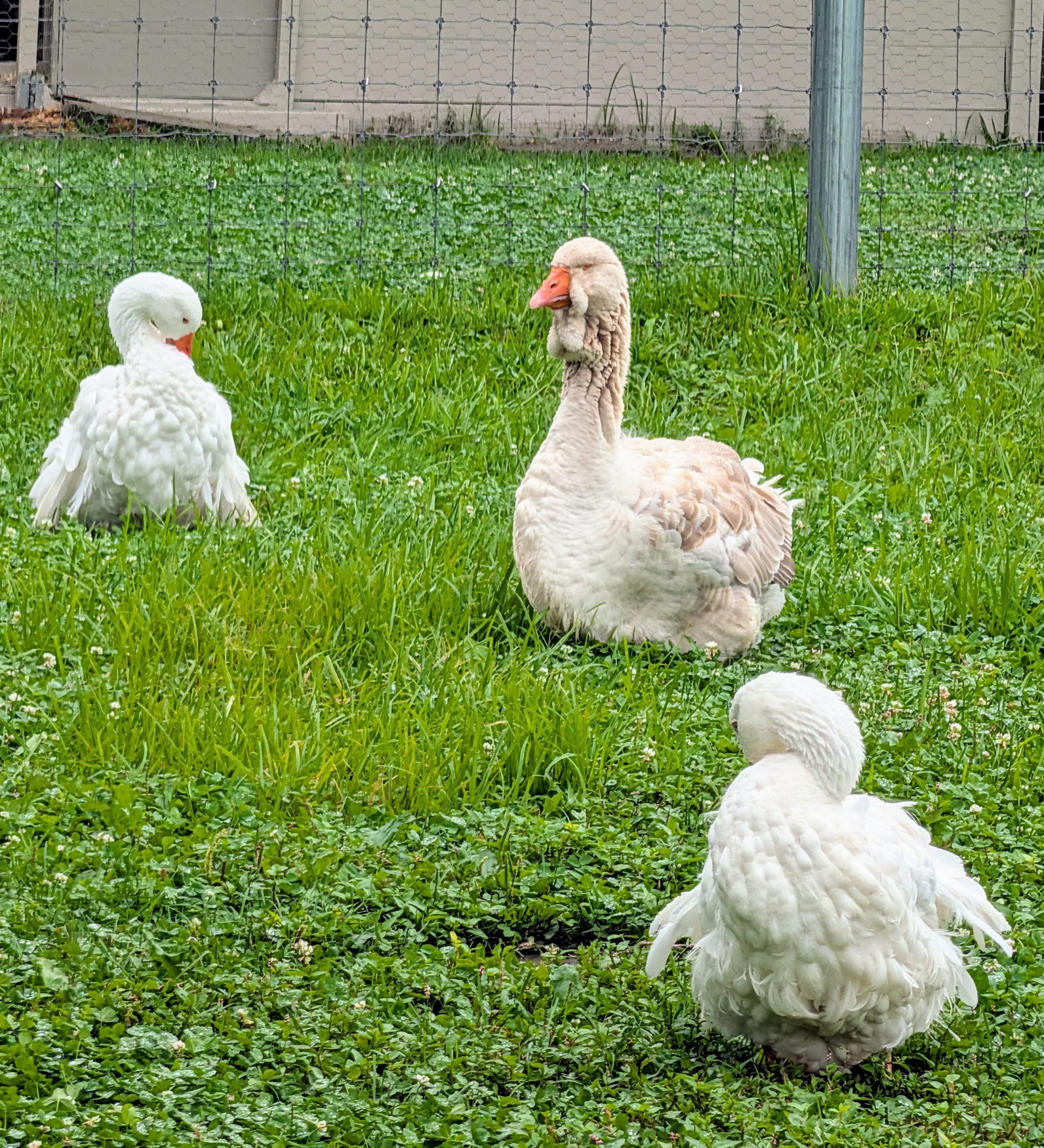
- And waterfowl don’t need roosts – they are very happy gathering together and sleeping on the ground.
-
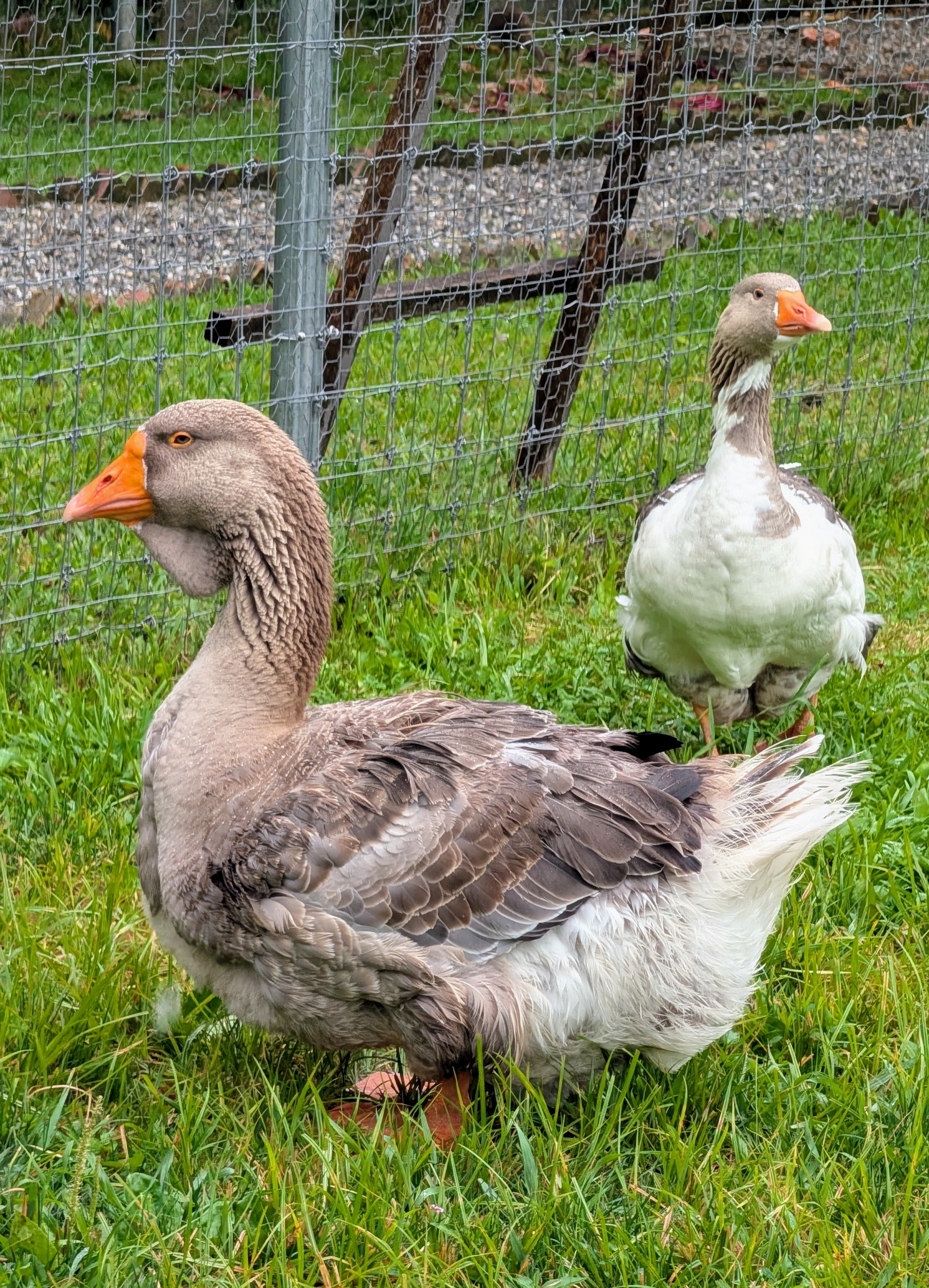
- This is Bear. He was incubated and hatched right here at the farm. He is about five years old and is very attached to the humans, but his “affectionate” pecks can sometimes be a bit insistent.
-
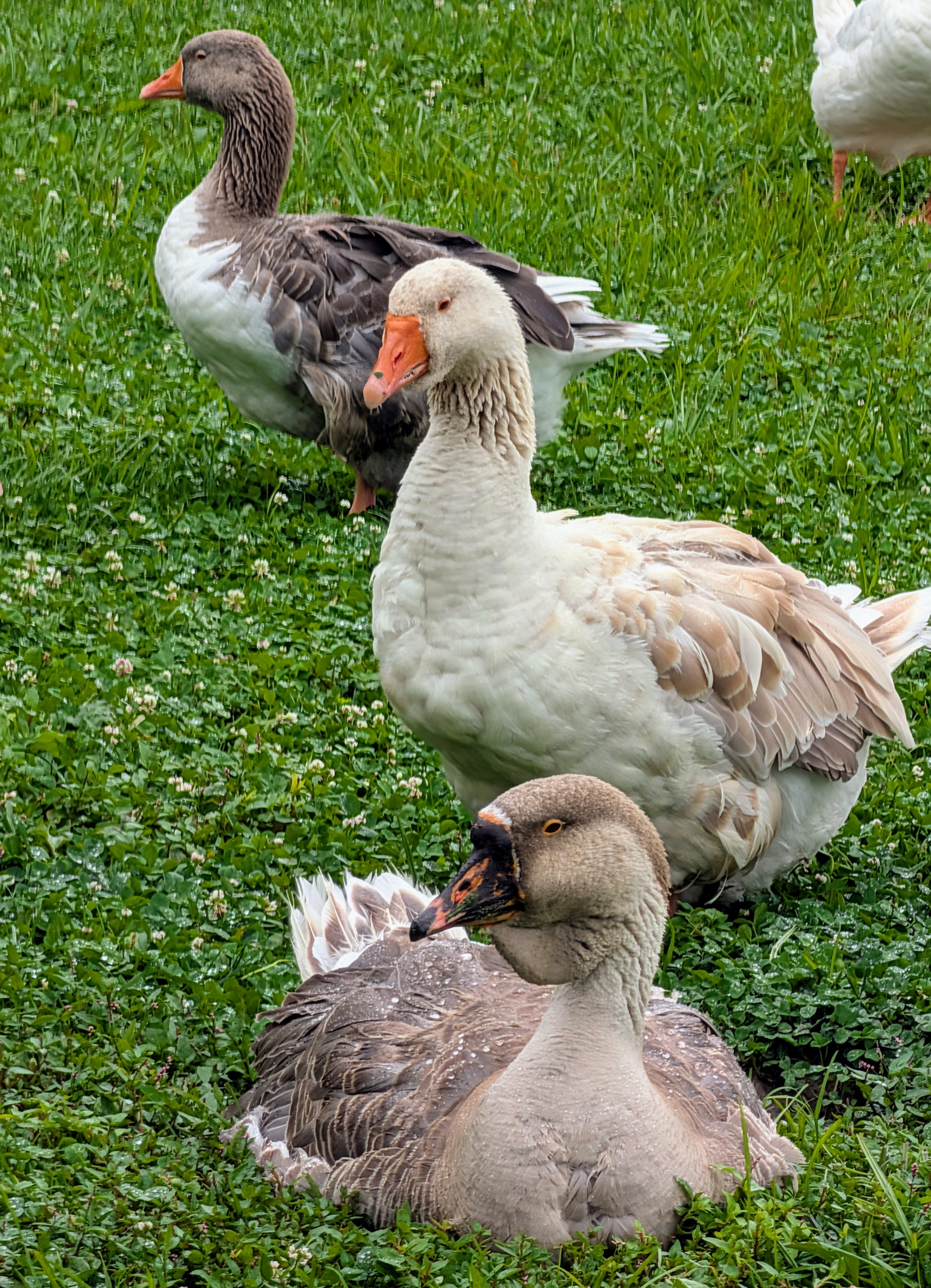
- My gaggle of geese is fun, friendly, personable, and very protective. It’s a joy to have them here at Cantitoe Corners.
This story originally appeared on Martha Stewart Blog

