


August 3, 2026
My Pergola with Blooming Tiger Lilies
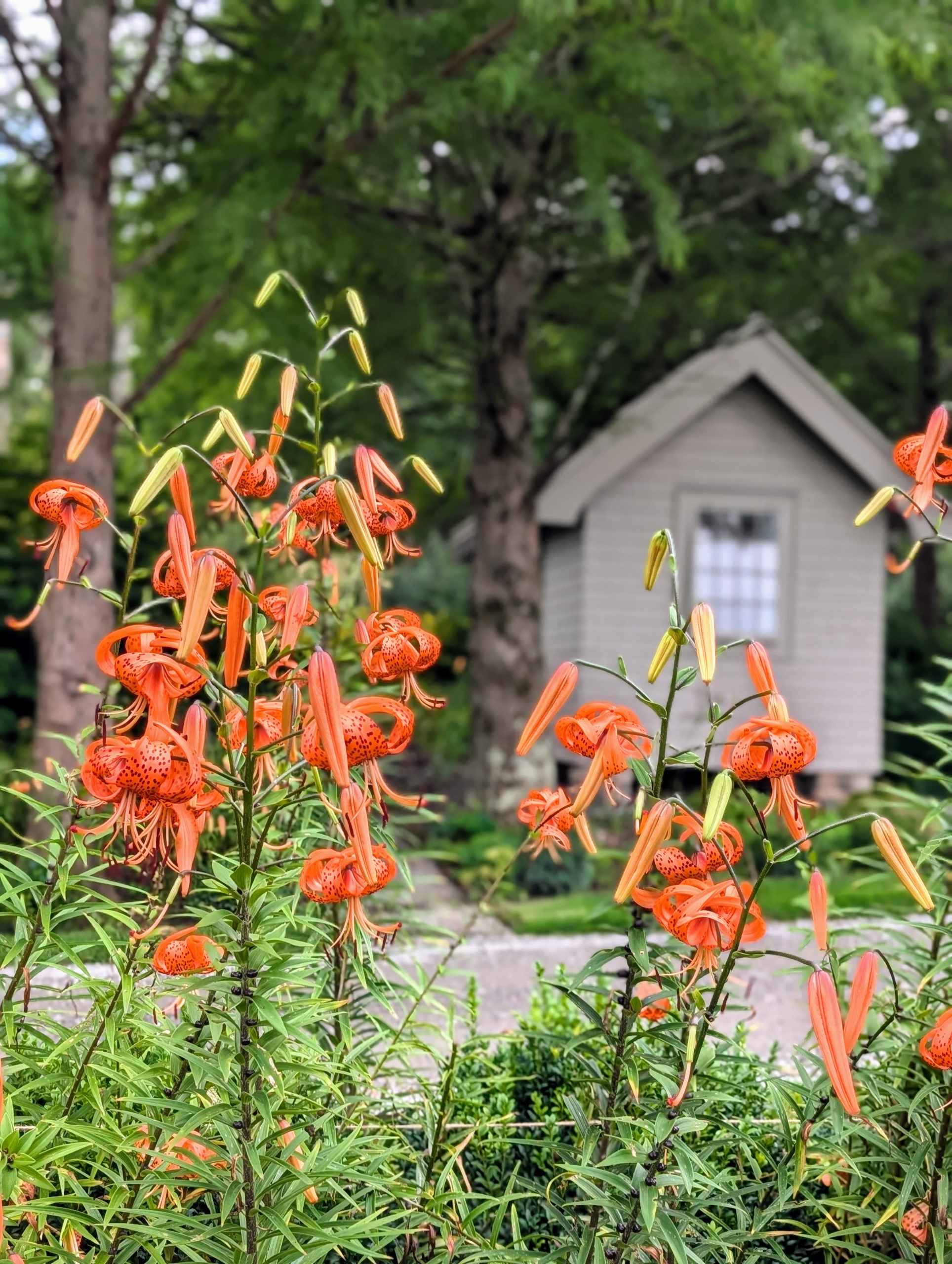
It’s unmistakably mid-summer when my long, winding pergola is aglow with the luminous orange blooms of tiger lilies.
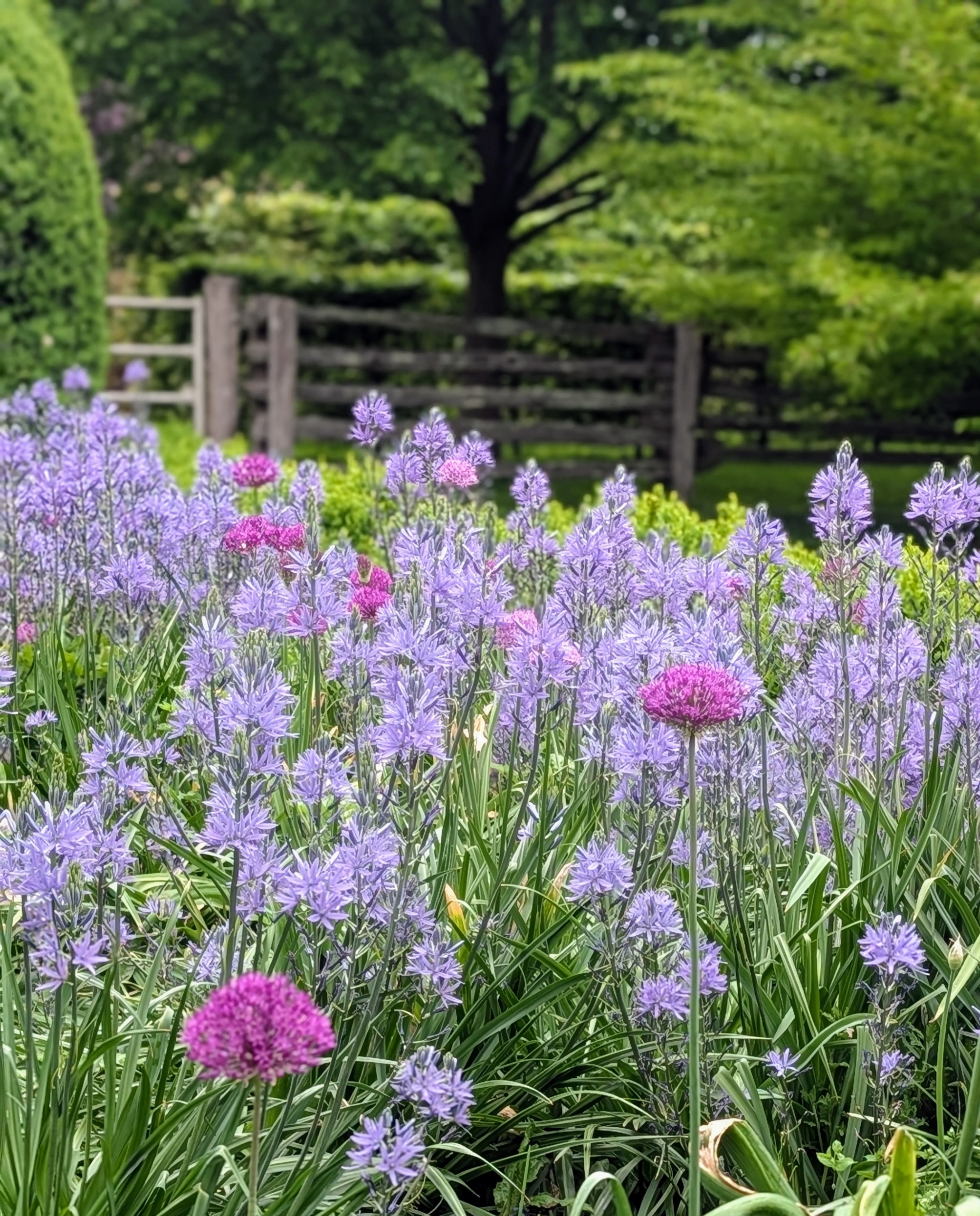
Set along one side of the carriage road near my Tenant House, this pergola goes through several transformations during the year. In winter, the beds are bare, while the bordering boxwood is carefully swathed in protective burlap. As spring gives way to early summer, bold purple alliums, Spanish bluebells, and blue Camassia create a striking display, followed by the delicate shades of lavender from the flowering clematis vines that wrap around each of the antique granite posts. Now, hundreds of brilliantly speckled tiger lilies brighten the garden bed – it’s so beautiful.
Here are some photos, enjoy.
-
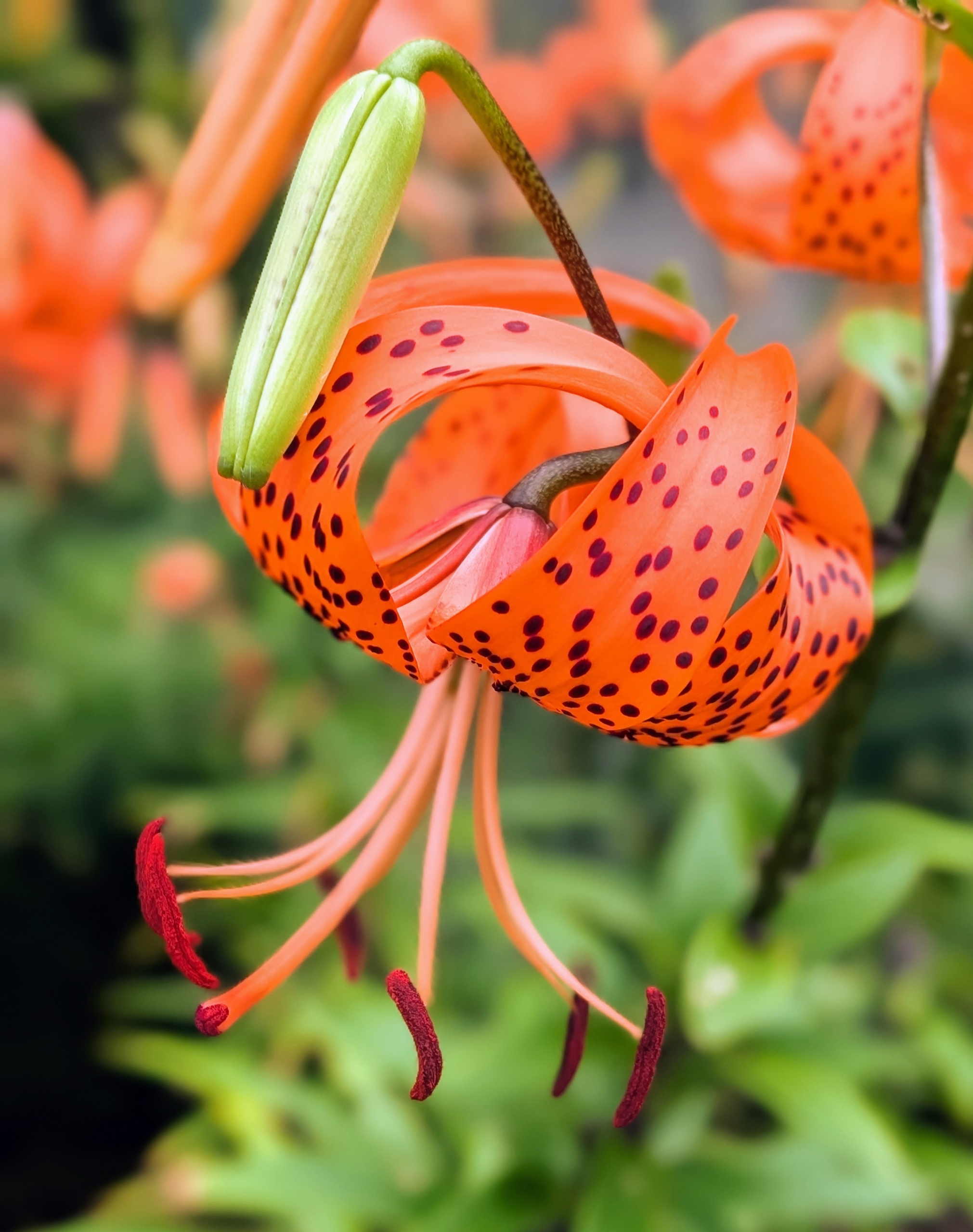
- I hope you saw my Instagram video @MarthaStewart48. My pergola is filled with these striking lillies. Tiger lilies, Lilium lancifolium, bloom in mid to late summer, are easy to grow, and come back year after year.
-
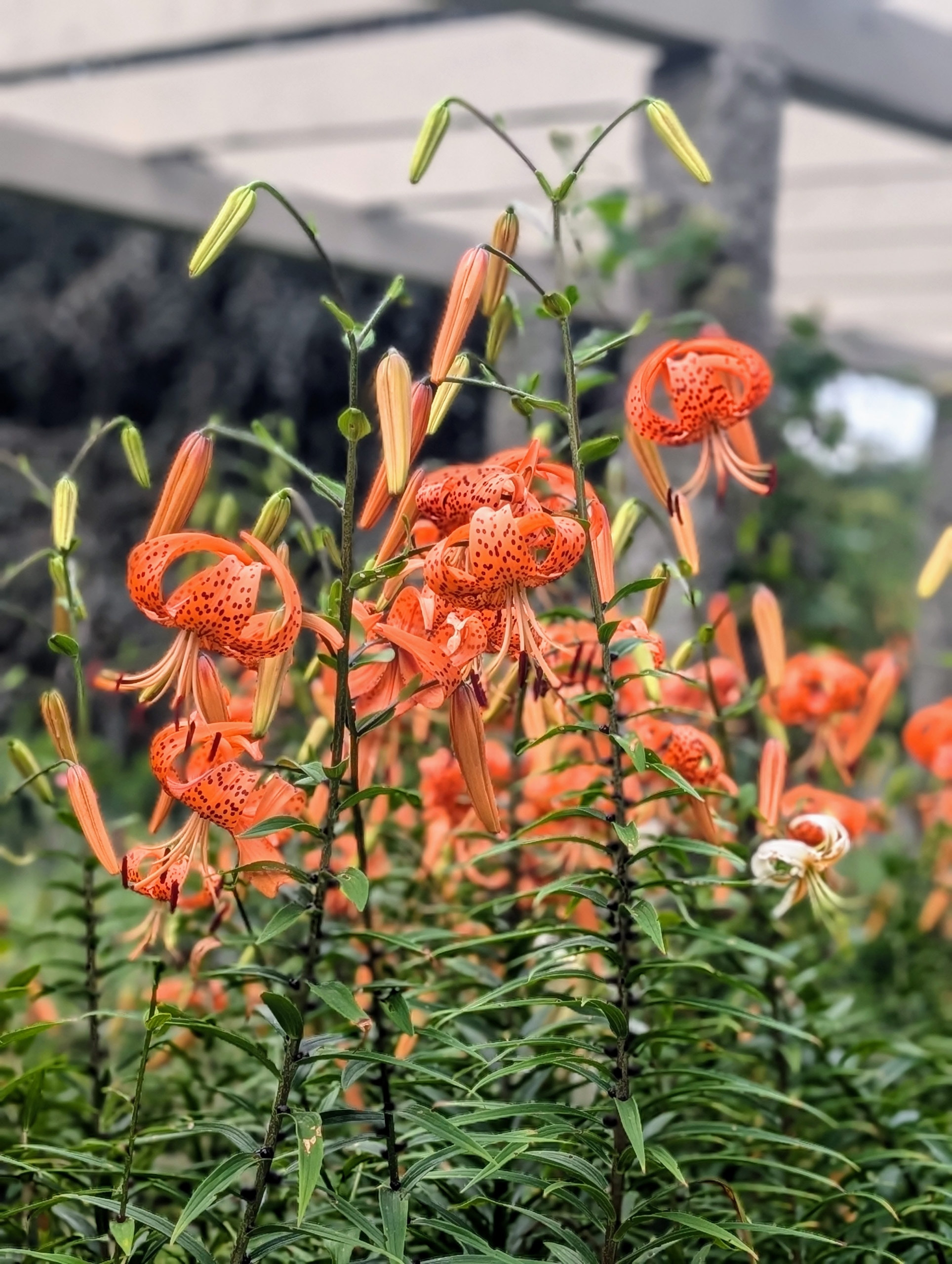
- Native to China and Japan, these robust flowers add dramatic beauty to any border with their bright and showy orange colored blooms.
-

- In winter, my pergola is sleeping – the boxwood border is covered in burlap and the beds are bare.

-
- By late May, this pergola garden is filled with lots of blue and purple flowers. This palette of colors is a big favorite at the farm – it grows more colorful and more vibrant every spring.
-
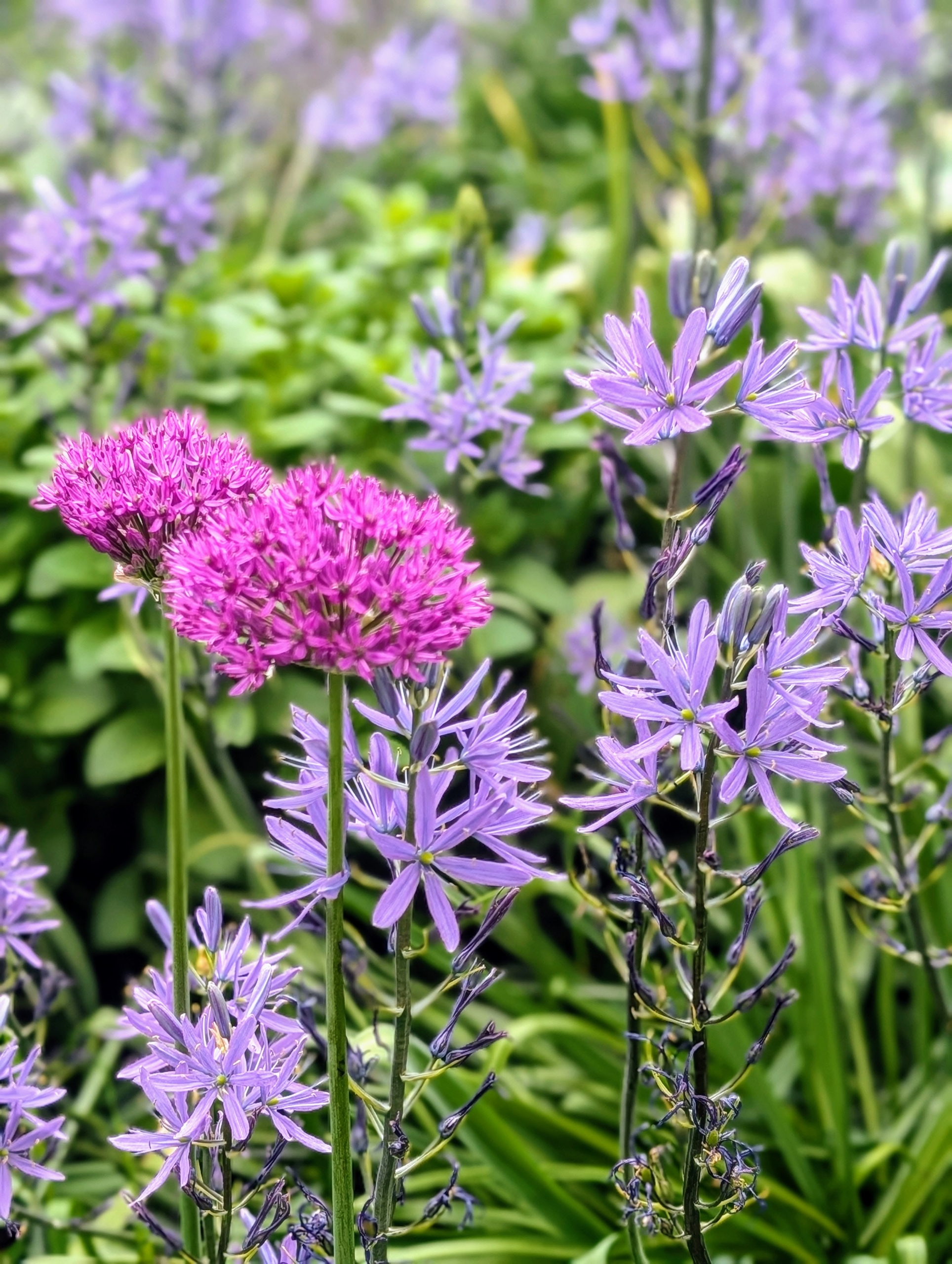
- The beds are filled with brightly colored alliums, Camassia, and Hyacinthoides or Spanish bluebells.
-

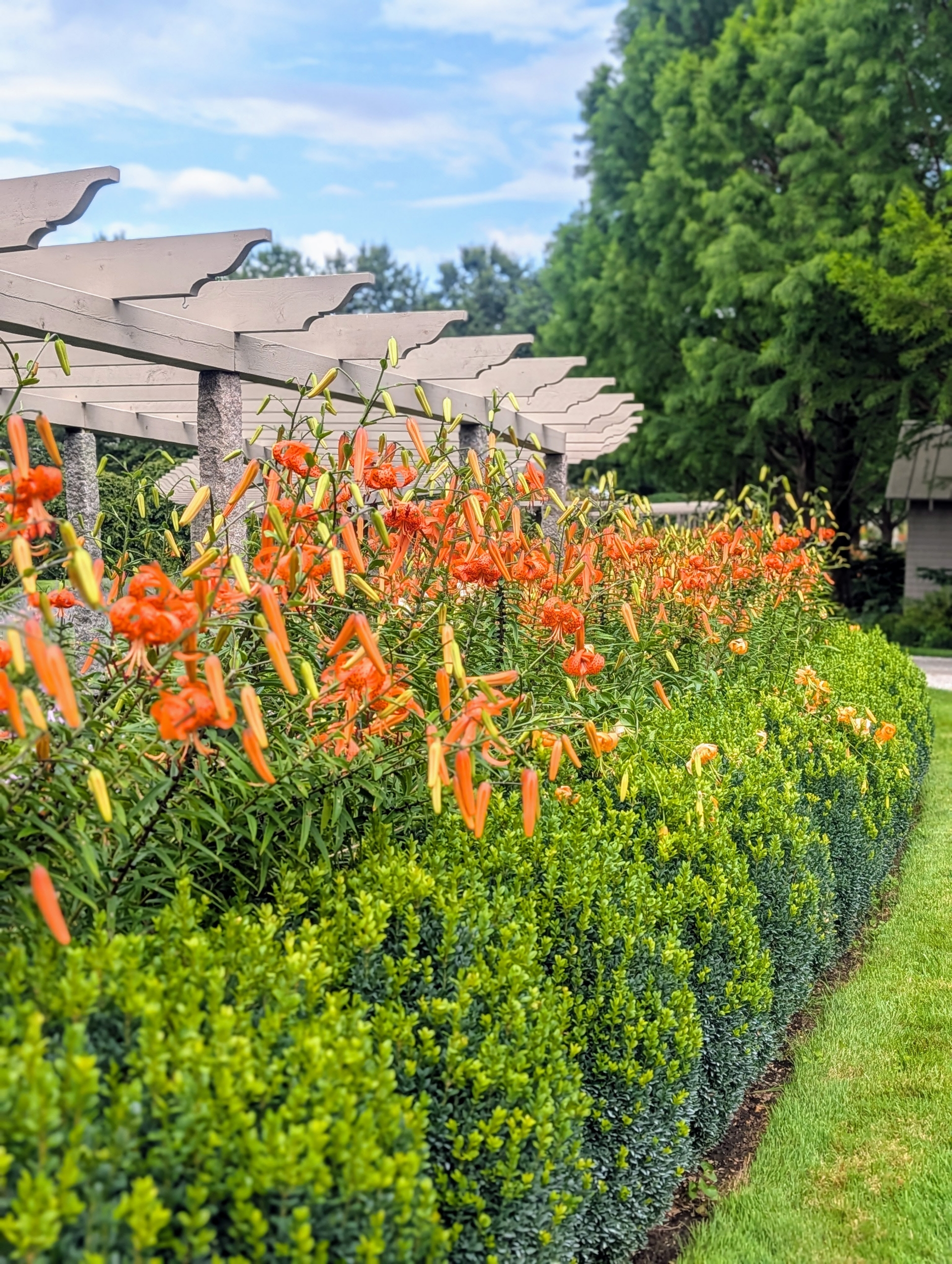
- And now it’s filled with bright orange lilies.

-
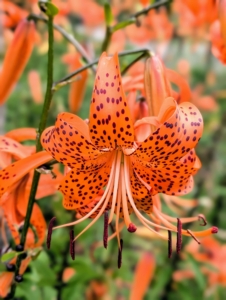
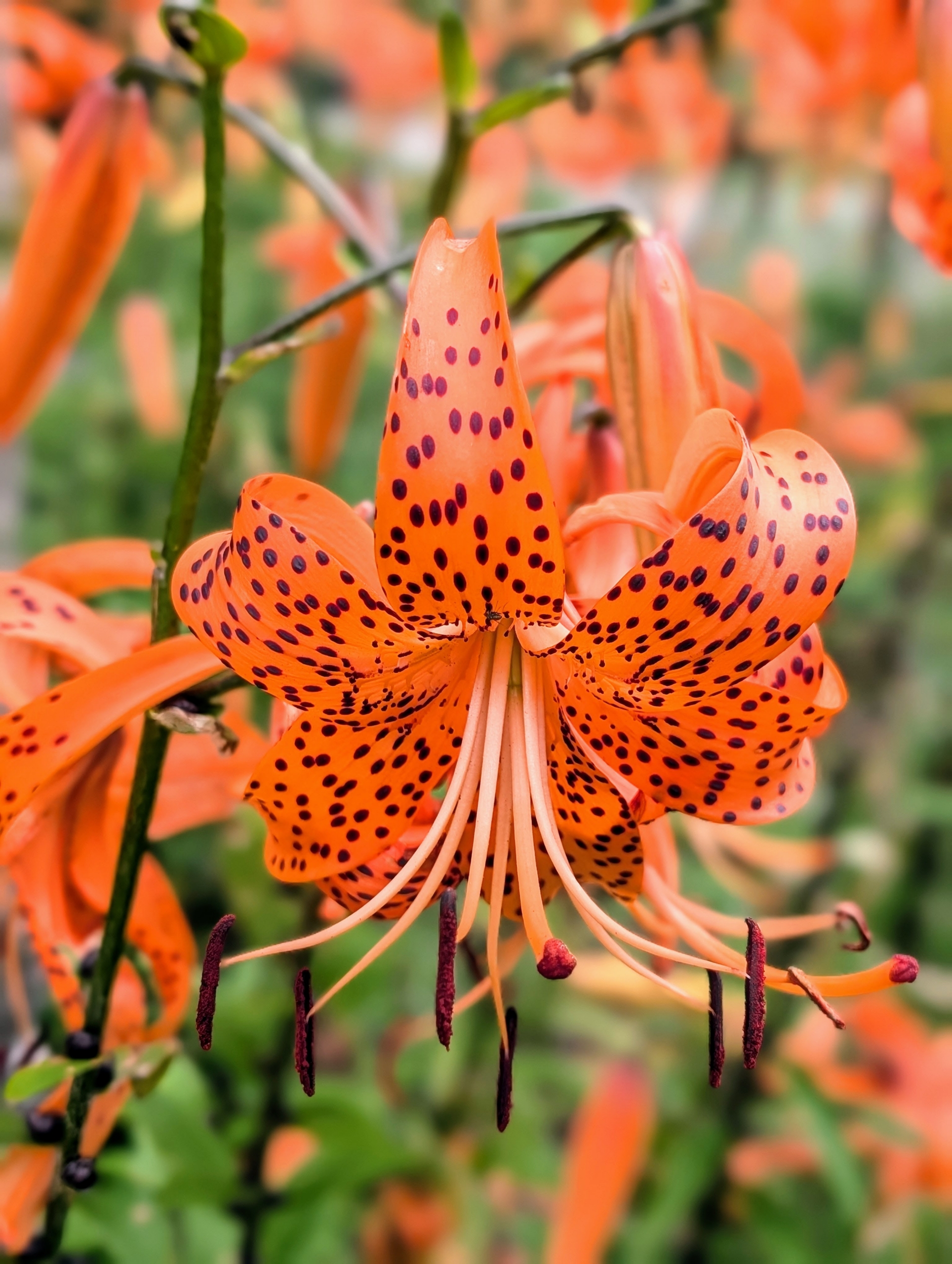
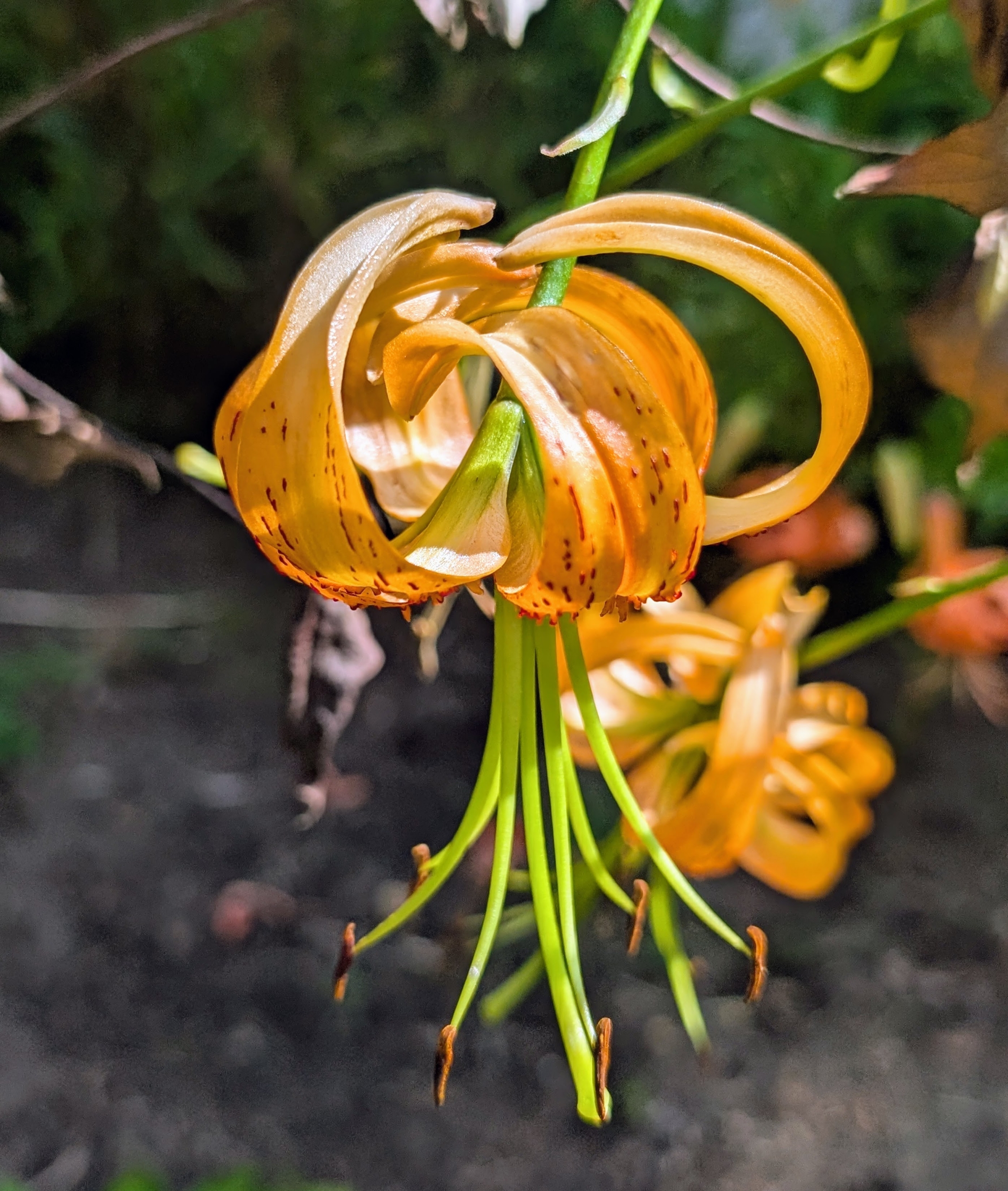
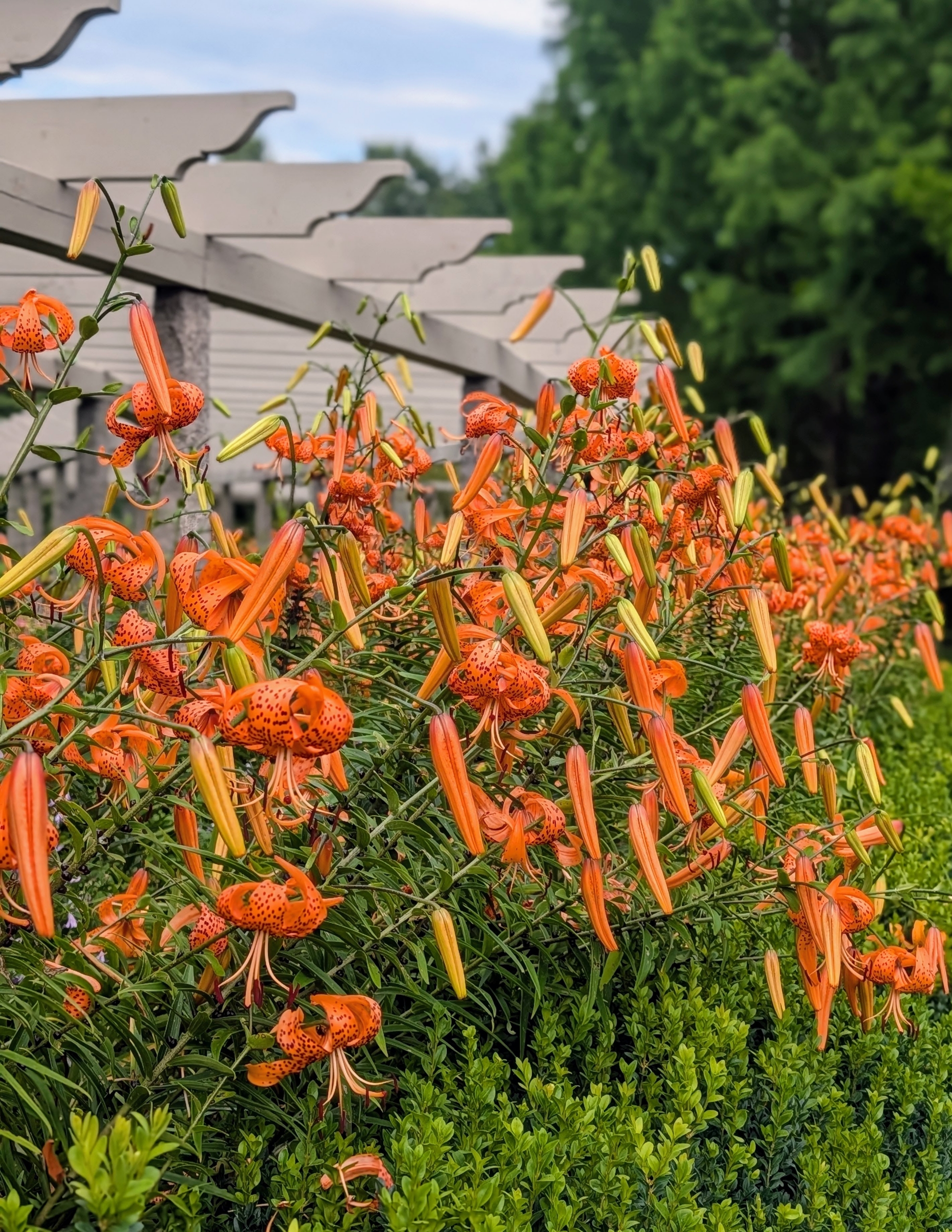
- Tiger lilies are covered with black or deep crimson spots, giving the appearance of the skin of a tiger. They have large, down-facing flowers, each with six recurved petals. Many flowers can be up to five inches in diameter. And they’re well-known for having heavily pollinated stamens, which stain. When cutting, always remove the anthers to prevent a clothing disaster – just pinch them off with gloved fingers.
-
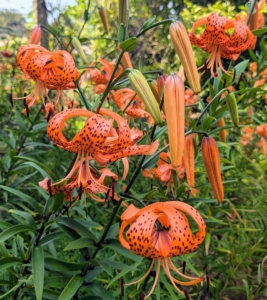
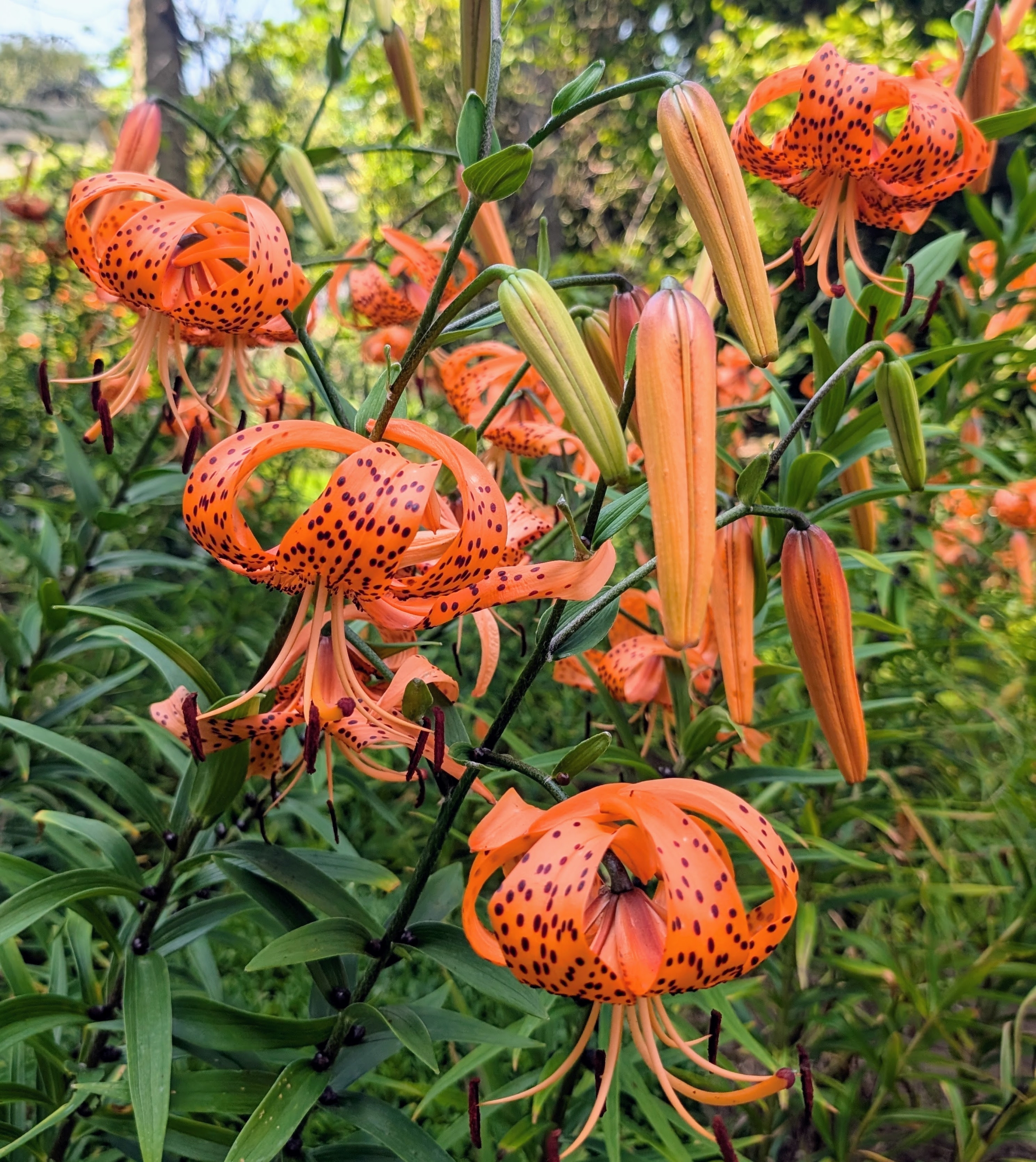
- The tiger lily’s petals bend back far during the flowering cycle, curling up against its own stem and exposing the stamens and pistol for visiting pollinators.
-
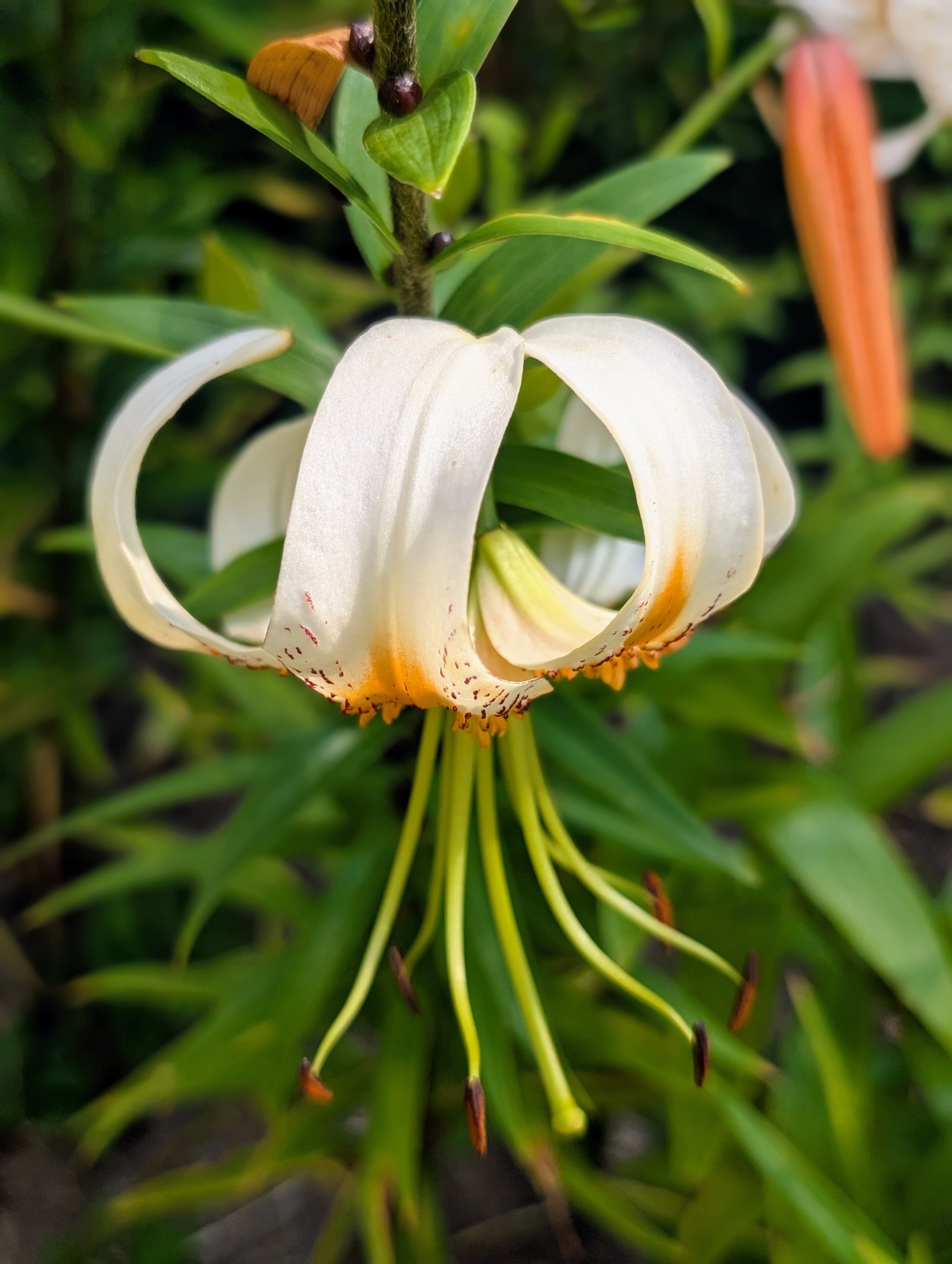
- There are also a few white lilies in this bed – adding more interest to the long floral display.
-
- This lily is white and orange with orange pollinated stamens.
-
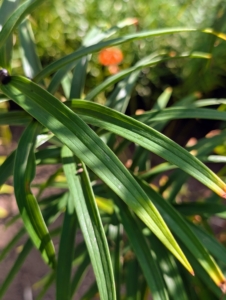
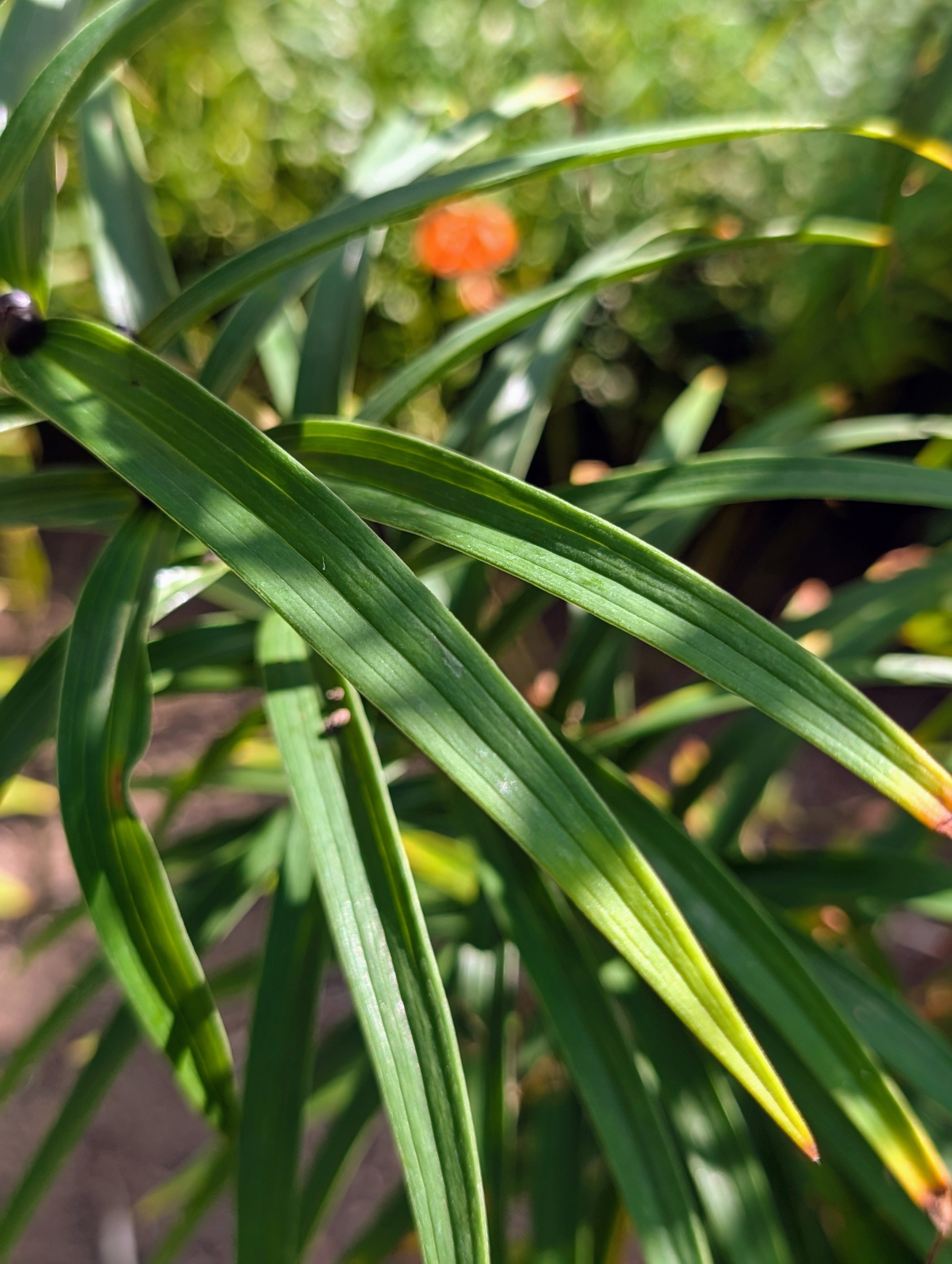
- The leaves can grow to three inches long and about 3/4-inch wide. They are medium green, narrow, smooth along their margins, and glabrous, clasping the stem at their bases.
-
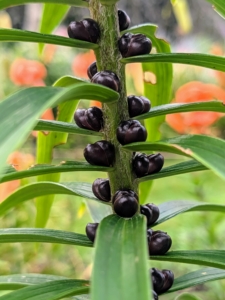
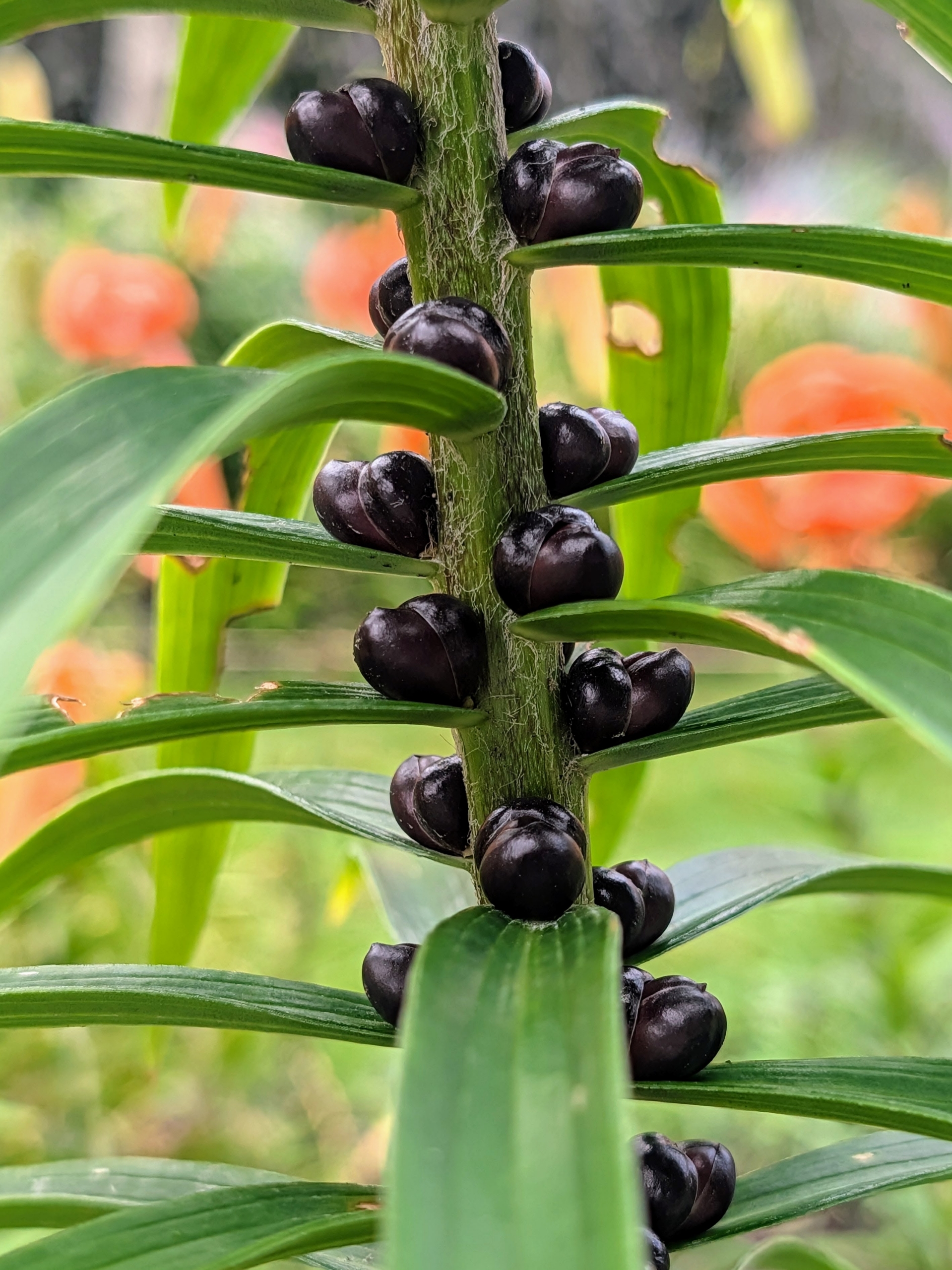
- The blackish, round “seeds” that develop in the axils of the leaves along the main stem are called bulbils.
-
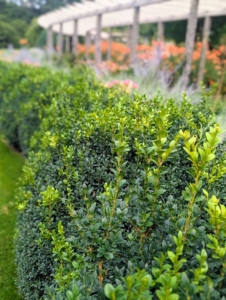
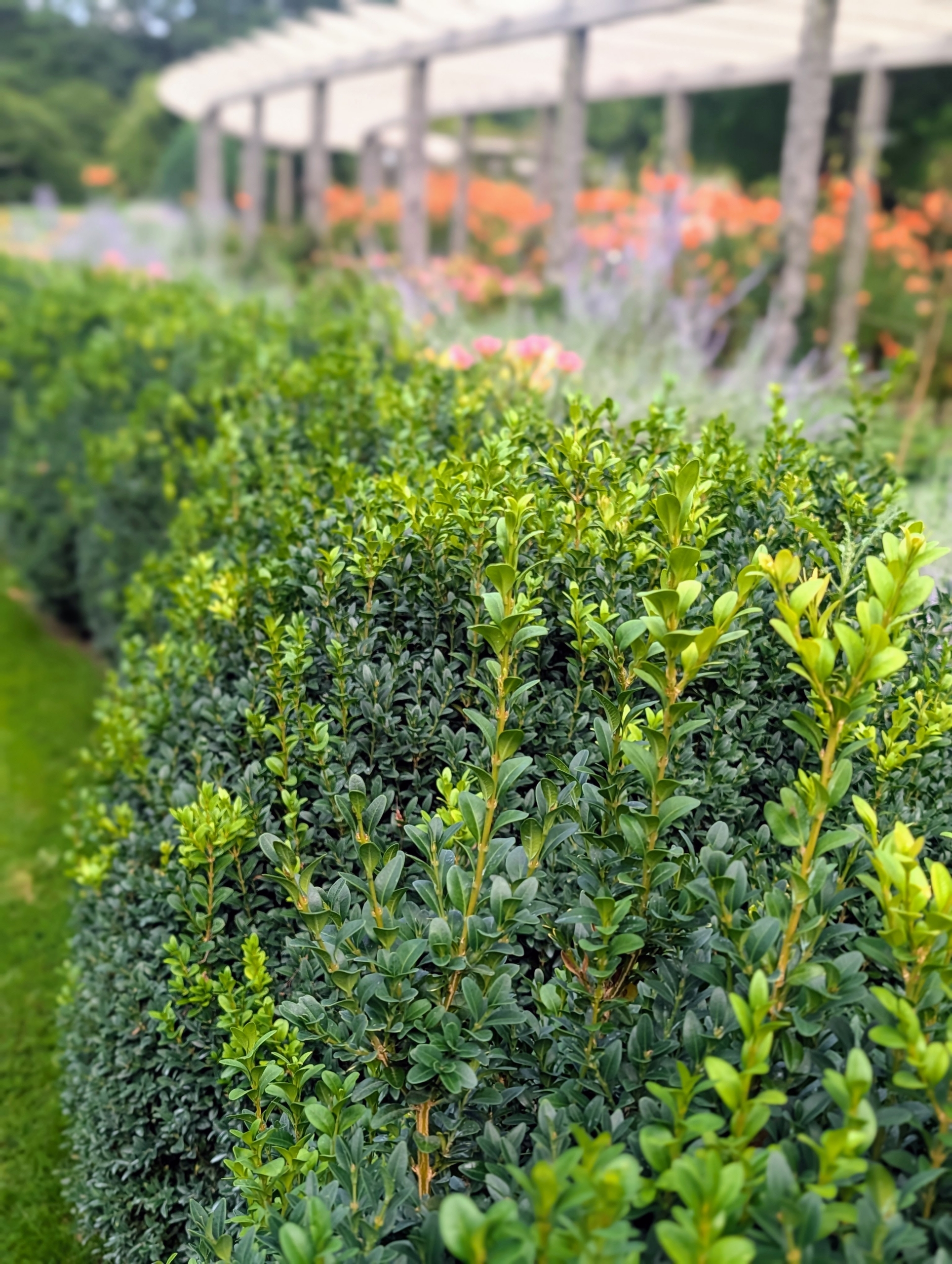
- Along both sides of the pergola, I planted a hedge of smaller boxwood shrubs, which have grown excellently.
-
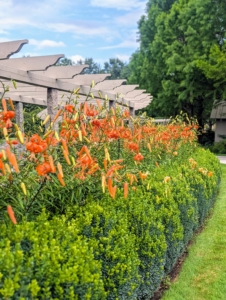
- This pergola starts across from my perennial flower cutting garden and runs along the carriage road leading to my Winter House. It’s one of the first gardens guests see when they come to visit.
-
- It’s also across the carriage road from my charming Basket house – filled with all kinds of wicker baskets I’ve collected over the years.
-
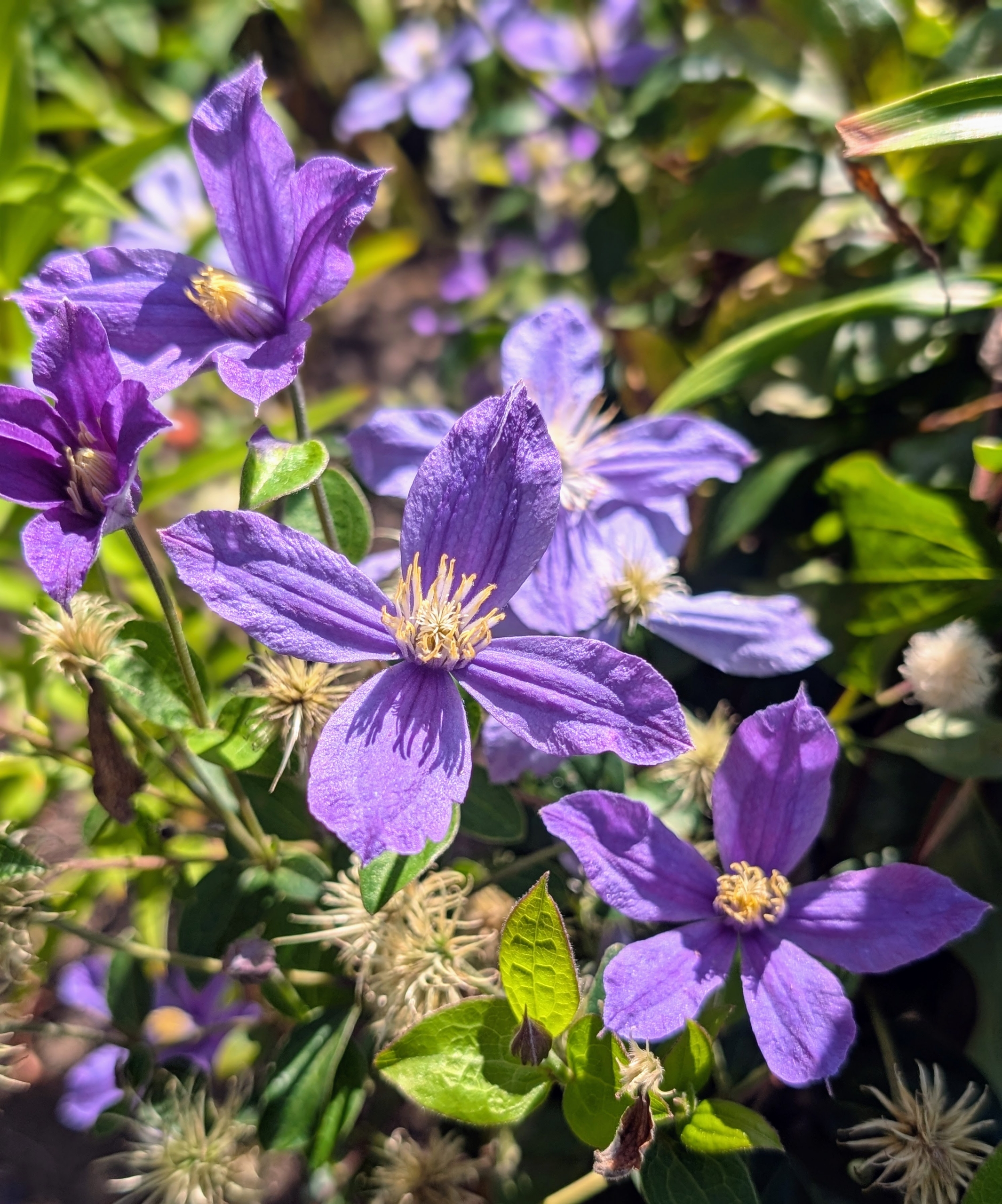
- On the granite posts, there are still a few lasting clematis flowers. I have always loved clematis, and have grown many varieties of this wonderful plant.
-
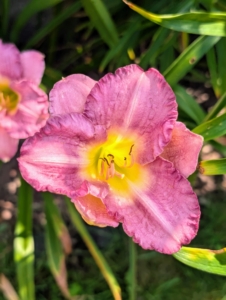
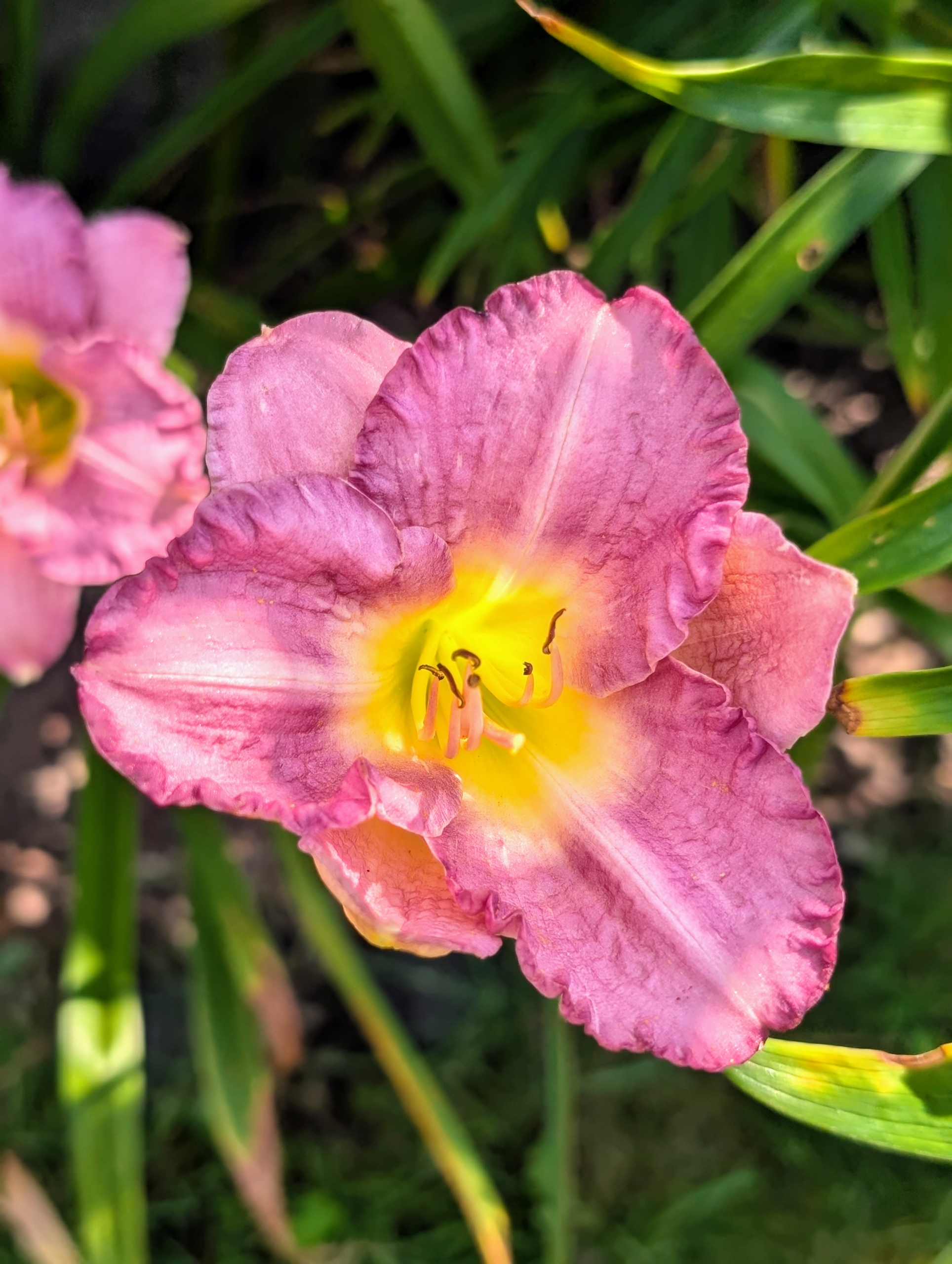
- I also have pops of daylilies. The daylily is a low-maintenance perennial—easy to grow, virtually disease- and pest-free, and able to survive drought, uneven sunlight, and poor soil. The daylily’s botanical name, Hemerocallis, comes from Greek hemera “day” and kallos meaning “beauty”. The name is appropriate, since each flower lasts only one day. Despite their name, daylilies are not “true lilies.” Leaves grow from a crown and the flowers form on leafless stems called “scapes,” which rise above the foliage.
-
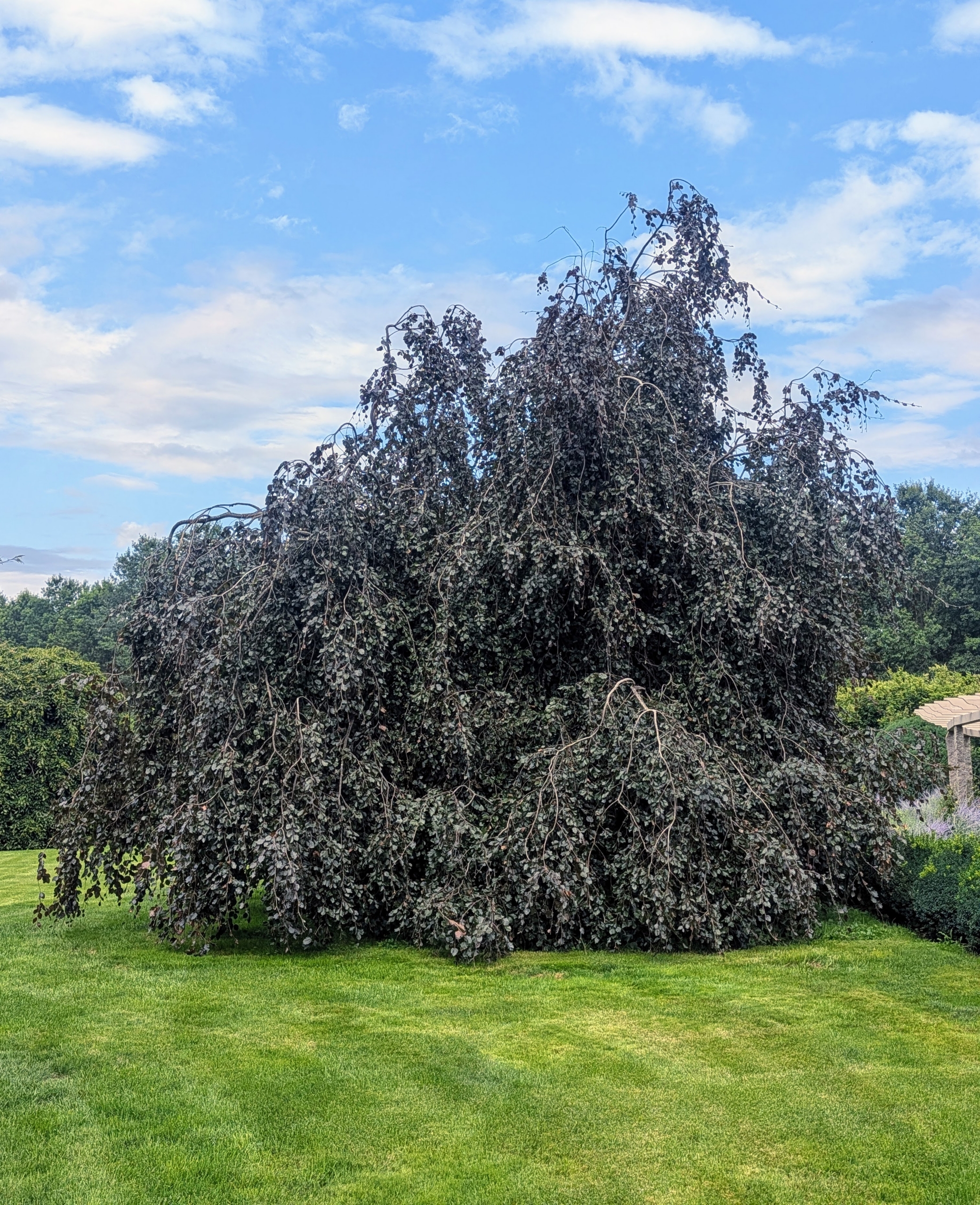
- And on one side of the pergola is my giant weeping copper beech tree. I have several large specimens on the property. The deep red to copper leaves grow densely on cascading pendulous branches.
-
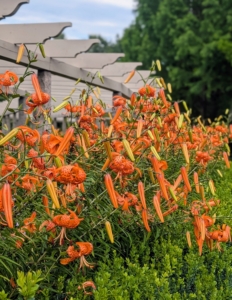
- And one by one, the orange lilies begin to open. New ones open every day during this time.
-
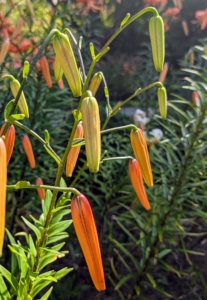
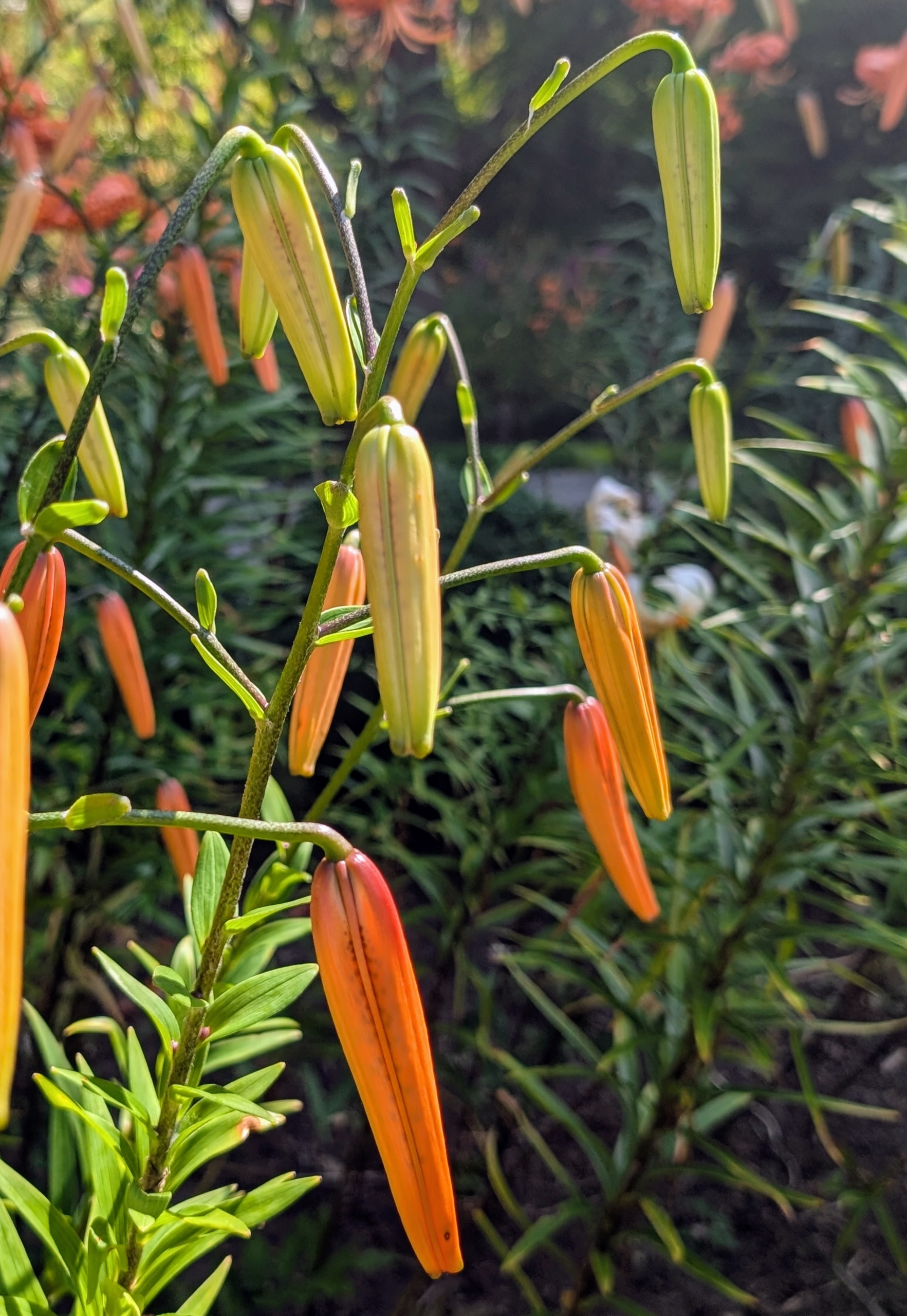
- And there are still many more lilies waiting to bloom. Tiger lilies do best in full sun.
-
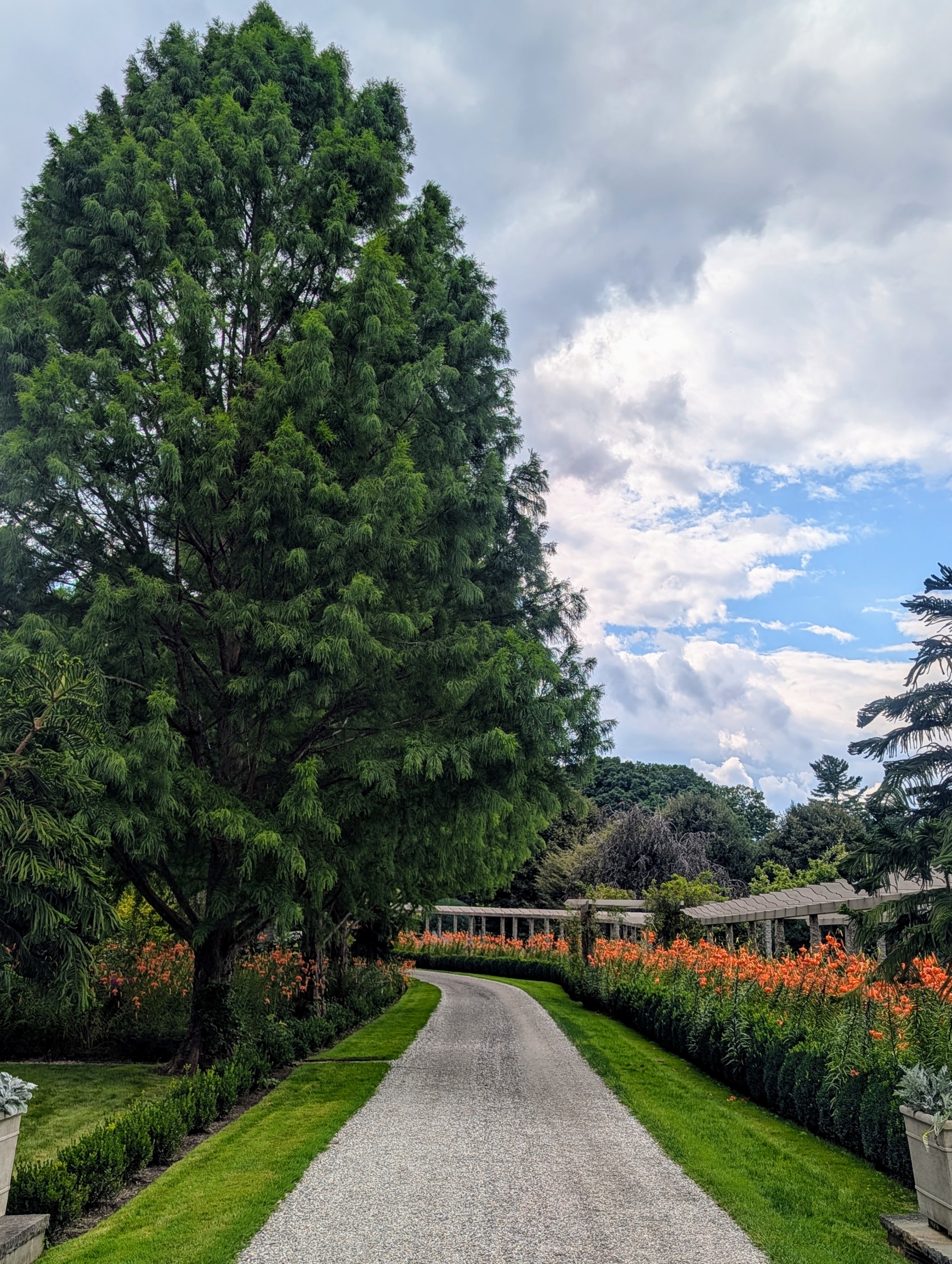
- The entire pergola border and its surrounding gardens, trees, and other specimens provide a spectacular show every year.
This story originally appeared on Martha Stewart Blog

