


On August 1, 1950, “Crusader Rabbit” debuted on the NBC-owned Los Angeles TV station KNBH, making history as the first animated series created specifically for TV broadcast. Produced as a satirical series of four-minute serialized chapters, “Crusader Rabbit” followed the zany exploits of Crusader, a brave and heroic bunny, and his sidekick Rags, a sensitive tiger. Together, the unlikely duo embarked on multi-episode “crusades.” The first storyline saw Crusader head off to face down the entire state of Texas over a plan to deport jackrabbits.
To bring the titular character to life, the producers cast actress Lucille Bliss as the voice of Crusader Rabbit. Film buffs and television gurus may recognize her signature voice work from other iconic projects, including several Disney films: She plied her trade on “Alice in Wonderland,” “Peter Pan,” and “Cinderella,” which got a 4K upgrade on Disney+ a few years back. She also voiced Smurfette in Hanna-Barbera’s hit 1980s cartoon series “The Smurfs,” which boasts one of the best animated TV series theme songs of all time.
“Crusader Rabbit” was the brainchild of cartoonist Alex Anderson and producer Jay Ward. Anderson’s uncle was Terrytoons founder Paul Terry, who passed on the project before Anderson teamed up with Ward. “My thought was to have a rabbit and a tiger but to switch their personalities, to have the rabbit be the aggressive tiger-like character and the tiger could be more of the gentle soul,” Anderson recalled during an interview with the Television Academy. “That was the essence that I approached Uncle Paul with.”
Crusader Rabbit paved the way for Rocky and Bullwinkle
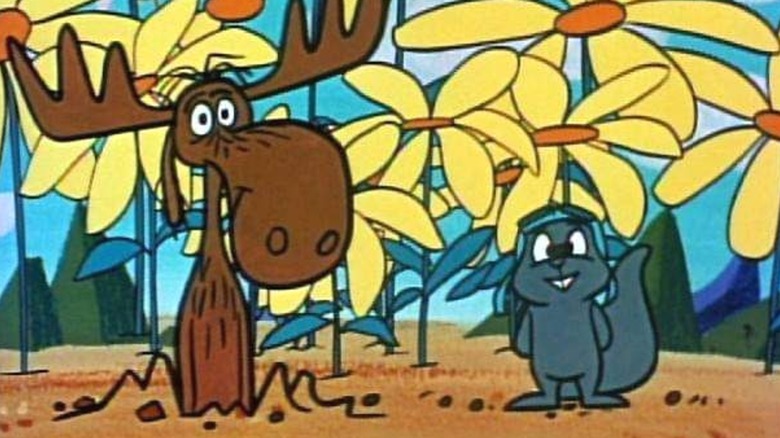
At the time, animation for television had to operate on strict budgets and was bound by tight turnaround times. As such, the “Crusader Rabbit” team relied heavily on what’s known as limited animation, a technique that involves reusing frames to create basic, repetitive movements. It was very different from the fluid animation seen in movie theaters in the 1950s, but it was their only option.
According to Anderson, the animation became more sophisticated as the team learned how to operate within the confines of the budget. “We were evolving, and we were learning with each new gimmick how to better perform and better achieve what we were looking for, and getting our artists to understand the whole process,” he told the Television Academy. “We learned a lot, and maybe toward the end, we were really getting a little bit professional about doing it, but it was so very much a learning process.”
“Crusader Rabbit” — which concluded with 23 crusades consisting of 455 individual four-minute episodes — laid the foundation for future animated television shows. Anderson and Jay Ward took all the lessons they learned from the experience and channeled them into their next venture, 1959’s “Rocky and His Friends.” The influential variety series aired under a number of different titles over the years before being given the name “The Adventures of Rocky and Bullwinkle and Friends” for its home video release.
This story originally appeared on TVLine

