


October 8, 2026
Planting Sugar Maples
Here at my farm, we’re making the most of the fall planting season, getting many beautiful trees into the ground. Fall is an ideal time to plant, when the soil remains relatively warm while cooler air temperatures help newly planted specimens establish their roots.
This week, my outdoor grounds crew is planting 15 sugar maples, Acer saccharum ‘Green Mountain’, from our friends at Select Horticulture, Inc. in nearby Pound Ridge, New York. These handsome trees can eventually reach 40 to 80 feet tall, developing dense, oval crowns and spectacular yellow-to-orange fall color. I chose to plant them along the carriage road in my back hay field, near a grove of red maples. I’m looking forward to watching these trees grow and thrive.
Here are some photos.
-
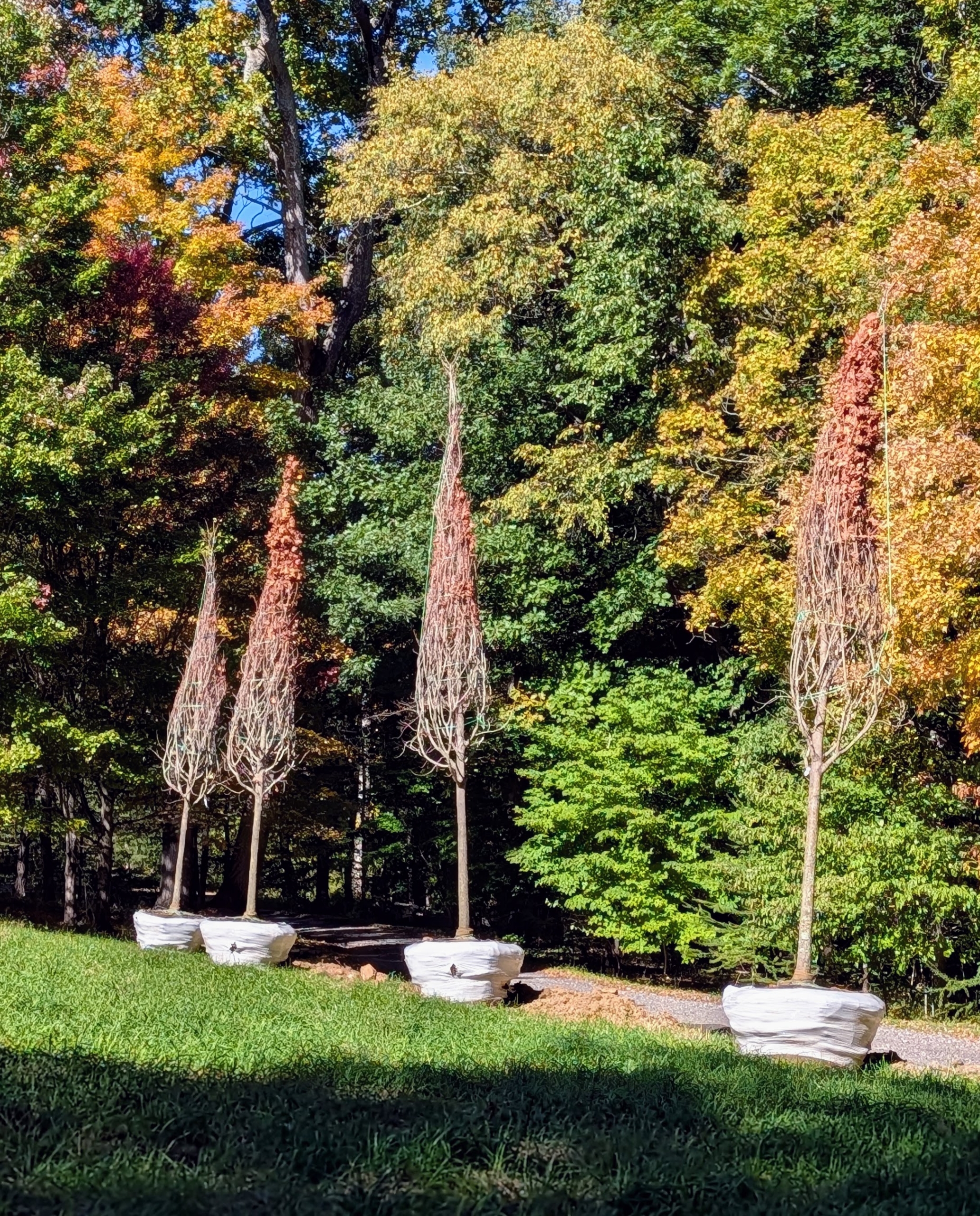
- There is always so much happening at my farm. On this day, trees are delivered from Select Horticulture and brought straight to my back hay field.
-
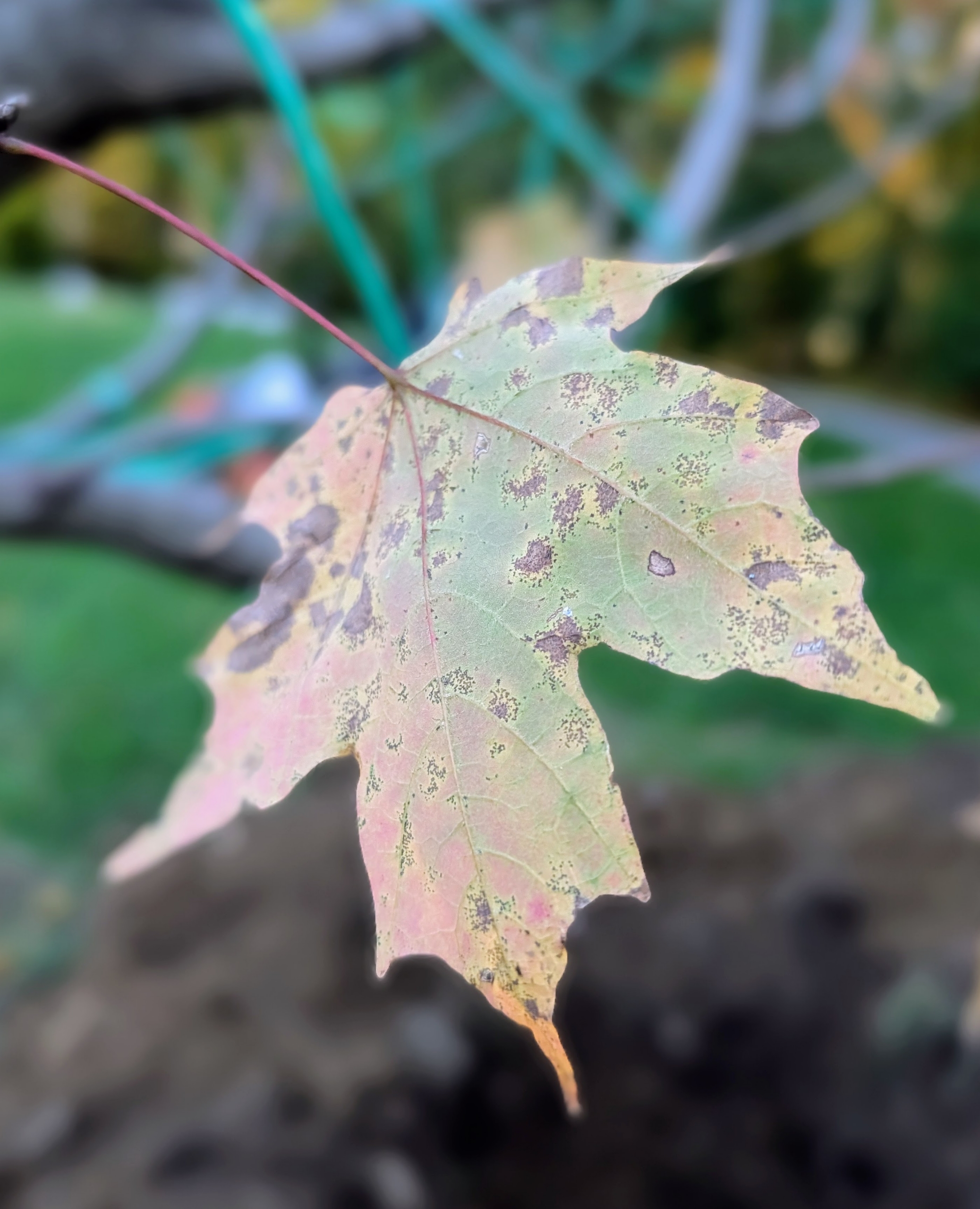
- The foliage of these trees has already started to change color and drop, but the leaves are usually leathery, dark green in spring and summer, turning brilliant orange, gold yellow, and scarlet in autumn.
-
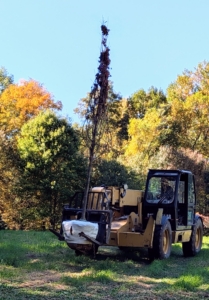
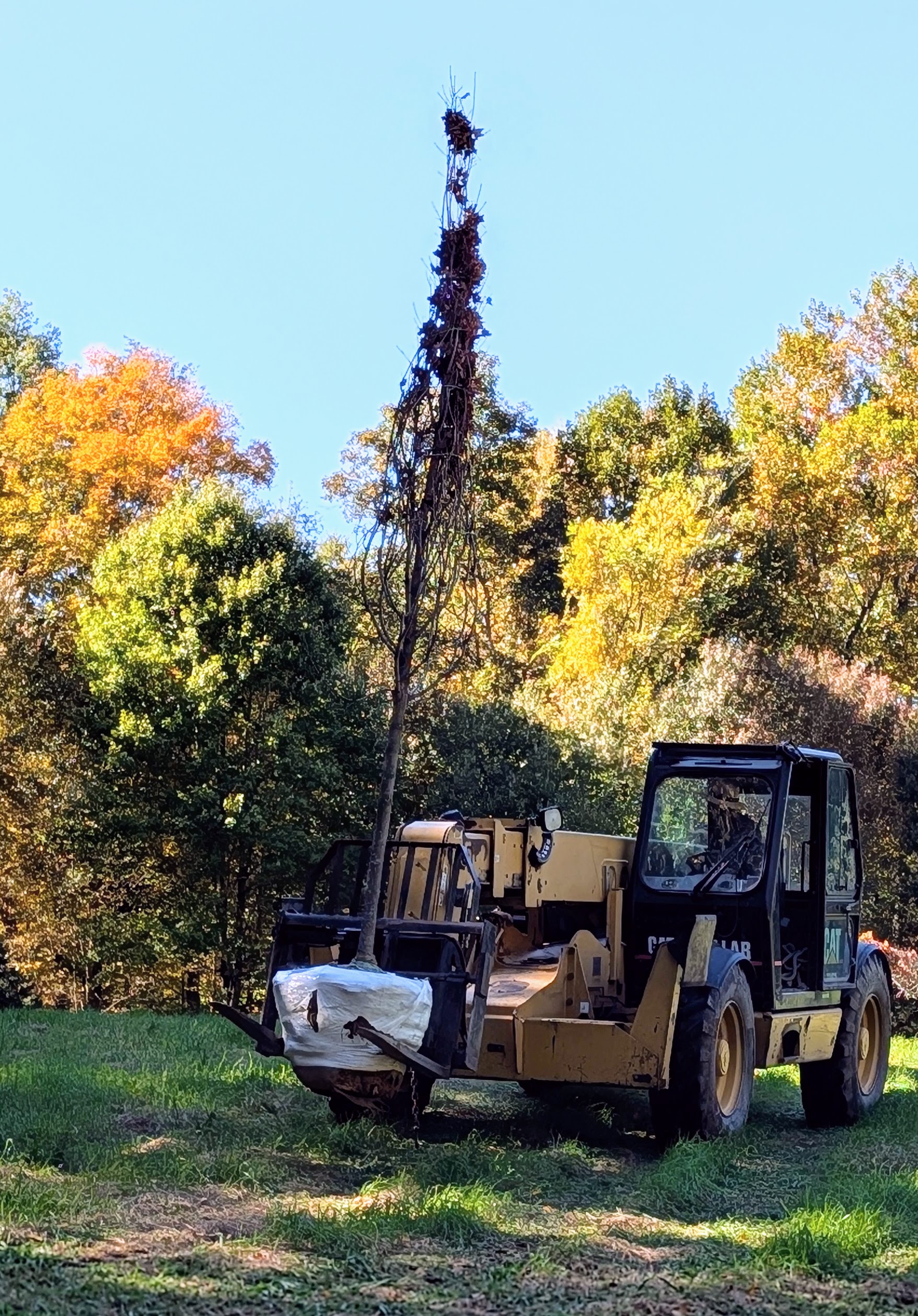
- Using our trusted Hi-Lo, my outdoor grounds crew foreman Chhiring Sherpa positions the trees at the edge of the carriage road.
-
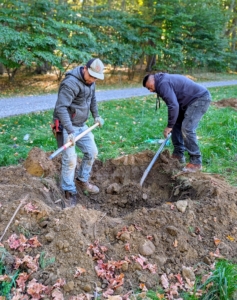
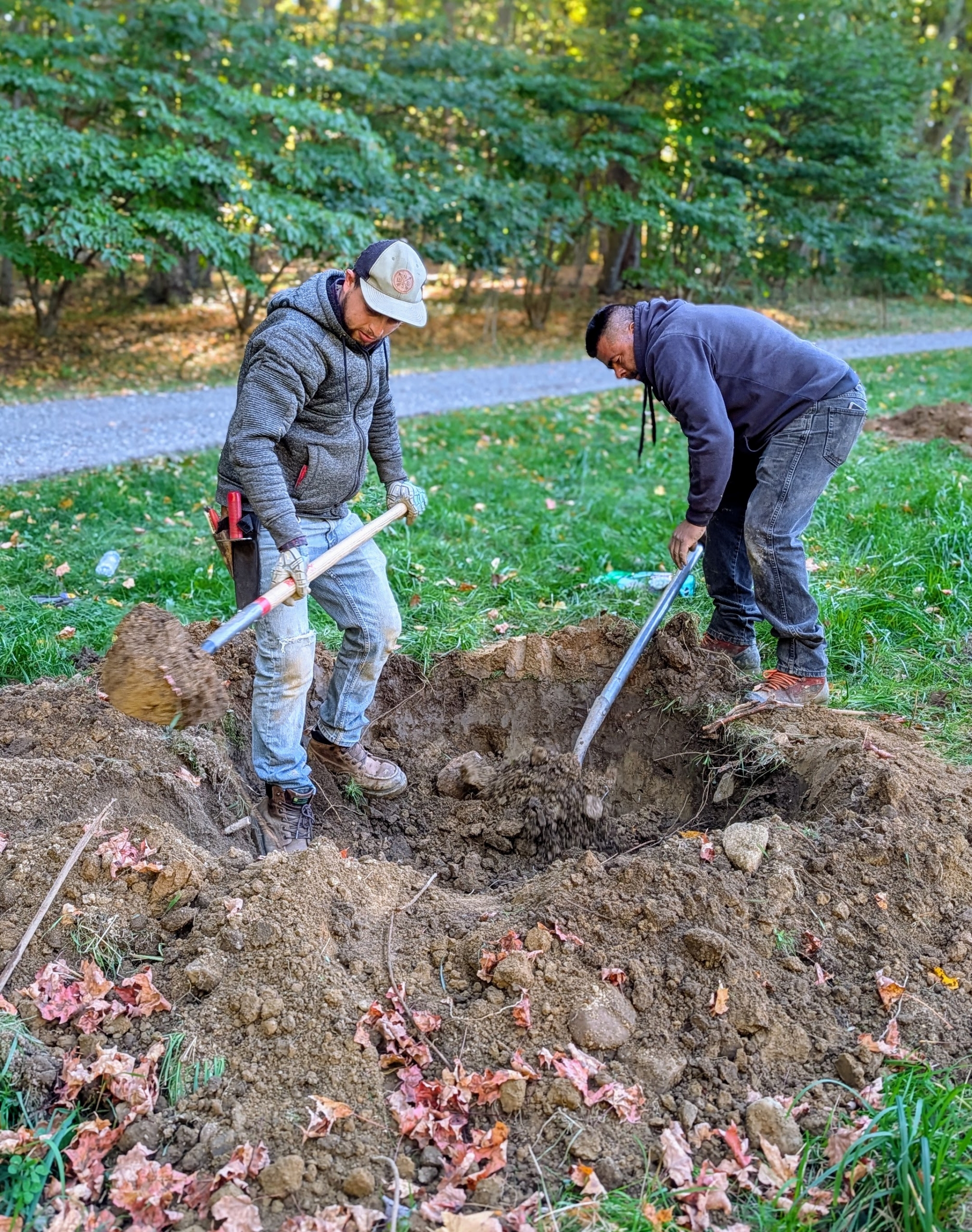
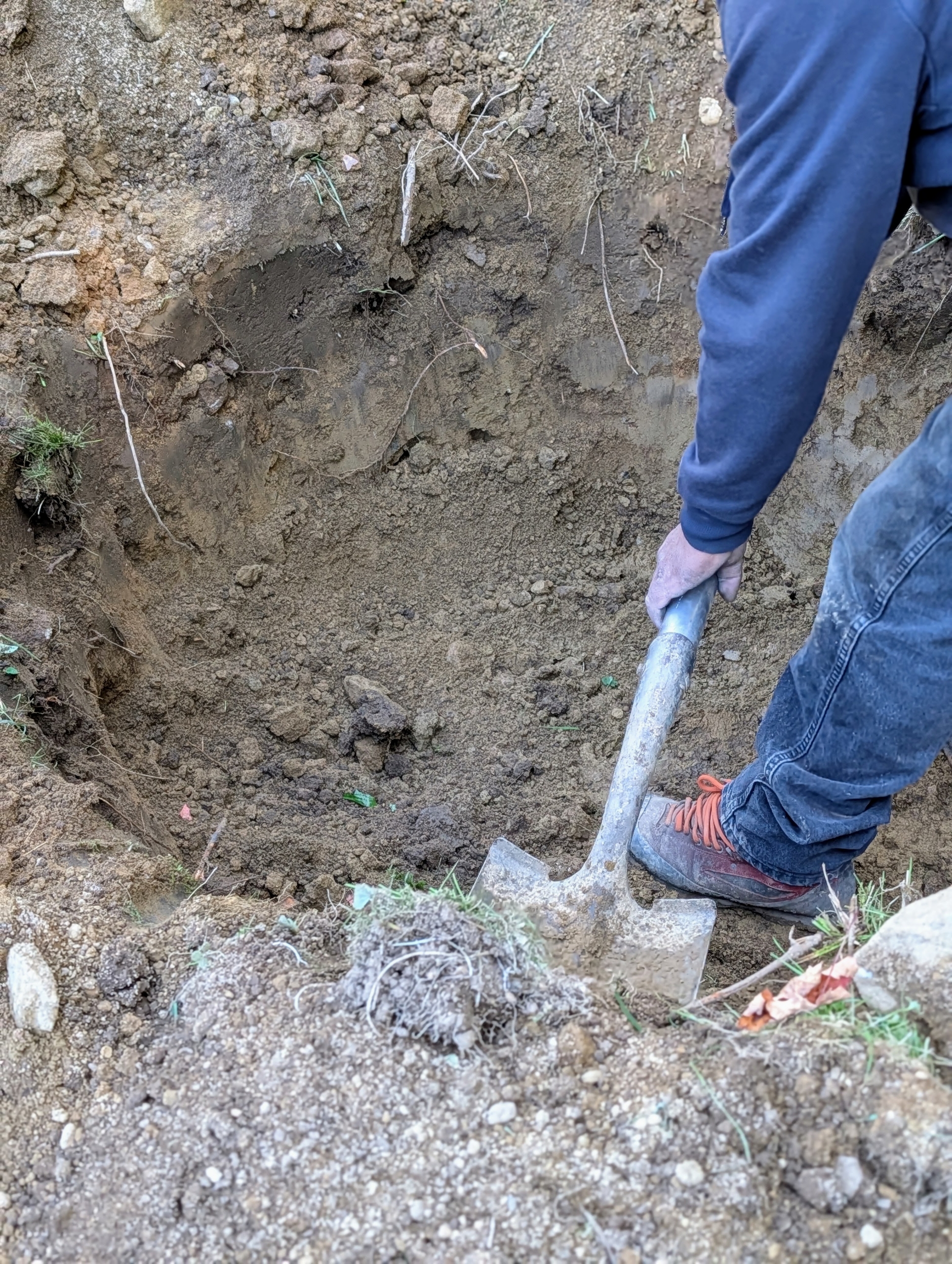
- When planting any tree, the hole should be twice the width of the root ball and equal in depth. This allows the tree’s roots to spread easily and get the oxygen it needs.
-
- The sides should also be at a slight angle to help the roots get properly established.
-
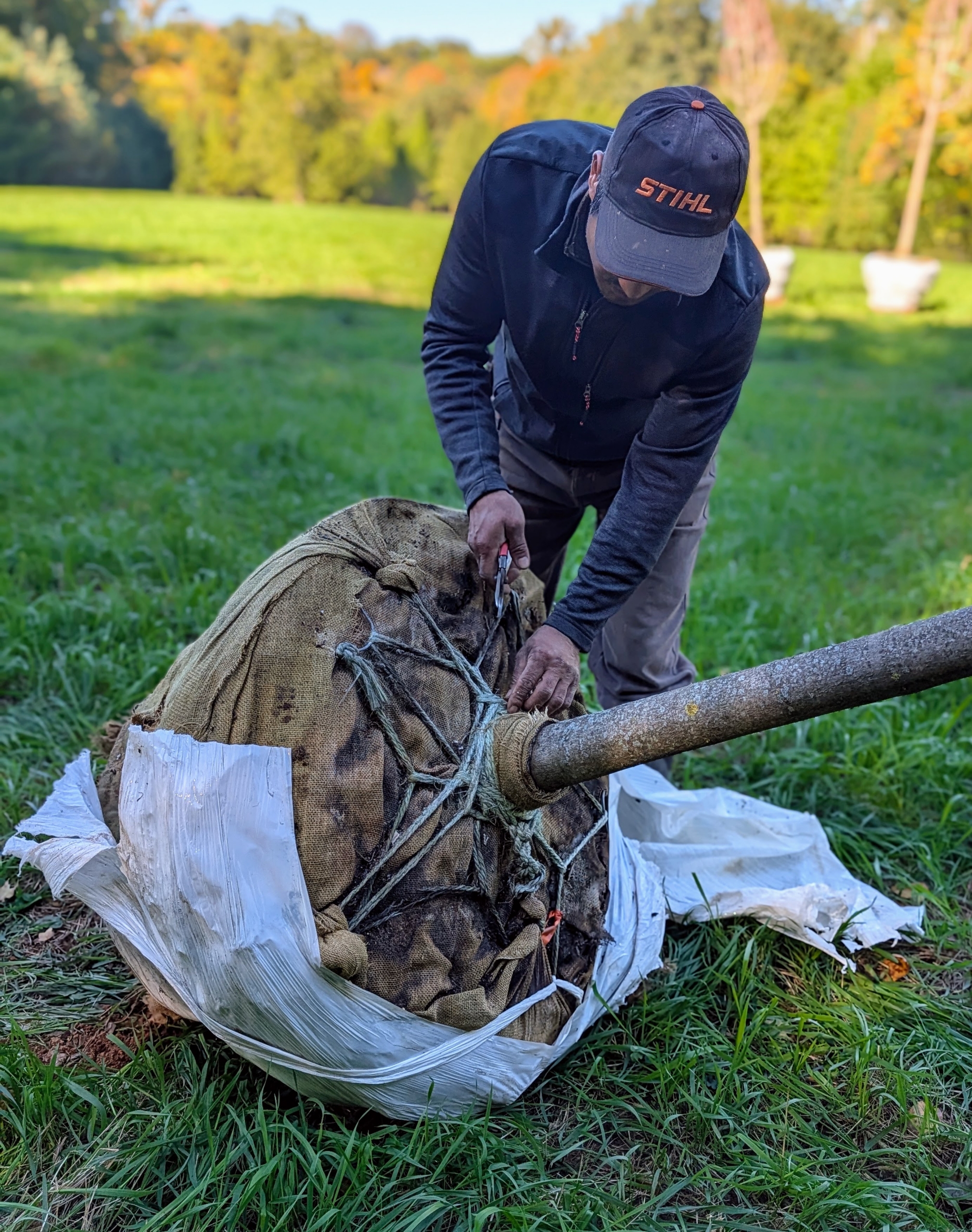
- Pasang begins to remove the protective plastic from the root ball of the tree. The materials hold together the root ball so that chunks of heavy soil do not fall out or tear roots. The wrapping protects the roots from dehydration and sunburn and allows trees to be safely moved.
-
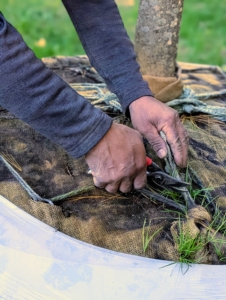
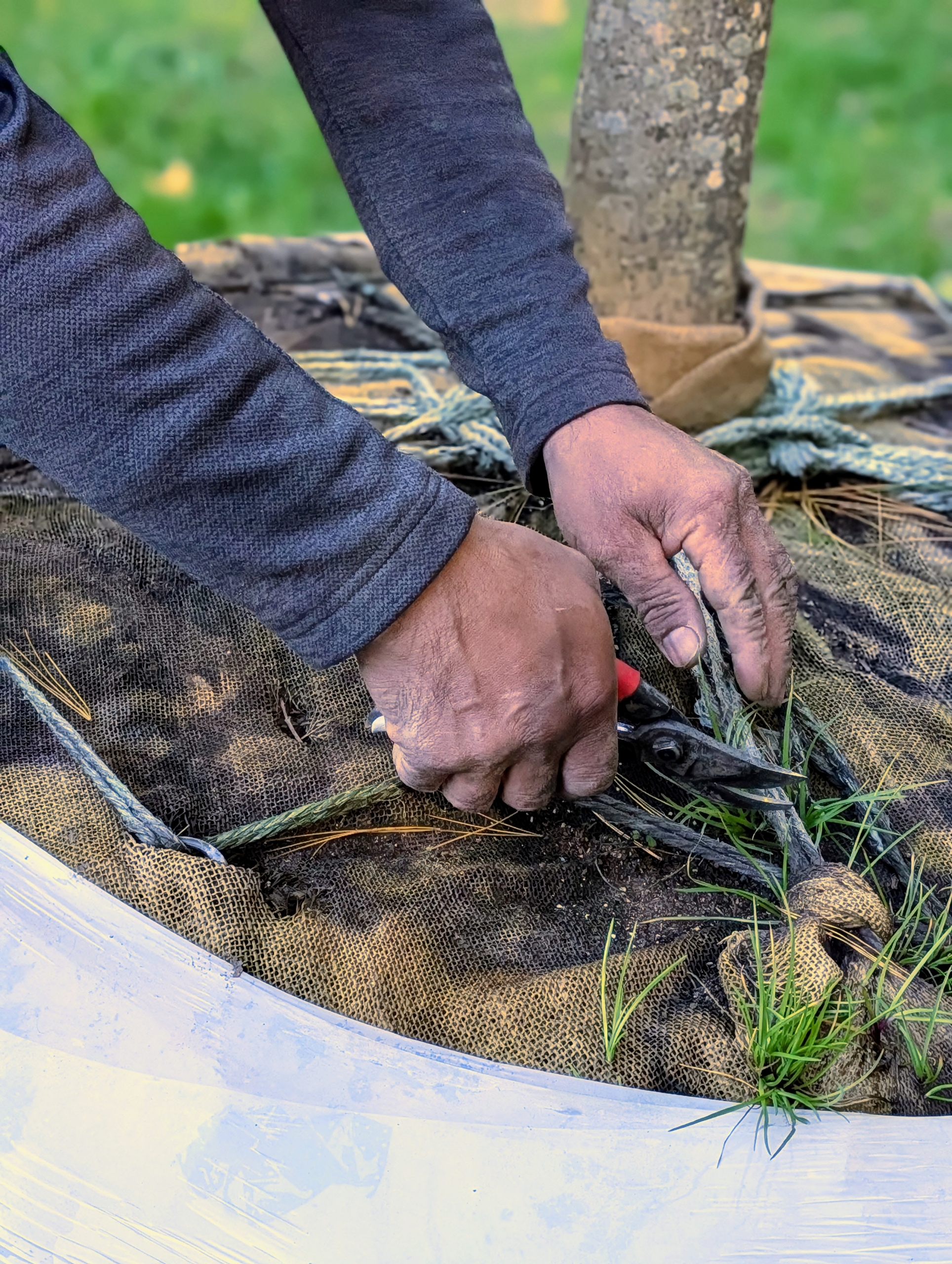
- Here is Pasang also removing the strong rope.
-
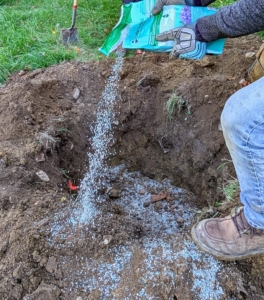
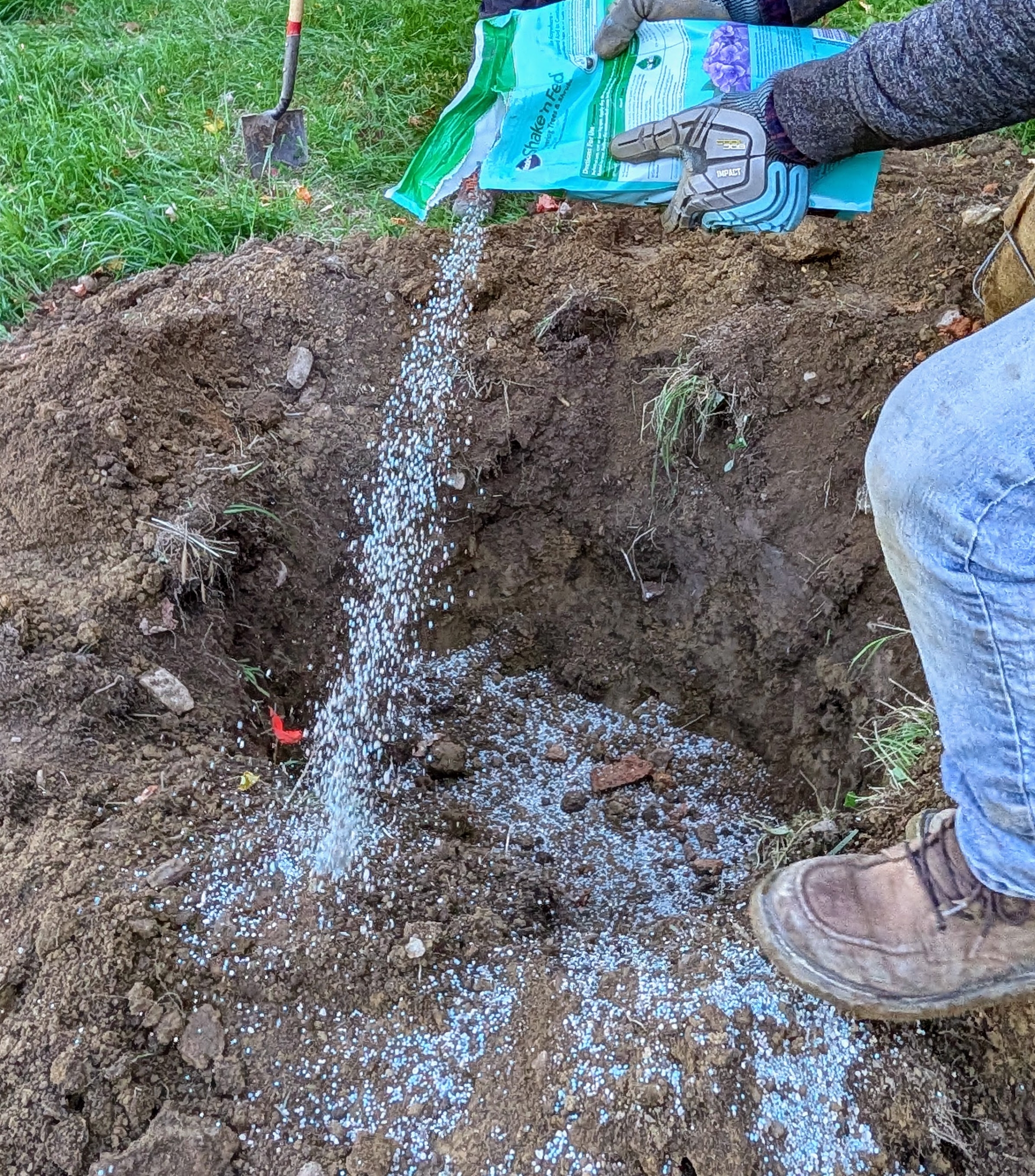
- Meanwhile, Alex sprinkles a generous amount of fertilizer into the hole and the surrounding soil. Remember, “if you eat, so should your plants.”
-
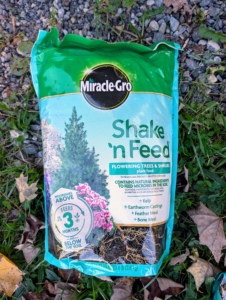
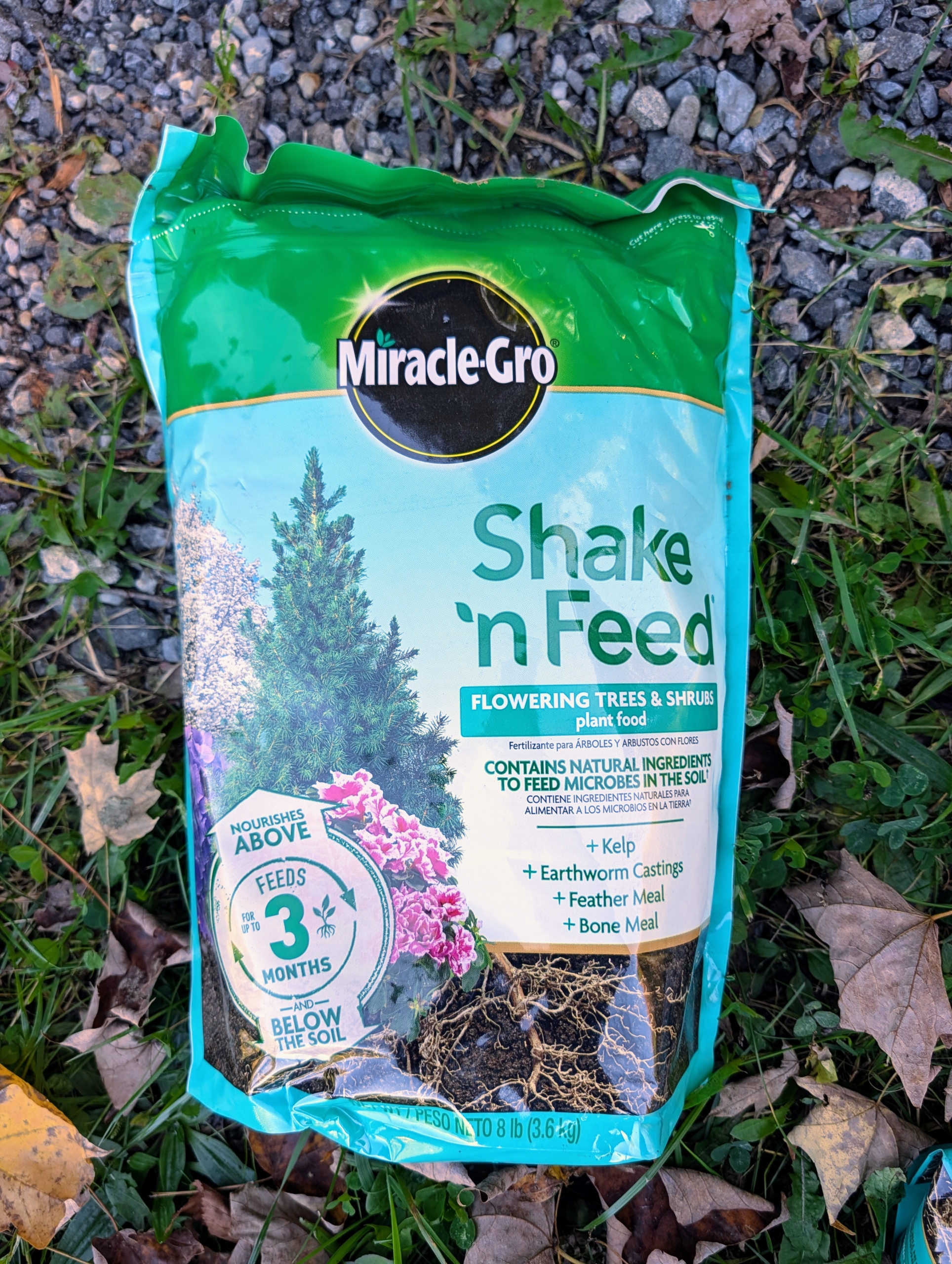
- I use Miracle-Gro Shake’n Feed Flowering Trees & Shrubs plant food which has done so well for my plants. It contains natural ingredients such as kelp, earthworm castings, bone meal, and feather meal, which will feed the tree and maintain its foliage.
-
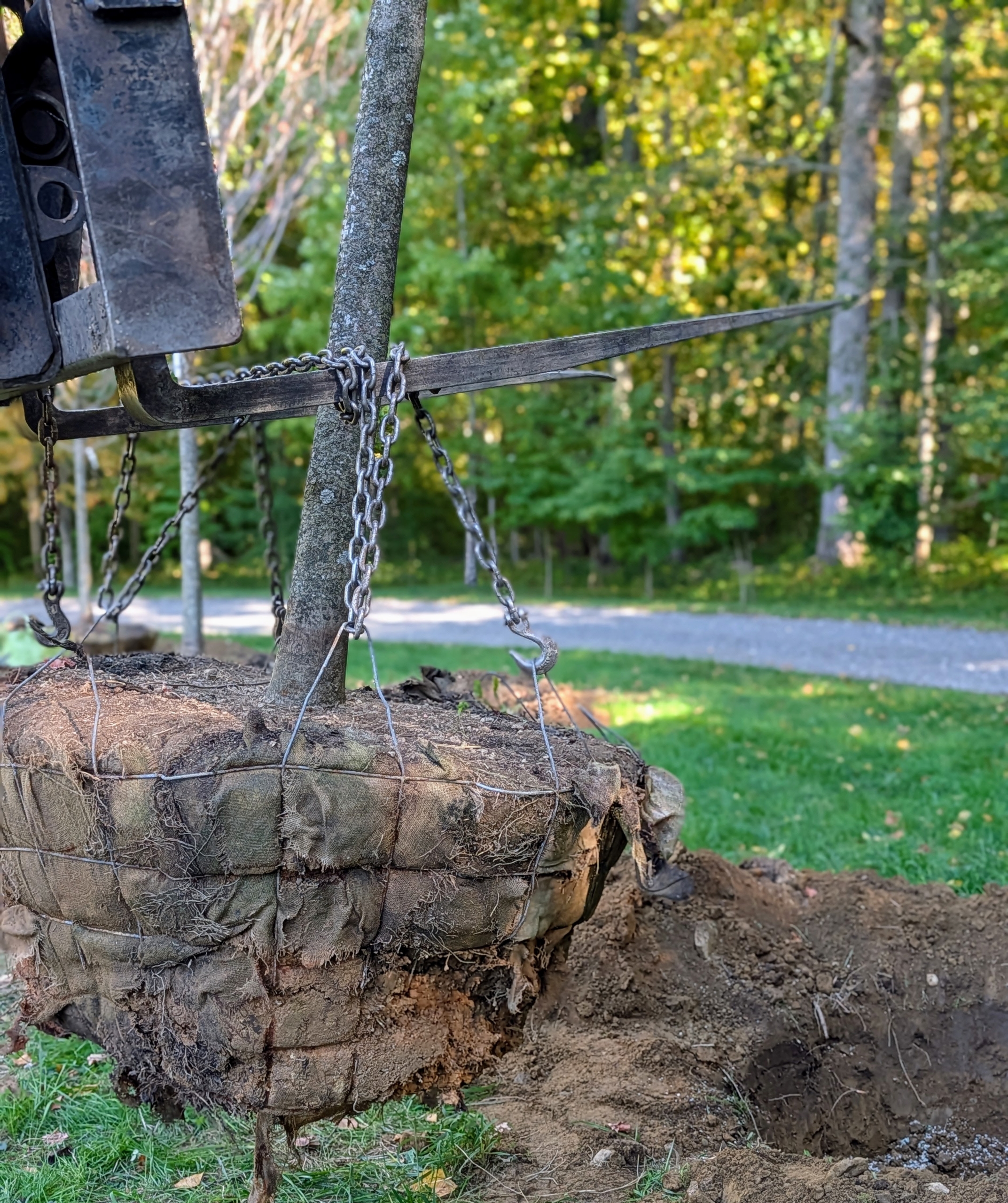
- The Hi-Lo carefully transports the tree to its designated hole.
-
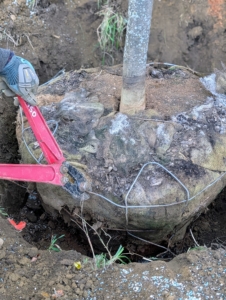
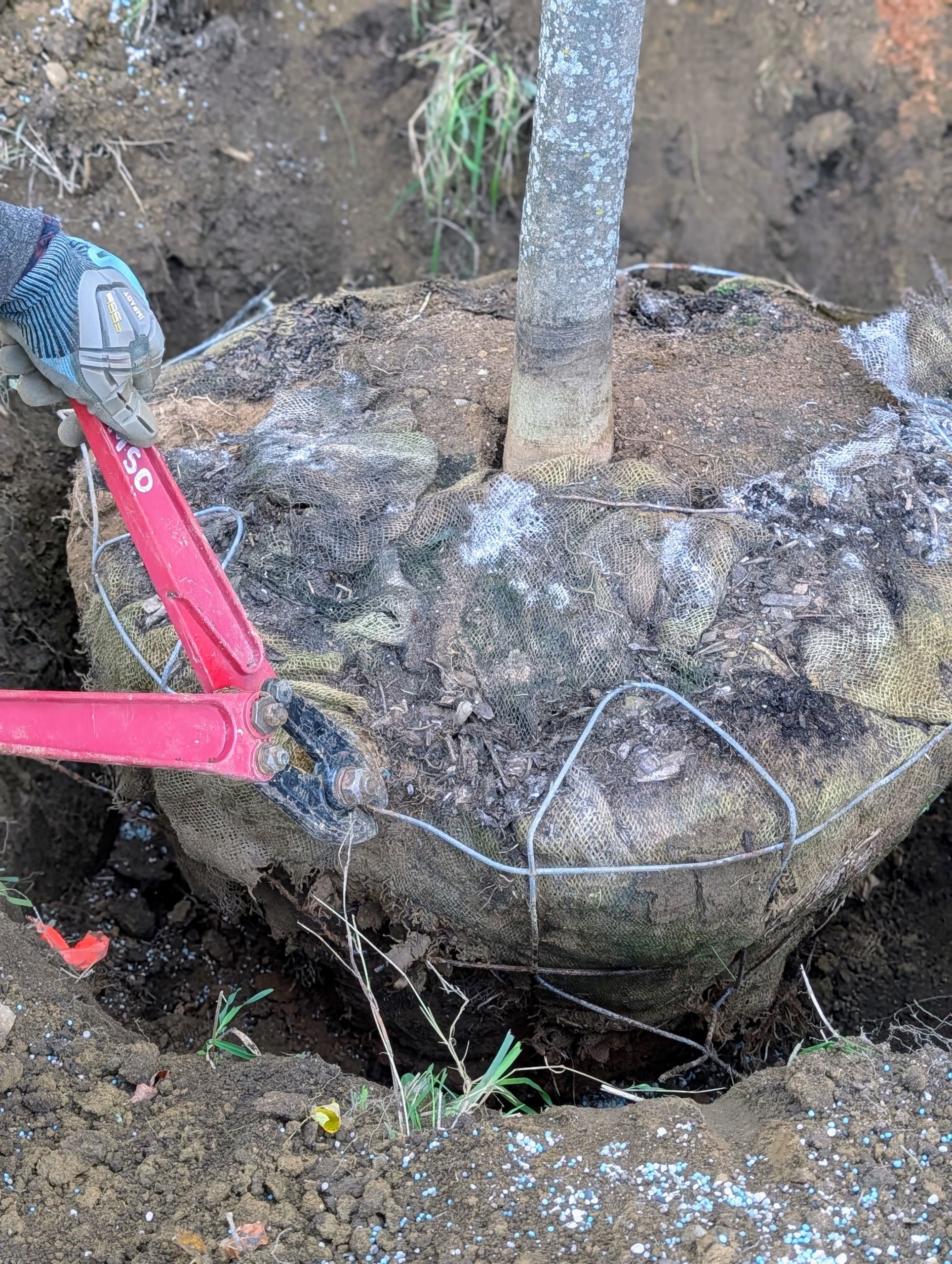
- Once there, the wiring is cut and removed. Some feel it is ok to leave the wiring in place, but I always remove all the protective wrapping, so there is nothing blocking the roots from developing.
-
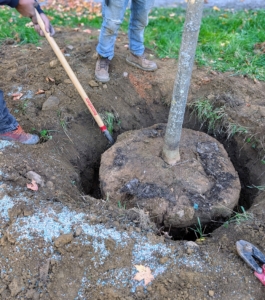
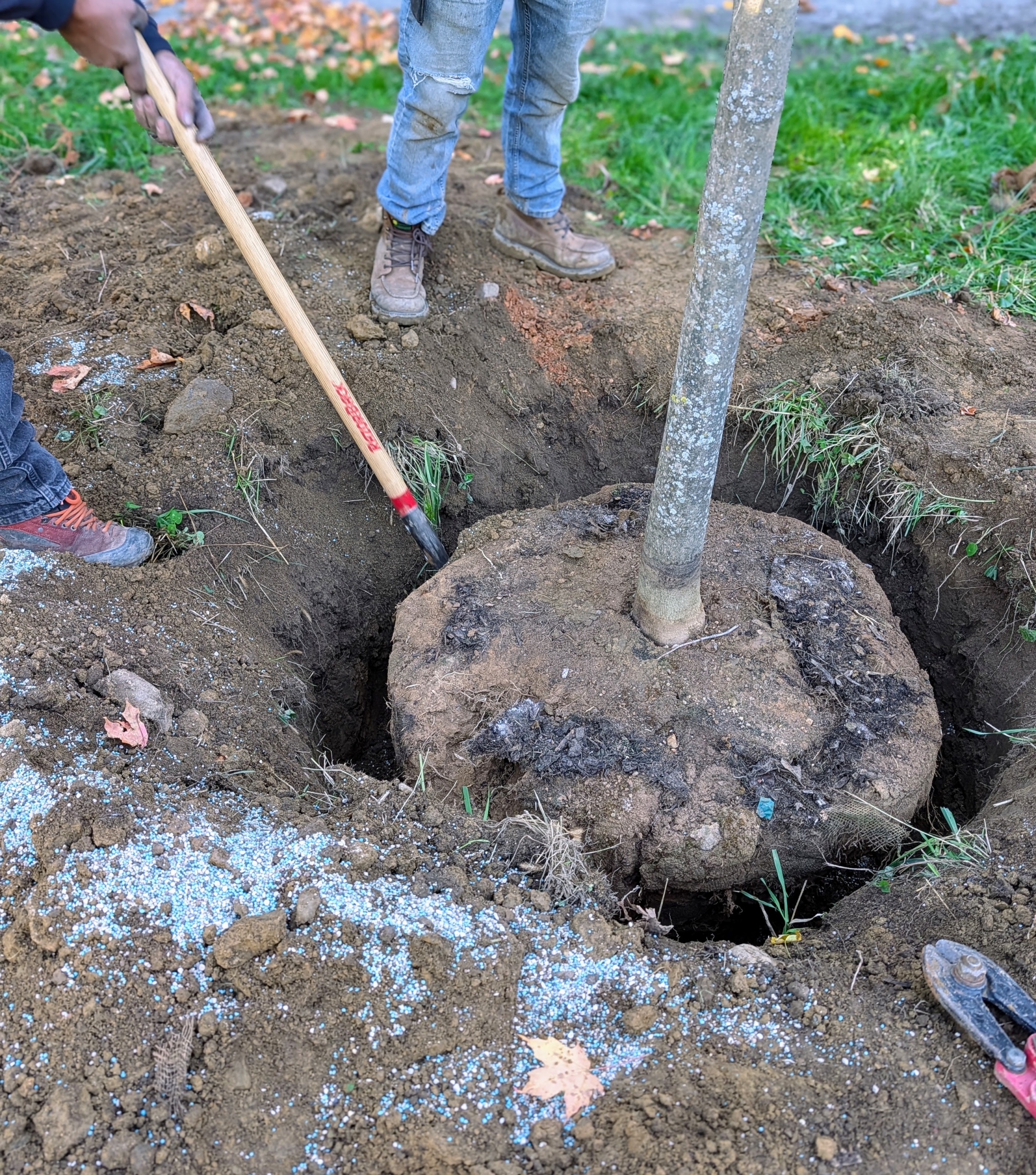
- A crucial step in growing healthy trees is to plant them at the proper depth. Planting a tree too deep can kill it. Plant it only at its flare – the bulge just above the root system where the roots begin to branch away from the trunk. Digging a wide planting hole helps to provide the best opportunity for roots to expand into its new growing environment.
-
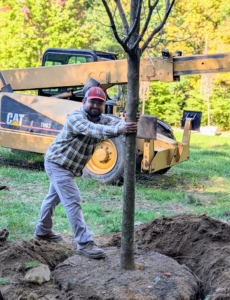
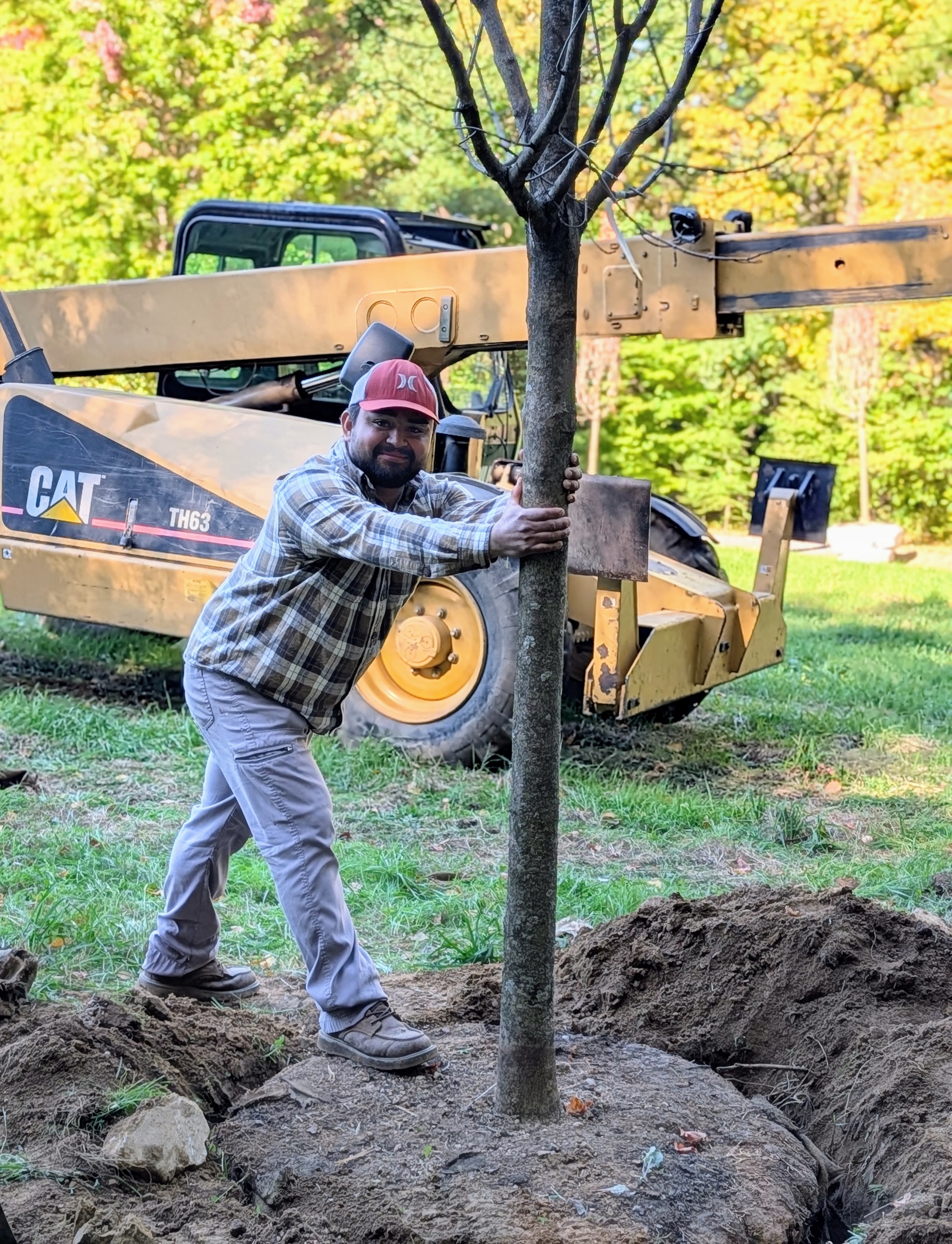
- The crew looks at the tree from all angles to make sure it is straight and secure in its place. Jimmy stands by to help make any slight adjustments.
-
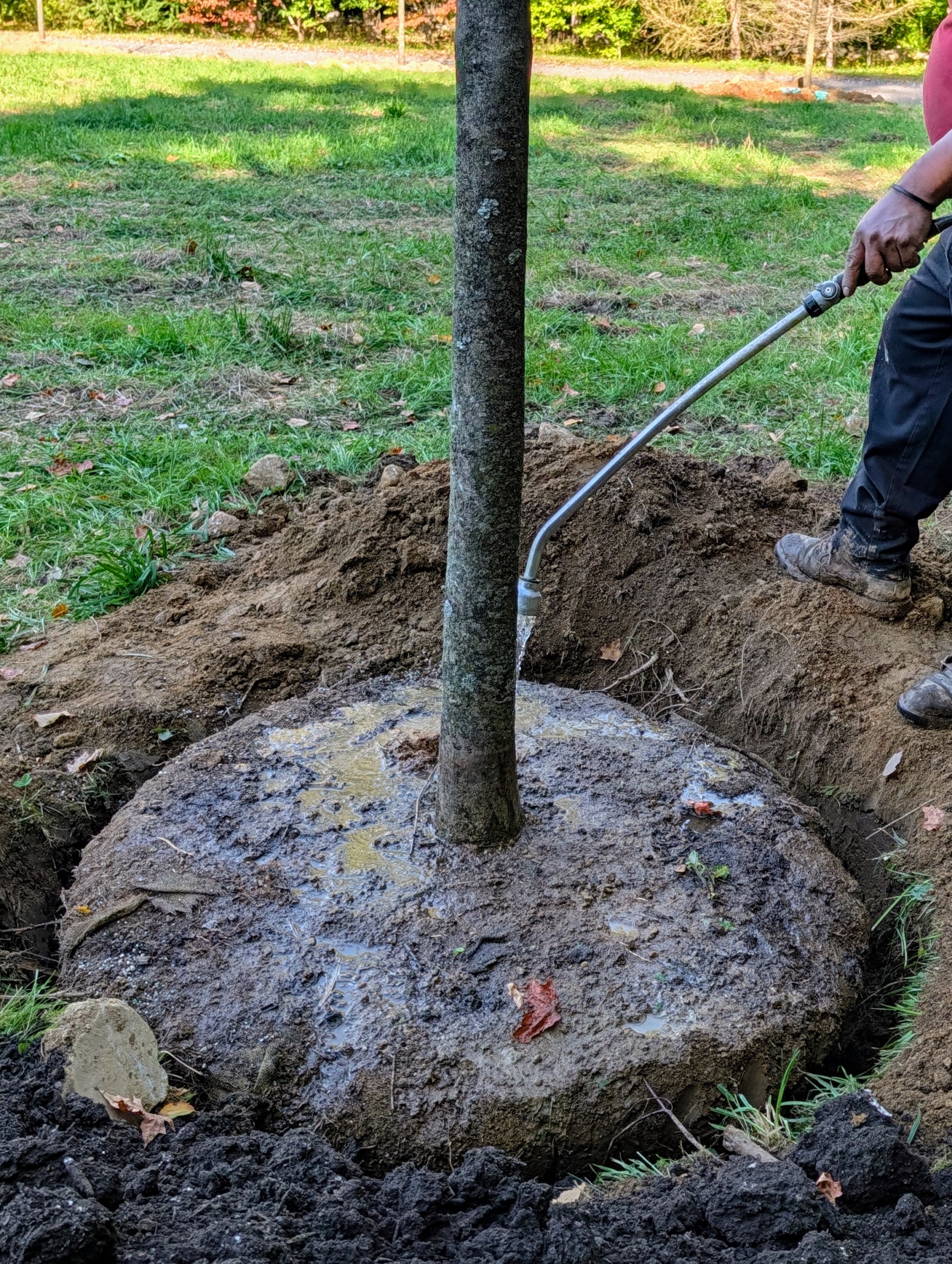
- Next, these trees need a good drink before they are completely backfilled.
-
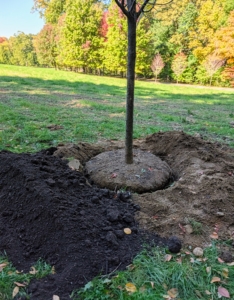
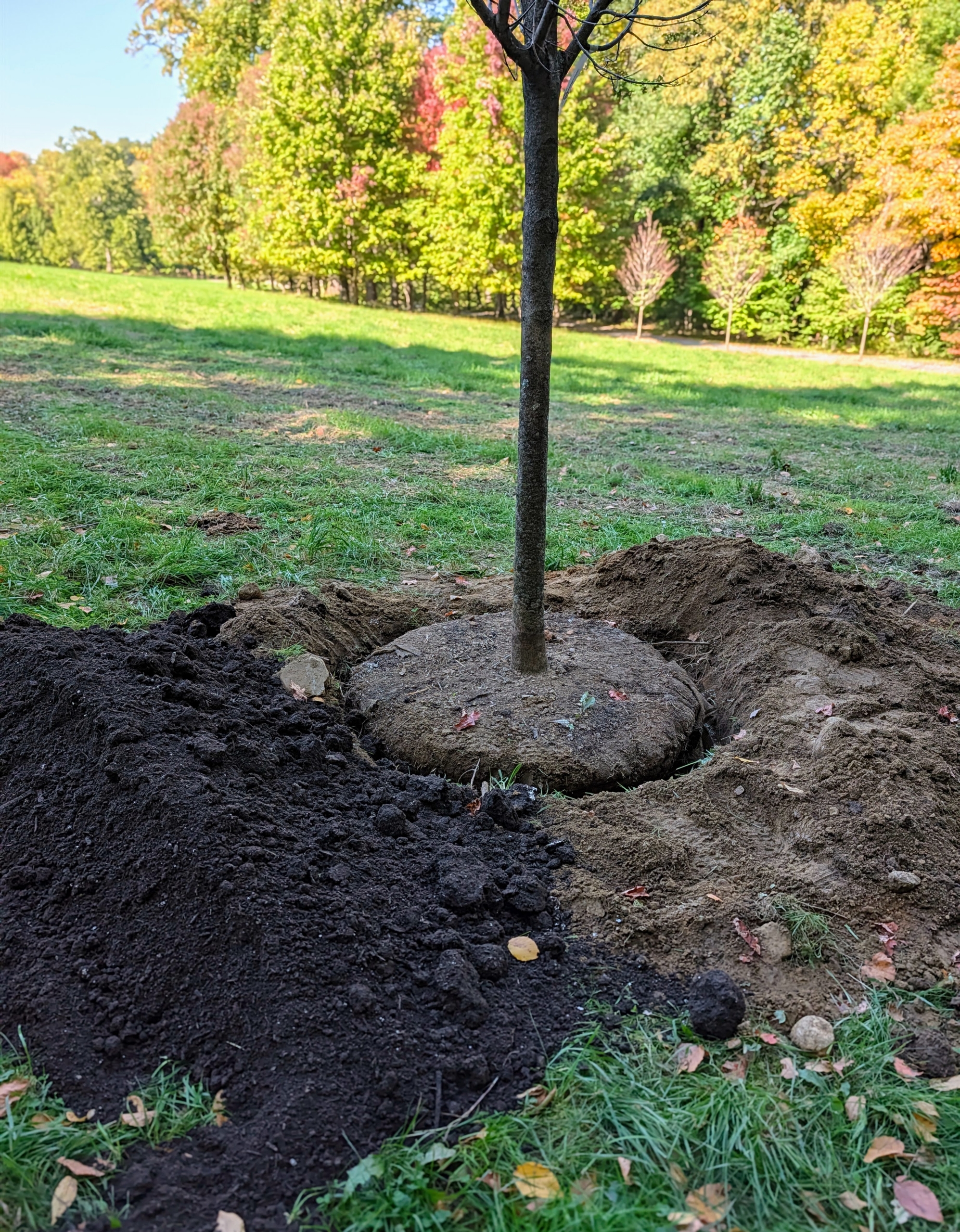
- Compost made right here at my farm is also brought over to add to the existing soil.
-
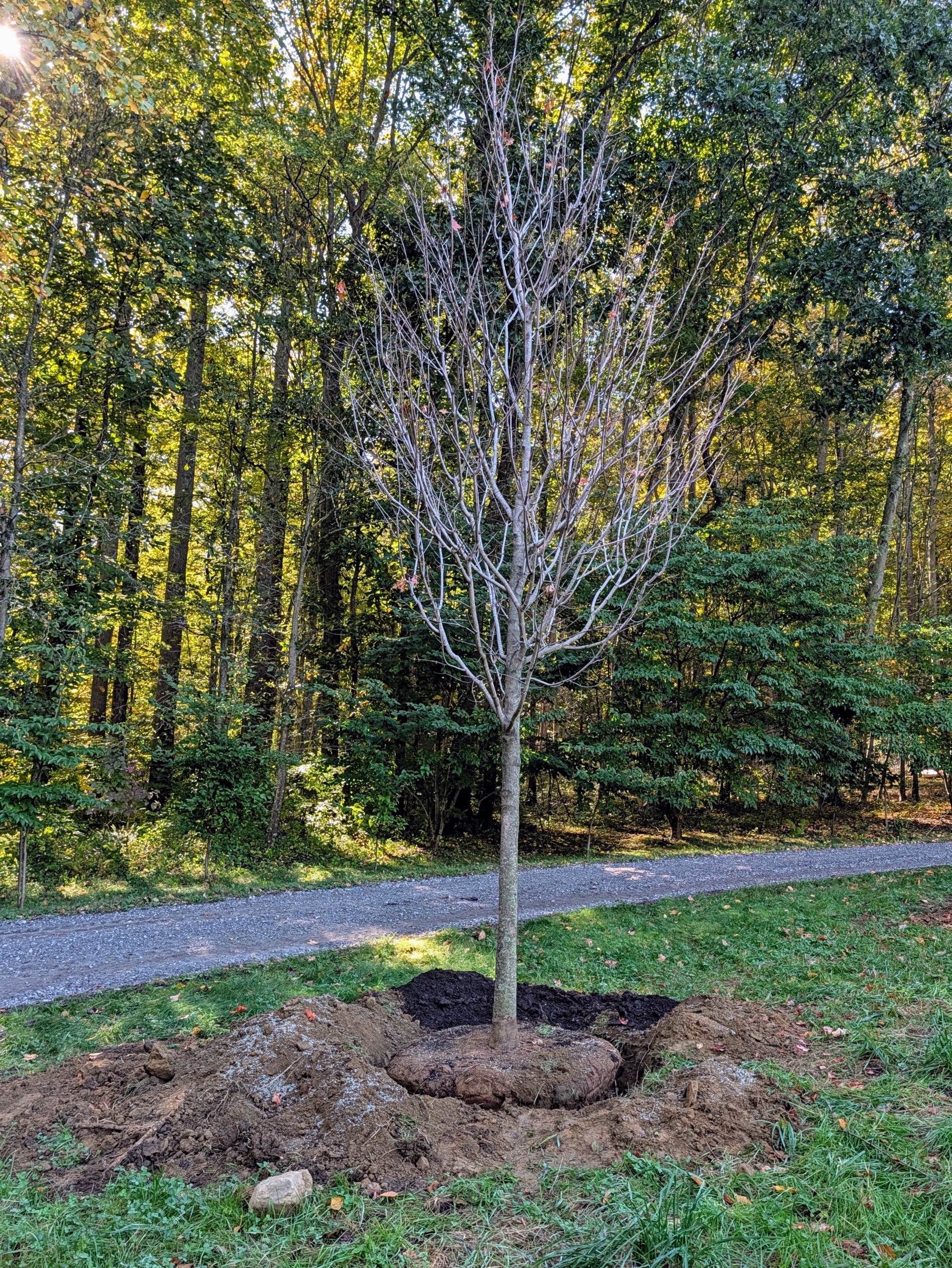
- The sugar maple is one of the most iconic deciduous trees in North America. The ‘Green Mountain’ is known for its exceptional hardiness, strong branching, and brilliant fall color, but it is also deciduous, so it drops all its leaves by late fall and is bare for the winter.
-
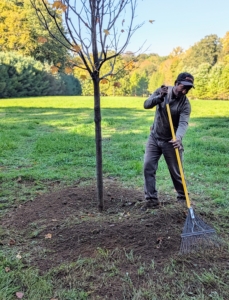
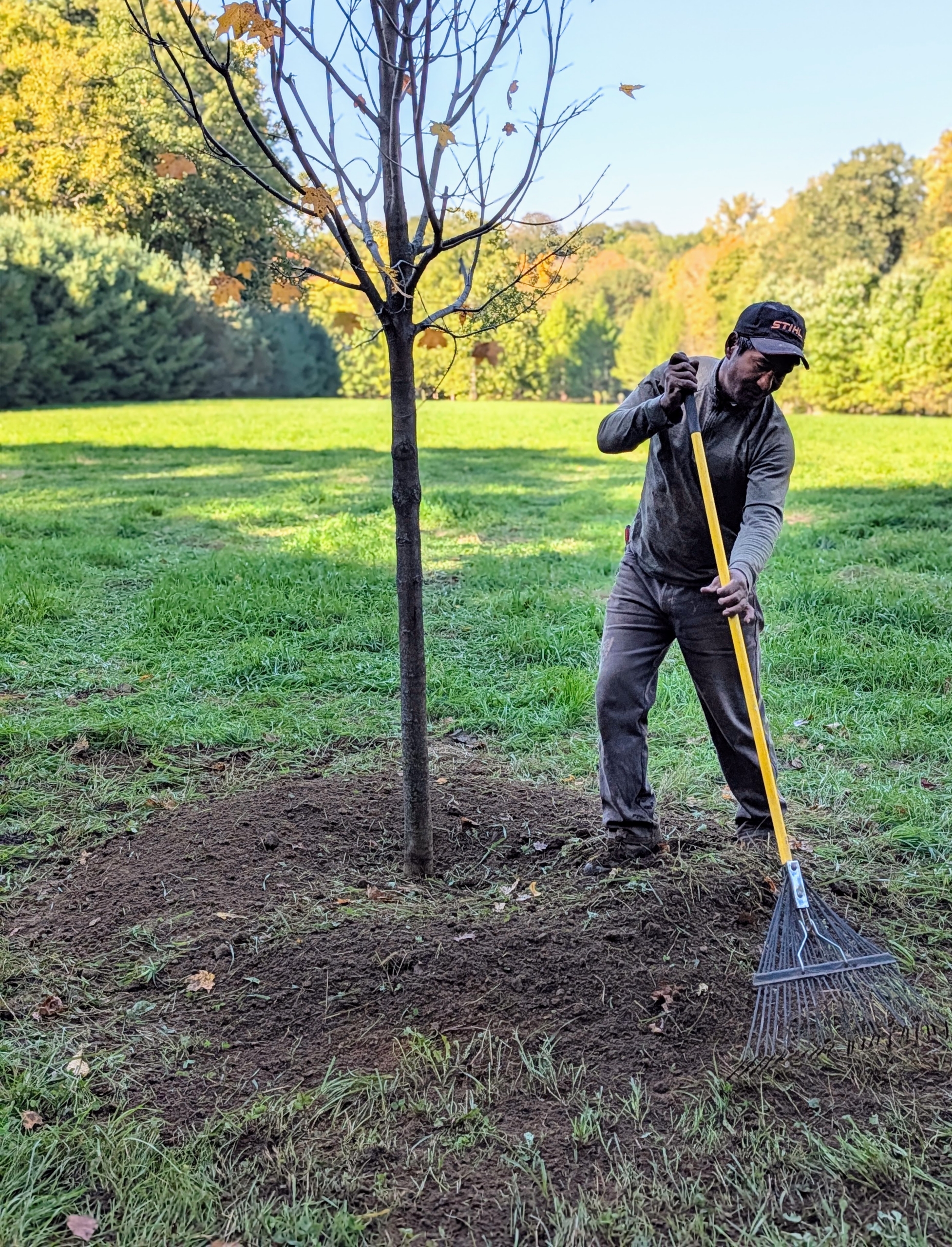
- The hole is backfilled, the area is tamped down lightly to establish good contact between the soil and the tree’s root ball, and then it is raked level and neat.
-
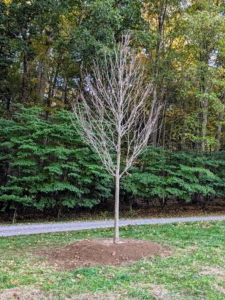
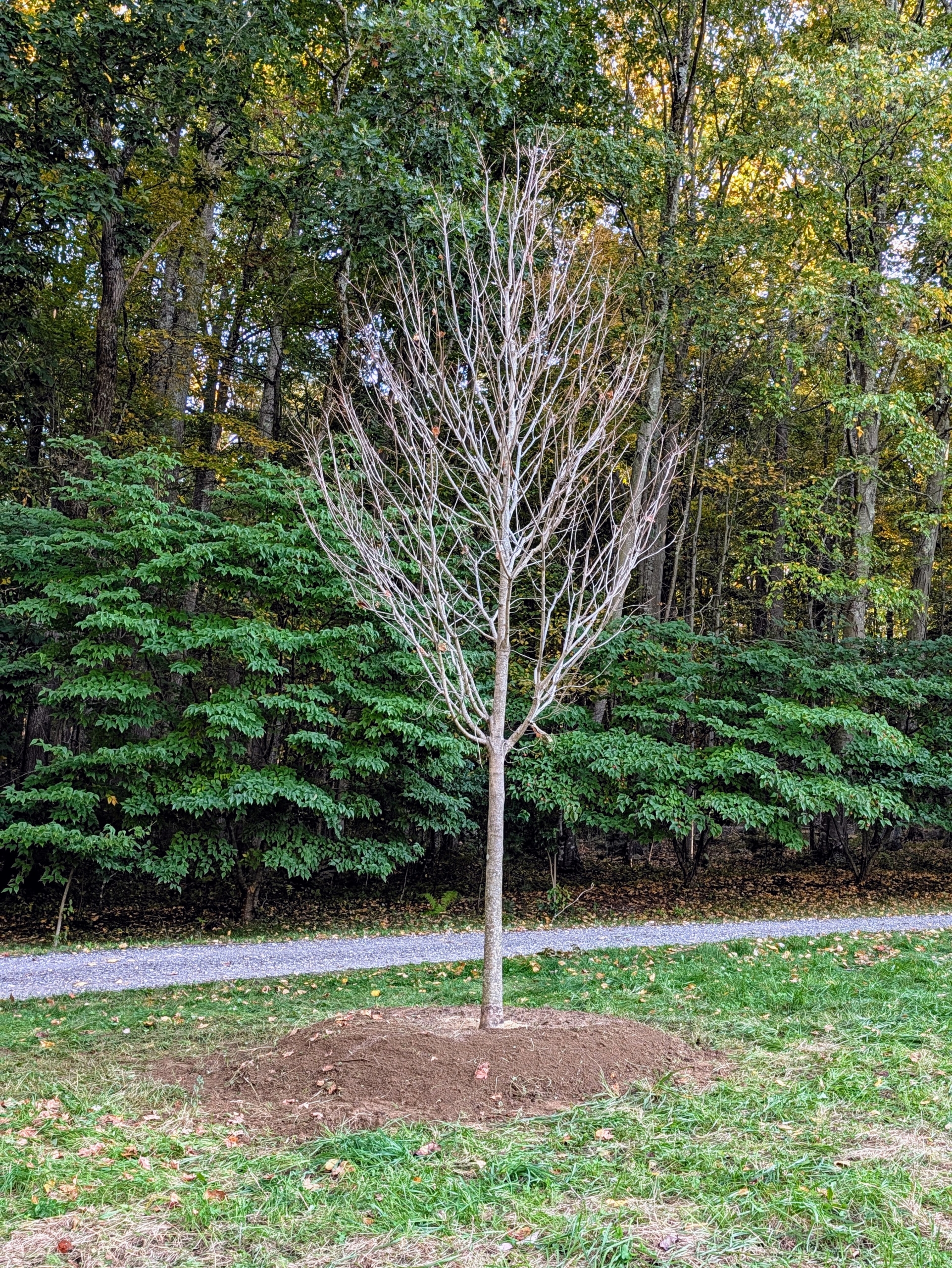
- Sugar maples thrive in full sun to partial shade, ideally receiving four to six hours of direct, unfiltered sunlight daily, with some afternoon shade in hot climates. All these maples will be very happy here.
-
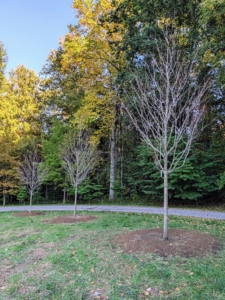
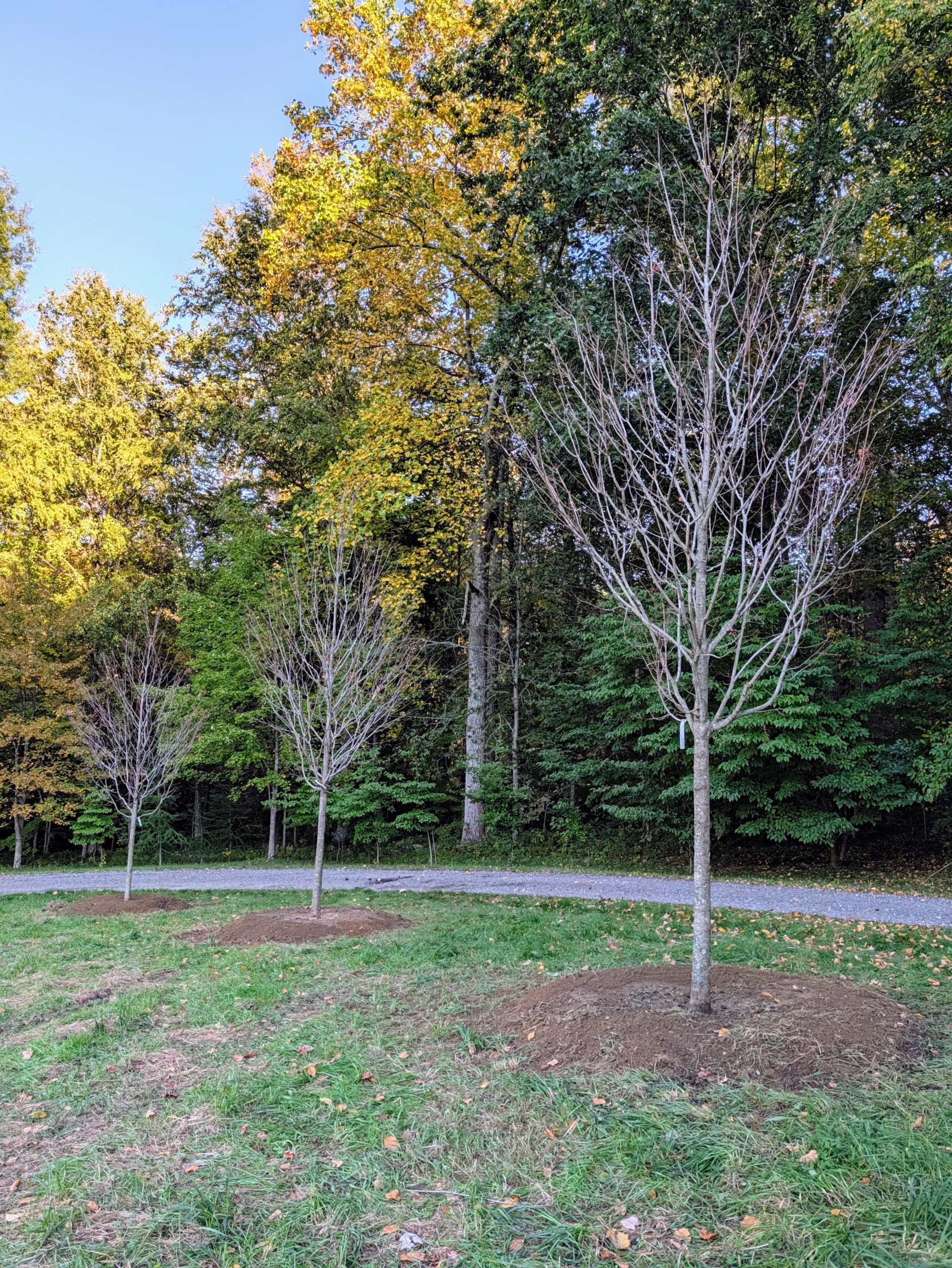
- Here are three lined up nicely and planted 25 feet apart. They will have lots of room to grow.
-
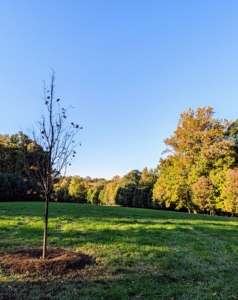
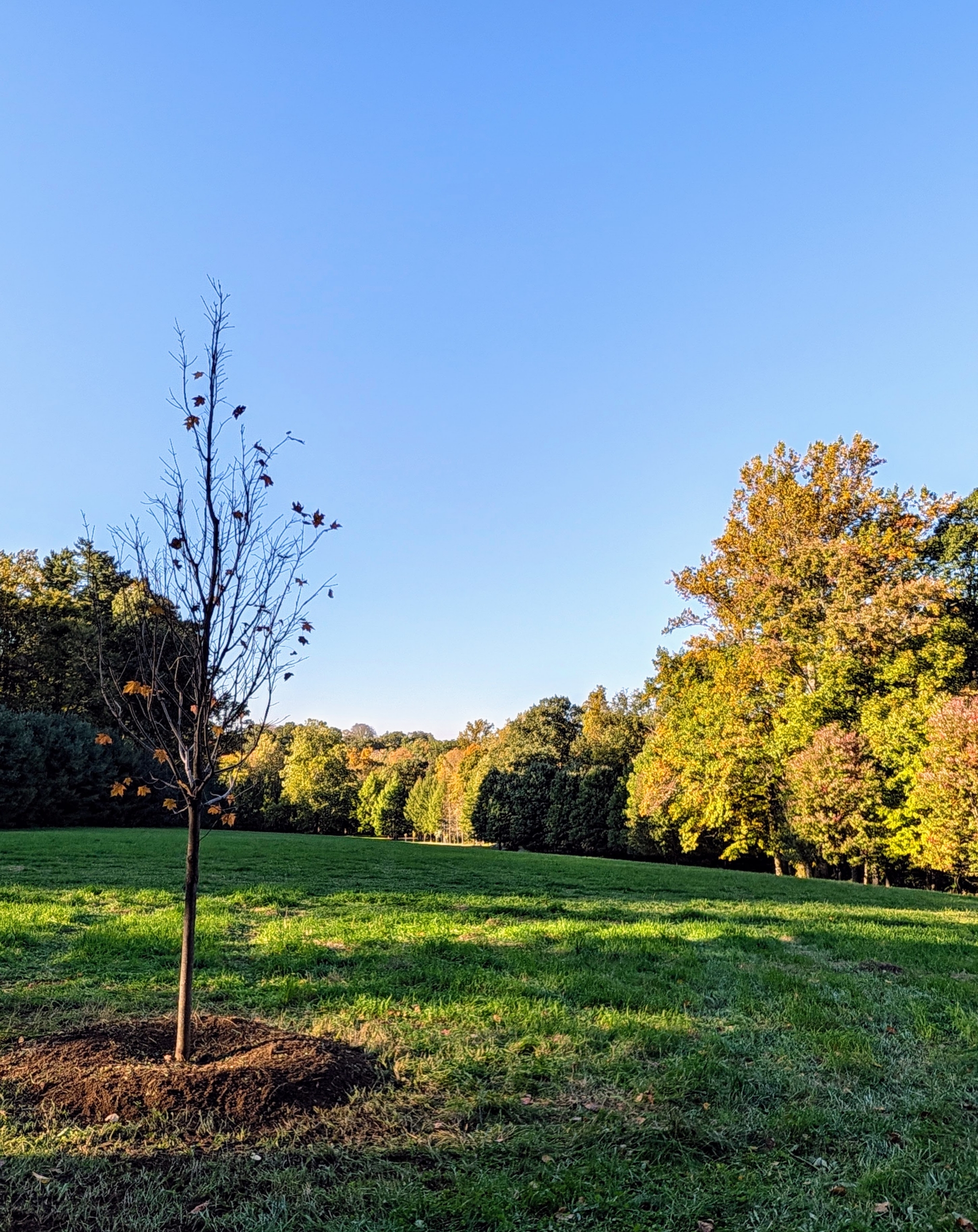
- These trees are loved for their broad, rounded crowns and symmetrical form when mature. They will look so beautiful here in this field.
This story originally appeared on Martha Stewart Blog

