


November 12, 2026
My Ginkgo Trees in November
Here at my farm, I have thousands upon thousands of trees. Many were already well established when I purchased the property, but I planted all the others — in beautiful allées, in groves, along privacy hedges, and in carefully arranged rows throughout my living maze. This time of year, one particular type of tree always captures my attention – the magnificent ginkgo.
Ginkgo biloba, commonly known as the ginkgo or maidenhair tree, is the sole surviving species of an ancient plant division, Ginkgophyta. Fossil records show that ginkgo trees date back more than 270 million years. Native to China, they have been cultivated there for centuries and are now grown throughout the world. In the sunken garden behind my Summer House stands a spectacular ginkgo that’s probably about 250 years old. Ginkgos have distinctive fan-shaped green leaves that turn brilliant golden yellow in autumn. Then, usually after the arrival of a hard frost along the East Coast, the leaves on my ginkgos and countless others in the surrounding area drop almost all at once. It is one of fall’s most spectacular natural displays, and one I look forward to seeing every year.
Here are some photos of the ginkgos at my farm, enjoy.
-
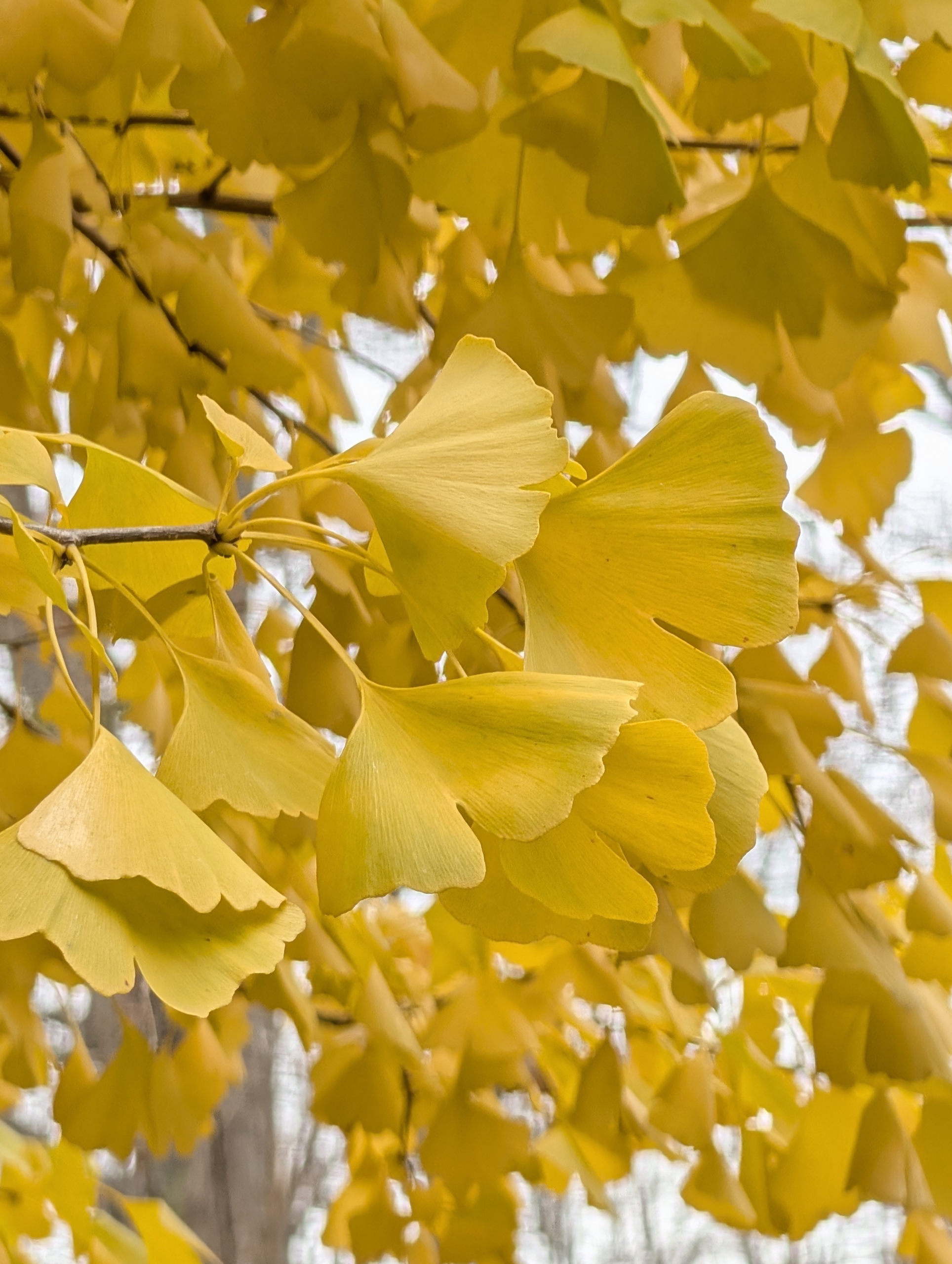
- The ginkgo’s beautiful leaves are so unique – no other broadleaf tree has the same distinctive combination of shape, vein pattern, and growth habit as the ginkgo.
-
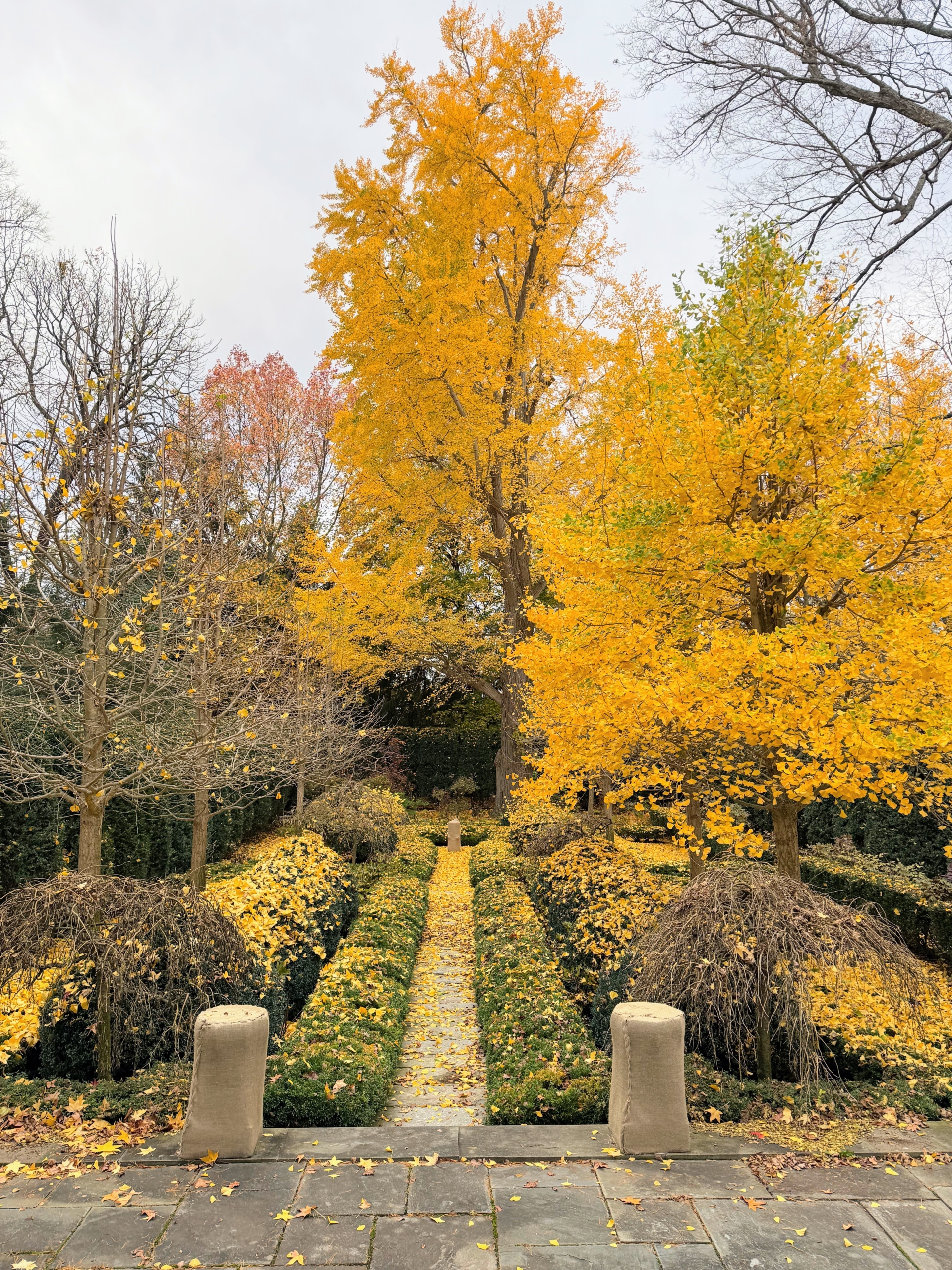
- These ginkgo trees are in my sunken Summer House garden. The giant tree in the back is a female and the main focal point of this formal space. It is quite large and probably more than two and a half centuries old. This photo was taken just a few days ago.
-
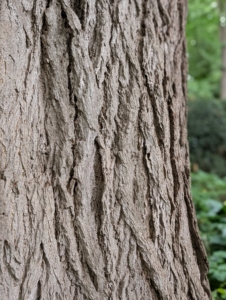
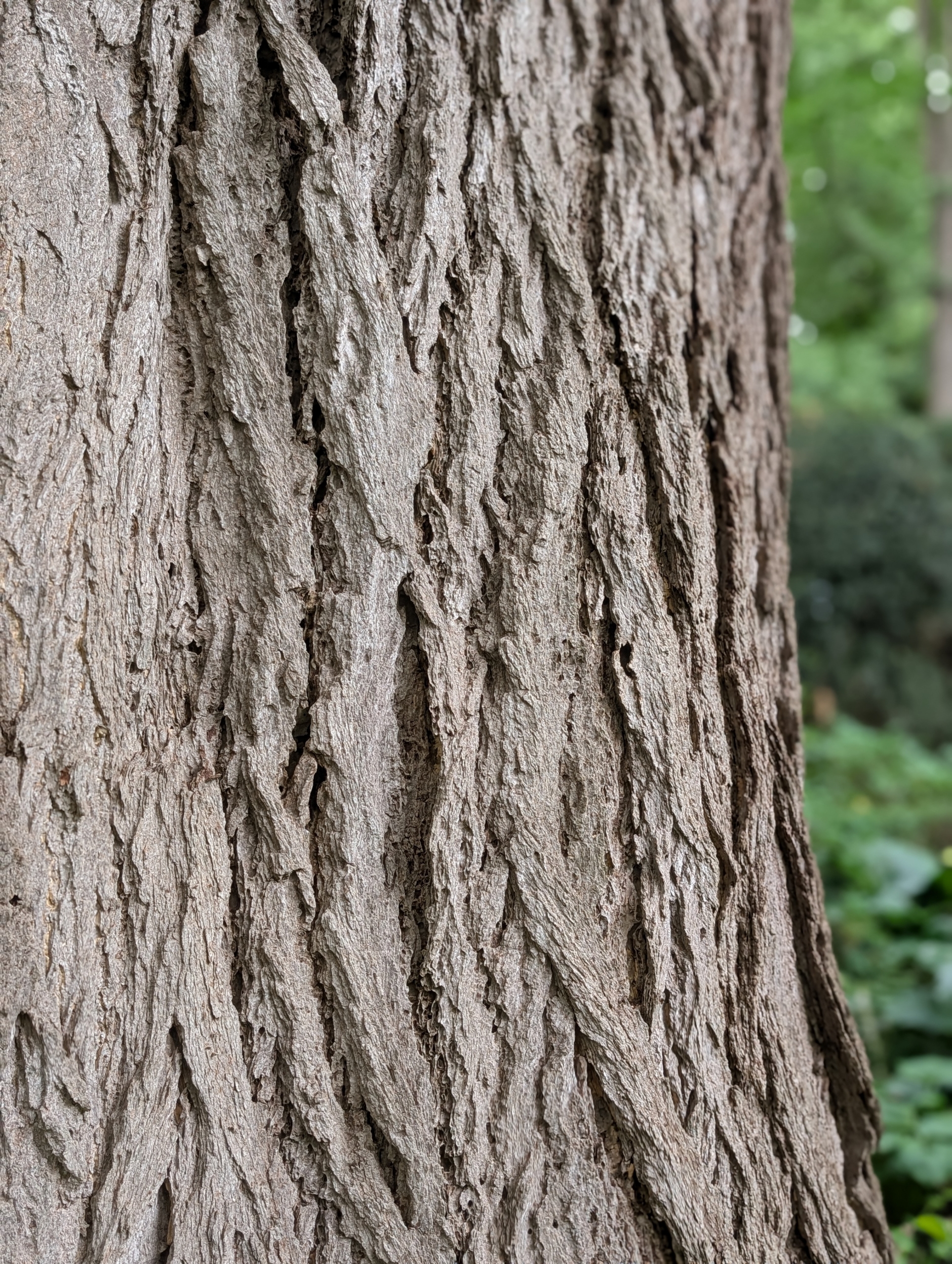
- The trunk of the ginkgo tree is a light brown to brownish-gray bark that is deeply furrowed and highly ridged. The ridges become more pronounced as the tree ages. The trunk circumference of the giant female tree measures more than 14-feet.
-
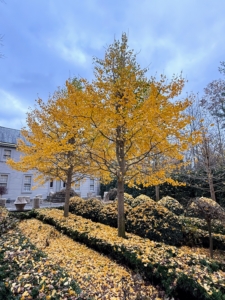
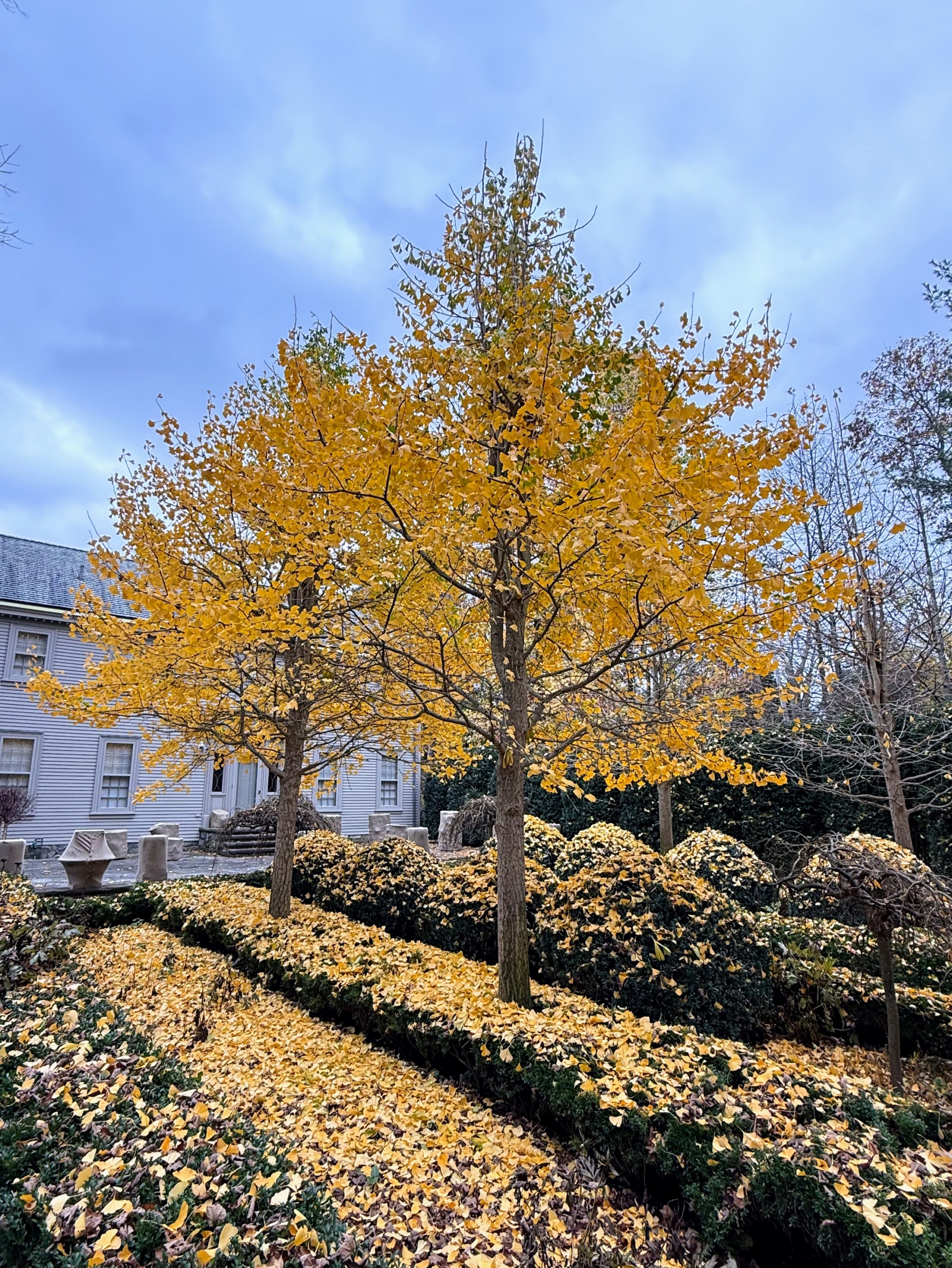
- These ginkgo trees are also in my Sunken Garden – full of autumn color.
-
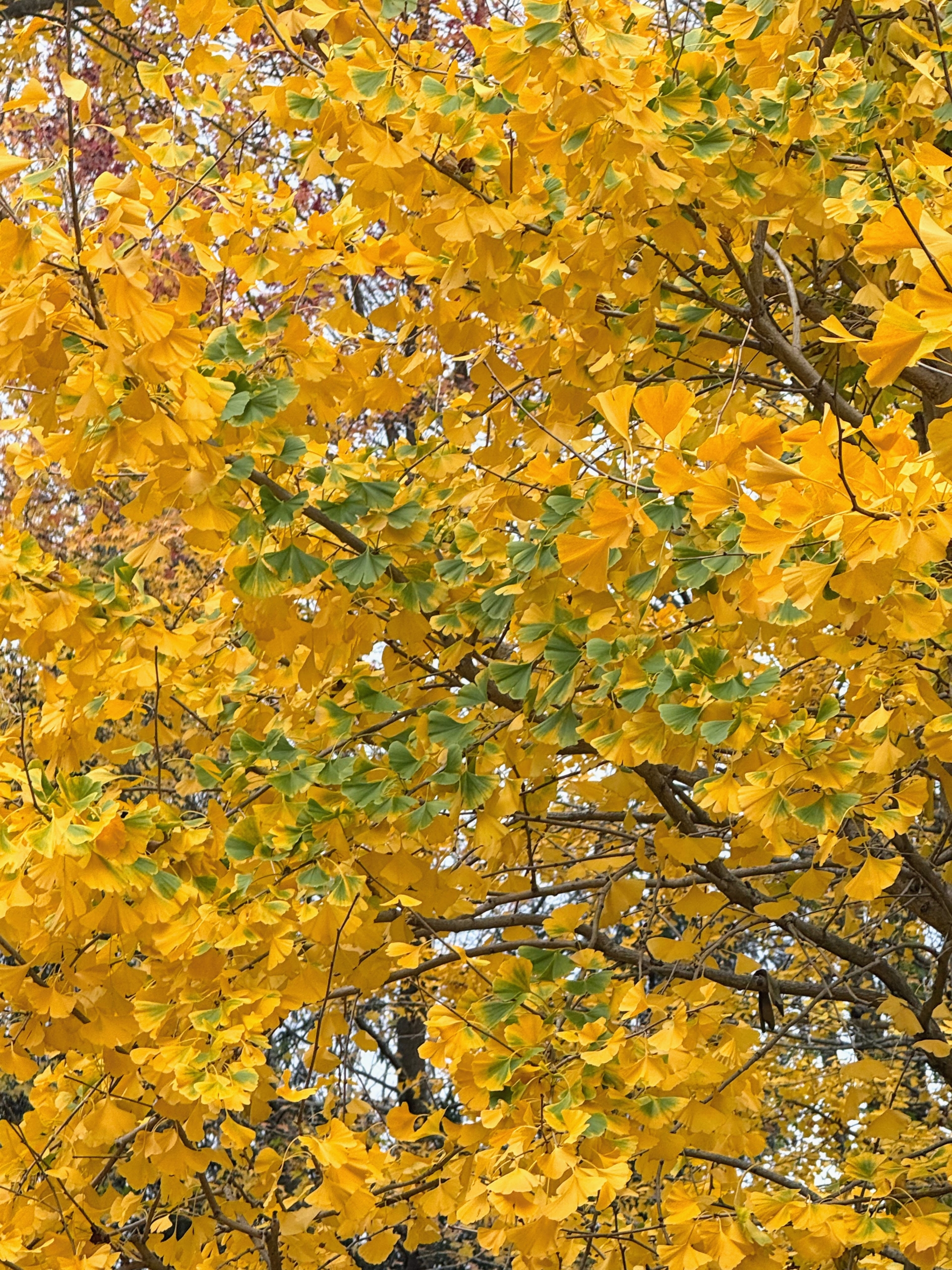
- All the ginkgo trees have changed. One can see a tinge of green still left on this tree. The entire transformation process can take about a week or two.
-
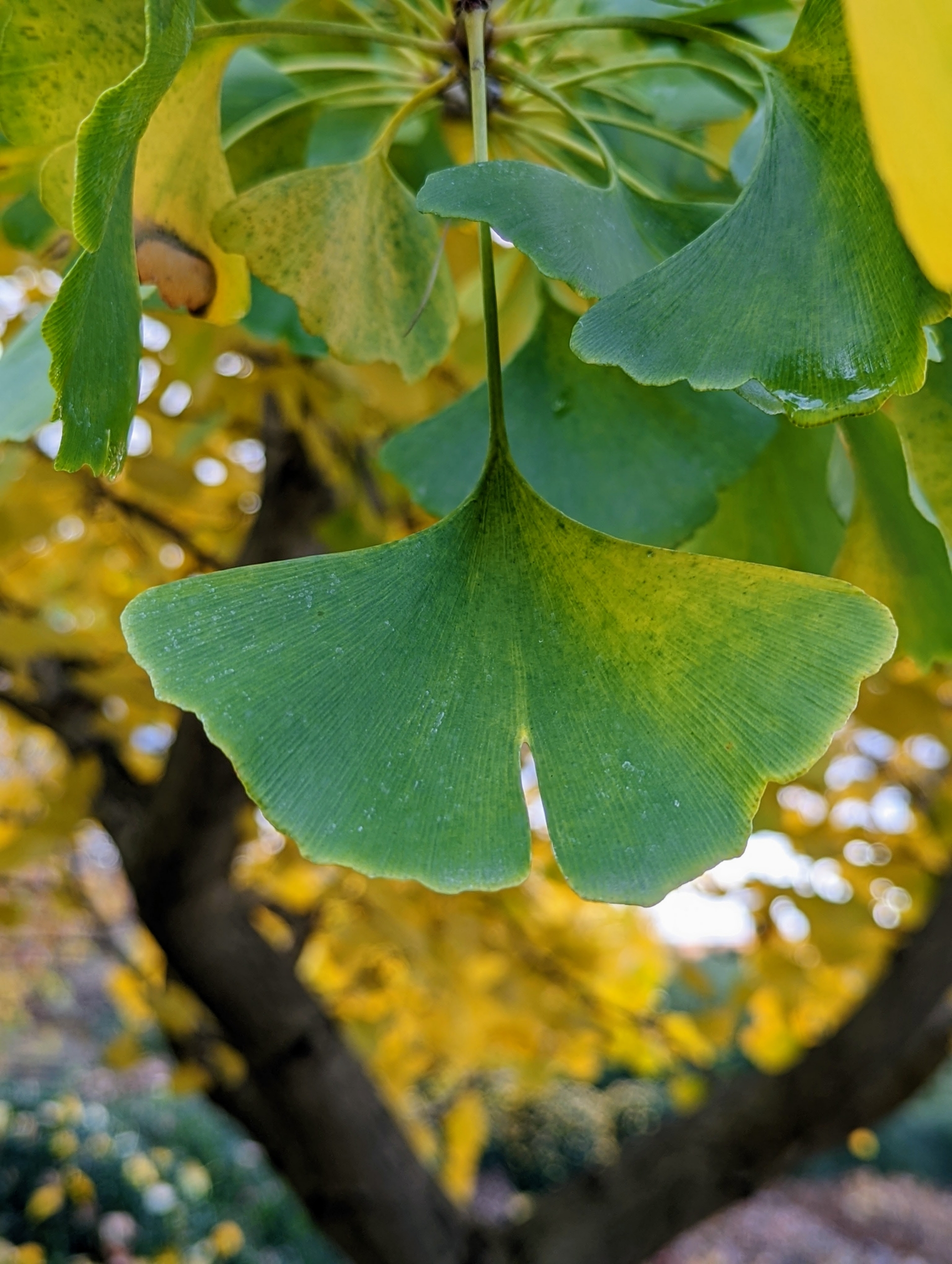
- The change of color happens after the breakdown of chlorophyll, the pigment responsible for the green. As the days get shorter and temperatures drop, plants prepare for winter by shutting off chlorophyll production.
-
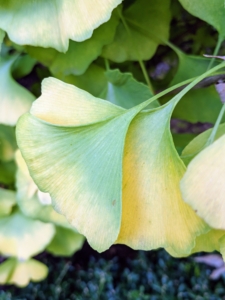
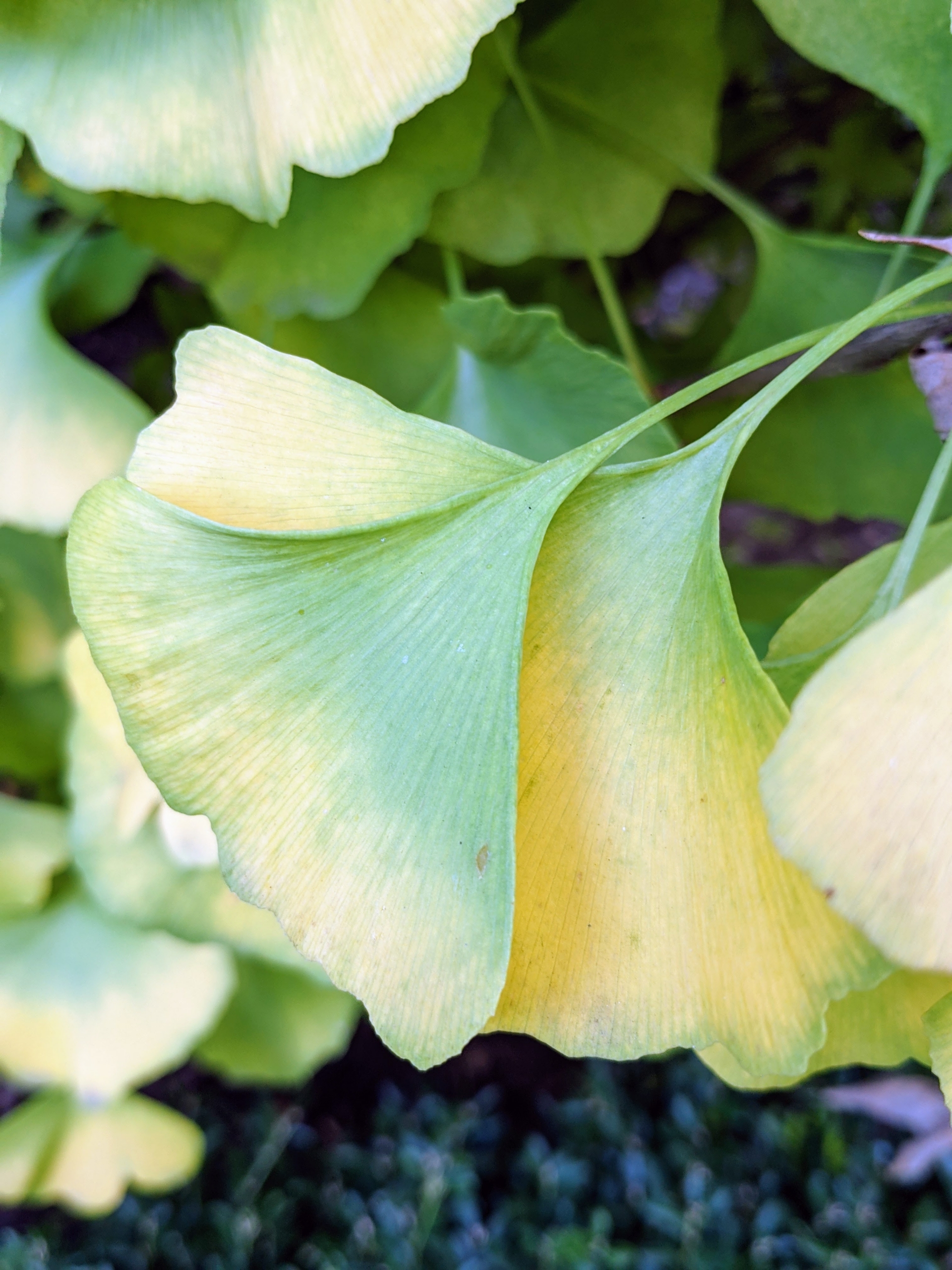
- Here the leaves are mostly yellow.
-
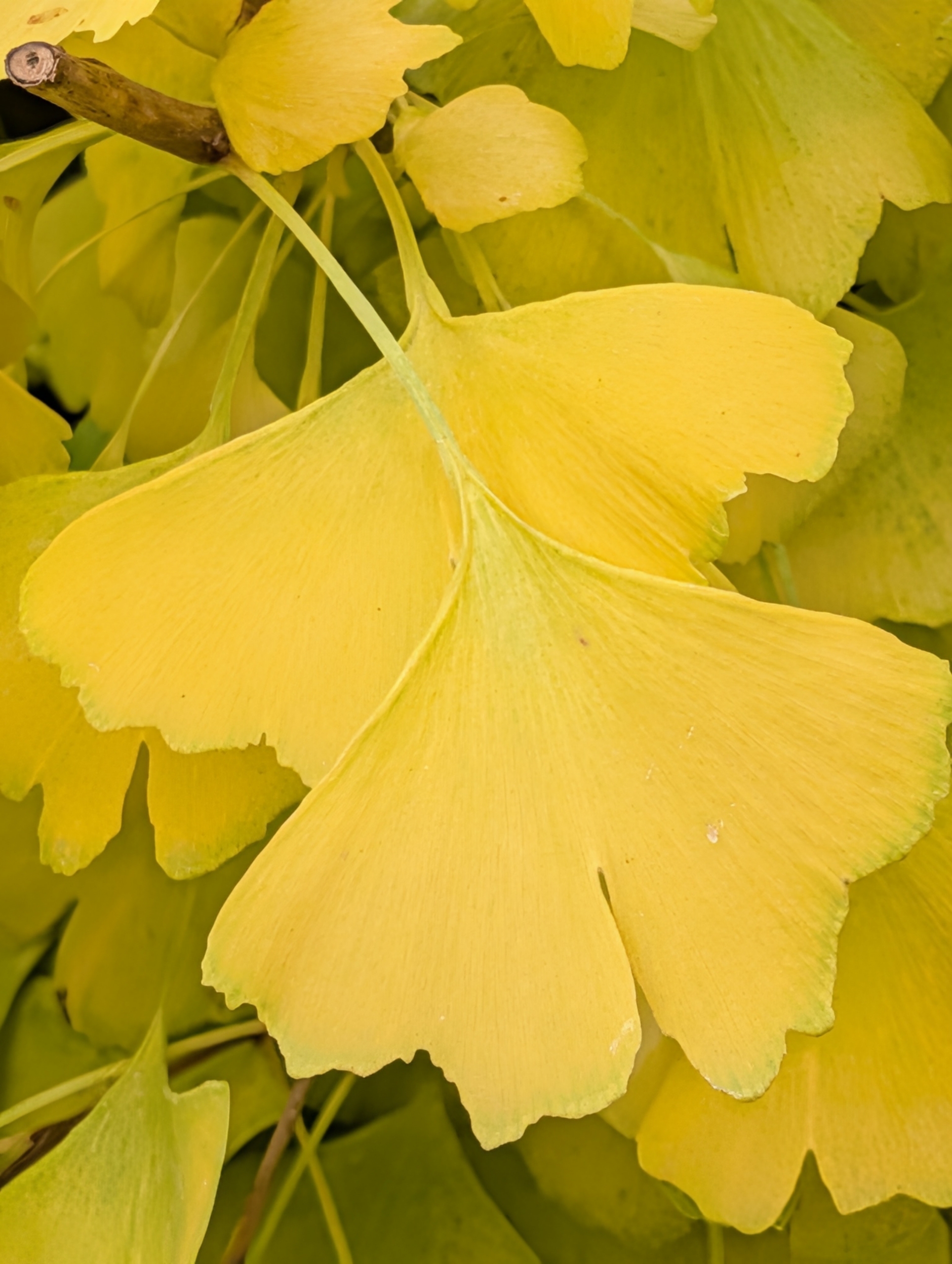
- And here they golden yellow. The leaves are fan-shaped, up to three inches long, with a petiole that is also up to three inches long. This shape and the elongated petiole cause the foliage to flutter in the slightest breeze.
-
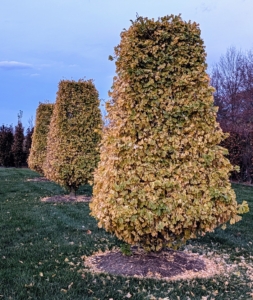
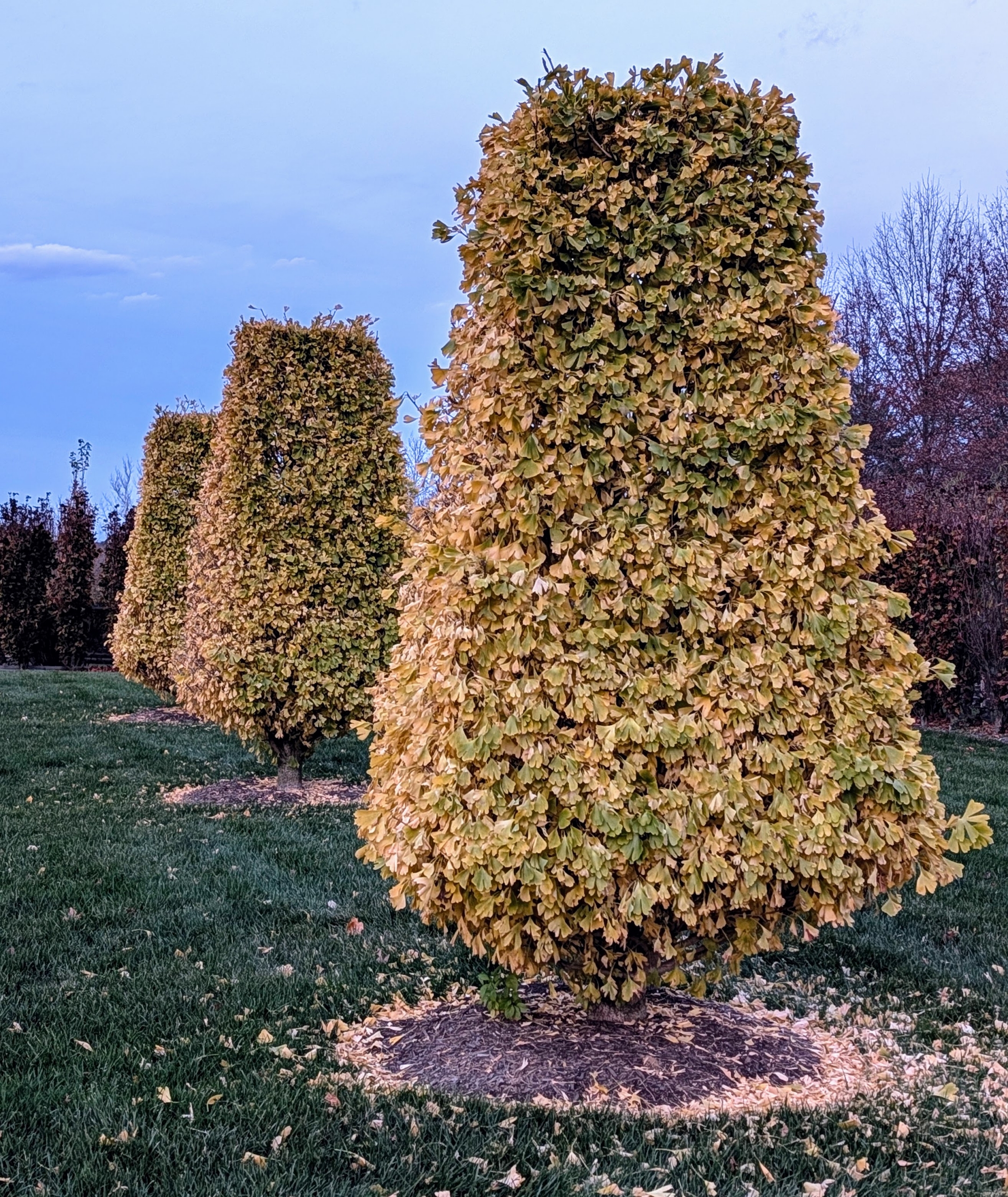
- These are three of six Ginkgo biloba Goldspire™ Obelisk trees that surround my pool. I planted the narrow upright tower trees in the spring of 2024 and I am so pleased with how they are doing.
-
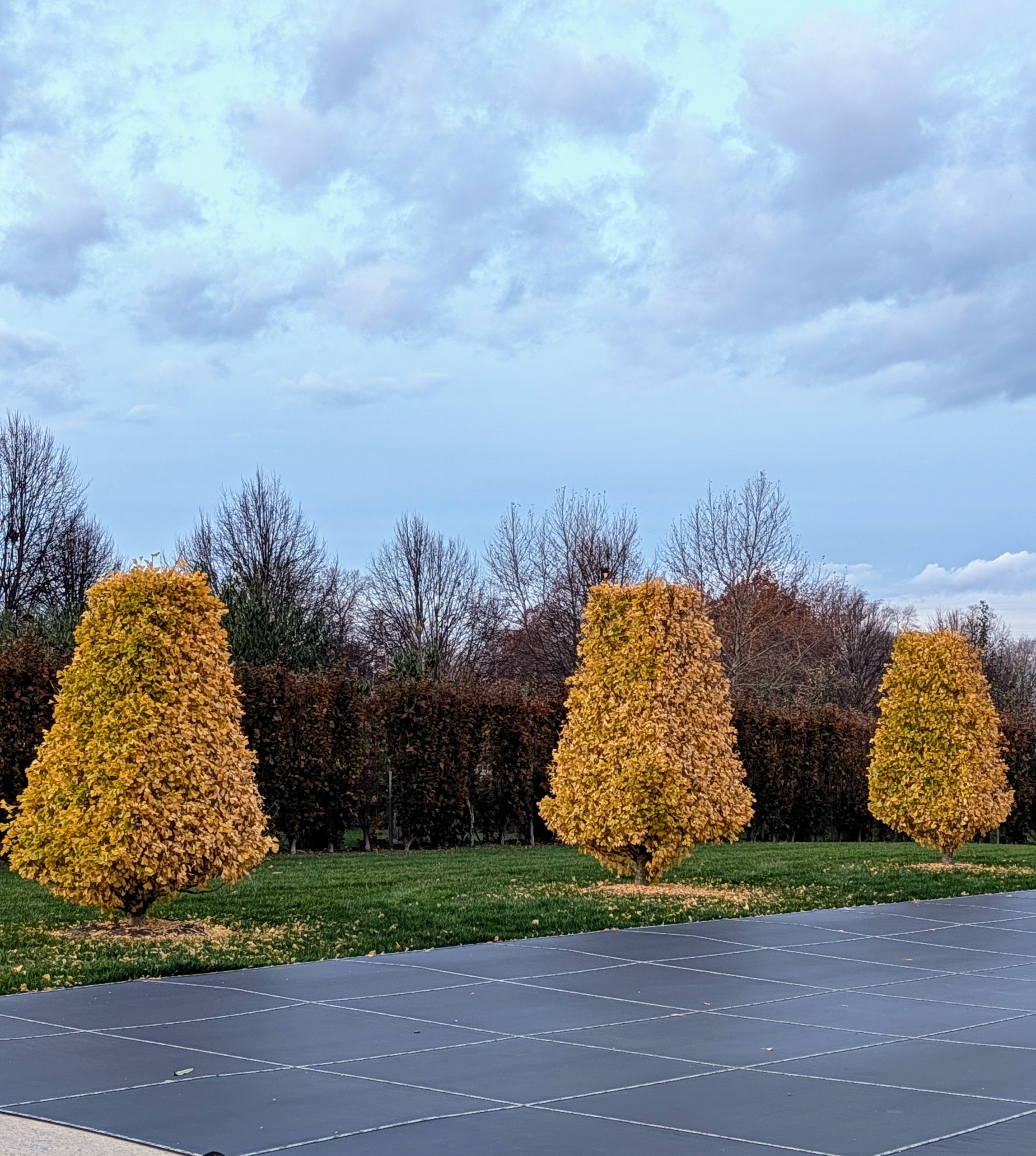
- Here are the other three on the opposite side of the pool. In November, these trees are also golden yellow. Ginkgo Goldspire™ is a highly ornamental, non-fruiting male tree originating in Italy. It has a very upright, tight fastigiate habit. These are also starting to drop leaves.
-
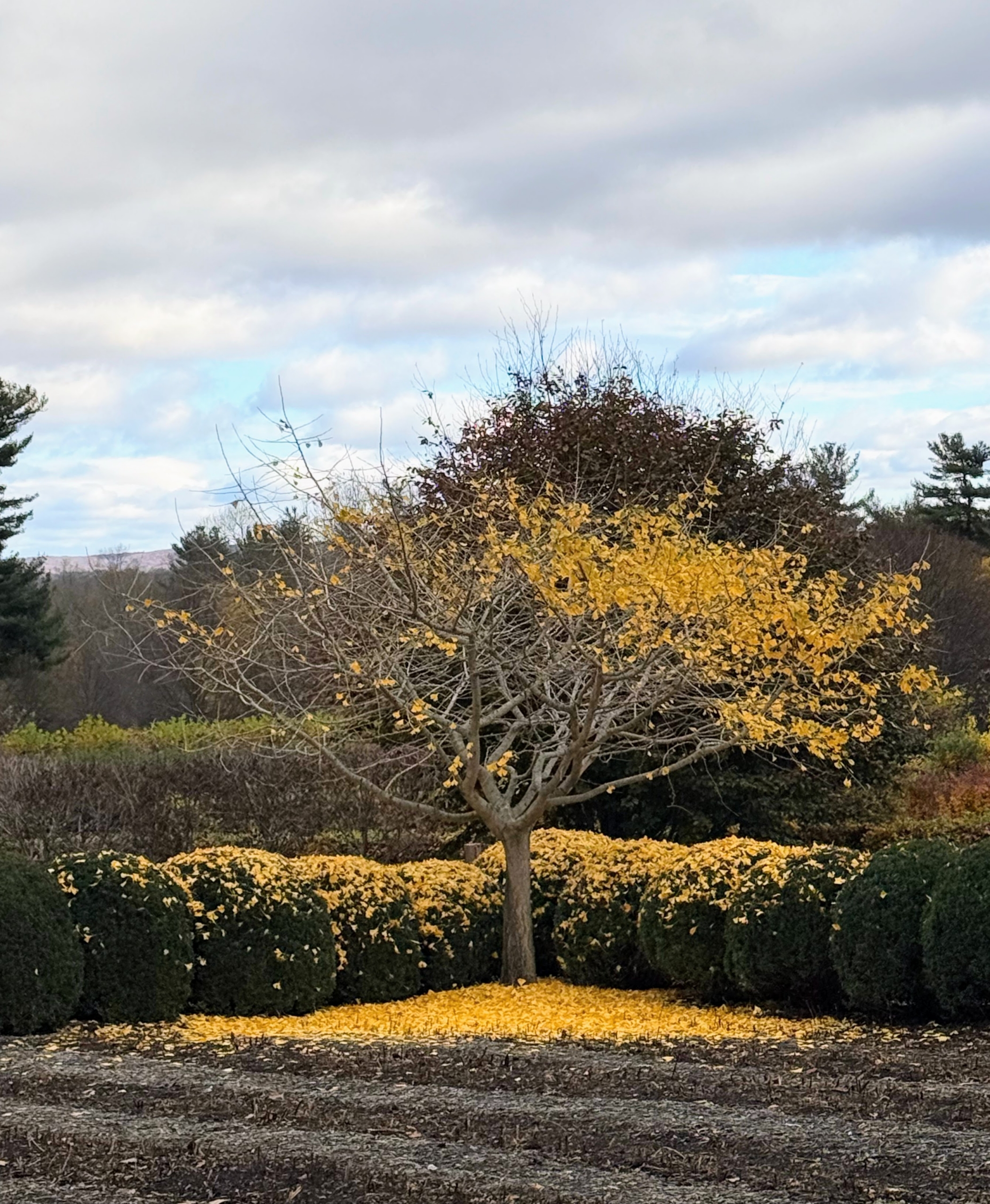
- Ginkgo trees are dioecious, meaning that male and female reproductive parts develop on separate plants. Ginkgo trees typically reach sexual maturity around 20 to 30 years old. This ginkgo tree is in one corner of my herbaceous peony bed.
-
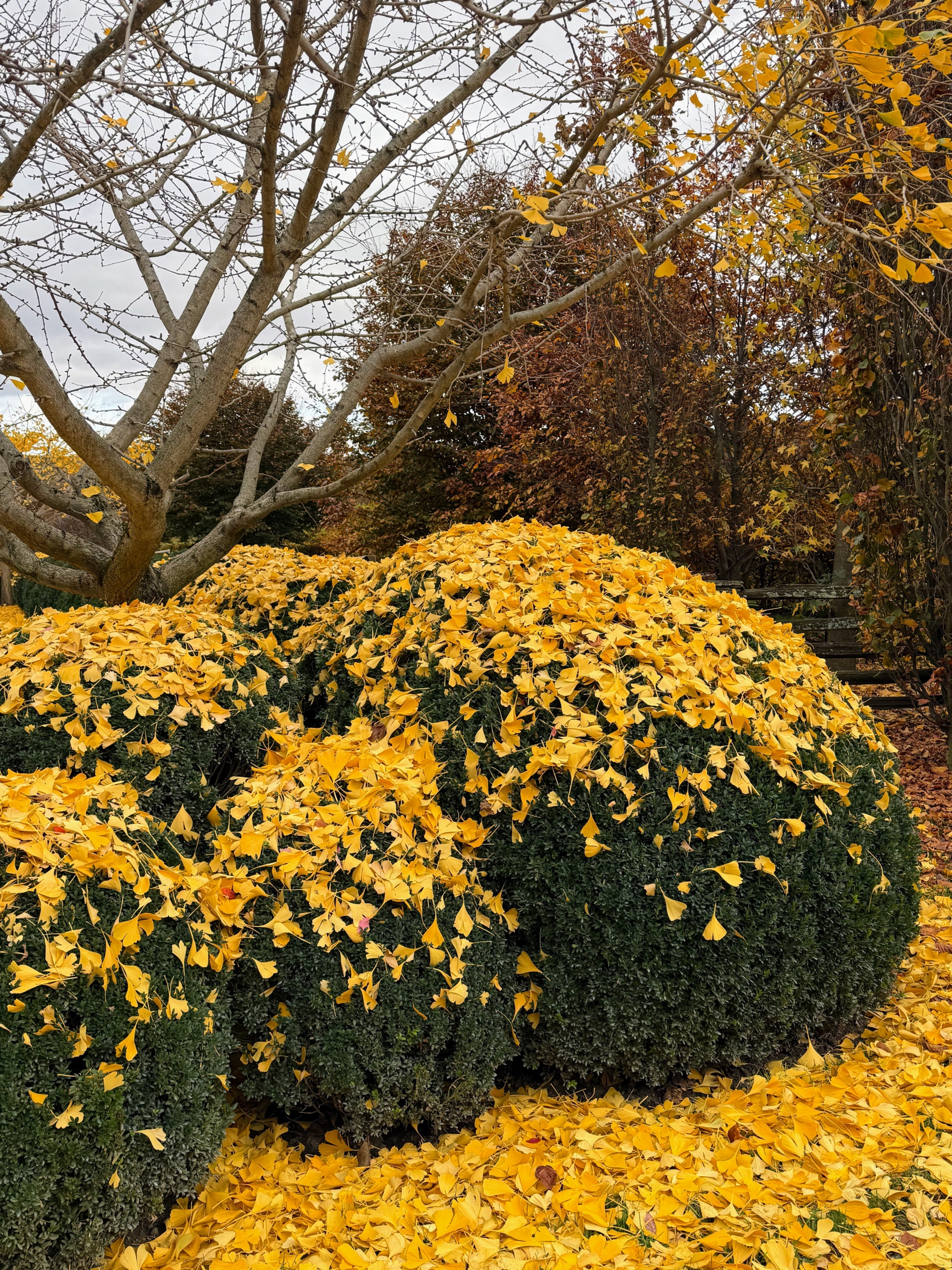
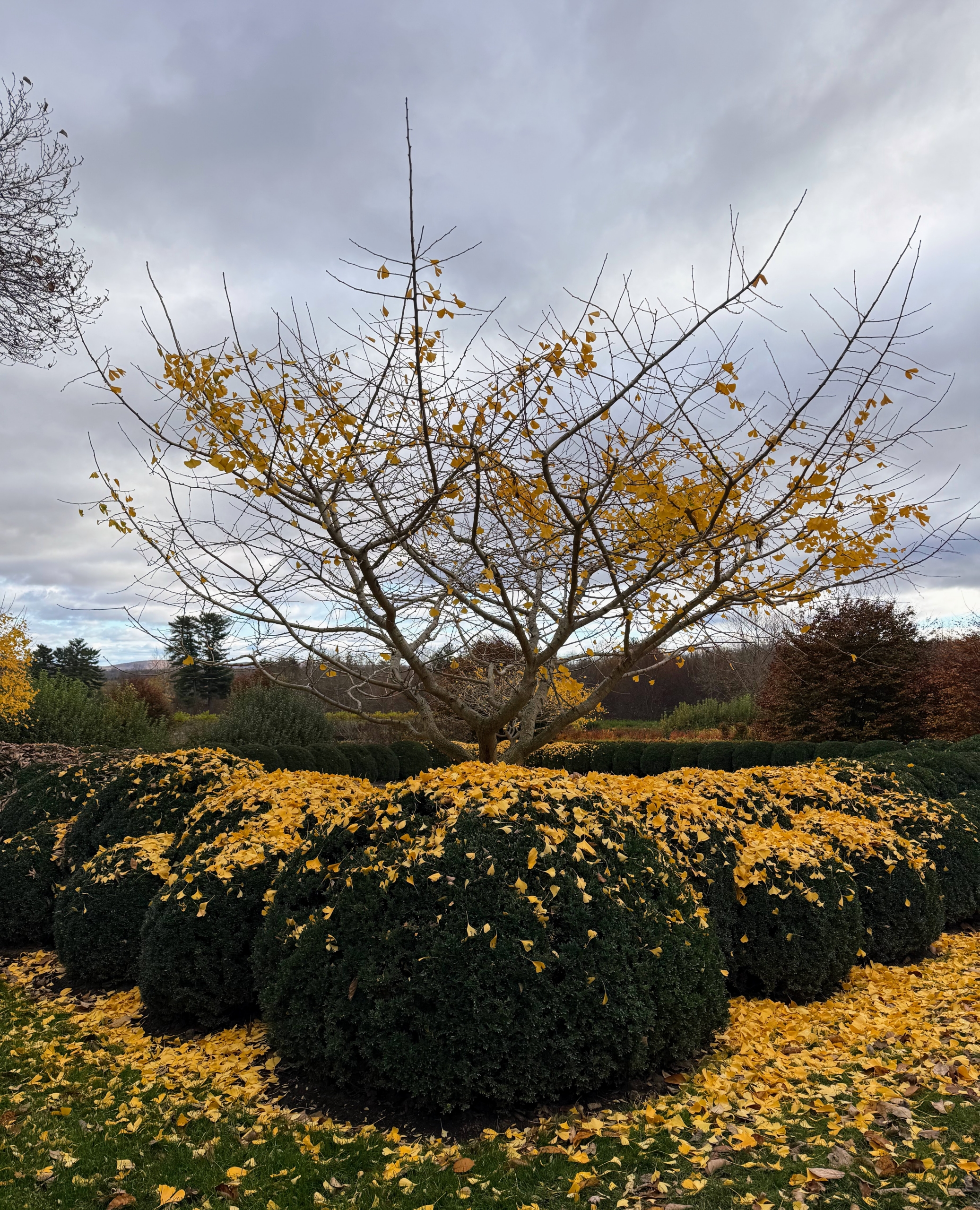
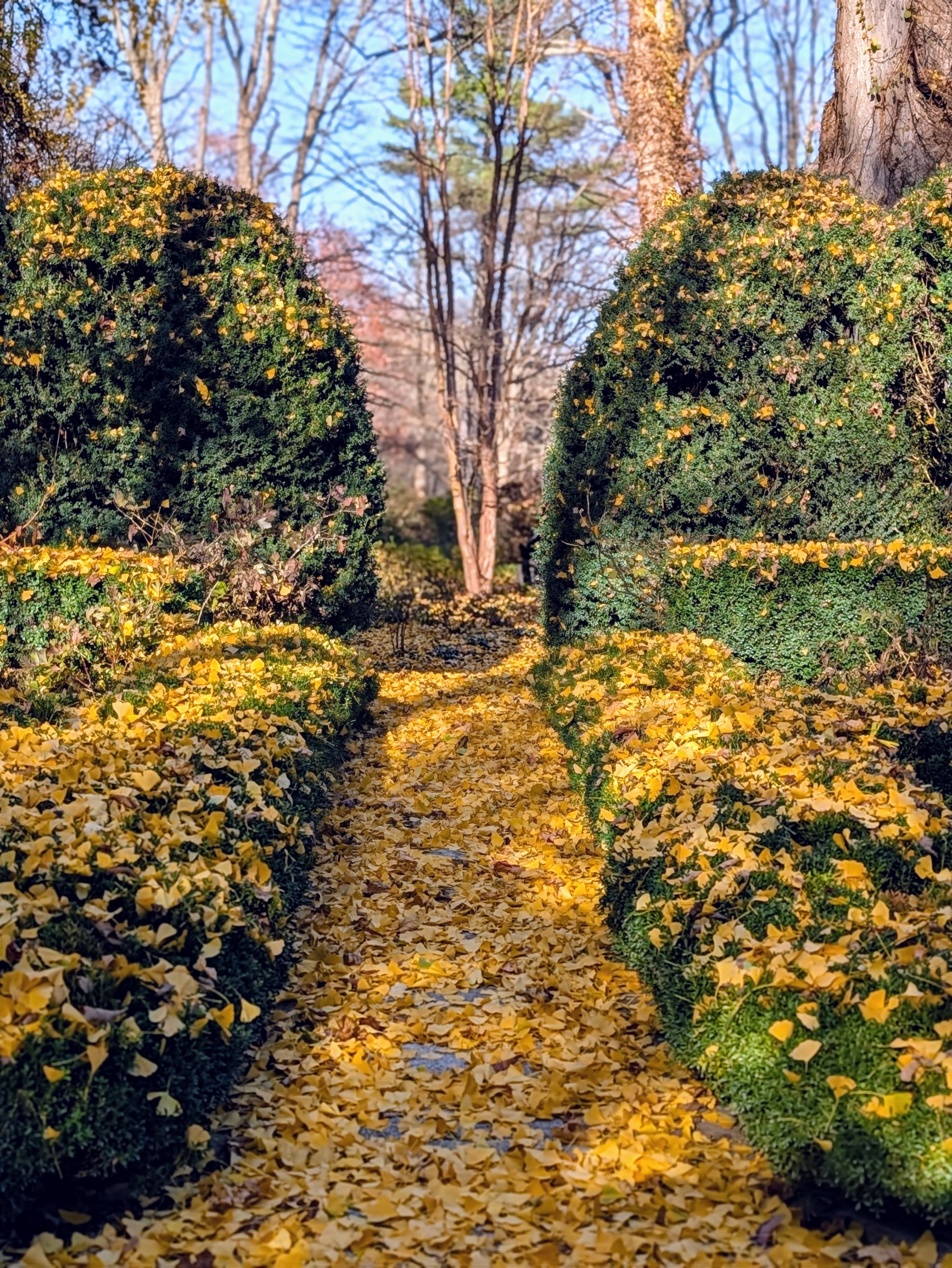
- This tree is in another corner of my herbaceous peony bed, which is surrounded by boxwood. The leaves look so pretty on the bold green boxwood shrubs.
-
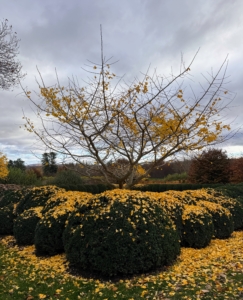
- Ginkgos are among the last trees to turn color, often after maples have peaked, reaching a uniform golden yellow before shedding.
-
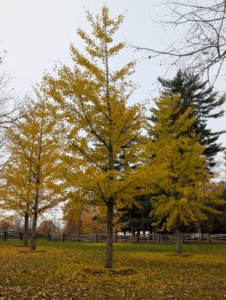
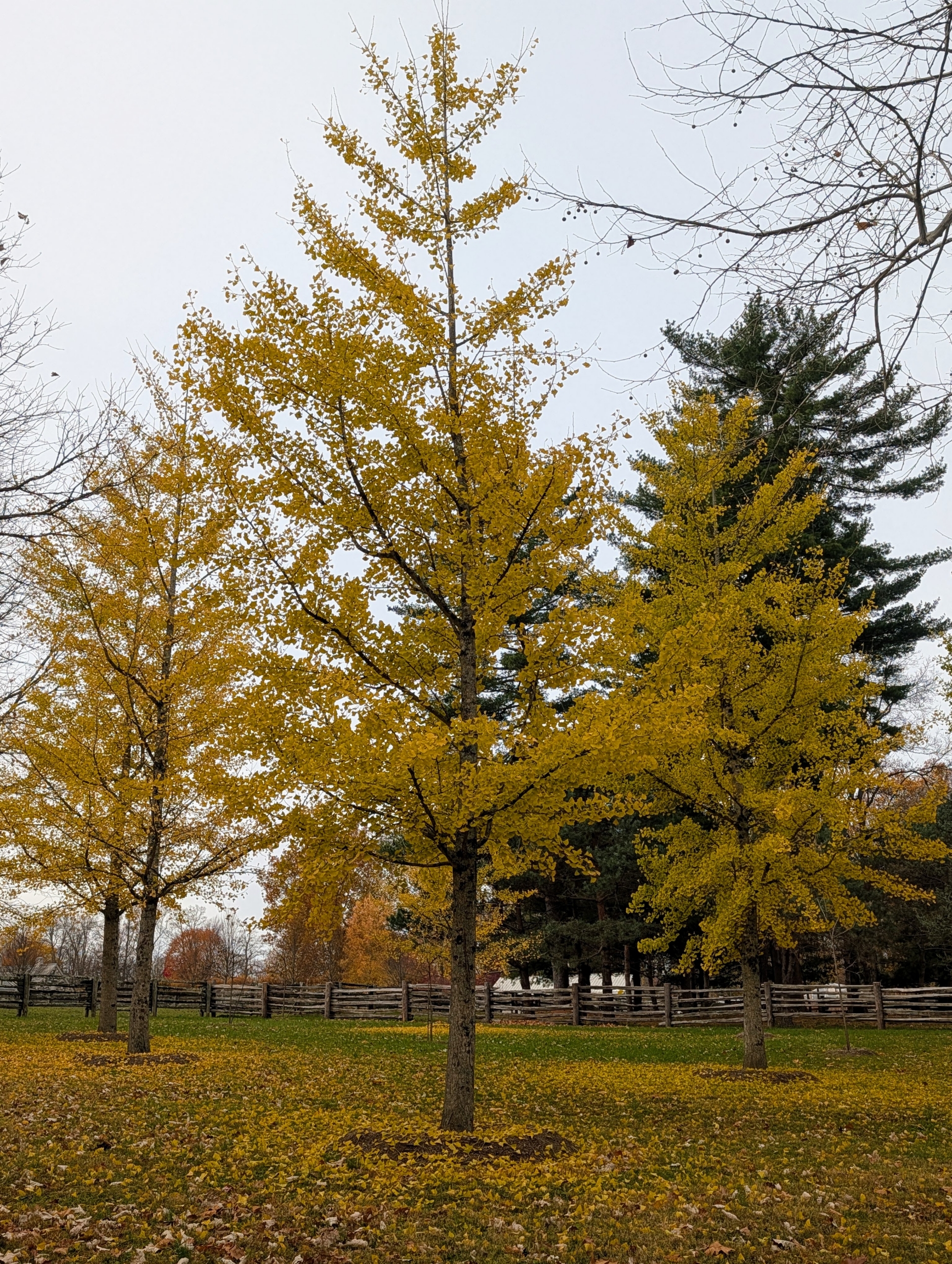
- These ginkgo trees are in a grove not far from my chicken coops outside my fenced pastures. The leaves are still holding on. The first significant hard frost is the main trigger for mass leaf drop, which could happen very soon. The exact date shifts year to year with climate patterns, but the synchronized drop is a normal seasonal occurrence.
-
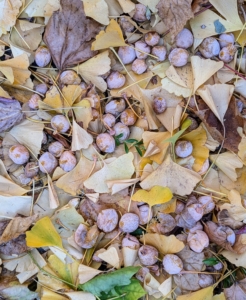
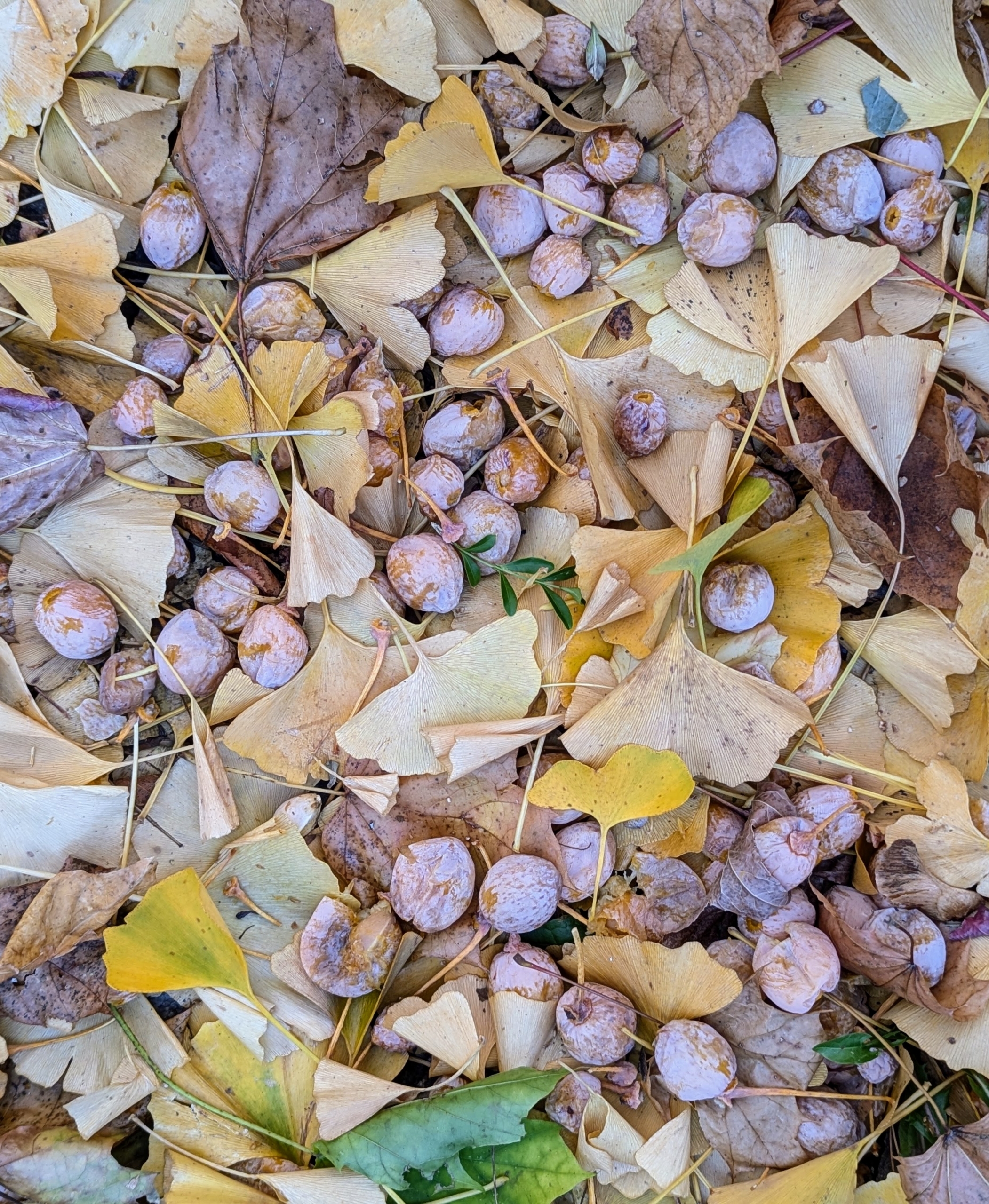
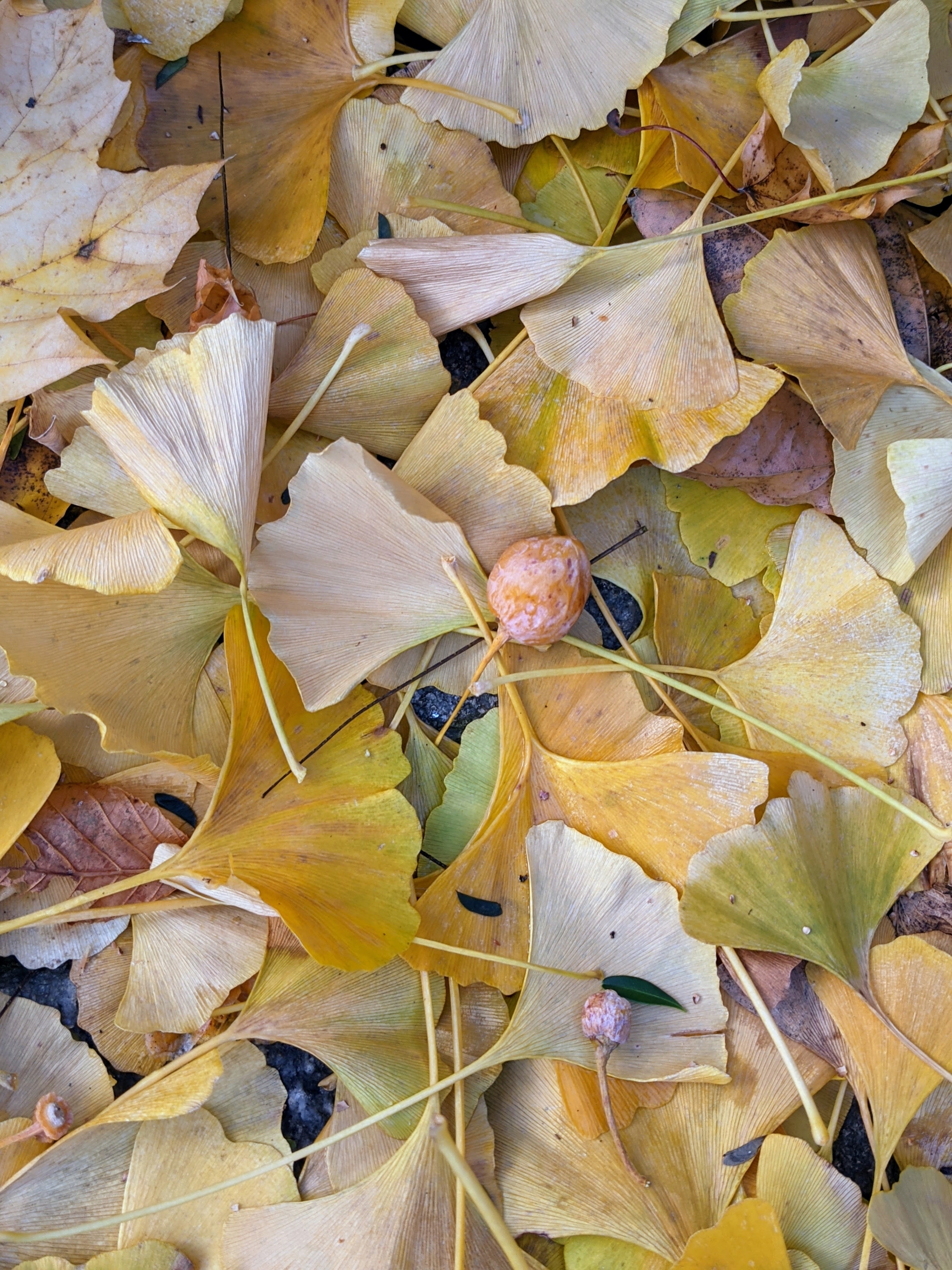
- Mixed with the fallen leaves below the female tree are newly fallen ginkgo tree seeds, covered with the foul‑smelling, apricot‑like outer flesh. The outer, nasty smelling pulp is known botanically as sarcotesta.
-
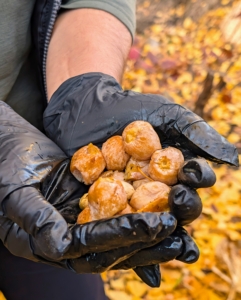
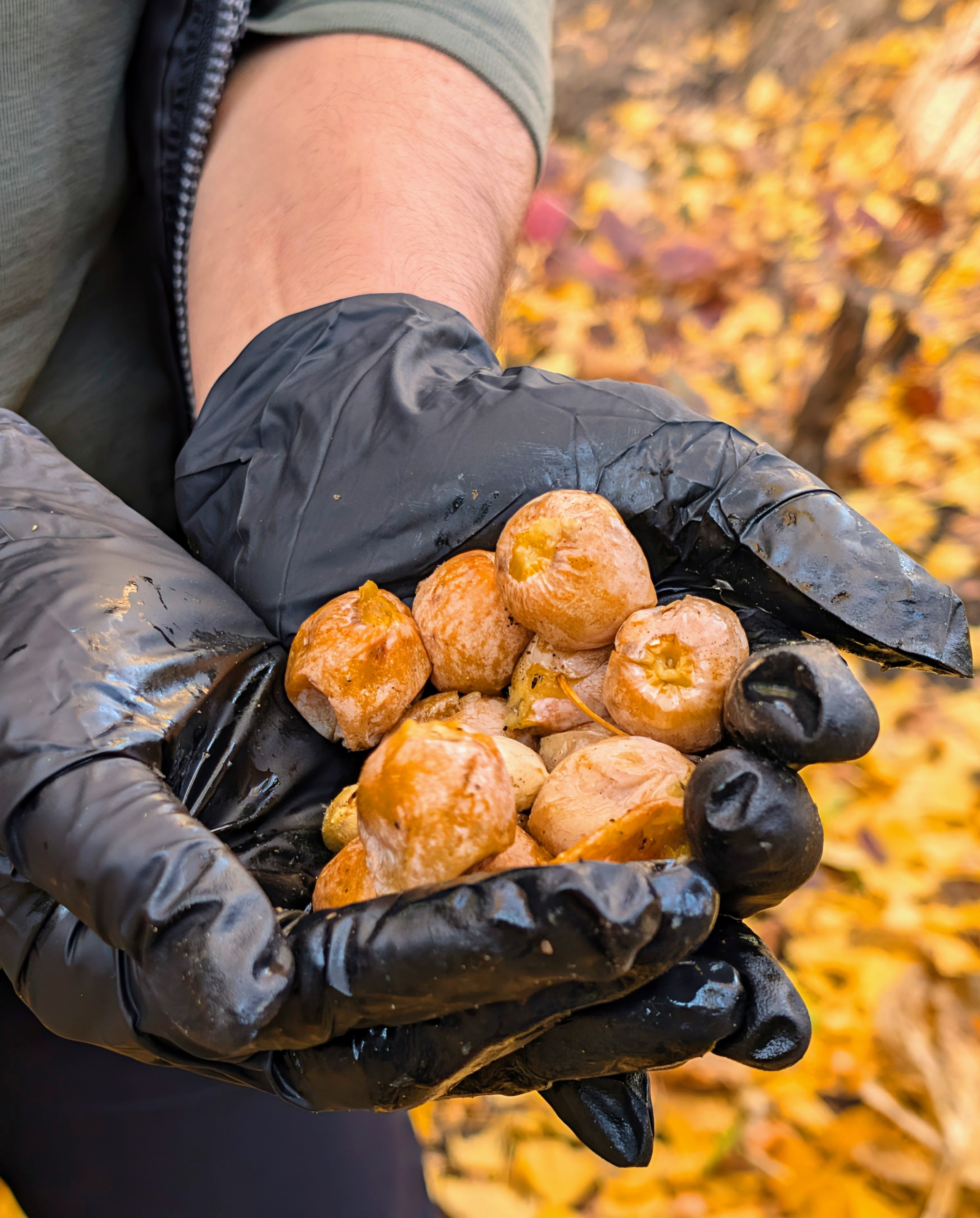
- Here, Enma picks up a handful to show their size. They may look like fruits, but technically they are flesh-covered seeds.
-
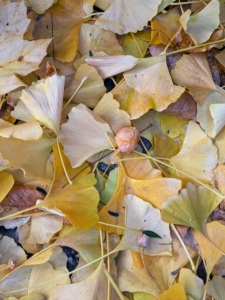
- The ginkgo seeds contain urushiol, which is the same chemical that causes poison oak, ivy, and sumac, so always wear gloves and protect your skin whenever handling.
-
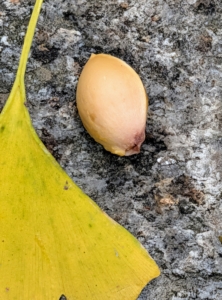
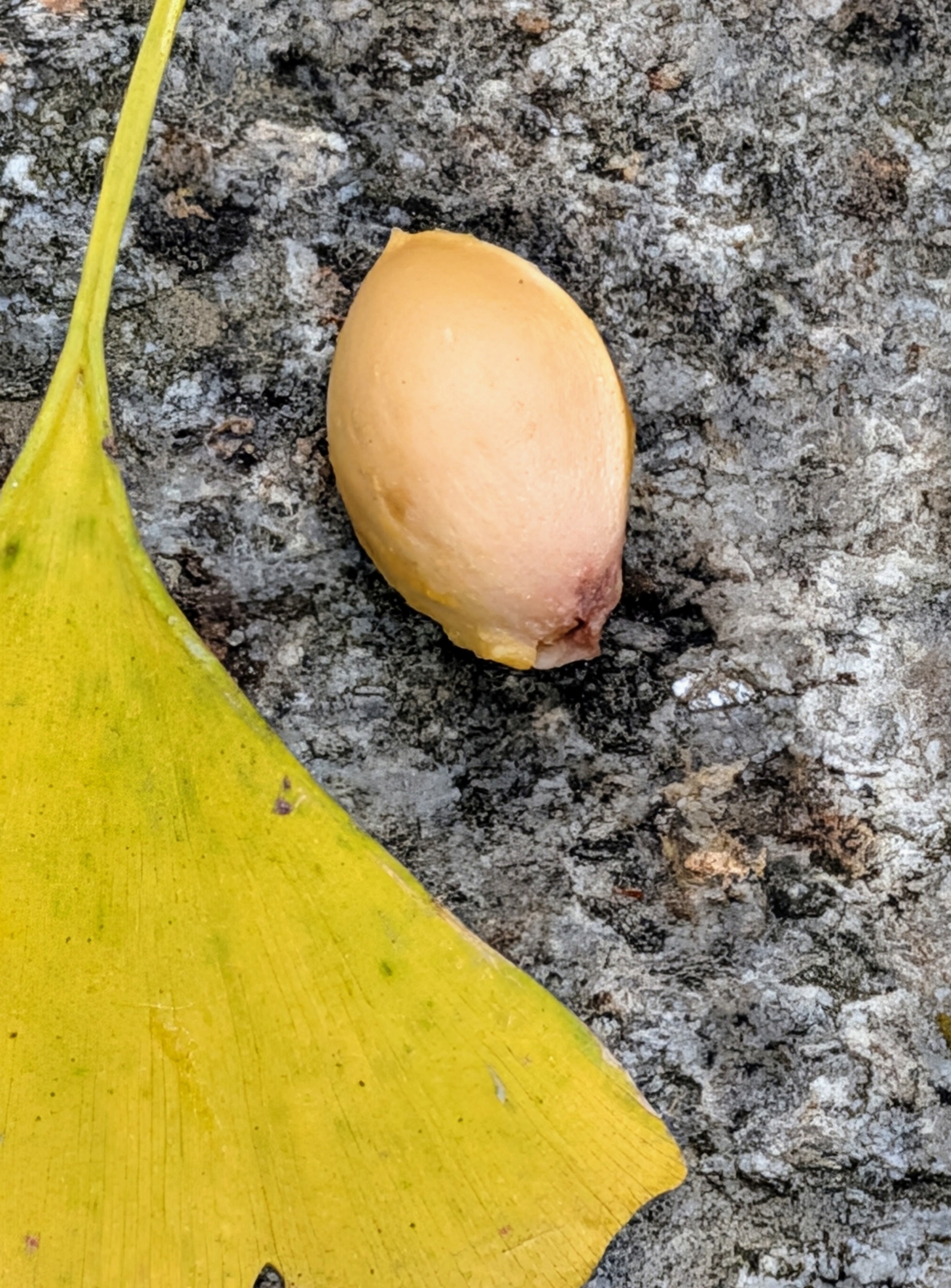
- Inside the fleshy outer layer is a single hard-shelled seed enclosing an edible kernel. The kernels are often roasted and used in Asian cuisines.
-
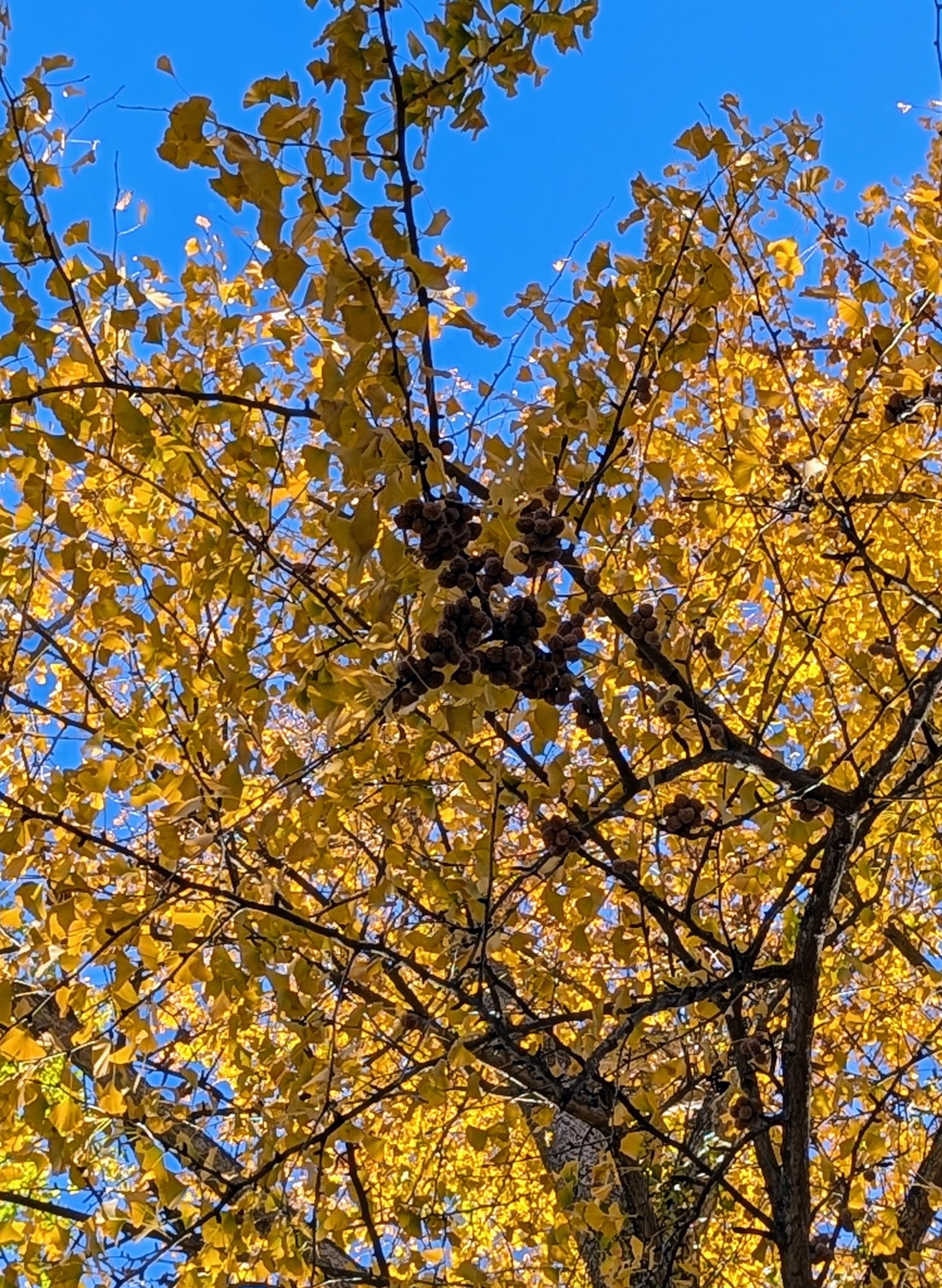
- Look closely and this tree – it is still full of seeds just waiting to fall.
-
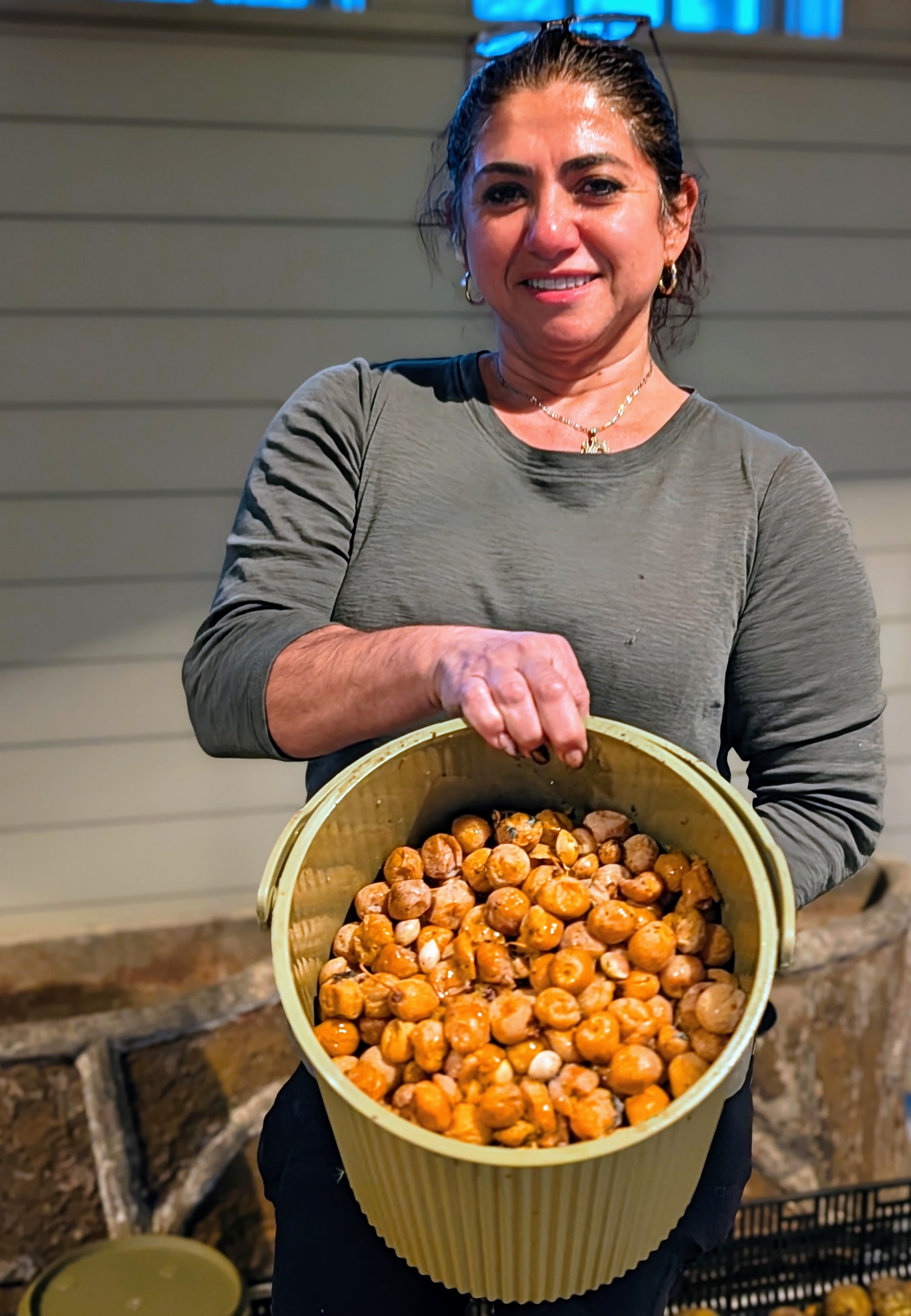
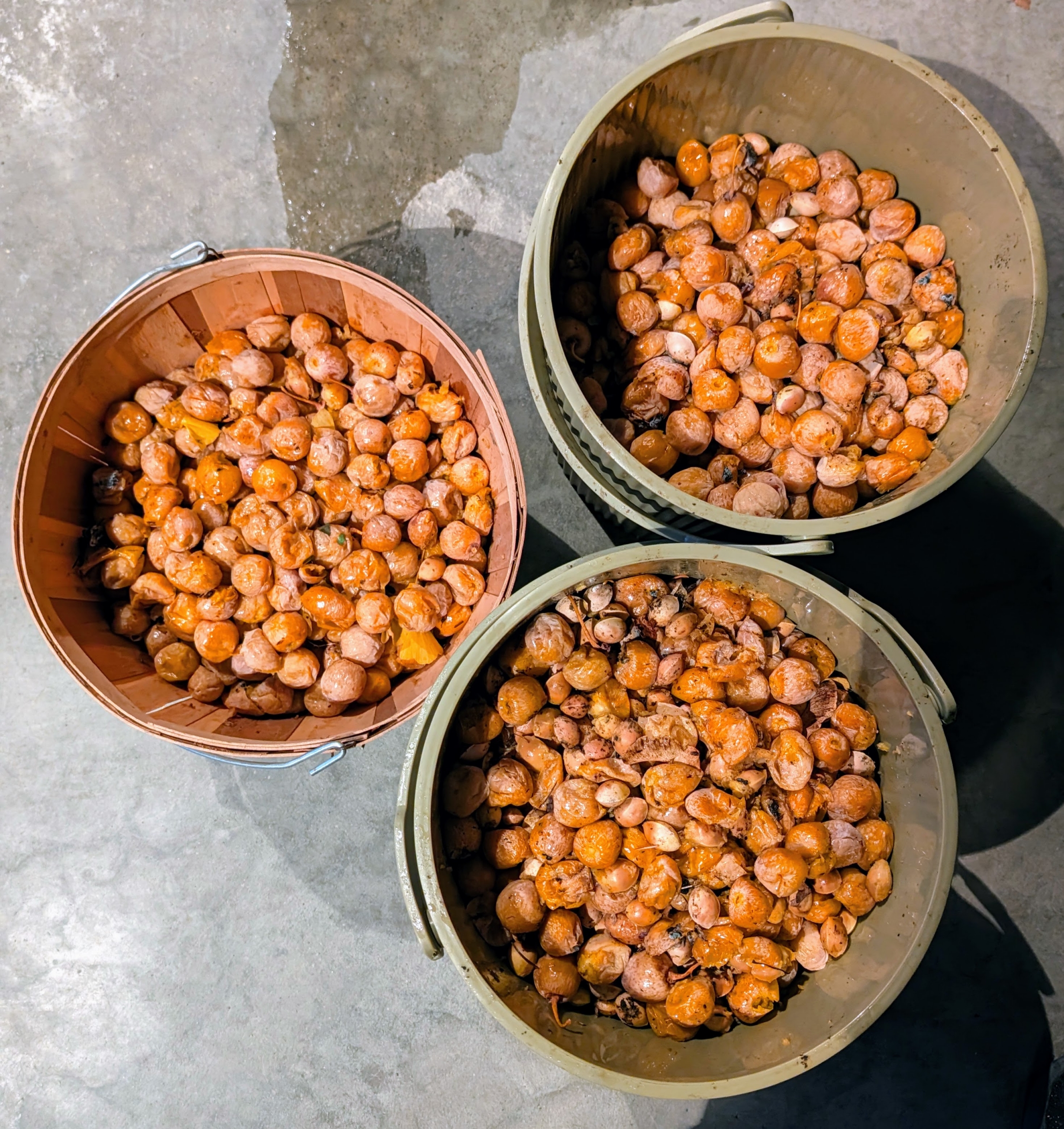
- I often collect the seeds and give them to chef friends for use in their Asian dishes – they are always excited to receive them. Enma shows just one bucket full.
-
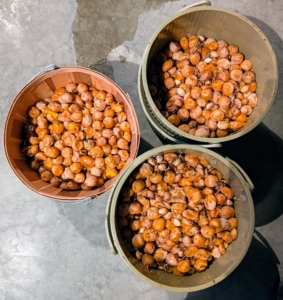
- I have so many this year! What a bounty.
-
- What are the ginkgo trees doing where you live? Have they dropped their leaves and seeds?
This story originally appeared on Martha Stewart Blog

