


Thirty-six years in, Deadpool’s journey to the top of the pop-culture food chain continues to be different from most superheroes’. Wade Wilson evolved from a 1990s cult anti-hero into a fan-favorite, satire-based hero. Following a significant dip in popularity during the mid-2000s, Deadpool shot to A-list status after his first solo movie made him a Hollywood goldmine.
Marvel has leaned into Deadpool’s chaotic energy by making him a go-to character for superhero team-ups and inserting him into the very fabric of their history through meta-narrative events. Deadpool also shines on his own, having starred in multiple solo runs that explore his origins, his missions as a mercenary, and his rarely-seen serious side.
Still, over three decades after his comic book debut in The New Mutants #98, Deadpool doesn’t have one of the merits that make characters like Spider-Man, Hulk, and the X-Men so iconic.
Rob Liefeld Argues Deadpool Was Ruined By Not Having A Strong Rogues Gallery
Deadpool Co-Creator Believes Deadpool’s Rogues Gallery Was Constrained In The 1990s
Speaking to EscapePodUncut, Deadpool co-creator Rob Liefeld shared his frustrations with the lack of notable villains in Deadpool lore. Liefeld theorizes that Marvel actively prevented Deadpool’s rogues’ gallery from expanding following the artist’s transferral from Marvel Comics to Image Comics, instead pitting the Merc With A Mouth against ridiculous antagonists who debuted in other heroes’ comics. Liefeld explains:
“Deadpool has never been more popular than under my pen in the comics. Sold more. Sold higher. And Deadpool: Bad Blood, Marvel was shocked. That was a thirty-dollar comic that charted number one.”
“My biggest criticism of Deadpool (…) We discuss Spider-Man, we discuss Batman, the two biggest rogues galleries in the history of comics (…) They are brilliant, and you’re really defined by the villains that you’re up against. At some point Marvel decided, and part of it I think is policy, ‘let’s not encourage new characters’, because I’m also part of the group that led the exodus in the nineties to go explore our own exploits as creators, and I think that flipped them out (…) I think that traumatized Marvel to this day.”
“With Deadpool they did not create a rogues gallery. They gave him Howard the Duck villains. I kid you not. In the early two thousands I went into the comic store and I went like ‘No!’. Doctor Bong is a guy with a bell for a head, and he occasionally hits his head and goes ‘Bong!’. (…) So, they were giving Deadpool everyone else’s bad villains, like almost saying ‘he’s as much a joke to us as we want him to be to you’.”
Early foes like Doctor Bong were clearly intended to be “joke villains”, which helped establish Deadpool as a comedy-leaning character even before Marvel cemented Wade Wilson as a quippy, dirty-mouthed, fourth-wall-breaking anti-hero. Other early enemies like T-Ray, Slayback, and Killspree were more serious threats, though they were certainly products of their time, with excessive pouches, cybernetic limbs, and extreme designs that haven’t all aged gracefully.
Rob Liefeld’s Deadpool: Bad Blood introduced the Juggernaut-esque Thumper, who was revealed to be a childhood friend of Wade’s. Thumper’s direct connection to Deadpool’s pre-Weapon X past attempted to create a sustainable nemesis with deep emotional stakes. This initiative was later expanded in the 2023 sequel Badder Blood, which introduced more Liefeld-designed foes like Shatterstorm. But despite these noble efforts, Bad Blood and its successors have struggled to exert the long-term influence Liefeld likely hoped for, and Thumper has been left behind.
Does Deadpool Really Not Have A Proper Rogues Gallery?
Few Marvel Villains Are Associated Strictly With Deadpool
Deadpool wouldn’t be able to stop making enemies if he actively tried to, yet when his list of personal enemies is examined, a clear pattern emerges. Taskmaster is perhaps Deadpool’s most frequent rival, but he’s equally defined by his rivalries with Moon Knight, Captain America, Spider-Man, and many other heroes. Thanos, who famously cursed Wade with immortality out of a jealous love for Lady Death, is a cosmic-level threat that belongs to the entire Marvel Universe.
This isn’t to say that Deadpool’s personal enemies don’t exist. Characters like Ajax have deep, traumatic roots in Wade’s Weapon X origin but often disappear for years in the comics. Similarly, Evil Deadpool is a brilliant conceptual foil, but he lacks the recurring staying power of a Joker or a Green Goblin. Other deeply personal foes like T-Ray, who’s obsessed with destroying Deadpool, or the equally unpredictable Madcap, offer fascinating psychological stakes but are frequently sidelined.
|
Notable Deadpool Enemies |
First Encounter |
Motivations |
|---|---|---|
|
T-Ray |
Deadpool (Vol. 2) #1 (1996) |
Believes he’s the real Wade Wilson |
|
Evil Deadpool |
Deadpool (Vol. 3) #44 (2011) |
Resents and envies the original Wade |
|
Allison Kemp |
Deadpool (Vol. 3) #48 (2011) |
Seeks revenge for her permanent injuries |
|
Slayback |
Deadpool: The Circle Chase #1 (1993) |
Seeks revenge for his own murder |
|
Ajax |
Deadpool (Vol. 2) #14 (1998) |
Sadism / revenge for his own murder |
|
Madcap |
Deadpool Annual Vol 2 1 (2013) |
Mischief / obsession |
|
Taskmaster |
Deadpool #2 (1997) |
Professional clashes / competition |
|
Thanos |
Deadpool (Vol. 2) #33 (1999) |
Love triangle |
The result is a hero who, despite having a long-running solo career, has spent much of the last three decades fighting other heroes’ villains or the heroes themselves. Whether it’s fighting the Mad Titan all by himself or killing the Marvel Universe, Deadpool’s stories often rely on his meta-narrative awareness instead of a stable rogues’ gallery. This gap is what Liefeld points to as a missed opportunity, as Marvel may have inadvertently prevented Deadpool from building a pantheon of personal antagonists.
Marvel’s Gallery Of Rogues’ Galleries Has Lost Momentum
Rogues’ Galleries In General Aren’t That Relevant Anymore

The very concept of a gallery of rogues has lost its historical momentum. In the 1960s through the ’90s, the introduction of a new villain often meant the birth of a pillar for a hero’s mythos. But in the modern era, this expansion has slowed to a crawl. Even a powerhouse like Spider-Man rarely sees these newcomers stick. While characters like Kindred or Chasm were pushed as major additions, they often feel like temporary obstacles instead of permanent fixtures on the level of a Green Goblin or Doctor Octopus.
Marvel introduced over twenty of Spider-Man’s most iconic villains during Peter Parker’s first fifteen years. Meanwhile, Miles Morales has struggled to create a rogues’ villain of his own within the same period, and most of his enemies existed long before his debut.
This phenomenon extends to Marvel’s other heavy hitters, where new villains are often just echoes of the old. The Hulk frequently cycles through various Gamma-powered enemies, while Captain America remains locked in a perpetual struggle against Hydra and the Red Skull. Even the X-Men, despite their radical Krakoan and From the Ashes eras, often find themselves falling back on Sentinels, Magneto, or Mr. Sinister. Though writers do introduce formidable new threats, like the gene-terrorist group 3K or the entity Omen in the 2026 Daredevil relaunch, these villains are often tied to specific events or runs.
Marvel antagonists are frequently one-and-done in the movies, even when villains as big as Gorr the God Butcher and Ultron make their live-action debut. Sometimes, villains are repurposed, such as The Leader finally returning in 2025’s Captain America: Brave New World as a Captain America antagonist instead of a proper Hulk enemy. Comics have followed suit by prioritizing event-based clashes over the slow-burn construction of personal rivalries. Since Deadpool didn’t cement a definitive rogues gallery during the ’90s, he’s more unlikely to get one now.
Deadpool Doesn’t Really Need An Actual Rogues’ Gallery
Wade Wilson’s Lone Mercenary Nature Makes Him Less Likely To Have Archnemeses

In many ways, the lack of a traditional rogues’ gallery isn’t a failure of writing, but a reflection of Deadpool’s independent nature. As a mercenary-for-hire, Wade Wilson works on the fringes of the Marvel Universe; he rarely stays in one place or with one moral alignment long enough to cultivate a Sinister Six of his own. Deadpool’s character is built on a lack of deep, stable personal ties. He doesn’t have a city to protect or a secret identity to maintain, so he lacks the typical vulnerabilities that villains like the Green Goblin or Lex Luthor exploit, which allows him to be a truly free agent.

Deadpool’s Healing Factor Sounds Cool Until You Realize How Horrifying It Really Is
Deadpool possesses the best healing factor in the Marvel universe. However, Wade Wilson’s invincibility makes his immortal life a living hell.
Deadpool’s independence allows him to be the ultimate wild card and a perfect foil to the rest of the Marvel roster. Instead of being locked into an endless cycle with a specific arch-nemesis, Wade’s best stories often involve him clashing with established icons like Spider-Man or Wolverine. Wade Wilson treats the entire Marvel Universe as his playground, and he’s just as likely to be the villain in someone else’s book as he is to be the hero in his own.
However, while a massive gallery isn’t strictly necessary for Deadpool to remain compelling, there’s an undeniable charm to the idea of Wade having a few more regular foes to call his own. As the Merc With A Mouth continues to evolve, a more stable set of villains could open up new avenues for long-term storytelling. Seeing a villain who truly understands Wade’s unique brand of madness would be a refreshing change of pace.
Which characters do you think make up Deadpool’s rogues’ gallery?
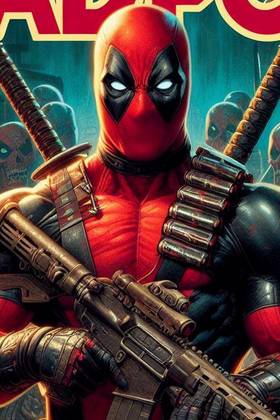
- Alias
-
Wade Wilson
- First Appearance
-
The New Mutants
- Alliance
-
X-Men, Avengers, Astonishing Avengers, Deadpool Corps, Frightful Four, Great Lakes Initiative, Heroes for Hire, Mercs for Money, Secret Defenders, Six Pack, Thunderbolts, Weapon X, X-Force
- POWERS
-
Healing factor, regeneration, superhuman strength and agility,
- Franchise
-
Marvel
This story originally appeared on Screenrant

