


Image source: Getty Images
Opening a Stocks and Shares ISA can be one of the best financial moves a UK investor can make. The good news is that getting started is far simpler than most people imagine. Many brokers (Hargreaves Lansdown, AJ Bell etc) let you open an account in under 10 minutes with just a debit card and proof of identity.
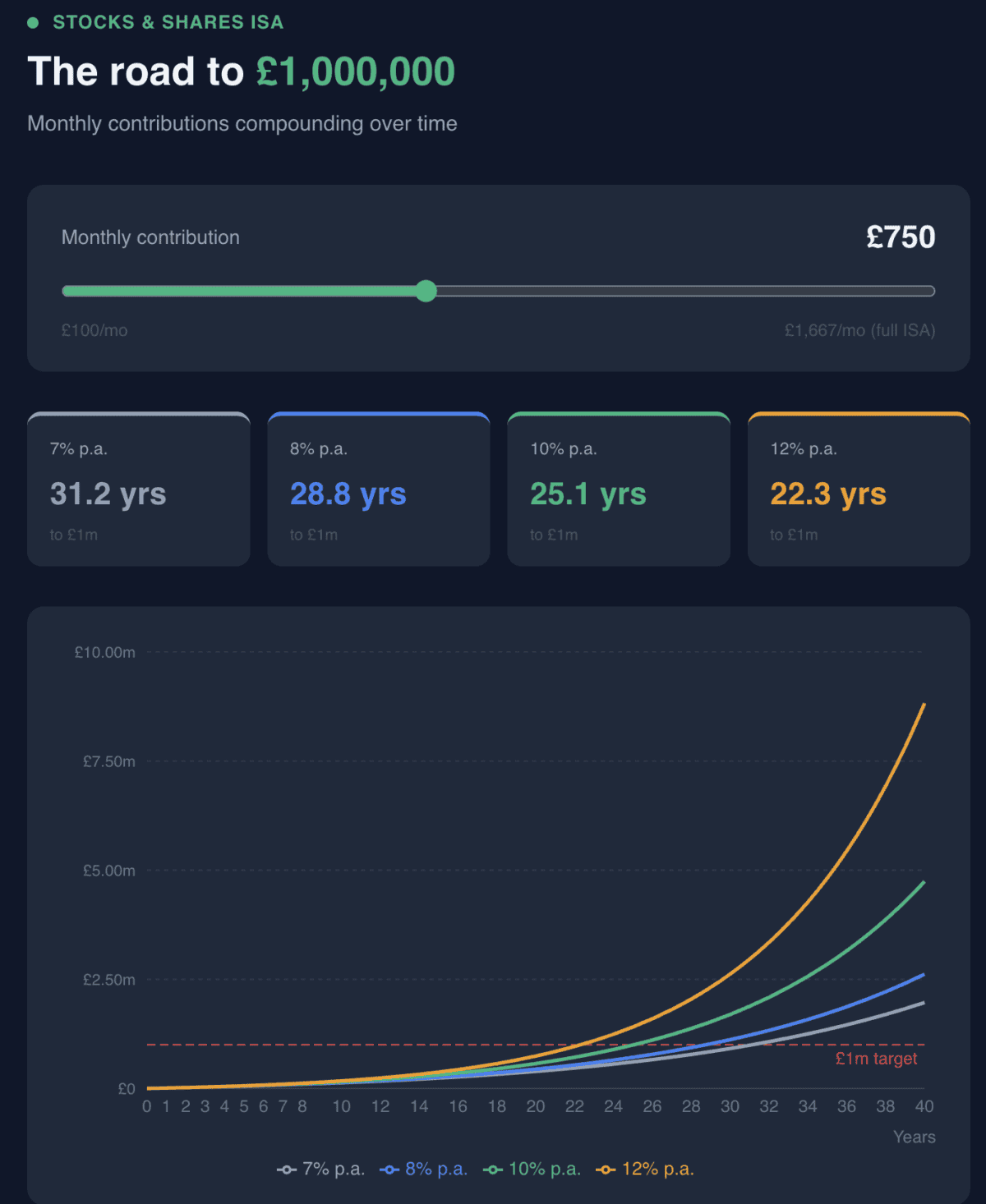
You don’t need a large lump sum either. Most platforms allow monthly contributions from as little as £25, meaning you can begin building wealth at whatever pace suits your budget. Once your ISA is open, you can invest in thousands of stocks, funds, and investment trusts — all sheltered from capital gains tax and income tax, year after year.
The annual allowance is £20,000 and, crucially, any unused portion cannot be carried forward.
That’s why acting before the 5 April deadline matters so much. Every tax year you sit on the sidelines is a year of tax-free compounding you can never get back.
Please note that tax treatment depends on the individual circumstances of each client and may be subject to change in future. The content in this article is provided for information purposes only. It is not intended to be, neither does it constitute, any form of tax advice. Readers are responsible for carrying out their own due diligence and for obtaining professional advice before making any investment decisions.
Starting in choppy waters
Of course, you can put money inside a Stocks and Shares ISA before 5 April and not actually buy anything. However, I’m personally finding opportunities in the current madness.
Markets have been jittery since the conflict erupted in the Gulf, and many high-quality stocks have fallen sharply in recent weeks. For long-term investors though, this kind of pullback is less a cause for alarm and more an invitation.
In short, when great businesses go on sale, patient investors pay attention.
What’s more, the long-term picture — rising global demand for technology, defence, travel, and industrial innovation — remains very much intact. And those are some of the themes that influence my investing.
Some of my favourite stocks have taken a hit: Nvidia and Credo Technology are down amid broader tech sector nerves; Airbus and Melrose (LSE:MRO) are feeling the pressure of macro uncertainty and fewer flying hours; Jet2, the UK’s top tour operator, has slipped back on higher fuel prices.
But none of these businesses have fundamentally changed and their growth prospects are largely the same. I believe that buying quality at a discount is precisely the kind of move that builds serious long-term wealth.
A Rolls-Royce alternative
Melrose is a stock I really like. I’m a fan of industrials and aerospace stocks. Melrose has some similarities to Rolls-Royce of four years ago. The company’s undergoing a restructuring, but the underlying business is unbelievably strong.
What do I mean by unbelievably strong? Well, Melrose makes components for aircraft engines and aircraft structures. Its components feature on around 90% of the world’s commercial aircraft, and it is the sole source supplier for 70% of the programmes it works on — meaning there’s literally no one else who can make what they make.
It’s currently trading around 12.5 times forward earnings with a price-to-earnings-to-growth (PEG) ratio around 0.9. That’s a fraction of the valuation afforded to Rolls-Royce, which is a segment peer.
Risks? Well, every company has them. In the near term, it’s worth considering currency fluctuations as Melrose earns the majority of its income in US dollars. More broadly, it’s also worth recognising that the company is less diversified than it used to be — now be purely aerospace and defence.
Nonetheless, I think this one is well worth considering.
This story originally appeared on Motley Fool

