


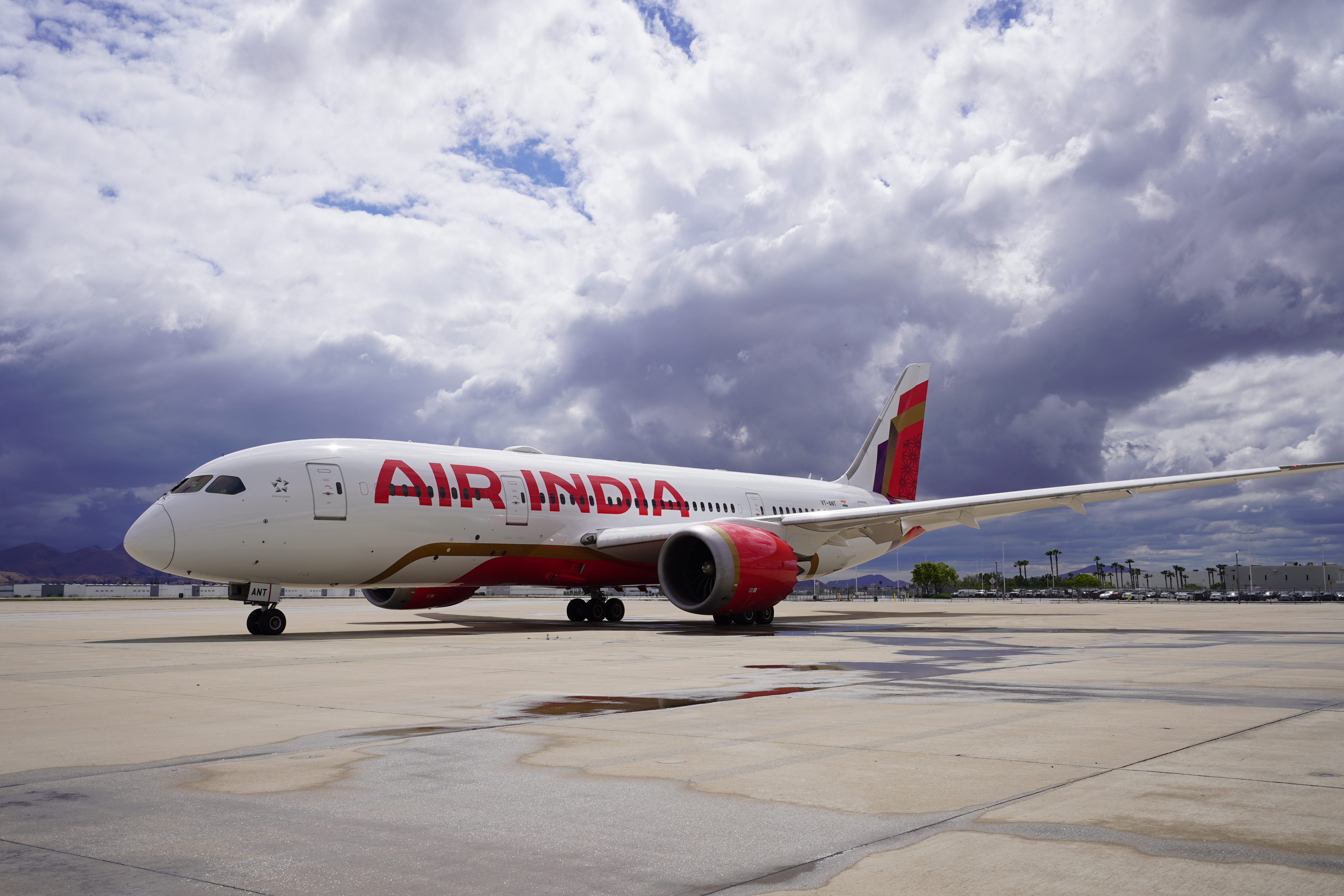
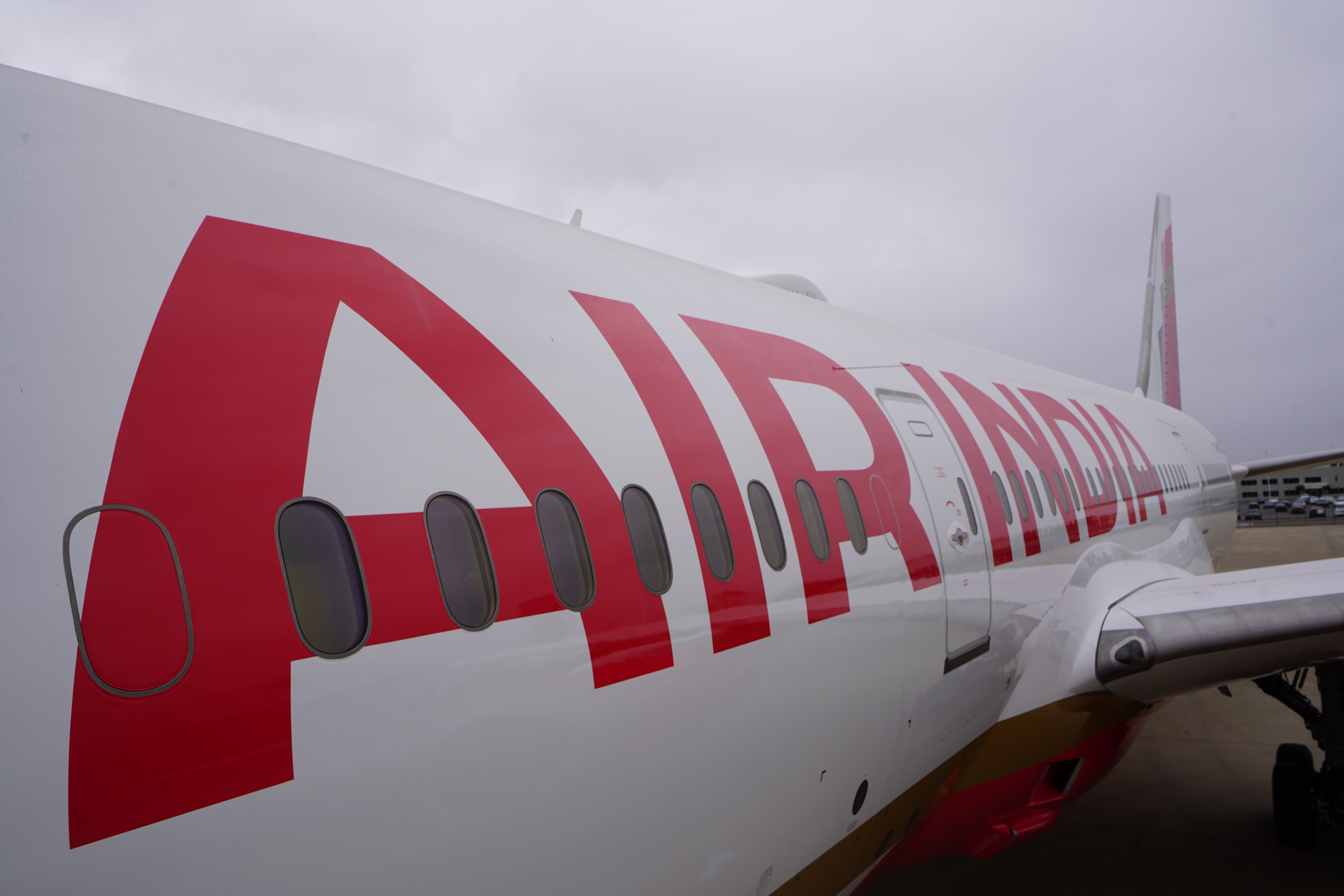
Last weekend, Air India marked another milestone in its ongoing transformation as the first fully retrofitted Boeing 787-8 aircraft took flight from San Bernardino, California bound for Delhi.
The Prince of Travel team was live-on-location for a first look at the plane, which included a full nose-to-tail makeover of VT-ANT’s interior and exterior.
Here’s what we know about the specific aircraft, what the retrofit entails, and what it means for the broader transformation that Air India is working through.
Air India Debuts First Retrofitted 787-8 Aircraft
VT-ANT is a Boeing 787-8 Dreamliner that was originally delivered to Air India in February 2015, back when the airline was still owned and operated by the Government of India. The Tata Group acquired the airline in January 2022, and since then, Air India has been operating under private ownership with a fundamentally different vision for where the airline is headed.
The challenge is that the cabin products on Air India’s legacy widebody fleet, which is comprised of 26 Boeing 787-8s and 13 Boeing 777s, had fallen well short of the standard that a globally competitive airline needs to offer.
In December 2022, Air India announced a $400 million (USD) investment to completely retrofit all of these aircraft, including the installation of new latest-generation seats, modern inflight entertainment systems, new carpets, curtains, and wall laminates across all cabins.
The current retrofit transforms the 787-8 from a two-class layout into a modern three-class configuration.
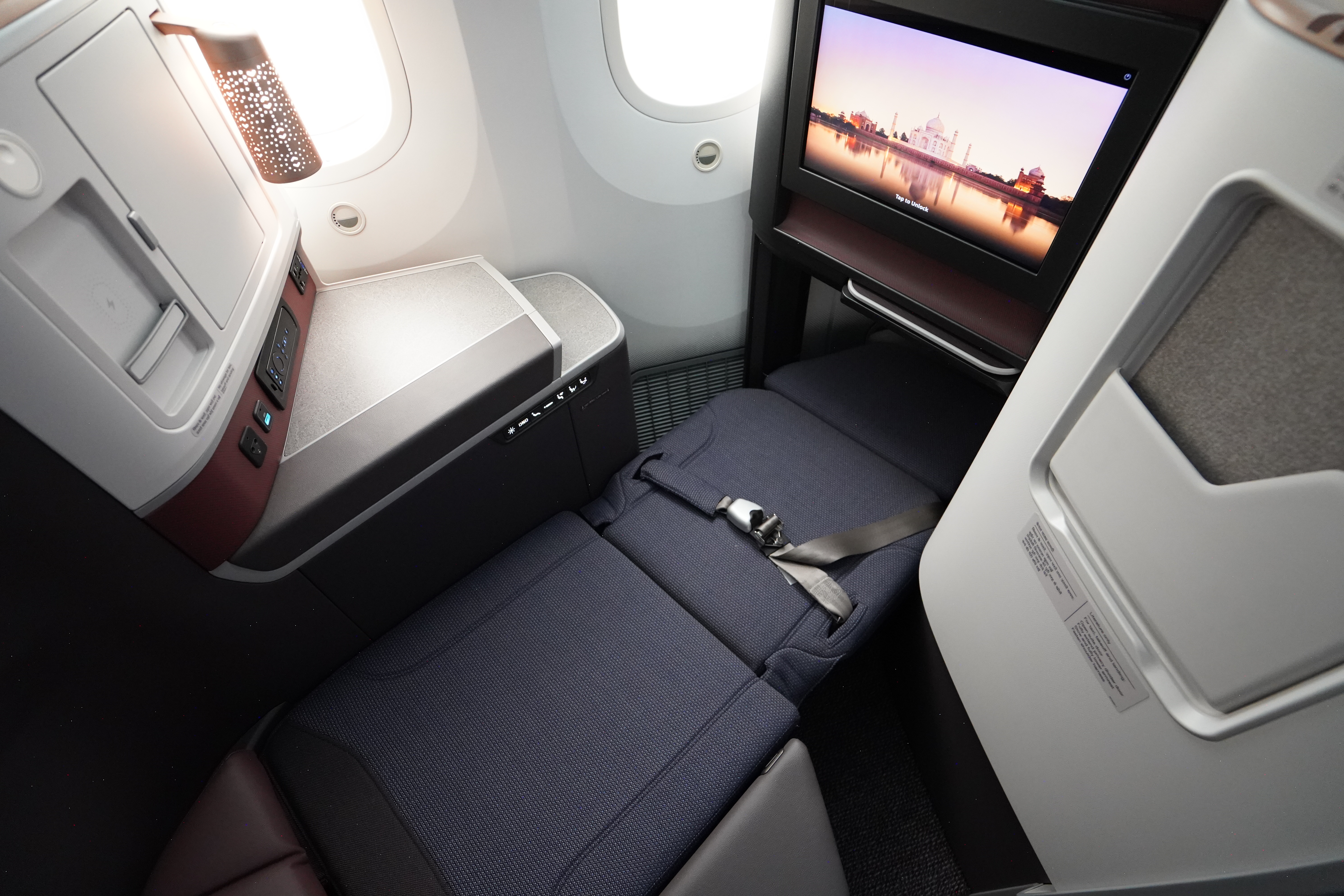
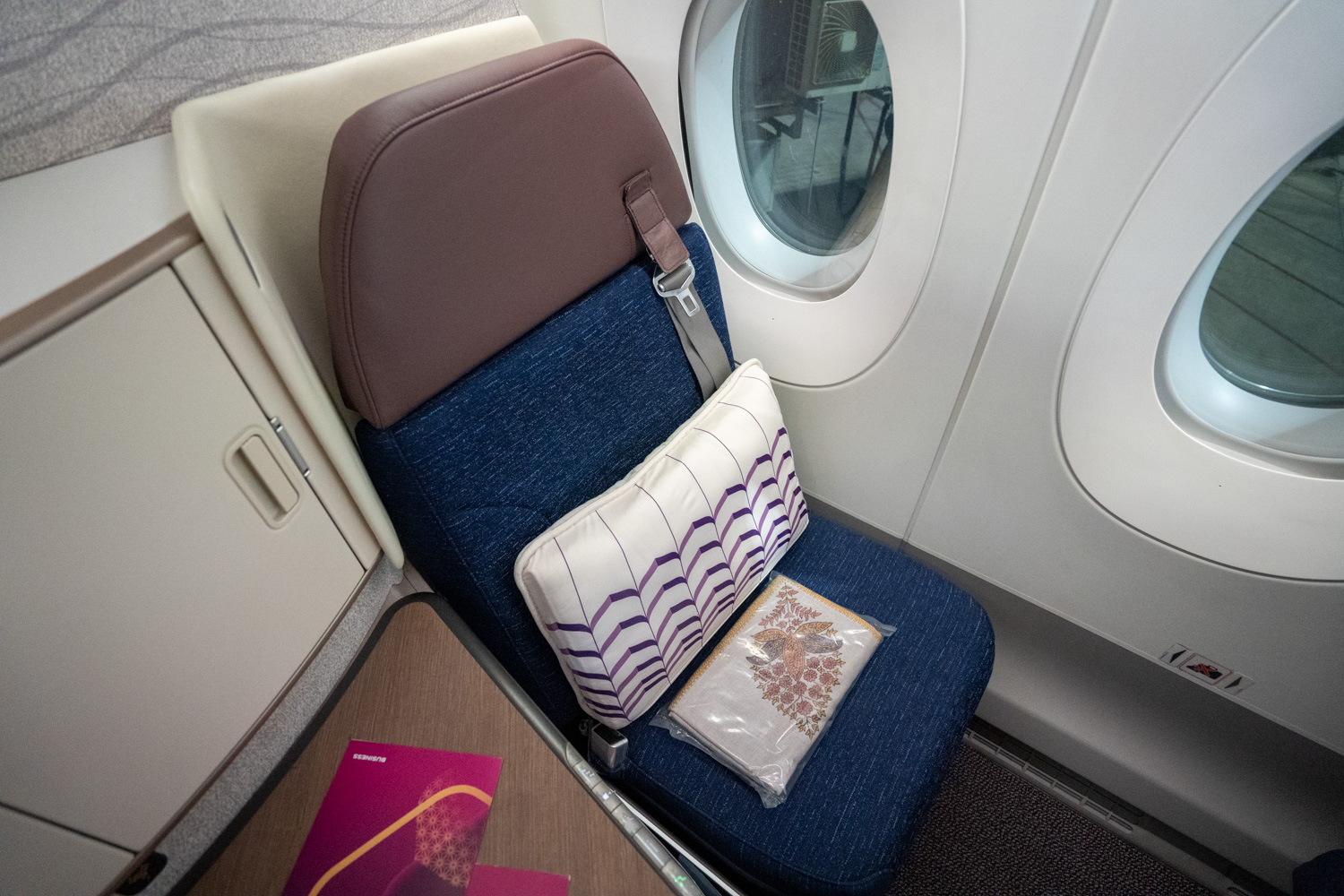
Business class features 20 private suites in a 1-2-1 layout, featuring the Elevate Ascent seat, the same product Air India debuted on its factory-built 787-9 aircraft earlier this year.
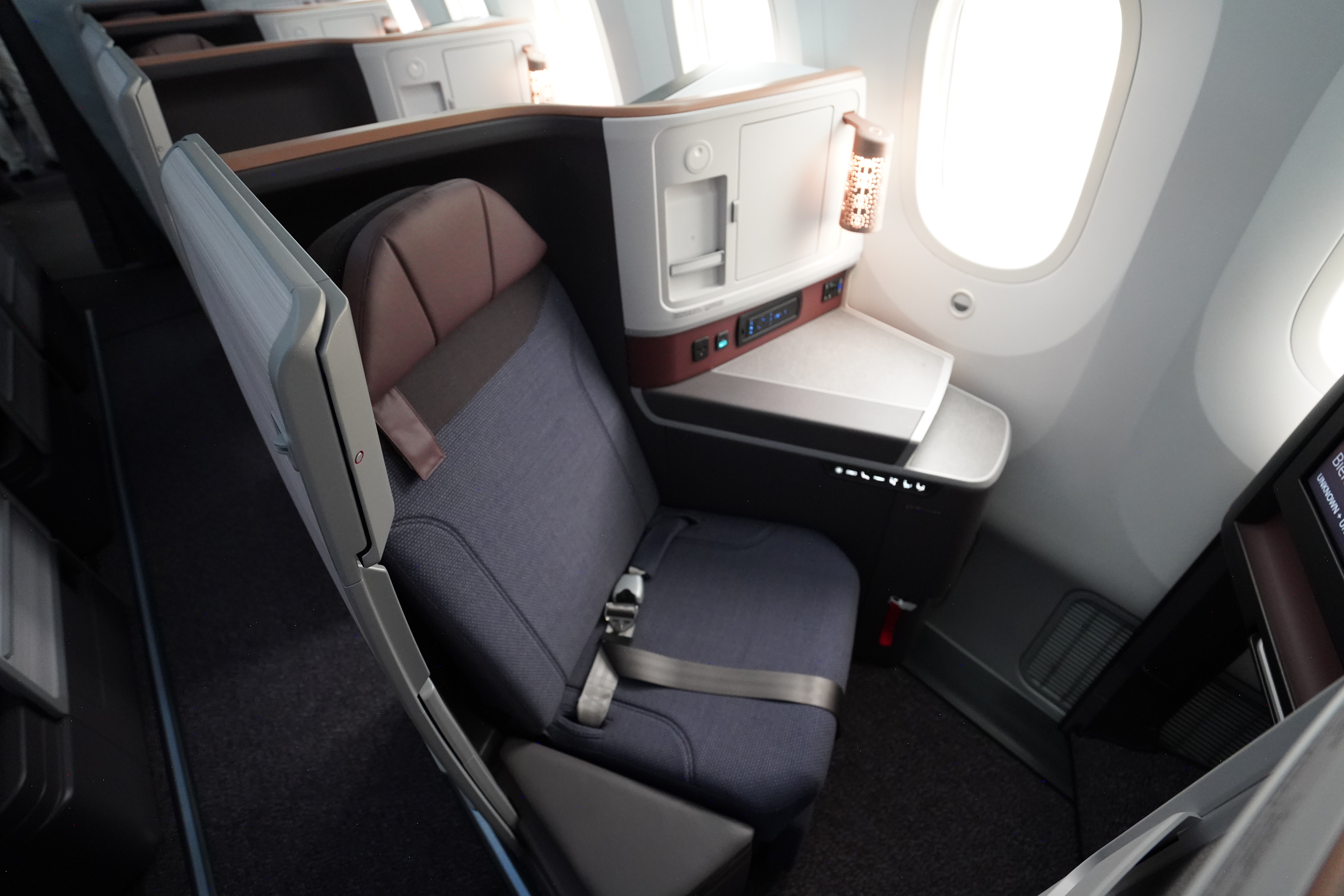
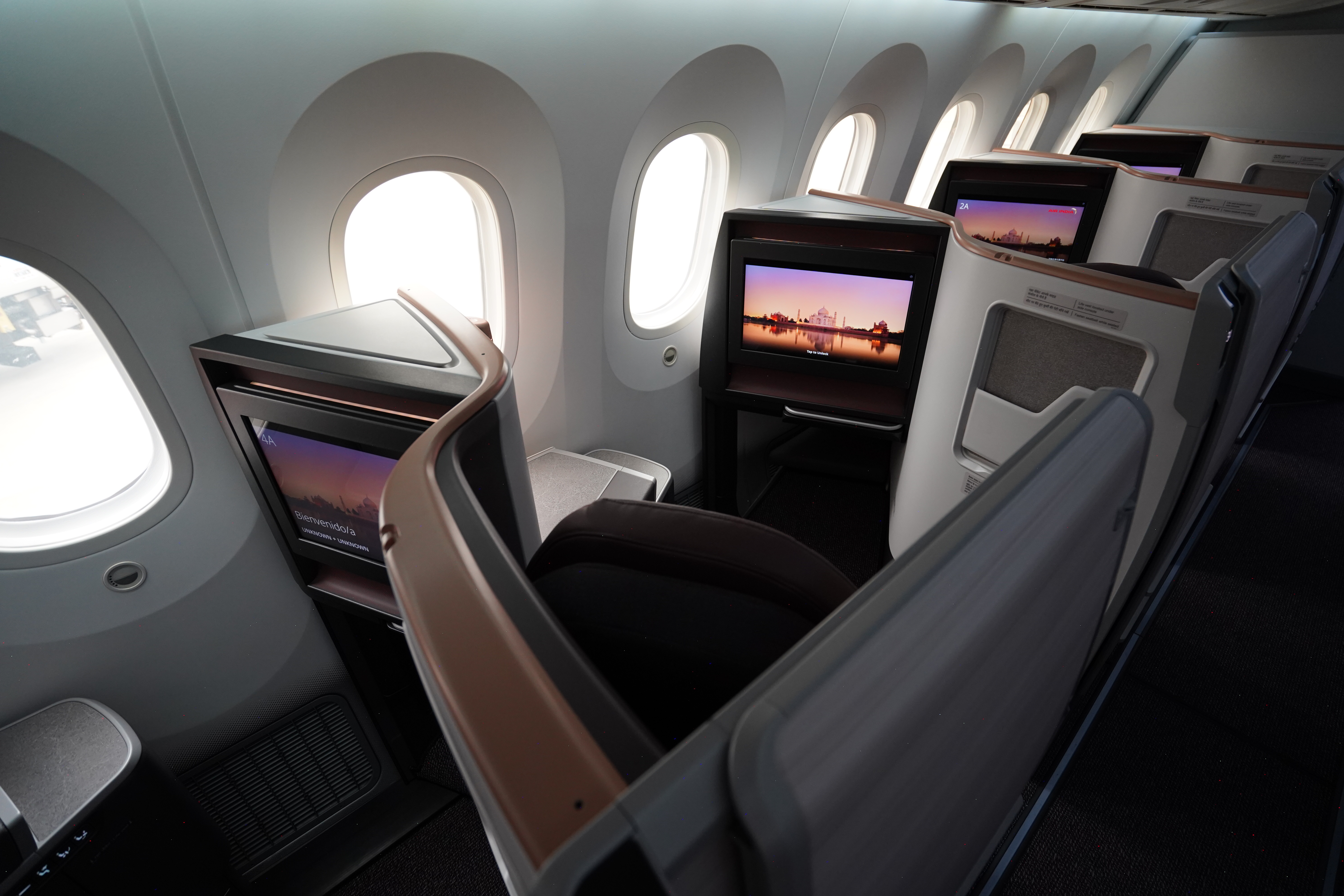
Each suite offers direct aisle access, sliding privacy doors, 42 inches of pitch, a fully flat 79-inch bed, a 17-inch 4K QLED HDR touchscreen, multiple charging options (including wireless charging), and a jaali-inspired feature lamp.
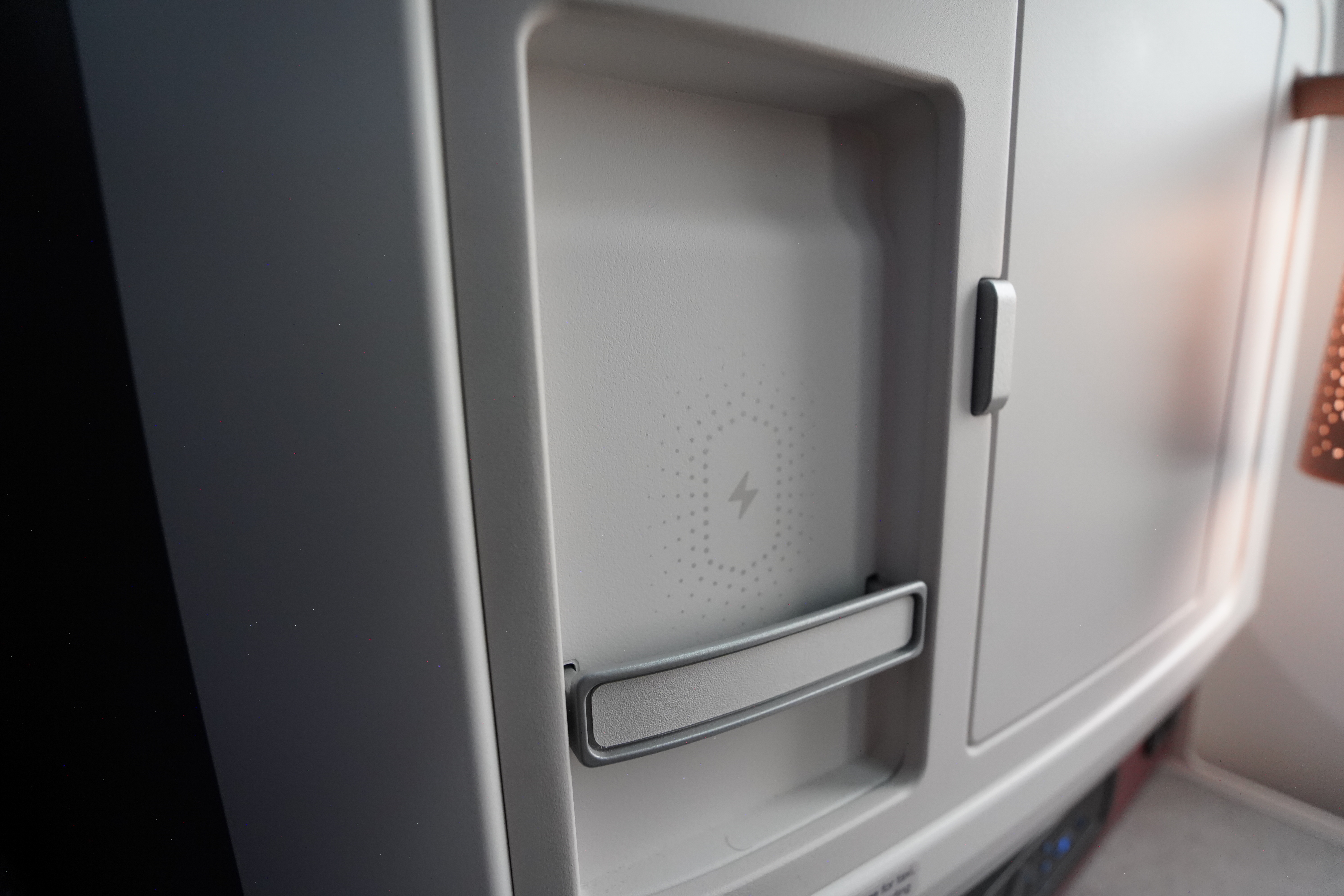
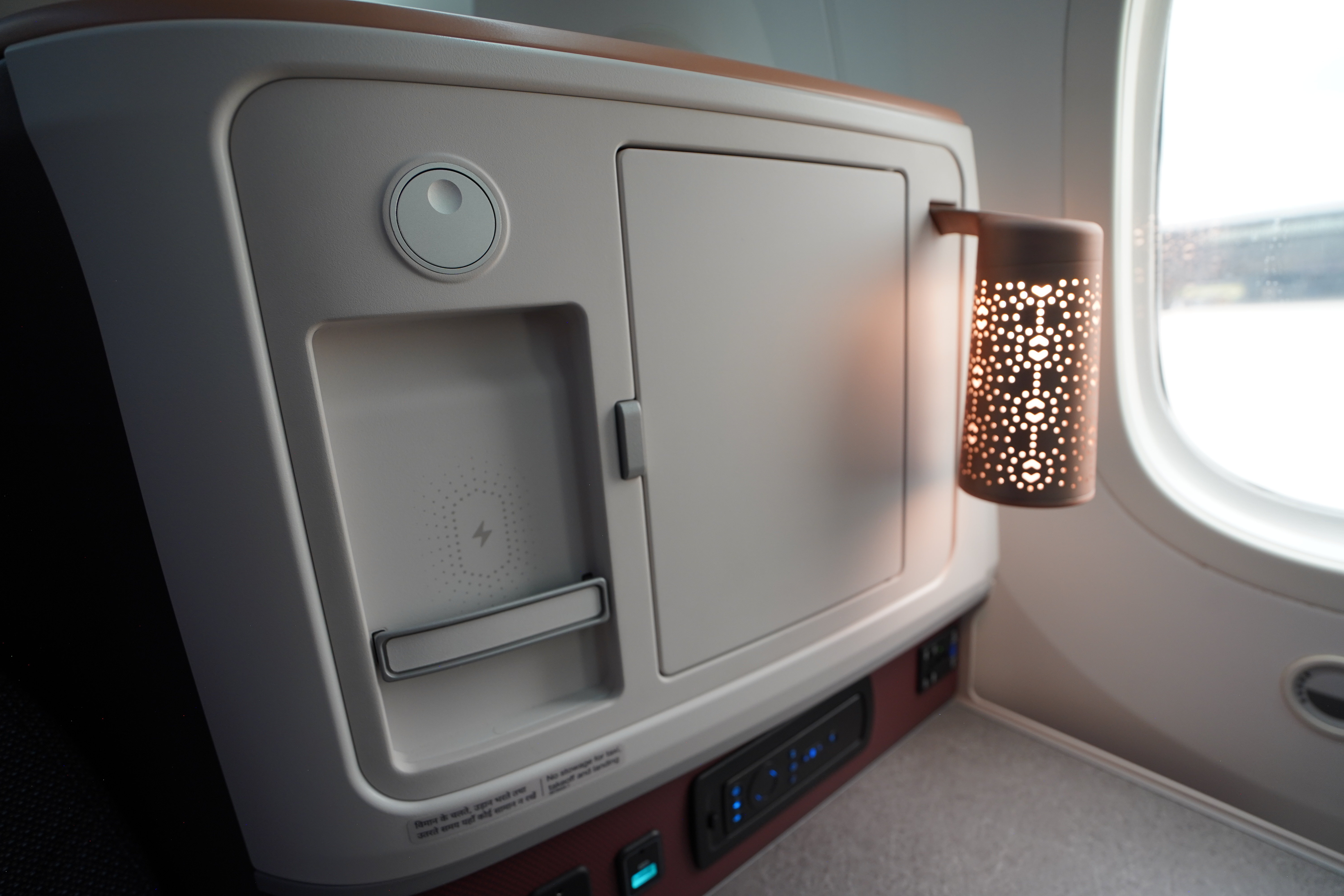
In the middle of the plane, the new premium economy cabin features 25 seats in a 2-3-2 layout, with 38-inch pitch, 7-inch recline, a 6-way adjustable headrest, calf and leg rest, 13.3-inch 4K screens, and fast-charging ports.
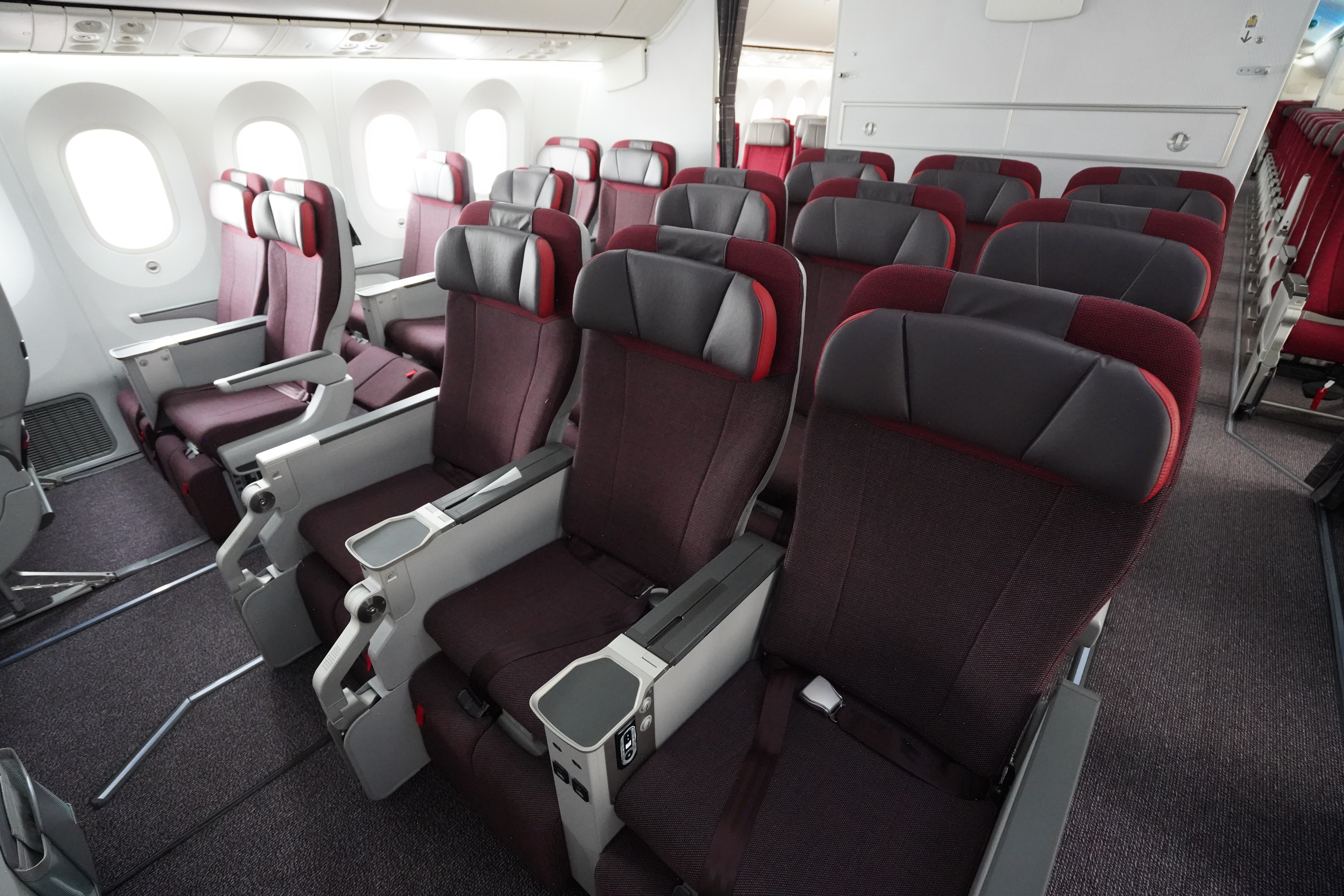
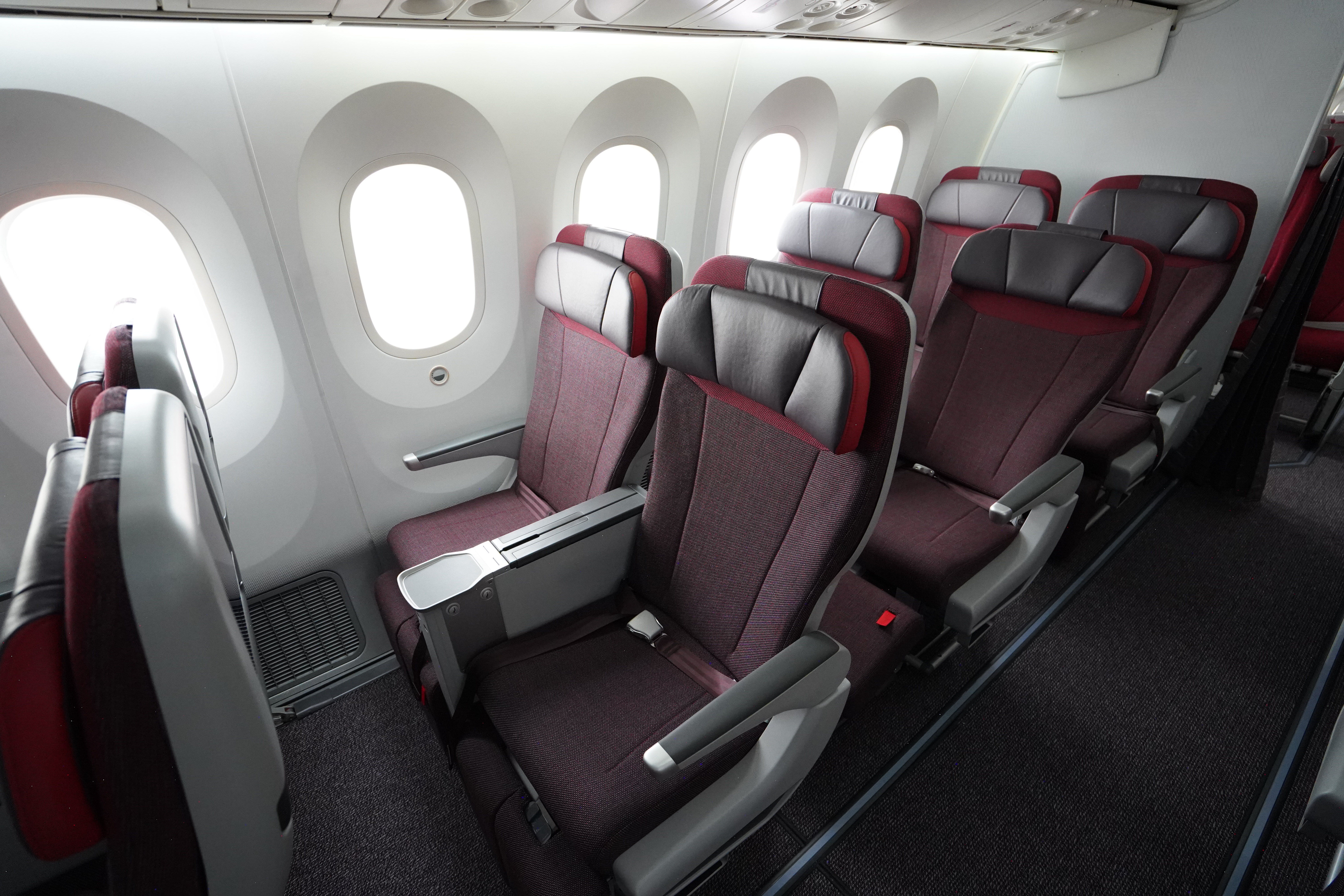
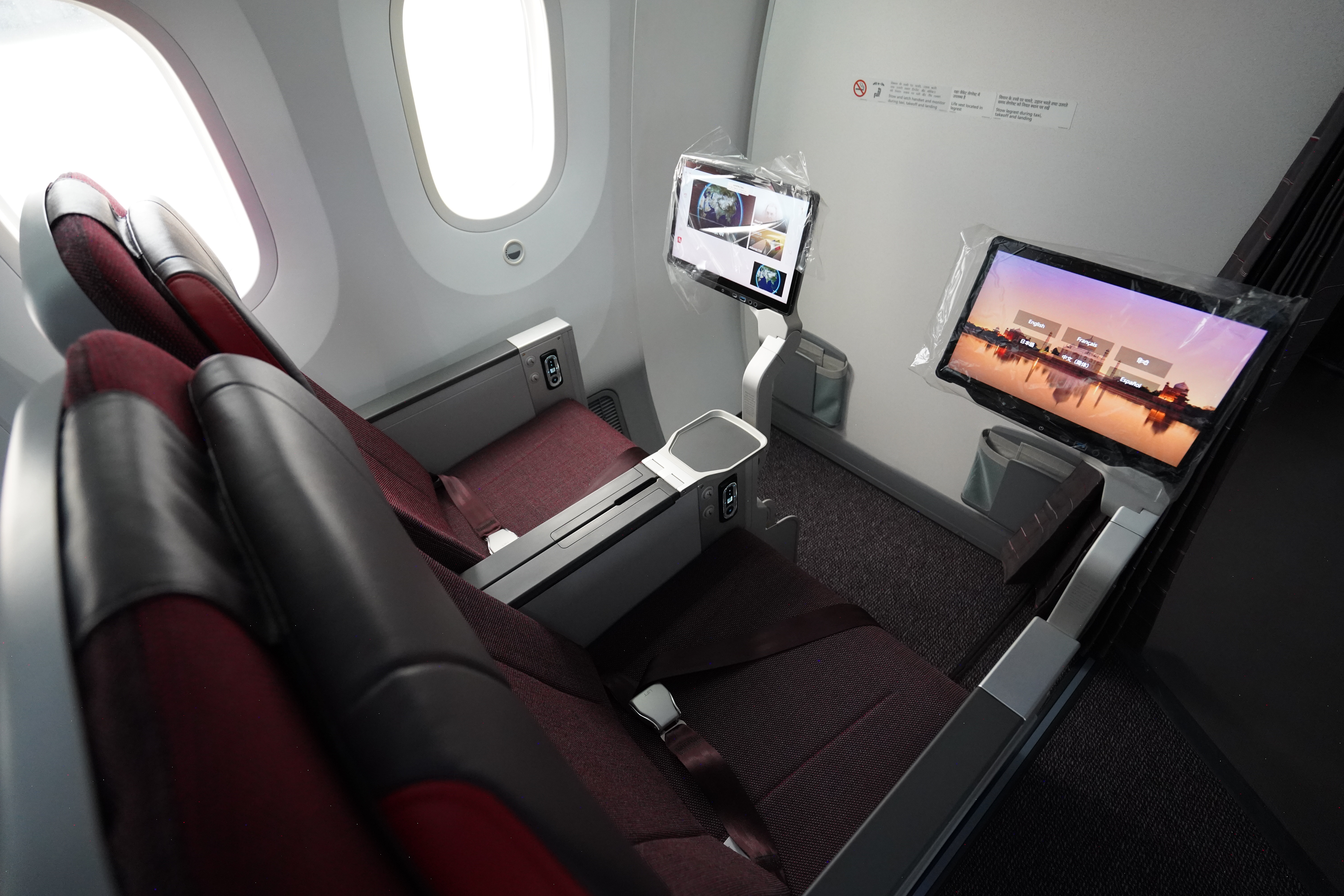
Lastly, the economy cabin is comprised of 205 ergonomically optimized seats in a 3-3-3 layout, with 31/32-inch pitch, 5-inch recline, 11.6-inch 4K QLED HDR touchscreens, and USB-A and USB-C charging ports.
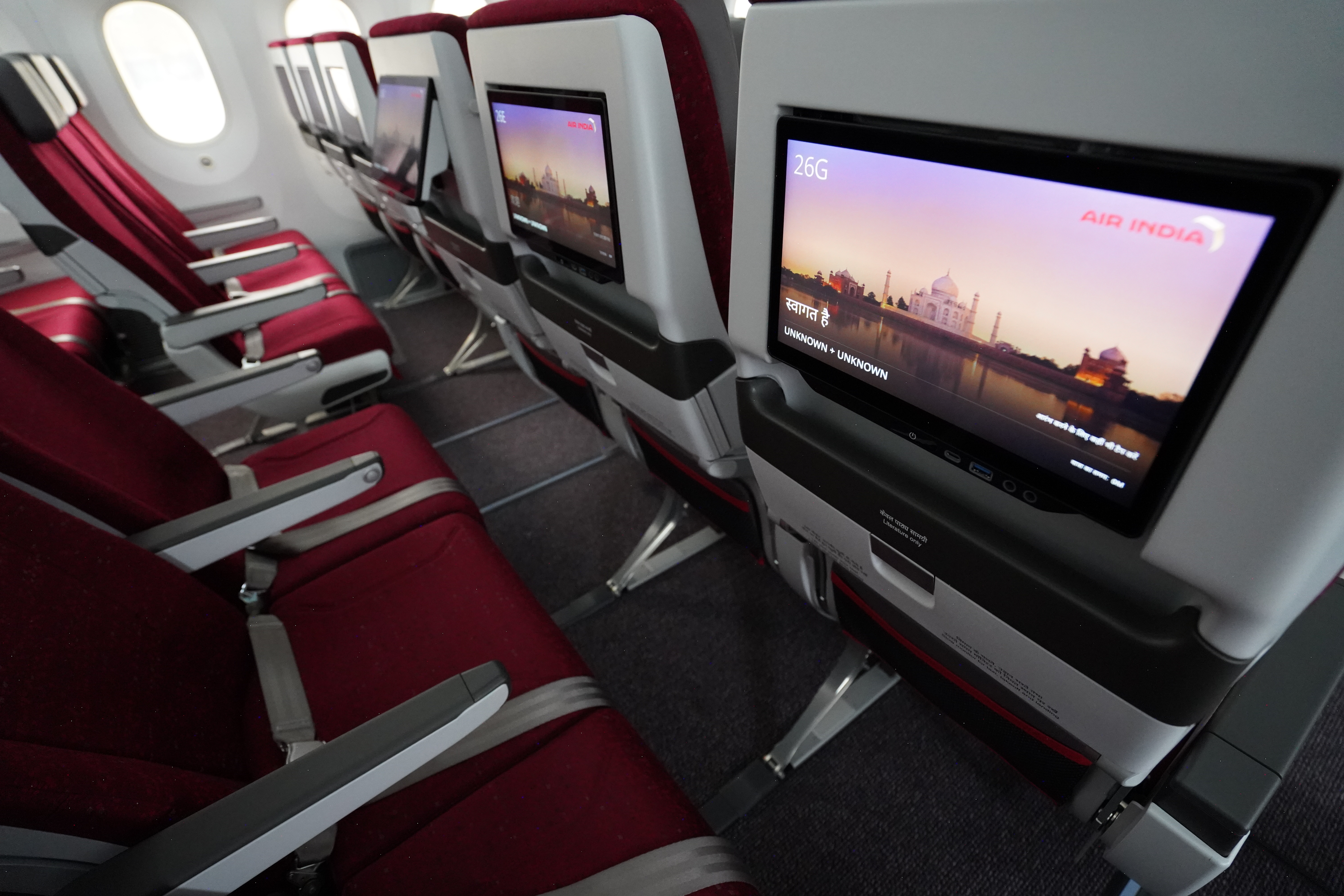
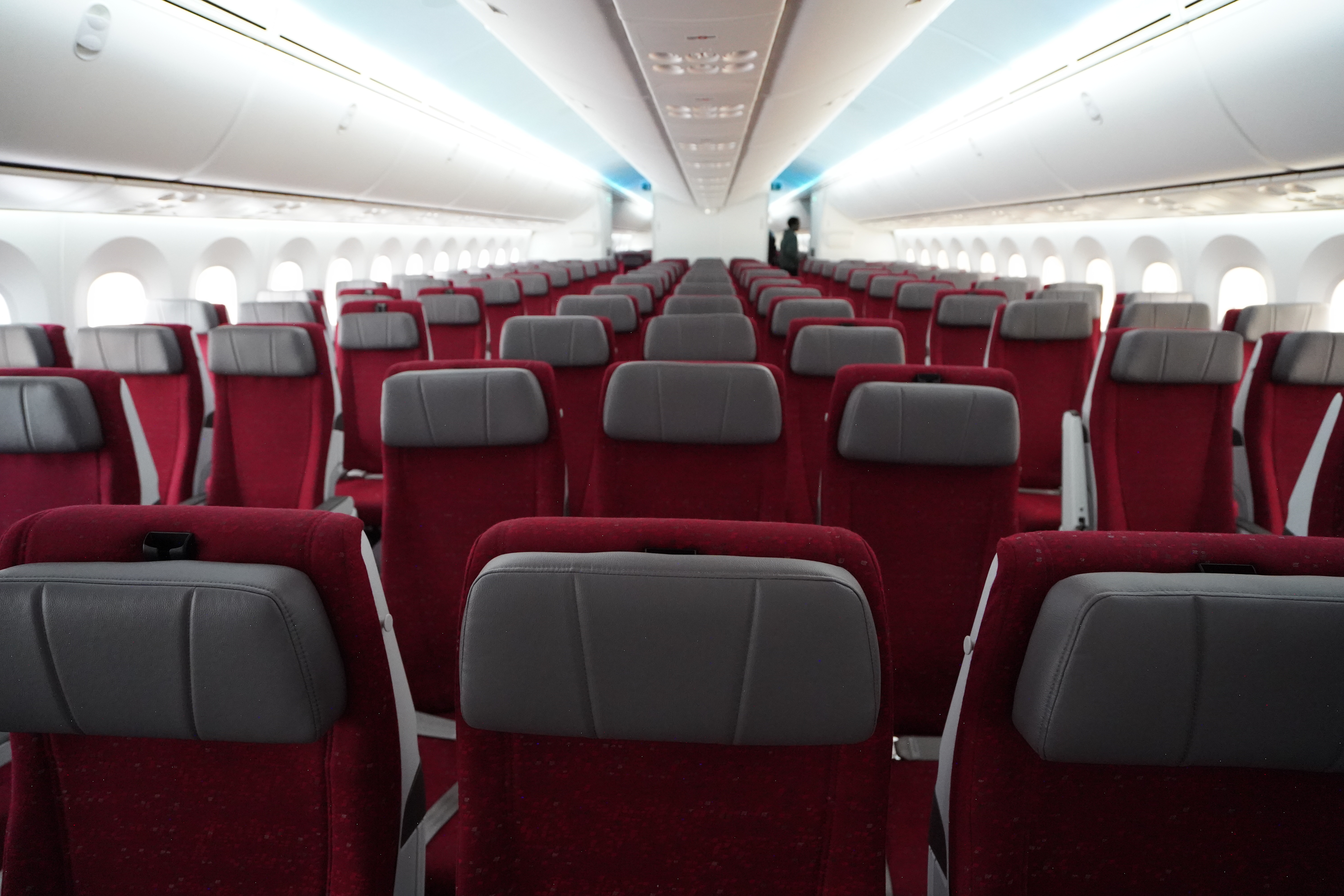
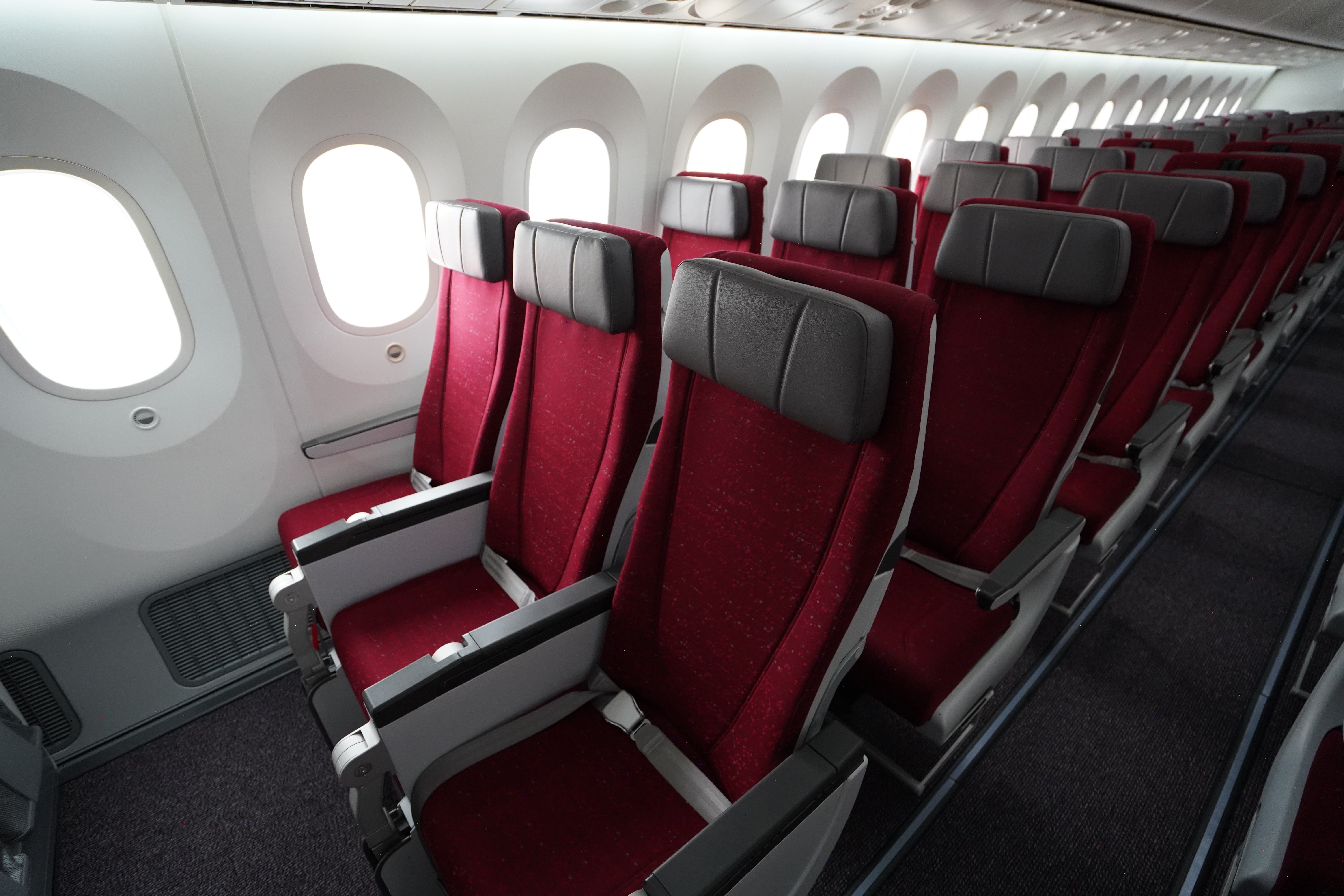
The cabin interiors were designed by JPA Design in collaboration with TrendWorks, and the overall aesthetic is a significant step up from the legacy product. Beyond the seats, the retrofit includes overhauled galleys and lavatories, new overhead bin panels, and a new cabin service system.
The aircraft exterior also received a complete makeover, with a 20-member specialist team dedicating thousands of hours over 18 days to strip the old livery and apply Air India’s striking new colours.
Air India Is Transforming
The retrofit program was initially intended to begin in 2023, and it has faced significant delays, largely due to post-COVID supply chain disruptions that slowed seat deliveries from suppliers. In fact, one supplier walked away from a contract entirely, causing a two-year delay in one retrofit stream.
This specific aircraft was ferried to Boeing’s Modification Center in Victorville, California in July 2025, and was originally scheduled to return to service in December 2025.
That didn’t happen, due to extended regulatory certification work required because VT-ANT is the prototype for the 787-8 retrofit configuration, which pushed the timeline further.
The good news is that now that this certification is complete, the same approved design can be applied to the remaining 25 Boeing 787-8s without repeating the full certification cycle. Air India is targeting completion of all 787-8 retrofits by 2027, which suggests a rapid succession of aircraft entering the modification pipeline from here.
From a practical perspective, here’s what this means for travellers, and particularly for Canadians.
The retrofitted 787-8s will primarily serve routes to Europe, Asia, and Australia. These are routes where Air India’s legacy cabin products have been a hard sell for anyone accustomed to the standard set by competitors, especially Gulf-based carriers.
The new three-class product with the Elevate Ascent business class suite brings Air India much closer to parity with competing carriers. I had the chance to test out Air India’s modern soft product on the A350 from Delhi to New York last year, and it was excellent.
For the Delhi–Toronto route specifically, Air India has announced that it will deploy its new factory-built Boeing 787-9 – which features 30 business class suites in the same Elevate Ascent configuration – starting in August 2026.
Seven of the ten weekly flights between Delhi and Toronto will operate with the 787-9, while the remaining three will continue on the legacy Boeing 777-300ER.
It’s a significant upgrade, but it also means the legacy product isn’t disappearing from Canadian routes overnight, so be sure to check the aircraft on your specific flight. If it’s operated by a 787-9 and has a premium economy cabin, you’re in luck.
And that’s the broader reality of Air India’s transformation. Progress is real, but it’s happening on an industrial timeline, not a consumer-facing one.
The airline is simultaneously inducting new A350-900s with an excellent business class product, building a new flagship lounge in Delhi, and now working through the wide-body retrofit program.
When you zoom out and look at where Air India was three years ago versus where it’s headed, the trajectory is impressive. But if you’re booking a flight next month, don’t assume you’ll get the new product.
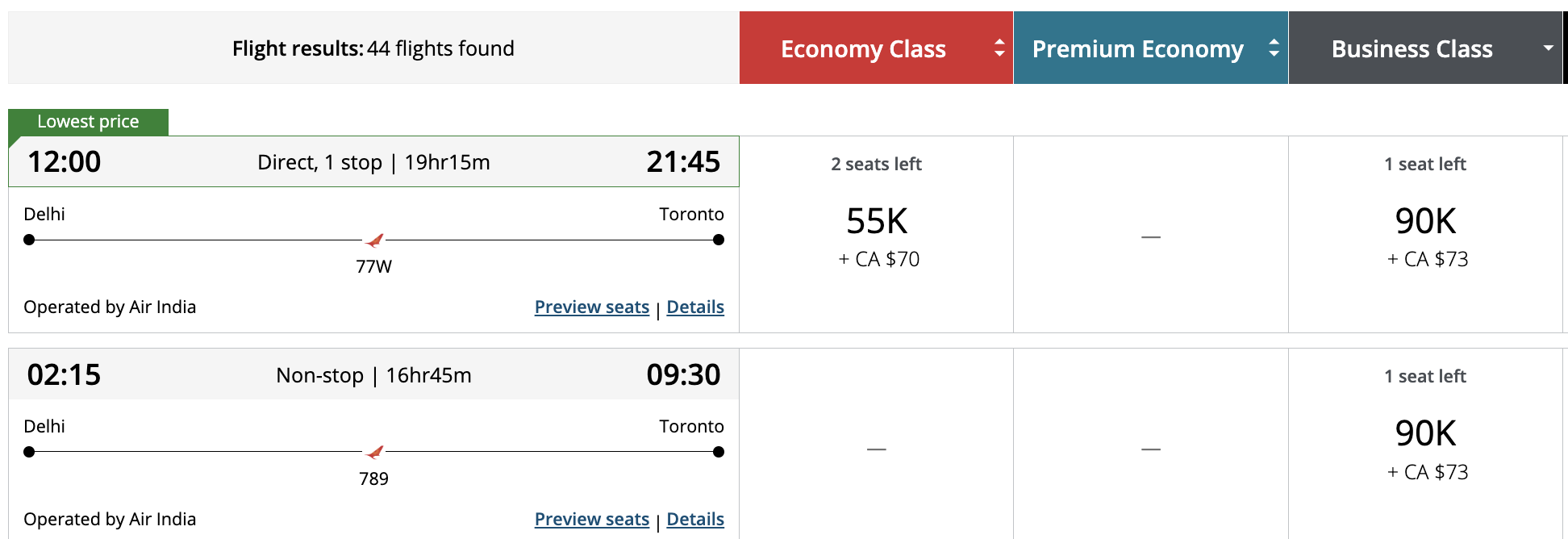
It’s worth noting that Air India flights remain bookable through Aeroplan as a Star Alliance partner, with fixed partner pricing and no fuel surcharges. For the Toronto–Delhi route, the distance of approximately 7,500 miles places it in the 6,001–8,000-mile band on Aeroplan‘s North America to Atlantic chart – that’s 55,000 Aeroplan points in economy or 90,000 in business class, one way.
Given the trajectory of the fleet refresh, the advice here is straightforward: if you have Air India travel planned, check the aircraft type on your specific flight. If you can snag a flight on the new 787-9 or a retrofitted 787-8, or the A350-900, you’re looking at a dramatically better experience than the legacy product.
And with decent award availability on Air India through Aeroplan at fixed partner rates, this is a route corridor worth watching as the new product rolls out across the fleet. If you’re departing from Delhi, be sure to check out the brand-new flagship Maharaja Lounge, which for all intents and purposes looks excellent.
Conclusion
Air India’s first completed 787-8 retrofit is a meaningful milestone, not because it happened as quickly as everyone wanted, but because it unlocks the path for the remaining 25 aircraft to follow in rapid succession.
The Elevate Ascent business class suite is a competitive product (with a slightly tight footwell and storage space that’s a bit limited), the new premium economy fills a gap that the legacy fleet didn’t address, and the overall cabin quality is now in line with what you’d expect from a carrier competing on international long-haul routes.
The transformation is real, it’s just not going to happen overnight. If you’re planning Air India travel in the near term, do your homework on the aircraft – and if you can, hold out for the new product. It’s worth the wait.
This story originally appeared on princeoftravel

