


Good First Steps in Air India’s Transformation
On September 23, 2026, I took the red-eye from Vancouver to Toronto Pearson to walk through a plane I wasn’t going to fly on. That plane is Air India‘s new Boeing 787-9, the aircraft that now flies most of the airline’s Toronto–Delhi schedule, and Prince of Travel had the opportunity to see it up close.
This is the third time Air India has invited our team to see one of its new cabins. My colleague T.J. was in Hyderabad for the A350 unveiling in January 2024, and in San Bernardino for the airline’s first retrofitted 787-8 in April 2026.
Each time, the cabin was a clear improvement, but neither the A350 nor the retrofitted 787-8 flies to Canada. The 787-9 is the first to bring it here.
After walking all three cabins, I’m happy to report that with the 787-9, Air India’s hard product has taken a real step forward, and it’s now ahead of the airline’s reputation in Canada. The design thinking doesn’t stop at the business class curtain, either.
It’s a good first step. What I’m not yet convinced of is everything around the seat, from the service on board and the ground experience to the transit through Delhi, and whether it all holds together from check-in to arrival. For now, my expectations for those are measured, though I’m hopeful.
To be fair, a ground tour can only tell you so much. I had a short window on a parked aircraft at the gate, so consider this a close look at the cabins, plus a practical guide to which flights have them.
Here are the key facts at a glance:
- The flights: AI 187 and AI 188, the daily pair between Delhi and Toronto, fly the new 787-9. Air India says every flight between Toronto and Delhi moves to it from January 2027.
- The cabins: 30 business class suites, 28 premium economy seats, and 238 economy seats.
- Still pending: As of September 2026, the business class doors can’t close yet and 18 economy seats are blocked from sale, both awaiting regulatory sign-off. There’s no Wi-Fi yet either.
- With points: 60,000 Aeroplan points in economy or 90,000 in business class one way, plus a $39 partner booking fee. Premium economy can’t be booked with Aeroplan.
Which Air India Toronto Flights Get the New 787-9?
If you want the new cabins, book AI 187 or AI 188, the daily 787-9 pair. Air India flies 20 times a week between Canada and India over the 2026–27 winter season, and all its other flights use the 777-300ER.
The schedule breaks down like this:
| Flights | Route | Frequency | Aircraft | Worth knowing |
|---|---|---|---|---|
| AI 187 / AI 188 | Delhi to Toronto / Toronto to Delhi | Daily | New 787-9 | Business, premium economy, and economy; normally non-stop both ways |
| AI 189 / AI 190 | Delhi to Toronto / Toronto to Delhi | Three times a week | 777-300ER (4 first, 35 business, 306 economy) | No premium economy; Delhi to Toronto stops in Vienna; scheduled to move to the 787-9 in January 2027 |
| AI 193 / AI 192 | Mumbai to Toronto / Toronto to Mumbai | Three times a week, October 25, 2026 to March 26, 2027 | Upgraded 777-300ER | First class suites with doors, business, economy, and Wi-Fi; no premium economy |
| AI 185 / AI 186 | Delhi to Vancouver / Vancouver to Delhi | Daily | Older 777-300ER (4 first, 35 business, 306 economy) | No premium economy; no public timeline yet for new cabins |
The daily 787-9 also normally runs non-stop in both directions, about 17 hours to Toronto and 16 back, since it can skip the Vienna fuel stop that Pakistan’s airspace closure has forced on westbound flights since April 2025.
Air India says every Toronto–Delhi flight will move to the 787-9 from January 2027. Vancouver is a different story for now, so if you’re flying from the West Coast, keep your expectations set to the older product.
Business Class
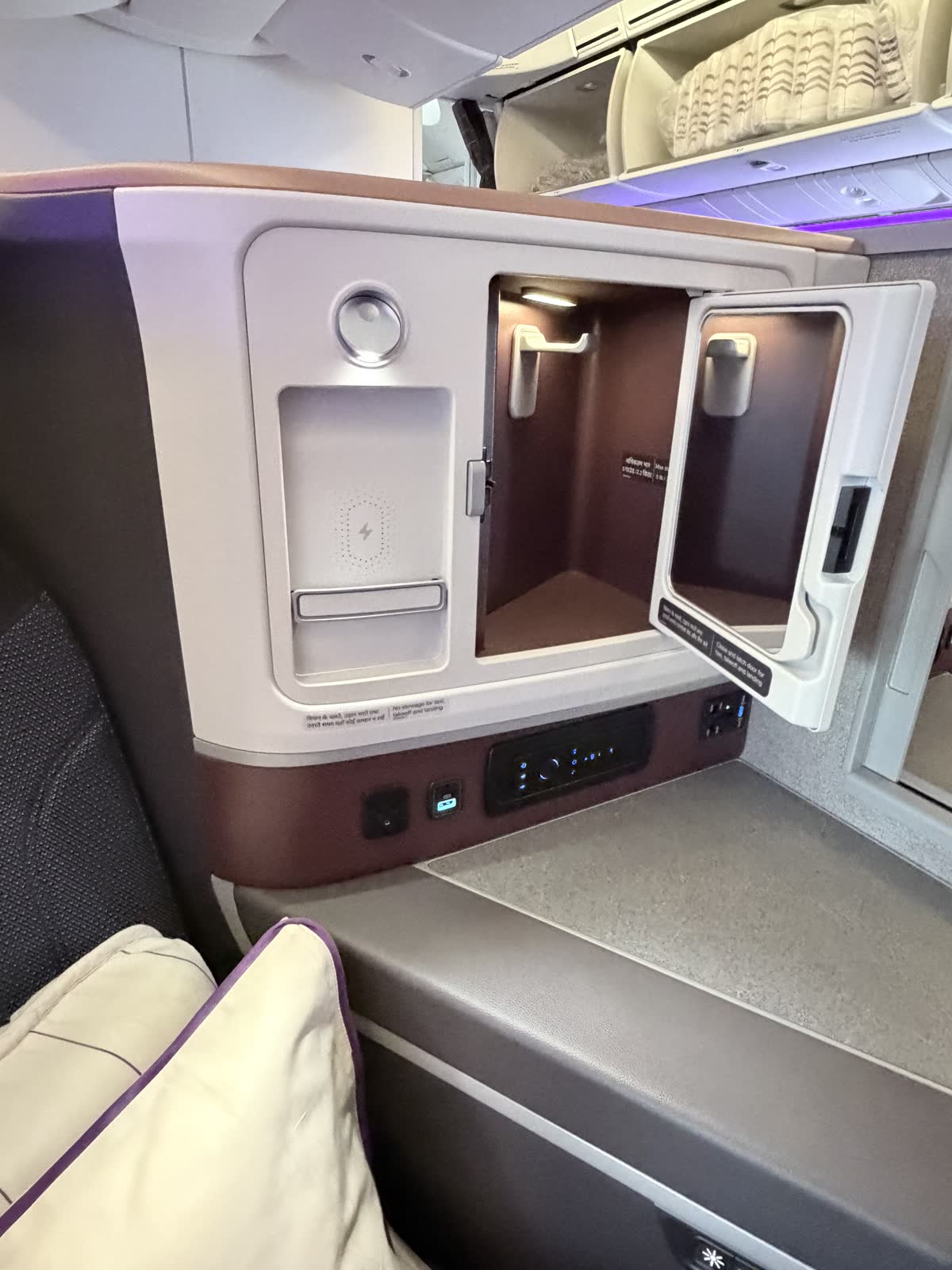
Business class has 30 Elevate Ascent suites in a 1-2-1 layout, so every seat has direct aisle access. The specs are competitive, with 42 inches of pitch and a fully flat bed up to 79 inches long. There’s also a 17-inch 4K touchscreen with Bluetooth headphone pairing, plus wireless charging and USB-A and USB-C fast charging.
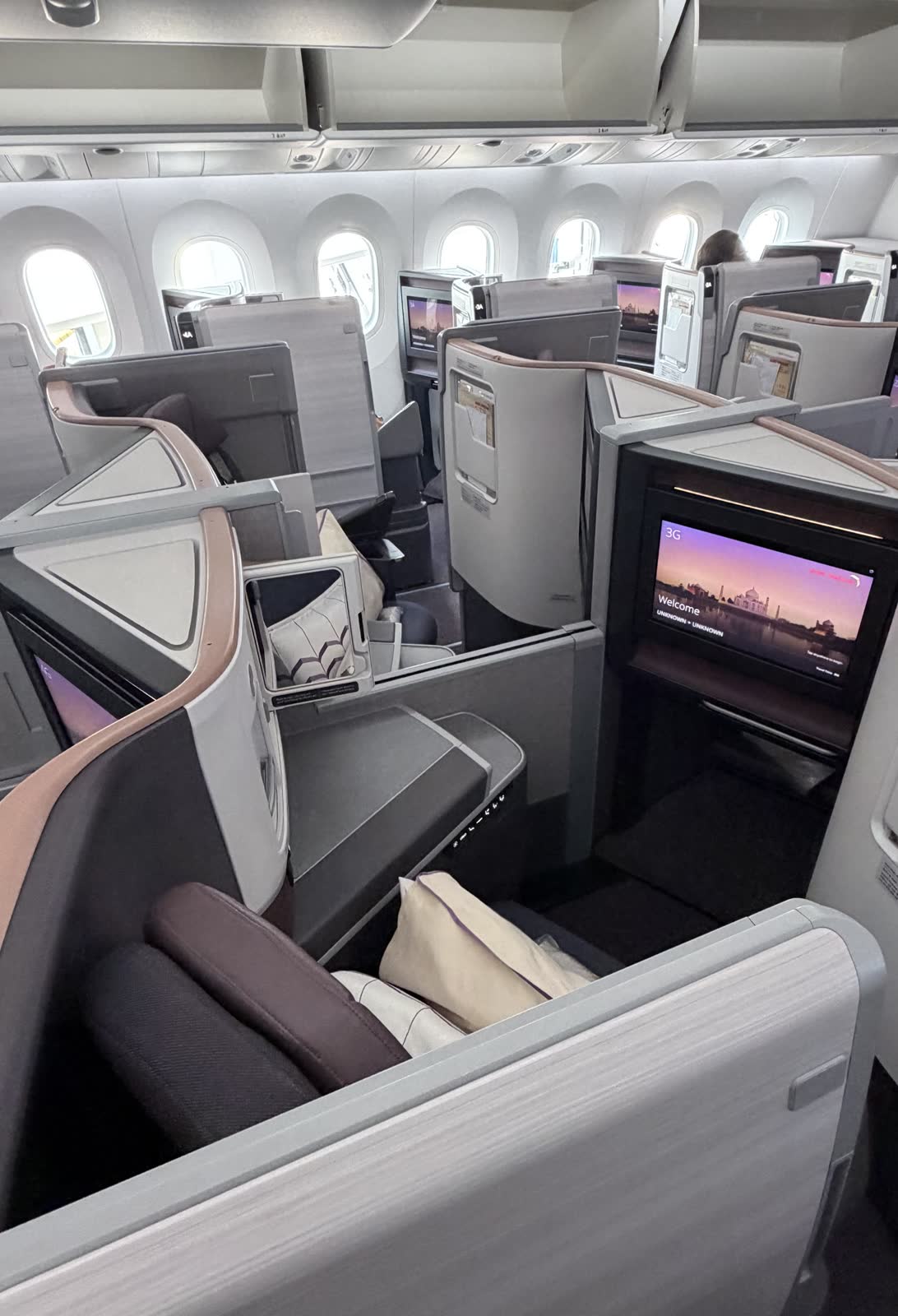
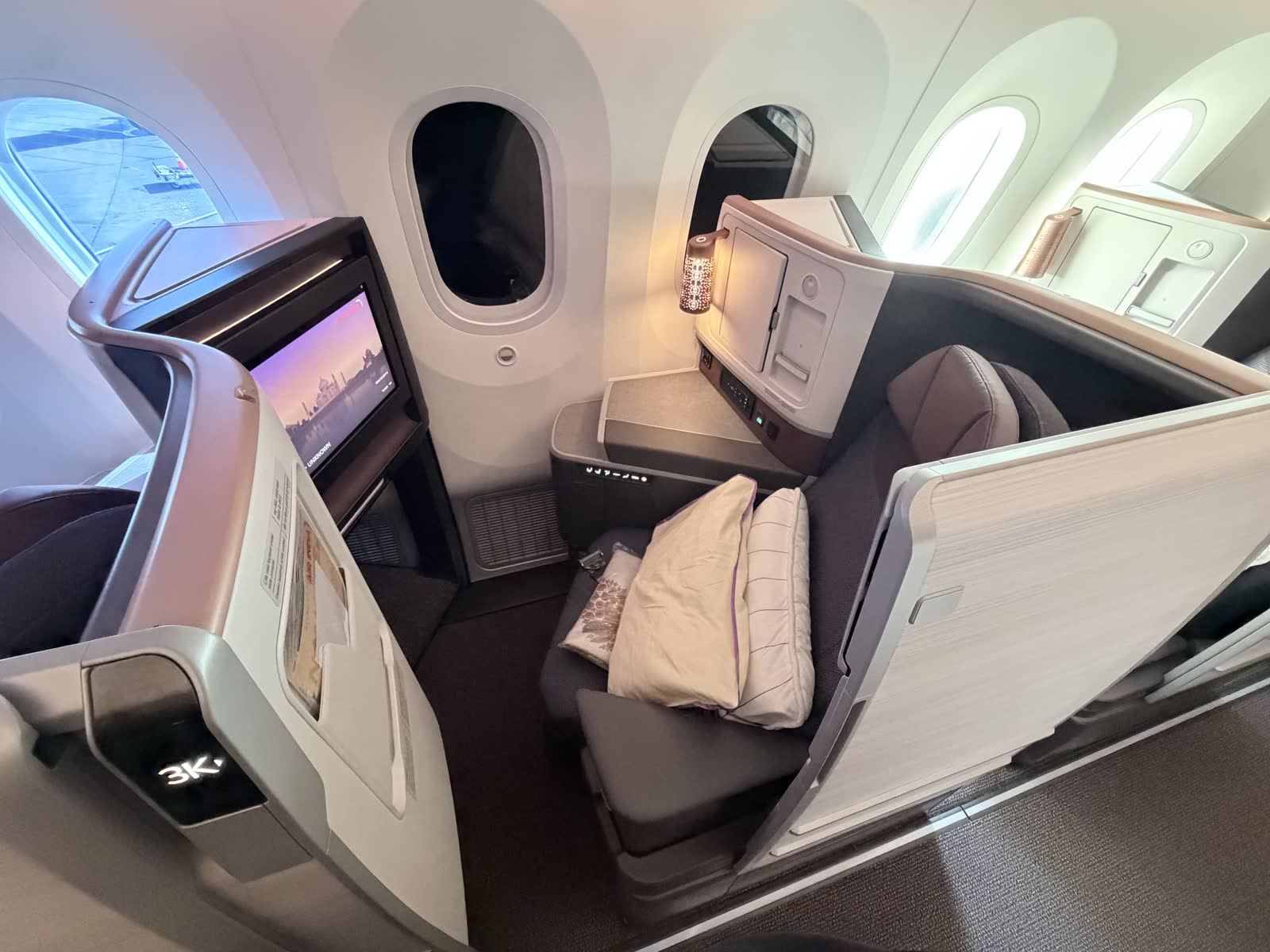
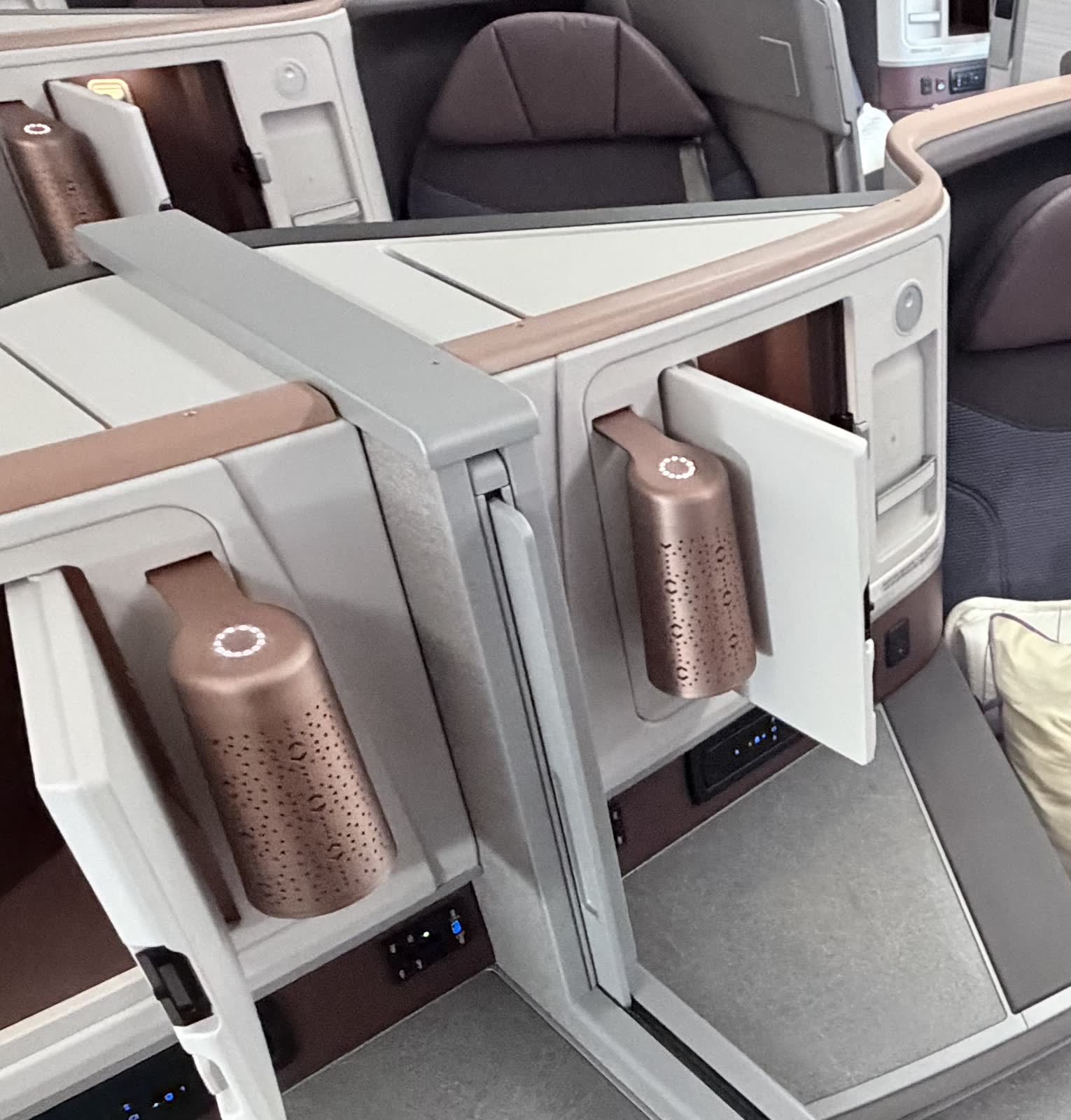
What stood out to me most is how much of India has been built into the suite, and how naturally it’s done. Each one has a feature lamp in Air India’s jaali pattern, inspired by India’s architectural heritage, and the same motif appears in the wall laminates from the moment you step on board.
The seat is upholstered in fabric where you sit and sleep, while the high-touch surfaces are finished in leather and laminate, which should be easier to keep clean. Your phone also gets its own upright slot that charges it wirelessly, a nice touch that gives it a proper home.
The biggest caveat is the sliding privacy doors, which aren’t in use yet. Air India says the feature is unavailable pending regulatory approval, and that every other part of the suite works as intended. In other words, the doors are there; they just aren’t allowed to close yet.
Until approval comes through, the doors stay fixed in the open position. When we asked about timing, an Air India spokesperson said the airline is “unable to comment on the expected timelines for regulatory approvals.”
When T.J. saw this seat in April 2026, he found the footwell a touch tight and the storage a little limited. Even so, I’m personally a big fan of this suite. It’s well thought out, and the cultural details are impressive.
Premium Economy
The 787-9 also brings Air India’s first premium economy cabin to its flights between Canada and India, giving travellers a middle option between business and economy on these routes for the first time.
There are 28 RECARO PL3530 seats in a 2-3-2 layout. Each one has 38 inches of pitch, seven inches of recline, a six-way adjustable headrest, and calf and leg rests that adjust individually. You’ll also find a 13.3-inch 4K touchscreen, USB-A and USB-C fast charging, and a bottle holder.
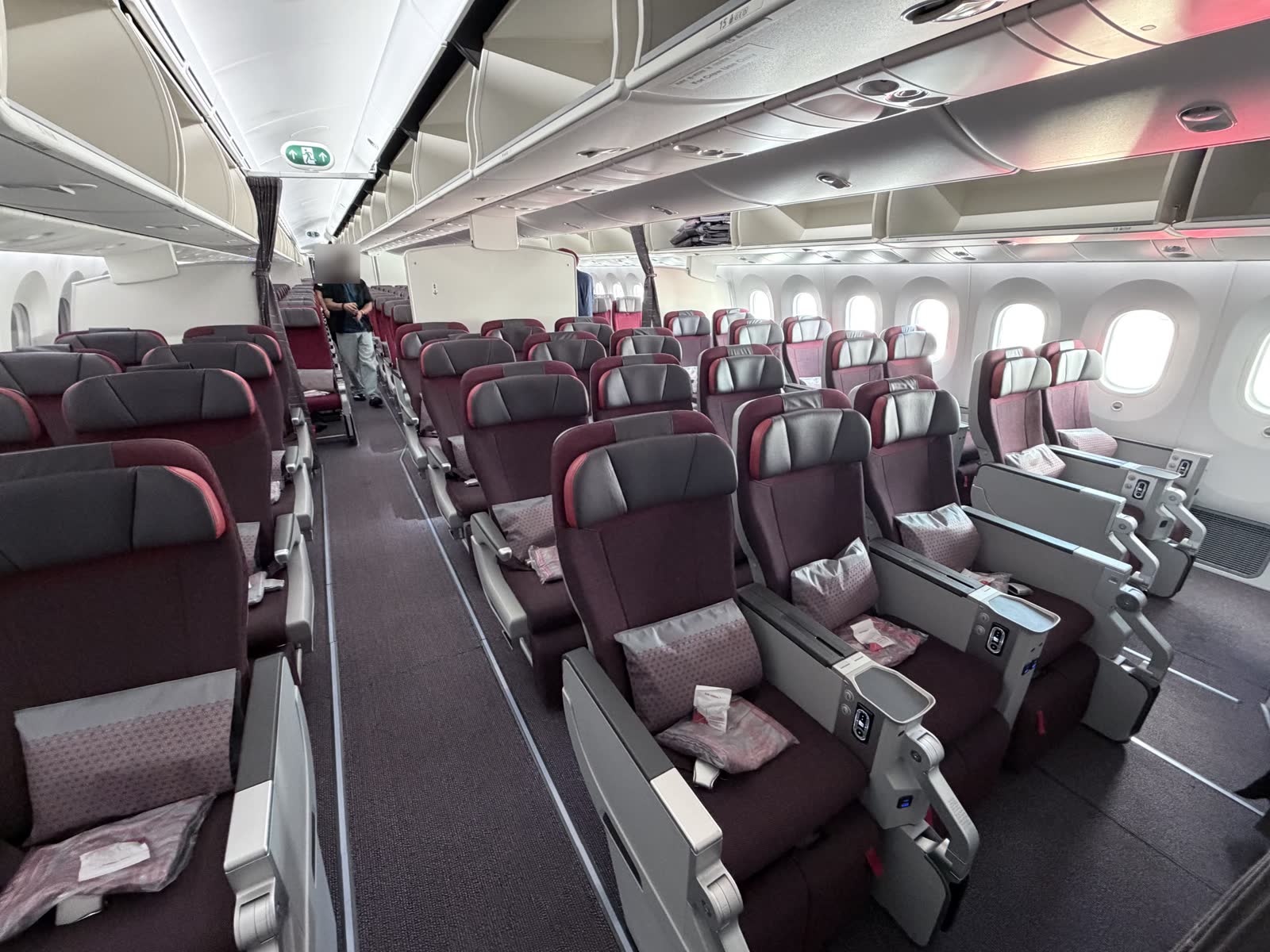
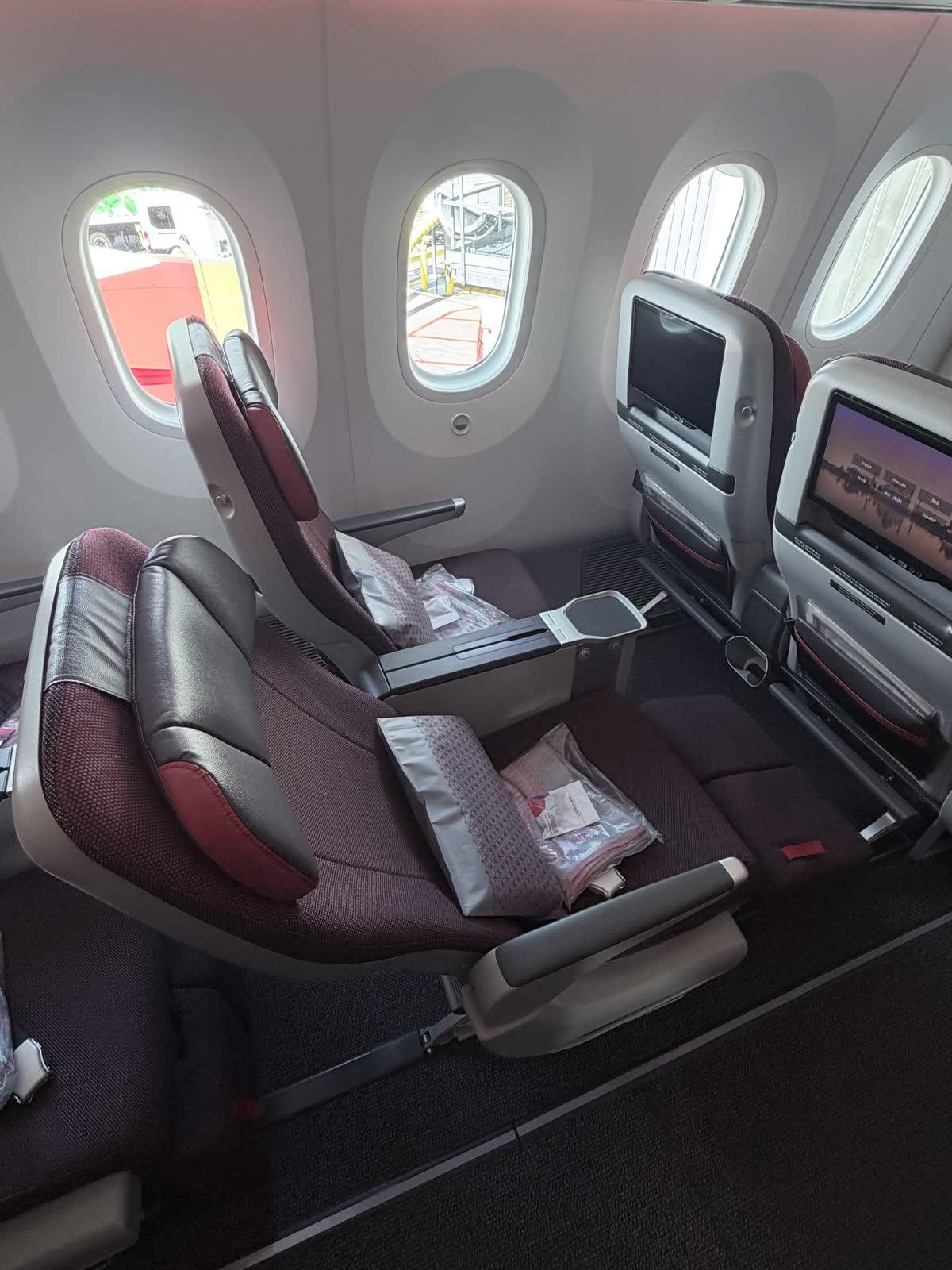
It’s a satisfactory product, and in line with today’s standard for the cabin. It’s a step above the previous generation of premium economy on many legacy airlines, although I’d still rank the cutting-edge versions at the top five-star airlines ahead of it. It meets the bar rather than raising it.
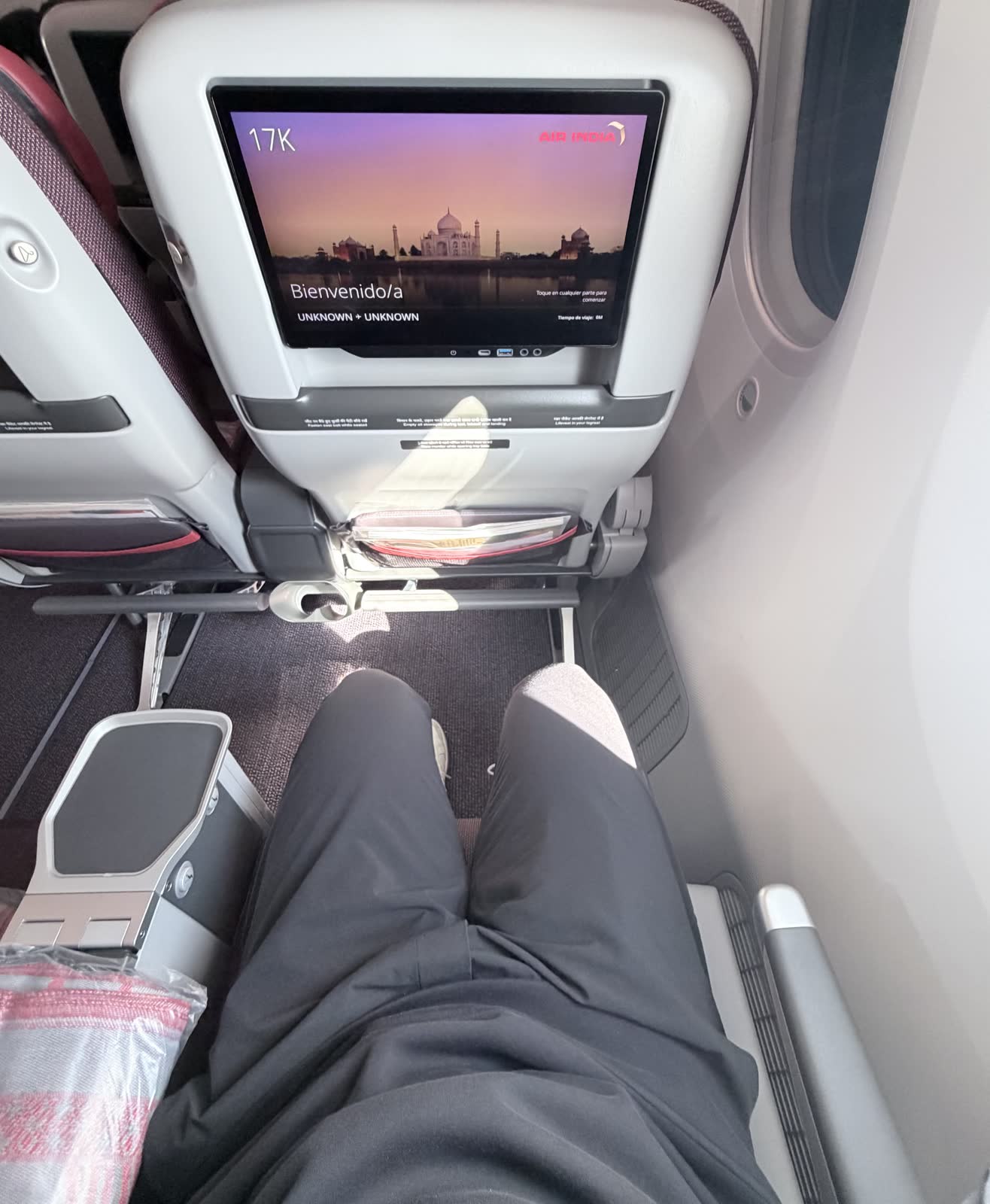
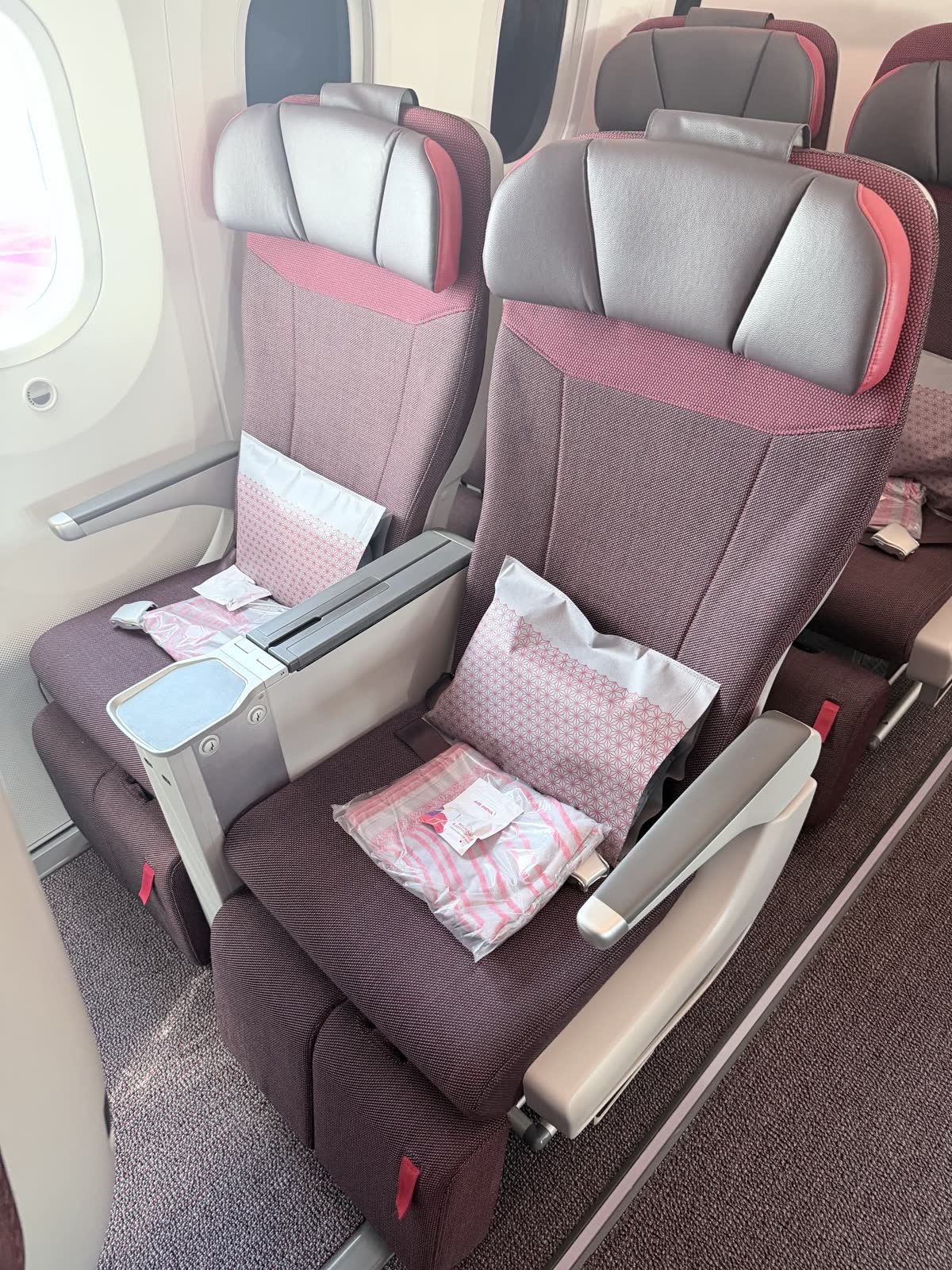
That extra space still counts for a lot on a flight of 16 to 17 hours. Keep in mind that you can’t book it with Aeroplan points, since Aeroplan’s chart has no premium economy pricing for Air India.
Economy
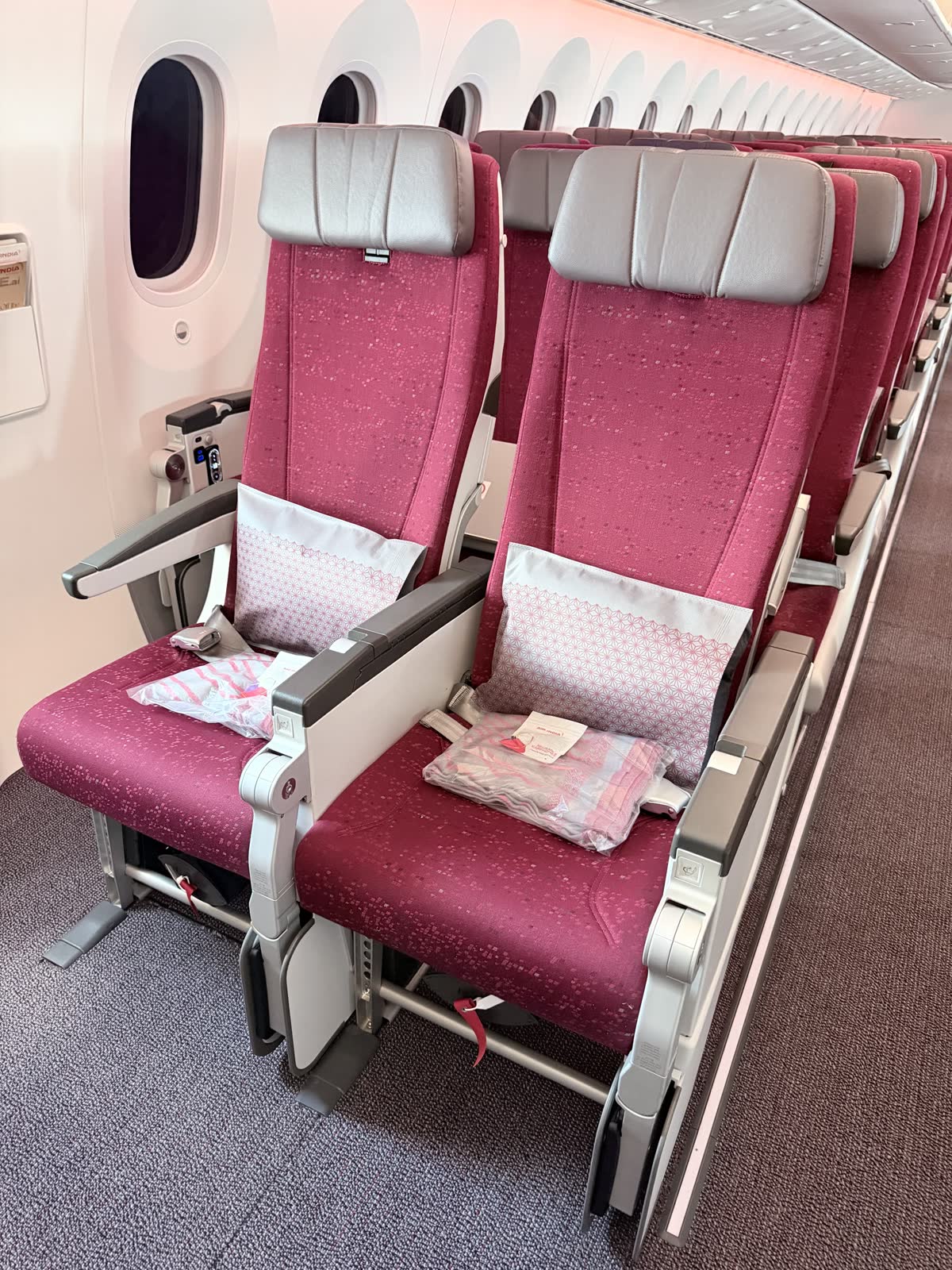
Economy has 238 RECARO CL3710 seats in a 3-3-3 layout, with 31–32 inches of pitch, five inches of recline, an 11.6-inch 4K touchscreen, and USB-A and USB-C charging.
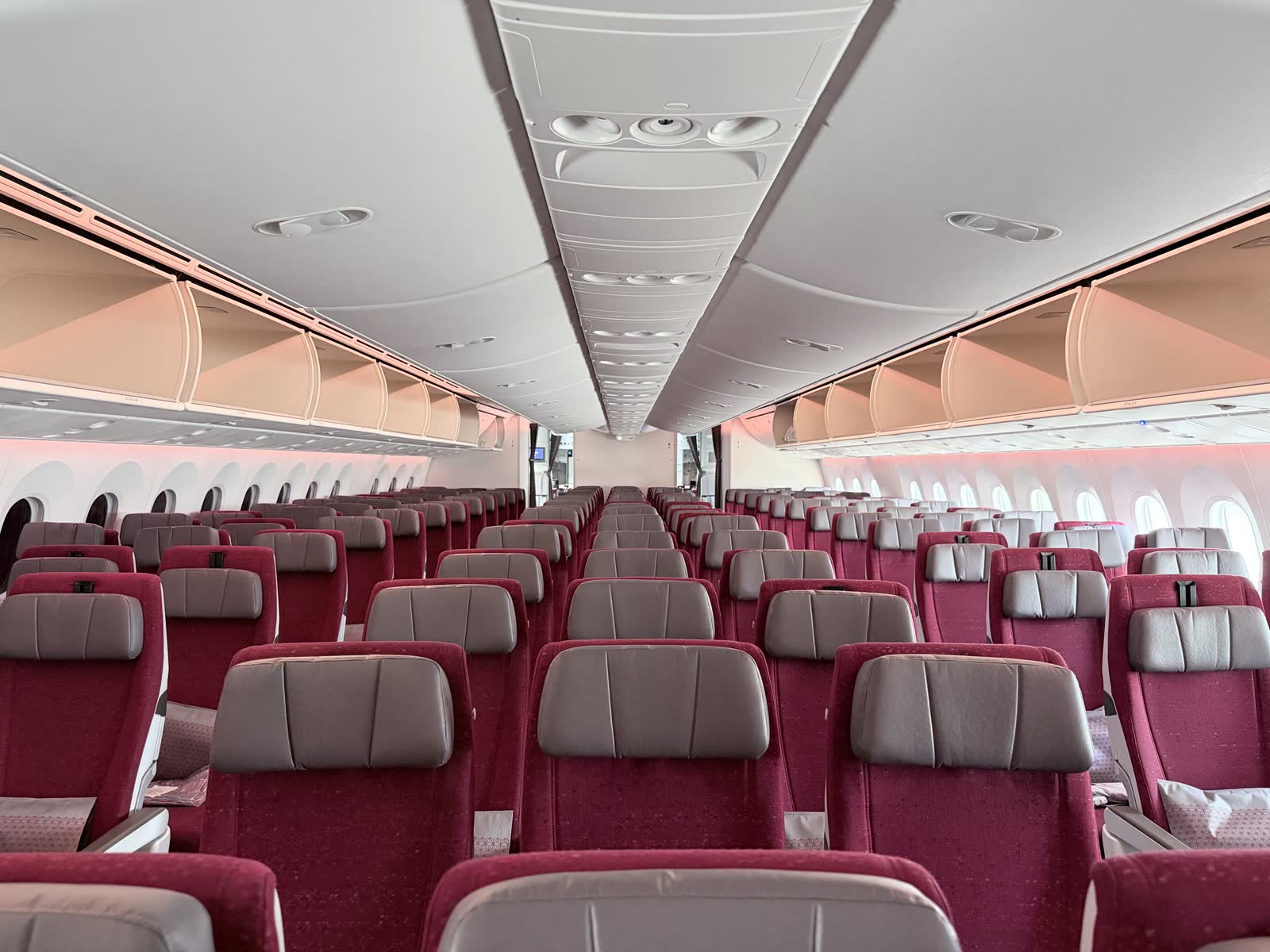
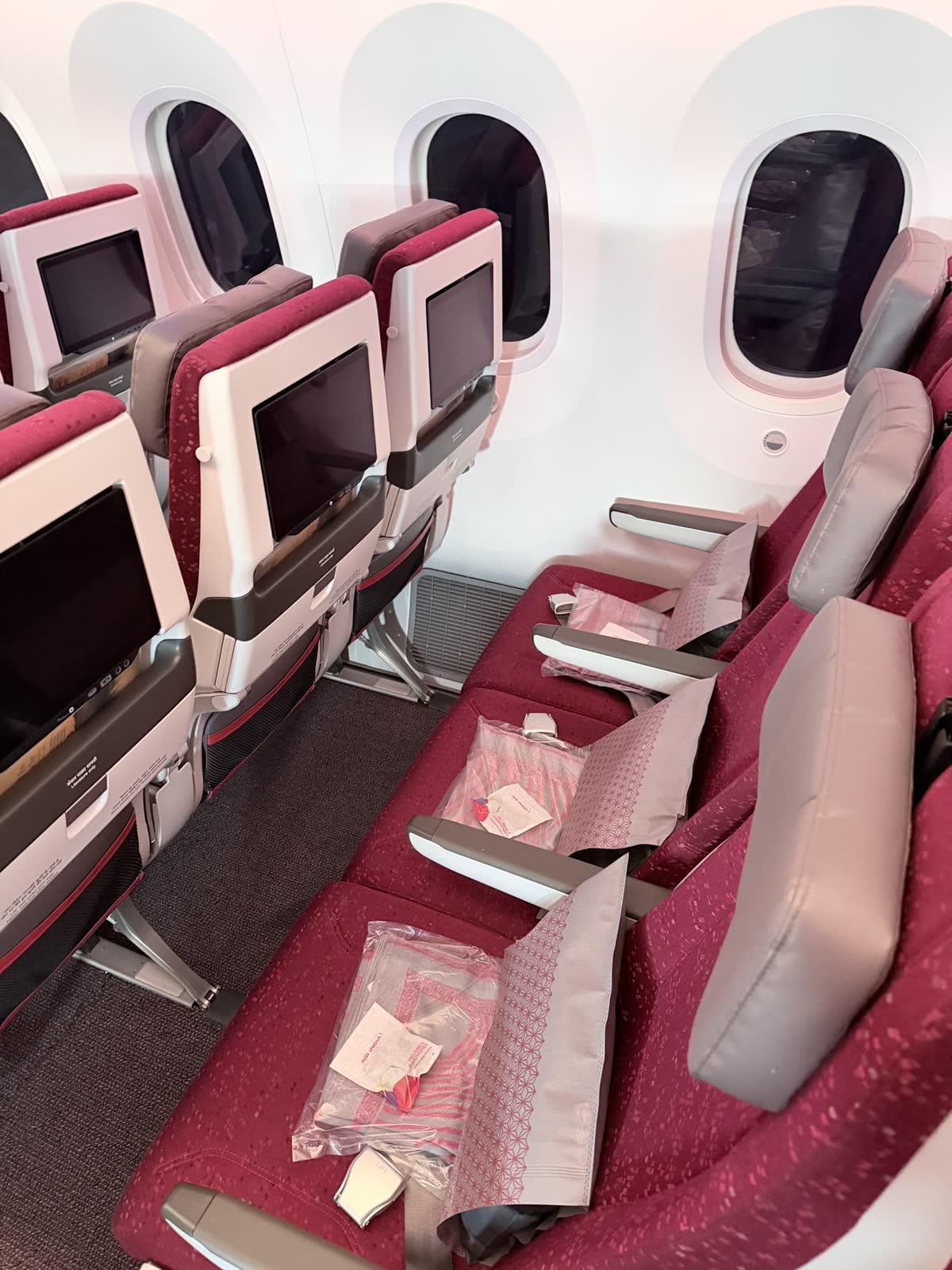
It’s an acceptable economy seat, and an improvement on what Air India has been flying on this route.
It’s worth noting that 18 of the 238 seats are currently blocked from sale, and physically blocked from use, pending a regulatory certification matter. Air India says the seat itself is fully certified and flies with airlines worldwide, and that it’s working with the manufacturer and the regulator to release them. For now, 220 economy seats are on sale.
A Cabin Designed as One Piece
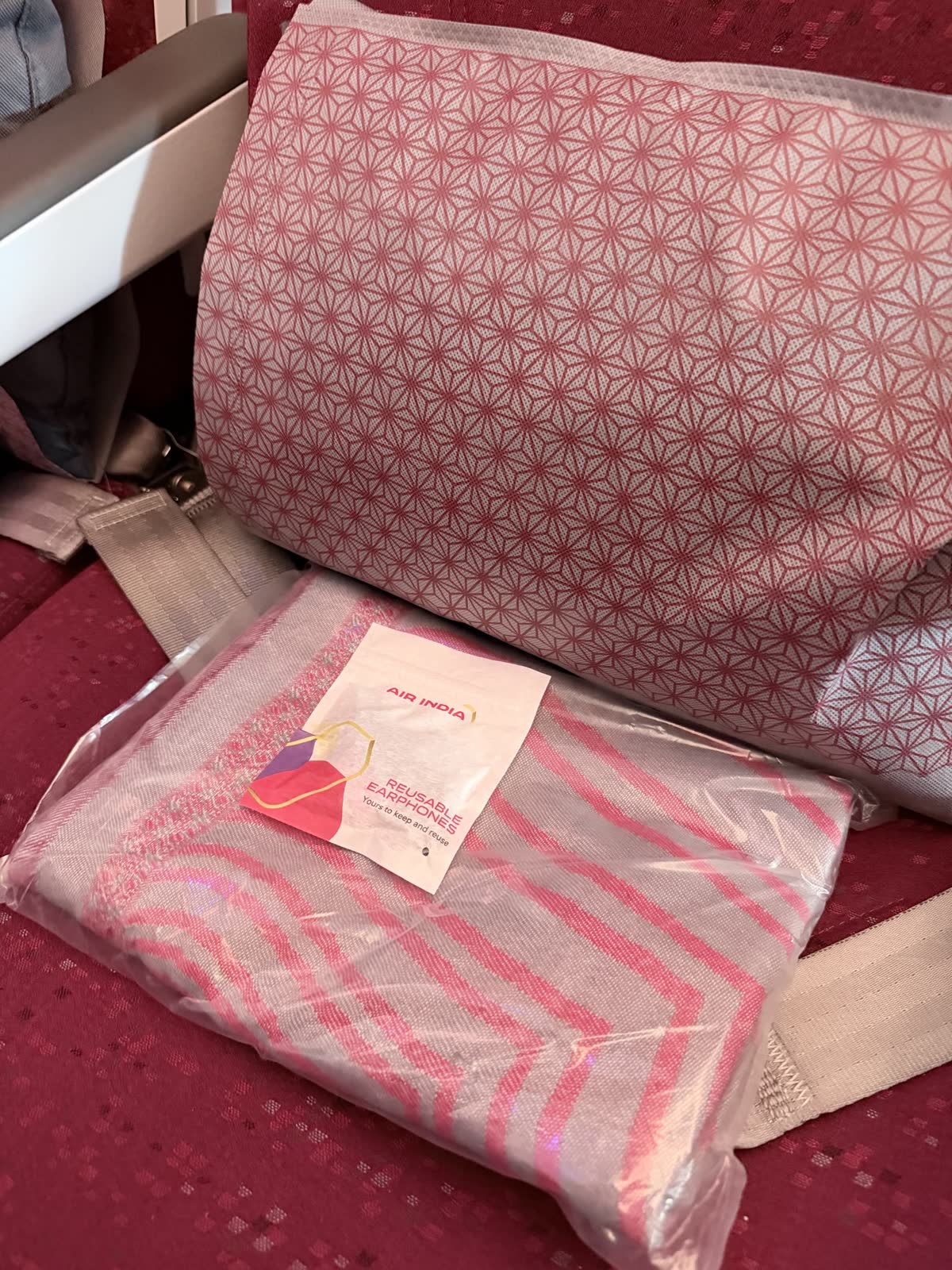
Plenty of airlines put all of their design effort into the front of the plane. Here, the palette runs through every cabin, so economy feels like part of the same aircraft. Air India styled it with JPA Design, pairing soft creams and pinks with reds, warm golds, and rich purples.
There are also two details you won’t find in the brochure. Near the second door, a dome in the ceiling brings Air India’s branding into the cabin itself, and the mood lighting has a national-day setting that washes the cabin in India’s tricolour. The lighting system, developed with Tata Elxsi and inspired by the chakras, offers 10 scenes designed around your circadian rhythm.
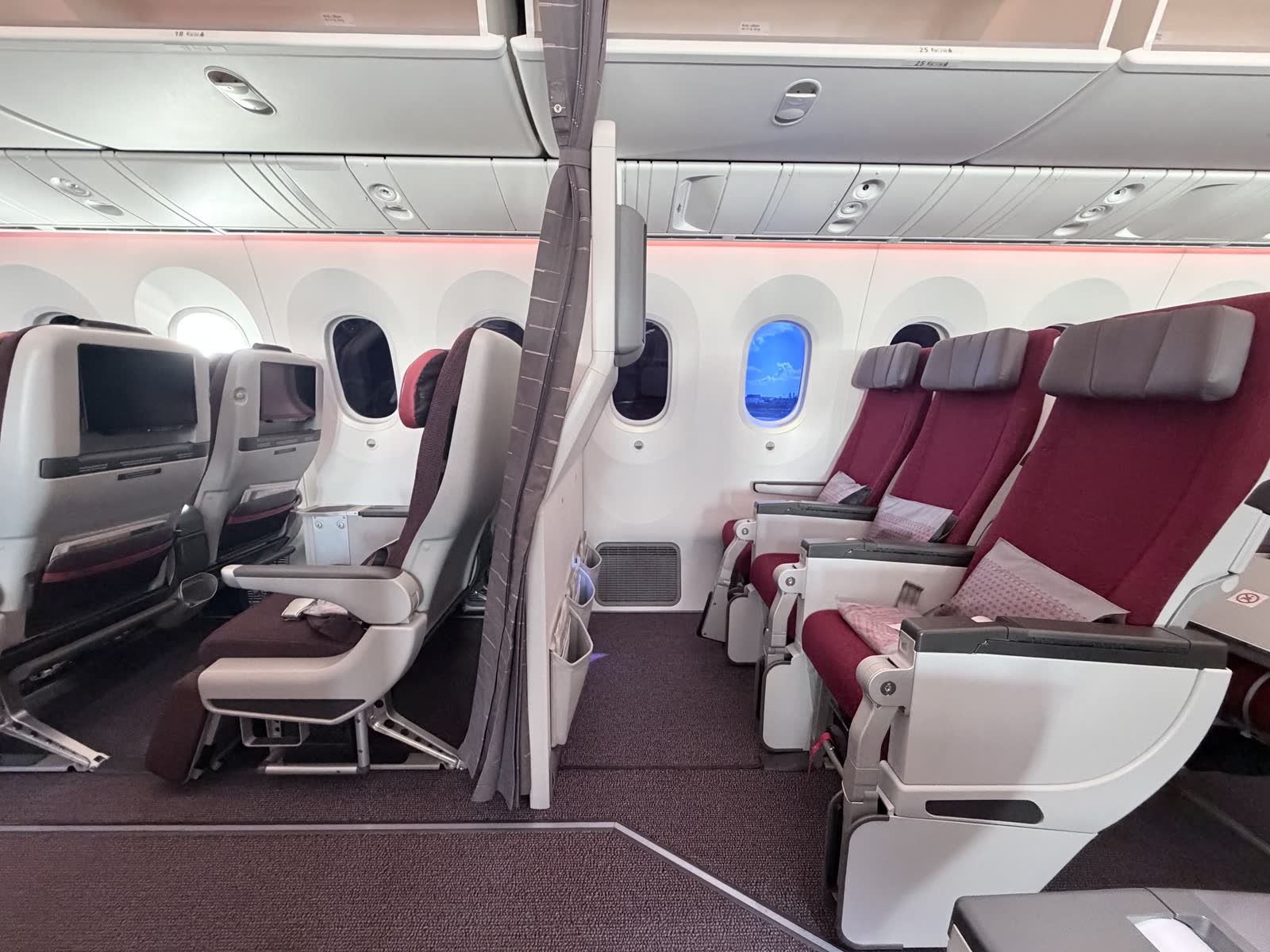
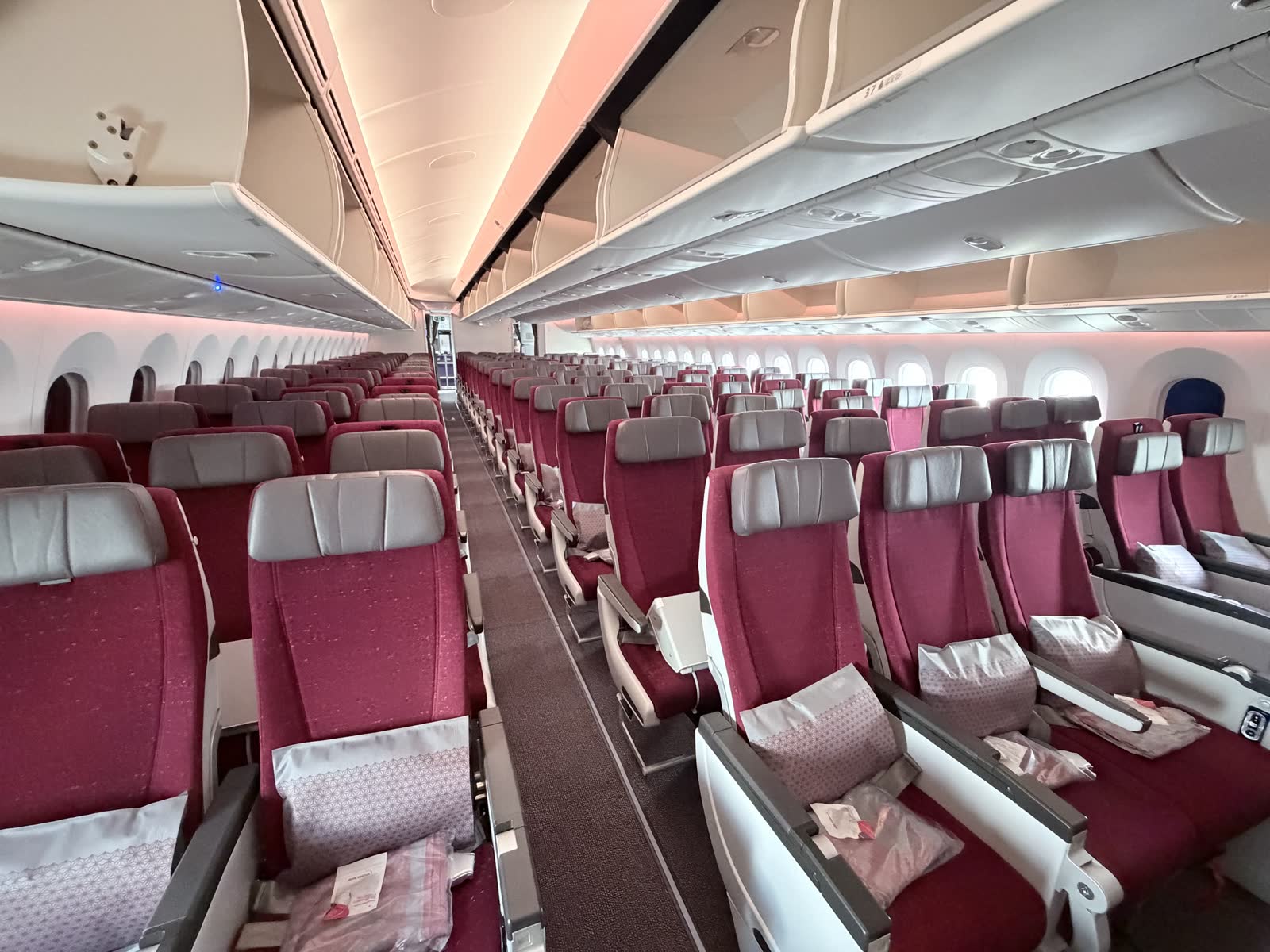
This cabin was designed for Air India from the start, and it shows.
Closing the Reputation Gap
For many Canadians, Air India’s reputation was formed on older aircraft, and it has lagged behind what the airline actually flies today. The numbers suggest the airline has been improving faster than people’s impressions of it.
Air India says its net promoter score has climbed from minus 35 in fiscal 2023 to plus 37 so far this fiscal year, and June 2026 was its most punctual month on record at 91.6%.
In May, Skytrax raised Air India from a three-star to a four-star airline. In September, it named the airline both the Best Airline in India & South Asia and the Most Improved Airline in Asia. Air India also picked up regional awards for its staff, its business and economy cabins, and its catering.
Still, the new cabins aren’t the whole story yet. About half of Air India’s widebody fleet has new or upgraded interiors today, rising to around 75% by the end of 2027, and the business class doors and blocked economy seats on the 787-9 are still waiting on regulatory sign-off, even though the first of these aircraft entered service in February 2026.
Understandably, the tour was all about the hardware. Air India has also refreshed its menus, drinks, amenity kits, and bedding since 2024. A spokesperson told us that meals, service, and onboard amenities stay consistent whether your flight uses the 787-9 or the 777-300ER.
It’s clear that talented people are behind this refresh, and the attention to detail on this aircraft shows it.
For that work to show up on every flight, though, Air India’s leadership has to be fully behind it too. That means the same commitment to service, training, and the ground and transit experience that went into the cabin. Air India says its current phase is focused on “excellence in operations and customer experience,” and that’s the standard I’ll be holding it to.
One more thing you won’t get on the 787-9 yet is Wi-Fi. An Air India spokesperson told us connectivity “is currently not available” on the new aircraft, which are wired for it but still waiting on antennas because of supply issues with the manufacturer. Air India says it’ll install the equipment at the earliest opportunity.
Air India’s Bet on Canada
Canada is home to more than 2.5 million South Asian Canadians, according to the 2021 census, and nearly half of them live in the Toronto area. For many of them, a trip to India is a family visit they make again and again, which makes the details of the flight matter all the more.
Air India knows it. “Canada is one of Air India’s most important international markets, with deep people-to-people connections driving strong demand for travel, particularly during the festive and holiday season,” said Nipun Aggarwal, the airline’s Chief Commercial Officer, when it announced the Toronto–Mumbai route.
If you’re not starting in Toronto or Vancouver, Air India’s interline partnership with WestJet connects 17 Canadian cities. Its codeshare with Air Canada also links Vancouver with Calgary, Edmonton, Winnipeg, Montreal, and Halifax.
Booking Air India’s 787-9 with Aeroplan Points
Air India is a Star Alliance member, so you can book it with Aeroplan points with no fuel surcharges.
Toronto–Delhi falls into the 6,001–8,000-mile band on Aeroplan’s North America to Atlantic chart. On the fixed partner chart, that’s 60,000 Aeroplan points in economy and 90,000 Aeroplan points in business class, one way. Expect Aeroplan’s $39 partner booking fee on top.
This story originally appeared on princeoftravel

