


If you have a few Air Canada trips in mind for the next year, the Explorer Flight Pass is back on sale until November 16, 2026, with locked-in prices to Canada, North America, Europe, Asia, and Australia.
The pass last went on sale from December 16, 2024, to January 17, 2025. This time, it comes in Economy Flex and Business Class Standard only, and each credit books into one specific booking class, which matters as much as the headline price.
How Air Canada Flight Passes Work
An Air Canada Flight Pass is a prepaid bundle of one-way flight credits, bought at a fixed price and used within a set zone of cities. Each time you book a flight, one credit comes off your balance, and connections on the same one-way trip don’t cost an extra credit.
Because the price is locked in when you buy, a credit costs the same whether you book months ahead or the day before. You can book as late as one hour before a North American flight, or two hours before an international one.
You can book and manage those flights on the Flight Pass website or in Air Canada’s Flight Pass app, which also handles changes, cancellations, and seat selection.
Most passes, including this one, are fixed-credit passes, where you buy a set number of credits. Air Canada also sells unlimited passes, which let you fly as often as you like within a zone for a monthly fee.
Air Canada lists 49 passes in its Flight Pass shop right now, from commuter passes between a handful of nearby cities to international ones, and it adds limited-time passes like the Explorer pass from time to time. Our guide to Air Canada Flight Passes covers the full lineup in more detail.
Explorer Flight Pass Prices by Zone
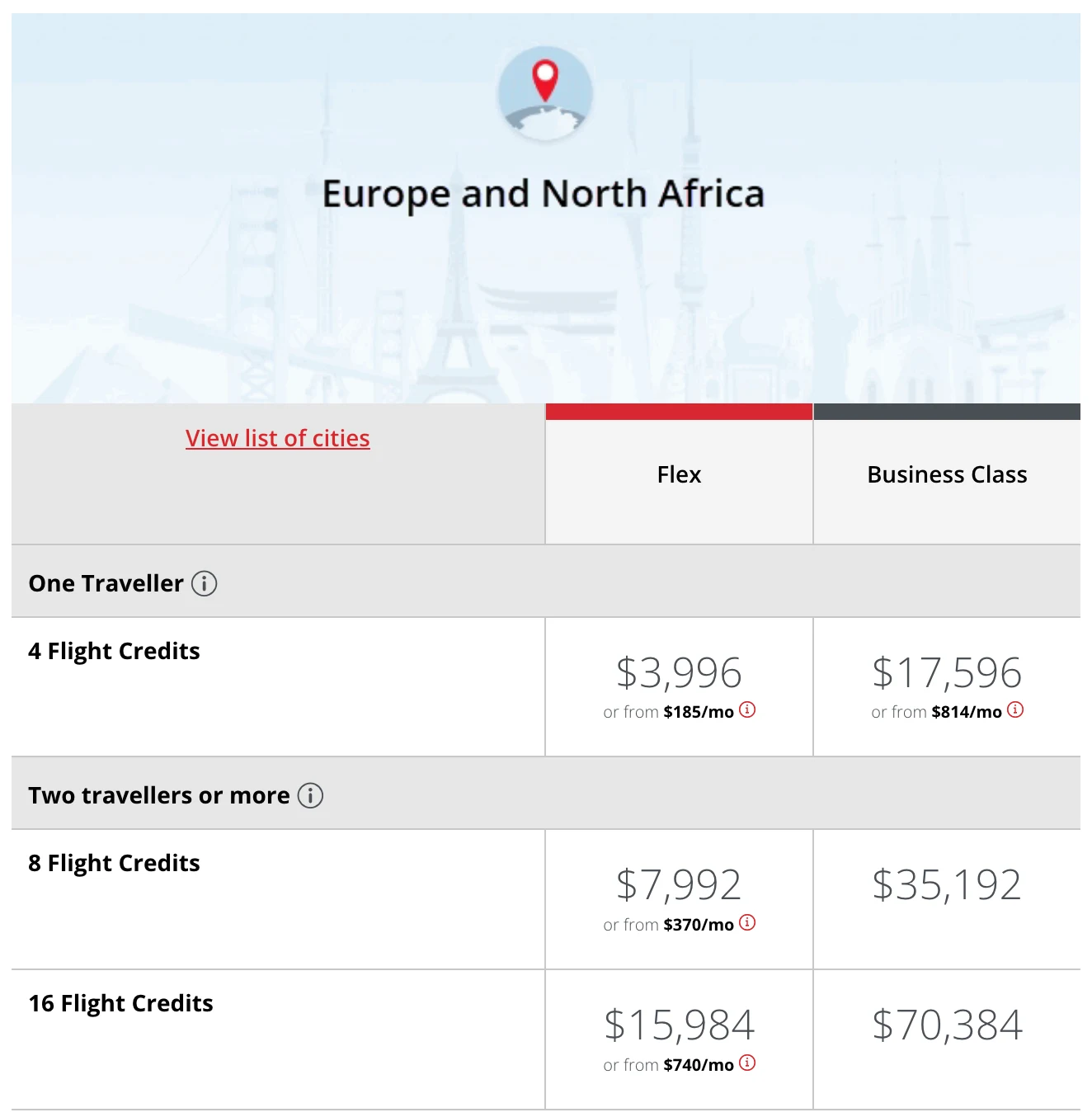
Each credit covers one one-way trip for one person, including connections. You can buy four credits for one traveller, eight credits for up to two travellers, or 16 credits for up to four.
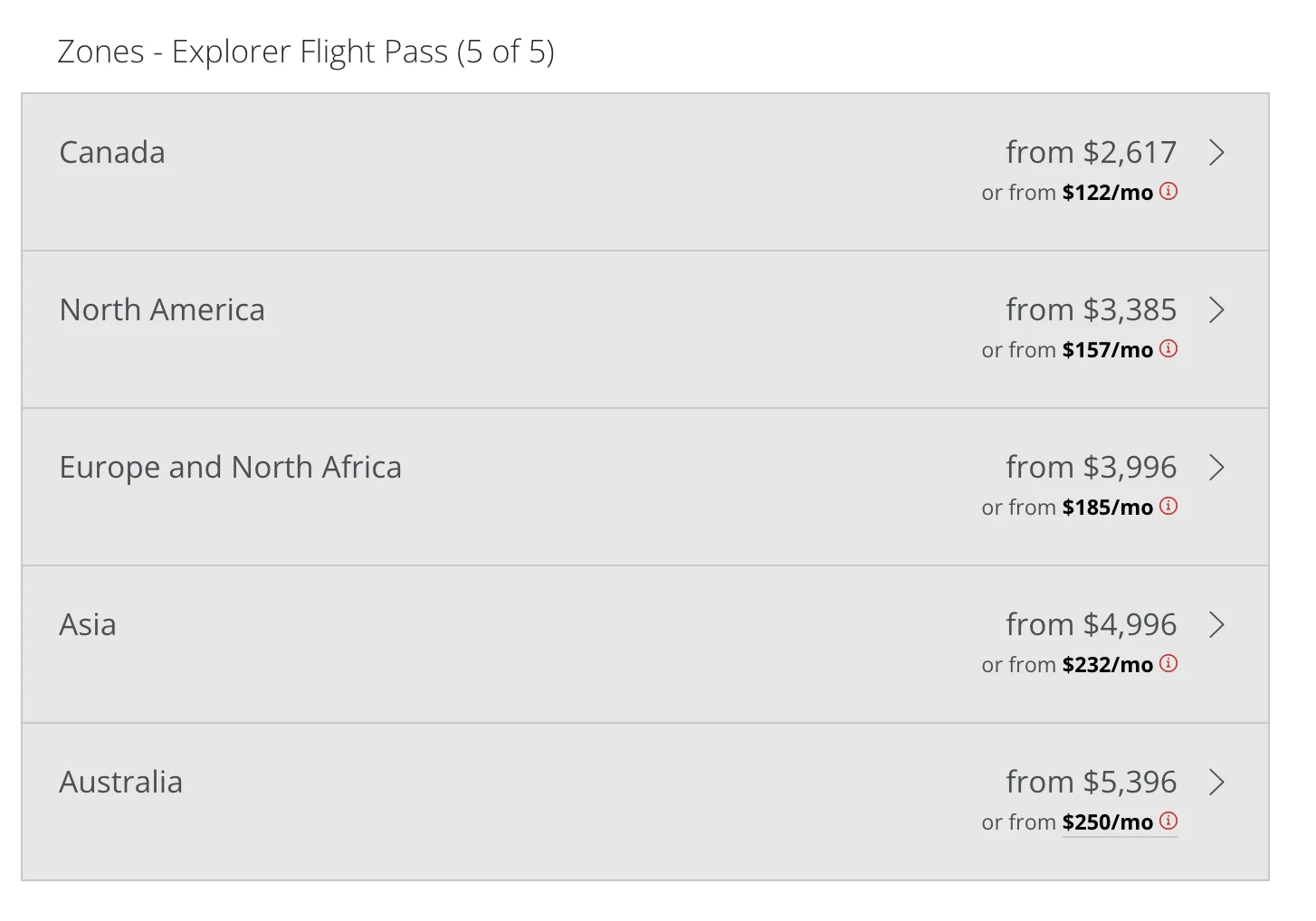
Prices for the four-credit pass in each zone are as follows, with all figures in Canadian dollars:
| Zone | Economy Flex, 4 credits | Business Class Standard, 4 credits |
|---|---|---|
| Canada | $2,617 | $5,645 |
| North America | $3,385 | $7,001 |
| Europe and North Africa | $3,996 | $17,596 |
| Asia | $4,996 | $19,996 |
| Australia | $5,396 | $27,996 |
In Flex, that works out to $654 per one-way flight within Canada and $846 across North America. Long-haul Flex credits cost $999 per flight to Europe, $1,249 to Asia, and $1,349 to Australia.
There’s no volume discount. In every zone, eight credits cost exactly twice as much as four, and 16 credits cost four times as much, so the bigger packs only make sense if you’re sharing them.
Business class is where the zones split apart. Within Canada and North America, it works out to $1,411 and $1,750 per flight, a little over twice the Flex price.
Long-haul business class costs $4,399 per flight to Europe, $4,999 to Asia, and $6,999 to Australia, four to five times the Flex price.
Where You Can Fly with the Explorer Flight Pass
Every zone includes Air Canada’s Canadian network, from Toronto, Vancouver, Montreal, and Calgary to smaller airports like Whitehorse, Sept-Îles, and Toronto’s Billy Bishop airport. Beyond that, each zone adds its own destinations:
- Canada: About 50 airports across every province and territory except Nunavut
- North America: Canada plus the US (including Hawaii and Anchorage), Mexico, the Caribbean, Bermuda, Costa Rica, Belize, and Guatemala
- Europe and North Africa: 27 cities, including London, Paris, Rome, Athens, Lisbon, Reykjavik, Algiers, and Casablanca
- Asia: Tokyo (Haneda and Narita), Osaka, Seoul, Hong Kong, Shanghai, Manila, Singapore, and Bangkok
- Australia: Brisbane, Sydney, and Auckland
The Asia zone doesn’t include India, Beijing, or Taipei. Auckland is tucked into the Australia zone, despite the name.
Credits only work on flights operated by Air Canada, Air Canada Express, and Air Canada Rouge, with no codeshare or interline flights. Air Canada also notes that travel may not be possible between every pair of cities in a zone, so use the Preview Flight Availability button on the routes you actually fly before you buy.
Fare Buckets, Fees, and Booking Rules
The fine print is where the Explorer Flight Pass gets interesting, and it starts with booking classes.
What the Booking Class Codes Mean
Airlines split each fare into several booking classes (often called fare buckets), each with a one-letter code and its own allotment of seats. As a flight fills up, Air Canada closes the classes with the fewest seats first.
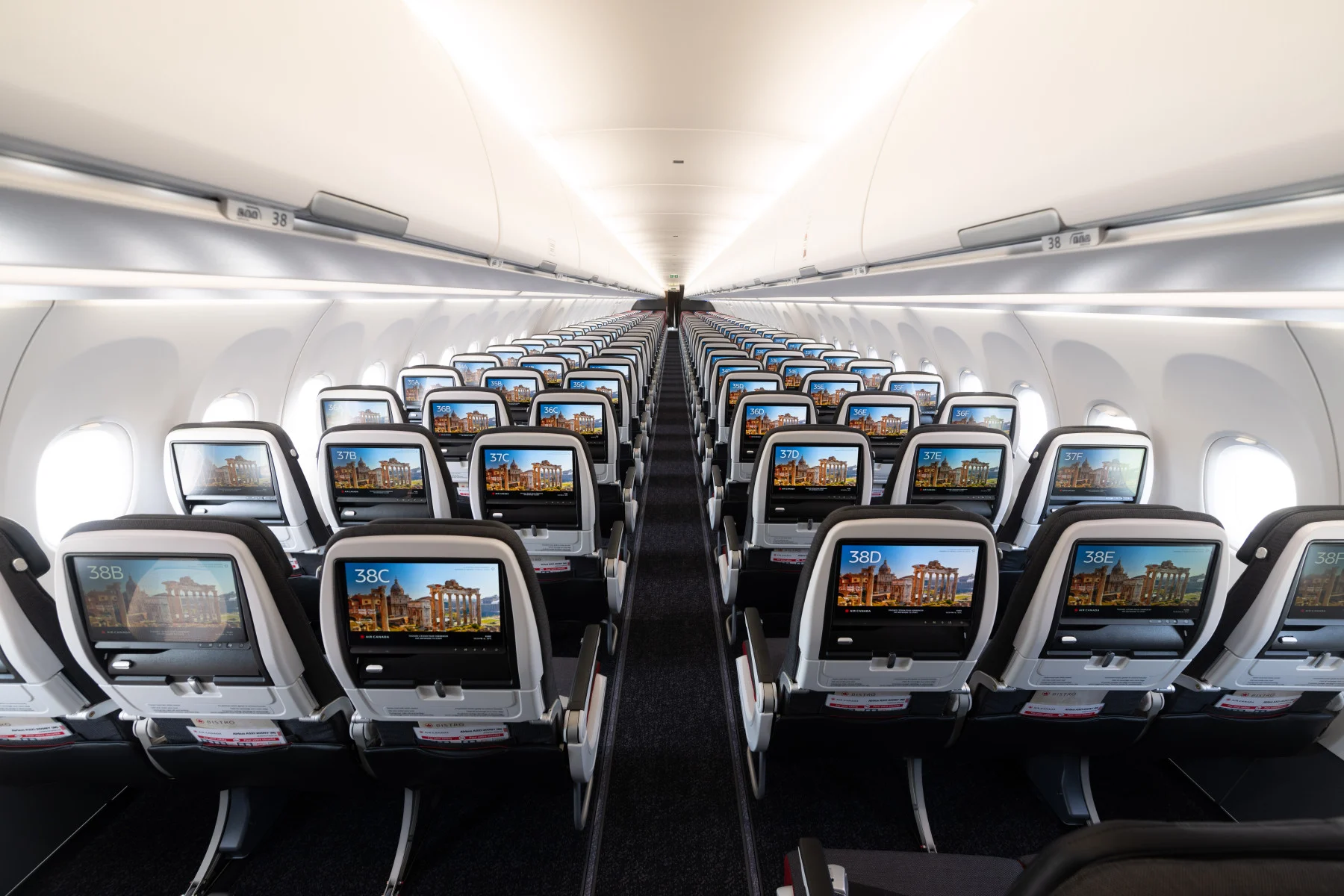
A Flight Pass credit can only be booked into the specific class named in its terms. If that class is closed on your flight, you can’t use the credit there unless you pay to move up.
Air Canada’s Economy Flex fare on North American routes has 12 booking classes. From the fewest seats to the most, they’re G, K, L, T, S, W, V, Q, H, U, M, and B.
Explorer Economy Flex credits book into V, which sits right in the middle. If V is gone, you can pay $175 plus tax per credit to book into U instead, which is three steps further up and stays open longer.
Business class works the same way with four classes, P, Z, D, and C. Explorer Business Class Standard credits book into Z, the second most restricted, and the fallback is D for $750 plus tax per credit.
In practice, a quiet midweek flight is more likely to have V or Z open, while a Friday evening flight before a long weekend may need the extra fee or a different flight. The Preview Flight Availability button in the Flight Pass shop shows which flights are open before you buy.
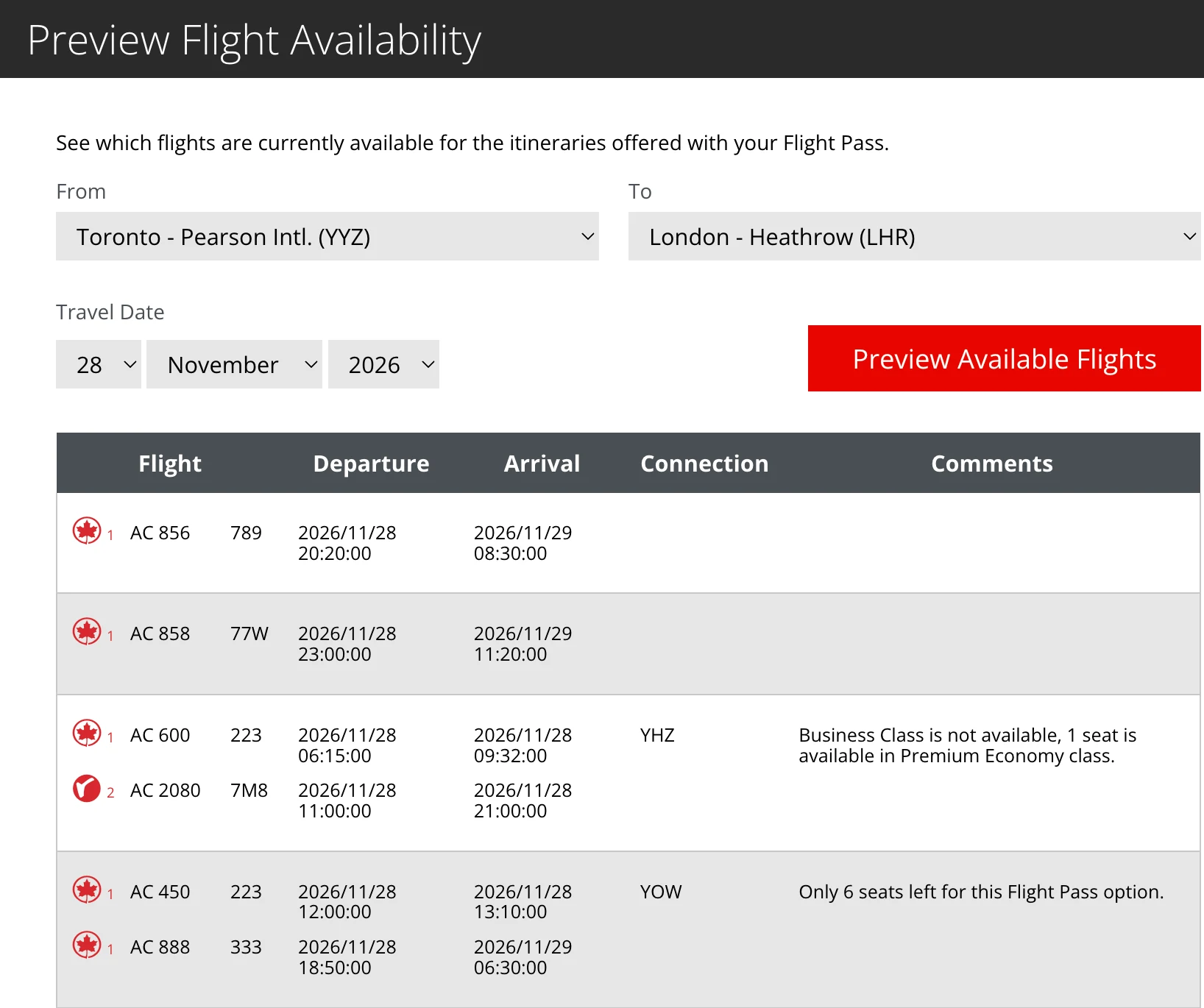
When I previewed the Europe business class pass from Toronto to London for November 28, 2026, both non-stop flights were open. A connection via Ottawa had only six seats left for the pass, and a connection via Halifax had no business class at all, just one premium economy seat.
Fees and Booking Rules
Beyond the booking class, the two fares follow these rules:
| Rule | Economy Flex | Business Class Standard |
|---|---|---|
| Booking class | V | Z |
| If that class is sold out | Book U for $175 plus tax per credit | Book D for $750 plus tax per credit |
| Changes | Free up to 1 hour before departure | Free up to 1 hour before departure |
| Cancellations | $50 plus tax per direction | No fee listed |
| One-time 3-month extension | $300 plus tax | $350 plus tax |
| Advance seat selection | Free | Free |
| Checked bags | First bag free | Two bags free, up to 32kg each |
Credits become bookable 24 hours after purchase, and on a one-traveller pass they can only be used by the pass owner. If you don’t cancel at least an hour before departure, the credit is forfeited.
On the plus side, I didn’t see any peak-period surcharges in the terms for the passes I checked, which some other Air Canada Flight Passes have charged.
The pass also doesn’t come in Latitude, so the complimentary upgrades covered in our Latitude Flight Pass guide don’t apply here.
SQC, Aeroplan Points, and eUpgrades
Flights booked with Explorer credits earn Aeroplan points and Status Qualifying Credits (SQC) once you’ve flown, with government taxes, fees, and surcharges taken out for each itinerary.
Both fares earn 4 SQC per dollar under Aeroplan’s 2026 rules, the same rate as a paid ticket, so the pass isn’t a status shortcut. There’s also no set amount of SQC per credit.
Air Canada doesn’t know where you’ll fly when you buy the pass, and the taxes and fees taken out are different for every itinerary. What you earn on each credit depends on how you actually use it.
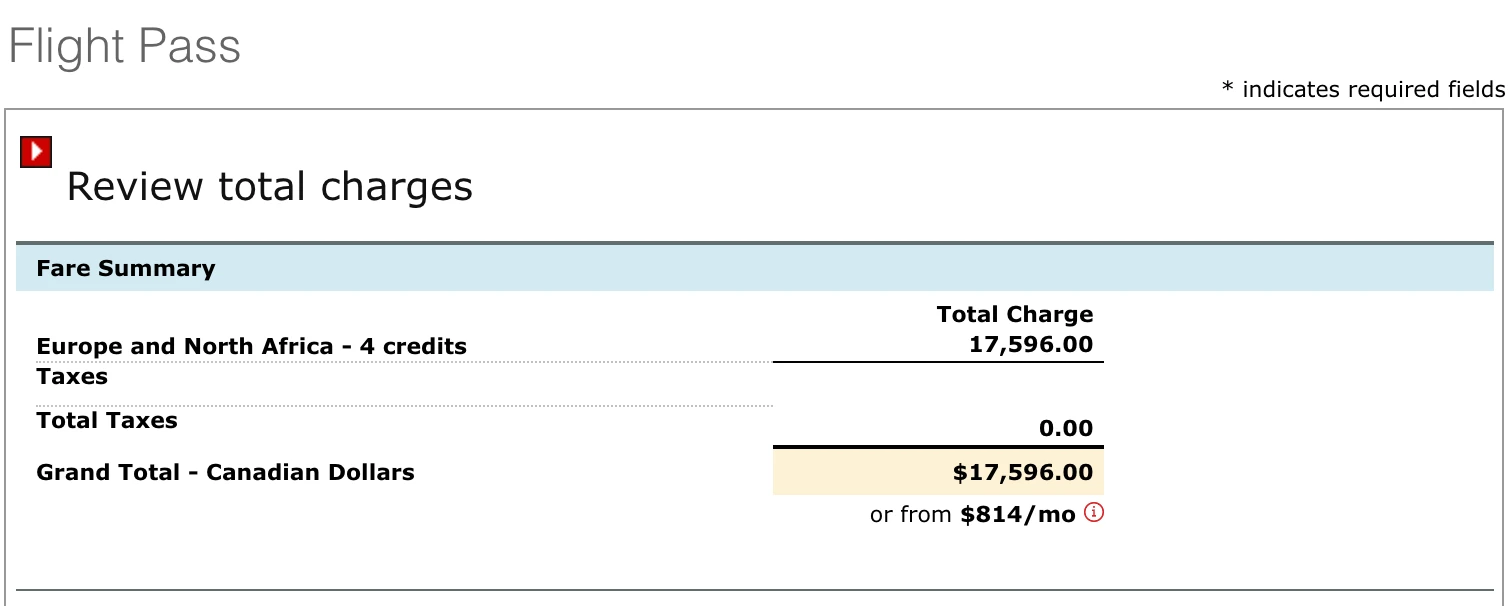
The pass itself doesn’t add taxes at checkout. When I went as far as the payment page for four Europe business class credits, the total was $17,596.00 with $0.00 in taxes.
You can use eUpgrade credits on Flex bookings, but don’t count on the pass earning any. Since V sits lower than the M class most other Flex passes book into, upgrading an Explorer flight also takes more eUpgrade credits. Air Canada’s list of eligible Flight Pass purchases names 6, 8, 10, 16, and 20-credit passes, and it says promotional passes may not qualify.
Business class Z bookings are on Air Canada’s list of booking classes eligible for the Signature Suite on international flights. The same page excludes promotional tickets, but as far as we can tell, that refers to promotional fares rather than Flight Pass bookings, so long-haul Explorer business class flights should qualify.
Is the Explorer Flight Pass Worth It?
The Flex credits make the most sense if you tend to book close to departure or would buy a Flex fare anyway. Free changes and a $50 cancellation fee give you room to move plans around, and the price doesn’t climb as the date gets closer.
Flight Passes are also handy if you fly one-way internationally, since a one-way ticket often costs much more than half of a round trip.
Business class within North America is the option I find most interesting. With Hawaii and the Caribbean in the zone, it can compare well with last-minute business class fares, but check prices for your own dates first.
Long-haul business class costs four to five times the Flex price, but it’s more reasonable than it first looks. With dynamic pricing, business class on Air Canada’s own long-haul flights can cost an enormous number of Aeroplan points.
For business travellers, a pass can also turn a last-minute splurge into a fixed, predictable cost, as long as Z is open on the flights you need. Partner awards through Aeroplan are still often the better deal if you’re happy to fly another airline.
A good way to decide is to look back at the Air Canada flights you took over the past year and compare what you paid with the per-flight price of the pass.
And if you shop for seat sales, a pass probably isn’t for you. Sale fares booked in advance are hard to beat, and any credits you don’t use within 12 months (or 15 with the extension) are lost.
Air Canada has run limited-time passes before, like the Infinite Canada Flight Pass in 2020, and they don’t stay on sale for long.
Conclusion
The Explorer Flight Pass is an easy way to lock in Air Canada prices for the next year, but the booking class matters as much as the price tag.
If I were buying, I’d look hardest at business class within North America, and I’d preview availability on the routes I actually fly before paying.
For long-haul trips, I’d compare the pass with Aeroplan partner awards first. The pass is on sale until November 16, 2026, and credits are good for 12 months from the date you buy.
This story originally appeared on princeoftravel

