


The legendary medical drama “ER” had some truly emotional and breathtaking moments over the course of its spectacular 15-season run. But one of the pilot’s most iconic scenes was actually totally unplanned — and originally written to take place somewhere way less visually pleasing.
We’re referring to the important moment between med student John Carter (played by Noah Wyle, a recent TVLine Performer of the Week) and chief resident Dr. Mark Greene (Anthony Edwards). Just before the scene, Carter runs out of the ER after witnessing the intake of a grizzly victim. That leads to Greene delivering one of the show’s best-known monologues, about the toll that saving lives takes on medical professionals. The pivotal moment ended up going down in the rainy ambulance bay of Cook County General Hospital, even though a basic alley was the original setting.
Noah Wyle, who left “ER” after 11 seasons in 2005, explained many years later during a Television Academy interview, “That wasn’t originally set in an ambulance bay. That was in, like, this weird alleyway outside the Linda Vista Hospital.”
Director Rod Holcomb was responsible for the striking shot
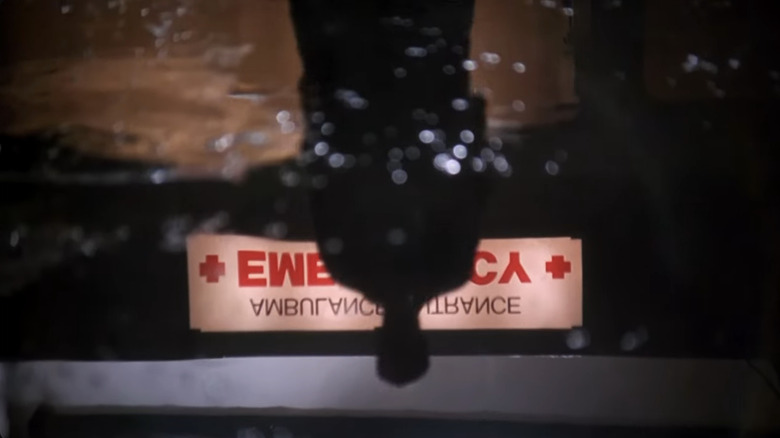
The scene is particularly well known for the moment when Greene is reflected in a rain puddle as he approaches Carter sitting on a curb and trying to catch his breath ahead of the fan-favorite monologue. “That shot of [Greene] on the curb, reflected in the puddle? It’s so iconic for the show. It made it into the opening titles!” added Noah Wyle (one of many actors on “The Pitt” who also appeared on “ER”).
The scene as we know and love it came together as something of a happy accident that made the most of some recent precipitation. “How did we get that shot? It rained,” explained executive producer and showrunner John Wells in the same interview. “Rod was out there and saw the reflection and shot the reflection,” he continued, speaking about the episode’s late director, Rod Holcomb. “That was him, a real artist and a tremendous stills photographer. He was always looking for those kinds of photogenic opportunities, those ways to tell the story.”
Holcomb employed his wide skill set on not only the pitch-perfect pilot but also five other episodes throughout the show’s run — including the series finale. In fact, Wells doubled down on Holcomb’s talents, claiming Holcomb “is the unsung hero” of the series. “He never got enough credit,” the showrunner explained. “What people remember about the show, and the way it moved, was Rod’s work.”
This story originally appeared on TVLine

