


Staying connected while travelling abroad used to be one of the most dreaded aspects of international travel for Canadians. Between exorbitant roaming fees and the hassle of hunting down local SIM cards, keeping your phone working overseas often felt like a losing battle.
But the landscape has changed dramatically — and for the better.
Today, there are more options than ever for Canadian travellers to stay connected abroad, ranging from global roaming plans built right into your monthly phone bill to affordable eSIM services you can set up before you even board your flight.
Here are the best roaming solutions for international travel.
Global Roaming Plans
If you’d told me a few years ago that Canadian carriers would offer affordable global roaming built directly into monthly plans, I wouldn’t have believed you. Canada was long notorious for having some of the most expensive telecommunications in the world — a fact that fellow travellers from other countries never let us forget. I still remember being charged long distance fees just for calling someone in Hamilton from Toronto. Long distance. For a call within the same province.
But times have changed, and this is now one thing I can confidently brag about when I meet travellers from other countries during my trips. Several Canadian carriers now offer plans where international roaming is simply included, with no daily fees and no add-ons to worry about. You land in a new country, and you’re immediately connected. No fiddling with eSIMs, no hunting for a local SIM vendor. It just works.
Personally, I haven’t looked back since switching to a global plan. It’s the most seamless roaming experience I’ve ever had.
Here are the main carriers to look at:
Freedom Mobile has been the most aggressive in this space, offering plans that include roaming in 120+ countries at no additional daily fee. Even their most affordable tiers come with a meaningful amount of international data, while their higher-end plans include generous roaming allowances — more than enough for most trips.
Rogers and Bell have followed suit with their own global plans that bundle international roaming into a single monthly price. Rogers offers Roam Like Home across 180+ destinations, while Bell’s global plan covers 78 countries and territories — both with no daily surcharge on eligible plans. The specific plans and pricing vary, so it’s worth checking their websites for the latest offerings.
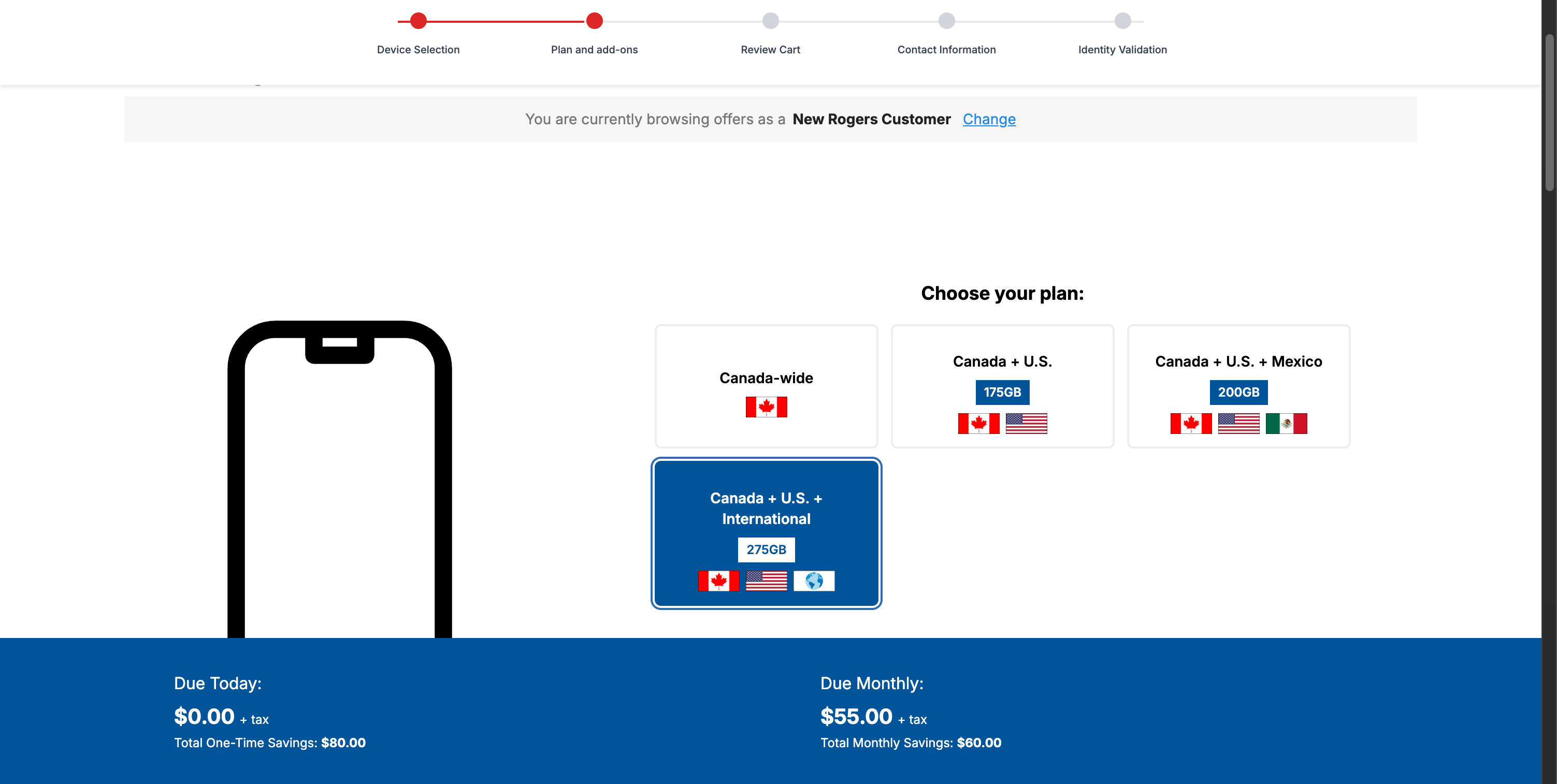
One tip for Rogers customers: if you pair your plan with the Rogers Red World Elite® Mastercard®, you can redeem your cash back directly towards your Rogers phone bill — effectively lowering the cost of your global roaming plan.
Across the board, expect to pay somewhere in the range of $35 to $100 per month depending on the carrier and plan tier. That’s a remarkable value when you consider how much Canadians used to pay for even basic roaming. Pro tip: the best time to hunt for deals on these plans is during Black Friday week and Boxing Day week, when carriers tend to offer their most aggressive pricing.
If you don’t opt for one of these all-inclusive plans, the Big Three carriers also offer pay-per-day roaming as a fallback — typically in the range of $13–$18 per day for US or international use. These per-day options can still add up quickly on longer trips, which is why the all-inclusive global plans represent such a leap forward. For frequent travellers, the math almost always works out in favour of a global plan.
North American Plans
If the majority of your travel happens within North America — the US, Canada, and Mexico — you don’t necessarily need a full global plan. Several carriers and their flanker brands offer plans that include seamless roaming across all three countries at very competitive prices.
The flanker brands — Public Mobile, Koodo, Fido, and Virgin Plus — are worth paying close attention to here. These carriers regularly offer plans that include data, talk, and text across all three countries starting at roughly $35 to $50 per month, often with generous data allowances. Since they run on the same networks as the Big Three (Telus, Rogers, and Bell respectively), you’re not sacrificing coverage for the lower price.
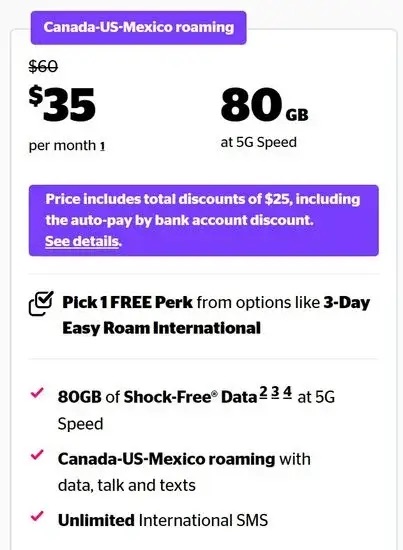
These plans are ideal if your travel pattern involves frequent trips south of the border or to Mexico, but only occasional trips overseas. You can always pair a North American plan with a travel eSIM (more on that below) for the occasional international trip.
eSIM Services
Before global roaming plans became mainstream, eSIMs were the go-to solution for savvy travellers — and they’re still an excellent option, particularly for those who don’t want to change their phone plan or who travel to destinations not covered by their carrier’s roaming agreements.
An eSIM is a digital SIM card that you can download and activate directly on your phone, without needing a physical SIM card. Most modern smartphones support eSIMs, including all iPhones from the XS onward and most flagship Android devices.
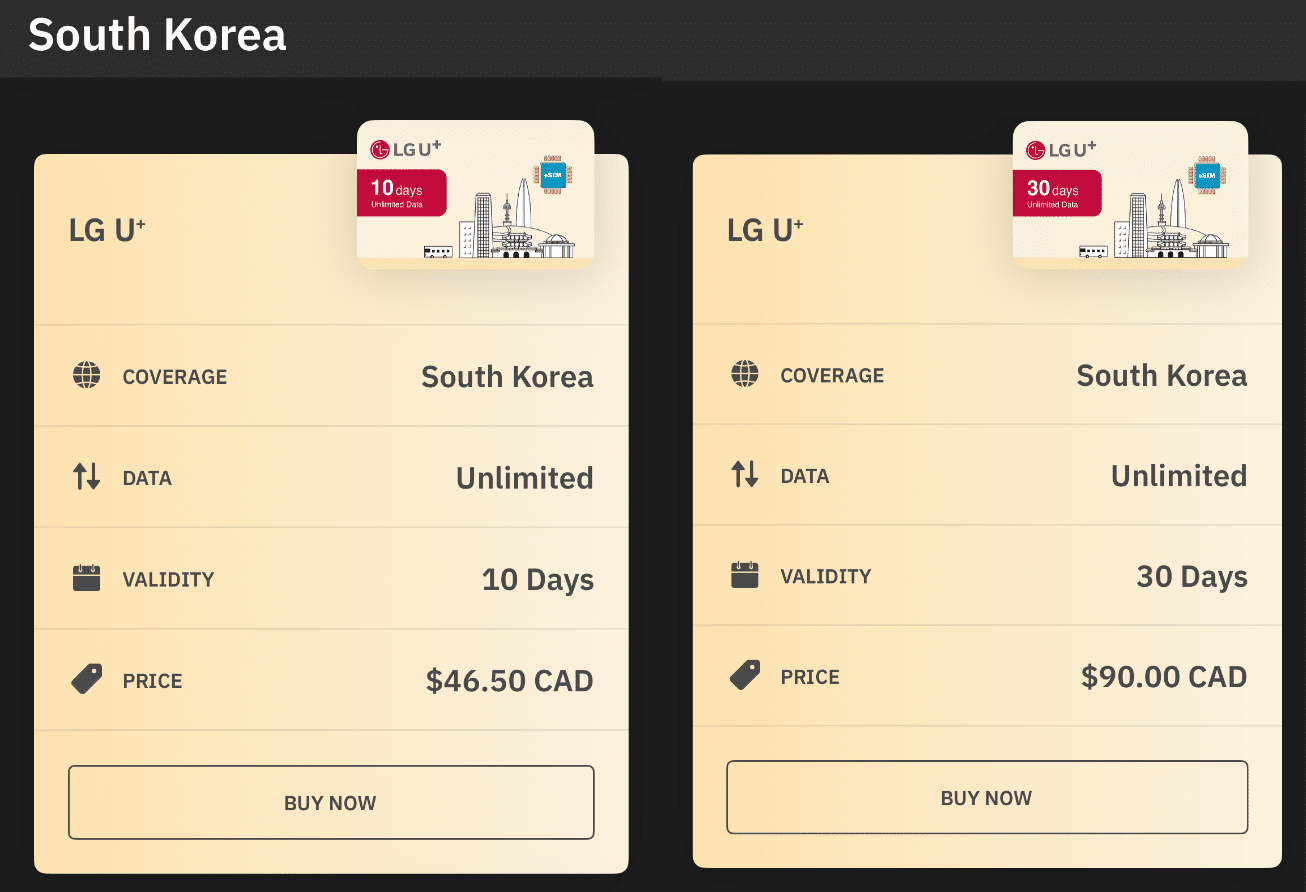
Here are some of the most popular eSIM providers for travellers:
Airalo is the most established player in the travel eSIM market, offering plans in 200+ countries. Pricing starts as low as ~$4.50 USD for 1 GB, with local, regional, and global plans available. Airalo supports mid-trip top-ups and offers an Airmoney rewards program. It’s the safe, reliable choice.
Roamless stands out with its pay-as-you-go model, where you’re charged approximately $2.45 USD per GB on average, and unused data never expires. They offer a single global eSIM that works across 200+ countries with automatic network switching — no need to install a new eSIM for each destination. New users get a free 500 MB welcome credit to try the service.
Saily, created by the team behind NordVPN, offers competitive pricing starting at $3.99 USD per GB. What sets Saily apart is its built-in privacy tools, including a VPN, ad blocker, and web protection. Larger data plans come bundled with a NordVPN subscription at no extra cost — a nice perk if you’re connecting to public Wi-Fi abroad.
Firsty takes a unique approach with a free ad-supported tier: watch a short ad and you get 60 minutes of basic-speed data. It’s enough for WhatsApp messages, Google Maps, and light browsing — perfect as an emergency backup or for very light usage. Paid plans start at approximately €1 per day for higher speeds.
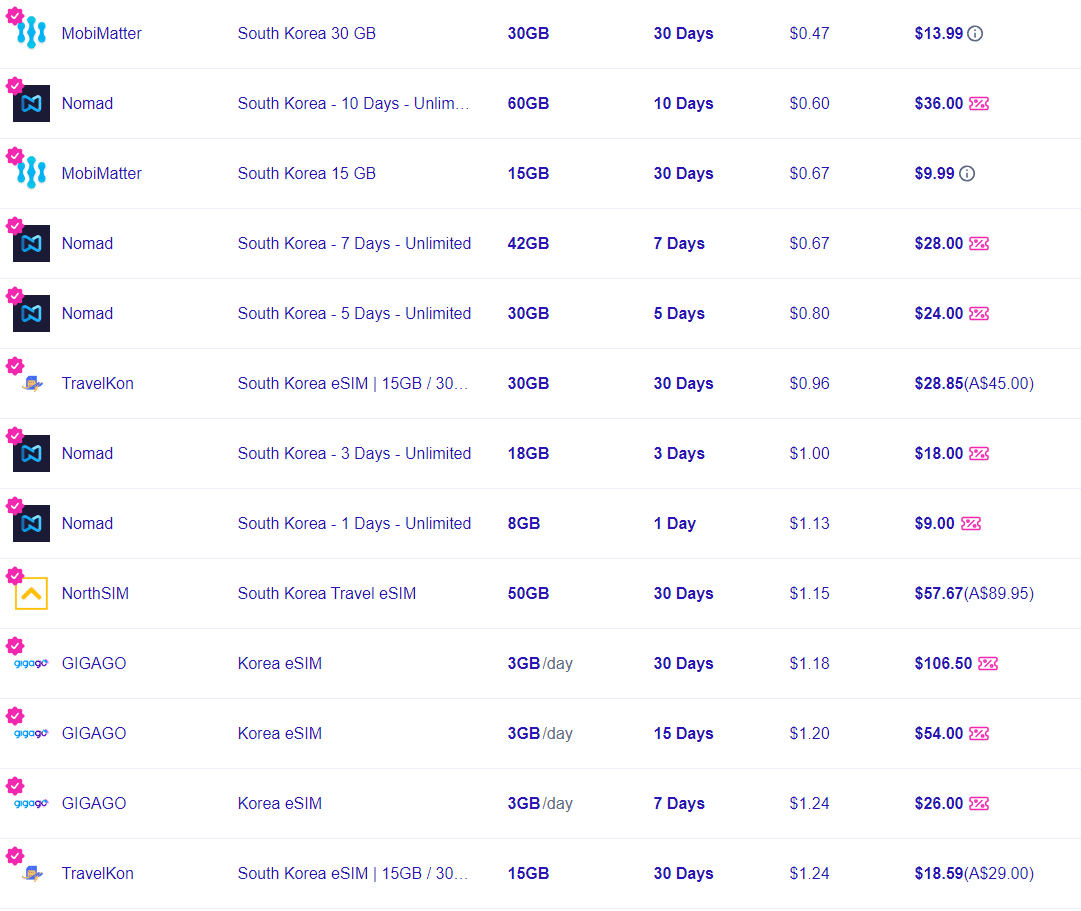
If you’re comparing eSIM plans across multiple providers, the eSIMDB website is an excellent resource for finding the best price per gigabyte for your specific destination.
Free eSIM Data via Credit Cards
Before you purchase a travel eSIM, check your wallet — you may already have free international data waiting to be claimed.
Mastercard × Flexiroam: Holders of an eligible World Elite Mastercard can claim 3 GB of free data valid for 15 days through Flexiroam, redeemable once per calendar year per card (up to three cards per person). World Mastercard holders get 1 GB for 5 days. Coverage spans 150+ countries, and you’ll also receive a 15% discount on future Flexiroam purchases. To redeem, download the Flexiroam app and enter your card number on the promotion page.

Visa × GigSky: Holders of an eligible Visa Infinite card can claim 1 GB of free data valid for 15 days through GigSky, once per year. Visa Infinite Privilege cardholders get 2 GB (two 1 GB plans). Coverage includes 200+ countries and even select cruise ships. Download the GigSky app and add your Visa card as the default payment method to claim your free plan.
If you hold both a World Elite Mastercard and a Visa Infinite card, you can stack both promotions for up to 4 GB of free international data before your trip even begins. That’s often enough for a short getaway on its own, or a helpful buffer alongside your carrier’s roaming plan.
Buy a Local SIM Card
In the age of eSIMs and global roaming plans, buying a local SIM card might sound a bit old-fashioned. But for certain travel scenarios, it remains one of the best options available.
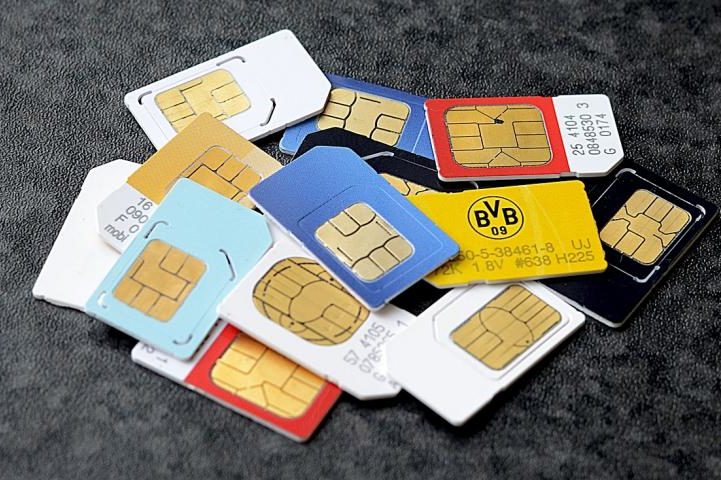
If you’re spending an extended period in one country — a few weeks or more — a local SIM card will almost always offer the best value for data. Countries like Thailand, Vietnam, South Korea, and many European nations offer prepaid SIM cards with generous data allowances at a fraction of what you’d pay through roaming or an eSIM provider.
Beyond price, there’s another compelling reason to go local: access to local apps and services. In many countries, having a local phone number unlocks access to ride-hailing apps, food delivery platforms, restaurant reservation systems, and other services that may not work with a foreign number. In places where Voice-over-Internet Protocol (VoIP) services like WhatsApp, LINE, or KakaoTalk are the dominant form of communication, a local number makes it far easier to interact with businesses and locals alike.
A few tips if you go this route:
- Avoid airport kiosks — the markup is usually significant. Instead, find a vendor in town, or ask your hotel concierge for a recommendation.
- Check phone compatibility — verify that your phone supports the local network bands before you travel.
- Bring your own unlocked phone — if your phone is locked to a Canadian carrier, you’ll need to unlock it first (which is free and can be done by contacting your provider).
- iPhone users, take note — iPhones sold in North America no longer have a physical SIM card tray, so picking up a local SIM at a shop abroad isn’t an option. The good news is that many countries are now offering prepaid tourist SIM cards as eSIMs, so this is becoming less of an issue over time.
Google Fi
Google Fi is a mobile virtual network operator (MVNO) run by Google that offers some compelling international roaming features — but with a significant caveat for Canadians.
Google Fi is only available to US residents. Signing up requires a US address, a US-based payment method, and activation while physically in the United States. If you happen to have a US credit card and a US address, it may be worth considering, but it’s not a practical option for most Canadian travellers.
For those who do qualify, Google Fi’s Unlimited Premium plan at $65 USD per month includes 50 GB of high-speed data in 200+ countries — a genuinely excellent deal for frequent international travellers based in the US. The Flexible plan starts at $20 USD per month plus $10 per GB used, with a cap at $60 per billing cycle for data, making it a solid pay-as-you-go option.
One important word of caution: Google Fi’s Terms of Service require that the service be “used primarily in the United States.” Too much international-only usage could flag your account for review or suspension, so it’s best used as a complement to US-based usage, not as a workaround for avoiding Canadian carrier fees.
Wi-Fi Hotspots
In some situations, you may not need a dedicated roaming solution at all. If you’re staying at hotels with reliable Wi-Fi, spending time in cafes, or visiting cities with robust public Wi-Fi infrastructure, you can get by on Wi-Fi alone — especially if your primary needs are messaging apps like WhatsApp or iMessage.
By enabling airplane mode with Wi-Fi turned on, you can avoid any accidental roaming charges while still staying connected whenever you’re within range of a hotspot.
A few things to keep in mind:
- Use a VPN when connecting to public Wi-Fi networks. Open networks can expose your data to security threats, so a VPN helps encrypt your connection and protect sensitive information.
- Download offline maps and content before your trip. Google Maps, translation apps, and many travel guides allow you to download content for offline use, reducing your dependence on a constant data connection.
- This approach works best as a complement to one of the solutions above, rather than as your only strategy. You’ll inevitably need data on the go — for navigation, ride-hailing, or checking information between Wi-Fi zones.
Conclusion
The roaming landscape for Canadian travellers has improved beyond recognition over the past few years. What was once an expensive headache is now, frankly, a solved problem.
With global roaming plans readily available from Canadian providers at fairly affordable prices, my personal pick is straightforward: just go with a global plan. The convenience of landing in a new country and being immediately connected — no eSIM installation, no SIM card hunting, no daily fee anxiety — is hard to overstate once you’ve experienced it.
If the majority of your trips happen within the US and Mexico, a North American plan from one of the flanker brands offers outstanding value. You can always supplement with a travel eSIM from Airalo, Roamless, or Saily for the occasional overseas trip.
And before any trip, don’t forget to check your credit cards for free eSIM data through Flexiroam (Mastercard) or GigSky (Visa) — it’s a nice bonus that many cardholders overlook.
For the savvy traveller, global roaming is the way to go. Welcome to the future of staying connected abroad.
This story originally appeared on princeoftravel

