


Image source: Getty Images
BAE Systems (LSE:BA.) shares have made investors a lot of money over the past few years. We’re talking about a 35% annualised total return in five years, almost three times the FTSE 100.
Unfortunately, the original catalyst for this outperformance was the dreadful invasion of Ukraine in early 2022. This kickstarted a sudden reprioritising of European defence spending, as nations realised that large-scale land wars in Europe were not a thing of the past.
Sadly, war is likely to be around as long as people are. But the level of geopolitical instability in recent years has risen sharply, with the war in Iran that started at the end of February being the latest example.
In theory, the situation in Iran should have given BAE stock a boost. The war in Russia certainly did, as did the US military operation in Venezuela in early 2026.
But since the conflict started, the FTSE 100 defence stock has actually declined slightly. And anyone who invested £7,500 in BAE 10 days ago would now have just £6,620 after an 11.7% correction.
Why is the stock down?
Even after the recent dip, BAE stock isn’t cheap, trading at 25 times this year’s forecast earnings. So it’s likely investors have been taking some profits off the table (the dividend yield is only 1.7% today).
However, another key problem is rising energy and fuel prices. Not only does this environment make it more expensive for BAE to manufacture and ship equipment like tanks, combat vehicles and artillery, it has also heaped further pressure on cash-strapped governments.
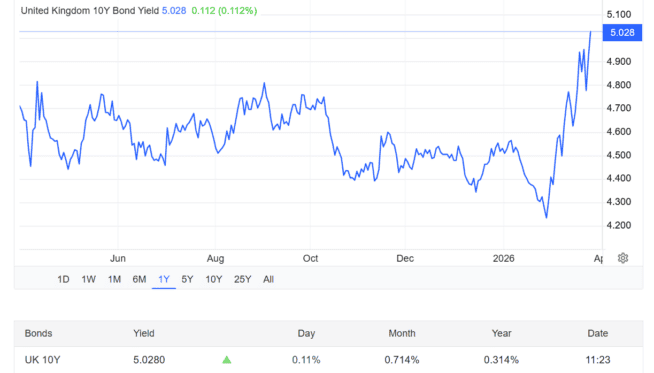
Since the Iran war started, yields on government debt across European countries have spiked. The 10-year UK gilt yield has jumped from 4.2% to more than 5%.
In other words, UK borrowing costs have reached their highest since the 2008 financial crisis. Where will the UK and Europe get the cash to fund their ambitious defence spending targets?
This question is worrying the market.
I think BAE will be fine
Then again, air defence stockpiles are coming under pressure due to the wars in Ukraine and Iran, while threats to national security continue to grow worldwide. So I don’t think rising bond yields change the growth story here.
For example, will Gulf states want to beef up security after Iran’s drone attacks across the region? My strong suspicion is yes. BAE is one of the most important defence partners for cash-rich Gulf states like Saudi Arabia, Qatar and UAE.
Meanwhile, on Wednesday (25 March), Turkey signed a multi-billion-pound agreement in London for training and parts support for its first batch of British-built fighter jets.
The defence giant ended 2025 with an order backlog of £83.6bn, with products spanning land, sea, air, cyber and space. The business is also exceptionally well-run under CEO Charles Woodburn.
I still hold the BAE shares I first bought in 2022, and I think they’ll continue doing fine long term. However, given the elevated valuation, I’m not looking to add to my position today.
If the pullback extends to 20%–25% (around £18 per share), then I will start to get really interested. But until that happens, I see better FTSE 100 opportunities about.
This story originally appeared on Motley Fool

