Wednesday, August 20, 2025

 
Home Blog Page 1605

Best Ever Beef and Cabbage Soup

0


This website may contain affiliate links and advertising so that we can provide recipes to you. Read my disclosure policy.

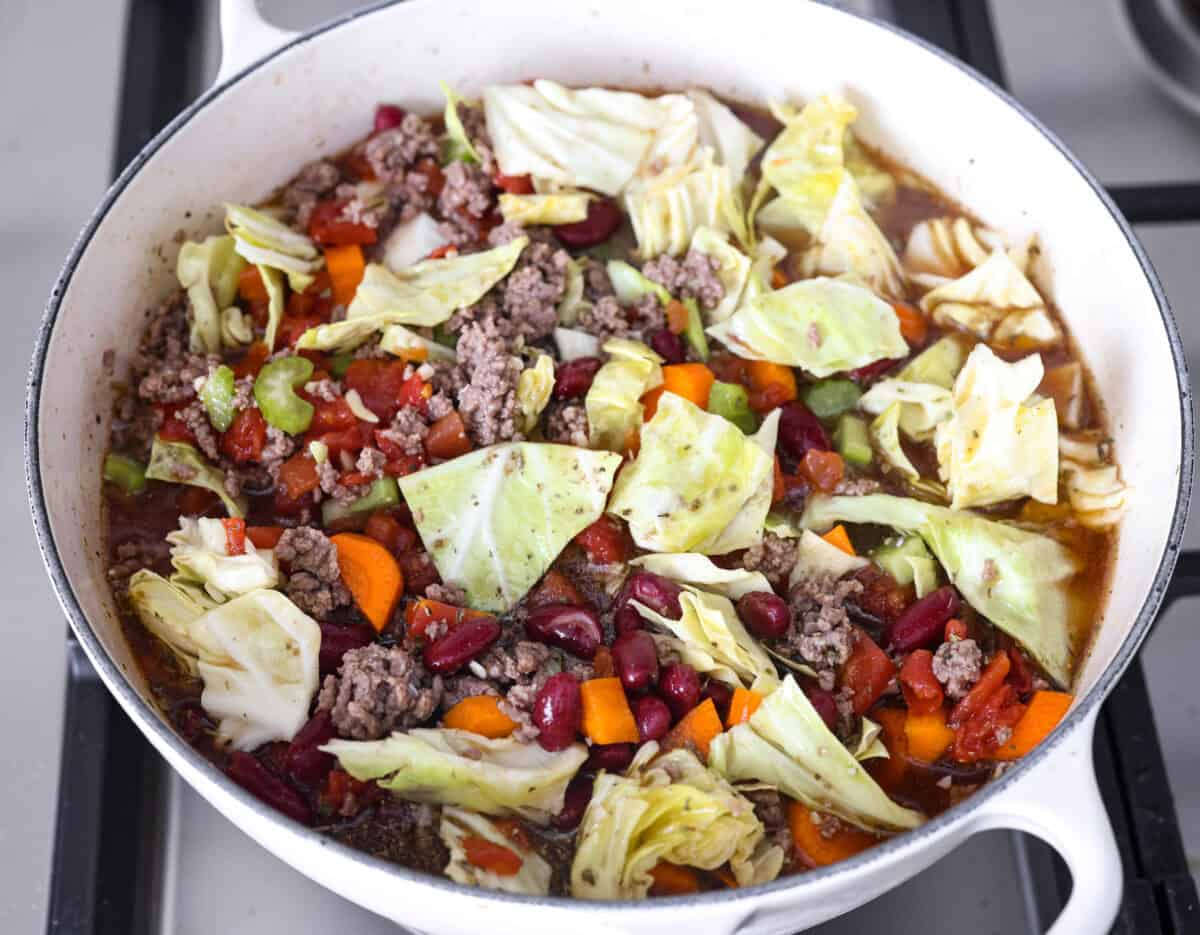
Beef and Cabbage soup is filled with seasoned ground beef, cabbage, carrots, celery, kidney beans, and diced tomatoes. It is hearty, delicious, and full of flavor! This is a great soup to serve on a cold day or to help you get in the spirit of St. Patrick’s Day while keeping your nutrition goals in check.

Overhead shot of a bowl of beef and cabbage soup. Overhead shot of a bowl of beef and cabbage soup.

A Reader’s Review

This soup is delicious!..Thanks for sharing. Think I like this better than Vegetable Beef.

SunnyV

Reasons You’ll Love This Recipe

  • One-Pot Wonder: I’m all about meals that don’t turn my kitchen into a disaster zone. This beef and cabbage soup is simple, stress-free, and uses barely any dishes!
  • Budget Friendly: In today’s economy, I am very conscious of how much groceries cost. This recipe uses ingredients that won’t break the bank!
  • Festive and Nutrient Rich: This soup is a great way to get into the St. Patrick’s Day spirit while keeping your nutrition goals intact!

St. Patrick’s Day Feast

If you love to celebrate Holidays with festive food, this is the perfect recipe to accompany your St. Patrick’s Day meal. Start with crispy Irish nachos, this beef and cabbage soup, and Irish soda bread. End your meal with some Guinness chocolate cake, and you’ve got the perfect meal to celebrate this fun Irish holiday!

Ingredients Needed
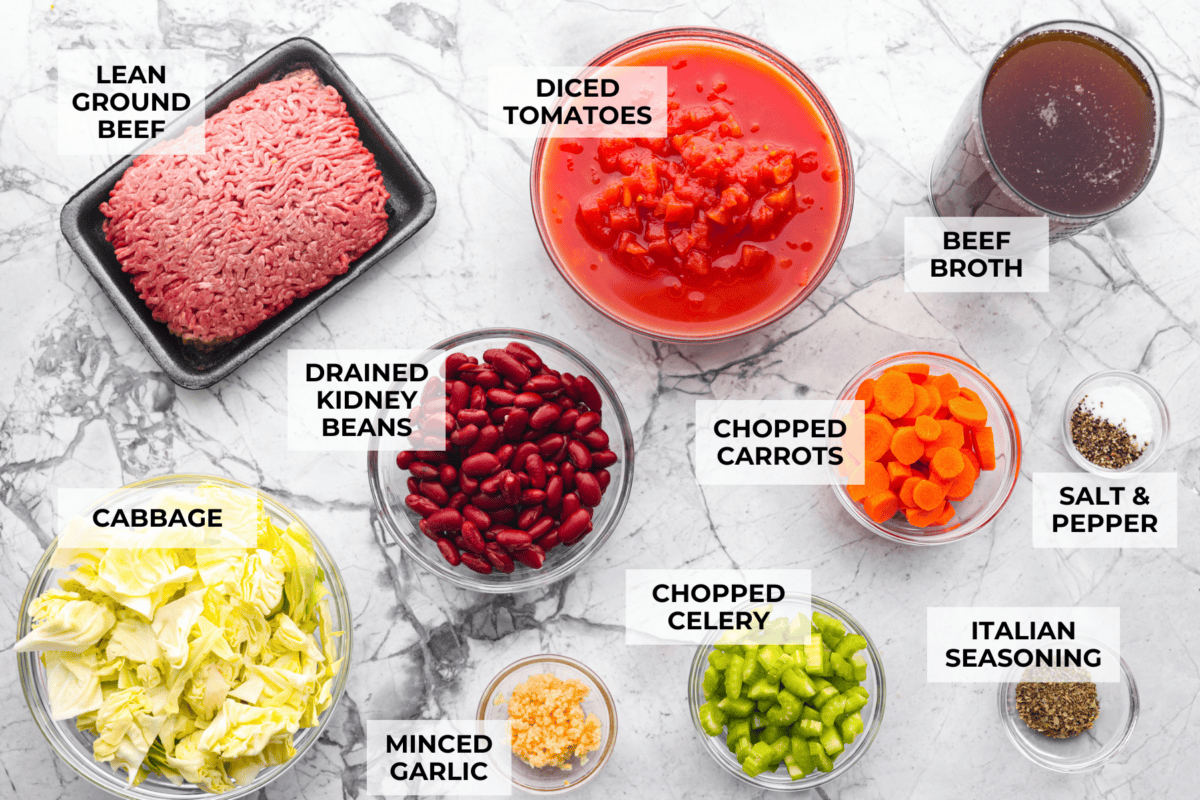
Overhead shot of labeled ingredients. Overhead shot of labeled ingredients.

How to Make Beef Cabbage Soup

You start by browning the ground beef, then add in the vegetables and beef broth. Bring it to a boil and reduce it to a simmer for an hour to let the flavors blend and the veggies become tender.

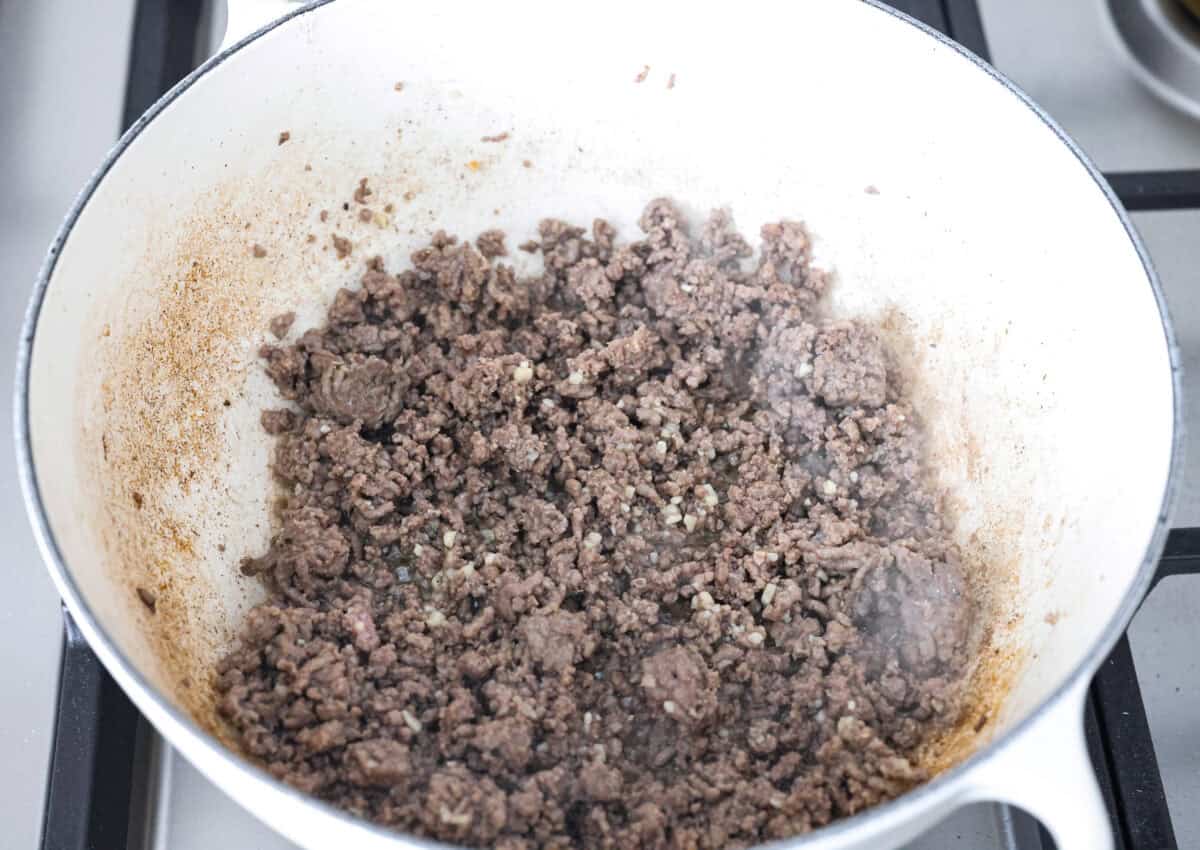
  1. In a large pot, add 1 tablespoon of olive oil and 1 pound of lean ground beef. Cook and brown the beef at medium-high heat until no longer pink, then add 3 teaspoons minced garlic and salt and pepper to taste and cook for 30 seconds.
  2. Add ½ chopped head cabbage1 (28-ounce) can diced tomatoes2 stalks chopped celery2 medium peeled and chopped carrots1 (16-ounce) can of kidney beans, 3 ½ cups beef broth, and 1 tablespoon Italian seasoning. Stir to combine.
  3. Bring the soup to a boil, then reduce the heat and simmer for 1 hour. Garnish with parsley if desired.

Tips For Making the Best Beef and Cabbage Soup

I want your soup to turn out exactly how you like. Here are some ideas for substitutions or ways to change this low-carb, keto-friendly soup.

  • Can I swap out the ground beef? Yes, try using different sources of protein, like ground turkey or chicken, in place of ground beef for a lighter soup!
  • Is red cabbage ok to use? I used green cabbage in this recipe, but you can use red if you prefer
  • What other vegetables would you recommend? Yes, you can add any of your favorite vegetables to this soup in step 3 when you add the other vegetables. I recommend peas, onions, chopped green beans, cauliflower, or any of your favorites.

Slow Cooker Instructions

This soup also works great in the slow cooker. Just add the browned ground beef and all of the veggies and broth into the slow cooker. Let it cook on low for 3-4 hours or until the vegetables are tender.

Close up shot of beef and cabbage soup. Close up shot of beef and cabbage soup.

Properly Store Beef and Cabbage Soup

If you make a double batch of this, you can freeze some to have a pre-made meal ready to go.

  • In the Refrigerator: Place the cooled beef and cabbage soup into an airtight container and store in the fridge for up to 4 days.
  • In the Freezer: This soup works great to make a double batch and freeze for later. Seal it in a freezer-safe airtight container for up to 3 months.
  • Reheating Instructions: You can reheat slowly, on low, over the stovetop. Or individual portions in the microwave in 30-second increments. Stirring in between.

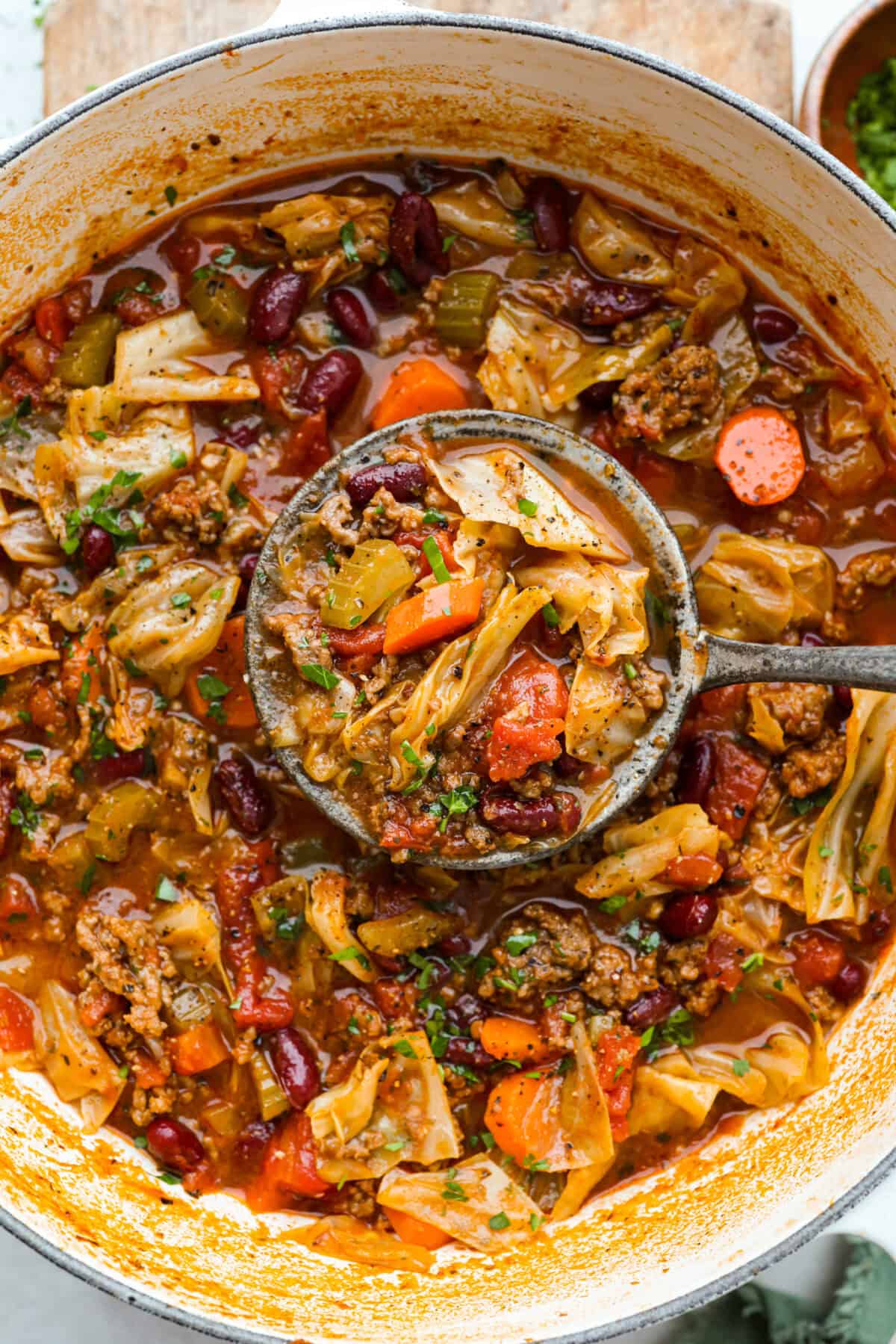
Overhead shot of beef and cabbage soup in a large pot with a ladle full of soup. Overhead shot of beef and cabbage soup in a large pot with a ladle full of soup.

More Beef Soup and Stew Recipes

If you’re looking for a delicious beef soup or stew to serve for St. Patricks Day, I’ve got you covered. These are the perfect addition to any festive feast.

Pin this now to find it later

Pin It

  • In a large pot, add 1 tablespoon olive oil and 1 pound lean ground beef. Cook and brown the beef until no longer pink.

  • Add 3 teaspoons minced garlic and salt and pepper to taste and cook for 30 seconds.

  • Add ½ chopped head cabbage, 1 (28-ounce) can diced tomatoes, 2 stalks chopped celery, 2 medium peeled and chopped carrots, 1 (16-ounce) can kidney beans, 3 ½ cups beef broth, and 1 tablespoon Italian seasoning. Stir to combine.

  • Bring the soup to a boil, reduce the heat, and simmer for 1 hour. Garnish with parsley if desired.
Originally posted on February 4, 2018
Updated on March 7, 2025

Calories: 252kcalCarbohydrates: 12gProtein: 29gFat: 10gSaturated Fat: 3gPolyunsaturated Fat: 1gMonounsaturated Fat: 5gTrans Fat: 0.4gCholesterol: 70mgSodium: 915mgPotassium: 874mgFiber: 5gSugar: 5gVitamin A: 5318IUVitamin C: 45mgCalcium: 110mgIron: 4mg

Nutrition information is automatically calculated, so should only be used as an approximation.


This story originally appeared on TheRecipeCritic

A P/E ratio of 4 or 23? I’m not sure what to make of this FTSE 250 stock

0


Image source: Getty Images

Today (7 March), Just Group (LSE:JUST), the FTSE 250 financial services provider, released its 2024 results. And despite reporting a large increase in profit, investors reacted badly.

Comparing 2024 with 2023, the results show a 34% increase in underlying profit to £504m, a 36% rise in retirement sales, and an improvement in the return on capital. As a result, the directors were able to announce a 20% increase in the dividend.

At first glance, the shares appear to be a bargain. Underlying earnings per share was 36p, implying a price-to-earnings (P/E) ratio of only four.

Summarising the performance, the group’s chief executive commented: “We made a pledge three years ago to double profits over five years. We have significantly exceeded that target in just three years and created substantial shareholder value as a result.”

So why did the company’s shares fall so much today? At one point they were down 15% before recovering slightly.

Different standards

I suspect it has something to do with the group’s use of alternative performance measures. These can produce different results to the statutory ones used by accountants, as laid down by financial reporting standards.

A look at the company’s accounts shows that the reported profit after tax was £80m. This was £49m (38%) lower than for 2023. And very different to its underlying profit of £504m.

Basic earnings per share for 2024 were 6.5p. Using this measure, the shares have a P/E ratio of around 23. Again, this is miles away from the headline number.

To help investors understand the variation in these figures, a reconciliation is provided.

The bulk of the difference is explained by the “deferral of profit in CSM” (£369m), which is excluded from underlying earnings. This refers to the Contractual Service Margin reserve, a bucket into which profits are deferred and reported at a later date.

Accounting standards require the profit from new business to be reflected over the lifetime of the contract. In contrast, when reporting its headline numbers, the company prefers to include it all at once.

Of course, there’s nothing wrong with either approach. The directors aren’t hiding anything, they are just choosing a different method to interpret its results.

What does this all mean?

In my opinion, this makes it difficult for investors to understand the numbers.

However, one thing that never lies is cash. It either exists or it doesn’t. During 2024, the group reported a significant increase in the cash generated from its operating activities. Overall, cash balances increased by 54%.

As well as this, in my opinion, there are other reasons to consider investing in the group. It’s growing rapidly and the company describes market conditions as “buoyant”. In addition, with a Solvency II capital coverage ratio of 204%, its balance sheet remains robust.

But there are risks.

Annuity sales may slow if interest rates fall as anticipated. And the group operates in a very competitive market that’s sensitive to wider economic conditions. Also, there are better income stocks around.

On balance, I’m still undecided. Therefore, I’m going to continue monitoring the company’s performance — considering both alternative and statutory measures — over the coming months, with a view to revisiting the investment case later in the year.


This story originally appeared on Motley Fool

Did MSNBC Cancel Joy Reid To Please Donald Trump?

0


PoliticusUSA is ad-free and independent thanks to the support of readers like you. Please consider supporting us by becoming a subscriber.

When MSNBC pulled the plug on The Reid Out, it was strange because there was no warning that such a change could be coming for viewers. There was reportedly tension between Reid and her corporate bosses, who did not like her outspoken criticism and progressive stances. The thing that seemed to make them uncomfortable was Reid’s comfort in bluntly and truthfully discussing issues like racism and sexism as they relate to Trump and the current Republican Party.

Reid was beloved by her most powerful colleagues like Rachel Maddow on the network. Maddow defended Reid and called her firing, along with other non-white anchors like Katie Phang, a mistake.

Even more bees should start buzzing when the ratings data for The Reid Out is looked at.

According to The Daily Beast, Reid’s audience was increasing when she was canceled:

But the Beast has obtained the audience ratings compiled by Nielsen which are used by news networks to assess the success of their shows and the people appearing on them—and they show no signs that Reid was experiencing an audience plunge out of line with her MSNBC co-stars. In fact she and all the other primetime line-up were on an upswing in February.

Ratings for every MSNBC primetime host declined in the period after the election, but Reid’s drops do not appear substantially more than her peers. Melber’s total-viewer ratings were down 42 percent (1.552 million vs. 903,000) between Nov. 6 and the end of February from their 2024 pre-election ratings—as were Reid’s (1.421 million vs. 825,000). Hayes saw a 45 percent decline in that same period (1.496 million vs. 820,000).

Chris Hayes’s All In is regularly one of the lowest-rated shows on the network, yet he is allowed to keep chugging along.

MSNBC will soon be spun off into its own company, and it is reasonable to ask if the decision to get rid of so many progressive, non-white Trump critics on the network had something to do with appeasing the administration so that any future matters that may come before the Trump administration will be viewed more favorably.

Trump called Reid a racist and celebrated her firing on Truth Social.

With so much of the mainstream media bending their knees and catering to Trump, any viewer who invests their time watching MSNBC’s programming deserves an explanation.

Reid’s contract had ended with the network, but MSNBC execs seem to have chosen the path of least resistance by getting rid of strong progressive voices of color, which may have been done to please Donald Trump.

Do you think MSNBC got rid of Joy Reid to make Trump happy? Share your opinion in the comments below.

Leave a comment


This story originally appeared on Politicususa

Senator John Kennedy Roasts Democrats for Melting Down Over DOGE: ‘The Tofu Crowd is Mad’ (VIDEO) | The Gateway Pundit

0


You’ve gotta love Senator John Kennedy of Louisiana. He never fails to come up with a funny way to roast the left.

During a recent appearance on the FOX Business Network, Kennedy made fun of the ongoing meltdown of Democrats over DOGE and Elon Musk, using the sort of hilarious language for which he has become known.

He noted that the ‘tofu crowd’ is angry about the idea of cutting waste and fraud.

RedState has details:

Sen John Kennedy (R-LA) told Fox’s Larry Ludlow he had been trying to push through a bill for awhile that would stop this and cut off any possible “money paid out to dead people.”

“It’s not ending Social Security,” Ludlow ranted about anyone who would find this objectionable. “I It’s ending the fraud in Social Security!”

Kennedy thinks now that DOGE and the President are highlighting it, his bill might finally happen. It’s hard to believe that anyone could object to something that makes so much sense. But that’s where Democrats seem to be aligned at this point: on the side opposed to sense.

But Kennedy being Kennedy, he also had one heck of a great remark when it came to Elon Musk and the tantrums of those on the left opposing DOGE. He said he thought Musk was a “rockstar” for what he was doing and he was “all for” the cuts.

“The tofu crowd is mad, but you know, when you trim fat, pigs squeal,” Kennedy declared. “That’s just the way the world works. That’s the law of nature.”

See the clips below:

If Trump ever wants to appoint a Republican humor czar, Senator Kennedy should be at the top of the list of candidates.


This story originally appeared on TheGateWayPundit

Talking textiles: Thandiwe Muriu’s use of the iconic Ankara fabric

0

Wax print fabrics or Ankara fabrics are known for their graphic patterns, bold colours and catchy slogans. The iconic cloth is now being celebrated in an exhibition at the Musée de l’Homme in Paris, where curators have been exploring its anthropological, social and political role on the African continent and beyond. Kenyan artist Thandiwe Muriu joins us to talk about the fabric’s function in her striking portraits, and how she uses textiles to explore identity, aesthetics and her own place in society. Thandiwe tells us how clothes and the messages they send can empower and emancipate women, and we discuss the use of traditional motifs in contemporary fashion, as African prints seduce designers all over the world. 


This story originally appeared on France24

Would the world be more peaceful if more women were in charge? | Science, Climate & Tech News

0


If the world has felt more dangerous lately, you’re not mistaken. The number of conflicts has been rising. And from Ukraine and Russia, to Israel and Gaza, and Sudan – a common thread running through all these wars is they are waged by men.

Meanwhile in other parts of the world we have seen powerful men wielding chainsaws for fun.

Just 13 out of 193 countries have female leaders (according to October 2024 data).

If there were more, things would be wildly different, says the likes of former US president Barack Obama.

There would be “less war, kids would be better taken care of and there would be a general improvement in living standards and outcomes,” he said previously.

He’s not alone. Former Irish president Mary Robinson told Sky News ahead of International Women’s Day that having more women at the top was “necessary” for a more peaceful world.

And on this day 19 years ago, former United Nations chief Kofi Annan said: “No policy is more important in preventing conflict” than empowering women.

A woman has still never done his job, in 80 years of the UN.

Are they right? The answer is more than just the women at the top would have to change.

Image:
The number of global armed conflicts has doubled from a low of 86 in 2010 to more than 170 in recent years

Afraid to appear soft

A glance through history suggests women leaders have been just as, if not more, “prone to initiating conflicts” as men, according to Christopher Blair, assistant professor of politics at Princeton University.

They are incentivised to act as “Iron Ladies” specifically to overcome gender stereotypes that cast them as dovish and “less competent” on national security, he says.

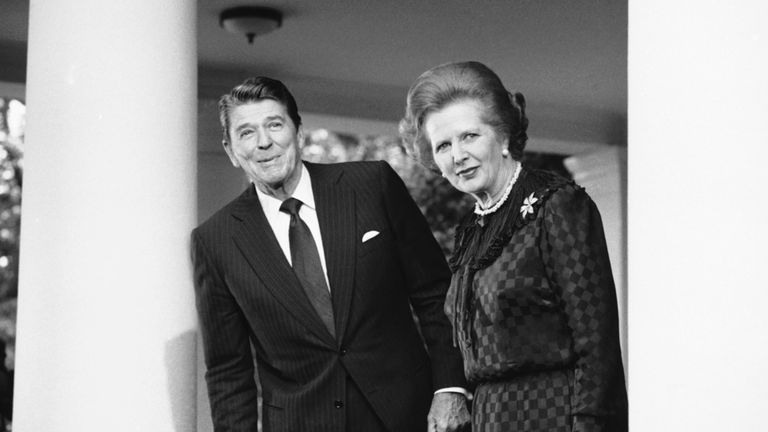
Just look at Margaret Thatcher: in 1982, Britain’s first female prime minister plunged 323 people to their deaths on Argentina’s Belgrano warship, and led the UK through the Falklands War.

A man's world: Margaret Thatcher took training to lower her voice. Here she is alongside president Ronald Reagan in 1982. Pic: AP
Image:
A man’s world: Margaret Thatcher took training to lower her voice. Here she is alongside president Ronald Reagan in 1982. Pic: AP

Or the famously hawkish US secretary of state Hillary Clinton, who hesitated over peace talks with the Taliban “because she was afraid of being perceived as stereotypically soft,” says Blair, based on insight from her advisers.

In what is nowadays a “much more hypermasculine world”, according to author Joslyn Barnhart, women are under pressure to “lean even more into masculine stereotypes of leadership”.

Giorgia Meloni, Italy’s darling of the right and first woman leader, chose to take the masculine form of her title, il Presidente.

Women are also penalised more harshly for backing down from threats, Blair’s research finds, encouraging them to add fuel to the fire, not put it out.

In 2016, The Sun newspaper hailed Theresa May as resembling “Maggie at her best”. Two years later, it hammered for being “soft” on Brexit, leaving the country “IN THE BREXS*IT”.

People are different, so it depends on the woman – or man

Angela Saini, author of “Patriarchs: How Men Came to Rule”, says it is not that women imitate male aggression, rather that they are well capable of being aggressive themselves.

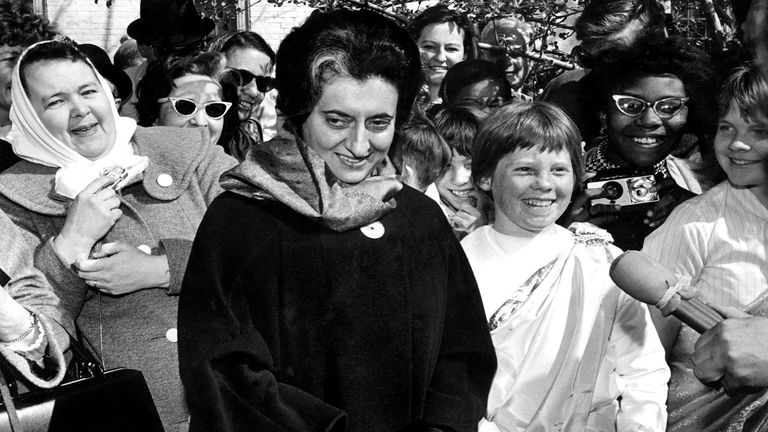
In 1975, India’s prime minister Indira Gandhi declared a state emergency and crackdown on opponents, civil rights and the press.

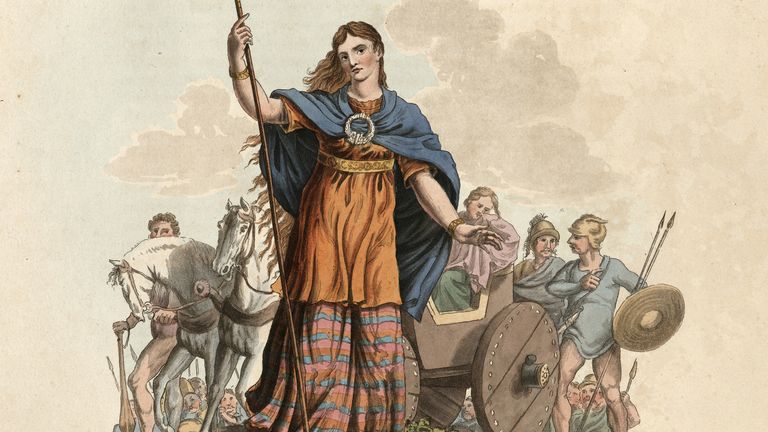
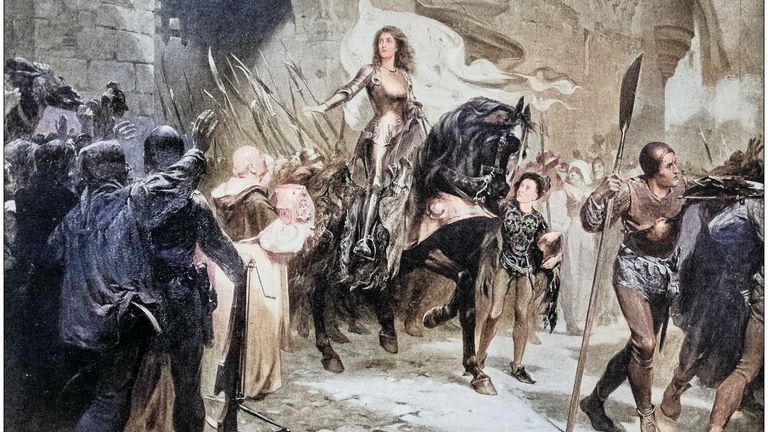
The warrior queen Rani of Jhansi led the Indian rebellion against the British in 1857, and before her there were Boudica and Joan of Arc.

Indira Gandhi, Prime Minster of India.
Pic: AP
Image:
Indira Gandhi, prime minster of India from 1966 to 1977 and again from 1980 until her assassination in 1984. Pic: AP

Portrait of Lakshmibai, the Ranee of Jhansi by Royal Artist of Jhansi Ratan Kushwah
Image:
Portrait of Lakshmibai, the Rani of Jhansi

So when asked if women could make the world more peaceful, Saini says: “Which women do you mean?”

She adds: “Because frankly, if it’s a choice of a world run by women like Thatcher and Liz Truss or, looking to the US, Marjorie Taylor Greene and Sarah Palin – that is not the kind of world that I would want to live in.”

So much would have to change to answer the question

The world has had so few women leaders that it makes it hard to truly compare them with men. (Although one paper found that queens in Europe in the 15th to 20th centuries were more likely to go to war than kings).

But just one in three UN countries has ever had even one woman in the top position.

Society would have to change so radically “in order to bring us to a world in which women are in charge, that it feels impossible to extrapolate from what we know today to that hypothetical situation,” says psychologist Cordelia Fine, who wrote “Patriarch Inc”.

Vintage engraving of Boudica , Queen of the Iceni..
Pic: iStock
Image:
Boudica, Queen of the Iceni. Pic: iStock

Joan of Arc..
Pic: iStock
Image:
Joan of Arc led the French army in repelling the English in the 15th century. Pic: iStock

Not just about the leader

But what we do know is giving women other forms of power does make societies more peaceful.

“Women’s leadership is not just about women being ‘in charge’,” says Mary Robinson.

Studies show that involving more women in: peace processes makes them last longer; in parliament leads to lower defence spending; and in elections makes democracies more peaceful.

And it is these types of societies that make way for different kinds of leaders.

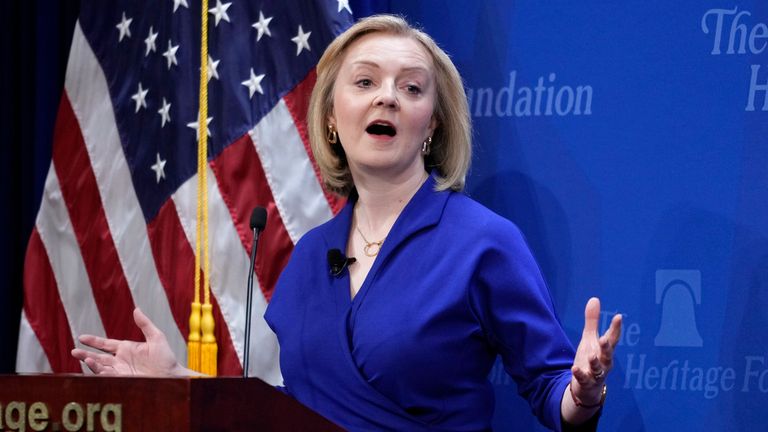
Liz Truss's time as prime minister lasted 49 days. Pic: AP
Image:
Liz Truss’s time as prime minister lasted 49 days. Pic: AP

In New Zealand – ranked fourth highest globally for gender equality – recent prime minister Jacinda Ardern attempted “a very different model of leadership” to aggressive counterparts, says Joslyn Barnhart, who researches women’s suffrage.

“Of course, we see things going very much in the opposite direction at the moment, much more towards a return to masculine, aggressive, assertive voices,” she says.

Various surveys from different countries have found women are more averse to war (whether this is nature or nurture is another debate) – though that balances out when the threat is imminent.

Mary Robinson says it is not that women are better than men.

It is that “solving the world’s toughest challenges needs all voices, not just those of half the global population”.


This story originally appeared on Skynews

Trump executive action targets Public Service Loan Forgiveness : NPR

0


The Public Service Loan Forgiveness program has provided relief for hundreds of thousands of borrowers.

Brynn Anderson/AP


hide caption

toggle caption

Brynn Anderson/AP

President Donald Trump has signed an executive action that directs the U.S. Education Department to exclude certain federal student loan borrowers from the Public Service Loan Forgiveness program.

The action says “individuals employed by organizations whose activities have a substantial illegal purpose” will no longer be eligible for the program, known as PSLF. It comes three weeks after Education Secretary Linda McMahon said at her Senate confirmation hearing she would keep the program intact.

Created by Congress, PSLF forgives the federal loan balances of borrowers who work in public sector jobs, including nonprofit organizations, after they have made 10 years of payments while working for their qualifying employer.

The executive action directs McMahon to redefine “public service” in a manner that “excludes organizations that engage in activities that have a substantial illegal purpose.”

Among the activities listed are: support for terrorism; child abuse, including “the chemical and surgical castration or mutilation of children or the trafficking of children to so-called transgender sanctuary”; “aiding and abetting illegal discrimination”; violating federal immigration laws; and state law violations such as “trespassing, disorderly conduct, public nuisance, vandalism, and obstruction of highways.”

Critics say that represents an attack on the free speech rights of borrowers, and on organizations that engage in activities that conflict with the administration’s agenda.

“What is happening is that debt is being used to scare hardworking public service workers from serving the most vulnerable members of our society, or speaking out against the Trump Administration’s radical agenda,” says Persis Yu, deputy executive director and managing counsel at the Student Borrower Protection Center.

Written into the PSLF law, signed by President George W. Bush in 2007, is a description of the types of public service employees who are eligible. Yu says it would take a lengthy federal rulemaking process to change those eligibility requirements.

Secretary McMahon and the White House could take steps to re-regulate the law. That’s what the Biden administration did in 2021, when it expanded the rules of PSLF.

One result of those changes was a boom in loan forgiveness. In January, toward the end of Biden’s term, the department announced in a statement that the “total number of borrowers approved for PSLF is now 1,069,000 and $78.46 billion. By contrast, only 7,000 borrowers had received PSLF at the start of the Biden-Harris Administration.”

While there are avenues for the Trump administration to regulate the way PSLF is administered, Yu says the president cannot redefine the law and who qualifies for it with an executive action.

“These borrowers have signed contracts [with the Department of Education] that embed this right to public service loan forgiveness in it, ” says Yu, adding he expects legal challenges to the executive action.

PSLF has a troubled history. In a 2018 review, the U.S. Government Accountability Office found that when borrowers called the company managing PSLF to make sure their jobs qualified, they sometimes didn’t get an answer — because the Education Department hadn’t given the company a list of eligible employers.

That same year, NPR reported that federal data showed 99% of applications for loan forgiveness through PSLF had been denied.


This story originally appeared on NPR

Hundreds of scientists from UCLA, USC protest Trump policy changes

0


Hundreds of scientists marched under sunny skies in front of federal offices in Los Angeles on Friday as part of a day of nationwide protests against Trump administration policies.

Pushing back against perceived threats to research and science, they bore on-theme signs, including one that read “What would Albert do?” accompanying a photo of Einstein.

The rally outside the Wilshire Federal Building drew graduate students and professors from USC and UCLA and was held under the banner of the Stand Up for Science movement, which drew inspiration from the March for Science held in 2017 shortly after Trump began his first term.

Many scientists once again feel under attack. In a matter of weeks, the second Trump administration has slashed jobs at science agencies — including the National Institutes of Health, National Science Foundation and National Oceanic and Atmospheric Administrationpulled the U.S. out of the Paris climate agreement (again), clawed back research papers under review at scientific journals to scrub terms that the political right has railed against, such as “transgender,” and terminated funding for global health programs. The administration has also attempted to block grants and reduce funding for research institutions.

Protesters hold up science-related signs to express their discontent. The Los Angeles rally was one of at least 32 Stand Up for Science demonstrations held nationwide on Friday.

(Myung J. Chun / Los Angeles Times)

“We have seen incredible disarray and attempts to dismantle a very effective research infrastructure in this country. And we have to say, enough is enough,” Judith Currier, a professor of medicine at UCLA, said at the demonstration, that took place in the shadow of offices for agencies including Veterans Affairs.

At least 32 coordinated rallies were held across the country Friday, anchored by a march on the National Mall in Washington, D.C., attended by thousands.

Duke Han, a professor of psychiatry and family medicine at USC, said that although he wasn’t as involved in the March for Science movement during Trump’s first stint in the White House, he chose to participate in these protests because the level of interference has grown in significance. Science has historically been considered nonpartisan, but events in recent years have galvanized those in the field to speak out.

“A lot of us are trying to figure out what we can do,” Han said. “A number of us are becoming more politically active, or politically active for the first time.”

For Han, the impact isn’t theoretical. He says his institution has become more cautious about giving offers to graduate students. A grant that was supposed to fund research he’s involved with to identify early signs of Alzheimer’s disease is five weeks late. He reached out to contacts at NIH but believes “it’s something that’s happening above them.”

A protester holds a sign in a crowd

The rally outside the federal building in Westwood drew professors, graduate students and others.

(Myung J. Chun / Los Angeles Times)

Several people at the protest said that the money used to fund scientific work pays dividends — and that losing it can have disastrous consequences for biomedical research, pharmaceutical development and more. Younger scientists shared the concern at the event. An international student at UCLA said the reason she came to the United States was for the “great opportunities” for research. “But look at the situation now,” said the 21-year-old undergrad, originally from India, who declined to provide her name because of how it might affect her immigration status.

Katherine Karlsgodt, an associate professor at UCLA in the psychology and psychiatry departments, who helped organize the Los Angeles rally, said she was “very upset” by the barrage of changes and concerned about their ramifications.

Alterations to science agency funding “have the potential to just completely derail scientific research and medical research [and] have a huge impact on universities and university budgets and our ability to train students and do research and basically everything that we do.”

Karlsgodt caught wind of the Stand Up for Science effort but was disappointed when she didn’t see a local rally on the books. Then some people at UCLA and USC got to talking, she said. One of her students — Dylan Hughes, a PhD student in the clinical psychology program at UCLA — booked the site and they began trying to spread the word. By the evening before the event, 300 people had RSVP’d.

Hundreds gathered for the Stand Up for Science rally.

“This is a really dark time for science and for humanity,” said Dylan Hughes, a UCLA graduate student who helped organize the Los Angeles rally, “but there’s an energy that we’ve created here that’s really helpful and has the power to change the world.”

(Myung J. Chun / Los Angeles Times)

Expressions of anger and alarm intermingled with hope and solidarity at the rally. Sam Cooke’s “A Change Is Gonna Come” played as scores of attendees mingled and flashed pithy signs to cars speeding down Wilshire Boulevard. Honks elicited cheers. A dog in the crowd sported a sign announcing, “Dogs against DOGE,” around its neck, a reference to the so-called Department of Government Efficiency, headed by Elon Musk, who has led much of the Trump administration’s cost-cutting efforts.

What’s now a national movement began as a Bluesky post.

On. Feb. 8, Colette Delawalla, a graduate student in psychology at Emory University, announced online that she was planning a national protest for science, according to the New York Times. It hit a collective nerve, and other scientists quickly hopped on board, evolving into Stand Up for Science.

Behind the rallies are policy goals outlined on the group’s website, including ending political interference and censorship; restoring and expanding research funding; and defending diversity and accessibility.

Back in L.A., Hughes, the UCLA PhD student, who helped spearheaded the local event, urged people to take in the moment.

“This is a really dark time for science and for humanity,” Hughes said, “but there’s an energy that we’ve created here that’s really helpful and has the power to change the world.”

Hundreds gathered for the Stand Up for Science rally.

The Stand Up for Science movement drew inspiration from the 2017 March for Science.

(Myung J. Chun / Los Angeles Times)


This story originally appeared on LA Times

Sean O’Malley and Merab Dvalishvili declare hot tub truce at UFC PI

0


The UFC Performance Institute in Las Vegas continues to generate interesting moments as fierce rivals end up training feet apart … and sometimes end up becoming friends in a hot tub?

Sean O’Malley and Merab Dvalishvili had a heated lead-up to their fight at UFC 316 that saw “The Machine” take “Suga’s” bantamweight belt via unanimous decision. Things got so nasty between the two camps that Dvalishvili threatened to throw down with O’Malley’s coach should they run into each other in Sin City.

Things are cooler now even though it looks like Merab’s next fight will be the “Suga” rematch. The two ran into each other at the UFC PI and ended up taking some pics and sharing some complimentary words.

“Ready to go again?” O’Malley asked in a video on his social media. “Your last fight was impressive, you looked good, that was a fun fight to watch.”

“When we gonna fight, I know you hit hard and then I know you’re gonna change plan,” Dvalishvili replied.

“I only had one hip last time,” O’Malley said. “I got the both hips now. Yeah, I got both hips.”

“I’m gonna use my striking,” Merab said and when O’Malley laughed he added, “You think I won’t? You think I’m not? Look what I did to Umar. It was striking.”

“I know!” O’Malley replied. “It was like what the hell? I didn’t know you could do that.”

The two parted ways with a well-natured O’Malley joke.

“I would say good luck,” he said. “But no. I hope you have bad luck.”

O’Malley hasn’t fought since the Dvalishvili loss. Immediately after he underwent surgery to fix an injured hip, and has since sworn off online life as he prepares to try and win his belt back. Merab kicked off 2025 with a win over Umar Nurmagomedov at UFC 311, and sounds eager to get back to action sometime in the summer.

Will the peace between Sean and Merab hold, or are things going to get mean again once their rematch is announced? Let us know in the comments below how you think a second fight will go.


This story originally appeared on MMA Mania

Apple wins patent battle against AliveCor

0


A federal court has ruled in Apple’s favor in the years-long fight against AliveCor, preventing a potential total import ban on the Apple Watch.

The ruling came in on Friday. In that ruling, a federal court of appeals invalidated AliveCor’s claims that Apple had infringed on its patented information.

Apple is understandably pleased. It provided AppleInsider with a statement.

“We thank the Federal Circuit for its careful consideration in this case. Apple’s teams have worked tirelessly over many years to develop industry-leading health, wellness and safety features that meaningfully impact users’ lives, and we intend to stay on this path.”

The company goes on to point out how millions have benefited from the health features on Apple Watch, and is glad that it can continue to provide important heart monitoring features to its customers.

In 2020, AliveCor claimed that Apple infringed on its intellectual property by using patented information when creating the AFib detection feature in Apple Watch Series 4 and onward. Just a few months later, AliveCor sought out an Apple Watch ban.

In 2022, the US Patent Office’s Trial and Appeals Board sided with Apple, claiming the company did not infringe on AliveCor’s patents. However, shortly after, an ITC judge sided with AliveCor, recommending that the ITC conduct a full review of the case.

When the ITC found Apple guilty of patent infringement in December 2022, it imposed a Limited Exclusion Order on Apple. The order would set a $2.00 bond per infringing Apple Watch imported or sold during the Presidential review period.

The ITC suspended the enforcement, pending a review by the USTP the US Patent Trial and Appeal Board — the same board that found the patent infringement claims invalid the first time.

That same month, Apple had retaliated, launching its own countersuit against the mobile ECG firm. The suit claimed that AliveCor had “brazenly infringed” on Apple’s technology, which it had “developed years before AliveCor even came into existence.”

By 2024, Apple had beat the antitrust lawsuit levied against it when US District Judge Jeffery White released a summary judgment ruling in favor of Apple. It upheld the notion that Apple wasn’t violating any AliveCor patents in Apple Watch models with redesigned ECGs.

According to Reuters, AliveCor was “deeply disappointed” in the ruling. It is reportedly examining “all available legal options, including potential appeals.”

And, the company has issued a statement to AppleInsider and others. We have included it in its entirety.

“We are deeply disappointed by the Court’s decisions this morning and that the Court did not review the available secondary considerations, which the ITC found to be persuasive in their finding of validity. Today’s ruling does not affect our business or ability to continue innovating for our growing base of millions of customers.

These cases go beyond AliveCor; these cases represent every small company and every future innovation that is at risk of being suppressed by a Goliath. Our fight against Apple is necessary to preserve innovation, fair competition, and the ability to ensure that inventors – both today and of the future – have the IP protection needed to build and scale new technologies.

We will continue to explore all available legal options, including potential appeals, to defend our position that our patents are valid and that Apple infringed our intellectual property rights. As we move forward, our focus remains on transforming the industry with clinically validated, AI-powered solutions that help democratize access to cardiac care.”

Timetable on appeals, given that Friday’s ruling was from an appeals court, aren’t exactly clear.


This story originally appeared on Appleinsider