


The famous tale of young George Washington chopping down his father’s cherry tree and subsequent confession of “I cannot tell a lie” is just that — unverified, to say the least.
The story first appeared in 1806 in the fifth edition of a biography about Washington’s life written by Mason Locke Weems. It was likely included to paint Washington as deeply honest. In reality, there is very little historical evidence regarding Washington’s relationship with his father, who died when Washington was 11 years old.
Washington and the cherry tree is one of many stories from America’s founding that don’t hold up to scrutiny. If you think you know the origins of the American flag, what Paul Revere really said on his famous ride or who invented peanut butter, you may be surprised.
To mark 250 years of U.S. independence, here are the real stories behind common American history myths.
Betsy Ross and the original flag
Betsy Ross is one of the few recognizable women from the colonial era. Although she was an accomplished seamstress, there is no historical evidence she sewed the first American flag.
She ran a successful upholstery business in Philadelphia. She worked on uniforms, tents and flags for the Continental Army led by Washington, according to the National Women’s History Museum.
The story you may have heard growing up was that Washington brought Ross a rough sketch of the flag in 1776, and she suggested turning the six-pointed stars into five-points and subsequently sewed the first American flag.
The story was first publicized by Ross’s grandchild, William Canby, in 1870, over 30 years after her death, as a piece of family lore that Ross told her children. But no additional historical evidence corroborates the story.
Congress adopted the first official American flag design on June 14, 1777. It was likely designed by New Jersey Congressman Francis Hopkinson. In 1780 he wrote to the Board of Admiralty requesting compensation for his design, saying a “quarter cask of the public wine” would serve as payment.
The Board of Treasury rejected his requests, saying he was not the only contributor to the design and had received a salary.
Madeline Burk, portraying Betsy Ross, holds a flag as it is hoisted up at the Betsy Ross House in Philadelphia, Monday, June 9, 2025. (AP)
Washington didn’t have wooden teeth. (Teeth of enslaved people? Maybe.)
Washington had bad teeth. By his inauguration, he had only one real tooth left. But the dentures he wore were not made of wood, as the curious lore goes.
According to George Washington’s Mount Vernon estate, Washington had at least four sets of dentures made with metals, including lead, gold and tin. Some sets used teeth from cows and horses and ivory from the tusks of hippopotamuses or walruses.
Small wood pegs were sometimes used to hold the ivory teeth in place, but the teeth themselves weren’t wooden.
At least two of the dentures include human teeth — it’s not clear whose. Washington kept some of his pulled teeth for later use, and 18th century dentists kept a stock of human teeth purchased from poor people, enslaved people or taken from dead people.
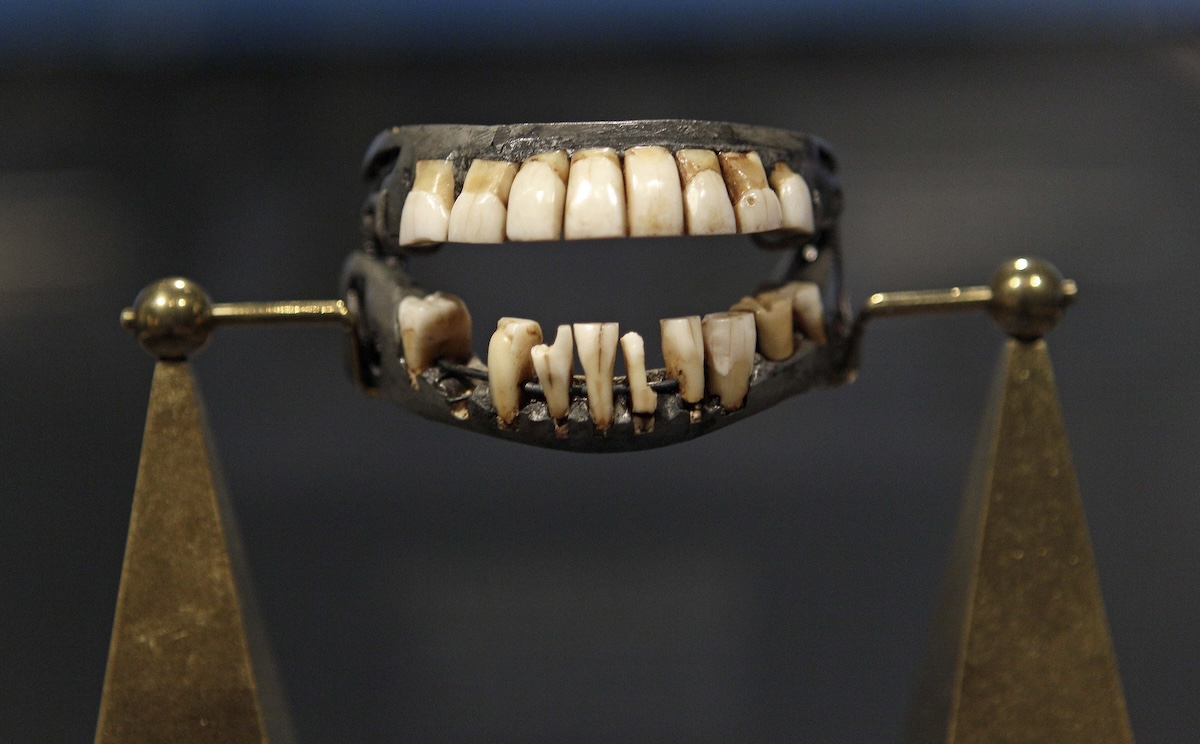
In this Sept. 9, 2010, photo, dentures worn by George Washington are on display at an exhibit at the N.C. Museum of History in Raleigh, North Carolina. (AP)
It is possible that the teeth came from enslaved people who worked under Washington, but the evidence is unclear.
Surviving financial records from 1784 show Washington paid cash to multiple enslaved people for nine teeth to be given to French dentist Jean Pierre Le Mayeur. But it’s not clear that they ended up in Washington’s dentures.
Despite Le Mayeur’s frequent visits to Mount Vernon, there are no records detailing what dental services he may have provided Washington, or what happened to those nine teeth. None of Washington’s dentures from this time period include human teeth. Le Mayeur may have used the teeth for a different patient or denture set.
Washington’s surviving dentures that contain human teeth weren’t made until 1789 by another dentist. There is no record of how those teeth were obtained; it’s possible they were from enslaved people.
We don’t know where the wooden teeth myth started. The dentures’ ivory may have become so stained with age that they appeared wooden. In 1798, Washington sent a set of his dentures to dentist John Greenwood for repair. Greenwood wrote in a letter that the set was “very black” and advised more regular cleaning.
Paul Revere didn’t shout ‘The British are coming!’
On the evening of April 18, 1775, Paul Revere rode from Boston to Lexington to warn his fellow Sons of Liberty about the coming attack from the British troops. But he probably didn’t shout “The British are coming!”
This was a stealth mission. Some colonists were still loyal to the crown, so Revere had to carefully alert fellow patriots without awakening known loyalists.
What did he say? According to the sworn testimony of Sgt. William Munroe, who was guarding the house where fellow Sons of Liberty Samuel Adams and John Hancock were staying, Revere actually said, “The Regulars are coming out.”
“The Regulars” was used to describe British military forces. Many of the colonists would have still thought of themselves as British, making it unlikely they would say “the British are coming.”
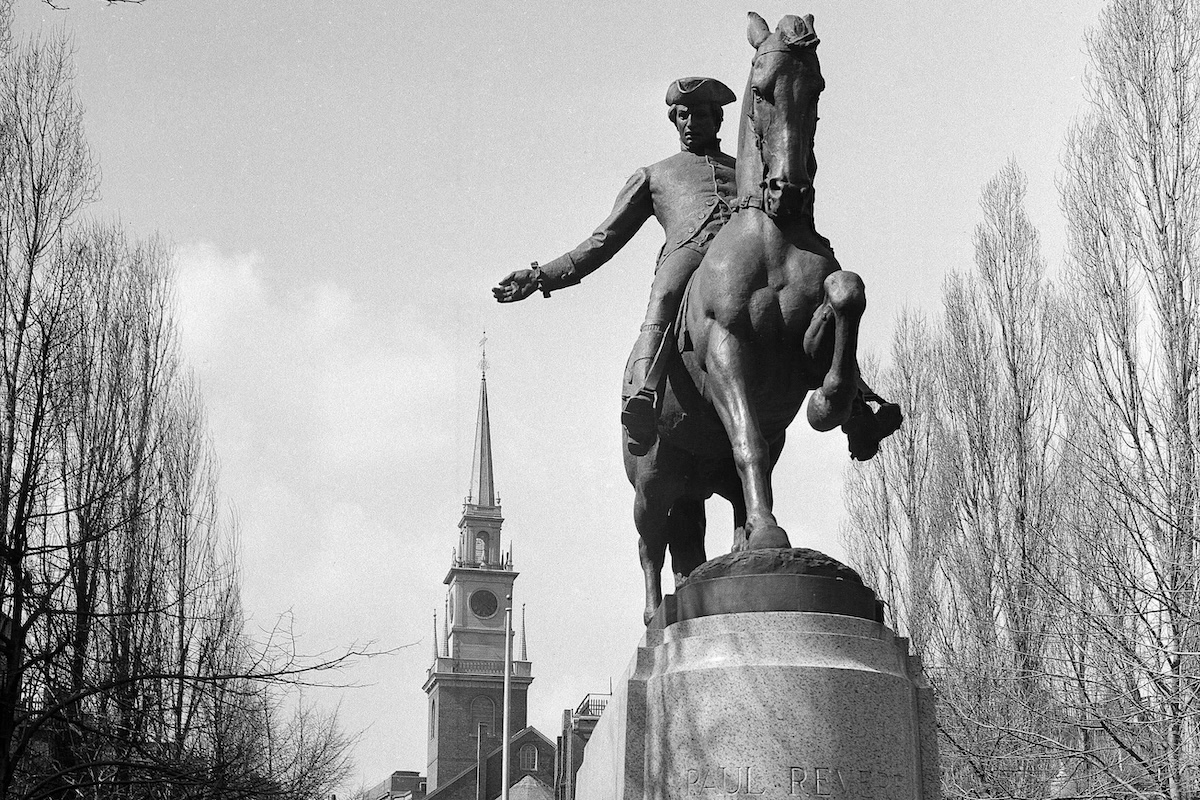
The statue of Paul Revere in front of Christ Church in Boston on March 23, 1948. (AP)
They didn’t burn ‘the witches’ during the Salem witch trials
Burning people (mostly women) accused of witchcraft was a historical practice, especially in medieval Europe. But the most famous American witch hunt didn’t involve flames.
In early 1692, several young women in the Puritan town of Salem, Massachusetts, were diagnosed with “bewitchment” after unexplained screaming fits and contortions. Hysteria ensued, with young girls accusing other women of witchcraft. Some denied it, others confessed.
In May 1692, the governor of Massachusetts appointed a special court to hear the cases. By the end of the trials, the court had executed 20 people, most by hanging. One elderly man, Giles Corey, was pressed to death with heavy stones, and several others died in jail awaiting trial. By the end of the trials, more than 200 people had been accused of witchcraft.
According to John Howard Smith, a Texas A&M University history professor, witch hunts were uncommon in colonial America. Salem was an anomaly.
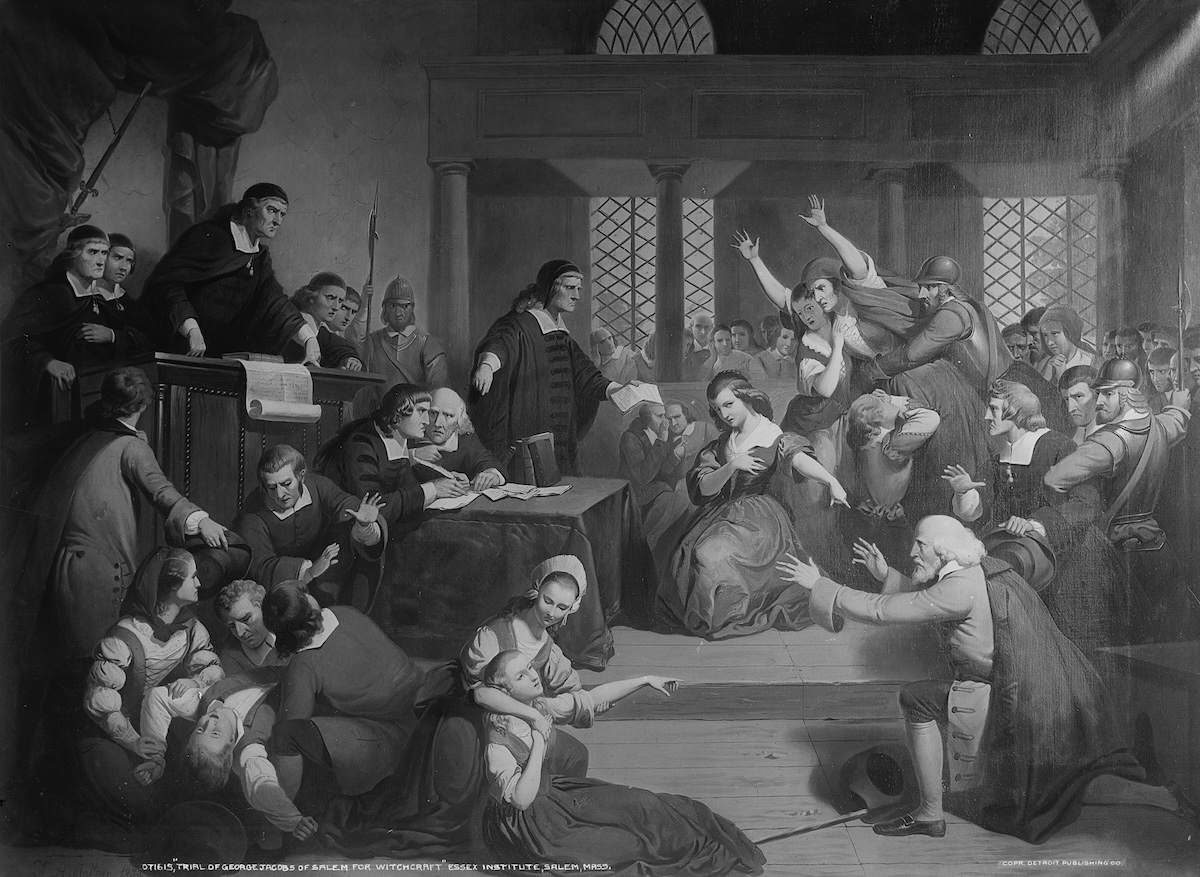
This image provided by the Library of Congress shows the painting “Trial of George Jacobs of Salem for Witchcraft” in 1692 signed “T.H. Matteson, 1855.” (Library of Congress via AP)
George Washington Carver did not invent peanut butter
George Washington Carver, born into slavery, was an inventor and agricultural chemist dedicated to improving Southern agriculture and helping Black sharecroppers. While he was a big fan of the peanut, he didn’t invent peanut butter.
By the turn of the 20th century, nonstop cotton production in the American South had exhausted the soil, and left the economy reliant on a single cash crop, which was almost eradicated by a boll weevil outbreak in 1914. After much experimentation, Carver encouraged farmers to diversify their crops and plant peanuts, soybeans and sweet potatoes instead.
There needed to be a market for all those peanuts. Carver developed over 300 derivative products from peanuts including ink, dyes, cosmetics, glue, soap and milk. He developed over 100 uses for the sweet potato.
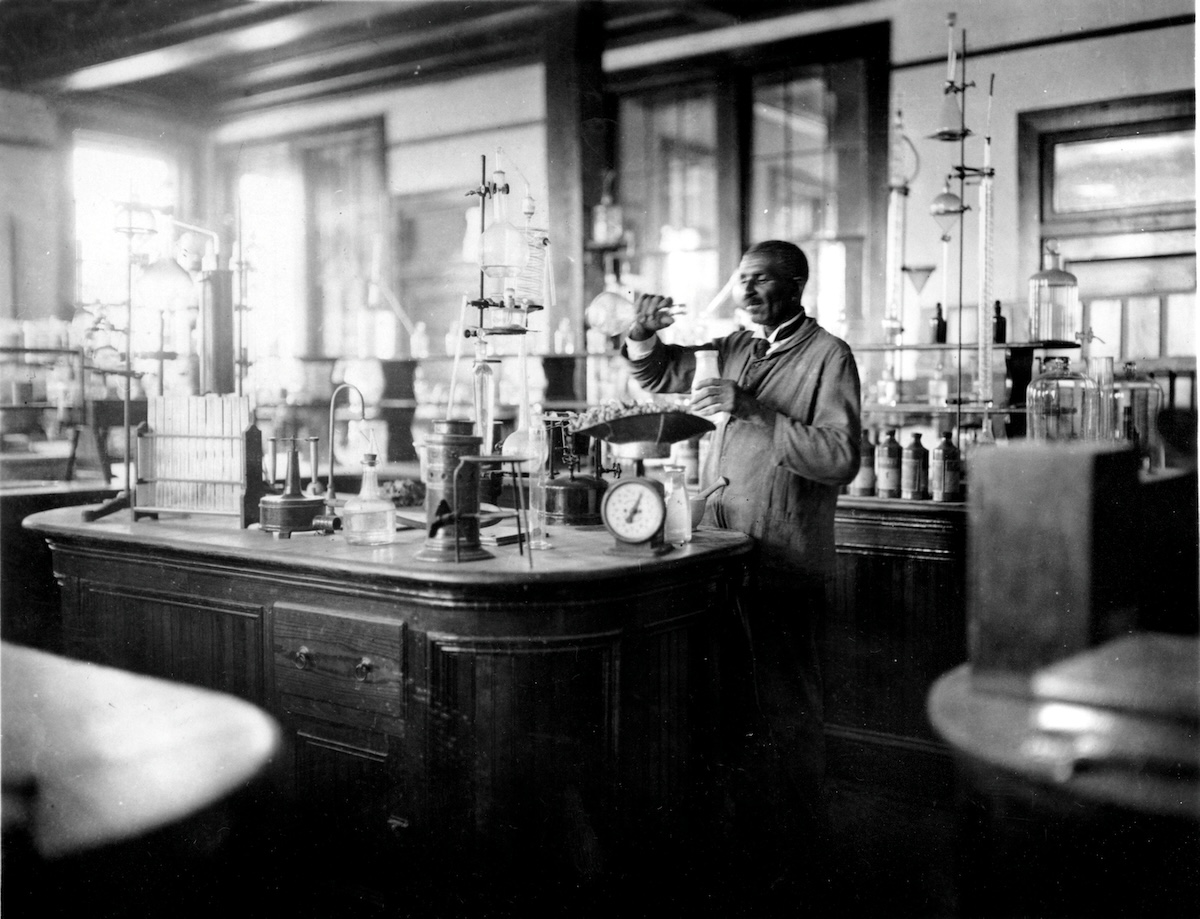
Dr. George Washington Carver works in his laboratory at the Tuskegee Institute in Alabama in this undated photograph. (AP)
The delicious sandwich ingredient had already been invented.
According to the National Peanut Board, there is evidence of ancient Incas and Aztecs grinding peanuts into a paste, but commercial production didn’t start until the late 1800s. In 1884, Canadian Marcellus Gilmore Edson patented peanut paste, made from milling roasted peanuts. In 1895, Dr. John Harvey Kellogg, of cereal fame, patented a way to make peanut butter from raw peanuts.
Carver is certainly responsible for turning the peanut from a source of animal feed and circus snack to a lucrative commercial agricultural crop that could be used in the production of peanut butter.
Now that you know what isn’t true, check out these five surprisingly true facts about American history.
This story originally appeared on PolitiFact

