


Award tickets on Air France and KLM are about to look a lot more like cash tickets. Starting September 8, 2026, Air France KLM Flying Blue will sell every award on its own flights in one of three fares named Light, Standard, and Flex.
The short answer is that the price floor survives. The cheapest award simply becomes the Light fare, with Standard and Flex stacked above it for more miles.
The longer answer depends on whether you hold elite status. Elites keep everything they have today, while everyone else will find the cheapest fare includes less than it used to.
How the Three New Award Fares Work
If you’ve bought a cash ticket on Air France or KLM lately, you’ve seen this menu before. Flying Blue is borrowing the same Light, Standard, and Flex structure for its reward tickets, leaving out only the Basic fare.
Selling awards in bundles is also part of a wider industry shift. Emirates Skywards has offered Saver and Flex award fares for years, and Qantas layered Classic Plus rewards onto its Classic awards in 2024, so loyalty programs are steadily borrowing the merchandising playbook from the cash side of the business.
The new setup covers every cabin except La Première on flights operated and marketed by Air France or KLM. Partner awards aren’t changing at all, and a booking that mixes Air France or KLM flights with a partner flight will only offer the Standard fare.
Anything ticketed before September 8 keeps its original conditions, even if you change the booking later.
For members without status, the differences come down to baggage and flexibility.
| Light | Standard | Flex | |
|---|---|---|---|
| Checked baggage | None in economy and Premium; one in business | One in economy; two in Premium and business | One in economy; two in Premium and business |
| Changes | Not permitted | €70 fee | Free |
| Refunds | Not permitted | €70 fee | Free |
| Advance seat selection | Extra cost | Extra cost | Included |
| Lounge access | Extra cost | Included in business only | Included in business only |
Checked bags are 23 kg each in economy and Premium, and 32 kg in business class. Business Light comes with one bag instead of two, and it only shows up in the O and Z fare classes.
Refunds on Standard and Flex require cancelling before the first flight of your trip, with miles redeposited for free on Flex or for €70 on Standard. Anything a fare leaves out, like an extra bag or a seat, can still be added for a fee.
One more quirk is worth noting. Fare brands can’t be mixed in a single booking, other than across cabins within the same brand, so an Economy Light can sit next to a Business Light, but not next to a Business Flex.
The Lowest Award Will Come with Less
Today, a Flying Blue award comes one way, with one set of rules. Even without status, the lowest-priced economy award includes a 23 kg checked bag, and you can change or refund the ticket for €70.
From September 8, that same price point becomes the Light fare. Book it without status, and the checked bag disappears along with any ability to change or cancel.
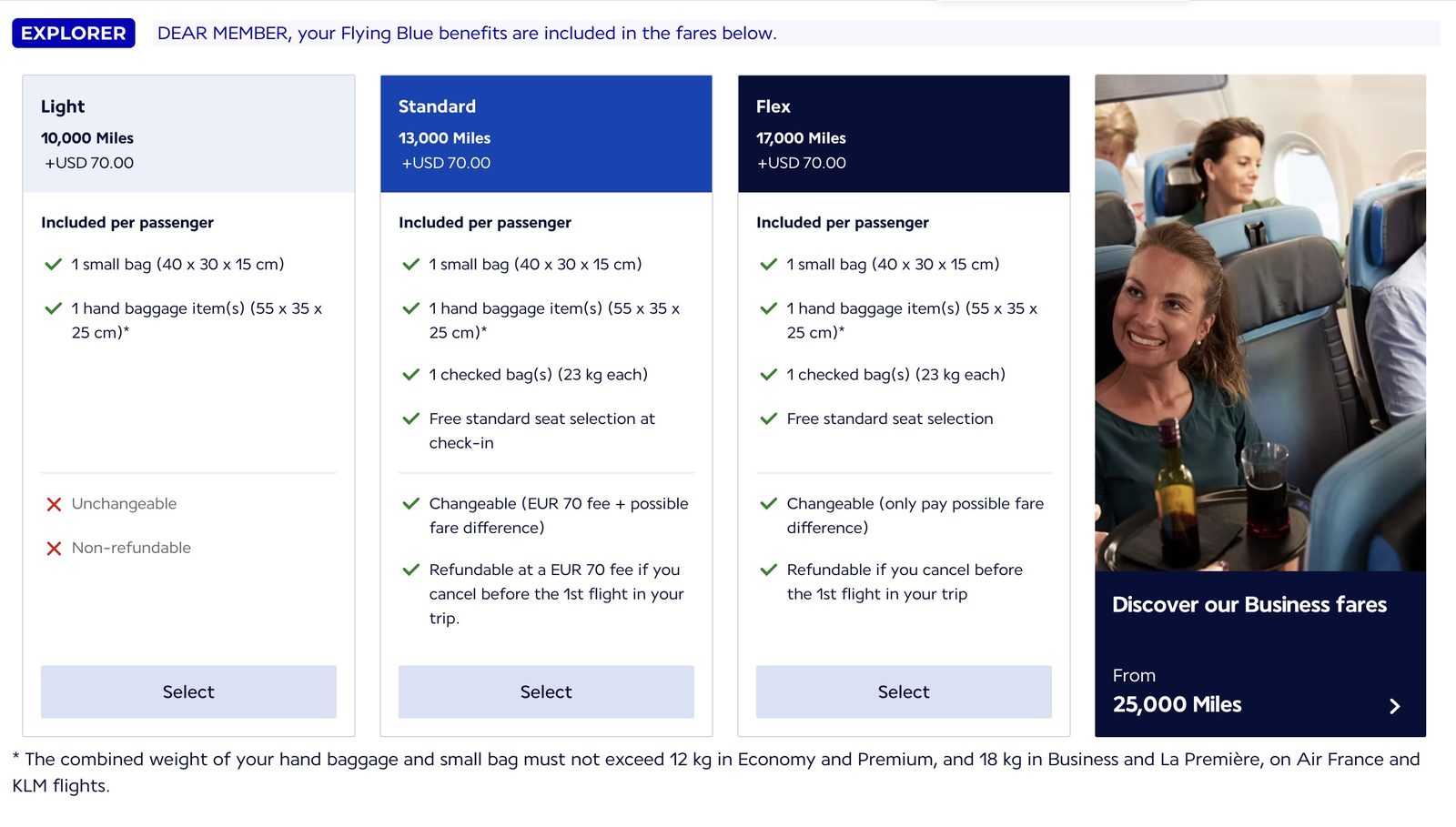
Getting today’s conditions back means stepping up to Standard, which runs 3,000 miles more on this route. That’s the quiet cost of this change. The price floor holds, but it covers less than before.
What the New Fares Cost
Nothing changes with availability or the number of award seats released. In the Berlin to Barcelona example above, Light prices at 10,000 miles, Standard at 13,000 miles, and Flex at 17,000 miles, each with US$70 in taxes and fees.
The gaps widen on long-haul flights. Today, a Paris to New York business class award books as a single fare at 60,000 miles, with two 32 kg checked bags included and €70 changes and refunds.
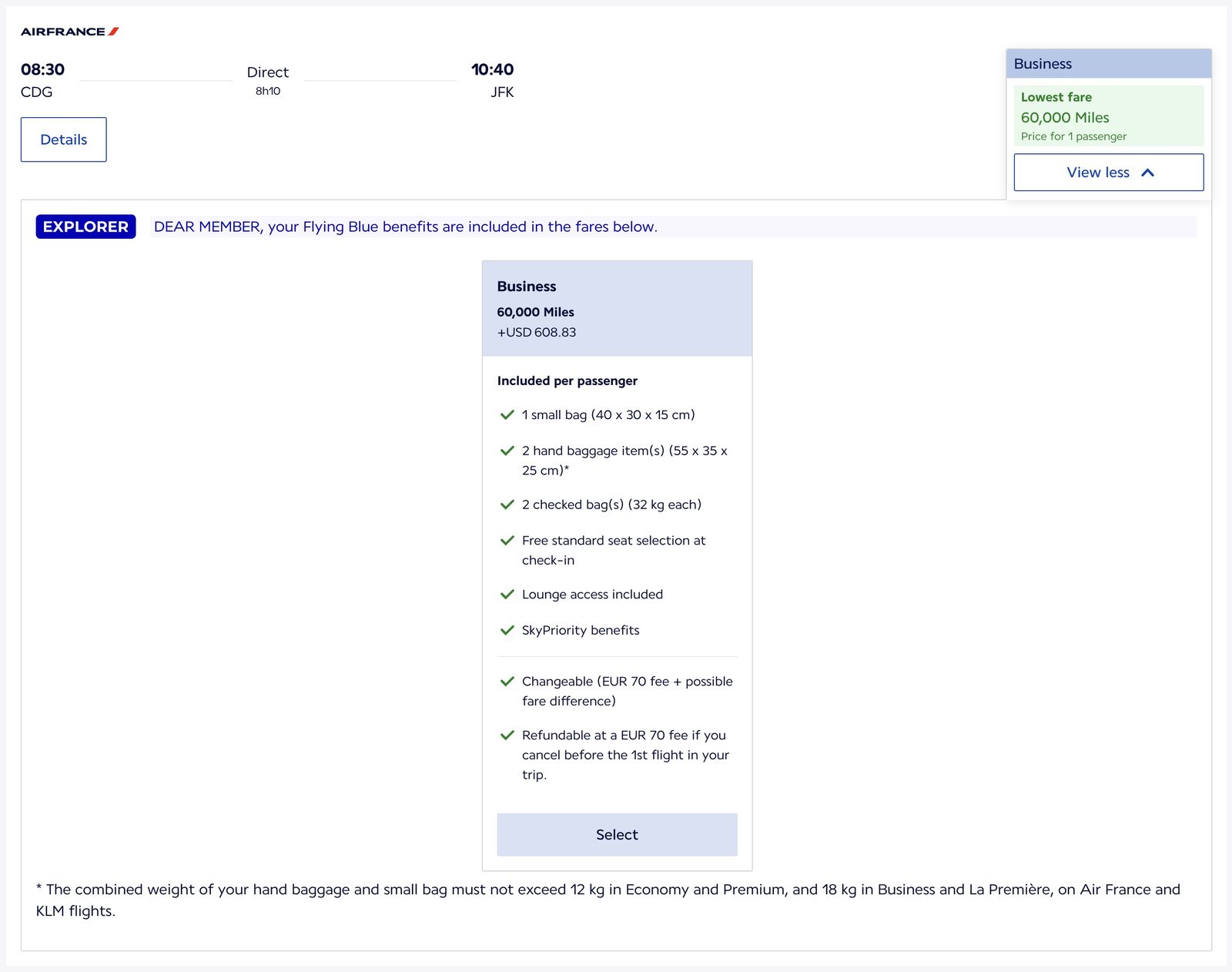
From September 8, that award splits three ways, and the same pricing applies from Canada.
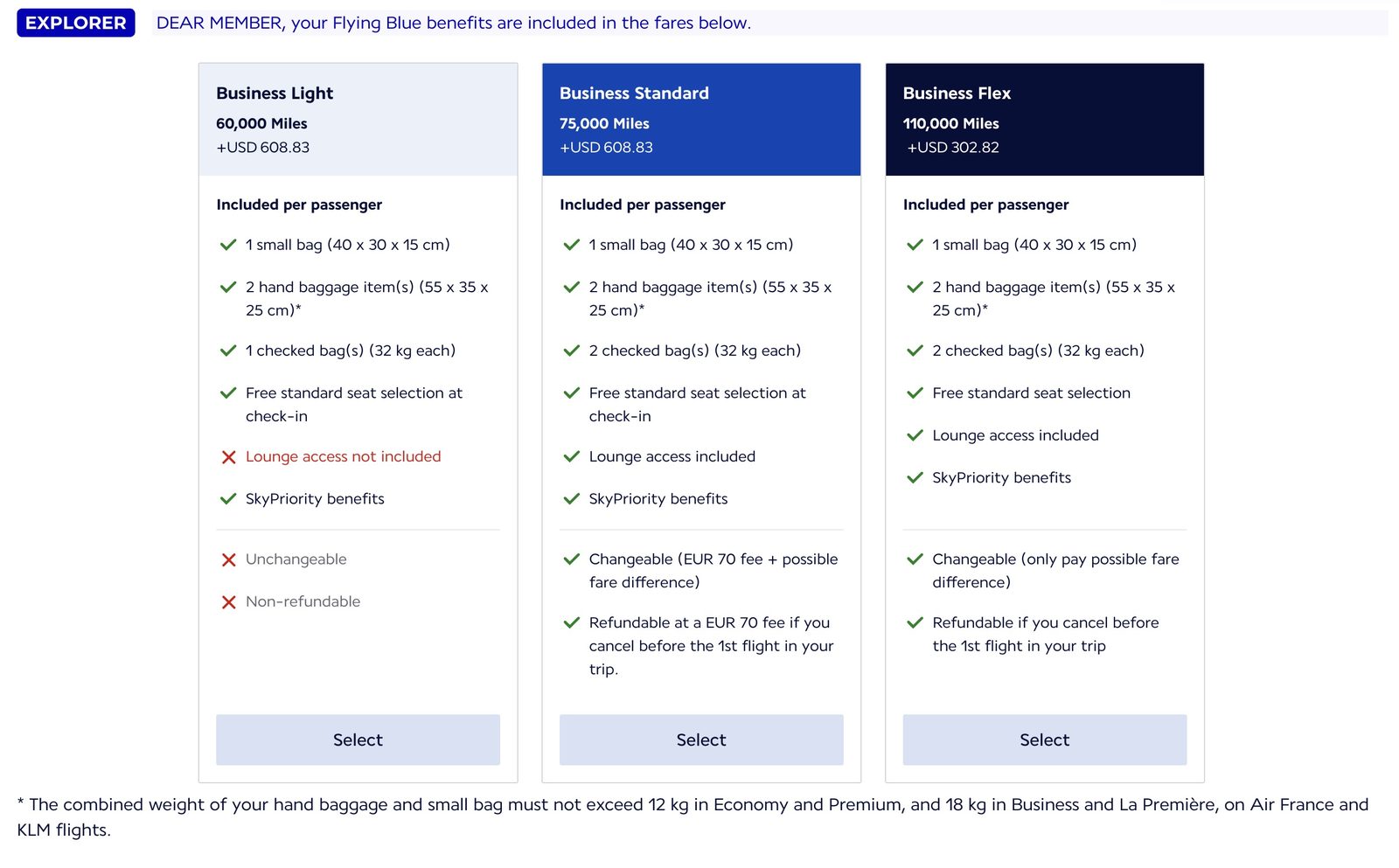
Flex stands out here. It costs 50,000 more miles than Light, yet its cash portion is about US$306 lower.
That’s a first for Flying Blue. On Flex fares, part of the carrier surcharges convert into miles, so the ticket draws more from your balance and less from your wallet. The taxes that remain must legally be paid in cash.
Run the numbers with our valuation of 2.0 cents (CAD) per Flying Blue mile, and the ladder gets clearer. Standard’s extra 15,000 miles carry about $300 (CAD) in value, which buys the second checked bag and the option to change or refund for €70.
Flex is a tougher sell on math alone. Its extra 35,000 miles over Standard are worth roughly $700 (CAD) against a cash saving of about US$306, so you’re effectively spending miles at under 1 US cent each to shed the surcharges, well below what we think they’re worth. The upgrade earns its keep only if you’re rich in miles and short on cash, or if free changes and refunds carry real weight for your plans.
If you’re sitting on a big balance, our guide to the best ways to redeem 60,000 or more Flying Blue miles shows where they stretch furthest.
Elite Status Is About to Get More Valuable
Status is the shield in this system. Whatever fare you book, your elite benefits follow you and override its restrictions.
In practice, each tier keeps what it already has, no matter how cheap the fare.
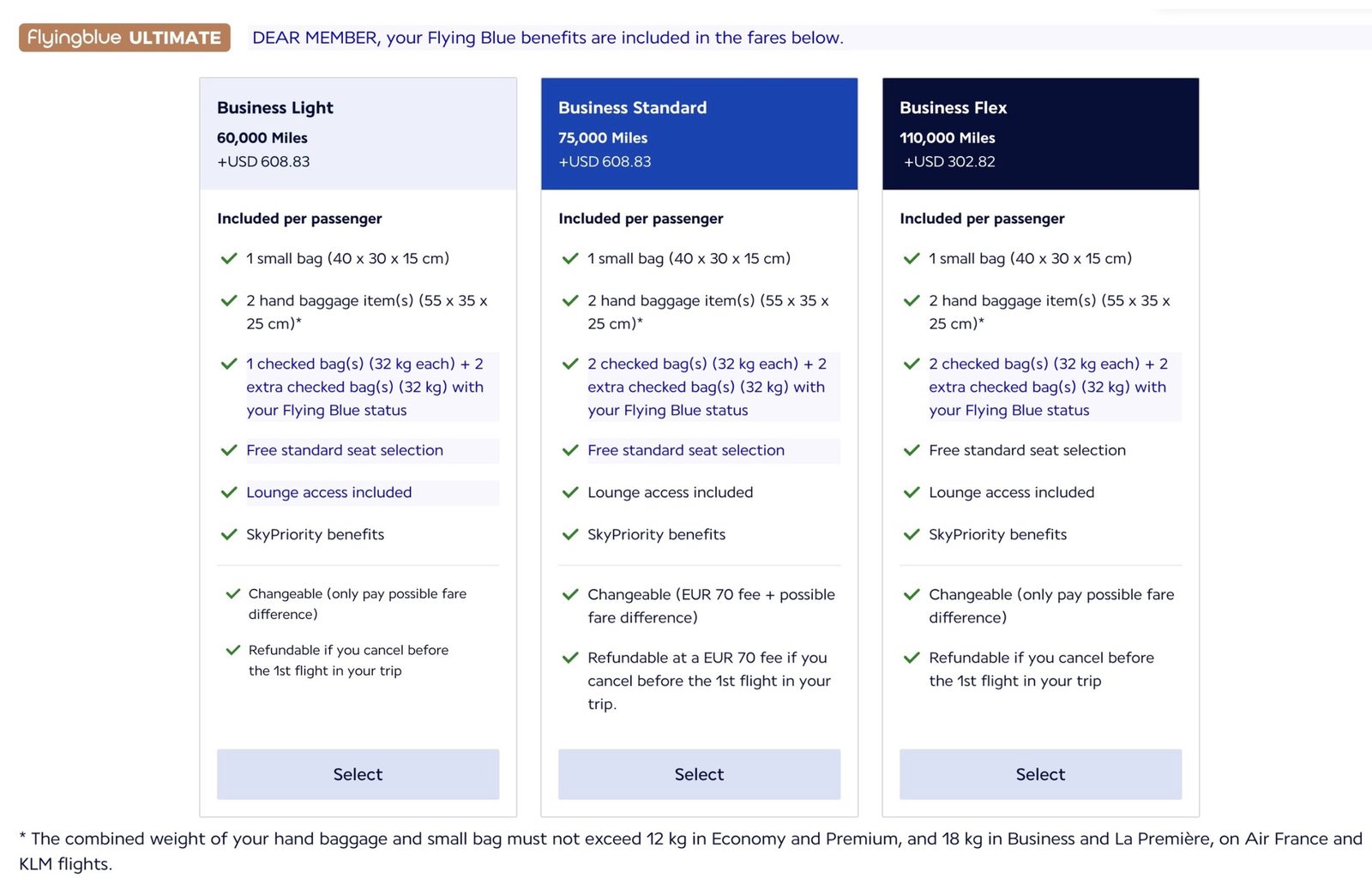
- Platinum and Ultimate: nothing changes. Even a Light fare comes with bags, free changes, and free refunds.
- Gold: most benefits stay in place on a Light fare.
- Silver: the checked baggage allowance stays.
SkyTeam status from other airlines counts too. Flying Blue treats SkyTeam Elite Plus, the level tied to its own Gold tier, at the Gold standard, so an Elite Plus member from Delta, Kenya Airways, or Vietnam Airlines Lotusmiles keeps most benefits on any award fare flown on Air France or KLM. SkyTeam Elite lines up with Silver and preserves the checked bag.
Full immunity from the fare rules starts at Flying Blue’s own Platinum tier, and you can see how the tiers ladder up in our Flying Blue elite status guide.
That layering is deliberate. Flying Blue’s own announcement describes the new structure as a way to further differentiate the value of status benefits, and the smoothest ride belongs to its own Platinum and Ultimate members, one step above what partner elites can reach.
Co-brand credit card perks survive as well. A card that comes with a checked bag allowance keeps that bag on a Light fare.
Change and refund fees are part of the same story, and Platinum and Ultimate members are supposed to have them waived outright, making Light and Standard functionally identical at the top tiers. The screenshot above still shows a €70 fee on Standard even in the Ultimate view, and we’ve asked Flying Blue to clarify whether that’s a display error. We’ll update this article once we hear back.
What Flying Blue Is Really Doing Here
Members with status land on the right side of this change. If anything, elites come out slightly ahead, and Flying Blue clearly built the structure around protecting them.
For everyone else, something real does go away. The headline price didn’t move, but recreating today’s conditions means paying up for Standard, a gap of 3,000 miles on our Berlin example and one that will vary by route. Compare that with the North American habit of simply repricing awards upward, and it lands gently.
It would’ve been easy to answer rising costs the way several North American programs did, by going fully dynamic. Flying Blue went the other way, keeping a published floor and the award charts it brought back a few years ago.
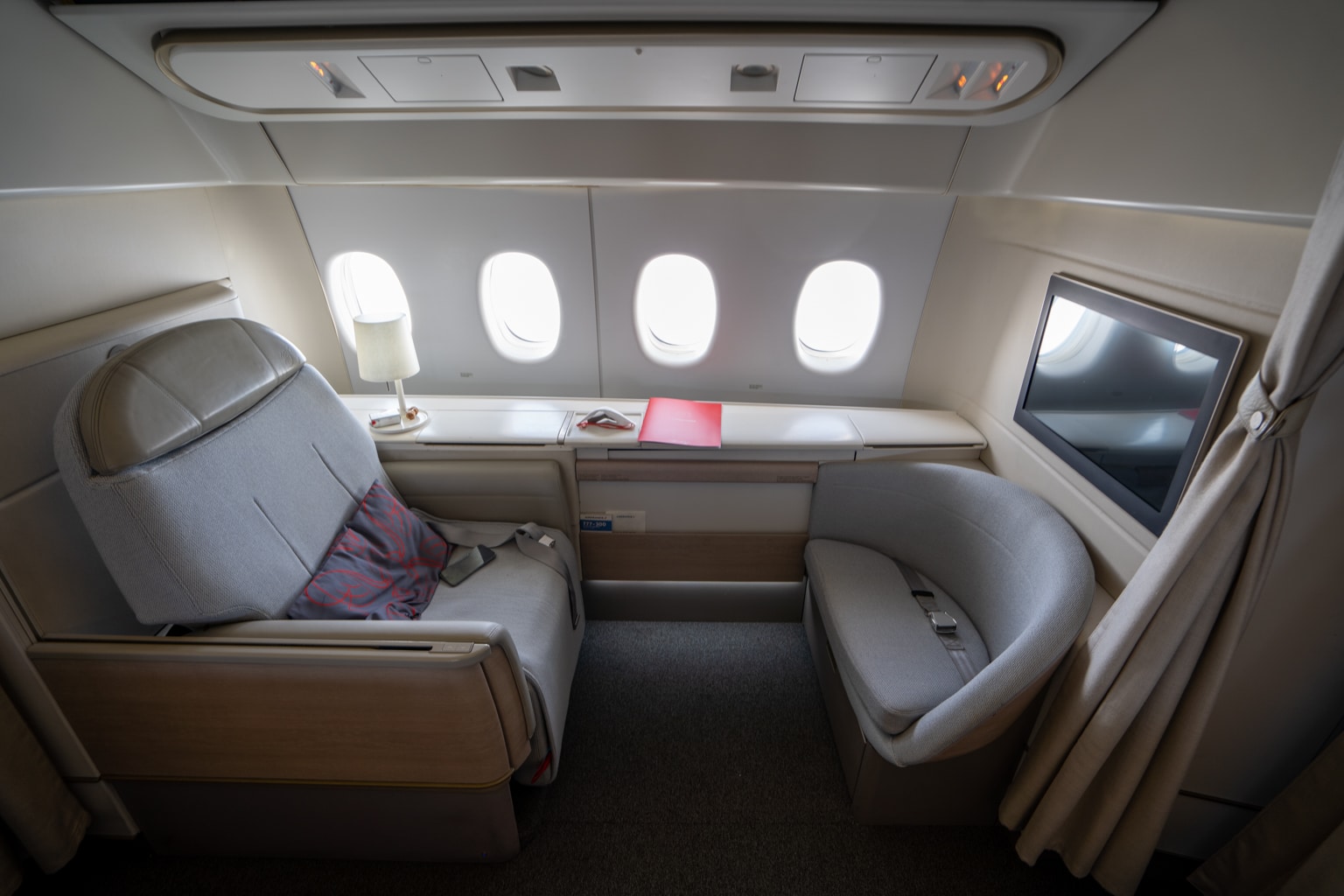
The context is a program serving two very different markets. Flying Blue’s core customers are in Europe, where salaries run lower, cards earn less, and miles build far more slowly than they do on this side of the Atlantic.
Most of its members simply can’t earn miles at anything close to the pace of the North Americans who fill its planes in the other direction.
Splitting the fares is how those two markets coexist. Travellers who want the extras can pay for them in miles, while the entry price stays put for members who count every mile. North Americans arriving with deep transferable points balances can buy up to Standard or Flex, and nobody else is forced to follow them.
It also explains where Flying Blue stands next to its American peers. The program has shown no appetite for the pricing arms race playing out in North America, and this structure reads like its way of opting out.
For Canadians, American Express Membership Rewards remains the only transfer route into Flying Blue, after the upgrade to a 1:1 transfer rate in January 2026. Each fare can be weighed straight against the MR points it takes, and the monthly Promo Rewards will also move into the branded fare structure. I cover those deals every month, and the Light price will stay the number to watch.
There’s another reason this lands softly in Canada. We’ve typically recommended booking partner airlines with Flying Blue miles rather than Air France and KLM’s own flights, since surcharges on their metal often run a few hundred dollars while most partners stay under $100 (CAD). Partner awards aren’t getting branded fares, so that playbook doesn’t change.
If you do fly Air France or KLM regularly, the calculus shifts toward earning status. SkyTeam Elite Plus from any member airline unlocks the Gold-level protections here, and the Kenya Airways status match and Vietnam Airlines Lotusmiles match are two shortcuts we’ve covered for getting there without flying your way up.
This story originally appeared on princeoftravel

